
Alaskan Bush People: Float-House Rescue Mission Reveals Survival Skills in Remote Wilderness
In the remote town of Port Protection, residents face unique challenges that shape their daily lives. The community's shrinking population and aging infrastructure demand innovative solutions from those who remain committed to this isolated enclave. As float houses sink and buildings deteriorate, inhabitants develop resourceful approaches to maintain their cherished way of life.
The town represents a delicate balance between tradition and survival, where self-sufficiency isn't just admired—it's essential. Residents like Carl and Morgan work tirelessly to rescue their sinking home using barrels and ingenuity, while others like Troy pursue new opportunities in underwater harvesting. David's community-minded incinerator project and the younger generation's investment in fishing demonstrate the resilience that defines this unique settlement, where neighborly support remains the foundation of community strength.
Key Takeaways
Residents of Port Protection demonstrate remarkable resourcefulness when confronting challenges like sinking homes and deteriorating infrastructure.
A strong sense of community responsibility drives individuals to create solutions that benefit everyone in this remote settlement.
The younger generation faces pressure to succeed and sustain the town's future through ventures like expanded fishing operations.
Living Challenges in Port Protection
Float Home Buoyancy Issues
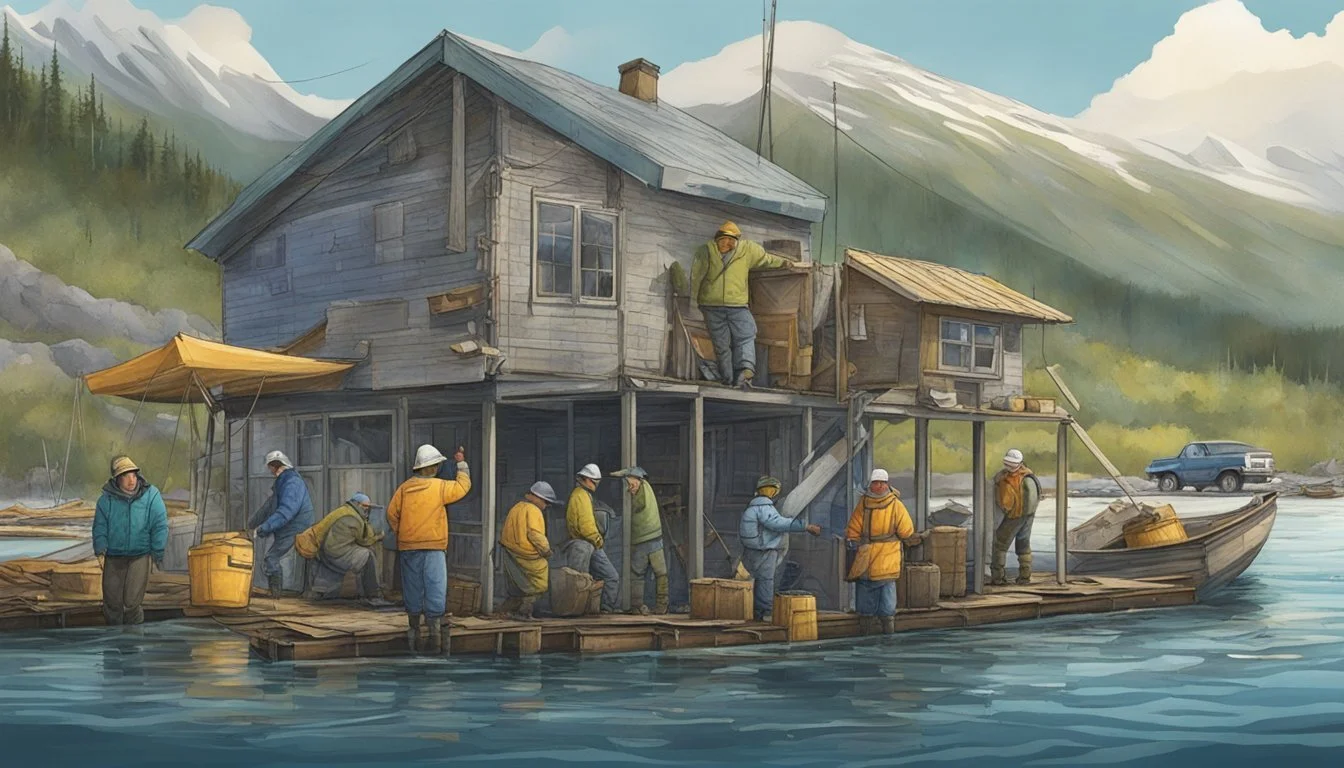
Float homes in Port Protection face a significant challenge with buoyancy loss over time. These structures, traditionally built on logs, experience gradual sinking as the logs age. When new, the logs provide excellent buoyancy, but their effectiveness diminishes with exposure to water. Some residents have reported losing nearly a foot of elevation over just three years, with conditions worsening during winter months.
The sinking creates everyday inconveniences that might seem trivial but indicate serious structural problems. Items roll across uneven floors, and pet toys disappear under furniture due to the tilting. These small annoyances serve as constant reminders of the more serious underlying issue.
Combating a Sinking Dwelling
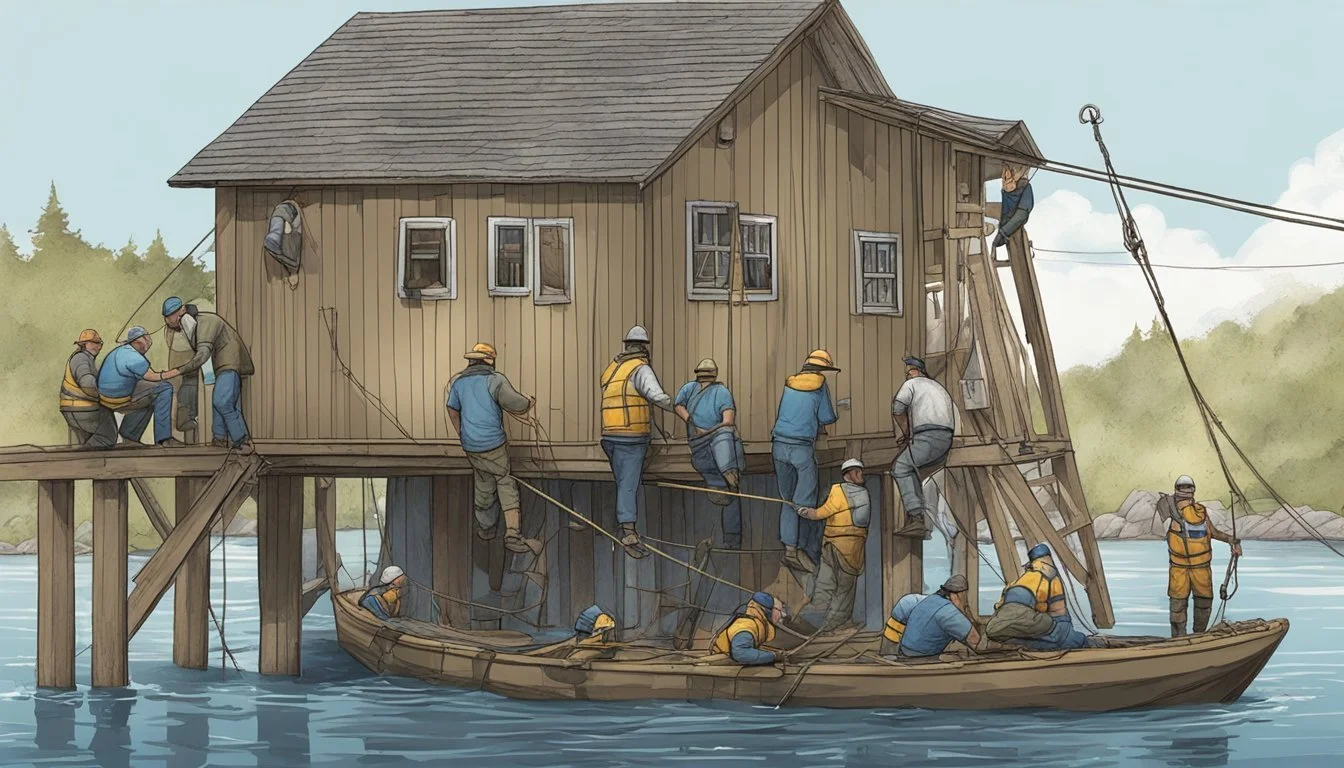
Residents have developed creative solutions to address sinking float homes. One common approach involves strapping existing logs together before inserting fifteen-gallon drums underneath the structure to provide additional buoyancy. This process requires careful planning to ensure the structure doesn't break apart during the procedure.
The process involves several strategic steps:
Binding all logs together with strong line
Positioning a small boat near the float house
Using leverage to create space for barrel insertion
Pulling barrels under the structure with the boat
This repair work can be particularly challenging as it often requires working in cold water. The endeavor represents the determination of Port Protection residents to maintain their unique lifestyle despite environmental challenges. Many view these efforts as part of a larger mission to demonstrate that building a sustainable life in this remote location remains possible, even as the community faces declining population and infrastructure challenges.
Community and Personal Efforts
Working for Success in a Declining Community
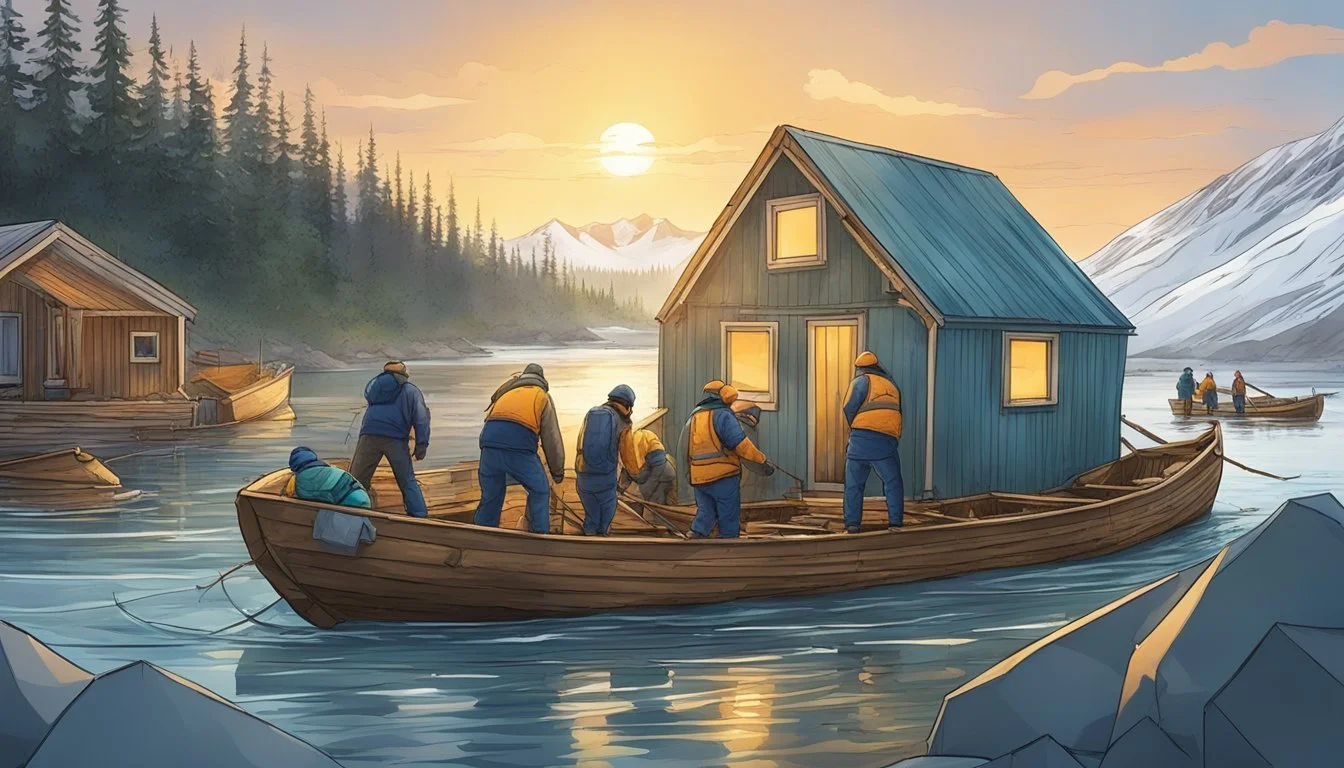
Carl has witnessed Port Protection gradually diminishing over time, with the community's energy fading and certain aspects deteriorating. Despite these challenges, he feels a strong sense of responsibility to help keep the town alive. "It's been hard watching the town get smaller," Carl explains while working on his sinking float house.
This dedication extends beyond just maintaining his own property. Carl believes in demonstrating that success is possible locally without needing to relocate elsewhere. While strapping logs together to salvage his sinking home, he emphasizes his commitment: "I feel a certain responsibility to keep it alive, to really push to be successful and do good. Show everybody that you can build a world here still."
Breanna shares similar sentiments about the pressure facing the younger residents. "Around here in Port Protection, we are the next generation, us younger people. And so, I definitely feel the pressure to be successful," she notes. This consciousness of responsibility drives local actions, from maintaining homes to expanding business opportunities.
Creating Local Sustainability
Community members in Port Protection actively work on projects that contribute to local sustainability and mutual support. David's construction of a large rocket stove incinerator exemplifies this commitment to community wellbeing. His three-chamber design aims to completely burn down trash, addressing waste management challenges in the area.
"When you make everybody's life a little easier, if you just lend a hand, that's what really makes the community a community," David explains while working on his project. His intention is to share the incinerator with the entire neighborhood, demonstrating the collaborative spirit essential to sustainable living in remote areas.
Troy represents another aspect of local sustainability through his career and lifestyle shift. After years as a senior financing consultant in a competitive environment that he found "soul sucking and draining," he chose to relocate to Port Protection. His decision was influenced by his father's end-of-life regret about working too much, pushing Troy toward creating a more meaningful life in this remote setting.
The pursuit of sustainable livelihoods also manifests in fishing endeavors. Oliver and Breanna invested in a larger boat, which Oliver describes as opening "a whole new horizon for us to just explore." This significant financial commitment represents both risk and opportunity for contributing to the community's continued viability.
Innovative Community Solutions
Creating a Marine Access Ladder
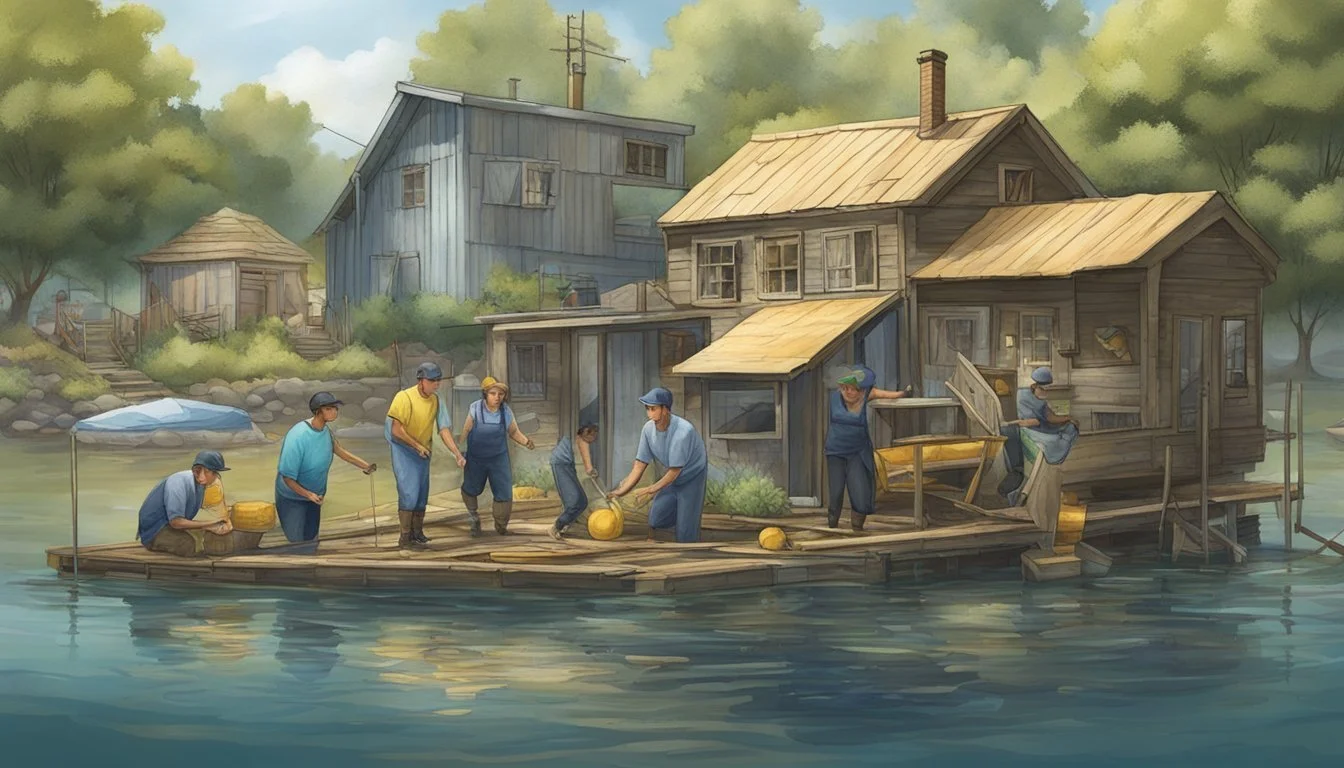
Sam crafted an aluminum ladder specifically designed for boat access, cutting pieces at 45-degree angles to form a functional marine tool. The simple yet effective design would allow easier movement between vessels and docks. This project emerged from Sam's collaboration with Troy, a newcomer to Port Protection who had left behind a high-pressure financial career.
Their partnership focused on exploring underwater resources around Port Protection. Sam would serve as Troy's dive tender, supporting him as they investigated the local marine environment. The ladder represented their first step toward harvesting sea cucumbers, providing essential access to the water.
Troy shared that his decision to move to Port Protection stemmed from a profound conversation with his father during hospice care. His father's biggest regret was working too much - a revelation that prompted Troy to reassess his own life priorities and seek a more fulfilling existence in Alaska.
Sea Cucumber Harvesting Partnership
The sea cucumber harvesting initiative brought together two residents with complementary skills. Sam provided local knowledge and boating expertise, while Troy contributed diving abilities that had been missing in the community for years.
"Been looking for a diver for years. And one finally moved here," Sam explained about their timely collaboration.
Their equipment preparation included:
Custom aluminum ladder
Diving flippers
Support boat
Underwater harvesting tools
The partnership highlighted how Port Protection residents combine specialized skills to access natural resources. Rather than attempting individual efforts, they recognized the value of working together to harvest sea cucumbers, which could serve as both food source and potential income.
Troy, despite initial impressions when he arrived "with some kind of weapon on his shoulder," quickly integrated into the community. Their friendship developed rapidly, demonstrating how Port Protection welcomes newcomers who contribute valuable skills and embrace the collaborative spirit essential to life in remote Alaska.
Life Transitions and Personal Growth
Reflecting on Past Career Paths
Troy shares his journey from a high-pressure professional life to his current lifestyle in Port Protection. "For many years, I was a senior financing consultant and I've always been very, very competitive, had to be number one everywhere I went," he explains. This career path, while successful, was ultimately "soul sucking and draining" for him.
His perspective shifted dramatically during a poignant conversation with his father. While his father was in hospice care, Troy asked if he had any regrets. His father responded with tears, saying he had "worked too much." This powerful moment became a catalyst for Troy's life changes, pushing him toward his current path in Port Protection.
Now, Troy focuses on building his cabin, moving beyond his temporary canvas tent dwelling. He views his new location as his personal "never, never land" despite acknowledging the significant work ahead. This transition represents a complete departure from his former corporate identity.
Embracing Change for Personal Fulfillment
Carl demonstrates how embracing change and responsibility can provide purpose in a changing community. "In Port Protection, there's an energy here that has faded. It's been hard watching the town get smaller," he observes while working to salvage his sinking float house. Despite the challenges, he feels "a certain responsibility to keep it alive."
For Carl, success in Port Protection represents something larger than personal achievement. "Show everybody that you can build a world here still, you don't have to go somewhere else to do that," he explains while working with Morgan to place barrels under his sinking home.
David exemplifies how embracing community needs can provide fulfillment after transition. His project to build a massive incinerator isn't just for personal use but designed to serve his neighbors. "When you make everybody's life a little easier, if you just lend a hand, that's what really makes the community a community," he explains while constructing the multi-chambered rocket stove.
The younger generation feels this transition of responsibility acutely. As Breanna notes, "Around here in Port Protection, we are the next generation, us younger people. And so, I definitely feel the pressure to be successful." Her comment reflects the weight of maintaining community traditions while finding their own path forward.
Building and Structural Improvement Projects
The Community Waste Management Solution
David has embarked on an ambitious waste management project for Port Protection. He's constructing a substantial rocket stove incinerator designed to completely burn down trash. The structure features three chambers: a hopper, a primary combustion area, and an eight-foot chimney measuring four feet square to create excellent draft.
"When you make everybody's life a little easier, if you just lend a hand, that's what really makes the community a community," David explains while working on the framework.
Despite having fewer cinder blocks than originally planned (160 intact out of 175), he's adapting his design. The incinerator will include a double wall on the back of the chimney to serve as a heat break. David's building this robust structure to be shared with the entire neighborhood, hoping it will last for decades.
Revitalizing Local Infrastructure
Carl and Morgan face a significant structural challenge with their float house, which has lost nearly a foot of buoyancy over the past three years. Many traditional float houses in Port Protection are built on logs that eventually lose their buoyancy over time.
"Most of the old float houses around here are built on logs. Which, when they're new is great, they're super buoyant. But eventually they start to lose buoyancy," Carl explains as he works on a solution.
Their restoration plan involves:
Strapping all the logs together to prevent the structure from breaking apart
Placing fifteen-gallon drums underneath to lift the kitchen end of the house
Using a skiff to pull the barrels into position between the logs
This creative approach demonstrates the self-reliance required in remote communities. Carl feels a responsibility to keep Port Protection's spirit alive despite the town's declining population, saying, "Show everybody that you can build a world here still, you don't have to go somewhere else to do that."
Next Generation's Stewardship
Youth Taking Responsibility in Port Protection
As Port Protection faces declining population and deteriorating infrastructure, younger residents feel increased pressure to maintain the community's vitality. Carl expresses deep concern about the town's future while working to repair his sinking float house.
"It's been hard watching the town get smaller. Watching certain things fall apart," Carl reflects while tightening straps around logs beneath his home. "I feel a certain responsibility to keep it alive, to really push to be successful and do good. Show everybody that you can build a world here still."
The community relies on residents who contribute their skills to support the collective well-being. David, for instance, constructs a large incinerator not just for himself but to share with neighbors.
"When you make everybody's life a little easier, if you just lend a hand, that's what really makes the community a community," David explains while carefully assembling the framework for his project.
The Investment in a Fishing Future
Oliver and Breanna have made a significant financial commitment to their life in Port Protection by purchasing a larger fishing vessel. This investment represents both opportunity and risk for the young couple.
"This boat really kind of solidifies us as fisherman. It's a whole new horizon for us to explore," Oliver explains as they prepare to inspect their vessel on the grid.
The purchase represents a considerable gamble:
They've taken out a loan requiring regular payments
The boat was purchased "sight unseen," creating uncertainty about its condition
Their success depends on reliable fish harvests
"We're definitely gambling just everything," Breanna acknowledges. "We're hoping that the fish will show up and we could just make this boat work."
For these young fishers, the inspection process brings considerable anxiety. If the hull has significant problems or they damage the vessel during the grid inspection, the financial consequences could be devastating.
"Not knowing this boat and how it takes to grid, it's nerve-wracking," Oliver admits. "It just kind of might do me in, as far as business wise goes. Be hard to recover from that."
Exploring the Underwater Environment
Getting Ready for Sea Cucumber Harvesting
Sam has been searching for a diver in Port Protection for years, and his patience finally paid off when Troy moved to the area. Their partnership opens up new possibilities for exploring the ocean floor and harvesting sea cucumbers. To prepare for this venture, Sam constructed a small aluminum ladder that can be attached to the side of a boat.
"Nothing stopping me but fear itself," Sam remarked as he worked on the ladder, carefully cutting the aluminum at 45-degree angles. The simple yet functional design included six rungs—sufficient for their needs.
Troy, originally from Kirkland near Seattle, brings diving expertise to their partnership. After years as a senior financing consultant in a competitive, "soul-sucking" career, Troy made a significant life change inspired by his father's deathbed regret about working too much. Now living in a canvas tent while building his cabin, Troy views Port Protection as his "never-never land" despite the challenges ahead.
Safety Considerations and Dive Planning
When Troy enthusiastically suggested a night dive, Sam responded with caution: "I think we'll practice during the daylight a little." This prudent approach acknowledges the risks involved, especially for their first diving expedition together.
The underwater environment around Port Protection presents unique challenges. As Troy noted, "It's probably as dark down there as it is at night," highlighting the limited visibility they'll likely encounter even during daytime dives.
Their preparation included gathering essential diving equipment. "Zee flippers," Troy announced as they reviewed their gear. The methodical preparation demonstrates their commitment to safety despite their enthusiasm for the expedition.
Sam's role as dive tender is crucial for Troy's safety underwater. Their complementary skills—Troy's diving experience and Sam's boating knowledge—create a balanced team for this new underwater venture that could provide both food and potential income through sea cucumber harvesting.
