
Alaskan Bush People: Off-Grid Living Secrets from the Brown Family Wilderness
As a pioneer of sustainable living, Joe has cultivated a remarkable "paradise garden" on 2.8 acres of land in Yancey County, North Carolina for the past 50 years. Purchased for just $800 when the area was still undiscovered, his property now sits at the foot of the Black Mountains adjacent to national forest. Joe's vision transcends typical gardening—he's created a botanical sanctuary of useful plants grown ecologically and arranged beautifully, enabling him to live as a modern hunter-gatherer.
After spending formative years in Detroit and then living with tribal people in Borneo as a Peace Corps volunteer, Joe was profoundly influenced by their self-reliant lifestyle. The contrast between consumerist America and the simpler, healthier lives he witnessed abroad inspired his approach to land stewardship. Now at 80 years old, he hopes to transform his paradise garden into an eight-person eco-village, increasing the land's carrying capacity through biodiversity while promoting medicinal plants like Gynostemma pentaphyllum, which he believes he introduced to America.
Key Takeaways
After 50 years of sustainable living in rural North Carolina, Joe has transformed rocky, steep land into a diverse "paradise garden" of useful plants.
Joe's approach was shaped by his Peace Corps experience in Borneo, where he observed healthier, happier people living self-reliantly with minimal environmental impact.
At 80 years old, Joe is working to establish an eco-village community to continue his vision of botanical diversity and sustainable living practices.
Joe's Mountain Paradise
Land Purchase and Early Days
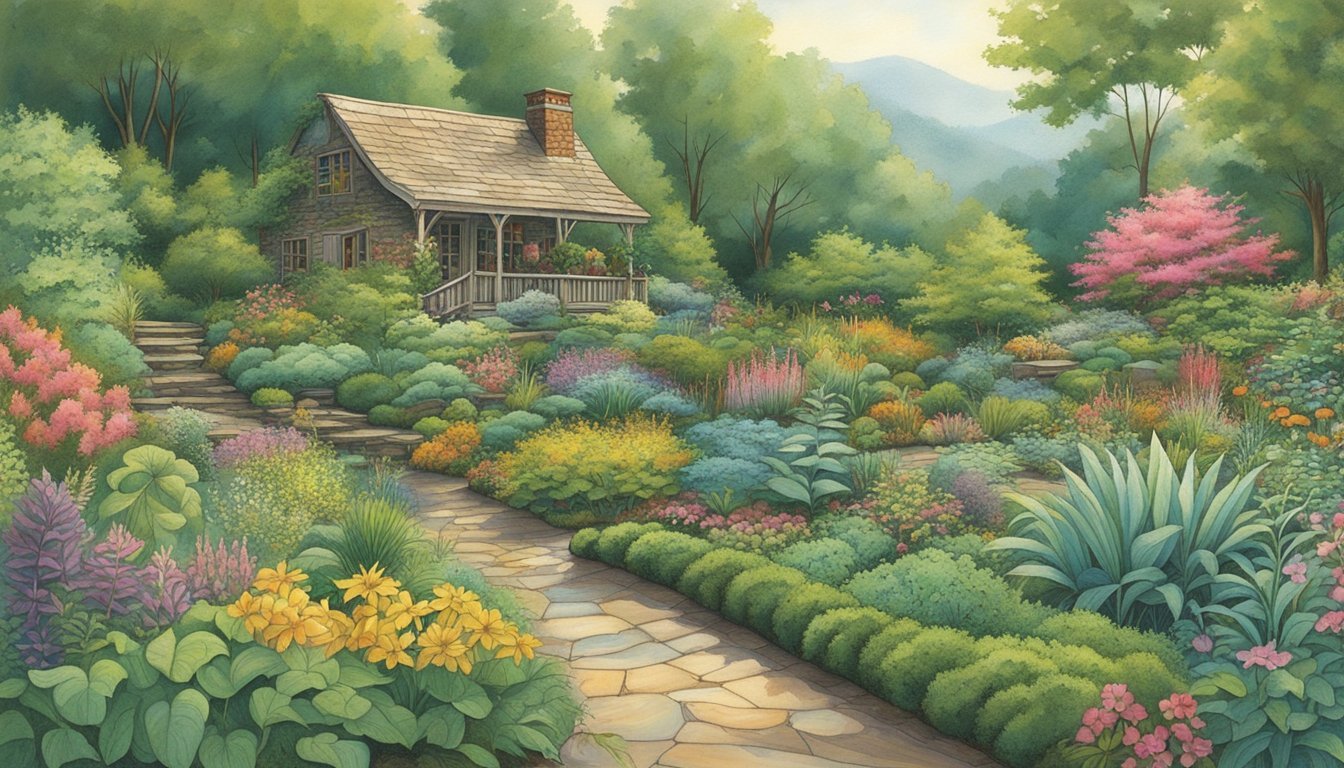
Joe arrived in Yancey County fifty years ago, purchasing 2.8 acres of land for just $800. This remarkable deal reflected the economic reality of the area at that time, as Yancey was the second poorest county in North Carolina. Land was abundantly available, with empty houses sitting vacant across the region. The owners were often willing to let people live in these properties for minimal maintenance like occasional lawn mowing.
His property sits at the foot of the Black Mountains, adjacent to national forest land. The location is particularly notable as it's near Mount Mitchell, the highest peak in the Appalachian Range. This setting provided Joe with diverse ecological opportunities for his future projects.
Yancey County's Evolution
In the five decades since Joe's arrival, Yancey County has undergone dramatic transformation. The once economically depressed area has been "discovered," attracting newcomers drawn to its natural beauty and proximity to Asheville. Being approximately one hour north of Asheville has made the county highly desirable as development radiates outward from that urban center.
Nearby towns like Marshall, which once featured boarded-up main streets nearly abandoned, now buzz with activity and commerce. The economic revival has dramatically changed property values and availability throughout the region. Joe's early land purchase, which seemed unremarkable at the time, proved to be the "last good deal" as he describes it.
Community Reception
The local reception to Joe and other newcomers in the 1970s was generally positive despite cultural differences. Mountain communities traditionally embraced a "live and let live" philosophy that allowed for diverse neighbors. Most locals displayed remarkable tolerance toward the influx of alternative lifestyles.
However, this period coincided with the Vietnam War, which created some tension. Joe acknowledges that his long hair and countercultural appearance occasionally drew skeptical looks from some community members. These reactions were exceptions rather than the rule, as the predominant mountain attitude emphasized neighborly acceptance and respect for privacy.
For many years following his settlement, Joe lived well below the poverty line, with an annual income under $10,000. This simple economic existence aligned with his vision of self-sufficiency and minimal environmental impact.
Lifestyle and Values

Financial Approach and Tax Considerations
Living in rural Yancey County for five decades has been characterized by deliberate financial minimalism. Annual income has consistently remained under $10,000, deliberately staying below the poverty line. This financial approach eliminates concerns about tax obligations while allowing for a fulfilling lifestyle focused on self-sufficiency rather than monetary accumulation.
The economic landscape of Yancey County has transformed dramatically over these years. Once the second poorest county in North Carolina with abundant affordable land, it has become increasingly popular due to its proximity to Asheville. Property that originally cost $800 for 2.8 acres in the 1970s would be unimaginable today, as previously abandoned towns like Marshall have experienced revitalization with thriving main streets.
Self-Sustenance and Agricultural Practices
The property functions as what the owner describes as a "paradise garden" - a botanical collection of useful plants grown ecologically and arranged ornamentally. This approach allows the gardener to become essentially a hunter-gatherer within their own cultivated space, simply needing to remember where specific plants grow and when to harvest them.
Food self-sufficiency is a central component of this lifestyle, though maintaining the extensive gardens requires more hands than currently available. The agricultural approach focuses on increasing the land's carrying capacity through strategic plant diversity, drawing inspiration from East Asian regions with similar bioclimates.
Key features of the gardening approach include:
Maximizing useful species diversity
Creating varied habitats to support different plant types
Emphasizing plants with medicinal properties
One signature herb cultivated on the property is Gynostemma pentaphyllum (Jiaogulan), an adaptogenic plant containing compounds identical to ginseng. This herb, known in some regions as "immortality tea," promotes health by boosting the immune system rather than treating specific ailments.
Concept of Eco-Village
The vision for the property's future centers on transitioning to an eight-person eco-village community model. After 80 years of individual stewardship and with health concerns emerging, finding people to continue and expand this work has become essential. The community approach seeks both temporary helpers and permanent residents who share the vision.
This community model draws inspiration from tribal communities in Borneo, where self-reliance and rich cultural practices created healthy, happy communities with minimal environmental impact. The stark contrast between these communities and American consumer culture sparked the desire to recreate aspects of that lifestyle in Appalachia.
Creating functional intentional communities presents challenges in American culture, where individualism often disrupts communal living experiments. Previous attempts at establishing hippie communes in the area typically dissolved after a few years due to these cultural factors. Despite these challenges, developing a sustainable community model represents the next frontier for this property - transforming from an individual paradise garden to a thriving ecological community.
The Garden of Living Harmony
What Makes a Paradise Garden
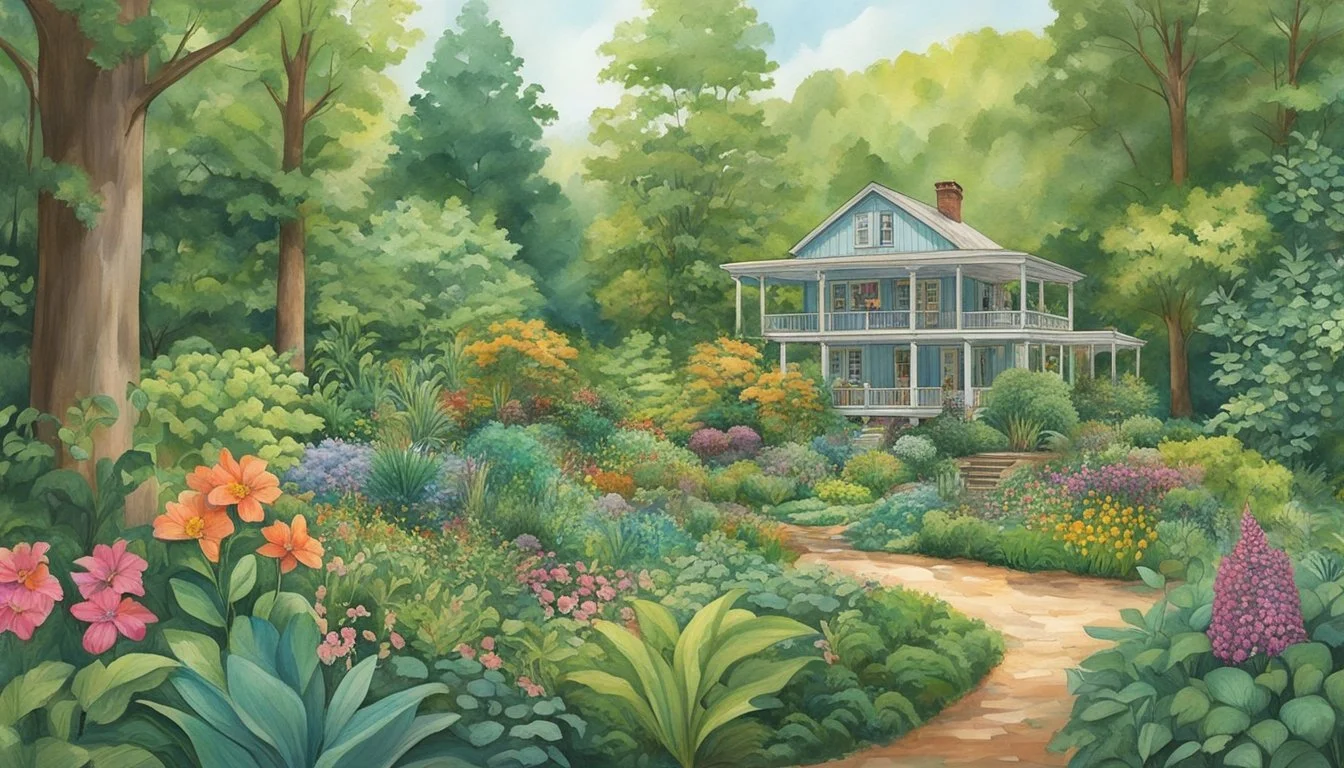
A paradise garden represents a botanical collection of functional plants grown through ecological methods and arranged for visual appeal. This concept transforms land into a self-sustaining ecosystem where useful plants thrive naturally, allowing the gardener to adopt a modern hunter-gatherer approach. Rather than constantly tending to crops, the gardener primarily needs to remember plant locations and harvest times. This model aims to create beauty while maintaining ecological balance and providing sustainable resources.
The paradise garden concept particularly thrives in areas with diverse microclimates and habitats. By introducing a wide variety of useful species, especially those adapted to similar bioclimatic regions, the garden can support more people per acre than conventional agricultural methods.
Learning from Traditional Societies
Anthropological research from the 1960s revealed valuable insights about hunter-gatherer societies that influenced the paradise garden concept. These studies examined how humans transitioned from living as integrated parts of natural ecosystems to becoming manipulators of nature through agriculture. This shift marks what some researchers identify as the beginning of humanity's destructive relationship with Earth.
Traditional societies, particularly in regions like Borneo, demonstrated remarkable self-sufficiency despite minimal material possessions:
Building their own shelters
Growing their own food
Developing rich cultural practices
Maintaining strong community bonds
These communities often exhibited better health and happiness compared to many in industrialized societies, while placing significantly less demand on natural resources. Their lifestyles reveal that humans can thrive with fewer possessions and smaller ecological footprints.
Environmental Consequences of Modern Farming
Conventional agriculture has fundamentally altered humanity's relationship with the natural world. The transition from hunter-gatherer societies to agricultural ones represents a pivotal moment when humans began attempting to control rather than coexist with natural systems. This shift has ultimately positioned humans as perhaps the most environmentally destructive organisms in Earth's history.
Modern farming practices face significant challenges:
Challenge Impact Resource intensity Depletes soil, water supplies Low biodiversity Increases vulnerability to pests/disease Chemical dependence Contaminates ecosystems Land conversion Destroys natural habitats
The paradise garden approach responds to these issues by working with natural systems rather than against them. It focuses on increasing land carrying capacity through plant diversity rather than chemical inputs or mechanical intervention. This model draws particularly from East Asian traditional practices, incorporating medicinal plants like Gynostemma pentaphyllum (Jiaogulan), which offers health benefits similar to ginseng but grows more abundantly and with less environmental impact.
Land and Biodiversity
Maximizing Land's Productive Capacity
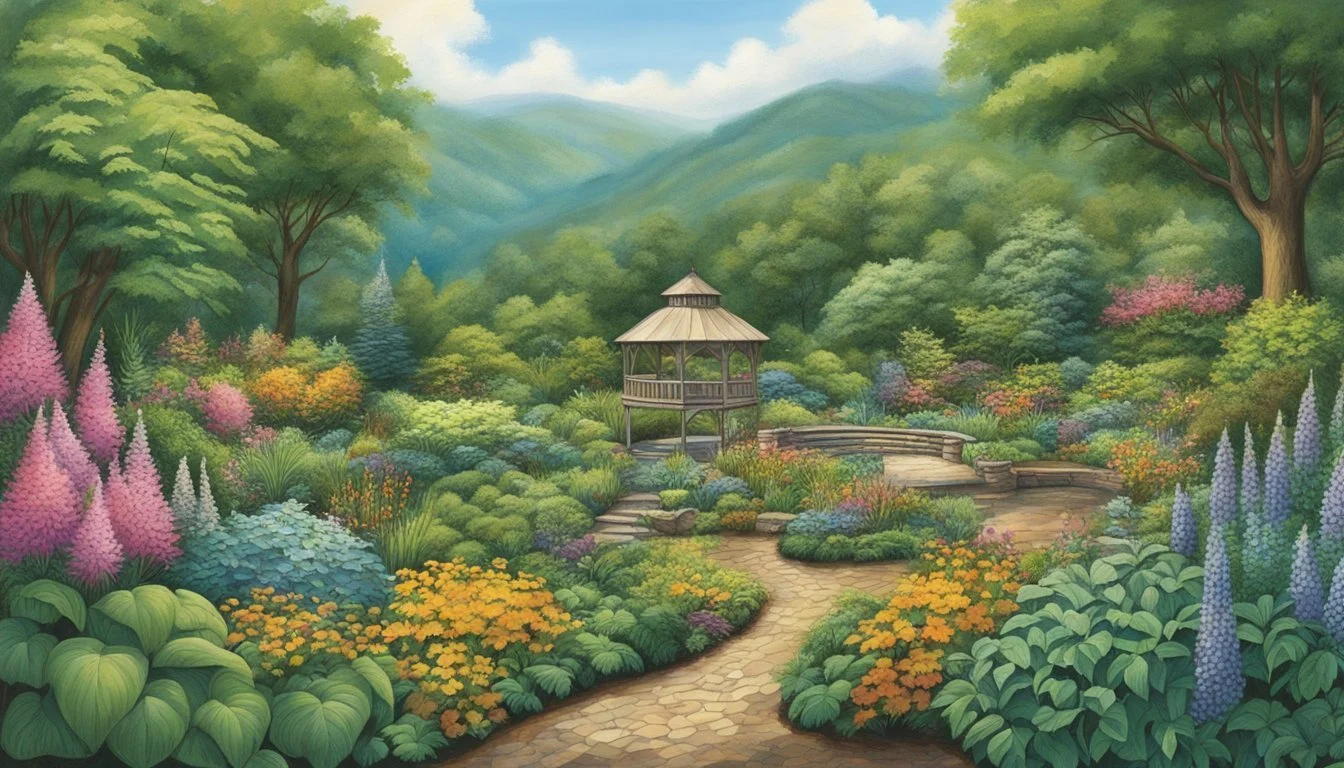
Land utilization strategies can dramatically improve how many people a specific area can support. In mountain regions like Yancey County, North Carolina, even steep, rocky terrain previously considered unsuitable for farming can be transformed into highly productive spaces. This transformation requires careful planning and introduction of appropriate plant species adapted to local conditions. The approach focuses on creating self-sustaining ecological systems where plants largely maintain themselves, requiring minimal human intervention beyond harvesting.
Several key principles guide effective land productivity enhancement:
Species diversification: Introducing a wide range of useful plants
Biological matching: Selecting species from similar bioclimatic regions
Self-sustainability: Creating systems that require minimal maintenance
Ecological Habitat Variety
Creating diverse habitats within a property significantly increases the range of beneficial plants that can thrive there. Different species require specific growing conditions, so developing varied microenvironments expands cultivation possibilities. The natural landscape features, like elevation changes and water flow patterns, can be leveraged to create these diverse growing spaces.
Habitat types that can be developed or enhanced:
Forest edges
Woodland understory
Sunny clearings
Shaded slopes
Protected valleys
East Asia, particularly regions with similar climate conditions to the Appalachian Mountains, offers numerous plant species that can thrive when introduced to North American mountain landscapes. Plants like Gynostemma pentaphyllum (Jiaogulan), originating from areas of China known for unusual longevity among residents, represent valuable additions to a diverse planting strategy.
Hydrology and Geography
Water movement across mountain landscapes fundamentally shapes what can grow in specific locations. In mountainous areas like those adjoining the Black Mountains of North Carolina, water typically flows down from higher elevations in the national forest before sinking into the ground. This creates a natural irrigation system that can be harnessed for cultivation.
The proximity to significant geographical features influences growing conditions:
Geographical Feature Agricultural Impact Mountain peaks Affects wind patterns and precipitation National forests Provides watershed protection and wildlife corridors Valleys Often contain richer soil and better water retention Elevation changes Create microclimate variations
Land in mountainous regions that was once considered marginal can become highly productive through careful observation of natural water cycles and terrain features. When these factors are understood and worked with rather than against, even steep landscapes can support abundant plant life and increased human habitation.
Joe's Personal Journey
Roots in Detroit and Move to North Carolina
Joe grew up in Detroit before relocating to North Carolina with his family when his father, a professor, decided to pursue teaching there. The free college tuition that came with his father's position was a significant benefit. After completing his education, Joe purchased 2.8 acres of land in Yancey County for just $800, which he considers "the last good deal" he ever found.
At the time of his purchase 50 years ago, Yancey County was the second poorest county in North Carolina, with abundant available land and even empty houses that people could occupy simply by maintaining the property. The area has since been "discovered," particularly due to its proximity to Asheville (about an hour away), and is now experiencing significant growth and development.
Experience with Indigenous Communities in Borneo
Following his time in North Carolina, Joe joined the Peace Corps and spent approximately three years living with tribal people in Borneo. This experience profoundly influenced his worldview and future life choices. He was deeply impressed by their self-reliant lifestyle, which contrasted sharply with his Detroit upbringing where people "don't really do anything except have a job, make money, and fulfill all your needs with your money."
The indigenous people he encountered built their own homes, grew their own food, and maintained a rich cultural life with meaningful rituals and traditions. Joe observed that despite having far fewer material possessions than Americans, they appeared healthier and happier while making minimal environmental impact.
Culture Shock and Lifestyle Transformation
Joe's most significant culture shock came not when traveling to Borneo, but upon returning to America. The "glut of stuff" in American consumer culture—particularly evident when walking into shopping malls—left him deeply uncomfortable after experiencing a more sustainable way of life.
This realization led Joe to reconsider his path. Though he initially contemplated pursuing graduate studies in anthropology to work with indigenous communities again, he ultimately decided: "I didn't want to study it, I just wanted to live it myself." He joined a small "hippie commune" of craftspeople who had connections to land in the same valley where he currently resides, near the renowned Penland School of Craft.
For many years, Joe lived well below the poverty line, with an annual income under $10,000. Now at 80 years old, he has transformed his initially rocky, steep land into what he calls a "paradise garden"—a botanical collection of useful plants grown ecologically and arranged ornamentally. His current focus is establishing an eight-person eco-village to continue and expand his vision.
The Social Environment
Community Ties to Penland Craft Institute
The area's connection to the renowned Penland Craft Institute played a significant role in attracting early settlers to this region of Yancey County. Many of the first alternative communities established in the area were drawn specifically because of Penland's presence. This craft school served as an anchor for artisans and craftspeople seeking to develop their skills while living in a rural setting.
The initial commune that formed in this valley included several craftspeople who had discovered the land through connections to Penland. These early community experiments followed a pattern seen across many alternative living arrangements of that era - beginning with enthusiasm but often dissolving after a few years due to various challenges.
Sustainability Obstacles for Communal Living
Creating lasting intentional communities in this region has faced several persistent challenges. Unlike traditional tribal communities observed in places like Borneo, where community structures have evolved over generations, modern American communes often struggle with sustainability.
The primary obstacles include:
Individualism - American cultural emphasis on independence makes collective decision-making difficult
Economic viability - Maintaining low-income lifestyles ($10,000 or less annually) requires significant adaptation
Labor shortages - Having enough people to maintain gardens and infrastructure is an ongoing challenge
Aging founders - As original community members reach their 80s, succession planning becomes critical
Despite the "live and let live" attitude of local mountain residents who were generally tolerant of newcomers, creating functional long-term communities has proven difficult.
Future Community Development Plans
The vision for this property centers on transforming it into an eight-person eco-village. This small community would continue maintaining the "paradise garden" - a botanical collection of useful plants grown ecologically and arranged ornamentally. The concept allows residents to become "hunter-gatherers" within their own carefully designed landscape.
Key elements of the future community plan include:
Increasing the land's carrying capacity through diverse planting
Utilizing plants from similar bio-climates, particularly East Asia
Creating varied habitats to support greater plant diversity
Maintaining the connection to simple living inspired by tribal communities
The property's location at the foot of the Black Mountains, adjacent to national forest land, provides an ideal setting for this vision of sustainable living. As Yancey County continues to be "discovered" by newcomers moving within range of Asheville, establishing this kind of intentional community represents what the founder sees as "the next frontier" in sustainable living.
Signature Health-Enhancing Plants
Jiaogulan: Nature's Longevity Herb
Gynostemma pentaphyllum, commonly known as Jiaogulan, stands out as a remarkable herb with exceptional health properties. This vine, belonging to the squash family, contains compounds identical to those found in ginseng but grows much more abundantly. While wild ginseng can fetch up to $1,000 per pound due to overharvesting concerns, Jiaogulan grows prolifically with minimal effort.
The plant gained international attention when Chinese government statistics revealed certain regions had unusually high numbers of centenarians. Investigations discovered these communities regularly consumed Jiaogulan as a daily tea, leading to its nickname "immortality tea." Today, it's widely used throughout East Asia and is gradually gaining popularity in Western markets, sometimes marketed as "Sweet Tea vine."
Understanding Adaptogenic Properties
Jiaogulan belongs to a special category of plants known as adaptogens—substances that promote overall wellness rather than targeting specific ailments. These plants work primarily by strengthening the immune system and helping the body resist various stressors.
The concept of adaptogens was largely developed through Russian research initiatives. Scientists there sought natural compounds that could enhance athletic performance and potentially help their Olympic athletes gain competitive advantages. Without access to traditional ginseng, Russian researchers focused on alternatives like Siberian ginseng to understand these health-promoting properties.
Adaptogens differ from conventional medicines in a fundamental way:
Conventional medicine: Treats specific illnesses after they occur
Adaptogens: Proactively support health and prevent illness
Primary benefit: Enhanced immune function and stress resilience
The Immortality Tea Legacy
The fascinating story of Jiaogulan as "immortality tea" represents a perfect example of how traditional knowledge can lead to valuable modern discoveries. Chinese investigators, puzzled by statistical anomalies showing unusually high longevity in specific regions, traced this phenomenon to the regular consumption of this humble vine.
For generations, local people had incorporated this plant into their daily routines without scientific validation. The discovery highlighted how traditional ecological knowledge often precedes scientific understanding.
Today, as interest in natural health solutions grows globally, Jiaogulan exemplifies plants that offer significant benefits while placing minimal demands on ecological systems. Unlike resource-intensive cultivated medicines, these adaptogenic plants often grow with little intervention, making them accessible and sustainable options for health promotion.
