
The Desert as a Character in Breaking Bad Exploring
Its Symbolic and Narrative Impact

The desert in Breaking Bad is more than a setting; it functions as a silent character that shapes the mood, choices, and fate of those within Vince Gilligan's world. The vast, empty landscapes surrounding Albuquerque create an atmosphere of isolation and danger, echoing the moral ambiguity and desperation of the show's characters.
Every major event in Breaking Bad seems heightened beneath the relentless desert sun, where there is no shelter from the truth or from each other. The harshness and beauty of the desert reflect the unforgiving reality Walter White and others face, making each scene feel raw and rooted in an authentic place.
Viewers come to associate the show's tension and unpredictability with the open, unforgiving spaces outside the city. The desert's presence ensures that the world of Breaking Bad remains grounded, immersive, and inseparable from the story’s core themes.
The Desert as a Character in Breaking Bad
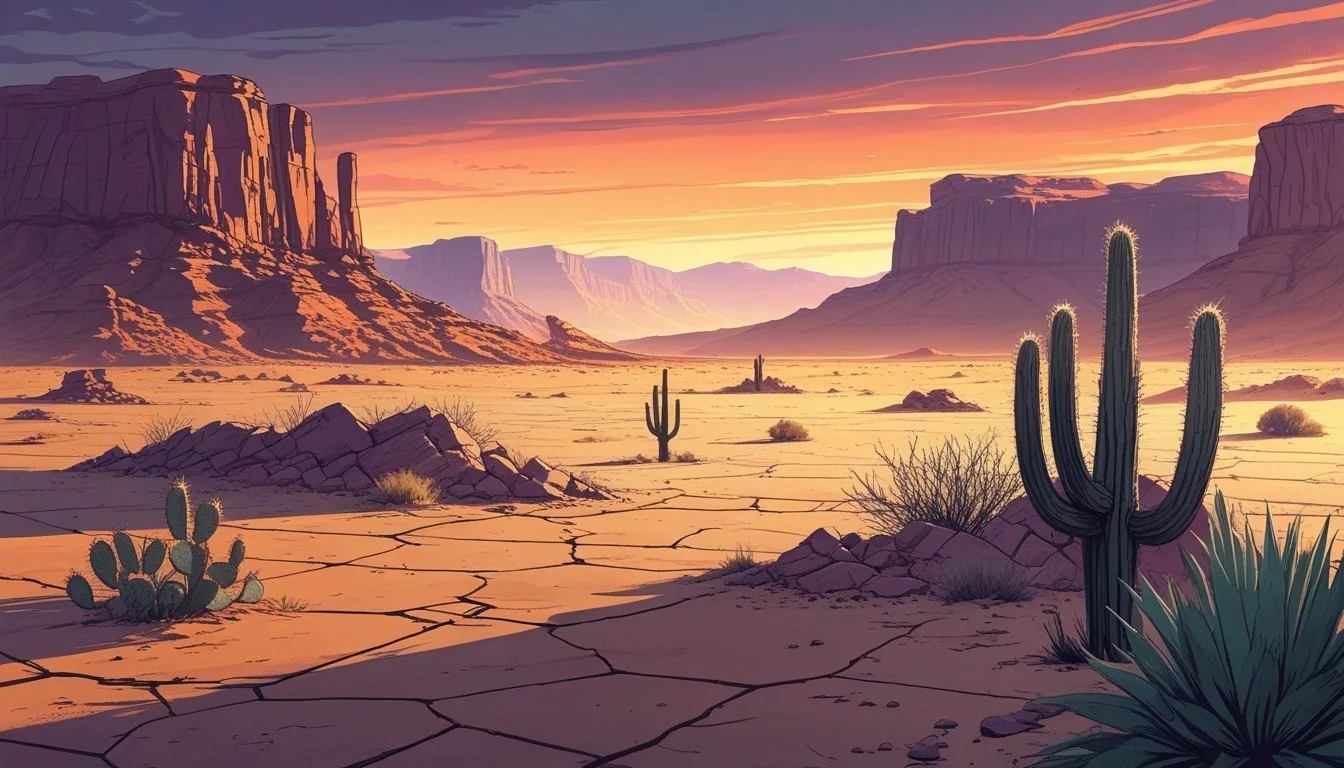
Breaking Bad’s desert setting is not just a backdrop; it actively shapes the tone, tension, and meaning of the series. The arid landscape influences characters and plot developments, while the cinematography uses its vast openness to convey isolation and danger.
Defining the Desert’s Role
The desert landscapes of Albuquerque are central to Breaking Bad’s storytelling. The setting acts almost as a silent witness to pivotal events—from tense meetings to violent confrontations.
Scenes such as the desert shootout in Season 5 highlight how the environment amplifies stakes and drama. The emptiness of the dunes removes distractions, focusing attention on the characters and their choices.
Directors use the desert to heighten realism. The heat, dust, and sheer space create physical challenges for Walter White and others, underscoring the sense that the world itself is indifferent to their struggles.
Symbolism of the Desert
Symbolism plays a significant role in how the desert is portrayed. The vast, empty spaces often mirror the moral emptiness or conflict within the characters.
The desert’s harshness represents an unforgiving world, where only the strongest or most ruthless survive. Scenes in the wilderness often signal turning points: choices that cannot be undone.
Its untamed nature evokes themes of chaos and lawlessness. The absence of civilization’s rules in the desert setting highlights Breaking Bad’s focus on what people become when stripped of societal constraints.
Personification of the Landscape
Breaking Bad frequently treats the desert like a living character. Through distinct cinematography—like time lapses of sunrises, distant storms, and sweeping aerial shots—the landscape is given moods and presence.
The desert responds passively; it does not save or punish but provides the canvas for human actions. Characters’ fates often feel small against its scale, reinforcing themes of powerlessness or inevitability.
Color, light, and silence in these scenes are used to intensify emotions. The result is a setting that interacts with the narrative without speaking, giving the impression of a watching presence that never intervenes.
Visual Storytelling and Cinematic Techniques
Breaking Bad employs a variety of visual strategies to turn the desert into a dynamic, central element of the show’s narrative. The approach to camera work, color, and use of real New Mexico locations creates a distinct atmosphere that connects the story to its harsh, expansive setting.
Cinematography of Desert Scenes
Wide shots dominate the desert sequences, often placing characters like Walter and Jesse in isolated frames to highlight their vulnerability. This framing emphasizes the vastness of the landscape, which can dwarf even the central figures.
Time-lapse photography is used to show changes in the environment, capturing both the beauty and danger of the desert. Long, steady takes allow tension to build naturally, while overhead shots provide a bird’s-eye view of the action.
Common techniques in Breaking Bad’s desert scenes:
Wide angle lenses for scale
Low angle shots to enhance drama
Handheld cameras for intimate moments between characters
This combination helps convey the desert’s impersonality and potential for violence.
Use of Colors and Lighting
Color symbolism is essential in Breaking Bad, especially in the desert setting. The natural beige, gold, and red hues of New Mexico soil are used intentionally to shape mood and meaning. Bright sunlight, with harsh contrasts, accentuates the arid landscape.
Characters’ clothing often changes tones depending on their roles and arcs. For example, Walter’s early scenes feature pale, washed-out colors, evolving into darker, more intense shades as his character changes.
Lighting methods include:
High-contrast daylight for realism and tension
Soft dusk lighting for reflective or transitional moments
Vivid color grading to highlight emotional shifts
The interplay between the desert’s natural palette and deliberate costume choices reflects internal character conflicts.
Filming Locations in New Mexico
Most desert scenes in Breaking Bad are filmed on location around Albuquerque and throughout New Mexico. These locations provide not just authenticity, but also unique light and landscape characteristics that set the show apart.
Some iconic spots include the To’Hajiilee Indian Reservation and the rolling dunes northwest of ABQ. Urban scenes transition smoothly into expansive, empty spaces, reinforcing themes of isolation and moral ambiguity.
Notable benefits of filming in New Mexico:
Diverse scenery for varied visual storytelling
Consistent lighting conditions due to the climate
Proximity to Albuquerque enables seamless shifts between city and desert settings
New Mexico’s geography becomes inseparable from the visual language and identity of Breaking Bad.
The Desert’s Influence on Main Characters
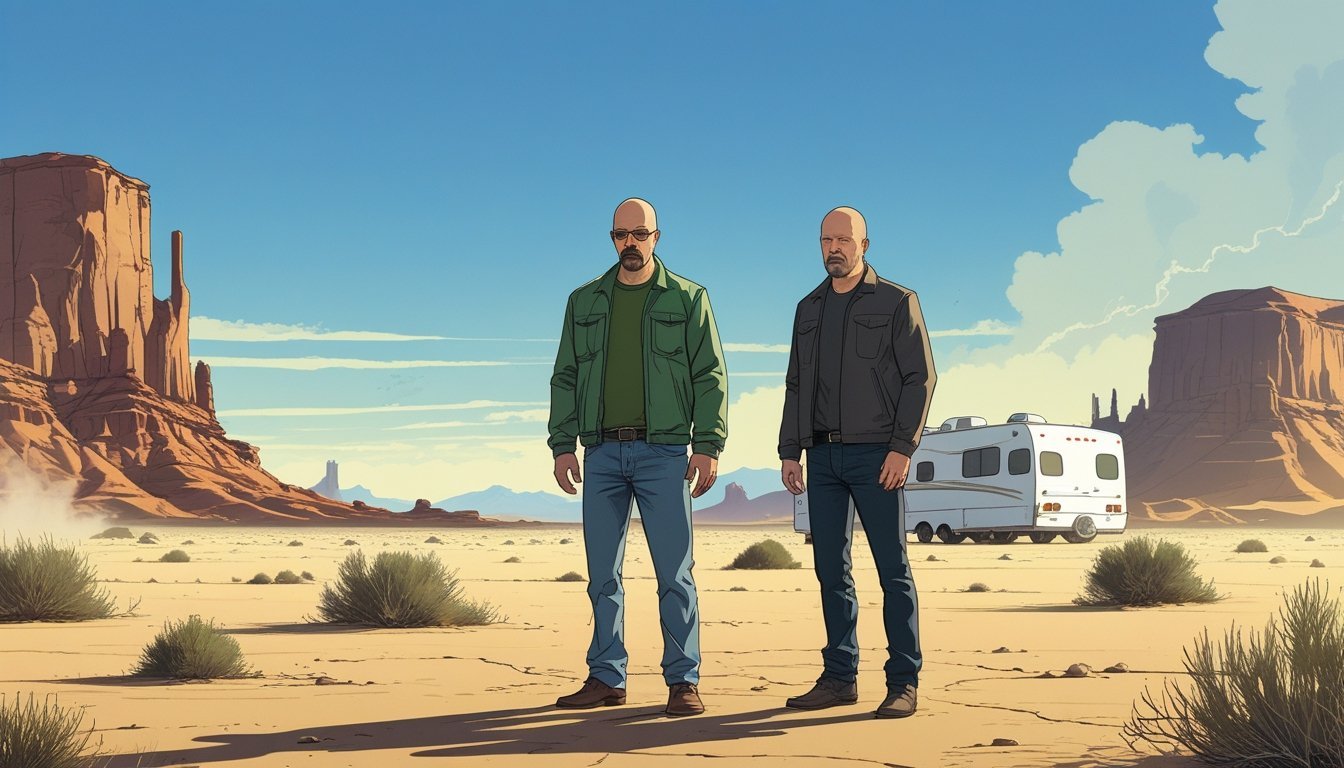
The desert in Breaking Bad functions as more than just a backdrop; it directly shapes the personal growth, choices, and fates of the core characters. Its harsh conditions expose vulnerabilities, force adaptation, and emphasize the consequences of moral choices.
Walter White’s Transformation
Walter White’s journey into criminality is deeply tied to the desert’s unforgiving nature. Scenes in the desert often coincide with his most pivotal decisions, symbolizing his increasing moral decay. The isolation strips away social norms, leaving him alone with his ambitions and justifications.
Bryan Cranston’s portrayal captures how Walter gradually adapts to this harsh environment. As the series progresses, the desert becomes a space where Walt’s actions grow bolder and more ruthless. Desert settings frame moments of desperation and control, reinforcing his growing detachment from his former self.
Key events, such as the disposal of bodies or confrontations with enemies, occur in the desert, underscoring the shift from chemistry teacher to criminal mastermind. The landscape mirrors his internal transformation, serving as both a silent witness and a catalyst.
Jesse Pinkman’s Journey
The desert significantly influences Jesse Pinkman’s emotional and psychological state. It is a place of trauma and reckoning, where Jesse is forced to face life-altering challenges outside his comfort zone. The vast emptiness often serves to intensify his feelings of loneliness and vulnerability.
During high-stress events—such as when Jesse and Walt are stranded—the harshness of the desert environment magnifies Jesse’s fear and desperation. These moments accelerate his character development as he learns to rely on himself and confront his limitations.
Over time, these experiences harden Jesse, pushing him toward maturity but also deepening his sense of isolation. The desert acts as both adversary and teacher, compelling Jesse to confront the realities of his choices and survive against overwhelming odds.
Isolation and Survival Skills
The desert enforces isolation, severing characters from the support and constraints of society. Without outside interference, each main character is forced to make decisions based solely on their instincts and skills. This isolation reveals true personalities and uncovers hidden strengths and weaknesses.
Survival becomes both a physical and psychological test. For Walter White, his scientific knowledge sometimes gives him an edge, transforming adversity into opportunity. Jesse, meanwhile, displays resourcefulness as he learns to adapt to the desert’s demands.
These challenges in the desert reinforce the need for adaptability and quick thinking. The landscape relentlessly tests the boundaries of human endurance and self-preservation, shaping the characters’ stories in tangible and lasting ways.
The Desert as a Crucible for Moral Ambiguity
The desert in Breaking Bad serves as more than just a backdrop; it intensifies the stakes of every moral decision and exposes hidden facets of each character. Its barren expanse frames moments of violence, turns isolation into a test of character, and draws visual parallels to America’s Wild West.
Isolation and Moral Choices
In Breaking Bad, characters often find themselves alone in the desert, cut off from the rules and expectations of society. This isolation strips away pretense and leaves individuals to confront the consequences of their actions. Facing seemingly endless sand and sky, Walt, Jesse, and others are forced into choices that reveal or erode their core values.
The lack of outside witnesses transforms the desert into a space where lines between right and wrong blur. Decisions such as whether to kill, betray, or confess become pressing and personal. The environment magnifies uncertainty and tempts characters toward acts they would never consider in a crowded, policed setting.
These moments serve as turning points for moral decay, when pressure from fear or desperation leads to irreversible acts. The landscape’s emptiness becomes a silent judge, offering no comfort or condemnation, only opportunity and risk.
Violence and Lawlessness
The desert frequently becomes the setting for acts of violence and confrontation in Breaking Bad. Ambushes, shootouts, and murders often take place far from civilization, where the absence of law enforcement encourages a survivalist mentality. The desert’s openness means there are few places to hide, making every violent act direct and inescapable.
Conflicts in these moments are not just physical but also psychological. The decision to pull the trigger or dispose of evidence highlights the thin line between necessity and cruelty. Characters such as Walt and Mike use the remoteness to carry out criminal acts with little fear of being caught, reinforcing the idea that moral boundaries are optional in this environment.
This lawlessness mirrors the criminal underworld’s own code, operating outside societal norms. The desert enables expressions of masculinity rooted in dominance, control, and willingness to use force when challenged.
Wild West Aesthetics
Breaking Bad’s desert locations evoke the visual language of the American frontier. Sweeping shots of wide skies and desolate land echo classic Western films where outlaws and lawmen settle scores away from prying eyes. These scenes anchor the show in a mythic tradition where the wilderness is both a threat and a proving ground.
The landscape underscores themes of self-reliance and confrontation. Characters are cast as modern antiheroes, grappling with morality in a lawless environment. The show’s producers intentionally use these Western motifs—dusty roads, sun-scorched vistas, isolated vehicles—to invoke a sense of rugged independence and ambiguity.
Through these visual cues, the desert frames Walter White and others as figures navigating a harsh, unpredictable world where traditional ethics often fail. The setting amplifies the tension between civilization and chaos, reinforcing the story’s exploration of moral decay and the blurred lines between right and wrong.
Desert Locations and Their Narrative Impact
Breaking Bad’s desert settings are more than just physical spaces; they influence plot developments and reinforce the emotional states of the characters. Specific locations across New Mexico serve as symbolic backdrops that heighten tension and reveal key aspects of the story.
To’hajiilee Indian Reservation
The To’hajiilee Indian Reservation, west of Albuquerque, is a recurring site for critical turning points in Breaking Bad. Its isolated lands become central for meth cooking, major confrontations, and secret deals.
This area features prominently in episodes such as the pilot, where Walt and Jesse first set up their RV lab. The vast emptiness emphasizes their vulnerability and the illegal nature of their operation.
Later in the series, the site hosts the famous standoff between Walt, Jesse, and Hank. The remote setting adds suspense, offering no escape or outside interference. Visually, the endless horizon and red earth highlight the loneliness and desperation pervading the characters’ circumstances.
To’hajiilee’s real-life status as tribal land adds weight to scenes filmed there. The sense of crossing physical and moral boundaries ties directly into Breaking Bad’s themes of lawlessness and personal ruin.
Albuquerque and the Surrounding Area
Albuquerque serves as the primary urban and suburban setting but is surrounded by open desert, which the show uses to contrast the characters’ daily lives. The boundaries between city and wilderness are blurred, reflecting the characters’ moral ambiguity.
Key desert filming locations near Albuquerque include routes along the Sandias and vacant lots that border inhabited neighborhoods. These spaces become stages for clandestine meetings, escapes, and moments of reflection. The emptiness around the city magnifies characters’ feelings of isolation or entrapment.
Besides To’hajiilee, deserts in the Albuquerque area feature in scenes like Jesse’s existential crises and Walt’s solitary drives. The landscape becomes an unyielding witness to their actions. By situating so many pivotal moments here, Breaking Bad integrates New Mexico’s real geography into its narrative fabric.
Desert as a Setting for Key Events
Breaking Bad often uses the desert to emphasize isolation and danger for its characters. The barren landscape becomes the backdrop for both the creation and concealment of illegal drug operations.
The Mobile Meth Lab and RV
The iconic RV, used as a mobile meth lab by Walter White and Jesse Pinkman, is frequently parked deep in the New Mexico desert. This remote setting provides the isolation they need to cook methamphetamine without fear of discovery. Distances from civilization protect their operation but also add vulnerability; when danger arises, help is far away.
Key events, such as their first cooks, the disposal of bodies, and tense confrontations with rivals, occur far from prying eyes. The desert’s vast emptiness mirrors Walt and Jesse’s growing detachment from normal life. Their RV, confined yet mobile, contrasts with the endless wilderness, highlighting their desperate attempts to avoid law enforcement and enemies.
The desert also amplifies moments of crisis. For example, when the RV becomes stranded or when characters are trapped, the harsh environment underlines their physical and moral hazards. The open landscape serves as both a shield and a threat—freedom from surveillance, yet constant danger from exposure.
The Superlab and Hidden Operations
While the superlab is concealed underground, its operations still connect to the desert through secrecy and isolation. Gus Fring’s industrial meth lab exemplifies a shift from makeshift to professionalized drug manufacturing. Hidden beneath an industrial laundry, its existence depends on staying invisible in the broad, empty expanse of Albuquerque's outskirts.
The desert landscape is used to move supplies and dispose of evidence. Operations inside the lab benefit from the same sense of isolation the RV once relied on, but with greater scale and sophistication. Here, the open land suggests both possibility and risk—space to grow the operation and hide its secrets, but also room for catastrophic exposure if discovered.
In both settings, the desert is more than scenery; it is a factor that shapes decisions and consequences, dictating how and where the business can thrive or collapse. The vast, unforgiving terrain becomes part of the machinery of drug production itself, affecting every action inside the RV or the superlab.
Key Characters and the Desert’s Impact
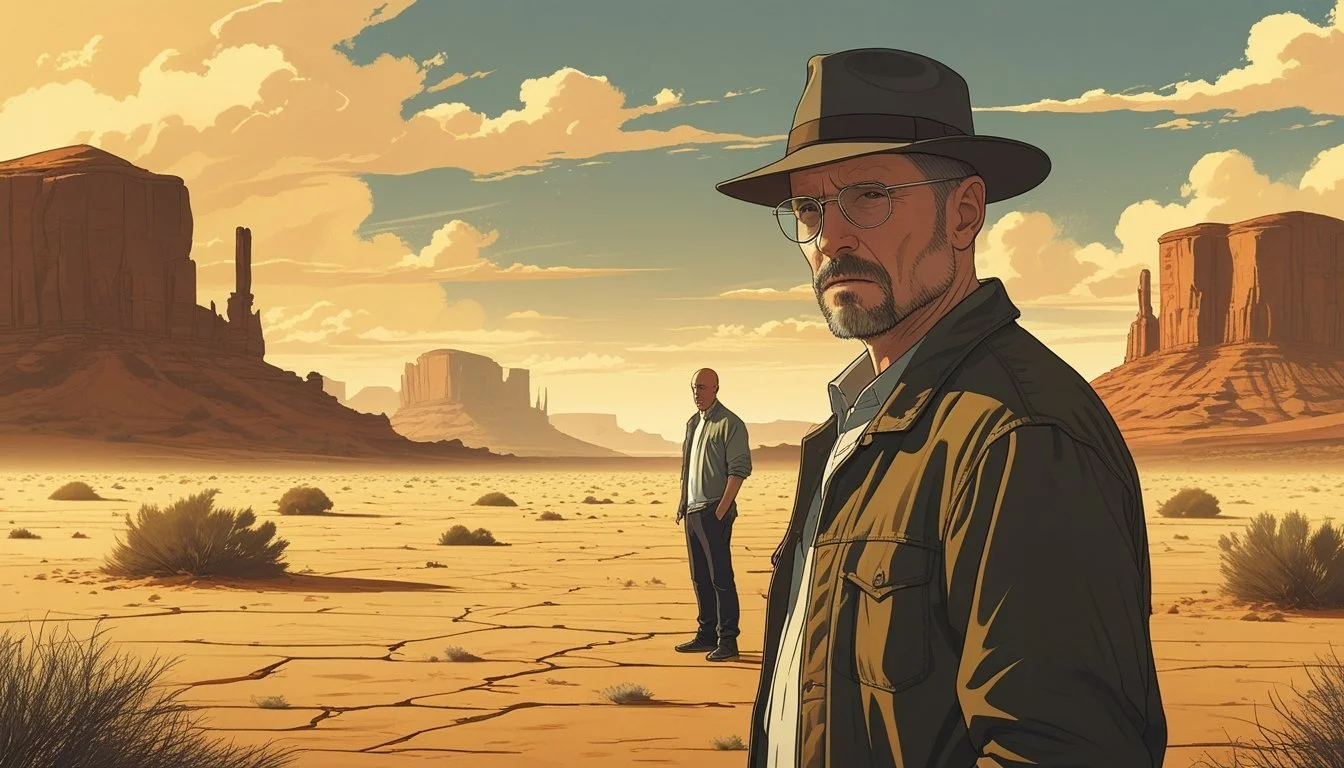
The desert surrounding Albuquerque serves as more than a backdrop in Breaking Bad. It significantly shapes the decisions, relationships, and psychological states of its central figures.
Gustavo Fring and Los Pollos Hermanos
Gustavo Fring’s criminal empire thrives partly because of the desert’s seclusion and vastness. He often uses remote desert locations to conduct business with minimal risk of law enforcement intervention. The openness gives him clear sightlines and control, which aligns with his calculated, methodical nature.
Los Pollos Hermanos, his restaurant chain, relies on the appearance of normalcy amid the barren landscape. This contrast highlights how Gustavo hides his true role as a drug lord under a facade of respectability. Business meetings in the desert are conducted with an air of formality and caution, reinforcing his emphasis on order and discipline.
Key events like the execution of rivals in isolated desert stretches underscore the consequences of crossing Gustavo. The arid emptiness often mirrors his detached demeanor, turning every encounter there into a lesson about power and vulnerability.
Key Details:
Fring utilizes desert isolation for strategic advantage.
The landscape exaggerates the duality of his public and private identities.
Desert meetings signal critical turning points in his criminal operations.
Family Dynamics Amidst Desert Isolation
The desert is a recurring stage for pivotal family moments. Characters like Walter White and Jesse Pinkman experience some of their most strained and revealing interactions surrounded by sand and sky. The setting amplifies emotional distance and vulnerability, stripping away the distractions of urban life.
For Walt, isolation in the desert exposes the growing fractures in his relationship with his family. When crises reach a peak, the desert’s emptiness becomes symbolic of both his freedom and his alienation from those he once tried to protect.
Jesse’s time in the desert—such as during the episodic standoff in “Ozymandias”—reveals how survival instincts and desperation redefine his idea of family. Bonds are tested in silence and heat, far from civilization, with little left but honesty and necessity.
Notable Elements:
Family confrontations in the desert intensify feelings of exposure.
The barren environment reflects the erosion of trust and closeness.
Critical choices about loyalty and self-preservation often play out in desert isolation.
Iconic Imagery and Symbolic Elements
Breaking Bad uses desert landscapes not just as backdrops, but as active storytellers through specific imagery and recurring symbols. Scenes often isolate the characters both visually and emotionally, framing their choices against the unforgiving environment.
The Tarantula Scene
The tarantula scene is one of Breaking Bad’s most recognized moments for its symbolic weight. A tarantula moves slowly across the sand as young Drew Sharp watches, moments before his shocking death. The use of a real tarantula in the vast, silent desert amplifies the tension and uncertainty.
This imagery highlights innocence amidst violence—Drew mirroring the small, vulnerable creature in an environment controlled by larger, unseen forces. The tarantula’s presence underscores the randomness and inevitability of harm in the desert, where neither nature nor fate shows mercy.
Viewers remember the sequence for its quiet, creeping dread. The tarantula’s symbolism lingers, illustrating how the desert’s harshness shapes—and sometimes dooms—those who stray into its domain.
Other Memorable Desert Motifs
Desert scenes recur throughout the series in pivotal moments such as Walter White’s meetings with Gus Fring, Saul Goodman’s abduction, and Mike Ehrmantraut’s solitary walks. Each sequence uses the landscape’s emptiness to convey exposure and vulnerability.
Wide shots display the main characters as small figures dwarfed by the endless sand and sky. This visual choice emphasizes isolation. The desert can be featureless and inescapable, trapping characters in moral limbo.
Desolate highways, abandoned vehicles, and the stark color contrasts of the New Mexico earth create an atmosphere where choices are magnified. The environment acts as a silent judge, witnessing the consequences of every action. These recurring motifs reinforce the sense that in Breaking Bad, the desert is both a setting and an uncompromising presence.
The Desert’s Role in Redemption and Fate
The desert in Breaking Bad is more than a backdrop—it actively shapes the fate and decisions of the characters, particularly as they face critical turning points. It acts as a space where consequences play out and where survival instincts are tested to their limits.
Consequences and Final Acts
The desert repeatedly sets the stage for defining moments, especially regarding choices that lead to redemption or damnation. Walter White’s pivotal decisions often unfold in these vast, empty spaces, such as when he confronts his enemies or hides his fortunes.
In the series finale, the desert functions as both a grave and a sanctuary. Walt buries his money here, signaling secrecy and regret, but also his final connection to Heisenberg—the persona he adopted out of desperation and pride. When forced to face the outcome of his actions, the barren landscape forces a confrontation with the truth, offering no distractions or places to hide.
Several critical shootouts and betrayals occur in the desert, underscoring the inevitability of consequences. The expanse offers anonymity but also ensures that actions have clear, unescapable results.
Themes of Survival and Endurance
Survival in the desert directly mirrors the characters’ struggle to endure morally and physically. On multiple occasions, characters are tested by the harsh, isolating conditions. For example, Jesse and Walt become stranded after a cook, relying only on creativity and basic survival skills to escape.
The desert amplifies their vulnerabilities, stripping away society’s comforts. The relentless sun, lack of water, and silence force characters to confront what they are willing to do to survive—not just for themselves, but for others.
This environment highlights the persistent tension between desperation and hope. Acts of endurance in the desert often mirror potential for redemption, with survival itself becoming both a literal and symbolic test of character.
