
Walt vs. Gus: The Best Villain Showdown in TV History Explored and Analyzed

Walter White and Gustavo Fring stand out as two of the most compelling villains in television history, each offering a unique approach to power, manipulation, and control in Breaking Bad. Walt's journey from high school chemistry teacher to criminal mastermind is a slow transformation driven by desperation and pride, while Gus enters the story as a calm, calculated drug kingpin who hides behind a polished business façade.
Their rivalry is defined by sharp contrasts in personality and methods, pushing both characters to their limits and raising the stakes with every confrontation. Fans and critics often debate which of these two brings more depth, tension, and unpredictability to the series, fueling ongoing discussion about who is the true best villain.
Walt and Gus’s clash not only drives the plot of Breaking Bad but also sets a standard for television villains, making their showdown a benchmark by which future TV antagonists are measured.
Overview of Breaking Bad's Iconic Villains
Breaking Bad features a cast of complex characters whose choices drive the story’s tension. Central to this are two of television’s most memorable antagonists, Walter White and Gus Fring, each representing a distinct approach to villainy within AMC's celebrated series.
Who Is Walter White?
Walter White begins Breaking Bad as a mild-mannered high school chemistry teacher in Albuquerque, New Mexico. Faced with a terminal cancer diagnosis and desperate to secure his family’s financial future, he turns to manufacturing methamphetamine. Over time, Walt develops the persona of “Heisenberg,” embracing the criminal world and demonstrating increasing ruthlessness.
As the series progresses, Walt’s motivations shift from necessity to pride and power. His scientific brilliance allows him to outwit rivals and remain a step ahead of law enforcement. Walt’s transformation blurs the line between protagonist and antagonist, making his character arc central to the show’s moral complexity.
Walter White’s journey is marked by key decisions and violent confrontations. His ambition puts him at odds with former allies and powerful adversaries like Gus Fring. This dynamic conflict drives much of the show’s tension and contributes to its reputation as an “ultimate showdown” in modern television drama.
Who Is Gus Fring?
Gus Fring is introduced as the enigmatic owner of the fast-food chain Los Pollos Hermanos. Beneath this public façade, he operates a highly sophisticated drug empire, utilizing legitimate businesses as cover. Gus is methodical and meticulous, often using routine and patience as his greatest weapons.
Gus’s power in the Breaking Bad universe stems from his ability to remain calm under pressure. He rarely acts impulsively, opting instead for calculated moves that reveal his experience. This makes him a formidable opponent for both Walt and other cartel members.
Known for being both cold and pragmatic, Gus stands apart from the typical TV villain archetype. His interactions with characters like Walter White and Jesse Pinkman reveal a unique kind of villainy, focused on efficiency and control rather than chaos or brutality alone.
Defining a TV Villain
Breaking Bad’s approach to villainy complicates traditional definitions. Walter White and Gus Fring are both antagonists, but they embody significantly different traits — Walt’s transformation into Heisenberg is driven by internal desires, while Gus’s criminal empire is maintained through careful, external manipulation.
In the context of the show, a villain is not simply someone who opposes the protagonist: it is someone whose ambition, methods, and morality challenge the viewer’s understanding of right and wrong. Both Walt and Gus are highly skilled, intelligent, and driven, yet their choices and justifications set them apart from classic “evil” archetypes.
Breaking Bad—streamed globally on platforms like Netflix—uses these characters to blur genre lines and deepen the concept of the anti-hero and the TV villain, making their ultimate showdown both compelling and thought-provoking for audiences.
Character Arcs: Walt and Gus Compared
Walter White and Gus Fring serve as two of television’s most complex antagonists, with each character shaped by markedly different circumstances and motivations. Their stories are defined by ambition, calculated decisions, and personal transformation against the backdrop of Albuquerque’s criminal world.
Walt’s Descent into Villainy
Walter White starts as an overqualified, underappreciated high school chemistry teacher in Albuquerque, with his cancer diagnosis pushing him toward crime. Driven by the desire to provide for his family, he partners with Jesse Pinkman to cook meth.
Walt’s transformation is gradual but relentless. Each success feeds his ego and arrogance, moving him from a desperate man to a power-seeking figure willing to sacrifice anyone. His guilt diminishes as he crosses ethical lines, eliminating threats like Gale and poisoning a child to further his aims.
By the fifth season, Walt’s need for control overrides his original justification. Money and ego replace his family as his core motivation. His choices drive a wedge between him and those he once cared for, ultimately isolating him completely.
Gus Fring’s Calculated Rise
Gus Fring’s ascent is defined by discipline and a sophisticated mask of respectability. Operating Los Pollos Hermanos as a legitimate front, he methodically builds a drug empire, maintaining strict separation between his business and criminal lives.
Gus’s actions are rarely emotional. He sees the drug trade as pure business, using meticulous planning and patience to outmaneuver rivals, including the cartel. While he shows personal animosity towards Hector Salamanca and the cartel during his revenge, Gus avoids unnecessary violence or attention.
His calculated approach makes him a formidable opponent. Even as his empire grows, he keeps a low profile, balancing ruthlessness with restraint until his confrontation with Walt exposes him.
Parallel Journeys and Diverging Paths
Both characters rise to power while hiding their criminal lives behind everyday professions. Walt teaches chemistry; Gus runs a chicken restaurant. However, their approaches differ sharply.
Walt’s path is messy, impulsive, and increasingly governed by emotion. His decisions, fueled by ego and arrogance, often create new enemies and problems. Gus remains calculated, favoring order and minimizing risk wherever possible.
Their arcs reflect contrasting worldviews: Walt loses himself to his darker instincts, while Gus maintains control until the end. The rivalry between them is as much about personality as it is about power, culminating in one of the most memorable villain showdowns in TV history.
Performance and Portrayal
Actors Bryan Cranston and Giancarlo Esposito delivered complex, widely discussed performances as Walter White and Gus Fring. Their portrayals shaped the show’s reputation and set the standard for villainy in modern drama, with both earning strong reactions from critics and audiences on AMC's critically acclaimed series.
Bryan Cranston's Transformation
Bryan Cranston’s depiction of Walter White is often noted for its depth and evolution. Starting as a mild-mannered chemistry teacher, Cranston uses subtle changes in posture, speech, and expression to show Walt's gradual transformation into a ruthless figure.
Cranston received multiple Emmy Awards for Lead Actor in a Drama Series, underscoring his skill and impact. He built Walt’s intimidating presence through restrained performances, choosing quiet intensity over cartoonish aggression.
His chemistry with Anna Gunn (Skyler White) and Aaron Paul (Jesse Pinkman) added layers to Walt's character. These relationships emphasized both Walt’s humanity and moral decay, helping ensure the character resonated with viewers.
Giancarlo Esposito as Gus Fring
Giancarlo Esposito’s portrayal of Gus Fring stands out for its deliberate restraint and complexity. Gus appeared calm, polite, and professional on the surface, but Esposito subtly conveyed the character’s capacity for violence through controlled gestures and measured speech.
His methodical presence as Los Pollos Hermanos' owner hid a ruthless, calculating criminal mind. Esposito’s ability to evoke menace without raising his voice set Gus apart from typical TV villains.
Critical reactions praised Esposito’s performance for its nuance and tension. He received an Emmy Award nomination for Supporting Actor, reflecting the industry’s recognition of his work. Gus’s unique blend of charm and intimidation has made him a frequent subject of study in villain performance.
Critical and Audience Reception
Both Cranston and Esposito earned sustained acclaim from critics, fans, and industry professionals. Their performances contributed to Breaking Bad being recognized as a critically acclaimed series and one of AMC’s flagship shows.
The series saw strong DVD and streaming sales, with many citing the main villains’ portrayals as a key selling point. Awards bodies consistently acknowledged both actors, further enhancing the show’s prestige.
Online forums and critic reviews frequently highlight Walt and Gus as two of television’s most compelling villains. Their clashes sparked ongoing debates over who was the superior antagonist, keeping the show relevant in pop culture conversations.
Key Rivalries and Relationships
The rivalry between Walt and Gus is shaped by their personal loyalties, the forming and breaking of alliances, and the struggle for Jesse’s allegiance. Their interactions with family and associates influence every major decision.
Family Ties and Loyalties
Walter White’s transformation into Heisenberg upends his family. Skyler, his wife, is first suspicious, then complicit, and finally fearful of Walt’s criminal evolution. Their son, Walt Jr., remains unaware of the full truth, and Walt’s lies strain every relationship within the home.
Hank, Walt’s brother-in-law and a DEA agent, becomes both an external and internal threat. Walt’s attempts to shield or manipulate Hank underscore his desperation to protect his secrets. Even extended family, like Marie, are drawn into the turmoil as Walt’s actions ripple outward.
By contrast, Gus Fring has no direct family ties shown in the story. His allegiance is to his drug empire and business façade. He drives loyalty through fear and strict professionalism, especially among associates like Mike Ehrmantraut.
Alliances and Betrayal
Walt and Gus’s partnership begins with mutual benefit but is undermined by paranoia and ambition. Walt cooperates out of necessity but plots constantly to escape Gus’s control. Their alliance deteriorates as each man tries to outmaneuver the other, particularly after Walt senses his life is at risk.
Former allies often become enemies. Mike, once a trusted operative for Gus, grows wary of Walt’s recklessness. Saul Goodman, serving both sides, adds complexity with his shifting allegiances, always looking out for self-preservation.
Lydia Rodarte-Quayle acts as a critical contact in the drug distribution network. Her anxieties and shifting loyalties make her both a liability and asset. Betrayal is never far; every alliance is transactional and fragile.
Jesse Pinkman's Struggle
Jesse Pinkman stands at the heart of the Walt-Gus rivalry. Repeatedly caught between the two, Jesse seeks belonging and approval. Walt manipulates Jesse emotionally, sometimes posing as a father figure, other times putting him in harm’s way to achieve his own ends.
Gus recognizes Jesse’s value and tries to turn him into a loyal lieutenant. He offers Jesse respect and a place in his operation, giving Jesse the stability and appreciation Walt often withholds.
Jesse’s friendships with Badger and Skinny Pete offer moments of genuine loyalty, in contrast to the manipulation by Walt and Gus. His struggle with guilt, especially over critical events involving children, shapes his choices and divides his loyalties. Jesse’s internal conflict is pivotal, affecting the outcome for everyone connected to the empire.
Legendary Showdown: Walt vs. Gus
Walter White and Gustavo Fring’s conflict stands out for its relentless escalation, strategic depth, and lasting impact on both Breaking Bad and television drama. Their rivalry develops through psychological warfare and culminates in a dramatic climax, featuring intricate storytelling and high suspense rooted in both characters’ actions and motivations.
Build-Up and Tension
The tension between Walt and Gus grows gradually from a business arrangement to an all-consuming power struggle. Gus presents himself as a methodical, composed cartel figure, operating with strict professionalism. Walt, initially underestimated, becomes more unpredictable as his ambition and desperation climb.
Key moments such as Walt killing Gale signal a turning point, forcing Gus to see Walt as a real threat rather than just a useful chemist. Their cat-and-mouse dynamic intensifies, with each side leveraging information and manipulating allies.
Throughout seasons four and five, every move and countermove adds to the suspense. Viewers witness failed negotiations, silent stares, and near-violent outbursts, all building up to a tipping point—making the unfolding story almost unbearable in its tension.
Face Off: Climax and Aftermath
The face off between Walt and Gus is realized most memorably in the season four finale. Walt, cornered by Gus's increasing suspicion and the threat to his family, executes a plan to eliminate his rival.
Gus’s visit to Hector Salamanca triggers the iconic showdown. Walt’s use of Hector and the rigged bomb is both risky and calculated—a convergence of plotting and personal vendetta. The explosion that ends Gus’s run is a turning point for the story, violently settling the feud.
After Gus’s death, the vacuum in the cartel world is palpable. Walt steps into new levels of criminal responsibility during the fifth season, showing both the triumph and heavy cost of his victory. The fallout from their showdown reshapes alliances and raises the stakes for everyone involved.
Chemistry of Suspense
Suspense in the Walt vs. Gus arc is rooted in carefully layered storytelling. The show tightly weaves together character motives, shifting loyalties, and small details that hint at danger. Every interaction is loaded with meaning, especially as trust erodes and paranoia grows.
The creators use silence, music, and even physical space—like the meth lab or hospital rooms—to heighten anxiety. Suspense peaks when viewers are unsure if any character is truly safe, making each encounter unpredictable.
Key Elements of Suspense:
Element Description Character Stakes Personal safety, family, pride Unpredictability Sudden betrayals, hidden traps Setting Neutral and hostile spaces (lab, laundry, etc) Timing Carefully paced revelation of plans
This mix of psychological and physical stakes keeps the audience engaged, turning every episode into an intense, memorable experience.
Legacy and Impact on Television
Breaking Bad’s depiction of the Walt versus Gus rivalry set a new standard for TV drama by exploring moral ambiguity and redefining what television villains could be. Both characters influenced the shape of modern antihero stories and inspired comparisons to other iconic figures across the medium.
Influence on Antihero Narratives
Walter White and Gus Fring are central to the rise of the TV antihero. The detailed portrayal of Walt’s transformation from a high school chemistry teacher to the ruthless Heisenberg blurred the line between protagonist and antagonist.
The Breaking Bad timeline—marked by Walt’s descent and Gus’s calculating opposition—showed how two morally gray figures could carry a story without a clear hero. This complexity can be traced in later shows, including Better Call Saul, and resonates with characters like Tony Soprano, Vic Mackey, and Don Draper, all of whom are defined by their internal conflicts and shifting loyalties.
AMC’s willingness to embrace such layered writing had a ripple effect, making nuanced antiheroes a television norm rather than an exception. Audience expectations shifted, and storytelling took more risks with flawed, unpredictable main characters.
Comparison to Other TV Villains
Gus Fring stands out as one of the most iconic TV villains due to his calm professionalism paired with ruthless efficiency. The cold, strategic approach seen in Giancarlo Esposito’s portrayal influenced later antagonists in the genre, elevating the portrayal of criminal masterminds.
Walt, evolving into his “Heisenberg” persona, was both protagonist and antagonist, which made his ultimate showdown with Gus deeply compelling. When compared to antagonists like Lalo Salamanca (played by Raymond Cruz in Breaking Bad) or villains in The Sopranos, Gus and Walt brought a level of psychological depth and unpredictability not always seen before.
Many critics and fans now rank Gus alongside other legendary TV villains, with lists often featuring him next to characters such as Tony Soprano. Unlike some predecessors, the Walt-Gus conflict was grounded in character-driven tension instead of pure shock value.
Lasting Impact on Pop Culture
The Walt vs. Gus rivalry became a cultural touchstone and continues to inspire memes, discussions, and analytical work. Their storyline helped cement Breaking Bad as one of AMC’s signature hits and raised expectations for what serialized TV could achieve.
References to the “ultimate showdown” between the two frequently surface in pop culture, especially in rankings or retrospectives on television history. Iconic scenes, such as Gus’s methodical dismantling of his enemies or Walt’s strategic genius, remain firmly embedded in public memory.
This impact extended to spin-offs like Better Call Saul and influences the tone and structure of crime dramas and character studies that followed. The rivalry’s legacy endures because it combined strong writing, memorable performances, and bold narrative risks.
Behind the Scenes: Storytelling and Direction

Vince Gilligan’s creative direction shaped the intense rivalry between Walt and Gus. The show’s careful mix of visuals, characterization, and tonal shifts contributed to some of the most memorable confrontations in modern television.
Vince Gilligan's Vision
Vince Gilligan approached "Breaking Bad" with a clear goal: to transform a mild-mannered character into a feared antihero. He orchestrated Walt and Gus as mirror images—each strategic, each hiding ruthlessness behind controlled personas. Gilligan used moral ambiguity as a tool, making both men compelling and unpredictable.
He frequently held story meetings focused on pacing and escalation, ensuring that every Walt-Gus exchange propelled the narrative. Writers’ room discussions centered on layering tension without melodrama. The creators wanted each interaction to reveal new details about power, fear, and the limits people cross.
Gilligan emphasized collaboration. Directors, writers, and actors—such as Bryan Cranston and Giancarlo Esposito—were brought in for insights, enhancing the realism and subtlety that define these characters.
Cinematography and Visual Storytelling
"Breaking Bad" is visually distinct, noted for its composition, color palettes, and symbolic framing. The camera work often highlights the psychological warfare between Walt and Gus. For example, wide shots isolate characters, showing vulnerability or dominance within a scene.
Lighting plays a critical role. Gus is usually filmed in cool, sterile environments, expressing control and calculation. Walt’s surroundings shift as he changes, using color and shadow to mark his transformation.
Directors use clever visual motifs, such as the recurring presence of glass, windows, and lines to symbolize barriers—emotional and physical—between characters. Carefully planned blocking underscores shifting power dynamics: a slight step forward or backward in frame often signals who holds the upper hand.
Role of Humor and Tone
Despite its dark subject matter, "Breaking Bad" uses humor to disarm and to deepen tension. Vince Gilligan and his team deliberately introduced comic relief, often through side characters like Saul Goodman, and situational irony.
Humor is sometimes woven into the dialogue during intensely serious scenes, creating an unsettling effect and making the drama even more potent. The mixture of menace and wit can be seen in scenes where Walt and Gus interact with law enforcement or inept underlings.
Shifting tone prevents emotional fatigue while keeping the suspense high. By balancing dread with occasional lightness, the creators keep viewers off guard, enhancing the shock value of each showdown. This tonal control is a hallmark of the show's overall storytelling approach.
The Enduring Appeal of Walt and Gus
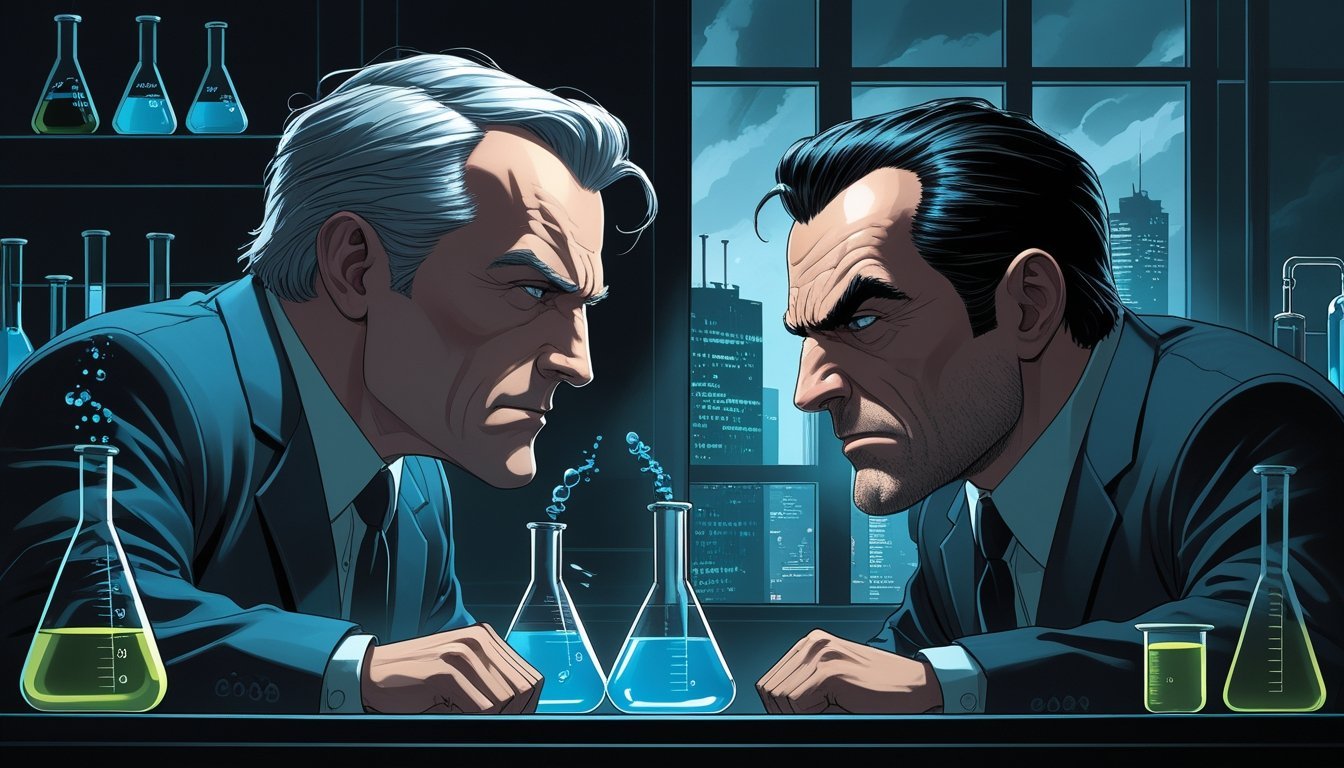
Both Walter White and Gus Fring have captivated viewers due to their layered personalities, methods, and unpredictable rivalry. Their storylines have sparked detailed analysis, inspiring ongoing discussions that keep Breaking Bad highly relevant on platforms such as Netflix.
Why Their Rivalry Resonates
The Walt and Gus rivalry stands out because both men are intelligent and calculated. Walt, a chemistry teacher turned meth kingpin, relies on scientific ingenuity and adaptability. Gus, in contrast, adopts a calm, businesslike approach while hiding ruthless ambition.
Their conflict affects not only each other but also influences secondary characters like Jesse and Saul Goodman. This intertwining of fates creates tension and drives the plot. Every move each character makes is carefully considered, creating a chess game that rewards close attention from viewers.
Fans appreciate how neither villain fits the mold of traditional evil. Walter starts as a sympathetic figure and evolves, while Gus maintains a composed exterior that contrasts with his brutal tactics. This complexity adds realism and encourages debates about morality and motivation.
Fan Theories and Ongoing Debates
Online forums and social media remain filled with comparisons between Walt and Gus. Some argue Walter is more dangerous because he acts impulsively, risking innocent lives. Others point to Gus as the true villain due to his cold, systematic control and willingness to eliminate entire organizations.
Debates often analyze pivotal moments, such as Walt’s betrayal of Jesse or Gus’s calculated takedown of the cartel. Lists and tables are commonly shared online to compare body count, manipulation, and key decisions:
Character Major Betrayal Body Count Manipulation Level Walter White Jesse, Mike Significant High Gus Fring Cartel, Victor High Very High
The arguments spill over into discussions of what makes a true villain. Is it intention, method, or impact? The continued popularity of Breaking Bad on Netflix ensures that new audiences bring fresh perspectives, keeping the debate lively and current.
