
Walter White’s Ego Was the Real Villain in Breaking Bad and How It Shaped His Downfall

Walter White’s journey in Breaking Bad is often remembered for its calculated violence and criminal ingenuity, but beneath the surface lies the real force shaping his actions—his own ego. Walter White’s ego is the true villain of Breaking Bad, propelling a high school chemistry teacher into the world of drug kingpins and transforming simple desperation into catastrophic ambition. While other antagonists appear throughout the series, none match the damage caused by Walter’s desire for power and recognition.
As Walt adopts the alias “Heisenberg” and descends deeper into the criminal underworld, his choices become increasingly guided by pride and a hunger for control. Rather than being driven by necessity alone, he is repeatedly compelled by an unwillingness to compromise and a need to prove his worth—largely to himself. Breaking Bad’s exploration of ego turns Walter White from a relatable protagonist into a complex villain whose greatest enemy was always within.
Walter White’s Transformation Into a Villain
Walter White’s shift from high school teacher to criminal mastermind was driven by personal motives, moral compromise, and a growing need for control. His journey reveals how seemingly small decisions fueled his evolution into one of television’s most complex antagonists.
From Chemistry Teacher to Drug Kingpin
Walter White started as a mild-mannered chemistry teacher in Albuquerque, New Mexico. Faced with a terminal cancer diagnosis and financial hardship, he turned to manufacturing methamphetamine to provide for his family. Bryan Cranston’s performance highlighted Walter’s initial desperation and vulnerability.
At first, his actions seemed justified by a desire to help his wife and children. However, his competence in chemistry allowed him to quickly excel in the illicit drug trade. Once he saw early success, reluctance faded and ambition grew.
As creator Vince Gilligan intended, Walt’s reasons shifted from necessity to pride and self-worth. Step by step, he made increasingly dangerous and unethical choices. This transformation revealed how his scientific talent, paired with circumstance, could lead someone down a criminal path.
Adoption of the Heisenberg Persona
Walter White’s evolution accelerated with the creation of his alter ego, Heisenberg. Embracing this persona, he shed much of his former restraint and empathy. Adopting the intimidating Heisenberg name marked a turning point as Walt’s ego began to dominate his actions.
As Heisenberg, he demanded respect and recognition from allies and rivals alike. His choices became more ruthless, prioritizing power and control over family or morality. He began to manipulate and threaten anyone who stood in his way, including former friends and business partners.
Heisenberg’s hat and attitude became symbols of his new identity. This persona was not just a mask—Walt internalized it, using it as a justification for his escalating cruelty. The line between Walter White the teacher and Heisenberg the kingpin blurred, making his transformation complete.
The Role of Ego in Walter White’s Actions
Walter White's transformation in Breaking Bad is inseparable from his ego. His choices consistently reflect deep-seated pride and a drive for dominance that shaped his journey from teacher to antagonist.
Pride and the Gray Matter Technologies Backstory
Walter White’s pride is sharply illustrated by his history with Gray Matter Technologies. He co-founded the company with college friends, but left early, selling his shares for a small sum. Afterward, Gray Matter evolved into a billion-dollar enterprise.
Walter’s decision to walk away from Gray Matter became the wound that fueled his later actions. Despite outward claims about working for his family's wellbeing, he quietly resented the success attained by his former partners, Gretchen and Elliott.
His pride made it impossible for him to accept charity when Gretchen and Elliott offered to pay for his cancer treatment. Instead, he masked his refusal as autonomy, but it was his bruised ego that could not tolerate being seen as a failure or victim.
Pursuit of Power and Control
The evolution from chemistry teacher to drug kingpin showcased Walter’s growing need to assert power and control. His ego soon overshadowed his earlier motives of providing for his family, turning greed and dominance into primary drivers.
Walter relished outmaneuvering rivals like Gus Fring and holding sway over associates, including Jesse Pinkman. His famous declaration, “I am the one who knocks,” is a direct manifestation of his self-image as a force to be feared, not pitied.
Power struggles became central to his actions, as Walter’s ego could not accept subordination. He continually placed himself in danger to assert mastery, making his own hubris the series’ true villain and antagonist.
The Drug Empire: Building and Breaking Bad
Walter White’s transformation from a chemistry teacher to a drug lord centers on his rise and fall in the methamphetamine business. The way he built and controlled his drug empire reveals how ego fueled both his ambition and his destructive choices.
Crystal Meth and Blue Meth Operations
Walter White used his expertise in chemistry to synthesize high-purity crystal meth, which became known as “blue meth” for its distinctive color. The purity and uniqueness of this product quickly made it highly sought after in the drug market, setting it apart from other methamphetamine on the street.
Production started small, using an RV lab with Jesse Pinkman. As demand increased, production moved into sophisticated facilities. Walter’s attention to detail and insistence on high standards ensured the blue meth’s reputation stayed unrivaled.
Control over the manufacturing process and product quality gave him a distinct edge in the drug business. His ego became closely tied to the fame and demand for blue meth, overshadowing the criminal consequences of his expanding operation.
Partnerships and Betrayals
Walter formed strategic partnerships to grow his drug empire. At first, he worked with Jesse Pinkman as a junior partner and later allied with established drug dealers like Tuco Salamanca and Gus Fring. Each partnership brought access to distribution networks and protected his business.
However, trust was always fragile. Walter’s pride and need for dominance led to repeated betrayals. He orchestrated the demise of rivals and even manipulated allies whenever he felt threatened or undermined.
His actions undermined every alliance and spread distrust. Walter’s betrayal of both friends and enemies alike demonstrated how his ego threatened the very stability of his meth operation, turning opportunities into risks throughout the series.
Manipulation and Moral Descent
Walter White’s manipulation of those closest to him and his gradual moral erosion are central to the narrative. His actions reveal a complex interplay between ego, relationships, and sociopathic patterns of behavior.
Deceiving Family and Friends
Walter’s double life is built on a foundation of lies to his family and friends. He withholds the truth about his criminal activities from Skyler and fabricates stories about his whereabouts, finances, and motivations.
His manipulations are not just verbal. Walt uses emotional tactics to control how others perceive his actions, even framing himself as a victim when convenient. This allows him to maintain his image as a responsible husband and father while secretly pursuing his own ambitions.
He justifies each lie as a necessary step to protect his family, but each deceit deepens the distance in his relationships. Over time, Walt’s choices leave his family isolated, confused, and endangered, showing that his need for control outweighs genuine care.
Key Tactics:
Lying about money’s origin
Gaslighting to shift blame
Manipulating sympathy to cover moral decline
Blackmail and Sociopathy
Walt’s descent is also marked by increasingly sociopathic behaviors, especially blackmail and emotional exploitation. He uses sensitive knowledge of others’ secrets and vulnerabilities as leverage.
Memorable instances include threatening Jesse, using information to coerce Skyler, and forcing unwilling associates into compliance. Each act of blackmail reflects a growing disregard for moral boundaries, with Walt prioritizing his own interests above ethical considerations.
These actions illustrate sociopathic qualities: lack of empathy, manipulation for personal gain, and a willingness to harm others if it suits his objectives. Walt’s transformation demonstrates how unchecked ego can erode morality until relationships are reduced to tools for power and control.
Example Target Purpose Poisoning Brock Jesse To manipulate Jesse’s loyalty Blackmailing Skyler Skyler To silence and control her Threatening Saul Saul Goodman To eliminate threats
Key Relationships Shaped by Ego

Walter White’s relationships with Jesse Pinkman and Skyler White reveal how his ego influenced his behavior and altered the lives of those around him. His pride and desire for control frequently strained trust, ended alliances, and fueled escalating conflict within his family and criminal partnerships.
Walter White and Jesse Pinkman
Walter White’s ego plays a decisive role in his partnership with Jesse Pinkman. Initially, he sees Jesse as a convenient means to an end, underestimating his intelligence and resilience. As their meth operation evolves, Walter’s need to assert dominance often leads to manipulative and condescending treatment.
Walter’s desire to maintain control causes ongoing tension. When Jesse succeeds independently, Walter’s jealousy and wounded pride strain their alliance. He withholds information, lies about Jane’s death, and repeatedly places Jesse in harm’s way—actions driven less by necessity and more by his need to remain central and superior.
The relationship becomes a cycle of loyalty and betrayal. Walter’s ego-driven interference prevents Jesse from escaping the criminal world, undermining Jesse’s sense of self-worth and agency.
The Dynamics with Skyler White
Walter’s ego drastically alters his marriage to Skyler. Instead of confiding in her or accepting her help, he insists on secrecy and control, assuming his decisions are best for the family. His pride keeps him from letting Skyler share in choices about their future, especially regarding his illness and criminal activities.
Skyler’s attempts to intervene are repeatedly ignored or met with anger. When she discovers the truth, Walter’s ego prevents genuine dialogue. Instead, he demands obedience and rationalizes his actions as being for the family, neglecting her autonomy.
The imbalance and secrecy forced by Walter’s ego damage their trust. Skyler becomes isolated, suspicious, and complicit against her will, highlighting how Walter’s need for power erodes genuine connection in the family.
Rivalries and Antagonists
Walter White’s transformation placed him in direct opposition to allies and adversaries alike. His ego fueled his conflicts with both the criminal world and law enforcement, making each rivalry intensely personal and escalating stakes beyond business or duty.
Conflict with Gus Fring and Los Pollos Hermanos
Gus Fring, operating under the legitimate front of Los Pollos Hermanos, became Walter’s primary adversary as Walter’s ambitions grew. Gus valued precision, discretion, and a businesslike approach to the drug trade, in stark contrast to Walter’s increasingly impulsive and pride-driven choices.
Walter’s inability to accept a subordinate role under Gus led to a series of escalating power plays. For example, he involved Jesse Pinkman in assassination attempts against Gus, igniting a dangerous cycle of mistrust. Gus, in turn, tried to isolate Walt and replace him with more compliant talent.
The breakdown between Walt and Gus was driven less by business necessity and more by an unwillingness on both sides—especially Walt’s—to yield control. This feud reached its peak with lethal consequences, showing how ego and mistrust trumped all else.
Tension with Hank Schrader and Mike Ehrmantraut
Hank Schrader, a skilled DEA agent and Walt’s brother-in-law, represented the law’s growing threat as he closed in on “Heisenberg.” Walt’s pride made him reckless, escalating his efforts to stay ahead of Hank and manipulate evidence to conceal his identity.
Mike Ehrmantraut, Gus’s loyal fixer, respected order and professionalism. He was wary of Walt’s unpredictable decisions, viewing his ego as a liability. Their working relationship eroded over time as Walt’s actions endangered everyone involved.
Mike’s distrust culminated in frequent confrontations. Walt ultimately saw Mike not as a partner but as an obstacle, leading to bitter disputes and a fatal outcome fueled largely by Walt’s refusal to be challenged.
Consequences and Victims

Walter White’s actions, driven more by ego than necessity, left a wide trail of harm. The consequences stretched beyond his immediate circle, shaping the fate of numerous individuals and the broader Albuquerque community.
Those Harmed by Walter’s Decisions
Walter’s choices led to the suffering or destruction of many lives.
Jesse Pinkman suffered repeated trauma, enduring manipulation, violence, and personal loss because of Walter’s ambition.
Jane Margolis and Andrea Cantillo both died as a direct or indirect result of Walter’s actions.
The White family—Skyler, Walter Jr., and Holly—became entangled in fear, criminal activity, and public shame.
Walter’s rivals, such as Gustavo Fring and Mike Ehrmantraut, also became victims of his escalating pride. Innocent bystanders—like the passengers in the mid-air plane collision—were harmed because of choices he made. The casualties were not only violent deaths, but also shattered relationships, trauma, and fear that haunted many survivors.
Enduring Legacy in Albuquerque
The aftermath of Walter’s empire lingered over Albuquerque. His meth empire left a mark on the city, fueling addiction, violence, and distrust.
Law enforcement resources were stretched thin as criminal activities increased and cartel violence escalated. Local neighborhoods saw the impact of the blue meth trade that Walter had set in motion.
In El Camino, the legacy continues, as Jesse Pinkman struggles to escape both the law and his psychological scars. Others—whether complicit or innocent—deal with the fallout, illustrating how Walter's ego-driven choices shaped the lives of so many in lasting ways.
The Lasting Impact on Television History
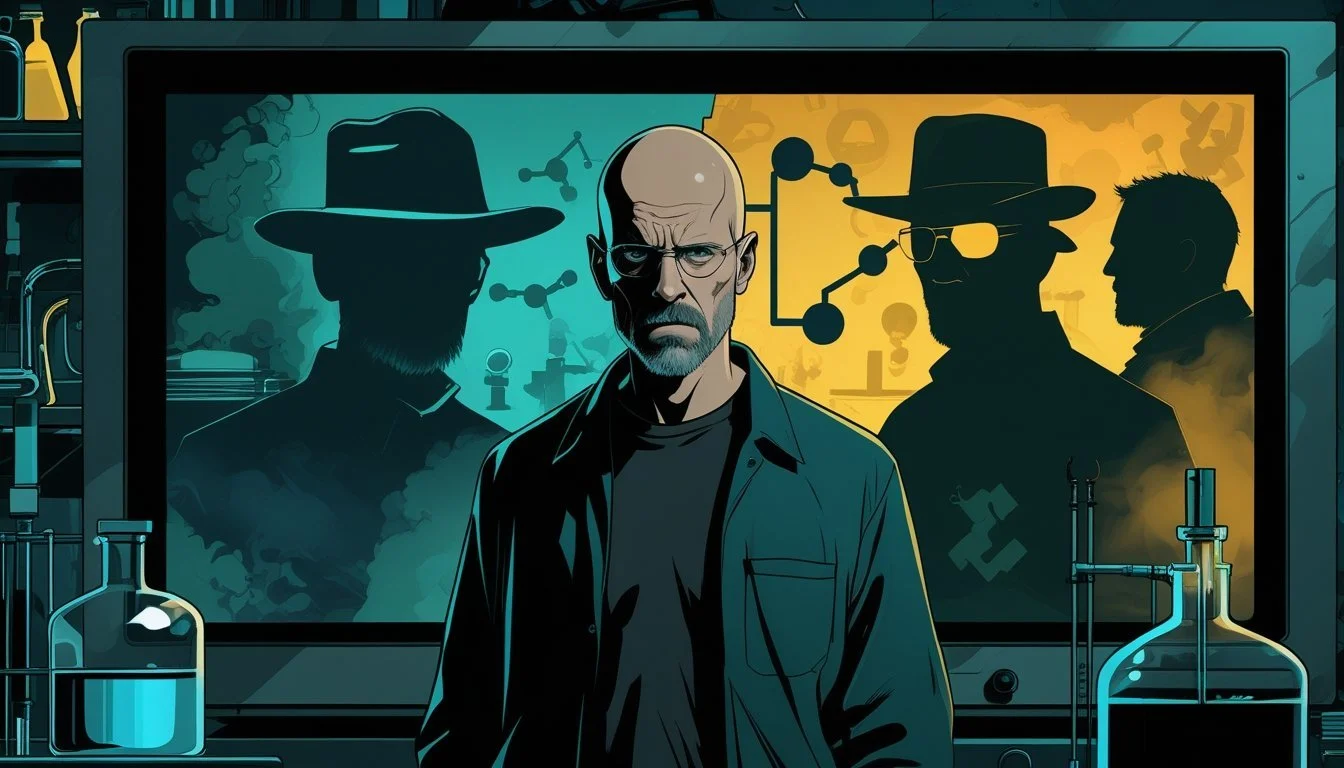
Walter White’s evolution shifted how television engaged with morality, villainy, and the antihero. His story prompted influential spin-offs and left a mark on pop culture and serialized storytelling.
Exploring Morality and Antagonists in Modern TV
Breaking Bad’s portrayal of Walter White set a new benchmark for complex moral storytelling. Instead of simple good-versus-evil, the series invited viewers to examine a protagonist who becomes his own antagonist, often driven by ego and pride rather than necessity.
Television histories now reference Walter White as a turning point. His moral ambiguity encouraged shows to explore antiheroes with nuanced motivations. Viewers witnessed how his selfish choices blurred lines between hero and villain, influencing later series such as Better Call Saul, Ozark, and Mr. Robot.
Writers and producers use Breaking Bad as a case study when developing modern antagonists. The layering of flaws and motivations makes the character’s downfall both inevitable and compelling for the audience. This shift led to richer, more challenging storylines across television.
Cultural Influence and Spin-Offs
Walter White’s character and the show’s intricate storytelling significantly impacted popular culture. Dialogue, imagery, and even the name “Heisenberg” became internationally recognized symbols, referenced in memes, merchandise, and discussions about TV’s golden age.
Better Call Saul, a direct spin-off, expanded the universe and explored new dimensions of morality and consequence. Its success further strengthened Breaking Bad’s legacy, showing that audiences crave deep character-driven narratives.
The influence also extended to other media and genres. Elements from Breaking Bad, including its pacing, cinematography, and character development, have been adopted in various dramatic series. This ripple effect highlights how a single character’s ego-driven journey can transform an entire medium.
