
What Better Call Saul Gets Right About Institutional Corruption
A Deep Dive into Systemic Flaws

Better Call Saul stands out for its nuanced portrayal of institutional corruption, revealing how systems meant to uphold justice and order can be quietly undermined by self-interest, loopholes, and the unchecked ambitions of individuals. The series doesn’t just focus on bad apples—it shows how the structures themselves often reward manipulation and create environments where morality becomes negotiable.
By following Jimmy McGill's transformation into Saul Goodman, viewers can see how personal and organizational pressures interact to erode ethics within the legal system. The show exposes not just one man’s fall but the complicated ways in which institutions protect, perpetuate, or even encourage unethical behavior at multiple levels.
Characters encounter legal and professional organizations that display glaring weaknesses, sometimes turning a blind eye to misconduct or rewarding those who game the system. This layered depiction of corruption gives Better Call Saul a realism often missing from legal dramas, inviting audiences to consider how easily any institution might stray from its intended purpose.
Understanding Institutional Corruption in Better Call Saul
Better Call Saul, the acclaimed AMC and Netflix spin-off series from Vince Gilligan and Peter Gould, examines how corruption develops and thrives within powerful organizations. With its detailed crime and legal drama set in Albuquerque, the show highlights how systems facilitate unethical behavior, not just isolated individuals.
Defining Institutional Corruption
Institutional corruption refers to widespread ethical decay within organizations, where rules, values, or procedures subtly encourage wrongdoing. In Better Call Saul, the legal and criminal structures often enable or even reward questionable actions.
Unlike traditional portrayals of corruption, which focus on explicit bribery or criminal acts, institutional corruption is more nuanced. It often appears as “doing what everyone else does” rather than deliberate lawbreaking.
Key Indicators in Better Call Saul:
Patterns of unethical legal practices within the law firm Hamlin, Hamlin & McGill.
Routine bending or manipulation of judicial procedures by lawyers and officials.
Tolerance of corner-cutting and quiet rule-breaking within trusted institutions.
Institutional Failure Versus Individual Sin
Breaking Bad and its prequel, Better Call Saul, differentiate between isolated moral failings and systemic flaws. Individuals like Jimmy McGill aren’t depicted as inherently evil; instead, their behaviors reflect larger institutional weaknesses.
Jimmy, later known as Saul Goodman, often justifies his choices by pointing to gaps or contradictions within the legal system. The show depicts supporting characters who are also swayed or pressured by the system’s limitations. This emphasis shifts blame from single “bad actors” to shared practices and incentives.
Table: Examples of Institutional Versus Individual Failures
Example Institutional Failure Individual Sin HHM’s partner sabotage ✓ Chuck forging insurance info ✓ Judicial manipulation ✓ ✓
The Role of Power Structures in Corruption
Power structures, such as law firms, courts, and criminal enterprises, play a central role in enabling corruption on the show. In the world of Better Call Saul, these organizations create environments where loyalty, hierarchy, and reputation matter more than fairness or justice.
The series demonstrates how people at different levels of authority engage in corruption to protect their status. Senior lawyers and cartel leaders use their power to conceal wrongdoing or enforce silence. Rules are routinely bent, and consequences for unethical behavior are minimal unless public scrutiny becomes unavoidable.
By focusing on these everyday power dynamics, the series reveals how corruption persists not due to a few “bad apples” but because institutions themselves can incentivize or shield misconduct. This focus distinguishes Better Call Saul’s storytelling from more simplistic crime dramas.
Depicting Legal and Judicial Corruption
Better Call Saul offers a grounded look at how corruption can manifest within the American legal and judicial systems. The show demonstrates how vulnerabilities in rules, ethical standards, and personal motivation intersect, impacting real people and court outcomes.
Manipulating the Legal System
Throughout the series, attorneys exploit ambiguities in the courtroom and skirt the edges of professional conduct. Jimmy McGill routinely uses technicalities and pushes the limits of confidentiality, often leveraging privileged information for personal advantage.
Several cases, such as the Sandpiper Crossing class action, illustrate manipulation during litigation. Lawyers in the show use complex strategies to delay, overwhelm, or mislead opposing counsel, showing how court procedures can be exploited rather than upheld.
The depiction of public defenders facing overwork and limited resources highlights that system manipulation is not confined to powerful firms. It is shown that both large and small actors may bend processes, sometimes justified by concern for clients.
Ethical Dilemmas and Loopholes
The series frequently puts characters in situations testing the boundaries of the rules of professional conduct. Jimmy and other lawyers wrestle with ethical responsibilities while trying to win cases, reflecting common real-world dilemmas faced in law.
Instances involving elder law clients, especially during the Sandpiper matter, raise questions about competence, informed consent, and the abuse of trust. The show makes clear how legal professionals may rationalize questionable decisions under pressure.
The writers highlight how loopholes—such as ambiguous standards for client confidentiality or aggressive negotiation tactics—can be legitimate tools or pathways to misconduct. This nuanced portrayal encourages viewers to scrutinize where ethical guidelines stop and self-interest begins.
Impact of Corruption on Justice
Corruption in the legal system, as depicted, undermines the legitimacy and fairness of justice. Victims include not only opposing counsel but also vulnerable groups like the elderly, whose class action rights are often downplayed for attorneys’ gain.
Courtroom scenes stress that when judges overlook breaches of conduct, the process itself loses integrity. Situations with biased decision-making or ignored evidence illustrate that the pursuit of efficiency or prestige can erode public trust.
The focus on class action litigation and the handling of confidential information show how widespread and subtle the consequences of corruption can be. The results include delayed justice, coercion of settlements, or unfair trial outcomes that harm individuals and communities.
Key Characters as Vehicles of Corruption

Better Call Saul analyzes how individuals interact with corrupt systems, often becoming products and perpetuators of that corruption. Through specific characters, the show demonstrates corruption’s many forms, from moral compromise to outright criminal enterprise.
Transformation of Jimmy McGill into Saul Goodman
Jimmy McGill, played by Bob Odenkirk, originally presents himself as a struggling but well-intentioned attorney. Gradually, he becomes Saul Goodman—a persona defined by manipulation, legal loopholes, and a disregard for the ethical boundaries of his profession.
Saul's evolution is not just a personal decline but also a reaction to the institutions that consistently undermine and exclude him. The pressures and failures of legal gatekeeping, especially through the actions of his brother Chuck, contribute heavily to Jimmy’s embrace of corruption as survival.
The series highlights how Jimmy’s initial minor schemes escalate. For example, his willingness to bend the rules when representing clients leads to outright cons and alliances with criminal figures. The transition underscores how institutional failings can foster and legitimize corrupt actors.
Chuck McGill’s Role in the Cycle of Corruption
Chuck McGill, portrayed by Michael McKean, is both an antagonist and a driving force behind Jimmy’s transformation. As a respected attorney, Chuck’s rigid views on law and his suspicion of Jimmy’s character set off a pattern of humiliation and sabotage.
He manipulates institutional rules to keep Jimmy out of the legal world, including orchestrating disciplinary actions and leveraging his influence within HHM law firm. Chuck believes he is protecting the law but ends up corrupting its processes for personal reasons.
His actions illustrate how personal vendettas and elitism can breed corruption within respected institutions. Rather than stopping wrongdoing, these gatekeepers sometimes reinforce it, especially when their actions are motivated by pride or fear rather than justice.
Kim Wexler’s Moral Conflicts
Kim Wexler, played by Rhea Seehorn, is perhaps the series’ clearest example of internal conflict over institutional corruption. She is a talented attorney with genuine ideals, trying to balance ambition, loyalty, and her sense of right and wrong.
Kim’s partnership with Jimmy challenges her professional ethics, especially as she becomes an active participant in schemes that damage people like Howard Hamlin (Patrick Fabian). Her willingness to bend or break the rules increasingly blurs her once-strong moral boundaries.
Her choices reflect the difficulty of preserving integrity in corrupt environments. The show demonstrates this through her calculated risks, partnership in cons, and eventual willingness to sacrifice her own career for morally ambiguous causes.
Gus Fring and the Institutionalization of Crime
Gus Fring, portrayed by Giancarlo Esposito, exemplifies the systematic side of corruption. As a business owner and cartel leader, he uses the appearance of legitimacy to run a sophisticated criminal enterprise.
Fring’s operations are highly structured, involving enforcers like Mike Ehrmantraut (Jonathan Banks). He exploits the weaknesses of law enforcement and regulatory agencies, embedding his activities within legitimate business fronts like Los Pollos Hermanos.
His character shows how corruption can move beyond individual actions into organized, sustained systems that are difficult to dismantle. Gus’s duality—philanthropist and ruthless criminal—demonstrates how institutional corruption can achieve a scale and efficiency rivaling legitimate institutions.
Morality, Virtue, and the Cost of Corruption
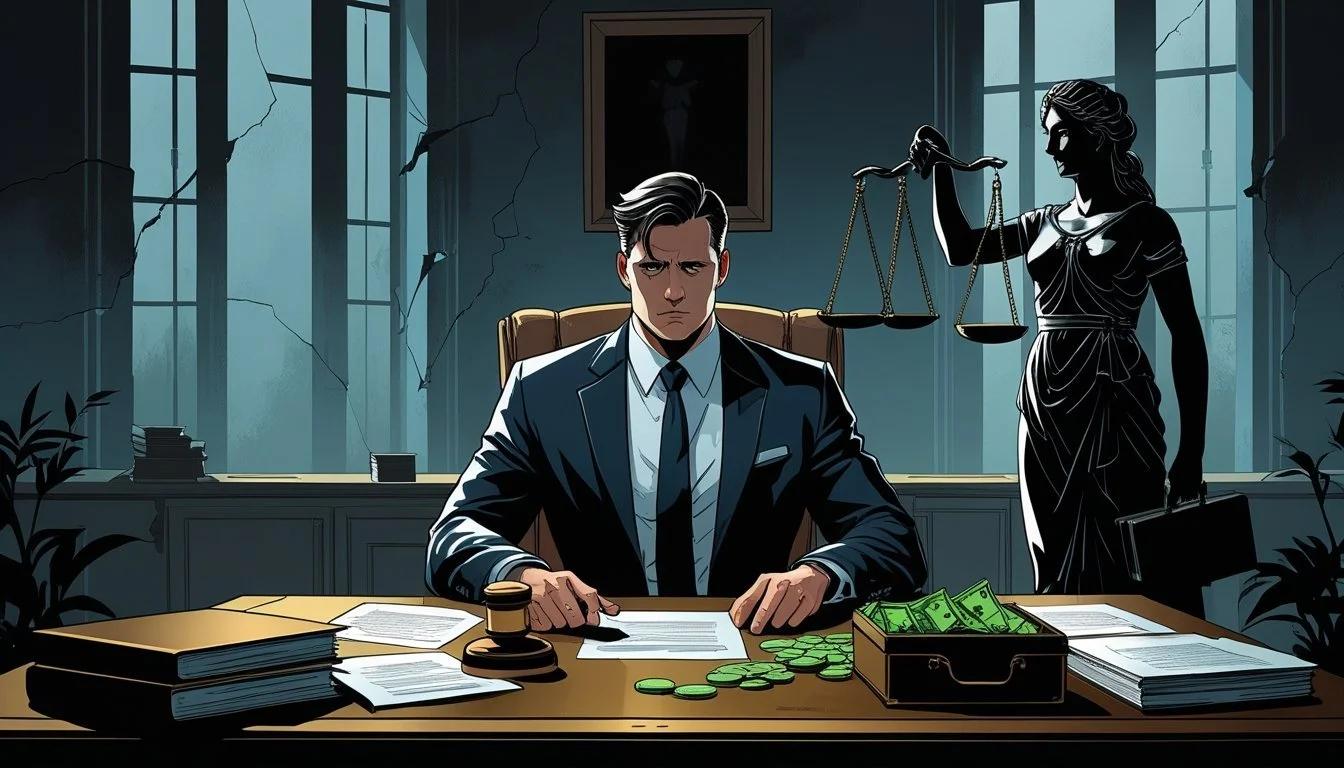
Morality and virtue are repeatedly tested in Better Call Saul, where characters encounter complex choices shaped by flawed institutions. The show explores how the pursuit of redemption and the consequences of crossing ethical lines impact both individuals and the broader systems they inhabit.
Blurring Lines Between Right and Wrong
Better Call Saul shines a light on how the legal and business worlds can obscure clear moral boundaries. Saul Goodman, formerly Jimmy McGill, often faces situations where doing the “right thing” is far from obvious.
Professional pressures and loopholes incentivize bending rules in ways that seem minor but build over time. The show illustrates how a culture of rationalizing small transgressions can erode personal virtue.
Characters face repeated temptations to justify morally questionable acts for perceived greater goods or personal gain. These incremental decisions reveal how easy it is to drift away from principles, especially within institutions accustomed to cutting corners.
Seeking Redemption Amid Systemic Rot
Redemption in Better Call Saul is rarely straightforward. Main characters such as Jimmy/Saul and Kim Wexler grapple with confession and atonement in a system that often rewards cunning over honesty.
Attempts at making amends are complicated by institutional inertia and widespread corruption. Individual confessions or moral awakenings, while significant, do not guarantee restoration or forgiveness. They may even bring new risks.
Efforts to “do the right thing” must compete with systemic rot. When traditions of virtue are hard to come by, personal attempts at redemption often feel fragile and isolated. The show demonstrates that true change requires more than a single act—it demands shifting the institutional environment as well.
Consequences for Individuals and Institutions
The consequences of corruption are felt on both a personal and organizational level. For individuals, continuous moral compromise leads to personal tragedy, strained relationships, and loss of identity.
Institutions shaped by corrupt practices suffer as trust erodes and ethical standards decay. According to economic and philosophical analysis, this dysfunction is not just a “moral issue”—it can have significant material and social costs, affecting everything from justice to public services.
In Better Call Saul, every act of moral failure ripples outward, showing how the cost of corruption is borne collectively—not just by individuals but also by entire communities and the institutions meant to serve them.
Better Call Saul’s Critique of Modern Institutions

By closely examining everyday workings of legal and corporate structures, Better Call Saul exposes how institutional corruption infiltrates the pursuit of justice. The show’s nuanced storytelling highlights not only personal failings but also systemic issues that shape behavior in so-called professional settings.
Satirizing Corporate and Legal Hierarchies
Throughout its run, Better Call Saul portrays law firms such as Hamlin, Hamlin & McGill (HHM) and Mesa Verde Bank as rigid, status-driven organizations. These structures reward conformity and discourage dissent, making genuine justice secondary to maintaining hierarchy and reputation.
For example:
Jimmy McGill’s talent is persistently minimized due to his background and lack of pedigree.
The culture at HHM penalizes mistakes heavily but turns a blind eye to unethical decisions made for profit or convenience.
Interactions between older partners and junior associates reveal how power dynamics foster a climate where ambition overrides ethical standards. Instead of embracing honest legal drama, the show depicts how even well-meaning individuals become complicit in practices that undercut fairness.
Reflections on Real-World Legal Systems
The legal world depicted in Better Call Saul is not a straightforward tool for justice but is deeply intertwined with personal interests and institutional survival. Courtroom procedure, plea bargaining, and bureaucracy are shown as avenues where justice can easily be sacrificed for expediency.
Key observations:
Case outcomes often depend less on right or wrong, and more on who wields institutional influence.
Law enforcement and regulators engage in compromises, sometimes pressured by caseload or public relations concerns.
This crime drama highlights how the legal system, designed to prevent corruption, sometimes perpetuates it through self-preservation and inefficiency. By grounding these elements in specific cases and character arcs, the show connects institutional corruption to broader questions about justice in modern society.
Storytelling and Creative Choices
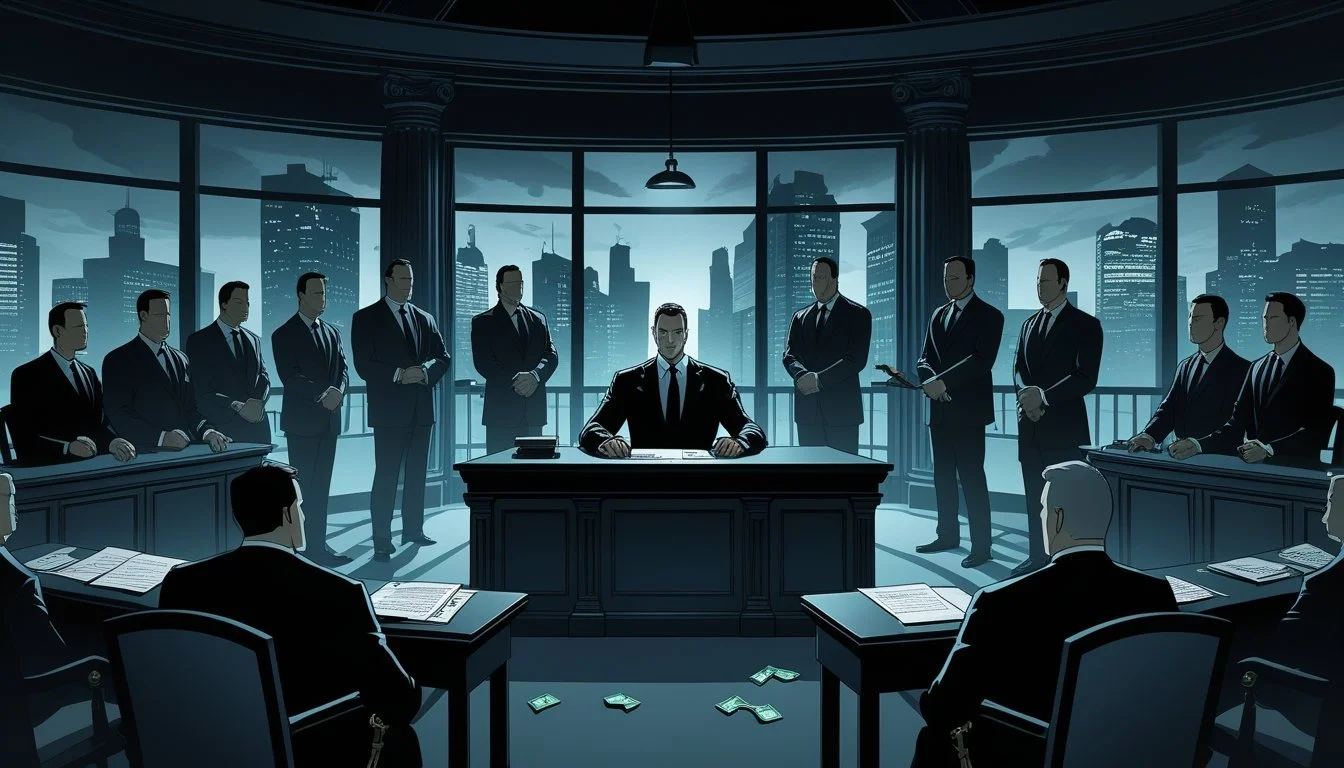
Better Call Saul explores institutional corruption by employing inventive narrative structures, complex character development, and close ties to its predecessor, Breaking Bad. By focusing on personal morality within flawed systems, the series offers an intricate examination of how individuals bend or break under institutional pressures.
Narrative Devices That Highlight Corruption
Vince Gilligan and Peter Gould use non-linear timelines and flashbacks to reveal patterns of ethical compromise over time. The show deploys visual motifs, such as the courthouse stairwell and Saul’s office, to reflect characters’ descent into moral ambiguity.
Dialogues are marked by subtext, revealing hidden motivations while exposing the double standards embedded within legal institutions. Montage sequences often contrast the outward appearance of fairness with the underlying misconduct in law firms and the courts.
The use of silent, observational scenes—frequently featuring Jonathan Banks as Mike Ehrmantraut—illustrates how corruption operates quietly but pervasively. These creative strategies allow viewers to witness gradual shifts rather than sudden, unbelievable turns.
Character Study and Psychological Realism
The series studies characters like Jimmy McGill (Bob Odenkirk) as they grapple with personal ambition and ethical boundaries. Michael McKean’s portrayal of Chuck McGill highlights how institutional success can breed hostility and gatekeeping within professional circles.
Kim Wexler (Rhea Seehorn) serves as a case study in gradual ethical erosion, showing how even principled individuals can become complicit. Through their choices, the audience learns how self-justification and rationalization perpetuate wrongdoing inside legal and corporate frameworks.
The writing reflects deep psychological realism by emphasizing routine stresses and showing how cumulative, small compromises lead to larger transgressions. The fallout from these choices is explored in both professional and deeply personal terms, adding layers to the show's depiction of corruption.
The Influence of Breaking Bad
As a prequel and spin-off, Better Call Saul draws on themes established in Breaking Bad, which also explored systemic flaws. The return of Giancarlo Esposito as Gus Fring deepens the connection, showing how criminal and institutional corruption are often intertwined.
The series expands on Breaking Bad’s narrative by slowing down character arcs, allowing viewers to trace the precise mechanisms of moral decay. This deliberate pacing, encouraged by the show’s run on AMC and subsequent availability on Netflix, fosters suspense while giving institutional processes a sharper focus.
Interactions between legacy and new characters create continuity, but Better Call Saul’s creative team chooses to spotlight lesser-known figures to illustrate that corruption is not unique to isolated cases—it’s woven into the foundations of the systems themselves.
Conclusion
Better Call Saul depicts institutional corruption through precise storytelling and detailed character development.
The series shows how individual ambition, profit motives, and systemic flaws interact. Characters like Jimmy McGill and the legal systems that surround him illustrate the gradual erosion of ethical norms.
Key points highlighted in the show include:
Greed and ambition influencing legal decisions
Rules and systems that, rather than prevent corruption, often enable it
Consequences for both individuals and institutions when ethics break down
The portrayal remains grounded, avoiding exaggeration. By showing choices and their results, the show provides a nuanced perspective on corruption's roots and impacts.
These themes are supported by character-driven narratives and scenes that focus on everyday realities rather than solely dramatic events.
The effectiveness of the series comes from its balance between personal responsibility and systemic issues. This approach ensures the story resonates with viewers interested in understanding real-world institutions.
