
Nikola Tesla's Death Ray: The Untold Story of the Inventor's Secret Weapon and Mysterious Death

Nikola Tesla, a visionary inventor whose contributions shaped the electrical landscape of the 20th and 21st centuries, remains a figure shrouded in mystery. His pioneering work on alternating current, remote control, and wireless power transmission revolutionized modern technology. Yet beyond his scientific achievements, Tesla's final years and death in January 1943 have fueled decades of speculation and conspiracy theories.
In the midst of World War II, Tesla's reported invention of a "death ray" – a particle beam weapon capable of bringing down aircraft and creating impenetrable national defense shields – attracted international attention. With Soviet payments for preliminary plans and evidence of FBI surveillance, many questions surround his sudden death in a Manhattan hotel room. The subsequent raid on his safe and the disappearance of key documents only deepened the mystery surrounding this scientific genius whose work continues to influence our world today.
Key Takeaways
Tesla's invention of a particle beam weapon attracted international attention and possible espionage during the turbulent years of World War II.
The suspicious circumstances of Tesla's death and the immediate raid on his hotel safe suggest his scientific secrets may have been targeted by multiple governments.
Despite rivalries and controversies throughout his career, Tesla's visionary work on alternating current and wireless technology fundamentally transformed modern electrical systems.
The Electric Legacy of Nikolai Tesla
Pioneering Modern Technologies
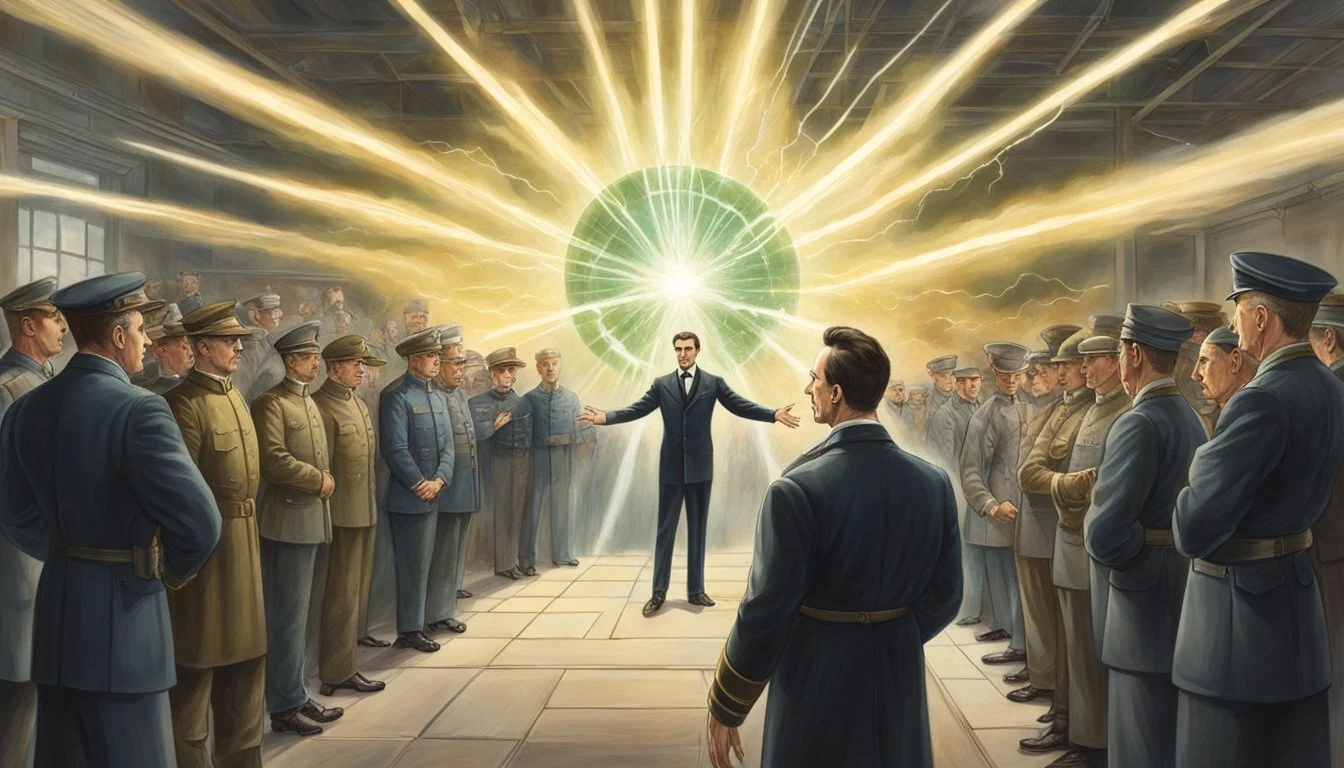
Nikolai Tesla stands as one of history's greatest scientific minds whose innovations shape our daily lives. Born during a lightning storm in 1856 in modern-day Croatia, Tesla's fascination with electricity led to groundbreaking discoveries that revolutionized how we generate and distribute power. His most significant contribution was the development of alternating current (AC) power systems, which fundamentally changed electrical distribution worldwide.
Tesla's AC motor allowed electricity to travel over great distances through thin wires by changing voltage values—something direct current (DC) couldn't achieve efficiently. When Thomas Edison rejected Tesla's AC system in 1884, Tesla partnered with George Westinghouse, leading to what became known as "The War of the Currents." Despite Edison's aggressive smear campaign against AC power, Tesla's superior technology ultimately prevailed.
Beyond power systems, Tesla pioneered remote control technology and wireless signal transmission. His inventions formed the foundation for many technologies we rely on today, making him responsible for both 20th and 21st-century innovations.
The Particle Beam Technology
Tesla claimed to have invented a revolutionary particle beam weapon in 1934 that could bring down aircraft from thousands of miles away. This device, often sensationalized as the "death ray," generated significant media attention worldwide. Tesla believed this weapon could create an impenetrable shield around any nation possessing it, potentially making war obsolete.
In 1935, Tesla secured a buyer for his particle beam concept—not his adopted homeland of America, but the Soviet Union. Records indicate he received $25,000 for preliminary details regarding the weapon. This transaction occurred in secret, during a time when Tesla reportedly felt under surveillance.
As World War II erupted in 1939, Tesla attempted to share his weapon technology with the U.S. military. He contacted a general in 1943 requesting a meeting to discuss how his invention might help end the war. Mysteriously, Tesla was found dead in his Manhattan hotel room at the New Yorker Hotel on January 8, 1943—before this meeting could take place.
Wireless Vision for the Future
Tesla envisioned a world where electrical power could be distributed wirelessly to all corners of the Earth. This revolutionary concept aimed to make electricity available 24/7 anywhere on the planet without the need for extensive infrastructure.
His wireless transmission experiments at Wardenclyffe Tower demonstrated his commitment to this vision. Tesla believed energy could be transmitted through the air or ground, potentially eliminating the need for traditional power lines and making electricity accessible to everyone regardless of location.
Tesla's forward-thinking approach to wireless technology extended beyond power transmission. He conceptualized wireless communication systems decades before they became commonplace. Many of these ideas were documented in his personal notes and patents.
FBI files reveal that following Tesla's death, his hotel safe was opened by a locksmith brought by his nephew, Sava Kosanovich, a Yugoslav diplomat. Important documents, including Tesla's black notebook containing weapon designs, disappeared during this time. The timing and circumstances surrounding these events have fueled decades of speculation about whether Tesla's death was natural or connected to his revolutionary technological concepts.
The Enigmatic End of Nikola Tesla
His Final Days Leading to Death
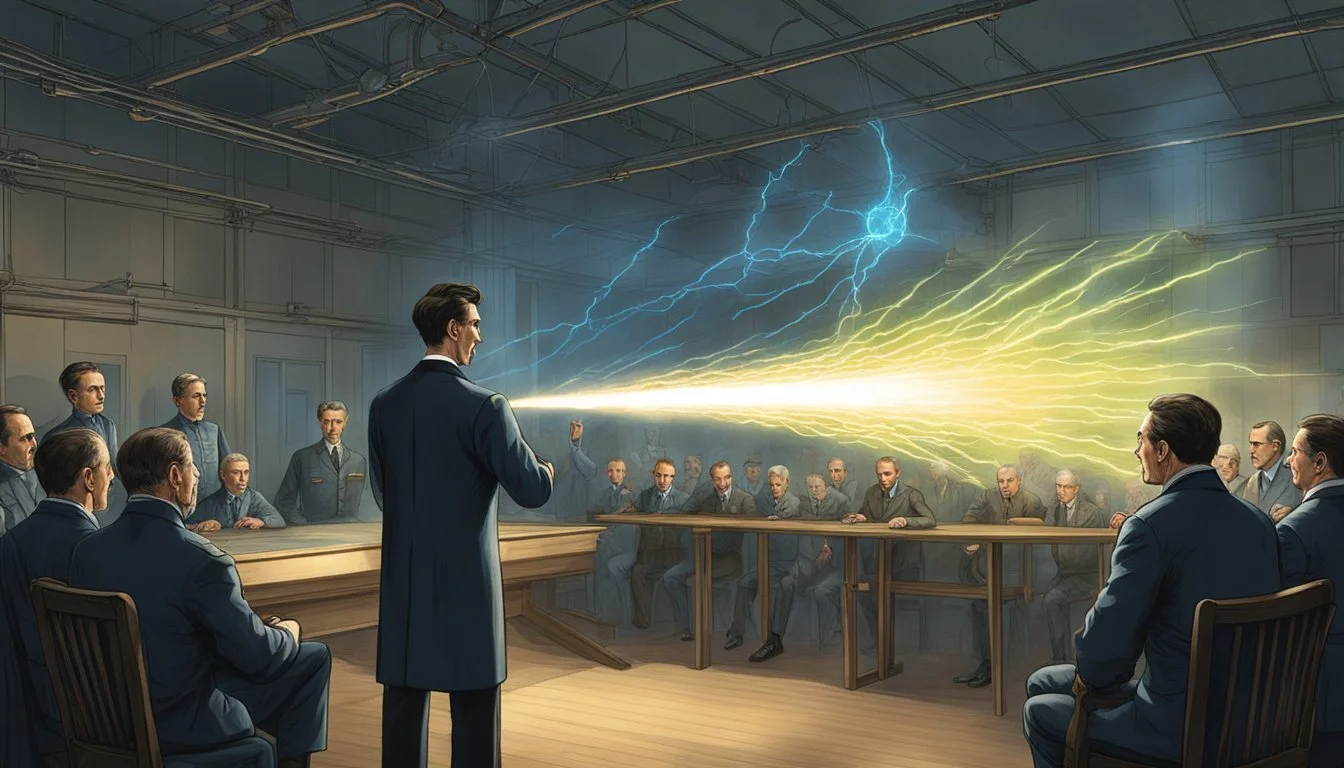
Nikola Tesla, one of history's most brilliant scientific minds, died on January 8, 1943, in his Manhattan hotel room. The Serbian-American inventor, known for pioneering alternating current and wireless technology, was living as a recluse in two rooms at the Hotel New Yorker. His death occurred just days after he had contacted a U.S. military general to request a meeting about sharing his particle beam weapon technology to help end World War II.
The timing of Tesla's passing raised questions immediately. He had survived a suspicious taxi accident in the 1930s after securing a deal with the Soviet Union for his particle beam weapon concept. Some experts believe this earlier incident may have been an assassination attempt, as Tesla was under FBI surveillance during this period.
Suspicious Theories Surrounding His Death
Multiple theories exist regarding Tesla's possible murder. Some speculate he was killed to obtain his particle beam weapon plans—a device he called "teleforce" that supposedly could destroy enemy aircraft from thousands of miles away. Tesla had made substantial claims about this technology, suggesting it could create an impenetrable shield around any nation possessing it, potentially making war obsolete.
The list of potential culprits includes several major powers:
Nazi Germany - The German government took the concept of death rays seriously and might have wanted Tesla's technology for their war efforts
Soviet Union - Already had preliminary details Tesla sold them for $25,000 in 1935
United States - May have wanted to prevent the technology from falling into enemy hands
Tesla's conflicts with powerful figures throughout his life contributed to these suspicions. His rivalry with Thomas Edison began in 1884 when Edison dismissed Tesla's alternating current motor design. While Edison promoted direct current (DC) technology, Tesla partnered with George Westinghouse to develop alternating current (AC), which could transmit power over much greater distances.
Stolen Documents and Investigation
Perhaps the most suspicious circumstance was the raid on Tesla's hotel safe shortly after his death. Recently released FBI files revealed that Tesla's nephew, Sava Kosanovich, led a group that included a locksmith to pick open Tesla's safe and remove personal papers. The FBI identified Kosanovich as a Yugoslav diplomat who was not particularly close to his uncle and possibly had communist connections.
One day after Kosanovich and his associates accessed the room, the FBI and Office of Alien Property seized Tesla's remaining documents. A small black book containing Tesla's more secretive weapon system ideas reportedly went missing, along with papers concerning the death ray.
The timing of these events—during the height of World War II when multiple governments sought advanced weapons technology—has fueled speculation for decades. Tesla had secured Soviet interest in his particle beam weapon before his death, making the theft of his remaining research particularly significant as nations scrambled to develop technological advantages during the global conflict.
The Particle Beam Weapon Controversy
Tesla's Groundbreaking Technology
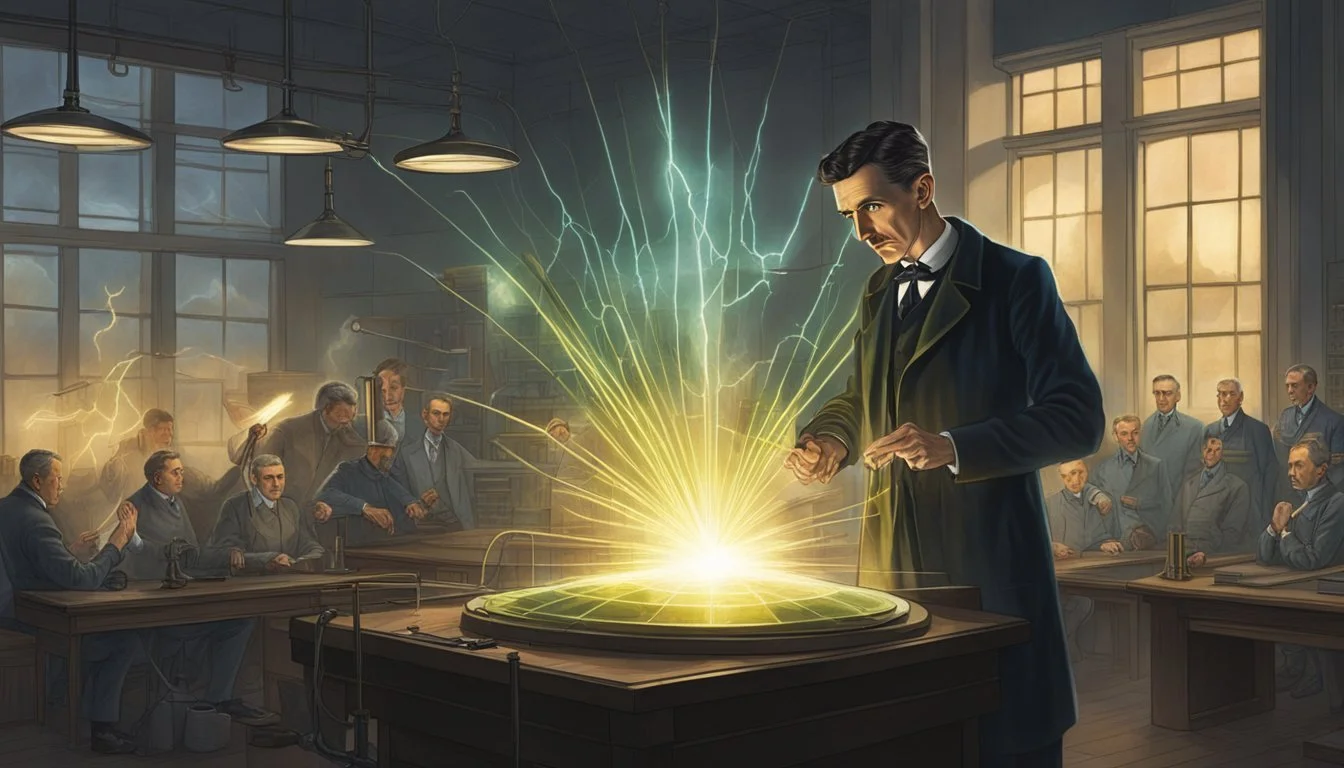
Nikola Tesla, the brilliant Serbian-American inventor, announced his creation of a revolutionary particle beam weapon in 1934. This advanced technology, often sensationalized as the "death ray" in media reports, promised unprecedented defensive capabilities. Tesla claimed this weapon could generate an invisible force field around any nation, essentially creating an impenetrable shield capable of destroying enemy aircraft from vast distances. This remarkable invention emerged after Tesla had already transformed the modern world through alternating current, remote control systems, and wireless power transmission concepts.
Tesla's particle beam concept represented the culmination of his lifelong work with electricity. As an inventor who consistently pushed scientific boundaries, Tesla believed this technology could ultimately make warfare obsolete by creating such powerful defensive capabilities that aggression would become futile.
Global Interest and Security Implications
Tesla's announcement generated international headlines and attracted attention from major world powers preparing for potential conflict. With Adolf Hitler's rise to power in Germany and mounting global tensions in the early 1930s, governments worldwide sought military advantages that might tip the balance in their favor.
The particle beam weapon offered precisely the type of revolutionary technology nations were seeking. According to Tesla, it could:
Destroy enemy aircraft from thousands of miles away
Disable mechanical systems remotely
Create an impenetrable defensive shield for any country
Tesla's inventions had already transformed global industry, so military leaders took his claims seriously despite their extraordinary nature. The inventor found himself under surveillance as various intelligence agencies monitored his activities and communications about the potentially game-changing weapon.
Soviet Connection and Mysterious Circumstances
In 1935, Tesla reportedly secured a buyer for his particle beam weapon concept—the Soviet Union. According to intelligence records, Soviet representatives paid Tesla $25,000 for preliminary details about the technology. This transaction occurred secretly, outside his adopted American homeland, raising significant concerns among U.S. officials.
Following this deal, Tesla experienced a suspicious taxi accident that some researchers suggest may have been an assassination attempt. The timing raised questions, as he was under FBI surveillance during this period specifically regarding his Soviet connections.
As World War II began in 1939, Tesla attempted to interest the U.S. military in his weapon technology, contacting a general to arrange a meeting. Tragically, before this meeting could occur, Tesla died in his Manhattan hotel room on January 8, 1943. Hours after his death, his hotel safe was opened by a locksmith accompanying Tesla's nephew, Sava Kosanovic, a Yugoslav diplomat whom FBI files identified as a possible communist sympathizer. Shortly thereafter, FBI agents seized Tesla's remaining documents.
International Tensions and Tesla's Inventions
The Second World War Period
Nikola Tesla's later years coincided with one of the most turbulent periods in global history. By the early 1930s, Adolf Hitler had risen to power in Germany, and his aggressive policies signaled the likelihood of another major conflict. Governments worldwide began searching for technological advantages that might provide military superiority. During this period, Tesla announced his development of a revolutionary particle beam weapon in 1934. This device, which he called "teleforce," allegedly could destroy aircraft from great distances and potentially create an impenetrable defensive shield around any nation.
The announcement generated significant media attention globally. Tesla claimed his invention could make war obsolete by creating such powerful defensive capabilities that aggression would become futile. Many military powers took interest in his claims, particularly as international tensions escalated toward what would become World War II.
In 1939, as Germany invaded Poland and the predicted global conflict became reality, Tesla attempted to gain the attention of U.S. military leadership. He contacted a general to arrange a meeting about his teleforce weapon, believing it could help end the growing war. Unfortunately, this meeting never occurred.
Tesla's Government Connections and Diplomatic Issues
Tesla maintained complex relationships with various governments throughout his career. Despite his significant contributions to American science and industry, his interactions with foreign powers created suspicion. In 1935, Tesla reportedly received $25,000 from the Soviet Union for preliminary details about his particle beam weapon. This transaction occurred secretly, but Tesla believed he was under surveillance afterward.
Following his death on January 8, 1943, Tesla's hotel room and safe were accessed by several individuals led by his nephew, Sava Kosanovich, a Yugoslav diplomat. According to FBI files:
Kosanovich brought a locksmith and others to open Tesla's safe
The FBI considered Kosanovich potentially aligned with communist interests
Tesla reportedly had a strained relationship with his nephew
The day after this group accessed Tesla's belongings, the FBI and Office of Alien Property seized Tesla's remaining documents. This sequence of events has fueled decades of speculation about whether important technical documents were removed before the official seizure.
Interested Parties Possible Motivations Soviet Union Already had preliminary plans and potential communist connections Nazi Germany Desperate for advanced weapons technology United States Preventing technology from reaching enemy hands
Interest in Teleforce Technology
Tesla's particle beam weapon attracted attention from multiple world powers during a time when technological superiority could determine military outcomes. The concept promised extraordinary capabilities—the ability to destroy enemy fleets, halt advancing armies, and eliminate aircraft from thousands of miles away. Such claims were particularly appealing during wartime.
Tesla's teleforce plans were considered extremely valuable. He maintained the details in various notebooks and papers, including a small black book containing his most advanced weapon concepts. After his death, many of these documents reportedly went missing, prompting questions about whether they were taken to develop the technology elsewhere.
The German government took Tesla's "death ray" claims seriously, viewing such technology as potentially game-changing. American authorities likely recognized the danger of such plans falling into enemy hands during wartime. This created a situation where multiple governments had strong incentives to secure Tesla's technical knowledge.
Tesla's belief in the transformative nature of his invention remained consistent throughout his final years. He maintained that properly implemented, his teleforce technology could fundamentally alter warfare by making offensive attacks impossible against any nation possessing it.
Major Conflicts and Professional Rivalries
The Edison-Tesla Divide
Nikola Tesla's career was marked by a significant and lasting feud with Thomas Edison, one of America's most celebrated inventors. Their relationship began with promise when Tesla arrived in America in 1884, eager to present his alternating current (AC) motor design to Edison, whom he greatly admired. The fundamental incompatibility of their approaches to electrical power transmission quickly became apparent, however.
Edison had built his reputation and business on direct current (DC) systems, which could only transmit electricity over short distances. Tesla's revolutionary AC motor design offered far superior transmission capabilities, as alternating current could be stepped up to high voltages and distributed across vast distances using thinner, more economical wiring.
When Edison dismissed Tesla's AC innovations, preferring to protect his investments in DC infrastructure, a bitter professional rivalry was born. Edison launched an aggressive public campaign against AC power, attempting to portray it as dangerous and unreliable to maintain market dominance.
Business Competition and Strategic Partnerships
Following Edison's rejection, Tesla found a crucial ally in George Westinghouse, Edison's primary business competitor. In 1888, Tesla partnered with Westinghouse to develop and implement his AC motor design, intensifying what became known as the "War of the Currents."
Edison's anti-AC campaign included public demonstrations where animals were electrocuted with alternating current to "prove" its dangers. Despite these tactics, the technical superiority of Tesla's AC system ultimately prevailed in the marketplace.
Throughout his career, Tesla formed other significant business relationships, though many proved financially disappointing for the inventor. Despite creating innovations worth millions, Tesla repeatedly lost fortunes through unfavorable business arrangements and his focus on ambitious, sometimes impractical projects.
Later in life, Tesla's work on advanced weapons technology, particularly his "particle beam weapon" concept, brought him into contact with various government interests. During World War II, this work reportedly attracted attention from multiple nations, including the Soviet Union, with whom Tesla had financial dealings related to his weapon designs.
Tesla's Impact Through the Electric Ages
Revolutionizing Electrical Distribution with AC
Nikola Tesla transformed human civilization through his development of alternating current (AC) technology in the late 19th century. Unlike Thomas Edison's direct current (DC) system, Tesla's AC innovation allowed electricity to travel long distances efficiently by changing voltage levels. This fundamental advantage made widespread electrification economically viable for the first time.
After being rejected by Edison in 1884, Tesla partnered with George Westinghouse to develop and promote his AC induction motor. This partnership proved crucial in what became known as the "War of the Currents" against Edison's DC system. Despite Edison's aggressive smear campaigns, Tesla's superior technology ultimately prevailed.
The triumph of Tesla's AC system laid the foundation for modern electrical distribution networks. Without his contributions, the universal availability of electrical power that we take for granted today would be impossible.
Inventing Tomorrow's Technologies Today
Tesla's forward-thinking achievements extended far beyond AC power. His work in remote control technology during the 1890s presaged modern wireless control systems by decades. In 1898, he demonstrated a remote-controlled boat at Madison Square Garden, shocking audiences with what seemed like magic but was actually groundbreaking science.
Tesla's vision extended to wireless power transmission, a concept he pursued throughout his career. He believed electricity could be distributed wirelessly to all corners of the globe, eliminating the need for transmission lines. His experiments at Wardenclyffe Tower represented an ambitious attempt to realize this dream.
During the 1930s, Tesla announced his controversial "particle beam weapon" concept, sometimes sensationalized as a "death ray." Various governments, including the Soviet Union, showed interest in this theoretical technology. His papers regarding this work sparked considerable intrigue, particularly following his death in January 1943 when his hotel safe was accessed and documents were removed.
Tesla's innovations in wireless technology have found new relevance in the 21st century. Modern implementations of wireless power transfer for consumer electronics directly build upon his pioneering theories. His conceptual work continues to inspire scientists and engineers more than 75 years after his death.
Final Years and Enigmatic Legacy
Tesla's Later Isolation
Nikola Tesla spent his final years in increasing seclusion, residing alone in two rooms at the Hotel New Yorker. This brilliant mind who had revolutionized electrical systems worldwide gradually withdrew from public life. By the 1930s, despite his reduced visibility, Tesla continued working on ambitious projects and concepts. His reclusiveness didn't diminish his inventive thinking, but it did create an air of mystery around his activities.
Tesla's financial situation had deteriorated significantly by this time. Despite having earned and lost several fortunes throughout his career, his later years were marked by relative poverty. This stark contrast between his monumental contributions to science and his personal circumstances remains one of the more poignant aspects of his biography.
Unresolved Questions and Theories
The circumstances surrounding Tesla's death on January 8, 1943, have fueled decades of speculation. His passing occurred just days after he had contacted a U.S. military general to arrange a meeting about his particle beam weapon - popularly known as the "death ray." This timing has raised questions among historians and Tesla enthusiasts.
Within hours of Tesla's death, his hotel safe was opened by a group led by his nephew, Sava Kosanovich, a Yugoslav diplomat whom Tesla reportedly disliked. According to FBI files released years later, Kosanovich brought a locksmith and several associates to access Tesla's safe and personal papers. The FBI viewed Kosanovich with suspicion, particularly given his diplomatic connections during wartime.
Following this incident, the FBI and Office of Alien Property seized Tesla's remaining documents. Several important items reportedly went missing, including:
Technical notes on the particle beam weapon
A small black book containing Tesla's advanced weapons concepts
Documents related to wireless power transmission
The timing of these events - occurring during World War II when multiple governments sought technological advantages - has led to several theories:
Soviet acquisition: Some believe Tesla's nephew, possibly with communist sympathies, may have taken documents to keep them from American authorities.
Nazi interest: The German government had shown significant interest in advanced weapons technology and may have sought Tesla's research.
U.S. government intervention: Some speculate American authorities may have acted to prevent Tesla's technologies from reaching enemy nations.
Tesla's particle beam weapon had attracted significant attention after his 1934 announcement. He claimed it could bring down aircraft from great distances and potentially create an impenetrable defensive shield around any nation possessing it. In 1935, Tesla reportedly received $25,000 from the Soviet Union for preliminary details about this technology.
A suspicious taxi accident shortly after this transaction further complicates the narrative. Tesla was struck by a taxi under circumstances some consider questionable, raising the possibility of an assassination attempt against the inventor.
The convergence of Tesla's revolutionary ideas, international tensions, and the mysterious events following his death creates an enduring historical puzzle that remains unsolved to this day.
