
The Elaborate Escape of Thabo Bester: South Africa's "Facebook Rapist" Who Faked His Death
In the heart of Johannesburg's affluent Sandton district, an exclusive launch event for 21st Century Media unfolded at the Hilton Hotel in early summer 2018. South Africa's elite gathered under candlelight, captivated by the appearance of "Tom Motsepe" on three large screens. The supposed billionaire chairman, calling in from New York on his birthday, received champagne toasts and celebratory songs from the gathered celebrities, activists, and socialites.
The lavish celebration harbored a shocking truth: "Tom" was actually Thabo Bester, a convicted murderer and rapist operating from a prison cell five hours away. This extraordinary deception represented just one chapter in the criminal career of a man who grew up in Soweto's challenging environment, was orphaned young, and developed a taste for luxury that would fuel his crimes. Despite serving a life sentence plus 50 years for raping three women and murdering one, Bester continued criminal operations from behind bars at Mangaung Correctional Centre, aided by a glamorous doctor from Johannesburg's high society.
Key Takeaways
A convicted murderer and rapist managed to pose as a billionaire businessman while orchestrating a fraudulent company launch from prison.
South Africa's deep inequality and high crime rates created the environment where Bester's criminal activities could flourish and evolve.
Prison system corruption enabled Bester to continue operating criminal enterprises despite being incarcerated in a maximum security facility.
The Sandton Luxury Event
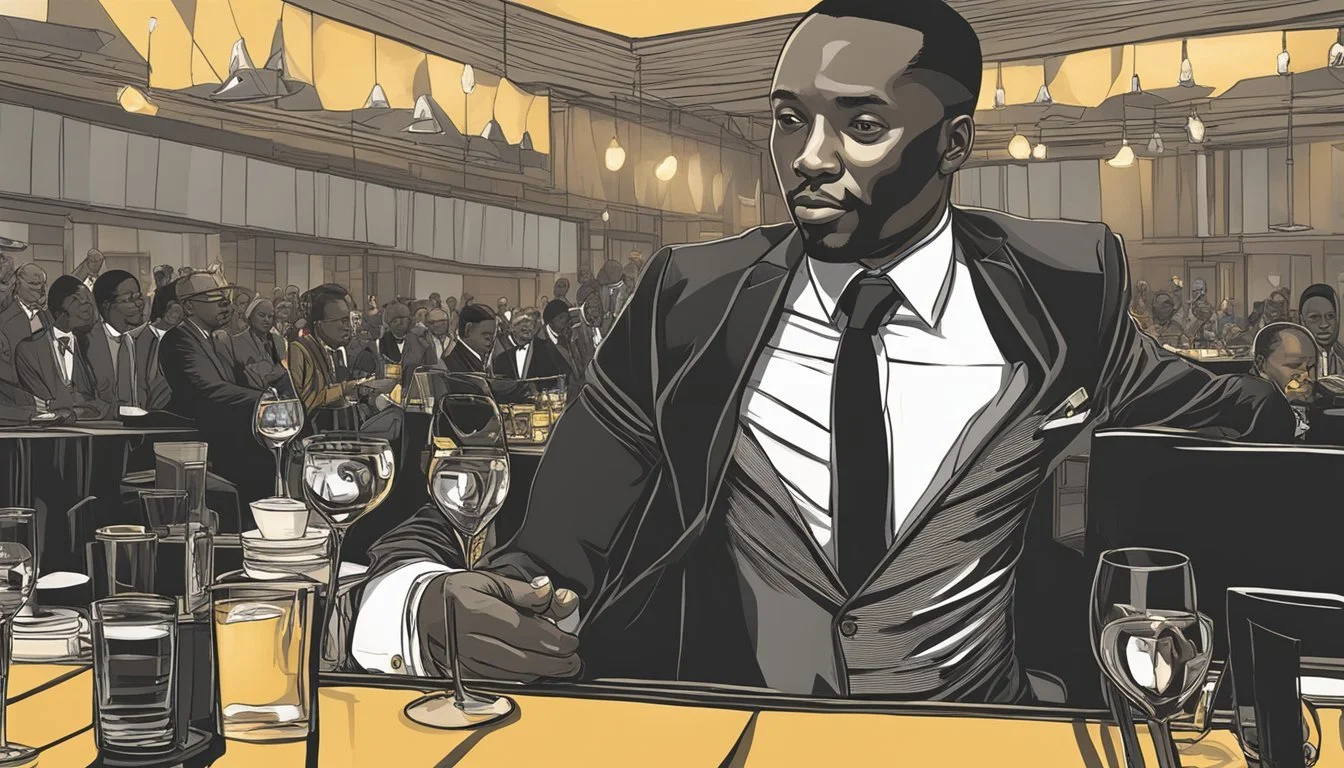
21st Century Media Gala
In the summer of 2018, Johannesburg's Hilton Hotel hosted an extravagant launch event for a company called 21st Century Media. The venue, located in Sandton—often referred to as "Africa's richest square mile"—provided an impressive backdrop for the gathering of South Africa's elite.
The exclusive gala attracted prominent figures from various sectors: activists, philanthropists, news personalities, and actors. Attendees enjoyed a sophisticated atmosphere with ambient candlelight, champagne, and floral arrangements as they seated themselves at circular tables throughout the venue.
Three large screens dominated the front stage, commanding the attention of everyone present. The anticipation built as the screens simultaneously displayed the face of a smiling man—the person everyone had assembled to hear from.
The False Identity of a Billionaire
The man appearing on the screens introduced himself as Tom Motsepe, supposedly from a wealthy South African family. Dressed in a blue waistcoat and tie, he sported a designer watch valued at approximately 1.5 million rand (roughly $80,000).
Mr. Motsepe, presenting as the chairman of 21st Century Media, claimed to be calling in from New York to participate in the celebration. The attendees even sang "Happy Birthday" to him as he smiled appreciatively from the screens.
What none of the distinguished guests realized was that everything about this situation was fabricated. The man wasn't in New York as he claimed—he was actually incarcerated in a prison facility located five hours away from the event. The company being celebrated was nonexistent, and "Tom Motsepe" was a complete fabrication.
Thabo Bester's Criminal Reality Exposed
The man on the screen was actually Thabo Bester, a convicted criminal serving time for heinous crimes. His real identity and location remained unknown to the gathering of Johannesburg's social elite as they celebrated his fictional company.
Bester had been sentenced to life imprisonment plus 50 years for multiple serious offenses:
Rape of two models lured with promises of modeling contracts
Murder and rape of his ex-girlfriend, Nomfundo Tyhulu
Multiple counts of fraud
The media had previously dubbed him "The Facebook Rapist" due to his method of targeting victims. He was supposed to be securely confined at Mangaung Correctional Centre, the second largest private prison in the world at that time.
Despite his imprisonment, Bester had established connections to the outside world through regular visits from Dr. Nandipa Magudumana, a well-known celebrity doctor from Sandton. This relationship provided him the means to create his elaborate deception and infiltrate South Africa's high society while supposedly behind bars.
South Africa's Social Landscape
Economic Disparities and Poverty
South Africa faces some of the world's highest inequality rates, creating stark contrasts within society. Approximately 63% of the population lives below the poverty line, highlighting the severe economic challenges many citizens face. This inequality is visibly represented in areas like Sandton, often called "Africa's richest square mile," with its luxury shopping centers and skyscrapers standing in sharp contrast to townships like Soweto. The wealth gap remains deeply entrenched, with roots tracing back to apartheid-era segregation that continues to influence social structures even in the 2010s.
Sexual Violence Crisis
Sexual violence represents one of South Africa's most pressing social issues. Human rights organizations estimate over 40% of South African women will experience rape during their lifetime. This disturbing statistic has led to international recognition of the problem, with Interpol identifying South Africa as having exceptionally high rates of sexual violence. The pervasiveness of these crimes creates an atmosphere of fear and vulnerability, particularly for women, and reflects deeper social issues regarding gender relations and power dynamics within the country.
Law Enforcement Challenges
The criminal justice system in South Africa demonstrates significant weaknesses in addressing violent crimes. Conviction rates for rape cases hover between 10-12%, an alarmingly low figure that suggests most perpetrators escape legal consequences. Even more troubling, less than 50% of recorded sexual assault cases result in an arrest. These statistics point to systematic failures in the criminal justice process, from investigation to prosecution. The prison system itself faces serious issues with overcrowding and corruption, as evidenced by inappropriate relationships between guards and inmates, widespread access to prohibited technology, and social media accounts documenting prison conditions.
Thabo Bester's Background

Early Life in Soweto
Thabo Bester was born in 1986 in a hospital near Johannesburg, though he was never officially registered at birth. His formative years were spent in Soweto, a sprawling predominantly Black township spanning approximately 200 square kilometers outside Johannesburg. This area, historically significant as the home of Nelson Mandela and a central location in the anti-apartheid movement, was characterized by modest housing and limited resources.
Bester's childhood was marked by absence and abandonment. Without his parents present in his life, his grandmother became his primary caregiver. Following her death during his teenage years, Bester found himself alone, forced to navigate life without family support. This period of isolation would prove influential in shaping his future path.
Criminal Beginnings and Convictions
Bester's criminal record began early, receiving his first conviction at age 17, though the specific offense remains unclear. His formal criminal history continued to develop when, in 2006, he served a two-year sentence for fraud. This initial incarceration marked the beginning of what would become a pattern of criminal behavior.
Upon his release on parole, Bester did not remain free for long. His subsequent crimes escalated dramatically in both nature and severity. He was eventually sentenced to 50 years imprisonment after pleading guilty to raping two women, both models whom he had lured with promises of lucrative contracts. This deceptive approach—offering professional opportunities, then assaulting and robbing his victims—became his recognizable criminal signature.
The most severe of his crimes involved the murder of Nomfundo Tyhulu, an ex-girlfriend. After promising her employment in television, Bester stabbed her to death while she slept. This murder added a life sentence to his already substantial prison term. The South African media subsequently dubbed him "The Facebook Rapist," a moniker that reflected both his methods and his growing notoriety.
Rise to Notoriety
In 2012, Bester began serving his sentences at Mangaung Correctional Centre, the second-largest private prison globally at that time. Located approximately five hours southwest of Johannesburg and operated by G4S, this maximum-security facility was known for frequent incidents, including assaults on officers, attempted suicides, and documented abuse.
Despite the restrictive environment, Bester's criminal activities did not cease behind bars. Approximately five years into his incarceration, prison guards noted regular visits from Dr. Nandipa Magudumana, a celebrity doctor from Johannesburg's affluent Sandton district. These visits, including one reportedly scheduled for Valentine's Day, established Bester's critical connection to the outside world.
Through Magudumana's legitimate company, Arum Holdings, Bester established a fraudulent property business. The operation supposedly offered renovation services for purchased properties, though these services were never delivered—funds were simply collected and kept. This scheme facilitated unauthorized payments into Bester's prison accounts.
Exploiting the prison system's educational provisions, Bester successfully requested a laptop under the pretense of studying graphic design. This access to technology and the internet provided him with tools to continue his deceptive operations, despite his imprisonment for serious violent crimes.
The Criminal Activities of Thabo Bester

Sexual Assault and Homicide Convictions
Thabo Bester accumulated a significant criminal record that ultimately led to his lengthy imprisonment. He received a 50-year sentence after pleading guilty to raping two women who worked as models. His method involved an elaborate deception where he would promise lucrative modeling contracts to attract his victims. After gaining their trust through lavish dinners and charm, he would proceed to sexually assault them and steal their personal belongings. These calculated crimes demonstrated a pattern of predatory behavior that targeted vulnerable individuals with professional aspirations.
The Murder of His Former Partner
Beyond the sexual assault convictions, Bester also pleaded guilty to the murder of his ex-girlfriend, Nomfundo Tyhulu. Using similar manipulation tactics, he had convinced Tyhulu that he worked in the television industry and could secure employment for her. This deception ended tragically when Bester stabbed her to death while she slept. For this horrific crime, the courts sentenced him to life imprisonment, to be served in addition to his existing 50-year sentence for the rape convictions.
Known in Media as "The Facebook Rapist"
The South African media widely covered Bester's crimes, giving him the notorious nickname "The Facebook Rapist." This moniker reflected his method of using social media platforms to identify and communicate with potential victims. His case received significant attention across South Africa in 2012 when he was sent to Mangaung Correctional Centre, the second-largest private prison in the world at that time. Despite the severity of his convictions and high-profile incarceration, Bester would later demonstrate that his criminal activities were far from over, as he continued to operate fraudulent schemes from behind bars.
Mangaung Correctional Centre
Mangaung Correctional Centre stands as one of the world's largest privately managed prisons, located approximately five hours southwest of Johannesburg, South Africa. Established to address overcrowding issues in the South African prison system, this maximum security facility became operational in 2012 under the management of G4S, a British private security company. The prison gained notoriety not only for its size but also for the significant security failures that would eventually be exposed.
Inside a Private Correctional Facility
The facility's environment reflects the challenges of privatized incarceration in South Africa. Mangaung's massive compound houses thousands of inmates, including some of the country's most dangerous offenders. Daily life within its walls is characterized by frequent violent incidents including assaults on officers, attempted suicides, and hunger strikes. Gang violence thrives within the prison's confines, creating a perpetually tense atmosphere for both inmates and staff.
Prison management struggles to maintain control, with documented incidents showing systematic failures in security protocols. Despite being a maximum security facility, inmates have gained access to contraband including electronic devices and other prohibited items. These conditions represent the broader challenges facing South Africa's prison system, where resources are strained and oversight is often inadequate.
Misconduct and Prisoner Living Standards
The prison's operational problems extend deeply into corruption and poor living conditions. Staff misconduct has been repeatedly documented, with prison wardens participating in inappropriate activities with inmates. Social media platforms have exposed guards engaging in TikTok dances with prisoners and other prohibited interactions, demonstrating the breakdown of professional boundaries.
Inmate access to electronic devices and internet connectivity presents a serious security concern. Despite regulations prohibiting these items, prisoners have managed to maintain active social media accounts, posting content from inside the facility. This technological access enabled some inmates to conduct illegal business operations from behind bars, with minimal intervention from prison authorities.
Living standards at Mangaung fall significantly below acceptable levels. Prisoner abuse is well-documented, with reports of physical mistreatment and neglect. The combination of overcrowding, inadequate supervision, and corruption creates an environment where basic human rights are frequently compromised. These conditions reflect the larger systemic issues within South Africa's prison infrastructure, where approximately 63% of the general population lives below the poverty line and institutional resources remain severely limited.
Ongoing Criminal Activities
Dr. Nandipha Magudumana's Role
Dr. Nandipha Magudumana emerged as Bester's key outside contact during his imprisonment at Mangaung Correctional Centre. As a prominent celebrity doctor from Sandton, Johannesburg's affluent district, Magudumana had established herself among South Africa's elite circles. She visited Bester regularly at the maximum-security prison, with records showing multiple visits over several years. Their relationship deepened significantly, with one particularly notable visit scheduled on Valentine's Day.
Magudumana wasn't merely a visitor; she became Bester's crucial connection to the outside world. Her status as a respected medical professional and her position in high society provided Bester with valuable social connections and resources. Through their partnership, she facilitated his continued criminal enterprises despite his incarceration.
Bester's Fraudulent Property Enterprise
While serving his sentences, Bester established a sophisticated property scam operation. The scheme operated under the guise of a legitimate business linked to Magudumana's actual company, Arum Holdings. This fraudulent venture promised property renovations and improvements to unsuspecting clients.
The operation followed a simple but effective formula:
Clients would purchase properties through the business
They would pay upfront for promised renovation services
No actual work would be performed
The money would be pocketed by Bester and his accomplices
Funds from these fraudulent transactions began appearing in Bester's prison accounts, transferred directly from Arum Holdings. The scheme demonstrated Bester's continued ability to orchestrate financial crimes despite being behind bars for rape and murder.
Managing Criminal Operations from Prison
Despite being confined to a maximum-security facility, Bester successfully ran his criminal enterprises from his cell. Prison authorities granted him a laptop after he claimed to be enrolled in a graphic design college program. This computer, along with internet access, became his primary tool for conducting business from inside Mangaung.
The prison's lax oversight allowed Bester to:
Communicate with outside accomplices
Manage his fraudulent property business
Receive payments from victims
Maintain his criminal network
This level of operational freedom within the prison highlights the systemic corruption within South Africa's correctional facilities. Guards apparently neither noticed nor intervened as Bester conducted business transactions and received suspicious payments to his prison accounts. The situation exemplifies the broader issues of corruption and inadequate supervision plaguing South Africa's prison system.
Criminal Network Expansion
While imprisoned, Bester's influence expanded dramatically. Working with Magudumana, he created an elaborate fictional persona named "Tom Motsepe" - supposedly a billionaire businessman operating internationally. This false identity became the centerpiece of their most audacious scheme.
In 2018, a lavish launch event for a fictitious company called "21st Century Media" took place at the prestigious Hilton Hotel in Sandton. The event drew Johannesburg's elite - activists, philanthropists, news anchors, and actors gathered for this exclusive celebration. On three large screens appeared a man claiming to be Tom Motsepe, supposedly calling in from New York, wearing expensive attire including a designer watch worth approximately 80,000 USD.
Prison Systems and Technology
The modern prison environment faces numerous challenges, particularly when it comes to balancing security concerns with opportunities for inmate rehabilitation and education. These issues become especially complex when considering how correctional facilities manage access to technology and digital communication tools within their walls.
Laptop Access and Internet in Prison
Prison policies regarding technology access vary significantly across institutions. In some facilities, inmates can obtain laptops under specific educational pretexts, though this privilege often comes with substantial risks. For example, in certain prisons, inmates enrolled in educational programs may receive computer access to support their studies, creating potential security vulnerabilities.
The introduction of internet-connected devices behind bars presents complex security challenges. Without proper oversight, these tools can become gateways for unauthorized activities, including business operations and external communications that circumvent prison monitoring systems.
Prison corruption further complicates technology management. In facilities where oversight is lax or staff are compromised, prohibited devices like cell phones frequently enter circulation. This has led to concerning developments, including inmates maintaining social media presences through platforms like TikTok and Instagram, sometimes even featuring prison staff in their content.
Private prisons present additional complications in technology oversight due to their operational structures. These institutions, introduced in some regions to address overcrowding, sometimes operate with different standards and oversight mechanisms than state-run facilities.
The balance between providing educational opportunities through technology and maintaining security remains difficult to achieve. While digital literacy represents an important rehabilitation tool, the potential for misuse creates significant risks within the prison environment.
