
More Than Just Pretty: Backgrounds That Drive Conversions
A product photo might stop a scroll, but a strategic background? That’s what gets clicks, adds to cart, and seals the sale.
Whether you’re selling skincare or sneakers, your product doesn’t live in a vacuum. It lives in a visual environment—one that speaks to your customer’s taste, trust, and expectations. And the smartest brands today aren’t choosing backdrops just because they “look nice.” They’re designing images that convert.
With tools like Pippit, https://pippit.capcut.com/ creators and e-commerce teams can go beyond aesthetics and build visuals that speak directly to consumer psychology. You can stop speculating about the finest studio wall. The focus now is on creating visual ecosystems that produce tangible outcomes, and yes, the background is where it all begins.
Let's examine how design choices like tone, setting, and mood have a direct effect on sales and how to effectively use that influence.
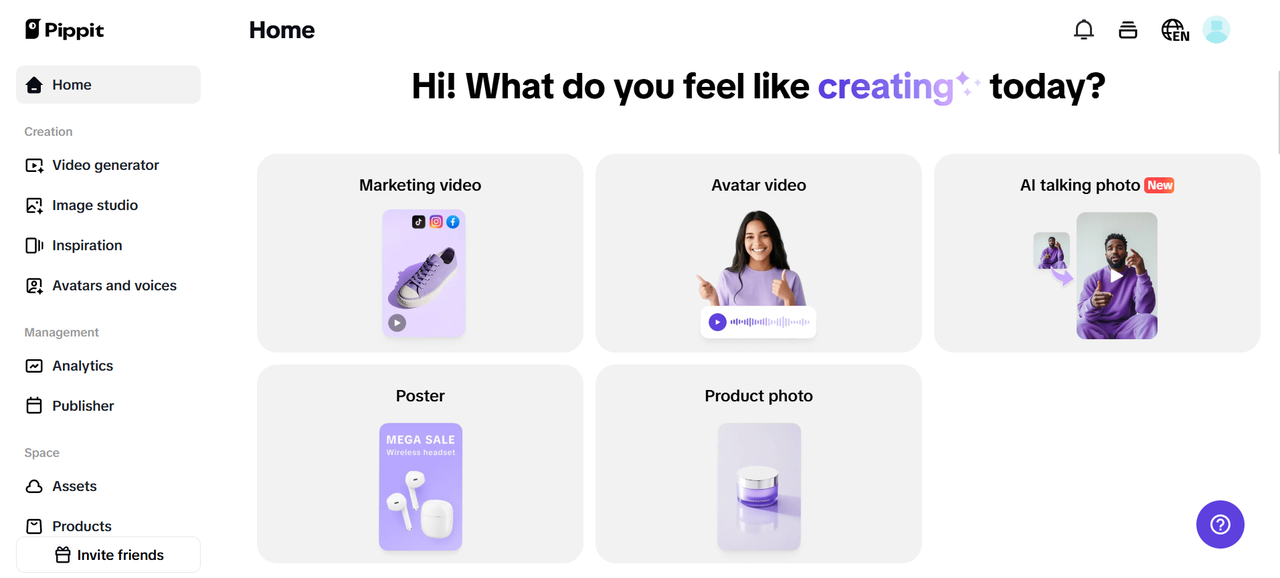
The conversion code: how backdrops influence buying behavior
Before a customer reads your caption or compares prices, they absorb your image. And in the first few seconds, their brain makes decisions: “Do I like this? Do I trust this? Does it feel worth clicking?”
Turns out, the backdrop you use answers all three.
Mood influences emotion
A calming beige backdrop makes customers feel safe with skincare. A bold red sets urgency for limited offers. Color psychology isn’t fluff—it’s a conversion tool.
Context is created by setting
Buyers are better able to visualise a sofa in their homes when it is displayed in a comfortable flat rather than on a stark white space. People are more likely to buy when they can see how it will be used.
Tone creates brand recognition
Is your brand playful? Futuristic? Minimalist? The background should match. If your ad feels inconsistent with your tone, you risk confusing the customer and losing the click.
A good product deserves a great environment. That’s why high-performing content doesn’t just feature a product. It stages it.
Backgrounds with a point: styles that sell
No "one size fits all" for backgrounds—except for strategic pairings by product category and target market. Here's how clever brands are adapting their visuals for conversions:
Soft neutrals for self-care
Why it works: Feels kind, reliable, and calming.
Best for: Skincare, bath essentials, and organic wellness companies.
Conversion boost: Fosters emotional safety and quality perception.
Monochrome tech realism
Why it works: Clean backgrounds emphasize smooth design and innovation.
Best for: Electronics, gadgets, and tools.
Conversion boost: Supports a contemporary, functional promise of the brand.
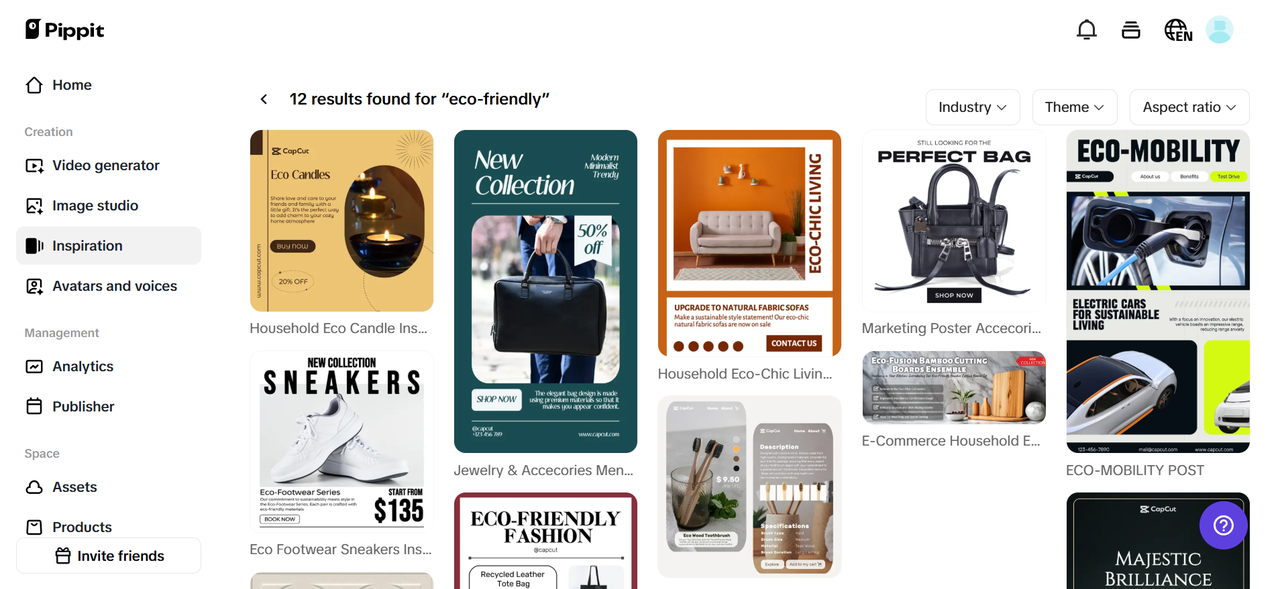
Natural textures for eco products
Why it works: Positional with sustainable values and narrative.
Best for: Green cleaning, eco fashion, upcycled products.
Conversion boost: Creates authenticity and mission alignment.
Bold contrast for promotions
Why it works: Stands out immediately in feed or ad placements.
Ideal for: Flash sales, season drops, launches.
Conversion uplift: Creates urgency and click-throughs.
With a background maker such as Pippit, you can seamlessly switch between these styles—ideal for A/B testing, which generates superior performance on various platforms.
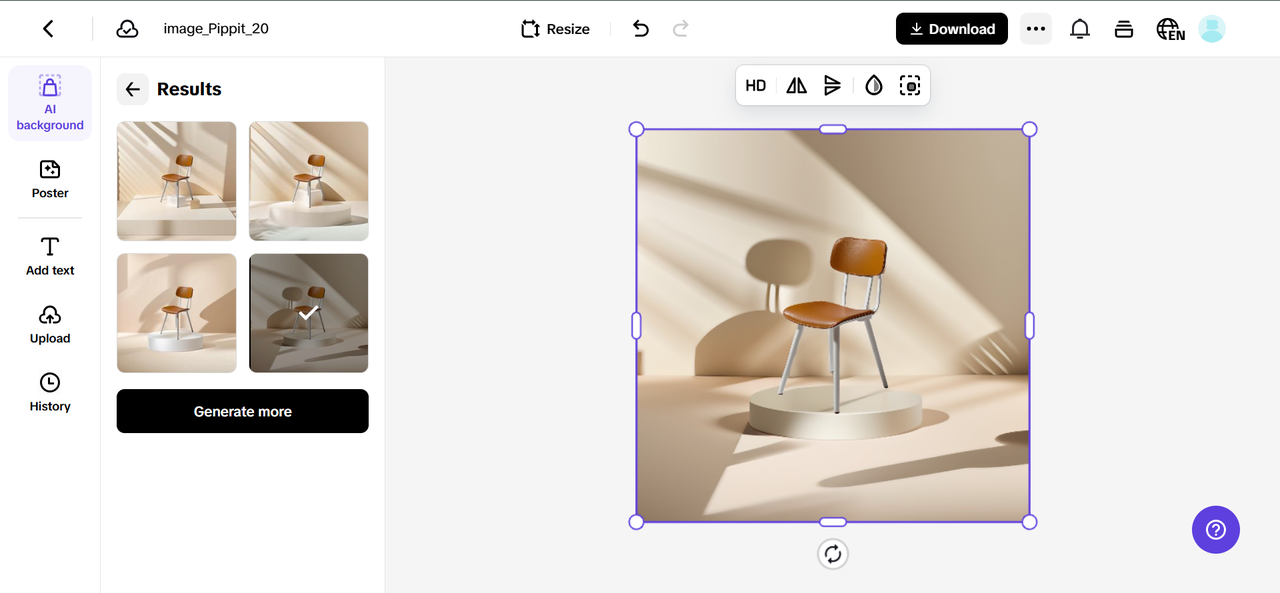
Lighting the way: mood, color, and behavior
Backgrounds aren't sheets of color—they're emotional cues. Here's how to leverage light, tone, and saturation to shape perception:
Cool tones = calm + reliable
Imagine icy blues, light greys, and lavender. They calm the eye and are ideal for brands that wish to be calming and professional.
Warm colors = energy + urgency
Reds, oranges, and bright pinks encourage action. They're great for time-sensitive promotions or sportswear.
Earth colors = natural + ethical
Muted browns, greens, and sand tones suit environmentally friendly or handmade products, and promote feelings of trust and sustainability.
The key? Don’t let the background overpower the product. Use tones to amplify, not distract.
The setting effect: environmental backdrops that convert
Beyond color, full environmental backdrops shape how your product is used in your viewer’s mind. This technique is especially powerful in e-commerce.
Real-life context = increased desire
Customers want to see how a product fits into their lives. Showcasing your planner on a cozy desk? More effective than a plain white surface. Lifestyle sells.
Implied luxury = perceived value
Place the same candle on a sleek marble countertop with golden light, and it instantly looks more high-end, even if the price is the same.
Targeting customers using visual cues
Making sales to students? Make use of a background with books and room décor. Marketing to athletes? Try a home gym atmosphere or locker rooms.
Silent segmentation is the setting. Background design is, therefore, strategic rather than merely aesthetic. This is for you, declares a strong image. That's the conversion rate.
Scroll-stopping in a sea of sameness
With so much content out there, differentiation matters. Your product may be great, but if it’s photographed the same way as ten competitors? It blends in.
Personalised backdrops:
Strengthen the character of the brand
Establish visual coherence across all platforms.
Establish value tiers and expectations.
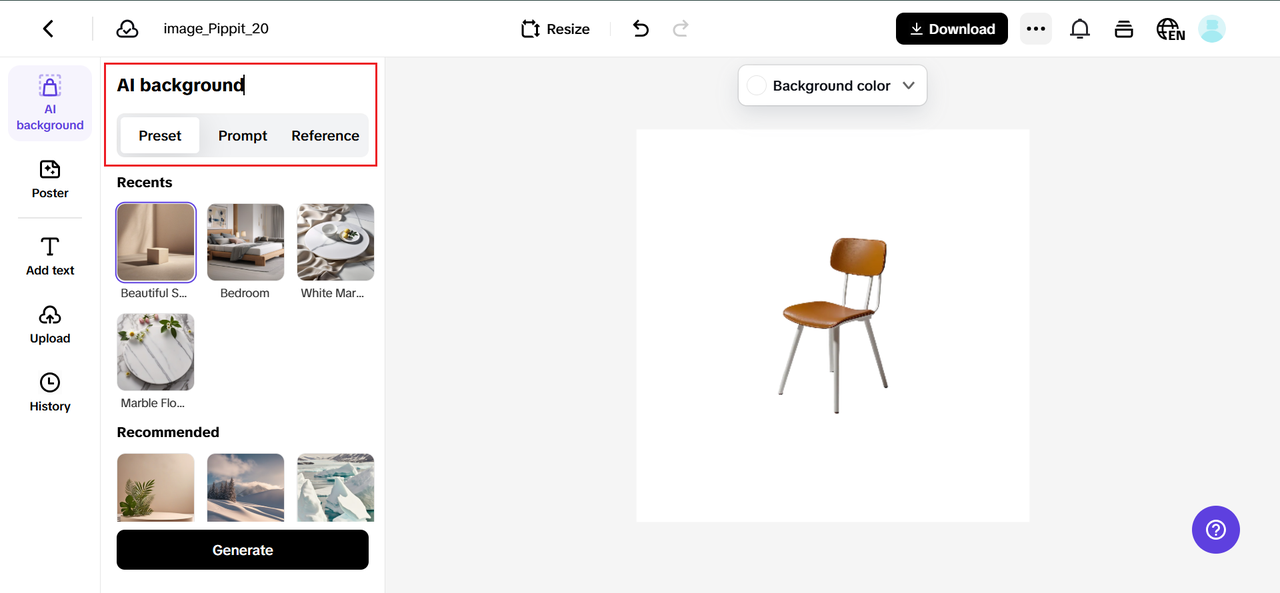
Provide a visual narrative in no more than two seconds. What's the best part? You don't require studio lighting, tangible props, or a camera crew. You can use AI to create your visual brand identity, create dozens of backdrop designs, and evaluate what works best from a single dashboard using technologies like Pippit.
Conclusion
A beautiful background is great—but a purposeful one? That’s what gets your product noticed, remembered, and bought.
With Pippit’s background maker, you can move beyond aesthetic guesswork. Whether you’re building an ad campaign, launching new products, or refining your feed, Pippit lets you create backgrounds that not only look great, but sell great too.
Try Pippit today and start designing visuals that speak to your customer—and drive them to act.
