
Yellowstone's Shocking Deaths: TV's Deadliest Drama Unveiled
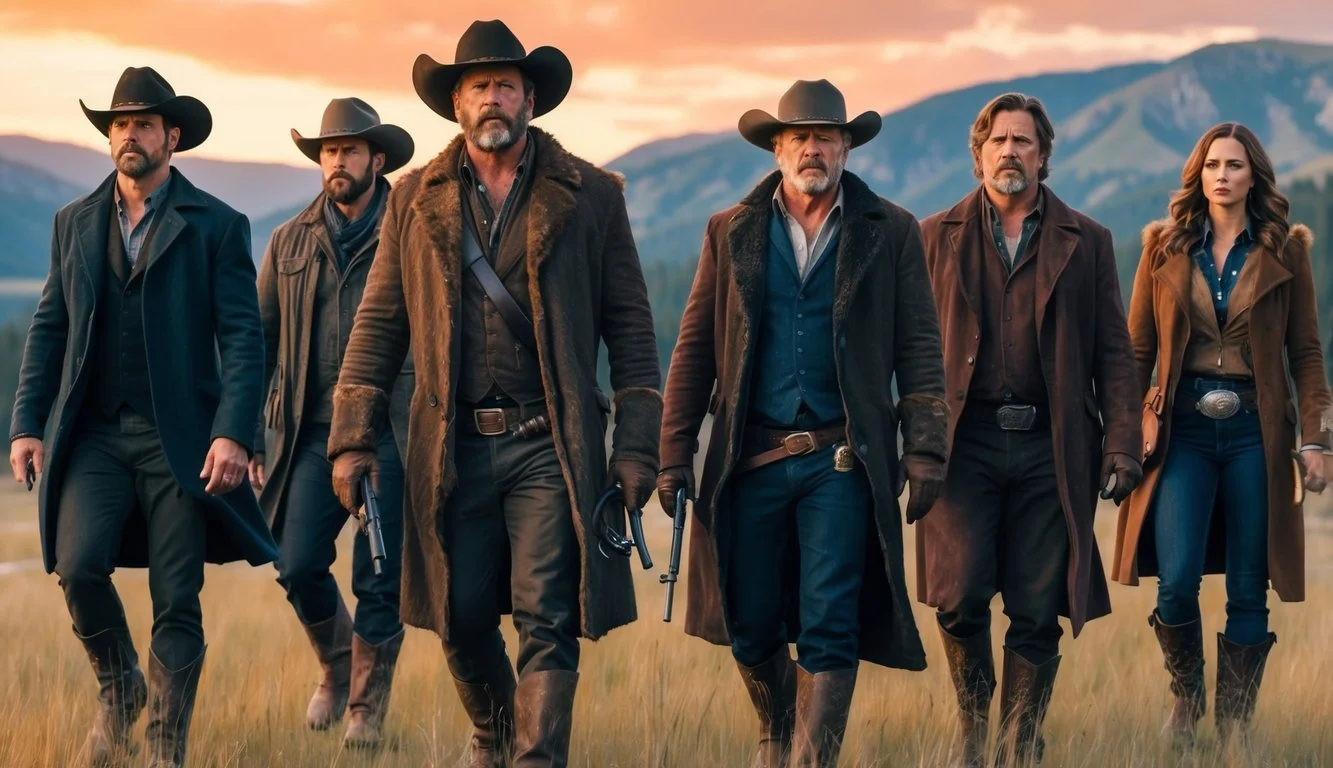
Yellowstone has carved its place in television history through its unflinching portrayal of violence and shocking character deaths. From the series premiere to its most recent episodes, creator Taylor Sheridan has never hesitated to eliminate key characters in brutal fashion when the story demands it.
With over 25 significant character deaths across its seasons, Yellowstone ranks among TV's most lethal dramas, though it falls short of the body counts seen in shows like Game of Thrones (with approximately 200 named character deaths) or The Walking Dead (which exceeded 100 major character deaths). What sets Yellowstone apart isn't necessarily the quantity of deaths but their quality—the emotional impact and narrative significance of each loss.
The Dutton family's saga consistently delivers memorable death scenes that serve the storyline rather than merely shocking viewers. Characters like Lee Dutton, John's eldest son killed in the very first episode, or ranch hand Fred Myers, who met a grim fate in the infamous "train station," demonstrate how Yellowstone uses death not as gratuitous violence but as a storytelling tool that reinforces the show's themes of loyalty, power, and survival.
Yellowstone Series Overview
Yellowstone has established itself as a cultural phenomenon since its 2018 debut, captivating audiences with its raw portrayal of modern Western life. The series blends family drama with high-stakes power struggles, all set against the breathtaking backdrop of Montana.
Creation and Development
Taylor Sheridan created Yellowstone after finding success with his screenplays for Sicario and Hell or High Water. The series premiered on June 20, 2018, on the Paramount Network, marking the channel's first scripted drama series.
Sheridan, who grew up on a Texas ranch, drew from his own experiences to craft an authentic Western narrative. His vision for the show was clear: to depict the modern American West with all its complexities and contradictions.
The production values for Yellowstone were ambitious from the start, with reports indicating a budget of approximately $5 million per episode. This investment allowed for the spectacular cinematography that has become one of the show's trademarks.
Sheridan's hands-on approach extended to directing multiple episodes, ensuring his creative vision remained intact throughout the series.
Overview of the Dutton Family
At Yellowstone's center is the Dutton family, led by the formidable patriarch John Dutton (Kevin Costner). As the owner of the largest contiguous ranch in the United States, John fights relentlessly to protect his land and legacy.
His children represent different facets of the Dutton empire: Beth (Kelly Reilly), the fiercely intelligent and ruthless business strategist; Jamie (Wes Bentley), the complicated lawyer with political ambitions; and Kayce (Luke Grimes), the former Navy SEAL torn between his Native American wife's culture and his family obligations.
Rip Wheeler (Cole Hauser), John's loyal ranch foreman and Beth's love interest, functions as an unofficial son. His unwavering dedication to the Dutton family has made him a fan favorite.
The complex relationships between these characters drive much of the drama, with shifting alliances and buried secrets continually reshaping family dynamics.
Setting and Themes
Yellowstone unfolds primarily on the expansive Dutton ranch, which borders Yellowstone National Park and a Native American reservation. This geographical positioning creates natural tensions that the series expertly exploits.
The show explores several recurring themes: the clash between tradition and progress, the erosion of the American West's way of life, and the moral compromises people make for family and legacy. Land ownership emerges as a central motif, with different groups making competing claims based on history, law, and power.
Violence serves as both currency and consequence in Yellowstone's world. Characters frequently resort to brutal measures, raising questions about justice and morality on the frontier.
The series also examines Native American issues through characters like Chief Thomas Rainwater (Gil Birmingham), who challenges the Duttons' claim to land his people inhabited for generations.
Key Deaths in Yellowstone
Yellowstone has become notorious for its shocking character deaths that reshape the show's landscape. These pivotal moments serve as turning points in the narrative and often leave lasting consequences for surviving characters.
Impact on Narrative
The murder of John Dutton's eldest son Lee in the pilot episode established Yellowstone's willingness to eliminate major characters. This death catalyzed the entire series, setting up the conflict between the Dutton family and the neighboring Native American reservation.
Dan Jenkins' death after multiple attempts on his life demonstrated how the series builds tension across seasons. His character represented outside business interests threatening the Dutton ranch.
Sarah Nguyen's murder showed the lengths Beth's assistant would go to protect the family. This death raised the stakes regarding the investigation into the Duttons' activities.
The assassination of livestock agent Steve Hendon reinforced that no character—even those representing law enforcement—is safe in the Yellowstone universe.
Character Departures and Their Consequences
Beth Dutton's assistant's suicide following his murder of a journalist demonstrated how violence creates ripple effects throughout the narrative. His death served as a reminder of the psychological toll of loyalty to the Duttons.
The tragic death of Kayce and Monica's son marked one of the show's most emotional moments. This loss tested their relationship and created emotional depth beyond the usual power struggles.
Wade Morrow's brutal execution showcased the ranch's harsh brand of frontier justice. His killing served as a warning to others who might cross the Duttons.
Garrett Randall's murder closed a major storyline while opening new questions about Jamie Dutton's future loyalties. This death exemplified how Yellowstone uses character eliminations to simultaneously resolve and create narrative tension.
Performance and Reception
Yellowstone has established itself as a ratings powerhouse and cultural phenomenon since its 2018 debut. The series has shattered viewership records while generating significant critical discussion about its portrayal of the modern American West.
Critical Acclaim
Yellowstone's critical reception has evolved significantly across its run. Early seasons received mixed reviews, with critics praising Kevin Costner's commanding performance as patriarch John Dutton while questioning the show's melodramatic elements.
The series currently holds a 76% approval rating on Rotten Tomatoes, with later seasons garnering stronger critical support. Critics have particularly commended the show's stunning cinematography capturing Montana's landscapes and Taylor Sheridan's exploration of land conflicts and family dynamics.
Awards recognition has been slower to materialize. Despite its massive popularity, Yellowstone received its first major nominations only in 2021, with Screen Actors Guild nominations for ensemble cast and Kevin Costner's performance.
Audience Response
Yellowstone has demonstrated extraordinary audience growth rarely seen in today's fragmented television landscape. The Season 4 finale attracted over 10.3 million viewers, establishing it as cable's most-watched show outside of HBO's Game of Thrones in recent years.
The series has proven especially successful in traditional broadcast metrics while simultaneously building a substantial streaming audience through Peacock. This cross-platform success demonstrates its broad appeal across viewing demographics.
Social media engagement surrounding Yellowstone continues to surge, with hashtags trending during premieres and finales. The show has inspired fashion trends, tourism to filming locations, and renewed interest in modern westerns.
The death scenes examined in this article consistently rank among the most discussed moments online, generating millions of views on YouTube clips and extensive Reddit discussions.
Yellowstone in Comparison to Other TV Series
Yellowstone has carved out its place in television history through its unflinching portrayal of death and familial drama. The series stands apart with its unique blend of modern western themes and high-stakes conflict that rivals even the most acclaimed dramatic television.
Rank in Television History
Yellowstone ranks among television's most impactful dramas in terms of its portrayal of character deaths. Unlike shows such as Game of Thrones or The Walking Dead, which normalized shocking deaths, Yellowstone presents fatalities with lasting narrative consequences.
The series averages 3-4 significant character deaths per season, placing it in the middle tier of deadly TV dramas. However, what sets Yellowstone apart is not the quantity but the quality and meaning behind each death.
Major character deaths in Yellowstone typically serve as crucial plot catalysts rather than mere shock value. This approach has helped the series maintain strong ratings, with approximately 8-10 million viewers per episode in recent seasons.
Comparison With Taylor Sheridan's Other Works
Taylor Sheridan's narrative fingerprints are evident when comparing Yellowstone to his other creations. The prequel series 1883 shares Yellowstone's unflinching approach to mortality but differs in its historical setting and frontier journey context.
In 1883, death serves as a constant companion throughout the westward expansion, while Yellowstone uses death more strategically to advance power dynamics. Both series embrace the harsh realities of their respective time periods with equal intensity.
Sheridan's storytelling consistently features strong family bonds tested by external threats and internal conflicts. His characters face moral ambiguity and impossible choices, traits that connect his body of work beyond just death scenes.
The violence in Yellowstone feels more calculated and modern compared to the environmental and circumstantial deaths frequently portrayed in 1883's nineteenth-century setting.
Evolution of TV Series Dramatization

Television dramas have undergone significant transformation in their approach to storytelling, character development, and audience engagement over the decades. The boundaries of acceptable content continue to expand as viewing platforms diversify and audience appetites evolve.
Shifts in Storytelling Techniques
Early television dramas followed predictable formulas with clear moral boundaries and limited graphic content. Shows typically reset after each episode, maintaining status quo storytelling rather than continuous narrative evolution.
This changed dramatically with HBO's pioneering series like "The Sopranos" (1999-2007), which introduced morally complex protagonists and season-long story arcs. The "golden age of television" emerged as writers embraced novelistic approaches to character development and plot.
Streaming platforms further revolutionized storytelling techniques, releasing entire seasons simultaneously and encouraging binge-watching behaviors. This format allowed for more intricate plotting and slower character development.
Violence and death shifted from mere plot devices to meaningful narrative elements. Shows like "Breaking Bad" and "Game of Thrones" used shocking deaths to subvert expectations and demonstrate genuine consequences within their worlds.
Audience Expectations Over Time
Modern audiences increasingly expect sophisticated storytelling with morally ambiguous characters and realistic consequences. The demographic viewing intense dramas has expanded beyond traditional target markets.
Viewer tolerance for graphic content has evolved substantially. What would have been considered shocking in the 1990s is now often standard fare on streaming and premium cable.
Key Audience Shifts:
Greater acceptance of antihero protagonists
Higher expectations for narrative complexity
Increased tolerance for graphic violence when narratively justified
Demand for diverse representation in storytelling
HBO pioneered the approach of treating audiences as intelligent viewers capable of following complex narratives. This philosophy has now become standard across streaming platforms like Netflix, Amazon, and Hulu.
Social media has transformed how audiences engage with dramatic content, creating immediate feedback loops and cultural conversations around shocking moments in series like "Yellowstone."
Marketing and Promotion of Yellowstone
Paramount Network executed a sophisticated marketing strategy to establish Yellowstone as a cultural phenomenon. Their approach combined traditional advertising with digital innovation to reach both rural and urban audiences.
Role of Trailers
Yellowstone's trailer campaigns strategically highlighted the star power of Kevin Costner while showcasing the show's stunning Montana landscapes. The initial season trailer garnered over 8 million views before the premiere, setting expectations for a modern Western drama with cinematic quality.
Paramount utilized targeted trailer placement across multiple platforms, including prime television spots during sporting events and strategic digital distribution. These trailers emphasized family conflict, ranch politics, and intense character moments rather than typical Western tropes.
The network also released character-specific teasers before major season premieres, building anticipation for key storylines. Notably, the Season 4 trailer broke viewing records with 14.7 million views in its first 24 hours after the shocking Season 3 finale.
Trailers for Yellowstone consistently maintained a cinematic quality that differentiated the series from other television offerings, reinforcing its position as premium content despite airing on basic cable.
Merchandising Strategies
Paramount capitalized on Yellowstone's popularity through a multifaceted merchandising approach targeting the show's dedicated fanbase. Official Yellowstone apparel, featuring the iconic "Y" ranch brand, became particularly popular, with Dutton Ranch hoodies and hats becoming fashion statements beyond the show's core audience.
The network partnered with western wear companies to create authentic ranch-inspired clothing lines that mirrored styles worn by characters on the show. These collaborations extended to premium whiskey brands, saddle makers, and home décor items.
Limited-edition box sets included exclusive behind-the-scenes content and collector's items like replica ranch tokens. Paramount also launched a dedicated online store offering everything from drinkware to Dutton Ranch Christmas ornaments.
Digital merchandising expanded into mobile games and branded experiences at western events. The strategic merchandising positioned Yellowstone not just as a television program but as a lifestyle brand appealing to both rural audiences and urban viewers fascinated by western aesthetics.
Conclusion
Yellowstone's approach to character deaths reflects its unflinching portrayal of the violent realities of modern ranching life. The series stands alongside shows like Game of Thrones and The Walking Dead in its willingness to eliminate significant characters without warning.
Taylor Sheridan's writing doesn't use death merely for shock value but as a natural consequence of the dangerous world his characters inhabit. This narrative choice reinforces the show's central themes about survival, power, and family legacy.
When compared to television history's most lethal dramas, Yellowstone occupies a unique position. It balances character-driven storytelling with unexpected violence that feels organic rather than gratuitous.
The emotional impact of these deaths resonates beyond mere statistics. Characters like Lee Dutton and Sarah Nguyen may have died early, but their absences continue to influence plot developments and character motivations throughout the series.
Yellowstone's mortality rate may not match the sheer numbers of certain fantasy or horror series, but its deaths carry exceptional narrative weight. This approach has helped cement the show's reputation as one of television's most compelling contemporary dramas.
As the series continues, viewers remain aware that no character is truly safe. This underlying tension contributes significantly to Yellowstone's dramatic power and enduring appeal with audiences.
