
Did Breaking Bad Need El Camino?
Examining Its Impact on the Series Legacy
Breaking Bad stood as one of television's most tightly crafted stories, leaving little room for lingering questions after its acclaimed finale. When El Camino: A Breaking Bad Movie arrived years later, it offered fans a return to Jesse Pinkman’s world and an answer to the simple question of what happened next. Some viewers welcomed this continuation, while others wondered if the series truly needed a postscript.
El Camino aimed to serve as a coda, exploring Jesse’s immediate aftermath rather than rewriting or undoing the show’s ending. The debate remains whether this film was essential for the story’s legacy or merely a thoughtful add-on for devoted fans. The conversation around El Camino’s necessity highlights differing views on what makes an ending satisfying and if expanding a closed story enhances or diminishes its impact.
Breaking Bad’s Enduring Impact

Breaking Bad remains a defining drama in modern television, notable for its complex characters and morally charged storytelling. Its final episodes and central figures continue to generate discussion and analysis years after the finale aired.
The Series Finale and Its Cultural Significance
The last episode of Breaking Bad, "Felina," aired in 2013 and immediately became one of television's most talked-about conclusions. The narrative tied up the core journey of Walter White, portrayed by Bryan Cranston, as he confronted the consequences of his transformation from a teacher into a drug kingpin.
The Albuquerque setting, with its unique landscapes and atmosphere, grounded the show and contributed to its identity. Critical reaction highlighted the finale’s balance between satisfaction and ambiguity, generating ongoing debate on whether Walter’s end was deserved or redemptive.
Media outlets, critics, and fans alike praised Breaking Bad for providing closure while avoiding forced optimism. The nuanced writing and performances made the show’s conclusions feel authentic and meaningful, setting a benchmark for series finales.
Legacy of Walter White and Jesse Pinkman
Walter White's evolution remains one of TV’s most memorable character arcs. His actions and psychology continue to inform discussions about morality, power, and family, while Bryan Cranston’s performance is cited among the best in television history.
Jesse Pinkman, played by Aaron Paul, provided a contrasting moral compass and added emotional weight to the series. His struggles and survival resonated with many viewers long after the show ended.
The relationship between Walter and Jesse was central to Breaking Bad’s impact. Their partnership, betrayals, and mutual dependence have been analyzed in academic and fan circles alike.
Breaking Bad’s influence is seen in subsequent dramas that emulate its character-driven narratives, nuanced villains, and tense storytelling, securing its place in television history.
Why El Camino Was Made
El Camino: A Breaking Bad Movie emerged as a direct response to lingering questions left after Breaking Bad’s finale. The director, Vince Gilligan, saw an opportunity to revisit Jesse Pinkman’s story while addressing fan interest and the larger legacy of the series.
Motivation Behind the Sequel
Breaking Bad concluded in 2013, leaving Jesse Pinkman’s fate open. Many fans wondered what happened to him after his escape in the series finale. This uncertainty sparked speculation across social media, fan forums, and interviews.
El Camino was made to provide direct narrative closure for Jesse. Rather than creating a traditional spin-off, the film functioned as a coda—a final chapter focused on one character’s emotional journey. The filmmakers wanted the movie to serve as a bridge for viewers who sought a more definitive answer about Jesse’s future, making it function less as a standalone sequel and more as a concluding epilogue.
Vince Gilligan’s Vision
Vince Gilligan, creator of both Breaking Bad and its spin-offs, conceived El Camino while drafting Breaking Bad’s final episode. He admitted that he could not stop thinking about Jesse’s next steps after the finale, indicating that the story still felt unfinished to him.
Gilligan directed and wrote El Camino himself, ensuring continuity with the original show’s tone and style. His approach was deliberate: rather than chasing nostalgia, he prioritized a restrained story tailored to the established universe. Gilligan’s intent was to deliver a film that fit seamlessly into the Breaking Bad world, expanding on Jesse’s arc without overextending the original narrative.
Fan Demand and Cultural Context
For years after Breaking Bad’s ending, fan demand for Jesse Pinkman’s fate remained high. Online discussions, interviews, and petitions highlighted the persistent curiosity and investment in his storyline. This audience interest provided a natural context for the creation of a film that would address these outstanding questions.
The cultural landscape, shaped by successful television spin-offs like Better Call Saul, made it clear that Breaking Bad’s universe could support additional stories. The release of the film also coincided with a growing trend of television series receiving epilogues or sequels in movie form. Gilligan and the creative team responded directly to this climate, using El Camino as a targeted way to close an open chapter for a beloved character.
El Camino’s Narrative Role
El Camino acts as a direct continuation of Breaking Bad, offering a focused look into Jesse Pinkman's fate after the main series ends. By tracing his immediate actions, internal struggles, and past connections, the film provides clarity and depth where the series left ambiguity.
Jesse Pinkman’s Search for Redemption
After surviving captivity and trauma, Jesse Pinkman is forced to confront his past choices. El Camino places Aaron Paul’s character at the center, showing his attempt to seek atonement for his involvement in Walter White’s meth empire. Jesse’s journey is not only physical escape but also a mental reckoning.
He seeks forgiveness—sometimes silently—by reaching out to people who once cared for him and grappling with memories of pain and guilt. Simple acts, such as sparing lives and expressing gratitude to old friends like Skinny Pete, highlight his refusal to sink further into the cycle of violence. Redemption, for Jesse, becomes about finally taking control and refusing to be used as a pawn.
Exploration of Jesse’s New Identity
El Camino allows viewers to witness Jesse shaping a new sense of self. Freed from the dominance of Walter White and the constraints of criminal associates, Jesse’s struggle shifts from surviving to defining who he will become.
Throughout, Jesse displays resourcefulness and resilience—skills forged by his ordeal, as well as a heightened moral awareness. He devises plans, negotiates for his freedom, and accepts help only when necessary. This process is marked by moments of vulnerability, such as when he hesitates to trust others, showing that freedom from physical captivity does not mean immediate psychological liberation.
Jesse’s final escape is not portrayed as triumphant, but as quietly hopeful. His new identity is grounded in a desire for anonymity and peace, rather than notoriety or revenge.
Flashbacks and Story Expansion
El Camino employs a series of flashbacks to fill narrative gaps and revisit key relationships in Jesse Pinkman’s life. These scenes introduce perspectives and details absent from Breaking Bad, such as Jesse’s interactions with people like Todd Alquist and his late father figure, Mike Ehrmantraut.
Flashbacks enhance the plot by providing context to Jesse’s trauma and his gradual resolve. Key examples include:
Character Flashback Purpose Todd Alquist Illustrates psychological control and lingering threats Jesse endured Mike Ehrmantraut Explores themes of escape, regret, and starting over
These backward looks are not merely reminders but active elements shaping Jesse’s final decisions. By expanding on relationships and events, the film transforms ambiguous background details from Breaking Bad into critical motivations for Jesse’s choices in El Camino.
Key Characters and Performances
El Camino: A Breaking Bad Movie extends the original series through its focus on familiar faces and introduces new conflicts tied to the past. The cast’s performances anchor the film, highlighting the evolution, desperation, and loyalty that define its central characters.
Jesse Pinkman: Central Protagonist
Jesse Pinkman, played by Aaron Paul, drives El Camino's narrative and emotional core. Paul's portrayal dives deep into Jesse's trauma following his captivity, exploring a man shaped by regret and survival.
The script demands a balance of vulnerability and resourcefulness. Viewers see Jesse in constant motion—evading law enforcement, searching for money, and seeking freedom. His quiet determination and broken state underscore the weight of everything he endured in Breaking Bad.
Paul intentionally plays Jesse with restraint, often expressing more through silence and physicality than words. This nuanced performance both complements and contrasts his arc in the original series. For many, Jesse’s journey in El Camino offers a credible postscript to his role in Breaking Bad.
Supporting Figures: Skinny Pete and Badger
Skinny Pete (Charles Baker) and Badger (Matt Jones) reappear as Jesse’s steadfast friends, delivering loyalty and unexpected wisdom. Their involvement is crucial in Jesse’s escape during the film’s early scenes.
The two support Jesse by providing shelter, a car, and money—risking their own freedom. Their banter, though lighter in tone, underscores the genuine camaraderie among the trio. A notable moment: Skinny Pete devises the plan that helps mislead police and creates a pivotal diversion.
Table 1. Skinny Pete and Badger’s Contributions:
Character Key Action Skinny Pete Provides cover, arranges car swap Badger Supplies cash, delivers Jesse’s car
Despite their limited screentime, Baker and Jones offer heartfelt performances, grounding the film in relationships built across the original series.
The Return of Todd Alquist and Neil Kandy
Todd Alquist, played by Jesse Plemons, appears in flashback, embodying the chilling demeanor that defined his original role. Todd’s relationship with Jesse is explored further, depicting moments of forced cooperation during Jesse’s captivity.
Plemons plays Todd with unsettling calmness, emphasizing the character’s unsettling mix of politeness and brutality. His scenes reveal details behind Jesse’s trauma, providing context for Jesse’s psychological scars.
Neil Kandy (Scott MacArthur), a new antagonist, becomes central to the film’s climax. As the welder responsible for Jesse’s chains, Neil is both formidable and opportunistic. MacArthur’s performance brings threat and tension, escalating the stakes as Jesse negotiates for his freedom.
Notable Cameos and Their Impact
El Camino features appearances by several Breaking Bad alumni through flashbacks and brief scenes. Walter White (Bryan Cranston) returns for a significant diner scene, offering closure and reminding viewers of Jesse’s origins. The chemistry between Paul and Cranston is intact, with their conversation reinforcing themes of fate and consequence.
Saul Goodman (Bob Odenkirk) is glimpsed in a previously unseen segment, adding legal tension and recalling his mentor-protégé connection to Jesse. Other cameos, such as Jonathan Banks as Mike Ehrmantraut, provide thematic depth by bookending Jesse’s story with moments from his past.
Each appearance is purposeful, designed to tie personal history to present choices. These cameos contribute both emotional weight and continuity, resonating with long-time fans of the series.
El Camino Versus Better Call Saul
El Camino and Better Call Saul take different paths in expanding the Breaking Bad franchise. Each serves a distinct narrative function, building on existing stories and deepening the universe.
Approaches to Expanding the Franchise
El Camino is a direct continuation of Breaking Bad, focusing on Jesse Pinkman's fate after the series finale. As a movie, it delivers a tightly focused narrative that resolves unfinished questions about Jesse, offering closure in under two hours. The story remains grounded in the immediate aftermath of Breaking Bad’s last episode, staying close to its parent show's tone and style.
Better Call Saul, in contrast, operates as a prequel and character study. Spanning multiple seasons, it explores Jimmy McGill’s gradual transformation into Saul Goodman. The series broadens the universe by introducing new characters, expanding on legal and criminal worlds, and delving into character backstories. Its slower pace allows for greater thematic exploration and connects various threads from Breaking Bad in new contexts.
The table below highlights key differences:
Aspect El Camino Better Call Saul Format Movie TV Series Timeline Post-Breaking Bad Pre- and Post-Breaking Bad Focus Jesse Pinkman Jimmy McGill/Saul Goodman Narrative Scope Closure Expansion & Context
Character Connections Across the Universe
El Camino draws primarily on characters directly tied to Jesse’s journey, with appearances from familiar figures like Walter White and Skinny Pete. The movie references key events and relationships but keeps its circle small.
Better Call Saul is more expansive in its connections. It centers on Jimmy McGill’s evolution but features recurring and interconnected roles for characters like Mike Ehrmantraut, Gus Fring, and others. Backstory and context for Saul Goodman are deeply explored, illuminating decisions and motivations seen later in Breaking Bad.
The timelines overlap subtly in Better Call Saul’s later seasons, bringing in direct nods or cameos from Breaking Bad characters and setting up events that lead into the original series. In summary, while El Camino is about finishing Jesse’s story, Better Call Saul is about fleshing out the wider universe and understanding how key figures transform and interconnect.
Thematic Resonance and Closure
El Camino revisits Jesse Pinkman after the events of Breaking Bad and explores questions of redemption and self-determination. The film aims to provide a more defined endpoint for Jesse’s struggle while reflecting on the series’ key themes.
Redefining Closure for Jesse Pinkman
Breaking Bad’s finale left Jesse Pinkman escaping captivity, but his ultimate fate was ambiguous. El Camino extends this narrative by chronicling Jesse’s efforts to build a new life, free from past traumas.
Jesse’s journey in El Camino focuses on decisions that reflect his desire for change and freedom. The film explores how closure for a character is not just about physical escape but emotional healing. Jesse’s actions, such as seeking help and making peace with his past, show personal growth and a rejection of old cycles.
By its conclusion, El Camino presents closure not as a grand moment but as a series of choices that allow Jesse to redefine himself. The film suggests that closure, for him, is earned incrementally rather than delivered instantly.
Moral and Emotional Takeaways
El Camino emphasizes the weight of Jesse’s actions and the challenge of seeking redemption. Throughout the film, he grapples with guilt and the consequences of his involvement in past crimes.
The story does not offer an easy redemption or total absolution. Instead, it shows Jesse trying to do right where possible, reclaiming some measure of agency and morality. Small gestures and difficult decisions highlight his ongoing internal struggle.
Viewers see the cost of freedom and the complexity of redemption. The film underlines that closure is rarely simple, especially for someone with Jesse’s past. El Camino uses its narrative to reflect on the emotional realities of moving forward after trauma.
Production and Release

El Camino was developed with careful attention to distribution strategy, location authenticity, and creative leadership. Each aspect influenced how the film built on Breaking Bad’s established legacy.
Netflix and Distribution Choices
Netflix became a central partner in the release of El Camino, securing streaming rights and debuting the film globally on its platform.
This allowed fans to watch the film simultaneously regardless of region, providing accessibility and wide reach. AMC, which aired the original Breaking Bad series, also broadcasted the film shortly after its Netflix release, bridging new and returning viewers.
The release strategy highlighted changing entertainment trends. By prioritizing streaming, producers addressed fans' shift toward digital platforms rather than traditional network broadcasts. Netflix’s involvement provided substantial marketing support, increased international visibility, and positioned El Camino as a major event for both Breaking Bad fans and the broader streaming audience.
Role of Albuquerque as a Filming Location
Albuquerque, New Mexico, served once again as the main filming location, preserving visual and cultural continuity from Breaking Bad.
Familiar landmarks, desert landscapes, and residential streets provided essential backdrops for Jesse Pinkman's storyline. Returning to Albuquerque also allowed the creative team to capture the same gritty, atmospheric tone established in the original series.
Location choices extended beyond mere aesthetics. Albuquerque's recurring presence reinforced the authenticity of the Breaking Bad universe, giving long-time fans visual cues that connected El Camino directly to the series. Filming in and around the city also supported local economies and maintained strong ties with the region, continuing a well-established production tradition.
Behind the Scenes: Direction and Writing
Vince Gilligan, Breaking Bad’s creator, returned as writer, director, and executive producer for El Camino.
His direct involvement shaped every phase of production, ensuring narrative continuity and consistency in style. Gilligan’s script picked up immediately after the Breaking Bad finale, centering on Jesse Pinkman, portrayed by Aaron Paul, as he navigated freedom and trauma.
The writing process drew heavily on character-driven storytelling. Gilligan balanced suspenseful plotting with deep personal moments, aiming to deliver a satisfying epilogue rather than a standalone sequel. Behind the camera, his attention to detail, pacing, and visual language mirrored the approach that defined Breaking Bad, resonating with the tone and quality viewers expected.
Supporting Cast and New Faces
El Camino draws from Breaking Bad’s expansive ensemble to provide resolution for key side characters. Not all supporting roles are new, but their inclusion shapes Jesse Pinkman’s fate and the narrative’s final tone.
Ed Galbraith’s Final Return
Ed Galbraith, portrayed by Robert Forster, reappears in a crucial moment for Jesse. As the discreet "disappearer," Ed had previously engineered new identities for those desperate to escape. In El Camino, he holds firm to his exacting standards, refusing Jesse's request for help until Jesse meets the strict payment conditions.
This final appearance is significant beyond plot mechanics—Robert Forster’s performance brings grounded realism at a pivotal crossroads for Jesse. Forster, who passed away the day El Camino was released, delivers a subtle but impactful performance that highlights themes of consequence and redemption. Ed’s businesslike demeanor and emphasis on personal responsibility provide moral clarity amidst the chaos of Jesse's life.
Table: Ed Galbraith's Key Appearances
Appearance Actor Function in Story Breaking Bad S5 Robert Forster Provides new identity for Walter White El Camino Robert Forster Offers a last chance at freedom to Jesse
Roles of Robert Forster and Mike Ehrmantraut
Robert Forster’s involvement in El Camino is more than a cameo. His role as Ed anchors Jesse’s options and underscores the seriousness of escape within the Breaking Bad world. His performance, marked by restraint and authenticity, leaves a lasting mark on the franchise.
Mike Ehrmantraut, brought back for a flashback sequence, is another crucial figure in Jesse’s journey. Played by Jonathan Banks, Mike appears in a scene set before his death, providing advice that echoes throughout the movie. Mike’s signature calm and measured guidance continues to influence Jesse’s choices as he seeks a new beginning.
By including both characters, El Camino honors the depth of Breaking Bad’s universe. Their appearances serve as reminders of the enduring consequences of past actions and the rare chances for redemption.
Conclusion: Assessing the Legacy
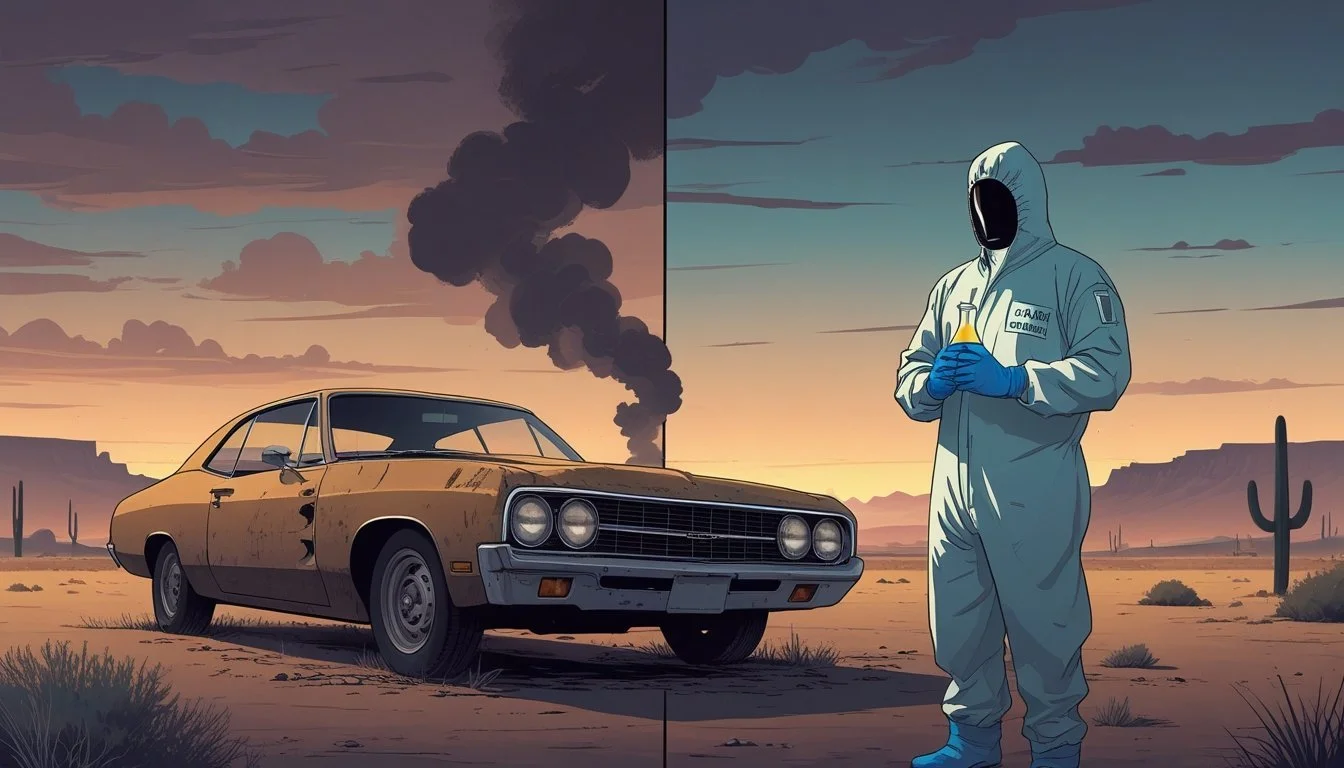
El Camino serves as a postscript to Breaking Bad, aiming to close Jesse Pinkman's story. The film provides answers to lingering questions without drastically changing the fate established in the original series.
Many viewers felt that Breaking Bad already offered a satisfying conclusion, especially for Jesse's arc. Some critics argue that El Camino did not fundamentally alter the legacy or themes of the show.
In evaluating the legacy, it's useful to consider:
Aspect Breaking Bad El Camino Finality Conclusive for Walt; ambiguous for Jesse Gives Jesse closure Tone Intense, complex Reflective, subdued Focus Walt's journey, morality Jesse's escape, redemption
The main contribution of El Camino is additional context for Jesse's pursuit of redemption. It echoes the show's emphasis on consequences and choices, but with a narrower focus.
For some fans, the film enriched the universe by providing a last glimpse into the aftermath. For others, its low-stakes narrative felt unnecessary, leaving the essence of Breaking Bad unchanged.
Legacy debates remain, but both projects maintain high regard for their careful storytelling and character work. The conversation about redemption and necessity is likely to continue among viewers.
