
Every Heist in Breaking Bad Was a Metaphor for Control
Exploring Power Dynamics in the Series

Every major heist in Breaking Bad is more than a plot device; each one acts as a metaphor for the characters’ ongoing attempts to wrest control—over their environment, their partners, and, ultimately, their own lives. As Walter White’s criminal ambitions grow, these high-stakes operations mirror his deepening obsession with power and order. Television shows rarely use criminal acts with such layered intent, but Breaking Bad intertwines each scheme with Walt’s psychological state.
Scenes like the train heist or the methylamine warehouse break-in reveal how control is always fragile, forcing characters to confront chaos and unforeseen consequences. Each heist becomes a test, not just of criminal ability, but of each person’s grip on circumstances that are always slipping away. The ways these operations succeed or unravel illustrate the theme of control as central to the entire narrative.
Viewers are invited to analyze not just the logistics of the heists but also what they mean for the people involved. By anchoring these dramatic moments in the psychology of control, Breaking Bad sets itself apart from other television shows, using each meticulously staged crime to explore its characters’ deepest motivations and anxieties.
The Motif of Control Throughout Breaking Bad
Control operates as a persistent motif in Breaking Bad, shaping not only the heists but also the personal and ethical boundaries of each main character. The show's use of symbolic storytelling methods—such as colors, settings, and recurring objects—grounds its exploration of power and autonomy.
How Control Shapes Character Motivations
Walter White’s transformation illustrates how a need for authority drives critical choices. Scenes like his insistence on meticulous lab procedures or demanding loyalty from Jesse highlight his reliance on control to mask personal insecurities.
Other characters, such as Gus Fring, approach control with precision and calculated detachment. This creates tension, especially when their methods conflict with Walt’s increasingly reckless behavior.
Skyler White exercises control through financial maneuvering and secrecy, counterbalancing Walt's illegal activities with her own forms of agency. These examples demonstrate how the desire for power or autonomy motivates actions, setting off larger conflicts within the series.
Thematic Evolution of Control
The theme of control in Breaking Bad shifts alongside the narrative. Early seasons show Walt struggling with a lack of control in health, work, and family.
As he gains influence, his methods become harsher and more symbolic—exemplified by moments like the "Fly" episode, where a seemingly trivial pursuit stands in for his psychological need to dominate his environment. The desert landscape, a repeated visual motif, underscores the isolation that absolute control can breed.
Over time, the consequences of seeking control become clear, as characters face the loss of relationships and escalating dangers. The motif is reinforced visually and thematically, showing how attempts to seize power often result in unintended costs.
Every Major Heist as a Metaphor for Control
Throughout Breaking Bad, each major heist showcases the characters' attempts to establish control over chaotic and dangerous situations. These operations reveal Walter White’s determination and the shifting power dynamics among those involved in the methamphetamine trade.
The Methylamine Train Heist
The methylamine train heist stands out as one of the most ambitious schemes. Walter White, Jesse Pinkman, and Todd risk everything to steal liquid methylamine from a moving train without detection. The operation is meticulously planned, requiring split-second coordination and absolute trust.
Walter's insistence on perfection—leaving no trace, keeping to strict timing—symbolizes his obsession with mastery and dominance. Jesse’s growing nervousness contrasts with Walt’s confidence, highlighting the tension between control and unpredictability. Todd’s drastic action against the boy who witnesses the aftermath underscores the moral cost of seizing and maintaining power.
The heist’s outcome foreshadows future conflicts within their group, as cracks begin to show when actions spiral beyond anyone's control.
The Warehouse Robbery
The warehouse robbery involves the crew stealing a barrel of methylamine from a heavily guarded facility. Security systems, schedules, and guards escalate the difficulty, forcing Walter, Jesse, and Mike to improvise under pressure.
Here, the metaphor for control is evident in the way each character responds to unplanned challenges. Walter manipulates the situation to ensure success, while Mike favors caution. Jesse adapts to shifting circumstances, displaying resourcefulness. The heist exposes both Walt’s growing arrogance and Mike’s frustrations with the increasing recklessness.
This robbery symbolizes the fragile balance between strategy and chaos, with control always just out of reach.
The Methylamine Barrel Heist
During the methylamine barrel heist, Walter and his partners coordinate to extract a key barrel from under the noses of rival drug lords and law enforcement. This high-stakes theft hinges on deception, precision, and split-second timing.
Walter’s personal drive for dominance is at its peak. He orchestrates distractions and manipulates his team to ensure everything unfolds to his design. The heist is a turning point for Jesse, who recognizes how Walter uses manipulation to maintain power.
Symbolically, the barrel’s theft represents Walter’s claim not just over drugs but over everyone around him. The act foreshadows the eventual collapse of their partnerships as loyalties are tested and true intentions are exposed.
Breaking Down Character Dynamics and Power Struggles
Power, agency, and shifting loyalties shaped the central relationships in Breaking Bad. Each main character’s actions around the heists exposed vulnerabilities, ambitions, and the constant struggle to maintain control.
Walter White’s Pursuit of Absolute Power
Walter White began as a quiet, overlooked chemistry teacher. Cancer and financial pressure pushed him into the drug trade to secure wealth for his family. But as he embraced his alter ego, Heisenberg, Walter’s pursuit of control went beyond necessity.
Each heist—whether stealing methylamine or orchestrating a train robbery—demonstrated his escalating desire for dominance. Walter’s carefully planned schemes reflected both his intelligence and his need to assert total authority. Power soon became his main goal, overshadowing his original intentions.
Walter often sidelined others, making decisions unilaterally. This undermined collaboration and fostered distrust. The more successful the heists, the more untouchable he felt, driving a wedge between his relationships and entrenching his identity as Heisenberg.
Jesse Pinkman’s Internal Conflict
Jesse Pinkman’s involvement in the heists exposed his inner turmoil. Unlike Walter, Jesse continually struggled with guilt and empathy. As he participated in increasingly dangerous schemes, Jesse’s moral boundaries were repeatedly tested.
Key events, such as Todd’s deadly actions during the train heist, left Jesse shaken. He questioned not only the morality of their crimes but also his perceived loyalty to Walter. The search for meaning and redemption often placed Jesse at odds with Heisenberg’s assertiveness and greed.
Jesse’s trust in Walter eroded as he began to recognize manipulation and coercion. These internal struggles made him vulnerable, yet they also drove him toward moments of resistance. The tension between self-preservation and remorse framed Jesse’s role in the power dynamics of the group.
Skyler and the Illusion of Control
Skyler White’s journey was defined by her attempts to regain control over her family’s future. When she learned of Walter’s criminal activities, she initially tried to distance herself. Over time, she became entangled, even managing the car wash business to launder Walter’s drug money.
Skyler’s actions reflected both fear and pragmatism. She believed she could contain the chaos, but Walter’s growing ambition rendered her efforts increasingly futile. The wealth she helped accumulate became a symbol of the corruption penetrating their family life.
Despite her resourcefulness, Skyler’s influence was often undermined. As Walter’s power grew, her authority as a partner and mother diminished. Her struggle revealed the limits of agency in an environment dominated by secrecy, deceit, and shifting allegiances.
Visual Motifs and Symbolism in Heist Sequences
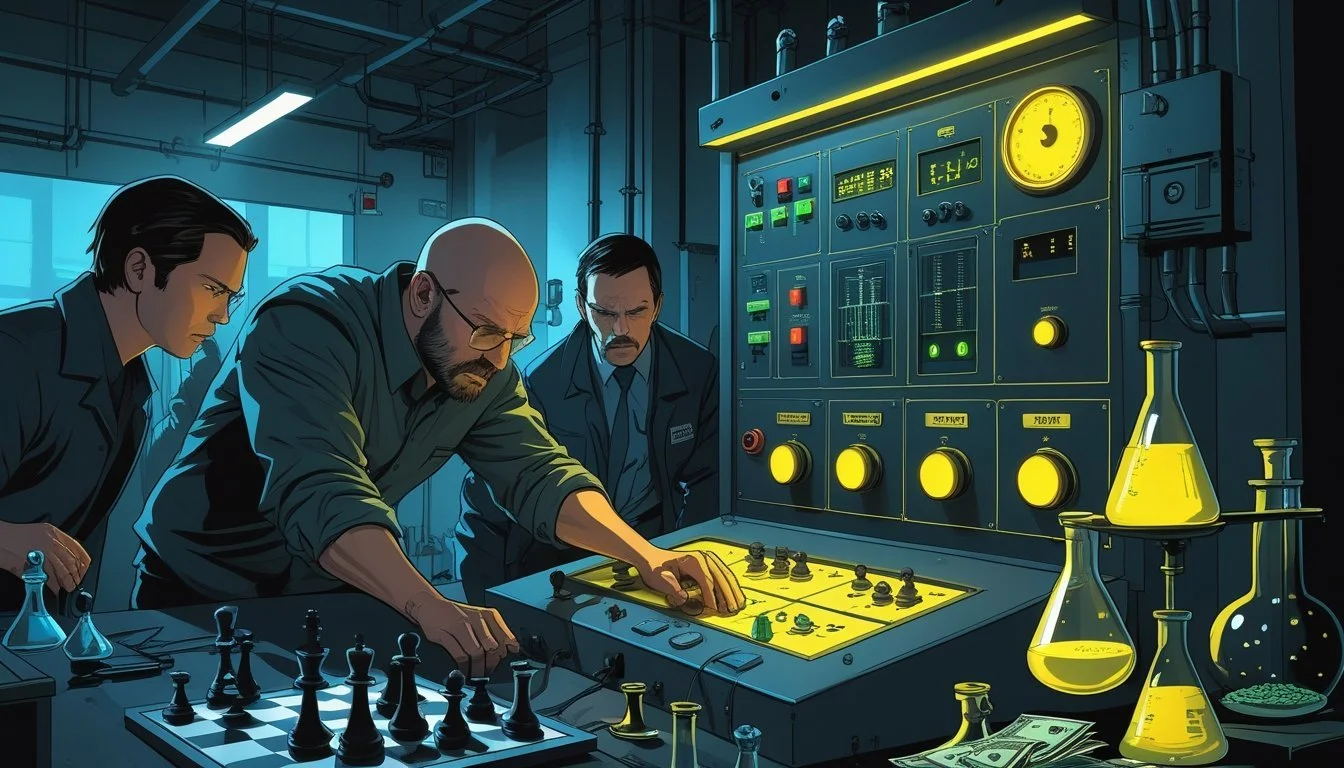
Breaking Bad incorporates visual motifs throughout its heist sequences to communicate deeper themes related to power and the consequences of control. Symbols like chosen colors, recurring objects, and visually striking moments enrich the narrative, giving each heist a layered significance beyond the action.
Use of Colors to Represent Control
Color choices during heist scenes are rarely coincidental. Walter White’s wardrobe, for example, often features green, a shade associated with money and greed. This signals his fluctuating control over both his criminal enterprise and his personal life.
Skyler frequently appears in blue, signifying calmness or detachment, in contrast to the tension of heist scenes. The saturation and lighting are manipulated to enhance feelings of instability or dominance. For example:
Character Common Color Possible Meaning Walter White Green Greed, ambition Skyler Blue Detachment, calm Jesse Pinkman Red Danger, vulnerability
Color symbolism mirrors power dynamics within the group and visually tracks each character’s assertion or loss of control, especially as heists grow riskier.
The Pink Teddy Bear’s Significance
The pink teddy bear is a recurring visual motif closely tied to the theme of unintended consequences. Its burned, one-eyed appearance first appears after the mid-air plane collision, which is itself a consequence of Walt’s earlier actions.
This object is often seen floating in Walter’s pool. Its destruction—losing an eye, a charred pelt—serves as a metaphor for the collateral damage of Walter’s decisions. The juxtaposition of the bear’s innocence with its ruined state alludes to both lost control and lingering guilt.
Heist sequences tend to escalate the theme seen here: that every attempt at control creates unpredictable fallout. The repeated presence of the bear visually ties individual heists to the greater cost of Walter’s drive for dominance.
The Tarantula and the Damage to the Eyes
The tarantula appears in relation to the train heist, collected by the young boy who unwittingly witnesses the crime. The tarantula is a subtle but important symbol. It represents hidden dangers and the fragile boundary between calculated risk and chaos.
Damage to the eyes, including the bear’s missing eye and other visuals, signals willful blindness or the refusal to see consequences. Eyes often serve as a motif for insight and perception—or the lack thereof.
The combination of the tarantula’s silent threat and visual cues about eyes enforces the message: in seeking control, characters overlook threats that are right before them. These motifs reinforce the series’ exploration of the limits and costs of power.
Chemistry and Manipulation as Metaphors for Control
In Breaking Bad, chemistry is more than a science—it’s how Walter White creates, destroys, and reshapes the world around him. The series connects scientific method and manipulation directly to themes of power and authority, using specific techniques and ideas as storytelling tools throughout Walter’s journey.
Chemistry as Power
Walter White’s expertise in chemistry is central to his ability to seize and maintain control. Early in the series, Walter demonstrates his command of samarium and other elements to solve problems others see as impossible. Each chemical reaction he designs—whether creating drugs, explosives, or diversions—reflects his growing mastery over his environment.
Chemical processes are linked to Walter's psychological need for predictability and dominance. As his crimes become more complex, chemistry gives him an edge over adversaries. This precise knowledge isolates him from those who lack it, reinforcing his sense of superiority and fueling the show’s ongoing themes.
Key chemistry scenes highlight sudden shifts in power:
Phosphine gas: Used to intimidate Tuco.
Thermite reactions: Breaking into a chemical warehouse.
Ricin: Subtle manipulation of enemies.
Each moment underlines how control is wielded not just physically, but intellectually.
Breaking Bad’s Use of Scientific Metaphors
Scientific metaphors are woven throughout Breaking Bad to illustrate change and control. Walter often describes life, decisions, and personal transformation through the lens of chemistry, such as referencing chirality or molecular symmetry during his classroom lessons.
These metaphors mirror the show’s larger themes. For example, the transformation of elements represents Walter’s gradual moral shift. Chemical processes like reduction and oxidation serve as analogies for his changing identity and the unpredictable consequences of his actions. Even the specific mention of elements such as samarium connects scientific principles to moments of personal significance, embedding power struggles within the narrative fabric.
The show’s reliance on chemistry metaphors turns abstract themes into tangible moments, underscoring how Walter manipulates both his surroundings and the people within them. Science, in this context, becomes a precise instrument of control, emphasizing the calculated nature behind every major heist and maneuver.
Consequences of the Pursuit of Control
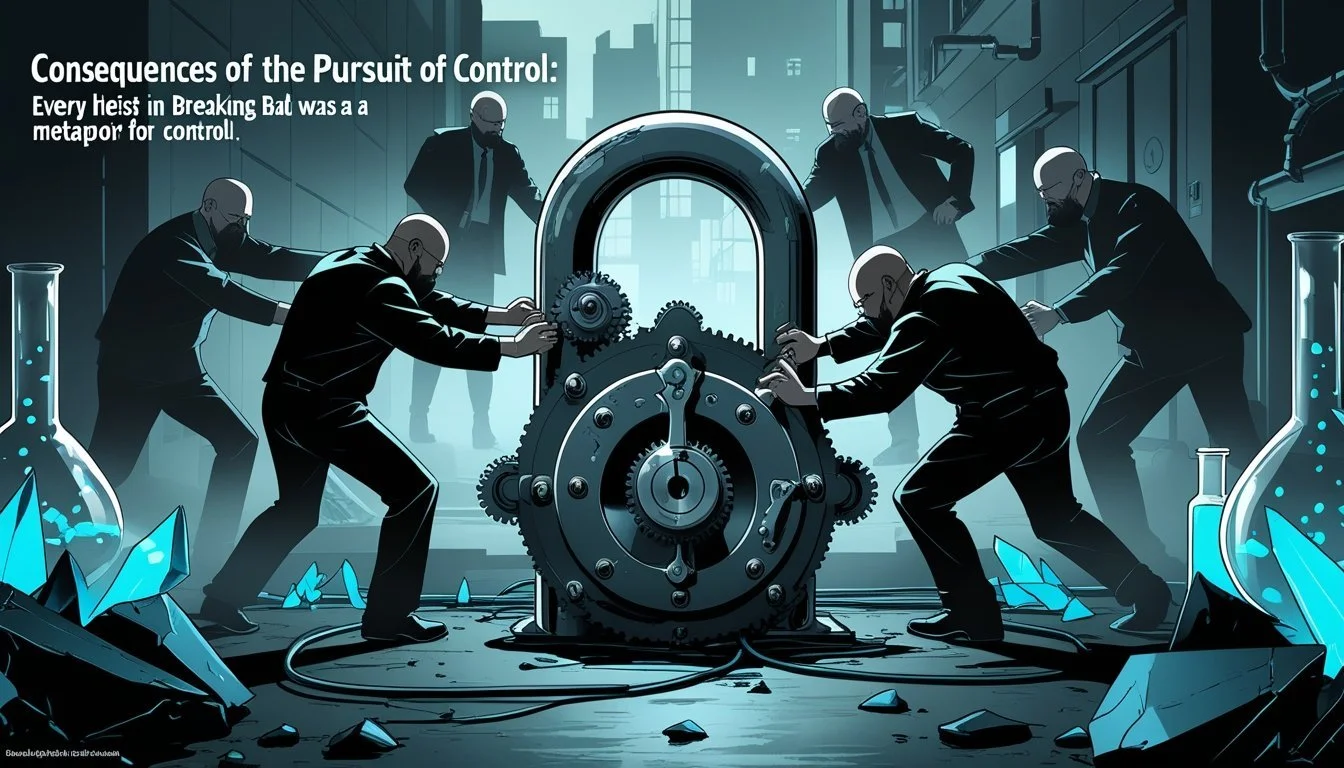
Walt’s need for control led to irreversible outcomes that shaped his fate and the lives of those around him. The cost of his actions is most visible through loss, destruction, and the erosion of personal bonds.
Death and Self-Destruction
Walter White’s pursuit of control is closely linked to death, both literal and figurative. His lung cancer diagnosis begins as a motivator, but as his criminal ambitions grow, the consequences escalate.
Many pivotal moments in the series, such as Walt’s decision to let Jane die, show the fatal costs of his need for dominance. The chain reaction of this and other actions leads directly to the deaths of figures like Mike Ehrmantraut and even Hank Schrader.
Walt’s own self-destruction is gradual. Each heist and power play deepens his moral decay, showing how the illusion of control often results in personal ruin. In the end, his actions contribute to both his physical decline and the collapse of everything he once cared about.
Impact on Family and Relationships
Walt’s family is repeatedly placed at risk by his choices. Skyler White is pushed into a world of secrets and criminality, forced to navigate the fallout from Walt’s double life. The psychological burden of Walt's actions leads Skyler to anxiety and fear for her children's safety.
Walt’s relationship with his son, Walt Jr., is also severely damaged. Moments of trust break down as Walt prioritizes secrecy and power. The pursuit of control often isolates him, leaving his family fractured and his marriage in turmoil.
Hank Schrader, Walt’s brother-in-law, becomes both a victim and adversary. The impact of Walt’s choices destroys not just his own family, but also directly leads to Hank's death, highlighting the profound and tragic consequences that ripple out from one man’s fixation on control.
Lasting Impact and Cultural Relevance
Breaking Bad’s enduring influence stems from its sharp integration of setting and narrative structure. The city of Albuquerque provided more than a backdrop; it enhanced the themes of isolation and transformation, while the infamous plane crash sequence demonstrated creative approaches to foreshadowing and storytelling.
Albuquerque as a Symbolic Landscape
Albuquerque, New Mexico, became a defining visual and symbolic component for the series. The city’s desert vistas and suburban architecture mirrored the isolation and volatility of the characters. Wide, barren landscapes emphasized Walter White's growing distance from morality, while the controlled chaos of urban spaces echoed the series’ focus on power struggles.
The choice to set Breaking Bad in Albuquerque was both practical and meaningful. The region’s stark light, unique culture, and recognizable landmarks contributed to the show's distinctive tone. Iconic locations like Saul Goodman’s office, Los Pollos Hermanos, and the car wash grounded the drama in a real, yet almost surreal, world.
Albuquerque’s specific cultural identity also influenced the show’s atmosphere. Subtle details—such as local slang, law enforcement practices, and small-town politics—deepened the authenticity. As a result, the city became an inextricable part of Breaking Bad’s story about control, ambition, and consequence.
The Plane Crash and Narrative Foreshadowing
One of Breaking Bad’s most impactful uses of foreshadowing was the mid-series plane crash, a direct result of Jane Margolis’s death. Flash-forward teasers in season two—showing charred debris and pink teddy bear parts—built mystery while quietly signaling catastrophe. Each cryptic image drew viewers into deeper speculation.
The eventual crash symbolized the ripple effect of Walter’s decisions. His quest for control over his environment caused unintended chaos for strangers, not just those in his immediate circle. The event also highlighted showrunner Vince Gilligan’s interest in karma and unintended consequences.
Foreshadowing through visual motifs, such as the recurring teddy bear, showcased Breaking Bad’s meticulous planning. These elements invited the audience to connect scattered clues, reinforcing the series’ narrative complexity and the illusion of control in an unpredictable world.
Legacy of Metaphors and Motifs in Breaking Bad
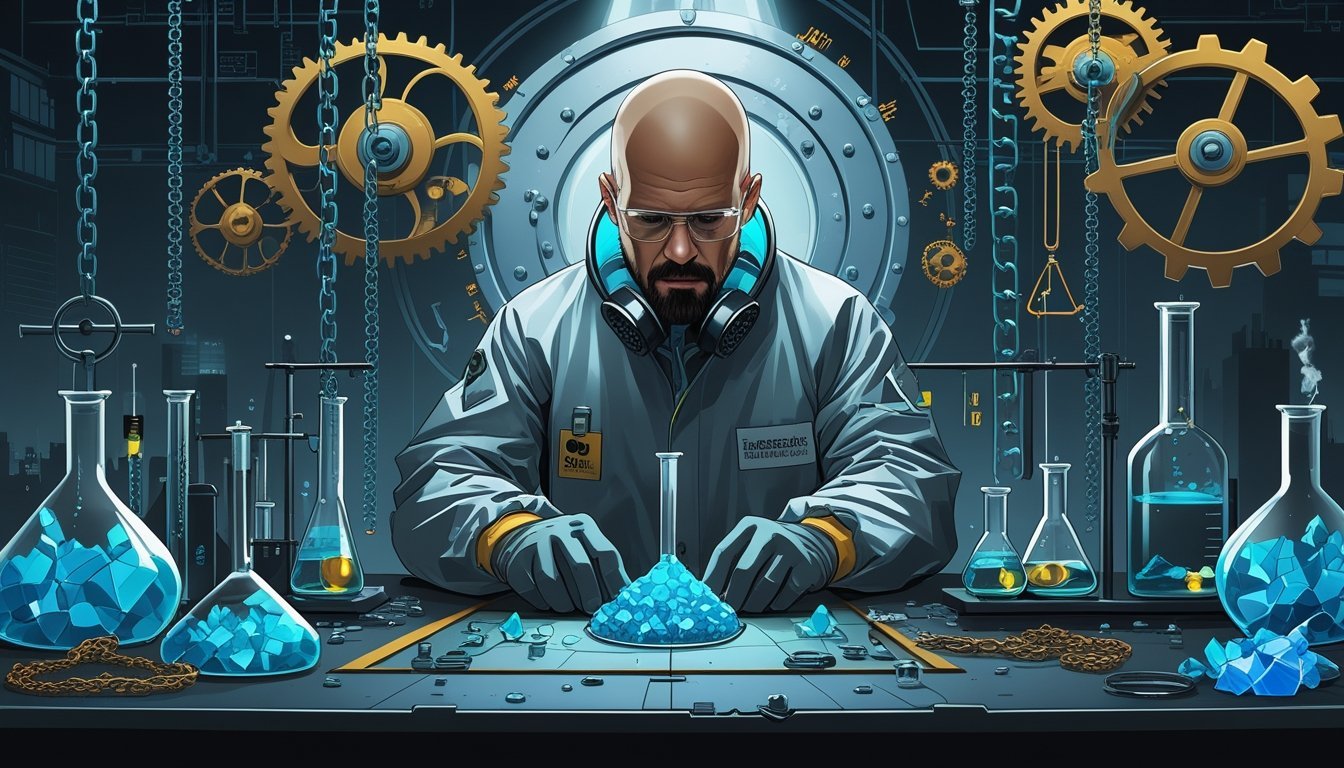
Breaking Bad’s use of metaphors and motifs has reshaped how visual storytelling is approached in serialized television. Its impact can be seen in the evolution of narrative techniques and thematic explorations in later shows.
Influence on Modern Television Shows
Breaking Bad set a new benchmark for embedding symbolism into plot and character development. Colors, such as Walt’s green shirts symbolizing greed and Skyler’s blue representing calm or sadness, inspired other creators to use costume and setting as narrative tools. Subsequent series, including Better Call Saul and Mr. Robot, have drawn on color-coded cues and recurring objects to reinforce thematic undercurrents.
Writers and directors now often use visual metaphors—like the recurring teddy bear in Breaking Bad—to foreshadow events and illustrate character arcs. The show’s careful layering of motifs, such as insects symbolizing decay or obsession, influenced how later dramas employ everyday objects to deepen emotional stakes.
Television storytelling since Breaking Bad increasingly prioritizes subtlety and viewer engagement with symbolic elements. Audiences are encouraged to interpret meaning, not just follow plot, leading to richer viewer experiences.
Enduring Themes of Control and Power
Control and power are woven throughout Breaking Bad’s metaphors and motifs, shaping both character actions and the show’s overall message. Walt’s obsession with controlling his environment manifests in heists, the meticulous pursuit of flies in “Fly,” and his handling of family and adversaries.
Motifs like broken objects, spilled liquids, and recurring mirrors signal shifts in who holds power. Each heist isn’t just a plot device; it visually and narratively demonstrates Walt’s changing grasp on control. The series often portrays attempts at control as fleeting, with motifs suggesting chaos and unintended consequences.
These themes have influenced other shows, which now explore the irony and instability of control through similar narrative techniques. The legacy of Breaking Bad lies in how it fused metaphors, motifs, and storytelling to explore human desires for power in nuanced, lasting ways.
