
Why Walt’s Final Confession in Breaking Bad Hit So Hard
Explained Through Character Depth and Story Impact
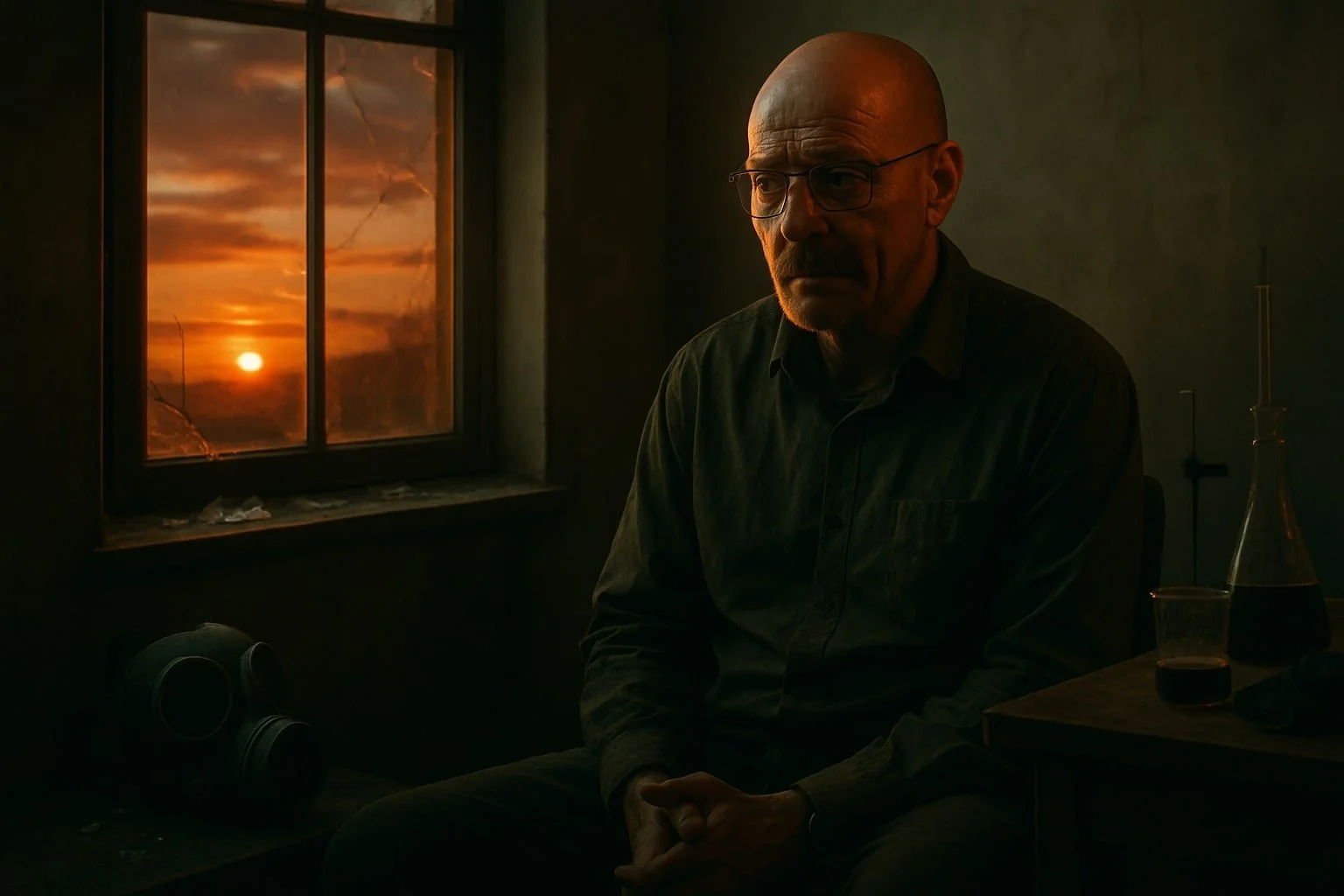
Walter White’s final confession in Breaking Bad stands out as a memorable turning point because it strips away his self-justifications and reveals his true motivations. By admitting he “did it for me,” Walt abandons the lies he told his family and himself, forcing the audience to see him as he really is. This rare honesty displays a complexity that resonates with viewers.
Fans and critics felt the impact of this moment because it differs from Walt’s previous manipulations and deceit. Instead of portraying himself as a victim or martyr, he takes ownership of his choices. The confession’s raw truth makes it one of the most significant scenes in the series.
The Context of Walt’s Final Confession
Walter White’s final confession in Breaking Bad is not an isolated moment. It is the result of accumulated decisions, shifting alliances, and the collapse of his personal justifications. Understanding this confession requires looking at the major turning points, the events leading up to it, its place in the episode “Felina,” and the emotional atmosphere of the series finale.
Turning Point in the Series
Walt’s confession in the last episode marks a decisive shift from his earlier attempts at self-justification. Throughout the series, he often tells himself and others that his actions are motivated by family or necessity.
In the finale, he explicitly abandons these rationalizations, finally admitting to Skyler that he did what he did for himself. This breaking of self-delusion reveals a level of honesty that he has not shown before.
This transformation is important, as it brings the show’s central theme—identity and self-awareness—to a head. Walt’s admission stands out against the repeated lies and manipulations that define his journey as Heisenberg.
Build-Up Throughout Breaking Bad
From the pilot episode, Walt’s actions grow increasingly violent and morally ambiguous. Each season intensifies his conflicts, both with himself and with others.
Events like Jane’s death, his manipulation of Jesse, and the conflicts with Gus Fring gradually strip away his excuses. By the fifth season, the audience sees a man consumed by pride, not just a victim of circumstance.
Walt’s history of rationalizing his behavior is repeatedly challenged by those close to him, especially Skyler and Jesse. The gradual unraveling of his relationships amplifies the significance of his final confession.
Timing in Felina
Walt’s confession comes in “Felina,” the final episode of Breaking Bad. At this point, he has lost nearly everything—his family, money, partners, and reputation.
Choosing to confess at this lowest moment gives added weight to his words. There is no longer any pretense left to maintain; Walt has no one left to impress or manipulate.
The timing is deliberate. By placing his confession right before his last actions, the show contrasts Walt’s final act of truth with the violent resolution that follows, highlighting the complexity of his character.
Series Finale’s Emotional Weight
The series finale of Breaking Bad carries an immense emotional burden, both for the characters and the viewers. Felina is filled with goodbyes, reckonings, and closure for major storylines.
Walt’s confession to Skyler is one of the most emotionally charged exchanges in the entire show. Unlike previous conversations, there is a directness and vulnerability that sets it apart.
This frank moment provides the audience with the resolution many have been waiting for. It reframes the entire series, letting viewers see Walter’s journey in a new light and underlining the tragic consequences of his choices.
Unpacking the Confession: What Walt Actually Said
Walter White’s final confession marked a turning point in Breaking Bad. He addressed the truth about his actions, confronted his motivations, and dismantled the persona he had built as Heisenberg.
Admissions About the Meth Empire
In his confession, Walter White openly admitted to leading a meth operation. He acknowledged his involvement at every stage, from manufacturing to distribution. Walt did not shy away from the scope of his criminal activity, describing how his choices affected not only his family, but also his community.
He outlined his methods and partnerships, specifically referencing relationships with Jesse Pinkman and other key figures. Walt’s candor about his role dismantled any remaining ambiguity over who was behind the infamous blue meth.
His detail-oriented approach provided clarity rather than leaving room for speculation. This brutal honesty forced anyone hearing the confession to reevaluate what they thought they knew about Walt and his motivations.
Personal Responsibility
Unlike earlier moments where Walt tried to justify his decisions for the sake of his family, this confession took a different tone. He accepted personal responsibility for his actions. Walt admitted that building the meth empire was ultimately his own choice.
“I did it for me,” he said directly, abandoning his previous narrative of self-sacrifice. This statement was pivotal, as it stripped away any lingering excuses about needing to provide for his family or being forced by circumstance.
By claiming responsibility, Walt exposed the depth of his ego and desire for power. The confession allowed the truth of his transformation from teacher to criminal to stand on its own, without the crutch of noble intentions.
Resolving the Heisenberg Persona
Walt’s confession also addressed his alter ego, Heisenberg. He broke down the artificial barriers he had placed between his two identities, blending them into one undeniable self.
No longer hiding behind aliases or rationalizations, Walt acknowledged that Heisenberg was not a mask, but a true extension of himself. This resolution was both an admission and a reckoning, merging Walter White’s legacy with that of his criminal counterpart.
His words brought the dichotomy between Mr. White and Heisenberg to a close. By doing so, he reclaimed ownership over his story and the consequences it brought, both for himself and those around him.
Impact on Main Characters
Walt’s final confession had ripple effects on those closest to him. The truth shattered personal relationships, created moments of catharsis, and set the stage for consequences that carried through the last moments of Breaking Bad.
Skyler’s Reaction
Skyler’s response to Walt’s confession was marked by a mixture of relief, sorrow, and anger. Having lived under the weight of Walt’s lies for years, she finally heard him admit that his actions stemmed from self-interest—not for the family. This moment offered Skyler some clarity.
She no longer had to maintain the facade or accept Walt’s justifications. Instead, she was forced to confront the reality that she and her children were collateral in his pursuit of power and pride. The confession may have given her a grim sense of closure.
Skyler’s feelings were complicated by fear for her family’s safety. She had to weigh the emotional fallout of Walt’s actions against the practical challenge of rebuilding her life, especially with Marie’s anger and the authorities circling. Walt’s admission fundamentally changed her understanding of their marriage and its collapse.
Jesse Pinkman’s Freedom
For Jesse Pinkman, Walt’s confession signaled the end of years of manipulation and control. Throughout the series, Jesse was haunted by Walt’s actions, especially surrounding Jane’s death and the exploitation of his loyalty. The confession allowed Jesse to realize that Walt’s motives were self-serving.
This acknowledgement provided Jesse with a psychological release. He was no longer burdened by the illusion that Walt acted out of protection or care for him. The final scene, paired with the song “Baby Blue,” emphasized Jesse’s emancipation as he drove away from captivity.
Walt’s willingness to admit the truth meant Jesse could reclaim agency over his own life. It marked the start of a new chapter—one where he was free from Walt’s shadow, able to grieve and heal away from the chaos that defined his time under Walt’s influence.
Fallout for the Family
Walt’s confession left his family in a state of instability and uncertainty. Skyler, already struggling from public suspicion and law enforcement scrutiny, faced the daunting task of navigating life as a single parent. The confession didn’t erase the legal trouble or the social stigma attached to Walt’s criminal empire.
Walter Jr. (Flynn) and Holly would grow up knowing the reality behind their father’s descent, not just the myth he once tried to uphold. Relationships within the White family strained further as the truth of Walt’s motivation surfaced. Marie was left grappling with Hank’s fate and the loss it brought.
The confession did not offer hope so much as a reckoning. The fallout forced everyone connected to Walt to confront the true cost of his choices, a weight that lingered well beyond his final moments.
Moral and Psychological Resonance
Walter White’s final confession in Breaking Bad strikes a deep moral and psychological chord. By blending ego, the complexities of trust and betrayal, and a sense of closure, the confession reshapes how viewers understand his journey and motives.
Ego and Redemption
Walter White’s confession is a stark confrontation with his own ego. For much of the series, he insists that his crimes were for his family, concealing the true motivation—his pride in being the best at what he does.
In admitting, “I did it for me,” Walter strips away all pretense. This admission transforms his character, facing the reality that his actions were driven by ego rather than altruism.
His words also touch on redemption. While not asking for forgiveness, Walter’s honesty gives weight to his choices. The audience sees a man acknowledging who he truly is, which lends his character unexpected dignity during his final moments.
Aspect Effect Ego Exposes real motives Redemption Provides honest self-assessment
Themes of Trust and Betrayal
Throughout the series, trust is repeatedly fractured between Walter and those close to him, especially Jesse Pinkman, his wife Skyler, and even Hank. The confession clarifies his manipulations, such as fabricating stories and endangering those around him for self-preservation.
Walter’s admission is not just a private moment—it is the collapse of trust with his loved ones. By confessing his true motivations, he reveals why relationships unraveled and why betrayals happened.
Jesse, in particular, is directly affected by Walter’s relationship with honesty. The confession comes as a relief, confirming for both the characters and the audience that Walter’s “concerned dad” persona was a mask over ruthless ambition.
Final Closure for the Audience
Walter’s final confession functions as a turning point for viewers. After years of following his complex decisions, the audience receives a clear understanding of what truly drove him: not just survival, but the pursuit of recognition and control.
This directness addresses unresolved tensions. By clarifying his stance, Walter provides viewers with a rare form of closure in a story marked by moral ambiguity.
The confession’s unvarnished truth wraps up loose threads regarding trust and motive. As a result, the ending feels both definitive and psychologically satisfying without resorting to melodrama.
Usage of Symbolism in the Finale
The Breaking Bad finale is loaded with visual and narrative symbols that carry deep meaning. Walter White’s final actions and surroundings reinforce longstanding themes while providing closure to critical story elements.
Ricin and Loose Ends
Ricin recurs through several seasons as a silent, ever-present threat. Walter retrieves the final vial in the last episode, signaling a closing of unfinished business.
Instead of using the poison against his most obvious enemies, Walt saves it for Lydia Rodarte-Quayle. This decision isn’t random; Lydia’s continued involvement in the meth operation represents the industry’s persistence even without Walt. By quietly administering the ricin through her tea, he eliminates a key figure but also symbolically ends his role as an innovator of murder.
Ricin stands as a literal and figurative tool to sever dangerous ties. Walt’s use of it in the finale is not about rage but precision, resolving one of the longest-running plot threads and asserting final control.
Blue Meth’s Legacy
Blue meth has always symbolized Walt’s mark on the world, blending his chemistry prowess with his criminal aspirations. In the finale, the purity of the product still circulating acts as a testament to his enduring influence, even after his empire collapses.
Jack’s gang tries to capitalize on the notoriety of blue meth, but Walt’s presence in the lab during his final moments serves as a stark reminder: only he could create such perfection. Walt’s pride in the product underlines his complex motivations—not just providing for his family, but also leaving a signature in the criminal world.
The recurring shots of the blue meth lab, and Walt’s almost reverent gestures toward the equipment, reinforce that his true legacy is neither money nor violence. It is the indelible trace left by his scientific genius in a morally compromised field.
El Paso and Gray Matter
El Paso and Gray Matter weave in themes of missed opportunity and unfinished ambition, integral to Walt’s internal battles. The cartel’s power in El Paso contrasts sharply with Walt’s isolated rise and fall in Albuquerque, highlighting what separates him from traditional drug lords.
Gray Matter Technologies, the company Walt co-founded and left, resurfaces when he watches Gretchen and Elliott’s televised interview. Their comments about his limited role push Walt into reclaiming both his narrative and place as a mastermind.
By orchestrating his confrontation with Gretchen and Elliott, and ensuring his money reaches his son via Gray Matter, Walt uses both organizations as instruments for his redemption and as reminders of the paths not taken. The symbolism here is rooted in Walt’s enduring struggle for recognition and his refusal to fade into obscurity.
Tension With Supporting Antagonists
Walt’s trajectory toward his final confession was shaped not only by his actions but also by the escalating threats from those around him. Key figures—including Jack, Todd, Lydia, and Hank Schrader—each introduced an additional layer of pressure that influenced Walt’s decisions and turned his path even darker.
Jack and Todd’s Role
Jack Welker and his nephew Todd Alquist became crucial players as they transformed from uneasy partners to unpredictable threats. After Walt involved Jack’s white supremacist gang to eliminate his enemies, he effectively lost control over the partnership. Jack was not bound by Walt’s moral boundaries, such as they were, and the gang’s increasing violence—including the murder of Hank Schrader—escalated the stakes dramatically.
Todd’s fascination with Walt and his willingness to please both Jack and Lydia made him even more dangerous. He killed innocents, such as the young witness in the desert, without hesitation. As Walt’s power faded, Jack and Todd’s influence grew, culminating in the hijacking of Walt’s entire operation and even the kidnapping of Jesse Pinkman. This betrayal by Jack and Todd left Walt isolated, forced him into desperate measures, and set the stage for his final acts of confrontation and confession.
Lydia’s Fate
Lydia Rodarte-Quayle ran the distribution side but preferred to manipulate events from the background. Her anxiety and contingency planning kept her deeply involved in the meth business even as things unraveled. Lydia’s allegiance shifted whenever it suited her—she encouraged Todd’s brutality and sought new partners once Walt’s organization showed weakness.
Walt eventually targeted Lydia in his final gambit, revealing how dangerous passive manipulation could be. He poisoned her, ending her role without confrontation but with clear intent. Lydia’s arc serves as a contrast to the overt violence shown by Jack’s crew; her danger was quieter but just as influential, keeping threats alive through connections, tactics, and strategy instead of direct aggression.
Face Off With Hank Schrader
Hank Schrader, Walt’s brother-in-law and a relentless DEA agent, was a constant source of tension. Once Hank discovered Walt’s secret, the dynamic shifted from family drama to a high-stakes game of cat and mouse. Hank’s pursuit was personal and professional, pushing Walt to further extremes to protect himself.
Hank’s refusal to compromise with Walt, even when faced with death, demonstrated his unwavering morality. This standoff led to the devastating scene in the desert where Jack executed Hank despite Walt’s desperate pleas. The fallout cemented the point that Walt’s actions destroyed those closest to him and left an unbridgeable divide. Hank’s determination forced events to their brutal conclusion, making Walt’s eventual confession not just an admission of guilt, but a reckoning with the consequences of his choices.
Creator Vision and Cultural Impact

Walter White’s final confession stands out due to its precise storytelling direction, the contrast with other prestige TV fare such as Mad Men, and its significant influence on later crime dramas. The script, choices made by Vince Gilligan, and how the show shaped expectations for its genre are crucial for understanding the impact of this moment.
Vince Gilligan’s Narrative Choices
Vince Gilligan, creator of Breaking Bad, focused on morally complex characters and visual storytelling. His approach was to avoid the obvious unless it best served the story, often using visual cues to reveal character motivations. This method is evident in Walter’s last confession, where every line and gesture has a double meaning.
Gilligan’s decision to show Walt’s acceptance of his actions—without heavy-handed moralizing—distinguished the finale. He allowed the character to finally be honest, breaking from earlier self-deception. This honesty heightened the confession’s realism and impact, leaving viewers with a sense of finality that felt earned rather than forced.
Gilligan also determined that Walt’s fate must reflect his moral journey, including the costs of his choices. This nuanced handling made the confession feel authentic within the narrative’s context. The show’s commitment to visual storytelling complemented this, as Walt’s emotions and acceptance are often expressed without unnecessary dialogue.
Comparison With Mad Men’s Endings
While Breaking Bad ends with explicit reckoning and finality, Mad Men opted for ambiguity and personal interpretation in its conclusion. Don Draper’s arc closes with a moment of meditation and implication, whereas Walter White’s story confronts the audience directly with consequences and truth.
Mad Men focused on the interior evolution of its main character, leaving questions about redemption open-ended. Breaking Bad instead delivers Walt’s direct admission, clarifying his motives and acknowledging his actions. This difference made Walt’s confession feel more cathartic and conclusive.
Whereas Mad Men suggested change or peace through symbolism, Breaking Bad used its final moments for clarity. This underlined a shift in how prestige TV could handle character resolution, offering both an emotional payoff and clear closure to viewers.
Influence on Crime TV Shows
Walt’s final confession influenced how later crime dramas handle character arcs and endings. By openly having the protagonist face the reality of his actions, Breaking Bad set a precedent that moved away from ambiguous or sanitized conclusions often seen before.
Subsequent crime TV series, such as Ozark and Better Call Saul, have adopted more direct engagement with the moral consequences of their characters’ choices. Shows became more willing to confront the darker truths underlying their narratives. Writers found that allowing characters such a moment of clarity could be both powerful and satisfying.
Breaking Bad also contributed to a trend toward less romanticizing of criminal behavior on television. Confessions and climactic scenes are now often depicted with similar honesty and attention to detail, shifting how audiences expect stories to resolve in the crime genre.
