
Gus Fring’s Death in Breaking Bad Was the Show’s Most Artistic Kill and Redefined TV Crime Drama

Gus Fring’s death in Breaking Bad stands out as the show’s most artistic kill, blending shock value with striking visual storytelling. AMC’s celebrated crime drama often used violence as a narrative tool, but the demise of Gus in season 4 is memorable for its unique mix of suspense, dramatic irony, and carefully crafted cinematography.
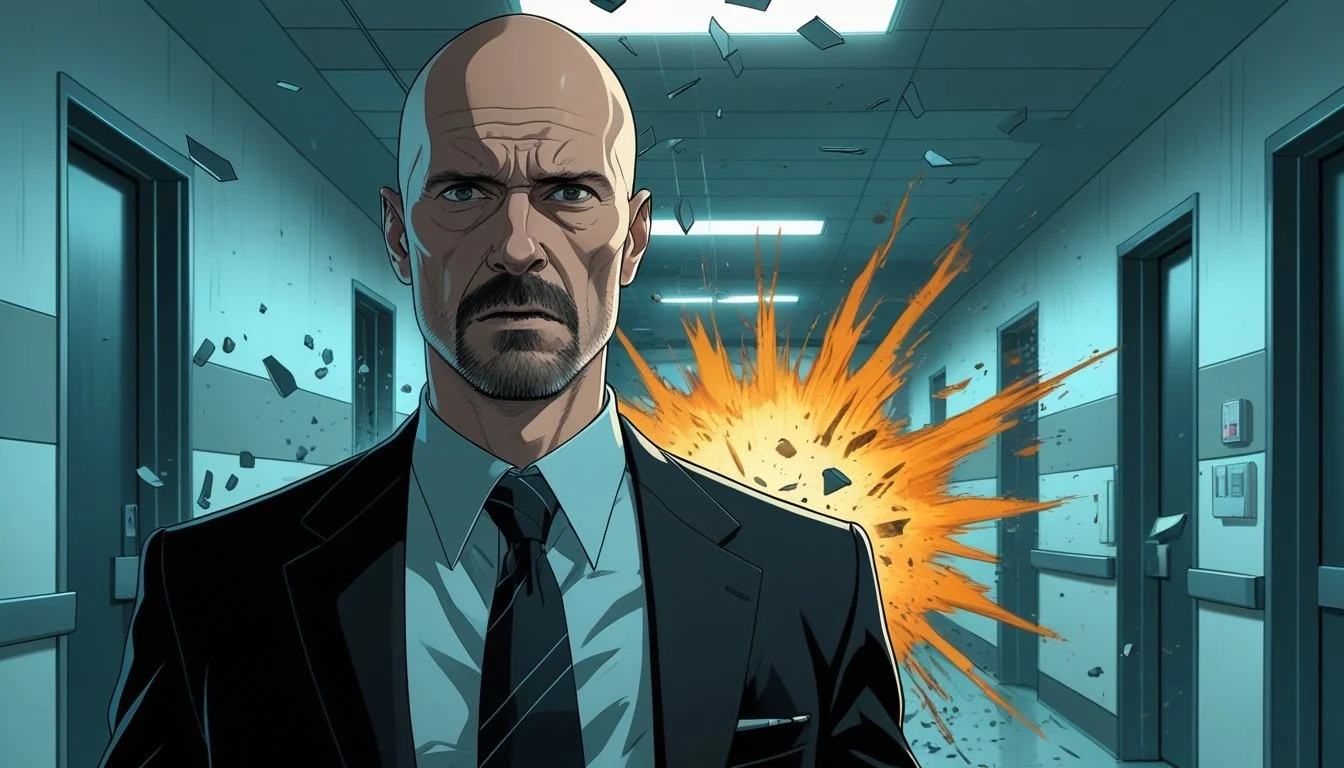
In the infamous hospital scene, viewers watched as Gus calmly exited an explosion, straightened his suit, and revealed the devastation to his face—a moment both surreal and meticulously choreographed. This vivid portrayal captivated audiences and set a new standard for how dramatic deaths can be depicted on television.
By merging intense plot stakes with a symbolic and almost theatrical approach, Breaking Bad demonstrated its commitment to storytelling that goes beyond shock or realism. Gus Fring’s end is a clear example of how the show balanced artistry with narrative impact, leaving a lasting impression on viewers and critics alike.
Setting the Stage: Gus Fring’s Role in Breaking Bad
Gus Fring’s influence shaped the criminal landscape of Breaking Bad, affecting every major character and conflict in the series. His decisions, alliances, and growing rivalry with Walter White set in motion the chain of events that led to one of television’s most memorable confrontations.
Overview of Gus Fring’s Character
Gus Fring, portrayed by Giancarlo Esposito, appears outwardly as a model businessman in Albuquerque. He owns Los Pollos Hermanos, a fried chicken restaurant chain, and is deeply involved in local charity work.
Beneath this façade, Gus is a calculating drug kingpin who manages a highly organized meth empire. He maintains a calm, almost cold demeanor, rarely showing emotion or acting impulsively.
His cautious approach and talent for strategic planning make him a formidable adversary. He conceals his criminal operations with legitimate business dealings, earning the trust of both law enforcement and the community. Gus is methodical, taking great measures to avoid drawing attention, and values loyalty and efficiency above all.
Rise As Albuquerque’s Drug Kingpin
Gus gradually becomes the dominant force in the Albuquerque drug scene. He builds a vast distribution network for blue meth, operating with discipline and secrecy.
He expands his reach by collaborating with the Mexican cartel while secretly plotting to undermine them. This dual approach keeps his operation running smoothly while he builds independence from cartel control.
Key to his rise is his recruitment of skilled chemists, most notably Walter White. Gus’s ability to balance violence with diplomacy allows him to eliminate rivals without unnecessary risk. He also keeps close tabs on potential threats, from law enforcement to disloyal subordinates, strengthening his position in the illicit market.
Gus Fring’s Relationship with Walter White
Gus’s alliance with Walter White begins out of mutual benefit: Gus needs high-quality meth, and Walt needs distribution.
Their relationship quickly evolves from business arrangement to a tense power struggle. Gus respects Walt’s skills but seeks to control him and limit his influence, especially as Walt becomes more unpredictable.
Jesse Pinkman, Walt’s partner, becomes a central pawn in their conflict. Gus’s efforts to separate Walt from Jesse—and ultimately replace Walt—force Walt to fight back. This escalating mistrust and manipulation set the stage for the deadly confrontation that defines Gus’s role in Breaking Bad.
Lead-Up to the Death Scene
Tension between major characters built intensely before Gus Fring’s final moments. Rivalries, alliances, and revenge plotted behind closed doors formed the blueprint for one of Breaking Bad’s most memorable sequences.
Conflicts with Walter White
Walter White’s transformation from chemistry teacher to criminal mastermind set him on a collision course with Gus Fring. Gus saw potential in Walt’s meth-cooking ability but quickly viewed him as a liability once Walt began acting independently.
Walt’s relationship with Jesse Pinkman became a point of contention. Gus tried to win Jesse’s loyalty, isolating him from Walt. Each move escalated distrust. Bryan Cranston, who played Walt, portrayed this mounting desperation and cunning with nuance.
A deadly rivalry developed, driven by self-preservation and ambition. Gus’s calm, measured demeanor contrasted sharply with Walt’s increasingly erratic and bold decisions.
Hector Salamanca’s Vendetta
Hector Salamanca held a deep, personal grudge against Gus Fring. His hatred rooted back to Gus’s orchestrated murder of Hector's family members. Immobilized and unable to speak except by ringing a bell, Hector became a symbol of quiet rage.
Gus viewed Hector as powerless, underestimating his willingness for retribution. Walt recognized the significance of Hector’s vendetta and used it as a critical piece of his plan. Their alliance formed out of mutual interest in destroying Gus.
The narrative designed by Vince Gilligan positioned Hector as both a victim and participant. His cooperation gave Walt the leverage needed. Hector’s explosive final act drew a close to his long-running feud with Gus.
Strategic Planning Behind the Kill
Walter White’s plan to kill Gus required detailed strategy and flawless execution. Knowing Gus’s routines and ability to anticipate threats, Walt sought out weaknesses others overlooked. He identified Hector Salamanca as a unique asset.
Together, Walt and Jesse Pinkman orchestrated a scenario that would draw Gus into a vulnerable position. Walt planted a bomb on Hector’s wheelchair, banking on Gus’s need for personal vengeance to lower his guard. Jesse’s involvement ensured Gus trusted the setup.
The use of Hector’s bell to trigger the device was both practical and symbolic. The plan relied not on brute force, but on exploiting Gus’s confidence and past actions. Vince Gilligan’s writing showcased Walt’s evolution into a master strategist, blending emotional motives with calculated risk.
Face Off: The Death of Gus Fring
Gus Fring’s death scene in Breaking Bad’s season 4 finale, “Face Off,” is widely recognized for its creative execution and unforgettable visuals. The event unfolded through careful planning, explosive action, and a shocking visual reveal that left a major impact on viewers.
The Pipe Bomb Plot
Walter White realized that conventional methods wouldn't eliminate Gus Fring due to his heightened paranoia and strong security. Walt instead targeted Hector Salamanca, knowing Gus’s vendetta against Hector could create an opportunity. He recruited Jesse Pinkman for knowledge about Gus’s habits and places he might be vulnerable, which led them to the nursing home where Hector resided.
Walt constructed a homemade pipe bomb and collaborated with Hector, who agreed to become bait. The plan hinged on exploiting Gus’s personal grudge and drawing him into a false sense of control. This careful manipulation was essential since Gus rarely exposed himself to danger directly, making the hospital meeting a rare moment of vulnerability.
Execution and Explosion
Gus entered Hector’s room, wary but compelled by his longstanding feud with Hector. Hector’s sudden bell ringing, combined with an angry glare, triggered the hidden explosive attached to his wheelchair. The pipe bomb detonated in close quarters, producing a violent explosion that shattered the room and caused extensive damage.
The blast resulted in lethal injuries for Gus, Hector, and Tyrus Kitt, Gus’s enforcer. The explosion was depicted using practical special effects and visual effects, giving it a stark and realistic atmosphere. Debris, fire, and smoke filled the hallway, emphasizing the destructive force of the bomb and the careful yet brutal nature of Walt’s plan.
Dramatic Reveal and Final Moments
The most striking aspect of Gus Fring’s death scene is its slow, deliberate reveal. After the explosion, Gus emerges from the room, seemingly unharmed and straightening his suit jacket. As the camera pans, it exposes the graphic extent of his injuries: half his face is destroyed, revealing bone and muscle underneath.
He adjusts his tie, maintaining his composed persona for a brief moment before collapsing and dying in the hallway. This striking visual, achieved with a mix of practical makeup and digital effects, highlights the combination of professionalism and vulnerability that defined his character. The sequence instantly became one of television’s most memorable and visually distinctive deaths, showcasing meticulous attention to detail and a calculated build-up to Gus Fring’s explosive demise.
Artistic and Cinematic Brilliance
Gus Fring’s death scene in the AMC series Breaking Bad is often cited as one of the show’s most visually striking and memorable moments. Through a careful balance of symbolism, performance, technical effects, and directorial vision, the scene leaves a lasting impact on audiences and stands out as a pivotal moment in television storytelling.
Symbolism and Storytelling
The death of Gus Fring is filled with symbolic detail that reinforces core themes in Breaking Bad. Gus, known for his calculated demeanor and control, steps out of Hector Salamanca’s room seemingly unharmed before revealing catastrophic injuries, echoing the duality he maintained throughout his life.
His death represents the collapse of an ordered and disciplined criminal empire, marked by the dramatic, almost operatic reveal. The visual of Gus fixing his tie, despite mortal damage, is an emblem of his obsessive need for perfection—even in death.
The scene highlights the consequences of pride and the ever-present risk of hidden chaos beneath composed surfaces. Symbolically, it also signals a passing of the torch within the criminal underworld, as Walt and Jesse dismantle their most formidable adversary.
Giancarlo Esposito’s Performance
Giancarlo Esposito’s portrayal of Gus Fring in this scene is remarkably precise. With controlled movements and a calm demeanor, Esposito delivers a performance that captures both the terror and dignity of the character’s final moments.
His subtle facial expressions, especially before the explosion, build palpable tension. After the detonation, Esposito physically conveys Gus’s denial and his instinct to maintain composure, even as he is fatally wounded. The brief moment where Gus straightens his tie is both chilling and deeply in character.
Esposito’s commitment to authenticity grounds the scene, ensuring that even as special effects take over, the human element remains front and center. His work has been widely praised by critics and fans, and it is central to the scene’s emotional force.
Innovative Visual and Special Effects
The technical execution of Gus’s death was a standout achievement in the series, blending practical and digital effects for realism. The makeup team created prosthetics and visual appliances to simulate half of Gus’s face being blown away.
Digital effects were layered in to finish the illusion, seamlessly blending real and generated imagery. The attention to anatomical detail, such as exposed bone and singed skin, heightened the shock value without drifting into excess.
Breaking Bad’s visual effects team faced the challenge of grounding the sequence in reality. The moment stands as a testament to the show’s investment in quality production, with the special effects serving the narrative rather than overpowering it.
Stylistic Choices by Vince Gilligan
Showrunner Vince Gilligan’s direction emphasizes visual storytelling throughout the scene. The framing is deliberate, guiding viewers' eyes from Gus’s profile to the full reveal of his injuries with calculated suspense.
Gilligan uses pacing to maximum effect. There’s a careful buildup, an explosion, and then an almost surreal calm as Gus emerges, not immediately registering his fate. This measured approach underscores the scene’s tension and shock.
Choices in lighting, set design, and shot composition contribute to a hyper-real atmosphere. Gilligan’s decision to focus on character-driven storytelling, even in a dramatic visual effect sequence, ensures the scene remains anchored in the series’ emotional logic.
Impact on Characters and Narrative
Gus Fring’s death rewrote the power dynamics of Albuquerque’s criminal underworld. The event directly shaped the destinies of Walter White, Jesse Pinkman, and every organization operating in the region.
Walter White’s Transformation
Walter White’s orchestration of Gus Fring’s murder stands as the moment he shifted from desperate chemistry teacher to criminal kingpin. By exploiting the feud between Hector Salamanca and Gus, he demonstrated not just cunning but a willingness to kill ruthlessly and indirectly.
After Gus’s death, Walt was forced to assume responsibilities and risks that cemented his new identity. This act marked a clear severing from any moral hesitation he once had. Walt’s actions eliminated the final major threat in his path, allowing him to dominate the meth trade with no one left to keep him in check.
Walt’s rise to power after Gus’s death is not just symbolic but practical. He is now the sole architect of his world—changing the course of the narrative and escalating the stakes for all involved.
Jesse Pinkman’s Arc
Jesse Pinkman is deeply affected by Gus’s death but in a markedly different way than Walt. In collaborating with Walt to defeat Gus, Jesse displays loyalty but also a growing discomfort with the violence and manipulation around him.
Jesse’s relationship with Walt becomes more complicated. The aftermath intensifies Jesse's struggle with guilt and his search for moral clarity. He is pulled further into a cycle of crime that he never fully accepted or wanted.
Jesse’s arc is shaped by a combination of trauma, mistrust, and an increasing awareness of Walt’s transformation. Gus’s demise amplifies Jesse’s internal conflict and sets up his later choices, pushing him toward moments of defiance and independence.
Aftermath for the Albuquerque Drug Trade
Gus Fring's death destabilizes the meticulously maintained order of Albuquerque’s drug trade. His assassination leaves a leadership vacuum, triggering infighting, chaos, and uncertainty among remaining criminal elements.
Law enforcement and rival organizations alike scramble to adjust. Small factions try to fill the gap, but none can match Gus’s methodical approach or network. Walt attempts to claim control, but the absence of Gus’s structure rapidly leads to new dangers and volatility.
The local drug economy becomes unpredictable, and the consequences ripple outward. Every group—law enforcement, small-time dealers, new kingpins—faces unforeseen risks as the old hierarchy falls apart.
Cultural Impact and Legacy

Gus Fring’s death left an unmistakable mark on television, shaping how audiences and creators view villain exits. Its influence extends across critical circles, character design, and even behind-the-scenes production decisions at AMC.
Critical Reception of Gus Fring’s Death
The death of Gus Fring in Breaking Bad stood out for its striking visual and narrative impact. Critics frequently praised the meticulous direction of the scene, highlighting its blend of surprise, horror, and dark artistry.
Many reviewers admired Giancarlo Esposito’s stoic performance, especially his calm demeanor during the final seconds. The prosthetic makeup and special effects, produced with help from The Walking Dead's creators, elevated the moment far above typical TV violence.
Analysts from major media publications called the scene a turning point for the AMC series. They noted its role in cementing Breaking Bad’s reputation for creative risk-taking and memorable storytelling.
Influence on Television Villainy
Gus Fring’s death reshaped how villains were portrayed in serialized drama. His composed, almost graceful exit set a new standard for antagonist demises, pushing other shows to create more distinct and meaningful villain send-offs.
Writers and showrunners on other AMC series began referencing Fring’s fate when designing pivotal deaths. The scene’s choreography and use of practical effects became a benchmark for shows looking to make a strong narrative statement.
Fring’s ending also deepened the ongoing debate about realism versus dramatic flair in modern crime dramas. Many creators now strive to balance spectacle with character-driven motives, reflecting lessons drawn from this iconic death.
References in Pop Culture and The Walking Dead
Gus Fring’s death was not only a landmark for Breaking Bad but also influenced other media. The scene became a frequent reference point in discussions about television violence and cinematic storytelling.
Makeup and effects artists from The Walking Dead, another flagship AMC series, helped design the blown-off-half-face effect. This collaboration led to further crossover in talent and visual style between the two series.
Pop culture often echoes the visual of Fring walking out of the explosion, adjusting his tie with half his face destroyed. It appears in internet memes, parodies, and homages, reinforcing its place in the television canon.
