
How Breaking Bad Uses Color Theory to Tell Its Darkest Secrets
Uncovering Visual Storytelling Techniques
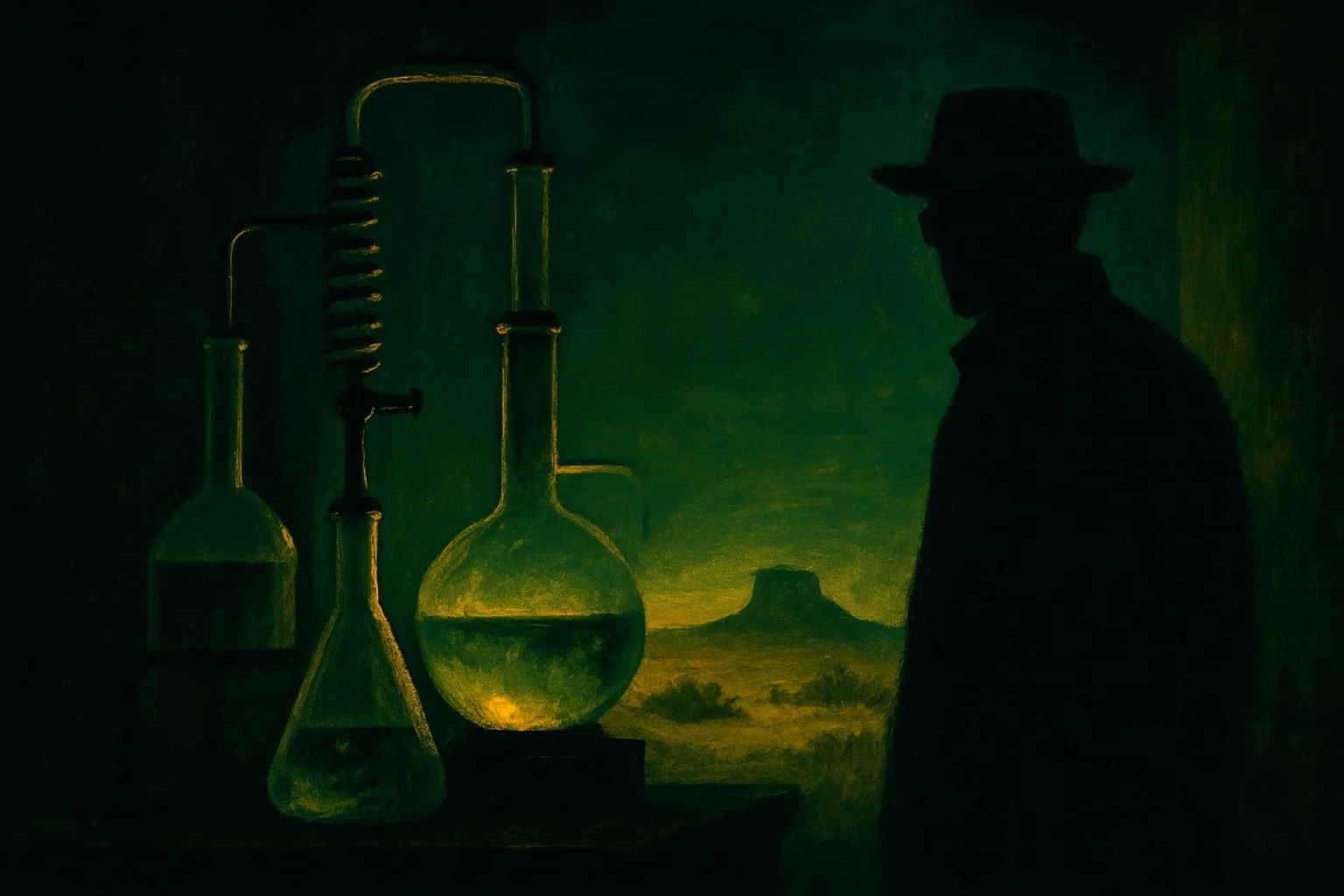
Breaking Bad uses color theory as a subtle storytelling tool, encoding its darkest secrets and character developments directly into its visuals. Vince Gilligan's careful choice of colors for costumes, sets, and lighting signals shifts in morality, power, and emotion, allowing viewers to read between the lines without a word being spoken. Every hue is deliberate, creating a visual language that shapes the audience’s understanding of the narrative.
From Walter White’s changing wardrobe to the meth’s iconic blue hue, each shade reveals something hidden about the characters’ psychology and their descent or transformation. Color not only sets the mood but also communicates who holds control, who faces danger, and how far characters have strayed from their original selves.
The Foundations of Color Theory in Breaking Bad
Breaking Bad’s visual style is deeply influenced by principles of color theory. Characters, scenes, and entire storylines are shaped by intentional color choices that guide viewer perception, reveal character psychology, and reinforce the show’s cinematic atmosphere.
Basics of Color Psychology
Color psychology plays a central role in Breaking Bad’s storytelling. The show leans on well-established associations: yellow for caution or danger, green for greed or transformation, and purple for luxury or isolation. Each color is chosen to reflect a character’s state of mind or intentions.
For instance, Skyler White is often dressed in blue, symbolizing calm or sadness, while Marie Schrader’s fixation with purple hints at her need for control and self-importance. Walt begins the series in soft, neutral tones, but his wardrobe darkens as his personality shifts. This deliberate use of color helps the audience intuitively sense underlying emotions and conflicts even before dialogue starts.
Using Complementary Colors for Visual Impact
Breaking Bad frequently employs complementary colors to create striking, memorable visuals. These opposing colors, when placed next to each other, enhance each other's intensity and create a sense of tension.
A common example is the pairing of yellow and purple. When Marie’s signature purple is set against the yellows of the meth lab or desert scenes, their contrast draws attention and underscores thematic clashes between safety and danger. In scenes between Walt and Jesse, complementary palettes help differentiate their characters and signal shifts in power dynamics.
The show uses this contrast to not only delight the eye but to accentuate character opposition and narrative turning points. It’s a subtle—but powerful—tool in the show’s visual storytelling arsenal.
Establishing Symbolism Through Color
Color symbolism is one of Breaking Bad’s most defining creative strategies. Each main character is closely associated with a particular hue, which evolves to mirror their journey.
This association extends beyond costumes to props and settings:
Character Predominant Color Key Symbolism Walter White Green Growth, greed, decay Skyler White Blue Sadness, calm, distance Jesse Pinkman Red/Gray Anger, vulnerability, loss Marie Schrader Purple Obsession, control, luxury
Even surnames, like White and Pinkman, echo these themes. The careful assignment of color deepens the show’s symbolism and subtly anchors each character’s arc for attentive viewers.
Evolution of Color Motifs Across Seasons
Color motifs in Breaking Bad are not static. As the narrative progresses, the color palettes of characters and settings change to reflect their moral and psychological evolution.
Walter’s journey is perhaps the most visually evident. Early in the series, his clothing is beige and innocuous. As he embraces his criminal persona, green and ultimately dark tones dominate his presentation, visually marking his transformation from teacher to kingpin.
Other characters experience similar shifts. Skyler’s wardrobe moves from lighter blues to grays, signifying disillusionment. Even the show’s environments become more desaturated in later seasons, reinforcing the increasing tension and darkness of the story.
This evolving use of color motifs mirrors character development, making color a dynamic narrative device throughout the series.
Key Characters and Their Color Palettes
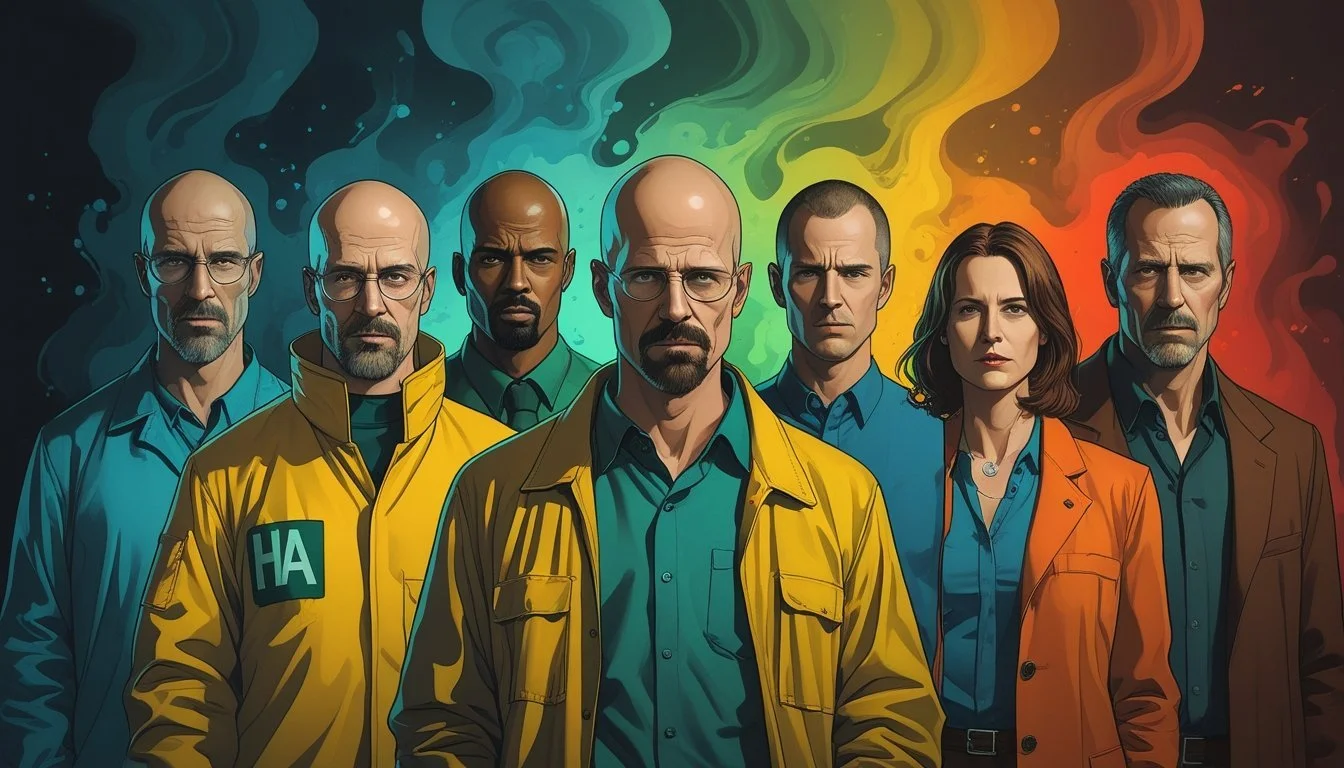
Throughout Breaking Bad, color serves as a visual language, mapping the mental and moral landscape of its core characters. Strategic color choices in costumes and environments reflect shifting loyalties, personal secrets, and psychological turmoil.
Walter White’s Transformation Through Color
Walter White’s journey from high school teacher to criminal mastermind is closely tied to his evolving color palette. Early in the series, Walt is frequently seen in pale, washed-out tones such as beige, off-white, and pale greens, reflecting his ordinariness and passivity.
As his involvement in the meth business deepens, Walt’s wardrobe shifts. He often dons green, symbolizing both greed and his growing ambition. The introduction of Heisenberg is marked by darker tones, especially black and dark green, signifying his embrace of a criminal identity.
These choices are rarely incidental. As Walt takes control, both his clothing and surroundings become darker and starker, mirroring his moral decline. The progression underscores Bryan Cranston’s portrayal of a man whose ethics and identity are fundamentally altered.
Phase Dominant Colors Symbolism Teacher Walt Beige, light green Innocence, naiveté Criminal Walt Green, black Greed, power, moral darkness
Skyler’s Clothing Choices and Emotional States
Skyler White’s wardrobe serves as a subtle indication of her emotional state and moral dilemmas. She often wears cool blues and whites during times of stability or control, projecting calm and order.
As Skyler becomes aware of Walt’s activities, her clothing darkens—gravitating toward grays, dark blues, and navy. This reflects confusion, confrontation, and emotional distress. The family home’s palette similarly darkens, mirroring the upheaval within.
Notably, when Skyler feels trapped or complicit, strong colors like deep teal or even black appear, emphasizing her internal conflict. Through her clothing, the show grants viewers insight into her shifting loyalties and struggles.
Marie Schrader’s Purple Obsession
Marie Schrader is visually linked to the color purple more than any other character in the series. Her home décor, accessories, and clothing frequently feature variations of purple, to the point of obsession.
The use of purple signals Marie’s desire for status, control, and individuality. In scenes of vulnerability or distress, her lavender hues become more muted, while in assertive moments, she wears bold purples.
It also distinguishes her from other characters, reinforcing her outsider status in the main conflict. The intensity of Marie’s palette provides both a visual signature and a subtle commentary on her personality traits.
Common Marie Purple Motifs:
Lavender scarves
Plum handbags
Violet décor
Jesse Pinkman’s Shifting Tones
Jesse Pinkman’s colors reflect his chaotic lifestyle and evolving sense of self. Early episodes show Jesse in bold reds, yellows, and graphic prints, conveying his impulsive nature and immaturity.
As his relationship with Walt intensifies, Jesse’s clothing becomes less vibrant, favoring darker, muted tones. These subdued hues highlight his growing guilt, trauma, and alienation from both the drug trade and society.
The shifts in Jesse’s color palette parallel his journey from reckless accomplice to deeply troubled individual. The specific choices in his wardrobe aid in tracking his psychological changes without the need for explicit dialogue.
Walter White: The Descent into Darkness
Walter White’s transformation is mapped visually and emotionally through his changing relationship with color. Across the series, his appearance and environment shift to mirror his evolving identity, decline in morality, and pivotal choices.
The Shift from Chemistry Teacher to Heisenberg
At the start, Walter White is shown as a mild-mannered chemistry teacher. His wardrobe consists largely of neutral tones, such as whites and beiges, symbolizing routine, purity, and a sense of normalcy. The aftermath of his cancer diagnosis marks the first visible disruption in his color palette.
Walter’s duality begins to take form after he chooses to cook meth, adopting the Heisenberg persona. As Heisenberg, black hats, dark jackets, and sharper contrasts appear. Costume changes visually represent his internal shift from powerless teacher to a figure of control and danger.
Key moments, such as his meetings with Gray Matter Technologies and early meth-cooking scenes, reveal careful use of soft blues and earth tones, which slowly give way as his methods and ambitions harden.
Green and Its Symbolic Associations
Green is one of the most recurring and loaded colors in Walter's arc. It is not just a visual motif—it tracks his journey from desperation to greed and ambition. In the early seasons, Walter often wears green when dealing with financial stress, making it an emblem of money, envy, and survival.
As the series progresses, green drifts in meaning. It comes to represent the moral decay brought on by Walt’s increasing criminal involvement. His green apron in the RV, stacks of cash, and even household objects reinforce this motif visually.
This color’s regular association with growth and renewal is inverted in Breaking Bad. Here, green often signals transformation into something corrupt, aligning with each major escalation in Walt’s actions.
Episode 5.09: The Crucial Color Shift
In episode 5.09 ("Blood Money"), Walter’s color palette demonstrates a distinct turning point. After accumulating millions and asserting dominance as Heisenberg, he is mostly seen in darker, subdued colors—deep browns, blacks, and grays.
The absence of green in his clothing during this episode marks a shift from greed and ambition to survival and self-preservation. Wardrobe choices directly reinforce his further descent into darkness and the isolation that comes with it.
Small details—such as the color of the bathroom towels or his iconic pork pie hat—are used to signal his complete separation from his old self. By this stage, color no longer signals potential, but the consequences of his past choices.
Juxtaposing Good and Evil with Color
Color is one of Breaking Bad’s most effective storytelling tools, used to signal moral contrasts and psychological depth. The series assigns specific hues to characters and products, shaping how viewers interpret intent, corruption, and innocence.
Skyler and Marie: Contrasting Hues
Skyler White is often associated with shades of blue and white, while her sister Marie Schrader is rarely seen without purple. This visual distinction quickly establishes differences in their personalities and values.
Blue and white suggest clarity, order, and transparency in Skyler’s early characterization. Purple, worn almost exclusively by Marie, hints at her need for validation and detachment from reality. The contrast is clear in scenes where the sisters interact: Skyler’s restrained blues are often juxtaposed with Marie’s bold purples to emphasize conflict or unity.
Over time, as Skyler becomes entangled in Walt’s criminal world, her wardrobe shifts toward darker, more ambiguous tones. Marie’s relentless purple, by contrast, feels increasingly disconnected from the world’s growing danger. The colors reinforce each sister’s alignment with or distance from the series’ moral decay.
Lydia and the Subtle Use of Blue
Lydia Rodarte-Quayle’s wardrobe is far more understated than most, favoring cold blues and greys. Unlike the boldness of Skyler or Marie, her color palette is precise, controlled, and professional.
Blue dominates Lydia’s scenes, visually linking her character to the methamphetamine she helps distribute. This connection is subtle but deliberate. It reflects her role as an enabler behind the scenes—quiet, calculated, and deeply implicated.
The slight variations in blue, from icy pale to dark navy, suggest Lydia’s anxiety, paranoia, and her sanitized approach to morally gray decisions. Her color choices blend into the cool corporate world of methylamine deals, underlining her complicity while avoiding overt flamboyance.
Blue Meth and Its Narrative Weight
Blue methamphetamine is one of Breaking Bad’s most iconic symbols. Unlike typical street meth, Walter White’s product is immediately recognizable due to its distinct blue color.
This blue is not just a marketing gimmick within the show’s world; it conveys superiority and perfection. It also sets the meth apart as a narrative device, marking it as something both alluring and dangerous.
Blue methalianes are produced with methylamine, a rare ingredient that amplifies both purity and story significance. As the blue crystallizes, it becomes a visual shorthand for Walt’s transformation—and for the spread of corruption. The unnatural color signals the intrusion of calculated evil into everyday life, making the drug itself a recurring motif for the choices characters make.
Foreshadowing and Tension Through Color Cues
Color in Breaking Bad is not just aesthetic; it is used to build suspense, warn of hidden danger, and preview character decisions. Throughout the series, strategic color choices consistently signal changes in threat levels and foreshadow key plot points.
Significance of Green and Yellow
Green is closely tied to Walter White. It represents his initial motivations, including money and survival, but gradually hints at his moral decay.
As Walt’s journey darkens, green appears in his clothing, surroundings, and even the stacks of cash. This reinforces his growing obsession and the blurring of his ethical boundaries.
Yellow signals caution and imminent danger. Characters often wear yellow or are surrounded by it during tense confrontations, especially in scenes involving the drug cartel or hazardous situations. These choices subtly increase anticipation.
Color Symbolism Example Uses Green Greed, Decay Walt’s wardrobe, cash, lab Yellow Caution, Danger Lab suits, cartel, warnings
Ricin, Leaves of Grass, and Danger
Ricin is a recurring plot device that embodies stealth and lethal intent. Whenever ricin is referenced or appears on screen, there is heightened emphasis on the color blue or muted tones, building tension quietly.
The book “Leaves of Grass,” discovered by Hank, is tied to Walt’s unraveling secret. Its notable green and earthy cover is no accident, visually connecting Walt’s intellectual pride with the green of his criminal actions.
Dangerous moments—such as the planning and attempted use of ricin—are often staged with washed-out colors, drawing attention to a single colored prop like the vial or the book. This directs the viewer’s focus and builds anticipation without words.
Key cues:
Ricin’s container isolated on a sterile background
“Leaves of Grass” positioned as a visual warning
Low saturation environments subtly punctuated by significant colors
Using Red to Signal Violence
Red is employed strategically to foreshadow violence, bloodshed, or power shifts. It appears before gunfights, murders, or moments of extreme tension.
Costumes and set pieces—such as blood spatters, red doors, or taillights—subtly alert viewers to confrontation or fatal outcomes. When characters wear red, it often marks them for imminent danger or signals a violent episode about to unfold.
Red is notably present in scenes involving the drug cartel and key deaths. The color’s intensity primes viewers, adding stress well before violence erupts. Simple visual cues, like a red shirt or a shadowed wall, guide expectations without explicit dialogue.
Secondary Characters and Their Color Stories
Color choices in Breaking Bad extend far beyond the main duo, offering powerful insight into the personalities, motives, and roles of secondary characters. These visual cues support the storyline, reinforce character themes, and expose underlying truths often left unspoken.
Hank Schrader’s Browns: Honor and Duty
Hank Schrader is frequently seen wearing shades of brown, tan, and beige. These earthy tones reflect his identity as a grounded, traditional DEA agent driven by order and responsibility. Brown, as used in his wardrobe and even home décor, communicates stability and an unyielding sense of duty.
This palette also distinguishes Hank from other characters who exist in moral gray zones. His earth tones connect him to honesty and straightforwardness, demonstrating his approach to both law enforcement and family.
Brown is rarely flashy, paralleling Hank’s no-nonsense, workmanlike attitude toward the drug war.
Summary Table: Hank’s Color Associations
Color Symbolism Example Scenes Brown Duty, stability Office, home, field attire Tan Tradition Family gatherings
Walter Jr: Innocence Amid Chaos
Walter Jr., often seen in blues and soft greys, visually contrasts with the turmoil striking the White family. These calm, cool shades point to his role as a moral anchor, untouched by his father’s criminal world. Blue, in Breaking Bad’s palette, typically signals honesty and straightforwardness, which Walter Jr. embodies through his behavior and loyalty.
While Walter Jr. is surrounded by escalating chaos and shifting alliances, his wardrobe stays consistent. His clothes rarely feature aggressive or dark colors, suggesting a sense of innocence and stability.
This color story makes his moments of confusion and hurt more significant because audiences see a visible divide between him and the growing darkness around him.
Supporting Cast: Madrigal, Krazy-8, and Saul Goodman
The supporting cast employs color in distinct ways to communicate their identities and roles:
Madrigal’s gray-heavy palette signals corporate sterility, detachment, and an almost clinical approach to criminal enterprise. Boardrooms, labs, and logos are sterile and cold.
Krazy-8’s clothing features muted tones during his key scenes, emphasizing marginalization and vulnerability, but hints of red appear in scenes foreshadowing danger or violence.
Saul Goodman’s loud, clashing suits—bright orange, green, purple—immediately brand him as flamboyant and slippery. His flashy colors are never just for show; they reflect his need for notice and his defiance of legal and ethical boundaries.
These choices set each character apart visually and sharpen viewers’ perceptions of their places in the wider story.
Color as a Tool for Symbolism and Rebellion
Breaking Bad uses color with precision to communicate power shifts, emotional defiance, and unrealized ambition. Carefully chosen hues manifest in the chemistry lab, character clothing, and key symbols such as Gray Matter Technologies.
Chemistry and Fulminated Mercury’s Visual Impact
Chemistry’s influence is visually clear during Walt’s iconic use of fulminated mercury in season one. The crystalline, nearly transparent substance is introduced in a scene full of white and pale blue tones, emphasizing the sterile and scientific setting.
As Walt tosses the fulminated mercury, it explodes with a blinding flash, abruptly disrupting the cold, methodical color scheme. This burst of color represents rebellion—Walt’s rejection of Tuco’s domination and the moral boundaries he once respected.
The imagery is deliberate: chemistry is not just a profession for Walt, but a tool of transformation. The colorless nature of the mercury mirrors his previous invisibility, while the resulting chaos marks his declaration of independence and new identity as Heisenberg.
Wardrobe Choices as Emotional Rebellion
Wardrobe color choices throughout the series reveal characters’ inner states and acts of defiance. Skyler’s pivot to white and pale blue mirrors her detachment and struggle with Walt’s choices, while Marie’s obsession with purple identifies her need for control.
When characters wear red, it often reflects aggression and turning points; after major conflicts, this color signals intensity or violence. Walt’s shift from beige and green (anxiety and naivete) to dark tones and black aligns directly with his transformation into the criminal figure Heisenberg.
These wardrobe shifts are not random. They signal characters’ desire to defy expectations, assert power, or mourn lost autonomy. The result is a layered and nuanced portrayal of rebellion carried out through color.
Gray Matter Technologies and Unrealized Potential
Gray Matter Technologies symbolizes missed opportunity, regret, and the blending of paths not taken. The company’s name itself is a play on “gray”—a mixture of black and white—emphasizing the ambiguity and compromise in Walt’s history.
Every time Gray Matter is mentioned or shown, the palette shifts to muted grays and sterile, corporate environments. This deliberate use of color underscores Walt’s bitterness and feelings of inadequacy, which fuel his later rebellious actions in the meth trade.
The visual contrast between Gray Matter’s environment and Walt’s lab work highlights the gap between legitimate science and criminal enterprise. Color here becomes a reminder of what could have been and what has been chosen instead.
Creating Visual Identity in Albuquerque
Breaking Bad crafts its visual identity by blending Albuquerque's unique landscape with carefully chosen color palettes. Each element, from wardrobe to background, contributes to the show's distinctive atmosphere and deepens thematic resonance.
Setting the Mood with Local Color Schemes
Albuquerque's environment is reflected throughout the show’s visual design. The city’s natural colors—desert ochres, dusty reds, and muted greens—appear in both exterior shots and interior set decoration. These tones evoke the arid New Mexico backdrop and set a mood that is grounded and authentic.
Production designers integrate Albuquerque’s Southwestern architecture and landscape into nearly every scene. For example, Saul Goodman’s office uses bold yellows and reds, mimicking local businesses and signage found in the city. The visual consistency helps anchor the series in its specific setting and provides emotional context for characters' journeys.
By choosing colors that mirror real Albuquerque neighborhoods, Breaking Bad draws viewers into its world. These choices contrast markedly with the cooler, more sterile palettes seen in other crime dramas set in different locales.
The Pilot Episode: A Blueprint for Future Color Use
The pilot serves as the visual foundation for the entire series. Key color motifs are established early—Walter’s green shirts foreshadow his transformation and connect to themes of money, decay, and envy. Skyler’s use of blue introduces the color’s recurring connection to loyalty and family.
Locations in the pilot, from Walter’s beige home to the sun-drenched Albuquerque roads, are carefully chosen to enhance narrative mood. The color of the RV, painted off-white with streaks of brown, suggests both innocence and corruption, themes central to the show.
The use of color is deliberate from the first episode. This foundation allows later episodes to build on established palettes, making every subsequent color shift significant for the audience’s understanding of character and story progression.
Influence of Hollywood Movies on Aesthetic Choices
Breaking Bad’s creators draw inspiration from classic Hollywood visual storytelling. Western films set in New Mexico often employ wide shots and saturated colors to highlight the starkness of the desert landscape. The series echoes these techniques, but introduces modern color symbolism.
Vince Gilligan and his team reference films like No Country for Old Men and the works of the Coen Brothers for framing and palette. Scenes often use shadows, complementary colors, and visual contrasts to heighten dramatic tension in a way reminiscent of Hollywood crime and noir films.
By adapting cinematic color theory for television, Breaking Bad balances the authenticity of Albuquerque’s local hues with heightened styles borrowed from Hollywood. This hybrid visual identity distinguishes the show and deepens the impact of its storytelling.
Legacy and Influence of Breaking Bad’s Color Storytelling
Breaking Bad’s color system deepened its plot and shaped a new standard for visual storytelling on television. The show’s deliberate palette influenced not only its character arcs but also the practices of other directors and designers in subsequent TV dramas.
Cultural Impact and Lasting Visual Trends
Breaking Bad’s methodical use of color—such as Skyler White’s association with blue or Walter White’s transformation through changing wardrobe hues—became widely discussed outside critical circles. Fans began to analyze scenes for meaning hidden in costumes or props, turning color theory into an expected part of television analysis.
This impact extended to other series. Shows like Better Call Saul and Ozark have used subtle shifts in lighting and costume color to hint at changes in motivation and morality, often citing Breaking Bad as inspiration.
Color-coded storytelling is now used in many popular dramas, helping to visually mark a character’s evolution without relying solely on dialogue. Such visual cues have also been adopted in film, advertising, and digital content, reflecting Breaking Bad’s reach beyond its genre.
How Vince Gilligan Redefined Television Color Use
Vince Gilligan, Breaking Bad’s creator, established a system where color mapped directly onto the emotional and psychological states of characters. For example, Walter White wore beige and green during his early days as a chemistry teacher and then adopted darker tones as he evolved into a drug manufacturer.
Gilligan worked closely with costume designers and cinematographers to ensure every color on screen served a narrative purpose. This approach helped embed the characters’ transformations into the very fabric of the show.
By assigning distinct palettes to key characters and using environment color as foreshadowing, Gilligan influenced how viewers interpret subtle visual storytelling cues. His innovations encouraged future showrunners to consider color as more than just an aesthetic choice but as a vital storytelling device.
