
How Breaking Bad Built Tension One Minute at a Time Analyzing the Show’s Masterful Pacing Techniques
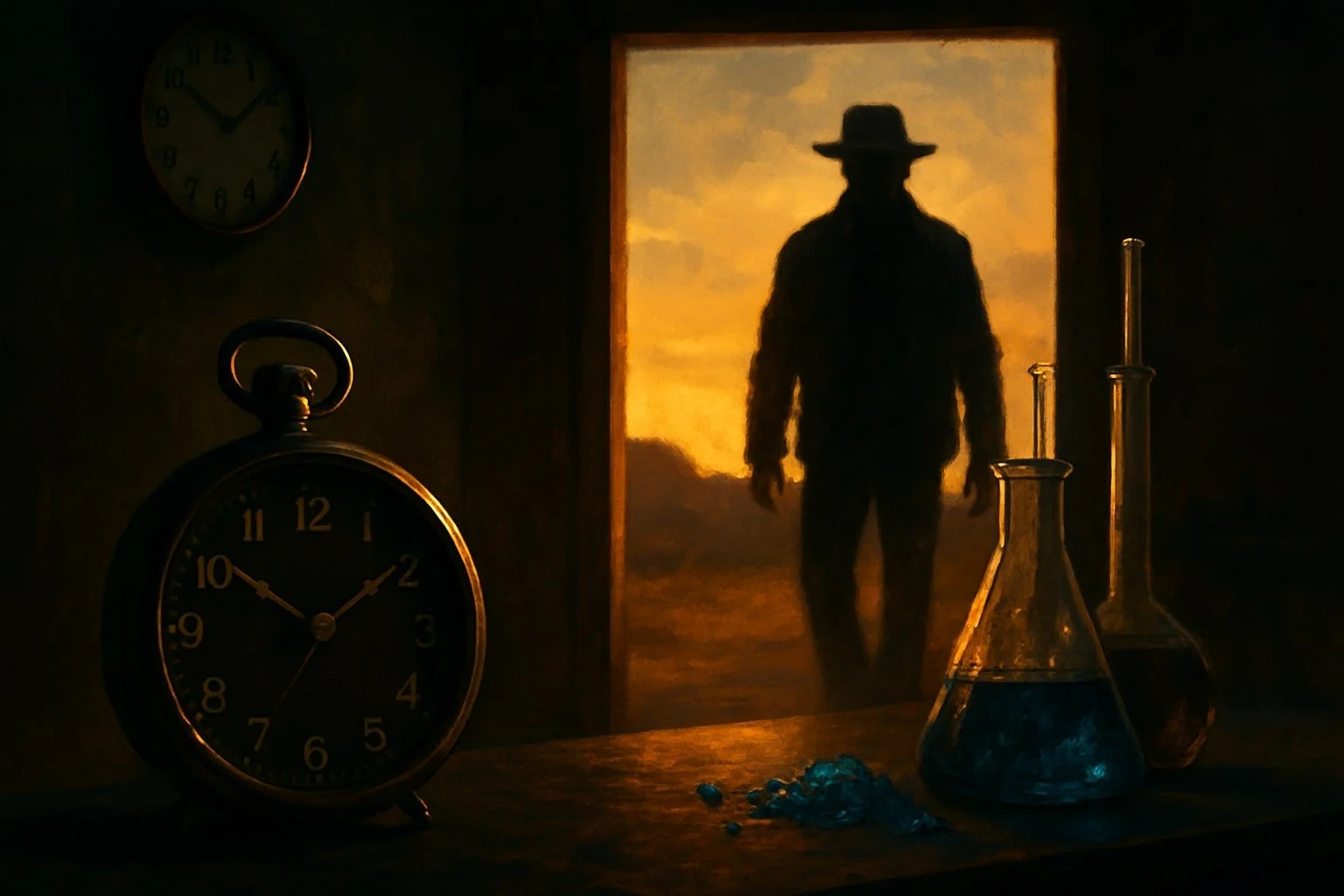
Breaking Bad is renowned for its ability to keep viewers on edge, episode after episode, through masterful use of tension. The series builds suspense one minute at a time by focusing on complex character dynamics, slow-burning confrontations, and scenes where every second matters. This approach makes even quiet moments feel charged with the potential for sudden conflict or revelation.
Episodes like "One Minute" showcase how deliberate pacing and close attention to detail can turn a single moment into unforgettable television. Instead of relying solely on action, the show uses everything from dialogue to silence to escalate tension and hold the audience’s attention.
By studying these techniques, viewers and creators alike can better understand how Breaking Bad maintains high stakes and emotional engagement throughout its run. The purpose of this post is to break down the ways the show crafts its unique brand of suspense, scene by scene.
The Art of Building Tension in Breaking Bad
Breaking Bad uses precise storytelling tools to create and sustain tension throughout its episodes. Every minute is crafted to layer suspense through structure, deliberate pacing, and emotionally charged escalation, often under the guidance of Vince Gilligan’s vision.
Narrative Structure and Pacing
The narrative structure in Breaking Bad relies on careful sequencing of events. Episodes often begin in medias res, showing a glimpse of a future event before returning to the present timeline. This approach encourages viewers to anticipate how the narrative will reach that point.
Each scene is methodically paced. Dialogue, silence, and mundane activities are all used to build a sense of unease. By controlling the speed at which information is revealed, the writers maintain suspense even in moments where little action occurs.
Vince Gilligan’s team utilizes parallel storylines. Characters face personal stakes simultaneously, allowing tension to ebb and flow while never fully releasing the built-up anxiety. Each subplot interlocks, avoiding narrative filler and ensuring continual emotional engagement.
Suspense Versus Action
Tension in Breaking Bad is not always the result of action scenes or violence. Instead, much of the suspense comes from prolonged anticipation and uncertainty. The creators favor psychological buildup over constant confrontations.
Key examples include scenes where characters face gut-wrenching choices. Silence, hesitant glances, and careful framing make the audience dwell on what might happen next. The outcome is often held just out of reach, manipulating emotional investment.
The climactic moments, such as the parking lot standoff in “One Minute,” show how suspense can be just as gripping as action. Carefully staged visual cues and shifts in character behavior drive tension forward without endless gunfire or chase sequences.
Minute-by-Minute Escalation Techniques
Breaking Bad excels at escalating stakes gradually, minute by minute. Each episode is constructed with micro-moments designed to ratchet up anxiety. This is evident in episodes like "One Minute," where the threat grows incrementally with each passing scene.
Writers use careful editing and sound design. For instance, the ticking of a clock, the ringing of a phone, or a character’s deliberate footsteps all contribute to a rising sense of dread. Small actions—such as glances or extended pauses—are used to stretch time and make viewers anticipate the next move.
A mix of visual storytelling and tightly written scripts ensures that the audience is constantly on edge. The interplay between what is shown and what is held back keeps tension alive, compelling viewers to stay engaged through every minute.
Iconic Examples of Tension Throughout the Series
Breaking Bad’s tension comes from a combination of meticulously crafted confrontations, expertly placed flashbacks, and sharp plot twists. These elements keep audiences on edge as characters face moral threats, sudden violence, and ever-present danger around the meth world.
Memorable Showdowns and Confrontations
Showdowns define many of the most tense scenes in Breaking Bad. Walt and Jesse frequently find themselves in dangerous standoffs—most notably, the parking lot scene in "One Minute," where Hank faces the Salamanca cousins in a sudden, violent action sequence. This moment is tightly choreographed, blending rapid editing with the unpredictable threat of violence.
The series also leverages the psychological contrast in confrontations, like Walt’s chilling conversation with Gus in the superlab. Subtle gestures, tone, and camera angles build unease, making the threat of violence as impactful as the act itself.
List of tense confrontations:
Walt vs. Jesse in the desert ("Felina")
Hank interrogating Jesse at the police station
The train heist’s time-sensitive standoff
Each of these scenes uses silence, pacing, and escalation to keep the tension high without resorting to melodrama.
Flashbacks as Tension Devices
Flashbacks in Breaking Bad serve more than backstory; they often foreshadow violence or provide context that heightens anxiety in the present. For example, the opening flashback of season two’s pink teddy bear in the pool is a recurring visual that teases impending disaster.
By revealing key moments from characters' pasts at strategic times, the show offers new perspectives on their motives and relationships. This technique is used to create suspense as viewers piece together information before the characters themselves are aware.
Table: Notable Flashbacks and Their Impact
Episode Flashback Subject Tension Effect "Box Cutter" Gus’s backstory Heightens threat in present time "Ozymandias" Family memories Amplifies emotional stakes "Peekaboo" Jesse’s childhood Deepens empathy, tension rises
Flashbacks often hint at violence or betrayals yet to surface, intensifying scenes as viewers anticipate the fallout.
Unexpected Turns and Cliffhangers
Breaking Bad is renowned for its cliffhangers and unpredictable plot turns. Every season delivers at least one moment where the action sequence or sudden discovery sends shockwaves through the story.
A key example is Hank’s realization in “Gliding Over All” that Walt is Heisenberg. The suspense builds as he pieces clues together, and the scene ends abruptly, leaving viewers anxious for the outcome.
Another standout is the explosive end to “One Minute,” where the fate of several characters is left uncertain after a chaotic shootout. The use of abrupt endings, abrupt cuts to silence, and unanswered questions all contribute to lingering anxiety.
Cliffhangers were used not just to keep the audience coming back but to escalate the stakes surrounding meth, loyalty, and survival. These moments are carefully constructed to avoid predictability, relying instead on clear cause-and-effect and character-driven decisions.
Key Characters and Their Role in Heightening Suspense
The series carefully develops characters whose decisions and internal conflicts drive the mounting tension scene by scene. The suspense intensifies through transformations, moral ambiguities, and shifting power dynamics that make each choice unpredictable.
Walter White’s Transformation
Walter White, introduced as a mild-mannered chemistry teacher, undergoes a radical transformation as the story unfolds. Bryan Cranston’s performance grounds Walter’s descent from a desperate provider into someone willing to manipulate and intimidate. His transition doesn’t happen at once; each crisis pushes his boundaries further.
Walter’s growing expertise in deception and risk heightens suspense, especially as he hides secrets from family, law enforcement, and his partner, Jesse. The tension rises each time he barely escapes discovery or suffers the consequences of prior choices.
This evolution is visible in key moments: Walter poisoning Brock, orchestrating Gus Fring’s downfall, and maneuvering through threats to his family. Every new step he takes blurs the line between his original motives and his more self-serving ambitions. This ambiguity keeps audiences questioning what he will do next.
Jesse Pinkman’s Struggles
Jesse Pinkman, played by Aaron Paul, acts as both a partner and a counterbalance to Walter. Initially reckless and naive, Jesse’s emotional journey adds another layer of suspense. His loyalty, guilt, and vulnerability pull him in conflicting directions.
The audience sees Jesse struggle with the moral cost of their criminal enterprise. Key moments—such as his reaction to Jane’s death or his guilt over the poisonings—reveal a character constantly on edge. This personal turbulence creates volatile situations that escalate tension for both Jesse and those around him.
Jesse’s relationship with Walter is a central driver of suspense. As trust erodes, and betrayals accumulate, viewers are left uncertain whether Jesse will cooperate with Walter, rebel, or break away entirely.
The Heisenberg Persona
Heisenberg, Walter’s criminal alter ego, takes shape as Walter’s moral boundaries dissolve. This persona projects confidence, intelligence, and menace—qualities that intimidate rivals and allies alike. The emergence of Heisenberg signals a shift in both the narrative and power structure.
Scenes featuring Heisenberg—such as the “I am the one who knocks” moment or confrontations with drug lords—are marked by psychological tension. His reputation alone heightens the stakes, forcing adversaries and law enforcement to second-guess his intentions.
Walter’s struggle to balance his family identity with the Heisenberg facade increases the suspense. As lines blur, each step towards criminal notoriety risks exposure or irreversible consequences, providing constant uncertainty and tension.
Antagonists and External Forces

In Breaking Bad, the introduction of powerful adversaries and outside pressures forces Walter White into a series of escalating risks and moral dilemmas. As new threats emerge, tension increases, driving the narrative forward in persistent and unpredictable ways.
The Threat of Gus Fring
Gus Fring, portrayed with precise calculation, serves as one of the most formidable antagonists. As a drug kingpin who masks his criminal enterprise behind the facade of Los Pollos Hermanos, Gus blends patience with ruthless efficiency.
His calm demeanor contrasts sharply with unpredictable moments of violence, creating a persistent sense of unease. Gus's intelligence leads him to manipulate both Walter and Jesse, setting traps and contingencies that force Walter to second-guess every move.
The control Gus wields over his operation makes him a constant source of threat. Walter, unable to fully predict Gus’s reactions, finds himself boxed in by silent warnings and real, demonstrable power.
The Cousins: Leonel and Marco
Leonel and Marco Salamanca, also known as "the Cousins," are silent but relentless enforcers for the cartel. Their presence in Albuquerque signals a deadly escalation in cartel involvement.
They rarely speak, letting their actions create fear. Their pursuit of vengeance against Hank Schrader and, by extension, Walter, generates prolonged suspense. The “One Minute” sequence is a key example, as the threat they pose forces characters into desperate actions under intense time constraints.
The Cousins’ singular focus and methodical violence make them a physical embodiment of impending doom. Their connection to the family patriarch Hector Salamanca further ties personal vendettas to the broader drug conflict.
DEA Pressure and Hank Schrader
Pressure from the DEA, notably through Hank Schrader (played by Dean Norris), looms over much of the series. Hank, though family to Walter, relentlessly pursues the elusive “Heisenberg,” unaware of the true identity behind the alias.
Hank’s investigative skills drive several significant plotlines. His ability to connect seemingly minor clues escalates the risk for Walter. The tension between Hank’s job and his loyalty to family creates dramatic irony, especially as the stakes of his pursuit grow.
The looming risk of legal consequences and exposure adds another formidable layer of danger to Walter’s operation. Hank’s presence ensures that law enforcement remains a constant, unpredictable antagonist.
Supporting Cast and Their Impact on Tension
Breaking Bad relies on more than its lead actors to sustain a gripping narrative. The supporting cast injects additional layers of stress through interpersonal conflict, unexpected choices, and the consequences of their unique personalities.
Marie’s Influence
Marie Schrader, played by Betsy Brandt, repeatedly heightens tension in subtle but crucial ways. As Skyler White’s sister, her presence often complicates domestic scenes and exposes the underlying cracks in the family structure.
Her struggles with kleptomania and emotional volatility introduce unpredictability. When Marie intervenes during family disputes or Hank’s investigations, she forces characters into uncomfortable confrontations.
Her loyalty to her sister and suspicion toward Walt create ongoing pressure. Each appearance signals possible exposure or escalation, raising the stakes even in moments that initially appear mundane.
Family Dynamics
The White and Schrader family relationships are a constant source of tension. Skyler, Walt, Walt Jr., Hank, and Marie navigate financial hardship, deception, and illness, fueling anxiety in nearly every shared scene.
Walt’s secrets strain his marriage and endanger his family, while Skyler’s increasing awareness compounds the stress. Hank’s investigation into the Heisenberg case adds a layer of threat within the family itself.
These family dynamics can be illustrated with a simple table:
Character Main Source of Tension Impact Walt Double life, deception Complicates trust, increases paranoia Skyler Suspicion, financial choices Escalates conflict, emotional distance Hank Investigation, pride Raises risk of exposure Marie Loyalty, meddling Creates conflict, offers distractions Walt Jr. Health, obliviousness Amplifies stress, emotional stakes
Small decisions, like concealment or confrontation, ripple through the household and keep the tension palpable.
Bob Odenkirk as Saul Goodman
Bob Odenkirk’s portrayal of Saul Goodman injects sharp, unpredictable energy into tense situations. Saul’s entry often signals a change in tone, but he also serves as a pressure release valve or an agitator depending on the scene.
His legal machinations complicate criminal activities and force Walt and Jesse into riskier scenarios. Saul’s glib attitude and schemes often lead to unintended consequences, forcing characters to react quickly.
Notably, Odenkirk’s performance balances comic relief with a deeper menace. In particular, his manipulation of legal loopholes and underworld connections escalates situations that might have otherwise settled, ensuring that viewers never fully relax when he is involved.
Directing, Writing, and Cinematic Techniques
Breaking Bad built tension through precise directing, sharp writing, and carefully crafted visual language. These elements combined to create an immersive experience, where even small choices influenced the emotional impact of each scene.
Michelle MacLaren’s Visual Storytelling
Michelle MacLaren’s episodes are noted for their striking use of negative space and inventive camera angles. She often frames characters alone in vast environments, visually emphasizing isolation and vulnerability. This visual strategy amplifies tension, especially during pivotal standoffs or moments of decision.
MacLaren employs time-lapses and deliberately slow pacing to heighten suspense. For instance, periods of calm are stretched out with extended shots or minimal dialogue, forcing the viewer to anticipate what comes next. Her work uses New Mexico’s landscape not just as a setting, but as an additional character exerting pressure on those within it.
The distinctive color palette and composition choices reinforce the themes at play. Shadows, silences, and wide shots are not just visual flair—they deepen the sense of danger and moral ambiguity threading through the story.
Thomas Schnauz’s Written Contributions
Thomas Schnauz brought a meticulous approach to plot and dialogue. He constructed scenes where the threat is often unsaid, allowing subtext and body language to generate unease. Schnauz’s scripts frequently position characters in high-stakes decisions, with tension mounting through every shift of power.
He writes dialogue that is sparse but loaded with meaning. A simple exchange often reveals deeper conflicts and threats beneath the surface. The structure of his episodes tends to ramp up tension by layering obstacles, leading to climaxes where consequences feel both inevitable and surprising.
Notably, Schnauz balances bursts of action with prolonged, tense build-up. He chooses when to delay resolution, letting anxiety linger as viewers wait for the other shoe to drop, maximizing suspense without resorting to melodrama.
Symbolism and Motifs
Breaking Bad uses repeated symbols and motifs to reinforce tension and foreshadow conflict. Objects like the teddy bear, the RV, and various colors are threaded through episodes, each becoming shorthand for underlying threats or impending change.
Color is crucial. Walter’s shifting wardrobe, for example, charts his moral descent—greens and whites give way to darker tones as he transforms. Motifs like the recurring use of close-ups on mundane objects (e.g., a ringing phone, a coin flip) direct attention to, and magnify, otherwise ordinary moments.
Visual motifs pair with auditory cues—such as the ticking of a clock or distant sirens—to signal shifts in tension. These details build a subtle, continuous sense of dread, keeping the audience alert for the next twist.
Accolades, Cultural Impact, and Legacy
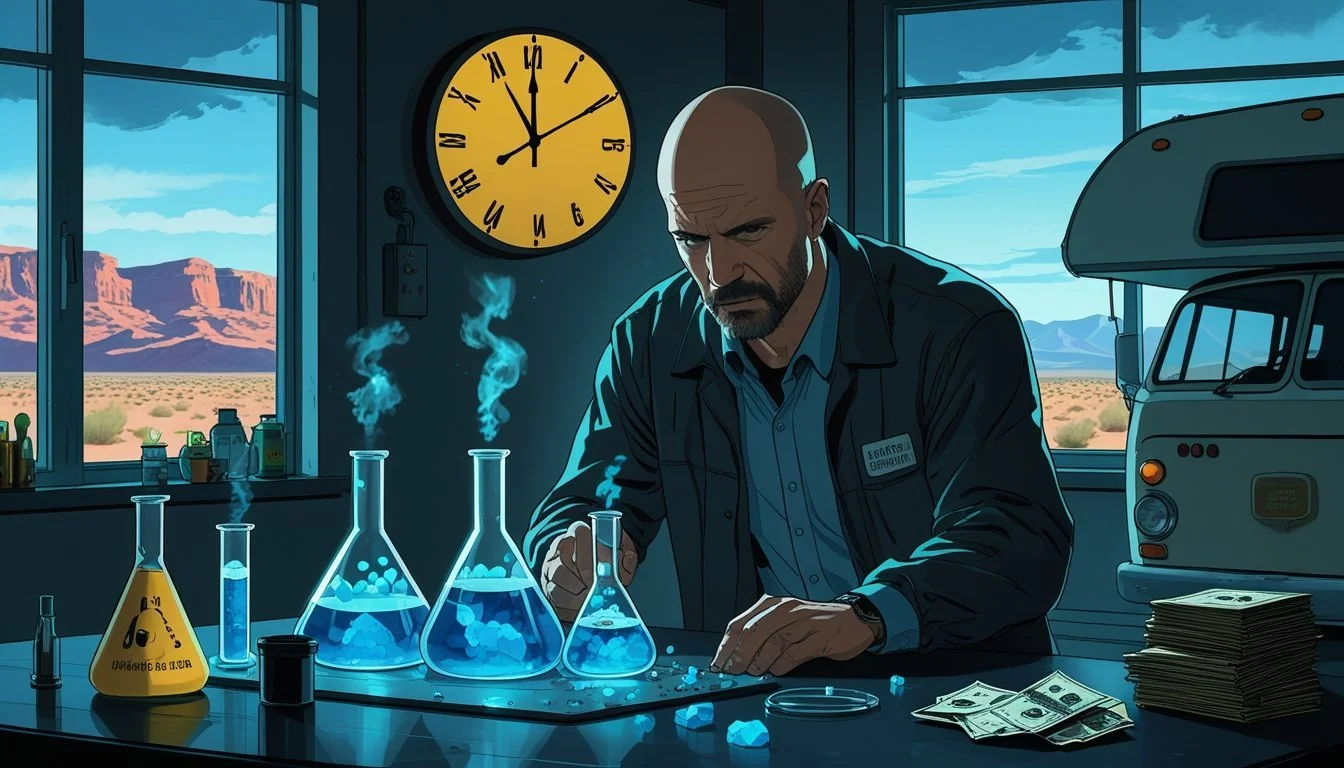
Breaking Bad’s meticulous approach to tension did not just change the way stories were told on television—it garnered widespread critical acclaim, influenced ambitious new works, and shaped the perception of its real-world setting. Its influence can be measured both in industry awards and in its ongoing footprint in pop culture and place.
Critical Reception and Awards
Breaking Bad received consistent critical acclaim during its run. The series earned 16 Primetime Emmy Awards from 58 nominations, reflecting industry recognition for elements like acting, writing, and direction.
Bryan Cranston, Aaron Paul, and Anna Gunn were each awarded for their roles, with Cranston winning four Emmys for Outstanding Lead Actor. The show also received a Guinness World Record as the most critically acclaimed TV show in history in 2014.
The series was praised for its tight storytelling, character complexity, and visual style. Critics highlighted its careful build of suspense as a defining strength.
Influence on Modern Television
Breaking Bad set a new standard for serialized storytelling on television. Its methodical pacing, moral ambiguity, and use of visual symbolism have influenced numerous series, including Better Call Saul, Ozark, and Fargo.
Writers and showrunners frequently cite Breaking Bad’s screenplay structure as a "template" for blending slow-burning tension with character development. The show’s ability to build stakes incrementally has become a point of study in screenwriting circles.
The success of Breaking Bad helped establish AMC as a destination for prestige drama. Its legacy continues in the ongoing interest in complex, morally ambiguous protagonists across the industry.
Depiction of Albuquerque
Breaking Bad put Albuquerque, New Mexico, on the map for many viewers. Filming on location contributed authenticity and a distinct regional character to the series.
Landmarks like the car wash, Saul Goodman’s office, and Los Pollos Hermanos have become recognizable and frequently visited by fans. The show’s impact on Albuquerque’s economy has included a rise in tourism and related merchandise sales.
The city is now widely associated with the series in popular culture, with many local businesses embracing the connection through themed tours and memorabilia.
