
Ozymandias Proved Breaking Bad Could Break
Its Own Rules and Still Succeed
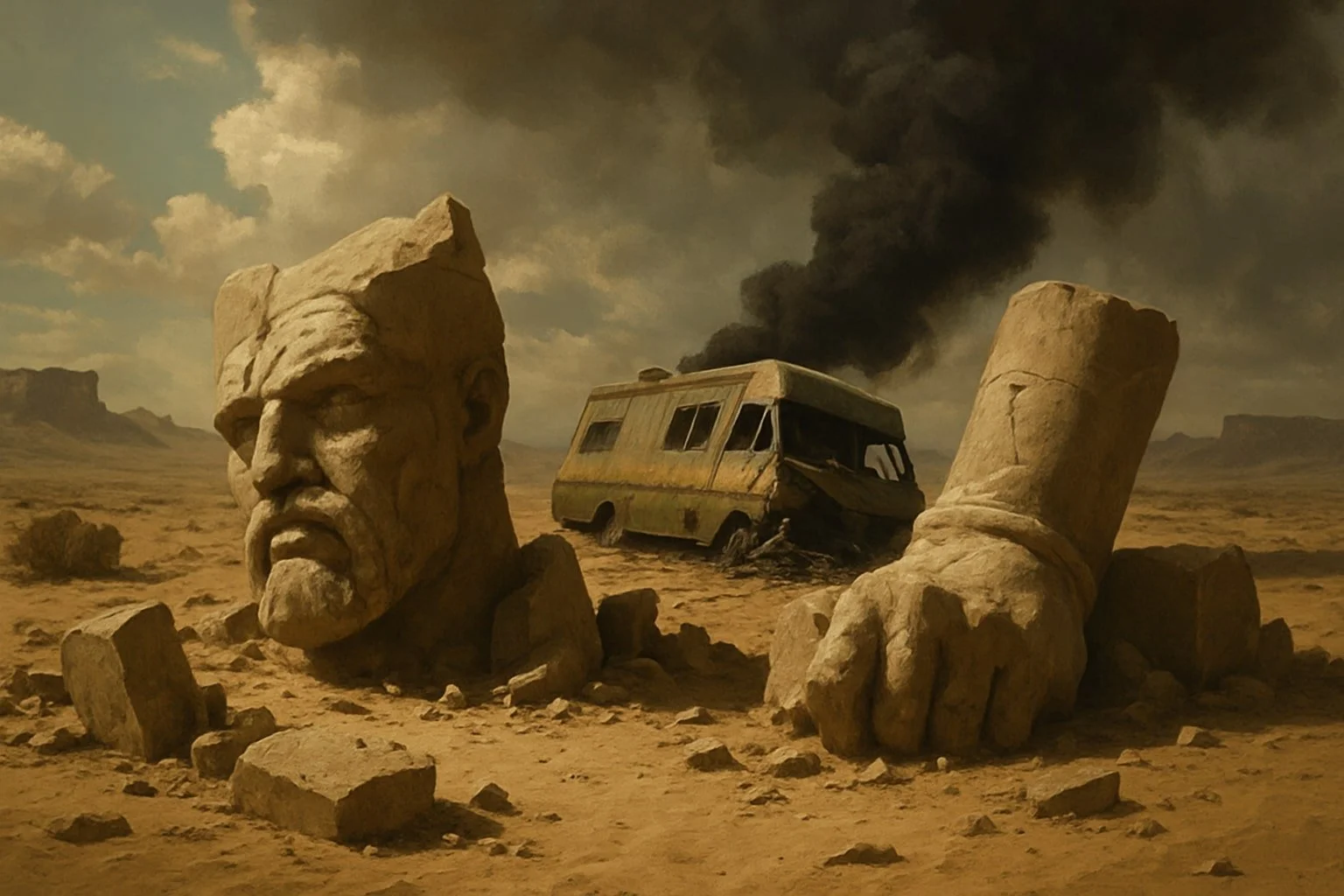
“Ozymandias” stands out in Breaking Bad’s legacy because it shattered expectations and upended the series’ established narrative rules, showing no character was truly safe and no outcome guaranteed. This pivotal episode stripped away the illusion of stability, pushing its characters—and the audience—into uncharted emotional territory.
With relentless pacing and high-stakes consequences, “Ozymandias” forced even the most prepared viewers to reconsider what the show was willing to risk. Long-time alliances disintegrated, characters paid for their decisions, and the line between hero and villain blurred further than ever before.
The result was an hour of television that reassessed everything Breaking Bad had built, making it clear that the story could—and would—destroy its own foundations when the time was right.
Why “Ozymandias” Stands Out as Breaking Bad’s Game-Changer

“Ozymandias” is widely recognized for shifting the direction of Breaking Bad with bold storytelling choices. Its narrative risks, intense emotion, and critical reception distinguish it as a pivotal entry, influencing not just the series but television history itself.
Defying Series Expectations
“Ozymandias” challenges the structure Breaking Bad had established over its earlier seasons. The episode refuses to protect its main characters, thrusting them into situations with irreversible consequences.
The death of major characters so late in the series upends the long-standing tension about who could survive. Writers subvert audience assumptions, abandoning traditional pacing for relentless escalation.
This episode provides little chance for resolution or safety, exemplifying creator Vince Gilligan’s willingness to defy the unspoken rules of serialized drama. By shattering comforting formulas, “Ozymandias” pushes viewers into uncharted territory, reinforcing the show’s reputation for fearless storytelling.
Critical Acclaim and Viewer Impact
“Ozymandias” achieved extraordinary viewer and critical recognition. On IMDb, it holds a perfect 10.0 rating from over 200,000 votes, a rare feat in television history.
The episode drew 6.4 million viewers at its initial broadcast, marking it as the show’s most-watched episode at the time. Reviewers praised its directing, performances (particularly Bryan Cranston and Anna Gunn), and expert pacing.
In critics’ lists and fan polls, “Ozymandias” routinely earns mention as the best episode of Breaking Bad and a television masterpiece. Its impact is highlighted by Emmy discussions and the ongoing reverence from both casual viewers and industry professionals.
The Legacy of a Genre-Defining Episode
The legacy of “Ozymandias” extends beyond its initial broadcast. It is often used as a benchmark for high-quality television, referenced in debates about the best episode ever produced.
Its narrative ambition and intense drama have inspired writers and showrunners, setting a new standard for climactic episodes. The balance of action, consequence, and emotion showcased how ambitious television could rival—and surpass—film in artistry.
“Ozymandias” is frequently analyzed in books, university courses, and think pieces as evidence of the evolution of the medium. Its reputation endures as a genre-defining moment and as a high-water mark for modern TV drama.
Narrative Structure: Breaking and Rewriting Its Own Rules
“Ozymandias” shattered audience expectations by discarding familiar patterns and escalating the consequences for its main characters. This episode redefined the stakes in Breaking Bad, rewriting the show’s standards for narrative risk and unpredictable outcomes.
Subverting Traditional Storytelling
Instead of saving major revelations and climactic moments for the finale, “Ozymandias” delivered pivotal twists earlier than expected. The episode bypassed conventional pacing by accelerating Walter White’s downfall without delay.
Dialogue and action were tightly constructed, each decision leading directly to visible fallout. Traditional safety nets for key characters were absent—longstanding cast members were exposed to true peril, eroding the viewer's sense of certainty.
Writers ignored expected pauses for reflection. Pacing remained relentless, making the event sequence feel both natural and starkly abrupt. The result: a narrative that felt both urgent and brutally logical, emphasizing the show’s commitment to consequences over formula.
Unprecedented Consequences for Main Characters
The events of “Ozymandias” forced the main characters to confront the real results of their choices. The collapse of the White family was depicted not as a gradual unraveling, but as a devastating implosion.
Hank Schrader, long a pillar of morality, met a sudden and irreversible end. No last-minute rescue was offered, and Walt’s attempts at negotiation fell flat, reinforcing the futility of hubris.
Skyler White directly confronted Walt’s legacy through violence and betrayal, marking a point of no return in their relationship. The writers dismantled the illusion of redemption, demonstrating that narrative consequences in Breaking Bad could be final, not just traumatic.
This approach solidified the show's legacy for ruthless honesty, anchoring the story's endgame in irrevocable loss.
Core Themes and Thematic Parallels to “Ozymandias”

Shelley’s “Ozymandias” and Breaking Bad’s episode of the same name both examine the destructive effects of unchecked ambition and pride. The storylines expose how power, no matter how immense, is ultimately fleeting, leaving behind only relics of former glory.
Hubris and the Illusion of Power
Both Ozymandias by Percy Bysshe Shelley and the Breaking Bad episode focus on leaders blinded by their own egos. In Shelley’s sonnet, Ozymandias boasts of his empire’s eternal might, carving his name into stone as a warning to others. Yet all that remains is a broken statue amid empty sands, emphasizing how Ozymandias’s belief in his permanence was a delusion.
Walter White follows a similar path. At the height of his power, he proclaims himself kingpin, convinced he controls his fate and those around him. His empire appears solid, but it is built on lies and violence. When his authority crumbles, the emptiness behind his presumed strength is revealed.
Key Points:
Ozymandias: Statue as symbol of faded authority
Walter White: Belief in invincibility leads to self-destruction
The Downfall of Walter White
The downfall in both stories is dramatic and irreversible. Shelley writes of “the lone and level sands” stretching around the ruined monument, making a stark visual of lost power. Similarly, in Breaking Bad, Walt’s life and empire unravel rapidly in the “Ozymandias” episode. Relationships are destroyed, allies are lost, and his family shatters under the weight of his decisions.
This episode rejects the illusion of lasting victory. Walt is left stripped of power and identity, echoing Ozymandias’s fate. The parallel is clear: no matter how formidable the empire or how ruthless the leader, the end result is defeat and erasure.
Character Empire Downfall Ozymandias Monument/statue Left in ruins, forgotten Walter White Drug empire Family gone, empire lost
Character Arcs Pushed to the Brink
In "Ozymandias," nearly every principal character faces irreversible consequences. Relationships collapse, trust dissolves, and the true cost of Walt’s empire-building becomes undeniable.
Walter White’s Breaking Point
Walter White, masterfully portrayed by Bryan Cranston, faces his most pivotal moment in the series. After Hank’s death, Walt’s persona as a calculating provider fully collapses. He can no longer protect his family, nor maintain the illusion that his actions have been justified.
The fallout is immediate and personal. His attempts to salvage his legacy unravel as his wife and son openly reject him. In one of the show’s most harrowing scenes, Walt’s desperation drives him to kidnap Holly, creating a rupture that cannot be healed.
The episode strips Walt down to his most vulnerable. His lies are exposed, his power is gone, and he must flee, alone and hunted.
Jesse’s Transformation
Aaron Paul’s Jesse is devastated by the events in "Ozymandias." Forced to assist in the execution of his own suffering, Jesse is betrayed by Walt, who reveals details about Jane’s death in a moment of cruelty.
Jesse’s journey from reluctant accomplice to broken victim marks a turning point. He is trapped by Jack’s gang and used for their meth operation, stripped of any remaining agency.
This forced captivity is a stark contrast to the Jesse introduced in earlier seasons. He shifts from a reckless partner to a person crushed by loss, showing how Walt’s decisions destroy not only his own life but those close to him.
Skyler’s Struggle
Anna Gunn’s Skyler faces the collapse of her family as the violence reaches home. Her confrontation with Walt, knife in hand, is fueled by the terror of losing both her children and her sense of security.
She acts to protect Walt Jr. and Holly, but the trauma leaves her isolated. The scene with Walt Jr., who calls the police to defend Skyler, emphasizes the irreversible breakdown of trust within the family.
Skyler’s struggle is not just physical but moral. Her past complicity now becomes unbearable, and her priority shifts entirely to her children’s safety, even if it means turning against Walt.
Key Supporting Performances and Directorial Vision

“Ozymandias” stands out through its carefully constructed performances, precise direction, and powerful writing. Each of these foundations heightens the emotional impact and narrative urgency of the episode.
Hank Schrader and Dean Norris’s Defining Moment
Dean Norris delivers one of his career-best performances as Hank Schrader in this episode. The character faces his fate with unwavering courage and dignity after being captured by Jack Welker’s gang in the desert. Norris conveys Hank’s defiance and resignation through tight, nuanced gestures and piercing line delivery, creating a scene that resonates with viewers.
Hank’s final exchange with Walter White is restrained and honest. He rejects Walt’s last-minute attempts to negotiate, stating, “You want me to beg? You’re the smartest guy I ever met, and you’re too stupid to see… he made up his mind ten minutes ago.” Norris’s controlled performance in these moments amplifies the tragedy and stakes, leaving a lasting impression. His work grounds the episode’s dramatic climax and reveals the human cost of Walt's ambition.
The Direction of Rian Johnson
Rian Johnson’s direction in “Ozymandias” is marked by sharp visual choices and a controlled pace. He orchestrates the chaotic desert shootout and devastating aftermath with clarity, avoiding melodrama. Johnson draws the best from his cast, allowing silence and stillness to speak as loudly as explosions or gunfire.
Camera angles and editing are used to gradually increase tension. Scenes such as the telephone call between Walt and Skyler employ lingering shots and precise cuts to highlight emotional turmoil. Johnson’s style strikes a fine balance between harrowing realism and the show's signature visual flair. His collaboration with series creator Vince Gilligan ensures thematic unity throughout the episode.
Writing by Moira Walley-Beckett
Moira Walley-Beckett’s script is direct and economical, allowing the performances and visuals to carry much of the weight. Dialogues feel authentic, and key exchanges pack both emotional and narrative punch. The writing maintains a relentless momentum without sacrificing depth, using small moments—like Marie telling Skyler that Hank has won, or Walt’s desperate phone call—to reveal character motivations.
She structures the episode so that each character’s turning point unfolds naturally. This careful construction supports Johnson’s precise direction and the actors’ raw performances. Under her writing, the consequences for every decision made by the characters are clear and irreversible.
Iconic Scenes and Emotional Impact

"Ozymandias" leaves a deep mark with its intense confrontations, raw family turmoil, and severe personal losses. Each part of the episode showcases the crumbling sense of justice and power at the heart of Breaking Bad, especially as the neo-Nazi threat reaches Albuquerque.
The Desert Showdown
The desert becomes the stage for Breaking Bad’s most brutal faceoff, where loyalty and trust collapse in front of both allies and enemies. Walt's meeting with the neo-Nazis ends in disaster, as Hank is executed in cold blood despite Walt’s desperate attempts to save him.
This moment delivers a stunning blow to viewers and establishes the ruthless nature of Jack's gang. The buried money motif—Walt’s life work—contrasts with the immediate loss of human life, stressing the futility of Walt's quest for control.
The sheer emptiness of the desert reinforces that no one is safe, and the violence signals that justice is out of reach. Ozymandias as a title is reflected here, highlighting the downfall of power.
Family in Crisis
Inside the White family's home, chaos erupts as Skyler, Walt, and their son clash in a scene filled with fear and betrayal. The knife fight between Walt and Skyler is especially harrowing, pushing their son, Flynn, to intervene and call the police.
Skyler's actions show her desperation to protect her children from Walt. The emotional trauma is intense—tears, screams, and confusion dominate the sequence. Walt’s attempted kidnapping of Holly only amplifies the terror, forcing him to confront the consequences of his choices.
This depiction of family dissolution brings a deeply personal impact, moving away from external threats and focusing on the havoc inside their own walls.
Gut-Wrenching Losses
Loss defines every moment in "Ozymandias." Hank’s death at the hands of the neo-Nazis not only devastates Marie and the audience but also represents the collapse of any remaining sense of justice in Albuquerque. Walt’s fall from power comes sharply and suddenly, isolating him from everyone he once hoped to protect.
Holly's separation from Skyler, Walt’s irreversible break from his family, and Jesse’s enslavement all compound the episode’s emotional cost. Each loss is more than tragedy—it marks the irreversible destruction left behind by one man's ambition.
This sequence of events ultimately echoes the lesson of Shelley’s poem: even the greatest can be brought low, with nothing left but ruin.
Reception, Legacy, and Influence in Television
“Ozymandias” is consistently cited as a benchmark for dramatic television, earning recognition for both its execution and its impact on future series. Its Emmy nominations, narrative techniques, and synergy with the evolving habits of streaming audiences have shaped its enduring reputation.
Critical Reception and Awards
Upon release, “Ozymandias” was widely praised by critics and audiences. Many reviews highlighted the episode’s tightly structured escalation and emotional power. It was frequently described as the standout installment of Breaking Bad and cited in lists of the best TV episodes ever produced.
The episode received several Emmy nominations, including Outstanding Writing and Directing. Critics pointed to Bryan Cranston and Anna Gunn’s performances as career-defining moments. The episode’s legacy as a high point in serialized drama is further supported by its high ratings and inclusion in end-of-decade rankings by major publications.
Lasting Influence on Future Storytelling
“Ozymandias” demonstrated that popular shows could break their own conventions in service of story and character. Its willingness to abruptly shift its tone and pace influenced other dramas aiming for more unpredictable storytelling. This episode inspired showrunners to rewrite norms around character fate and dramatic structure.
It became a reference point for writing rooms seeking to push boundaries. Series such as “Better Call Saul” and “Succession” have been compared to it for their willingness to dismantle established tropes. “Ozymandias” also helped popularize episodes that serve as climactic narrative “pivots” rather than just season finales.
Netflix and the Rise of Binge-Watching
“Ozymandias” aired shortly after Breaking Bad arrived on Netflix, which allowed new viewers to catch up and experience the series in a compressed period. This timing contributed to a significant rise in binge-watching and helped redefine how audiences engage with serialized storytelling.
Key Impacts:
Factor Result Netflix Availability Larger, more engaged real-time audience Release Synchrony Boosted streaming trends for serialized dramas Viewer Habits Fostered the binge model now common on Netflix
This pattern influenced how future prestige shows were marketed and distributed, cementing the link between streaming accessibility and cultural phenomenon.
