
How Breaking Bad Explores Generational Failure Through Fathers and Sons in Walter White’s Legacy

Breaking Bad, the acclaimed television series created by Vince Gilligan, uses its central father-son relationships to reveal the lasting effects of generational failure and flawed masculinity. The show focuses on Walter White’s dysfunctional bond with his own son, Walt Jr., and his complicated, surrogate relationship with Jesse Pinkman. Each of these relationships becomes a lens through which viewers witness the transmission of trauma, expectations, and personal shortcomings from one generation to the next.
Walter’s actions are often rationalized as efforts to provide for his family, but his choices repeatedly jeopardize the very people he claims to protect. The consequences of his behavior shape not only Walt Jr.’s understanding of fatherhood but also Jesse’s search for validation and identity. Through these dynamics, Breaking Bad interrogates the idea of the father as sole provider and exposes the psychological dangers of repeating destructive familial patterns.
By examining these layered interactions, the series challenges viewers to question whether breaking free from generational cycles of failure is possible, or if one is always at risk of inheriting the past’s burdens.
Themes of Generational Failure in Breaking Bad
Breaking Bad uses the relationships between fathers and sons to illustrate larger patterns of dysfunction and disappointment. These dynamics highlight how pride, ambition, and failure echo through families and mirror issues within modern American society.
Intergenerational Conflict and Resentment
Tension between generations in Breaking Bad often stems from unspoken expectations and repeated disappointments. Walter White’s relationship with his own father, though only referenced briefly, sets the stage for his anxieties about legacy and masculinity. These anxieties are transferred onto his relationship with his son, Walter Jr.
In contrast to his father’s hidden criminal life, Walter Jr. is kept in the dark about Walter’s true activities, leading to a gap of trust and understanding. The resulting resentment—sometimes subtle, sometimes overt—underscores the emotional chasm that grows within the White family. This mirrors many real-world families where tradition clashes with personal truth.
Walter’s pride fuels conflict, as he seeks respect and acknowledgment from family and society that he feels deprived of. His ambition, intended as a gift to his son, instead becomes a destructive force, echoing the frustrations and failures of previous generations.
Cycles of Dysfunction Within Families
Breaking Bad presents family dysfunction as cyclical rather than isolated. Walter’s initial decisions to enter the drug trade are rooted in his desire to provide for his family, but his actions create new harm and perpetuate old wounds.
Patterns of denial, secrecy, and manipulation infect both parental and child roles. Skyler’s complicity and silence contribute to the breakdown, showing that generational failure is not isolated to fathers and sons, but permeates the entire family unit. The White family’s issues are not unique, but emblematic of broader challenges in American society, where family secrets and ambitions often breed long-term dysfunction.
Walter Jr.’s struggle to assert independence further reveals how children inherit not only resources but also unresolved traumas and moral ambiguity. This ongoing cycle makes it difficult for any member of the family to escape patterns of failure and disappointment.
Societal Expectations and Disillusionment
Breaking Bad situates family dynamics within the pressures of American social and economic structures. Walter embodies the expectation that men must be both providers and moral leaders. When illness strips away his status and power, pride and ambition drive him toward criminality as a means of restoring his role.
Society pushes individuals—especially fathers—to meet standards that are increasingly difficult or even impossible to achieve. The resulting disillusionment feeds into a sense of inadequacy that is then passed down to the next generation. The White family's experience, marked by secrecy and disappointment, reflects a broader reality where families are shaped by societal failures as much as personal ones.
Skyler, as both partner and parent, also navigates changing expectations in modern society. The dissolution of trust and the erosion of family values seen in Breaking Bad highlight how generational failure is often a product of the intersection between personal choices and systemic pressures.
Father-Son Relationships: Walter White and Walt Jr.
The dynamic between Walter White and his son, Walt Jr., reveals how unmet expectations and poor communication fracture their family. Their interactions reflect the effects of Walter’s secret life, his struggle with lung cancer, and the resulting emotional distance.
Expectations and Disappointment
Walter White projects his aspirations and fears onto Walt Jr., hoping his son will embody the values and achievements he himself feels he has missed. The pressure mounts as Walter faces his mortality from lung cancer, fueling his need to provide for and control his family, especially his son.
Walt Jr., living with cerebral palsy, desires acceptance and respect from his father but often finds himself overshadowed by Walter’s desperation. Rather than bringing them closer, Walter’s attempts to shield his son from the truth only deepen the disappointment on both sides. In moments of crisis, such as Walter's absence during Walt Jr.’s sixteenth birthday, the gap between them becomes sharply clear.
Main points:
Walter’s hidden life and unspoken expectations create recurring tension.
Walt Jr. seeks normalcy and honesty, yet faces repeated letdowns from his father.
Communication Barriers and Emotional Distance
Communication breakdown is a constant challenge, as Walter rarely shares his genuine fears or reasons for his actions. Instead, he relies on secrecy, leading to confusion and mistrust within the family.
Walt Jr. responds with frustration, often taking his mother’s side and questioning his father’s choices. Attempts at connection, like shared breakfasts or brief heart-to-hearts, are undercut by Walter’s ongoing deception and emotional withdrawal.
Walter’s descent into addiction to power and control distances him further from his son. Their father-son bond grows strained, marked more by suspicion and regret than comfort or trust.
Key issues:
Walter’s secrecy creates emotional isolation for Walt Jr.
Attempts at honest dialogue are usually brief or sidetracked by Walter’s agenda.
Walter White’s Transformation and Its Impact
Walter White’s evolution from a struggling teacher to a feared criminal combines issues of survival, pride, and moral boundary. These changes affect both his own sense of identity and his relationship with his family, especially as they respond to the consequences of his actions.
From Provider to Drug Kingpin
Walter White begins as a high school chemistry teacher burdened by financial stress and an incurable cancer diagnosis. His fear of leaving his family destitute drives him to manufacture meth, which he rationalizes as a temporary measure for their sake.
As his operation expands, Walter adopts the persona of Heisenberg. His actions turn calculated and his priorities shift. The initial intent to secure his family’s future gives way to ambition and hubris, transforming him into a ruthless drug kingpin who uses intimidation, manipulation, and even violence.
This transformation is both psychological and physical, reflected in changes like his shaved head and colder demeanor. Walter’s role as a provider becomes distorted as he justifies criminal acts, prioritizing pride and power over the well-being of his loved ones.
Morality Versus Survival Instinct
At each turning point, Walter faces moral dilemmas that blur lines between right and wrong. Initially, he frames his decisions around survival, believing meth production is a necessary evil.
As he delves deeper, survival instinct is replaced by a need for control and recognition. Choices turn self-serving and are marked by ethical decline. Walter’s pride and ego eclipse any remaining concern for moral consequence.
His journey exposes the consequences of unchecked ambition. The progression from necessity to self-interest demonstrates how far he bends his values, reflecting on the broader theme of generational failure in Breaking Bad.
Jesse Pinkman and Surrogate Father Dynamics
The relationship between Jesse Pinkman and Walter White shifts from guidance to exploitation as the series progresses. A mix of mentorship, manipulation, and shifting loyalties drives much of their dynamic and illustrates how generational failures repeat themselves.
Manipulation and Control
Walter White initially adopts a protective, mentor-like attitude toward Jesse, often positioning himself as a father figure. Over time, this dynamic becomes increasingly manipulative. Walt uses Jesse’s vulnerability and search for approval—rooted in his own fractured relationship with his biological parents—to control him.
Jesse’s addiction and self-doubt make him especially susceptible. Walt takes advantage of these weaknesses, leveraging emotional tactics to maintain Jesse’s loyalty and keep him involved in criminal activity. The power imbalance becomes a central feature of their dynamic, with Walt exploiting Jesse's trust whenever it serves his interests. This manipulation frequently pushes Jesse further from redemption and deepens his moral conflict.
Examples of manipulation:
Gaslighting after Jane's death
Orchestrating partnerships to isolate Jesse
Undermining Jesse’s few attempts at independence
Mentorship, Loyalty, and Betrayal
Jesse’s loyalty to Walter has roots in their original teacher-student connection, a foundation mixed with Jesse’s need for guidance and belonging. Walter provides mentorship in both chemistry and criminal endeavor, which Jesse initially craves, especially as his addiction alienates him from his own family.
However, this loyalty is tested by repeated betrayals. From withholding vital information to allowing Jesse to suffer emotional and physical harm, Walter’s actions erode the trust in their surrogate father-son bond. Despite glimpses of genuine care, loyalty is often weaponized—a tool both men wield to protect or harm.
The cycle of mentorship and betrayal positions Jesse as both victim and moral compass. As Walter's motives darken, Jesse becomes more aware of the consequences, questioning the morality of his mentor and their shared path. Loyalty, once unshakeable, gives way to confrontation and ultimately estrangement.
Toxic Masculinity and Moral Decay Across Generations
Breaking Bad examines how toxic masculinity and shifting moral boundaries are passed between generations of men. Characters grapple with power, ambition, and identity, as their choices reverberate through families and communities.
Power, Control, and Ambition
Walter White’s journey is shaped by his need for power and control, both in his family and criminal life. He begins as a father striving to support his son and assert his importance, but ambition quickly transforms his motivations.
Jesse Pinkman becomes a proxy son to Walt, absorbing behaviors and masculine expectations rooted in dominance and self-reliance. Their partnership often blurs mentorship and manipulation, with Walt exerting control under the guise of protection.
The generational influence of toxic masculinity is reinforced by how men in the series measure their worth. Power, wealth, and the ability to control circumstances are equated with masculine success, overshadowing vulnerability or emotional honesty.
Key Behaviors Associated with Masculine Power:
Suppression of emotion
Aggression in decision-making
Status through financial or criminal achievement
Consequences and Ripple Effects
The pursuit of power sets off a chain reaction that affects not just the main characters, but everyone around them. Relationships deteriorate as deception and violence escalate, with sons and younger men internalizing or reacting against the patterns they witness.
Walter White Jr., for example, is caught between admiration and disillusionment as he learns of his father’s dual life. Jesse’s own history with his family and with Walt demonstrates how cycles of toxic behavior persist or shift across generations.
Consequences extend beyond family. Communities face increased harm, and minor choices lead to major fallout for secondary characters. Actions rooted in masculine pride often lead to irreversible loss, including death and estrangement.
Consequences Table:
Choice Immediate Result Long-Term Impact Lie to family Temporary control Broken trust Commit violence Problem solved quickly Cycle of escalation Hide vulnerability Perceived strength Emotional detachment
Moral Ambiguity in the Pursuit of Legacy
Characters’ desire to leave a legacy complicates their moral decisions. Walt claims his actions are for his family’s future, yet his motives blur as pride overtakes genuine concern. The boundaries between right and wrong become increasingly unclear.
Jesse struggles with guilt and searches for redemption, reflecting the tension between inherited values and personal agency. Both characters must weigh the costs of their choices, seeing how easily good intentions become corrupted.
Legacy in Breaking Bad often means something darker—leaving behind pain, trauma, and unresolved questions. The aspiration to be remembered or respected leads to greater moral decay, illustrating how the quest for significance can obscure ethical clarity.
The Role of Society and Cultural Influences
Breaking Bad situates its characters within a complex web of societal expectations and cultural narratives that shape their decisions, especially surrounding fatherhood. The show demonstrates how money, the pursuit of financial security, and American culture intersect in shaping family dynamics and moral boundaries.
The American Dream and Financial Security
Breaking Bad grounds its narrative in Walter White’s pursuit of the traditional American Dream. Walt’s initial motivation is to secure his family's financial future, reflecting deep anxieties about economic instability and the pressure to provide. This is heightened by his environment—Albuquerque is depicted as an average American city, underscoring common struggles with healthcare costs and job insecurity.
Society reinforces the expectation that men, especially fathers, should be unwavering providers. Walt’s actions are a direct response to the fear of failing his son and wife financially. His choices show the dark side of the American Dream: the transformation of moral boundaries when money and security are at stake. Lists of household bills, insurance papers, and cash stashes become recurring symbols, illustrating how the need for financial control drives Walt’s descent.
Breaking Bad as a Reflection of American Culture
The series uses its setting and characters to critique elements of American culture. Walter’s journey reflects broader societal and cultural pressures seen in popular culture and television history, where masculine roles are often tied to authority and success. This dynamic is mirrored in the way Walt struggles to assert control at home and in his criminal life.
Family and fatherhood are depicted as contentious spaces, reflecting changing norms and expectations. Breaking Bad’s portrayal of generational failure stems from these cultural pressures—Walt’s inability to live up to the traditional ideal impacts his relationship with his son. The show also became a touchstone in popular culture by challenging viewers to reconsider commonly held values surrounding success, masculinity, and the limits of personal responsibility.
Symbolism, Motifs, and Cinematic Devices
Breaking Bad uses carefully chosen symbols and bold visual storytelling to highlight the consequences of generational failure. By integrating recurring motifs like the pink teddy bear and leveraging distinctive cinematography, the series deepens its exploration of fractured family dynamics and the ripple effects across generations.
The Pink Teddy Bear and Foreshadowing
The pink teddy bear is one of the most recognizable symbols in Breaking Bad. It appears repeatedly in flash-forward scenes during season two. Its scorched appearance and missing eye foreshadow personal and moral destruction.
This bear, which falls into Walter White’s pool after a mid-air plane collision, visually represents collateral damage and loss of innocence. The toy is often interpreted as a metaphor for the unintended harm caused by Walter’s decisions, particularly the pain inflicted on his own family.
The use of a children's toy to mirror an adult's moral collapse draws attention to the show's focus on how the failures of fathers impact their children. The recurring motif reinforces the theme of generational consequences and lost potential.
Visual Storytelling and Cinematography
Breaking Bad’s cinematography uses color, framing, and camera movement to foster tension and convey meaning beyond dialogue. Distinctive choices—such as lingering shots of inanimate objects—invite viewers to reflect on underlying themes.
Color symbolism plays a central role. Walt often wears green, a color associated with envy and ambition, while Skyler and other family members are deliberately costumed to reflect changing dynamics. The visual contrast between home spaces and criminal environments further highlights the duality of Walt's life.
Director Vince Gilligan favors carefully constructed shots that emphasize isolation and detachment. The frequent use of point-of-view angles and wide compositions dramatizes the rift between fathers, sons, and family. These visual devices reinforce emotional distance and the destructive cycle of generational failure throughout the series.
Comparative Character Arcs and Redemption

Breaking Bad consistently contrasts the paths of its characters to shed light on generational failure, especially through the relationships that form between criminal mentors and protégés. The show's nuanced attention to accountability and redemption helps distinguish its anti-heroes from more traditional crime drama figures.
Parallels with Gus Fring and Scarface
Gus Fring embodies calculated ambition within the world of crime drama. Like the titular character in Scarface, Gus builds a criminal empire through discipline and strategic thinking. Both characters succeed because they control their emotions and maintain a code, but their methods and outcomes differ in key ways.
While Tony Montana from Scarface is reckless and driven by pride, Gus Fring maintains a façade of respectability, blending smoothly into society as a legitimate businessman. This contrast is especially stark alongside Walter White, whose arc echoes elements from both figures but ultimately lacks their self-control.
Comparison Table:
Character Approach Downfall Cause Public Persona Gus Fring Calculated, calm Betrayal Philanthropic owner Scarface Impulsive, violent Hubris None (open criminality) Walter White Shifting, cunning Hubris, pride Teacher/Family man
These parallels highlight how lessons, or their absence, can be passed down or lost between generations of criminals, shaping each character’s legacy.
Redemption and Accountability
Redemption and accountability play pivotal roles in the character arcs of Breaking Bad. Walter White evades accountability for much of the series, often rationalizing his choices as acts in service of his family. His lack of remorse stands in contrast to characters like Jesse Pinkman.
Jesse seeks and struggles with redemption, showing deep regret for his actions. His attempts to atone—seen in his efforts to help Brock or confront Todd—illustrate a desire for moral reckoning that Walter largely avoids. This contrast makes Jesse more sympathetic and highlights the show’s exploration of generational cycles of guilt and responsibility.
Walter’s ultimate fate—confronting his own failures but refusing full accountability—reinforces the theme of generational failure. Jesse’s arc, in contrast, suggests that breaking this cycle is possible through genuine accountability and the pursuit of redemption.
Legacy and Generational Trauma in Popular Culture
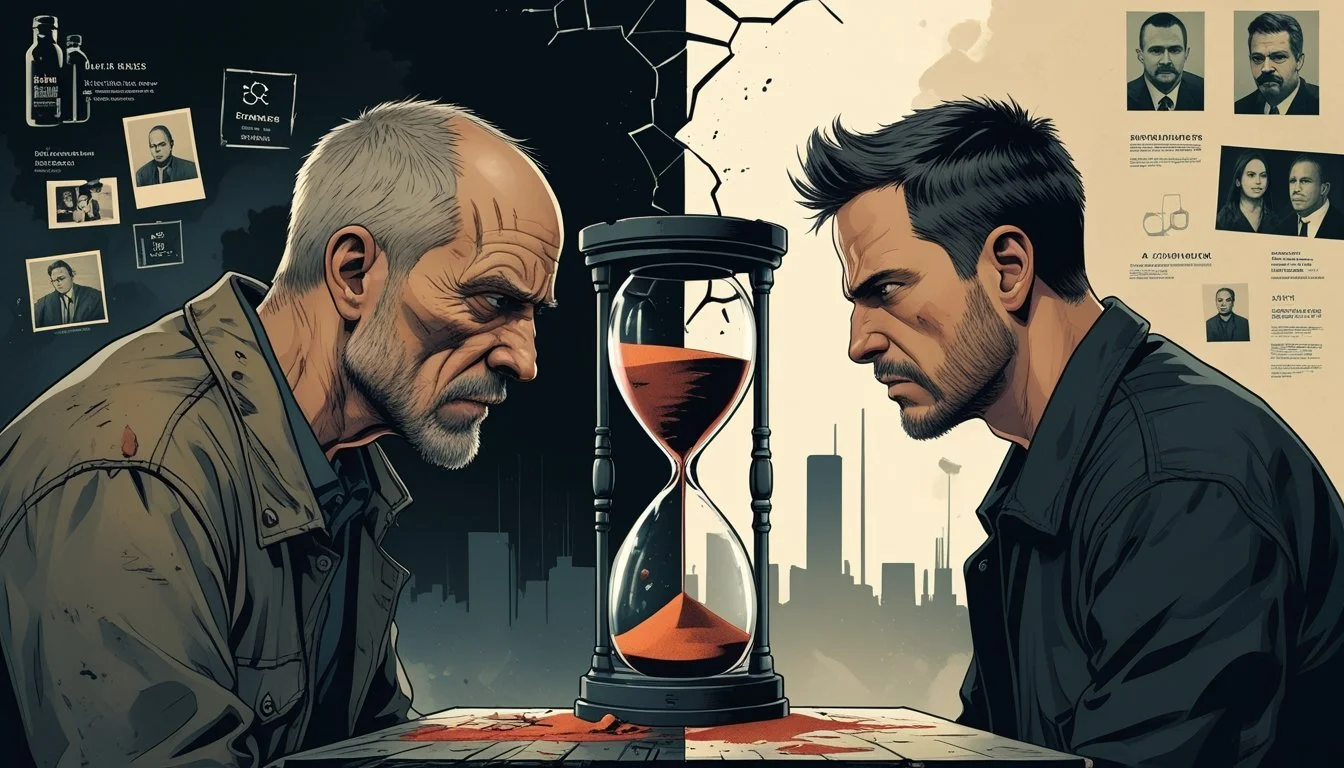
Breaking Bad's narrative of failed fatherhood and generational trauma left a measurable impact on both television storytelling and how society talks about family dynamics. Its recognition through critical acclaim and major awards cemented its relevance as more than just a crime drama.
Lasting Impact on Television and Society
Breaking Bad influenced modern television by portraying complex family relationships, especially between fathers and sons, with an unflinching look at generational trauma. Series creator Vince Gilligan pushed boundaries by depicting Walter White's transformation and its effects on his son, Walt Jr., which resonated with viewers worldwide.
Many subsequent shows adopted similar themes, reflecting a shift in how masculinity and legacy are depicted on screen. The show’s cultural phenomenon status contributed to broader conversations about parental influence and the cycle of harm passed through generations.
The ripple effects can be seen in popular series that came after, which cite Breaking Bad as an inspiration for their own exploration of family dysfunction and generational cycles.
Recognition and Critical Reception
Breaking Bad received significant recognition for its nuanced writing and performances. It won multiple Primetime Emmy Awards, including Outstanding Drama Series, and was widely acknowledged for its exploration of deep psychological and familial themes.
Critics consistently praised the show for presenting generational trauma without resorting to stereotypes. Reviewers highlighted how the series used the flawed relationship between Walter and his son to critique and examine fatherhood in modern society.
Accolades and positive reviews elevated Breaking Bad as a benchmark in television, leading to extensive academic analysis and influencing future media to tackle similar topics with more depth and realism.
