
How Gene Takavic Became the Ghost of Saul Goodman in Better Call Saul
The Transformation Explained

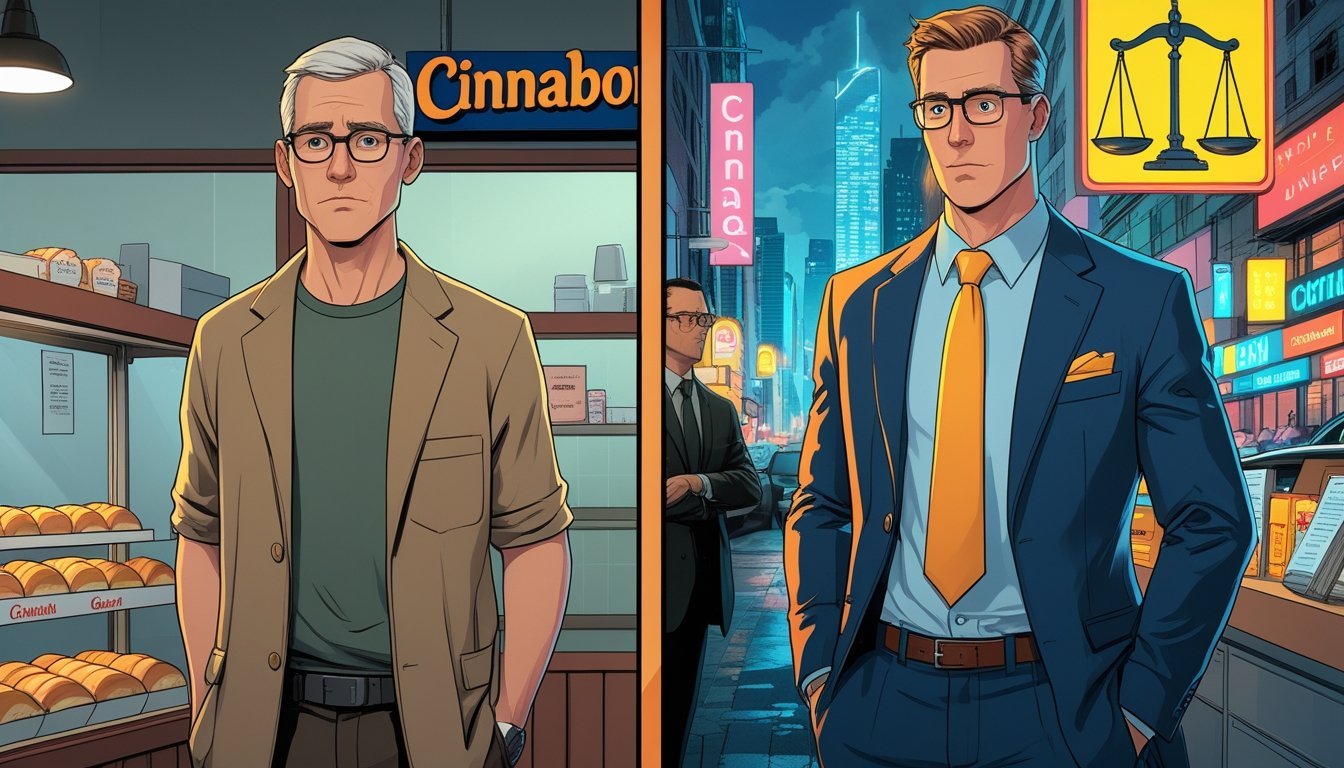
Gene Takavic is the new identity Jimmy McGill adopts after fleeing from his life as Saul Goodman, forced into hiding due to the fallout of his criminal associations in Better Call Saul and Breaking Bad. Stripped of his colorful persona, Gene becomes a quiet, anxious manager at a Cinnabon in Omaha, illustrating how thoroughly Saul Goodman has vanished—at least on the surface.
His journey from slick criminal lawyer to a wary ghost highlights the deep consequences of his past choices. The black-and-white flash-forwards in Better Call Saul create a haunting portrait of a man who must erase every trace of his former self just to survive.
Fans see in Gene Takavic not just the extinction of Saul Goodman’s flamboyance, but the daily torment of a life lived in fear and regret. The transformation raises captivating questions about identity, consequence, and the lingering shadows of one’s actions.
The Transformation from Saul Goodman to Gene Takavic
After fleeing the chaos of Albuquerque, Saul Goodman sheds every trace of his former life. As Gene Takavic, he navigates a monotonous existence, contending with the burden of his past and the struggle to blend into anonymity.
From Albuquerque to Omaha
Saul Goodman’s flight from Albuquerque begins the moment Heisenberg’s criminal empire collapses. Facing arrest or violent retribution, he uses the services of Ed the Disappearer, an identity specialist, to vanish overnight.
His destination is Omaha, Nebraska, where he starts over as Gene Takavic, a manager at Cinnabon in a quiet shopping mall. Every aspect of his old life—his law career, flashy persona, and criminal connections—is discarded by necessity.
The ordinary routines of Omaha are a stark contrast to the adrenaline-fueled world he left behind. As Gene, he adopts a low profile, wary of any attention that might expose him as a fugitive.
Creating a New Identity
The construction of Gene Takavic is both deliberate and necessary. Jimmy McGill, who became Saul Goodman, now has to erase every identifiable trait. Gene is balding, subdued, and avoids any form of charm or spectacle.
He must not only change how he looks but also how he acts. Gene avoids personal relationships, limits conversations, and never takes unnecessary risks. The smallest slip could compromise his cover and lead to arrest.
This new persona is maintained through careful attention to detail—using new identification, avoiding digital footprints, and following strict routines. Identity theft isn’t used by Gene; instead, he relies on fully fabricated documents provided by Ed.
Emotional and Psychological Evolution
Gene’s transformation is more than physical. Saul Goodman reveled in attention, risk, and manipulation. Now, Gene lives with anxiety and constant vigilance, haunted by the memory of what he was and the fear of being discovered.
The isolation in Omaha weighs heavily on him. Gene is lonely and struggles with the loss of his previous identities, especially the charm and confidence that made Saul Goodman unique. The blandness of his new life is suffocating, but he cannot risk slipping up.
He experiences moments of paranoia and regret, particularly when reminders of his past emerge. Whether facing a potential threat or recalling his days as Jimmy McGill, Gene is forced to confront what he has become—a shadow hiding in plain sight, forever disconnected from the life he once controlled.
Life as Gene Takavic in Omaha
Gene Takavic's existence in Omaha centers around careful routine, relentless caution, and limited human connection. His life as a Cinnabon manager offers stability but comes with emotional strains and constant awareness of his hidden identity.
Daily Routine at Cinnabon
Every morning, Gene arrives at the mall before opening hours. He methodically opens the Cinnabon store, prepares trays of cinnamon rolls, and manages daily operations with precision. His responsibilities include supervising staff, handling cash, and overseeing inventory.
During the day, he bakes, cleans, and interacts with customers as a courteous but reserved employee. Gene wears the standard-issue uniform, blending into a backdrop of Omaha, Nebraska retail workers. The job provides minimal attention and allows him to stay inconspicuous.
Breaks are brief and rarely social. Most of his time is spent on repetitive tasks: kneading dough, setting timers, and scrubbing counters. His only solace is the predictable, quiet monotony that keeps suspicion at bay.
Isolation and Fear
Gene’s life in Omaha is marked by deep isolation. He avoids meaningful relationships and rarely engages in casual conversation with colleagues. His apartment is sparse, reflecting a transient existence where nothing feels permanent.
His emotional world is dominated by paranoia. He anxiously monitors anyone who lingers near the Cinnabon or pays too much attention to him. Small incidents—a customer’s odd glance or a sudden noise—trigger overwhelming fear.
Gene constantly replays escape scenarios in his mind, memorizing exits and weighing what little luggage he could conceal. He watches old Saul Goodman commercials late at night, haunted by the life he abandoned and the consequences of being recognized.
Interactions with Locals
Interactions with Omaha locals are carefully managed. Gene keeps conversations with customers polite and brief, steering clear of personal topics. Regulars at the mall might recognize him as the quiet Cinnabon manager, but few know anything about his past or private life.
He occasionally converses with his staff, sticking to work matters and avoiding social invitations. Attempts by others to befriend him are quietly deflected. Even when danger seems low, Gene maintains emotional distance, never allowing anyone to get too close.
Notably, the rare moments when he is recognized or questioned, such as the encounter with a suspicious cab driver, prompt immediate anxiety and defensive action. For Gene, every relationship is a potential threat that could compromise his fragile anonymity.
Key Events Leading to Gene’s Unraveling
Gene Takavic’s careful life in Omaha begins to fall apart due to a series of events involving people from his new and old worlds. Each incident exposes fractures in his identity and brings him closer to losing control.
The Cab Driver Threat
Gene’s first major scare comes from a cab driver named Jeff, portrayed by Don Harvey and later Pat Healy. Jeff recognizes Gene as the infamous Saul Goodman from television and confronts him, shattering Gene's sense of safety.
This encounter forces Gene to break his routine and take risks to protect his anonymity. Instead of fleeing, he uses persuasion and intimidation to turn Jeff from a threat into an accomplice.
The incident raises the stakes for Gene, showing that his past can resurface at any moment and disrupt his efforts to stay hidden.
The Heist With Jeff
Seeking to control Jeff, Gene engineers a department store heist, codenamed “Nippy.” He manipulates Jeff into participating, ensuring that Jeff has skin in the game and cannot easily expose him.
The heist requires careful planning and introduces a new level of criminal activity to Gene’s previously dull life. It also pulls Jeff’s mother, Marion (played by Carol Burnett), further into Gene's orbit.
After a tense execution, the plan succeeds. However, Gene's willingness to engage in criminal behavior again reveals his inability to let go of his Saul Goodman instincts.
Confrontation With Marion
Marion becomes suspicious of Gene after noticing odd behavior and inconsistencies. She uses her computer to search Gene’s past, eventually discovering his true identity as Saul Goodman.
Her confrontation with Gene is pivotal. She refuses to be intimidated and outsmarts Gene by using her Life Alert device to notify authorities. Marion’s actions force Gene to abandon his cover and flee.
Carol Burnett’s portrayal of Marion provides a sharp counterpoint to Gene, showing how even an unassuming person can pose a mortal threat to his double life.
Waterworks and The Phone Call
During this spiral, the episode “Waterworks” captures Gene’s breakdown. Under pressure, he frantically calls his ex-wife Kim Wexler in Florida, desperate for connection and absolution.
The phone call is brief but emotionally charged. Kim’s reluctance to engage with Gene underscores the irreversible distance between them, deepening his isolation.
The failed attempt to reach out pushes Gene further towards reckless behavior, contributing to his exposure and ultimate undoing. This marks a turning point where nostalgia and regret give way to collapse.
Parallels and Contrasts With Breaking Bad
Gene Takavic’s story in Better Call Saul draws direct lines back to Breaking Bad, especially through his connections to Walter White and Jesse Pinkman. The series also blends its narrative into the broader AMC universe, creating a tapestry that links various points across both shows and the film El Camino.
Connections to Walter White and Jesse Pinkman
Gene Takavic is the last mask worn by Jimmy McGill, who became Saul Goodman in Breaking Bad. As Saul, he built relationships with both Walter White (Heisenberg) and Jesse Pinkman, acting as their attorney and occasional co-conspirator.
The episode "Breaking Bad" in Better Call Saul’s final season directly revisits the events of Walter and Jesse hiring Saul, featuring guest appearances by Bryan Cranston and Aaron Paul. These flashbacks reveal how deeply involved Saul was in Heisenberg’s criminal enterprise and how those choices led to his downfall.
In the Gene timeline, his constant anxiety and paranoia echo Walter’s trajectory in "Granite State"—both men ultimately become fugitives, hiding from their past. Yet while Walter sought one last act of control, Gene’s world becomes smaller, marked by fear and isolation rather than ambition.
AMC Universe Crossovers
Better Call Saul doesn’t just reference Breaking Bad; it actively overlaps with it through shared characters, timelines, and events. Key moments from Breaking Bad, such as Saul’s interactions with Heisenberg and his final exit, are mirrored and expanded on with new detail and perspective.
Cameos from Bryan Cranston and Aaron Paul in the final season tie together the two series in a direct and deliberate way. El Camino also fits into this universe, focusing on Jesse Pinkman’s escape, while Saul’s own disappearance as Gene provides a parallel story of exile and survival.
Many timeline crossovers are precise, with episodes like "Fun and Games" featuring notable time skips that match up with Breaking Bad's late seasons. This creates a consistent, interlocked chronology across AMC’s flagship dramas.
The Role of Supporting Characters in Gene’s Story
Gene Takavic’s transformation and isolation are shaped by the people who knew Saul Goodman and Jimmy McGill. Past connections resurface and influence Gene’s efforts to bury his former life, with every relationship leaving its own mark.
Kim Wexler’s Impact
Kim Wexler, portrayed by Rhea Seehorn, remains a central influence throughout Gene’s journey. Her departure from Jimmy McGill signals a turning point, as Kim was both his moral compass and closest confidante. The loss of her trust and partnership strips him of support and catalyzes his complete descent into Saul Goodman.
The memory of Kim lingers in Gene’s actions and decisions. Even as he goes into hiding, her absence haunts him more than law enforcement ever could. Their brief contacts during the “Gene” timeline reveal lingering regret and unresolved guilt that continues to define who Gene has become.
Kim’s decision to leave shapes the emptiness at Gene’s core. Without her influence, his choices grow colder and the distance between who he was and who he has become grows irreversibly.
Francesca and Howard
Francesca, Saul Goodman’s sharply competent office manager, becomes a quiet witness to Jimmy's transformation. Her loyalty to the Goodman brand ends when Saul’s world collapses. In a crucial phone call during the Gene era, Francesca reminds Gene that his past continues to have consequences. She stands as a link to the world he left behind but also as a warning that ties can snap without warning.
Howard Hamlin’s tragic fate hangs over Gene’s story like a shadow. As Kim and Jimmy’s schemes culminate in Howard’s death, Gene carries that legacy of collateral damage. The guilt and secrecy surrounding Howard mark Gene’s attempts at self-erasure, underscoring the price of living under an assumed identity.
Character Relationship to Gene Lasting Impact Francesca Former employee Practical connections, reminder of fallout Howard Victim Guilt, secrecy, moral burden
Appearances by Mike, Gus, and Lalo
Mike Ehrmantraut (Jonathan Banks) plays a pivotal role as Saul Goodman’s fixer and enforcer. Mike’s discipline and pragmatic outlook influenced Jimmy’s behavior, teaching him lessons about trust and survival. The memory of their partnership manifests during Gene’s contemplation of risk and paranoia.
Gus Fring (Giancarlo Esposito), as the calculating kingpin, created the world in which Saul thrived. Gus’s fall forces Saul to run for his life, ultimately leading to the “Gene” identity. The stability that Gus once afforded is replaced by fear and isolation.
Lalo Salamanca (Tony Dalton) brings chaos and unpredictability. His actions escalate events that drive Saul further from Jimmy McGill. The danger Lalo represented pushes Gene further into a state of hypervigilance and disconnection.
Influence of Chuck
Chuck McGill, Jimmy’s brother, is the original trigger for much of Jimmy’s self-doubt and striving. Chuck’s constant skepticism and disapproval plant the seeds for Jimmy’s transformation into Saul Goodman. Even after Chuck’s death, Gene’s memories of him are sharp and unresolved.
Chuck’s influence is visible in Gene’s self-destructive choices and moments of internal conflict. The fractured sibling dynamic leads Gene to continually redefine himself in opposition to Chuck’s ideals.
Gene’s struggle to escape his own past—embodied by Chuck’s criticism—remains an undercurrent throughout his story. This unresolved relationship adds a further layer of complexity to Gene’s attempts at reinvention.
Timeline and Pivotal Episodes
Gene Takavic’s story unfolds across critical episodes in the later seasons of Better Call Saul, especially through distinctive black-and-white sequences. These key scenes establish not only his transformation but also the precise timeframes when Saul Goodman disappears and Gene emerges.
Season 5 and the Lead-Up to the Finale
The timeline for Gene Takavic begins with the flash-forward sequences opening many season premieres. Season 5 depicts Gene living in Omaha, Nebraska, working at a Cinnabon.
In the cold open of Season 5, the episode "Magic Man" shows Gene's anxiety intensifying as he's recognized. This marks the growing threat of exposure long after Saul Goodman vanished.
These vignettes are brief but packed with tension. Saul’s meticulous life as Gene becomes increasingly unsustainable, highlighting his fear and longing for his former identity.
Season 6: Teasers and Key Moments
Season 6 features several pivotal Gene sequences that fill in the gaps and clarify the timing. The standout Gene episode, "Nippy" (season 6, episode 10), is set in 2010, shortly after the end of Breaking Bad.
Gene orchestrates a complex con to handle a blackmailer, demonstrating both his resourcefulness and the enduring presence of Saul Goodman’s instincts. This episode is essential for showing how close Gene comes to being exposed.
Football details, like discussions about Nebraska games, anchor these scenes in a specific post-Breaking Bad period. Gene’s actions in Omaha are clearly tethered to events that occurred soon after his disappearance.
"Quite a Ride" Through to Episode 11
In the "Quite a Ride" flashback (season 4, episode 8) and through to episode 11 of the final season (“Breaking Bad”), viewers see Saul at the peak of his panic during and after Walt’s criminal empire collapses.
"Quite a Ride" isn’t set in the Gene timeline, but it transitions directly into those later black-and-white scenes by depicting Saul’s escape. The rush to shred evidence and arrange for a new identity happens here.
From this flashback to the Gene episodes later on, the show connects the dots between Saul’s flight from Albuquerque and the quiet, haunted existence Gene tries to maintain in Omaha. The events across these episodes mark Saul’s ultimate transformation into Gene and his retreat into a life defined by caution and regret.
Fugitive Life, Crimes, and Consequences
After fleeing Albuquerque, Jimmy McGill—now living as Gene Takavic—relied on deceit and calculated risk to maintain his cover. The transition from flashy lawyer to Cinnabon manager was marked by constant vigilance, irregular criminal activity, and eventual legal consequences.
Scams and Survival Strategies
Gene’s daily life in Omaha was defined by his intent to remain unnoticed. He worked as a Cinnabon manager under a new identity, using mundane routines to blend in.
Despite his efforts to “go straight,” compulsive behaviors persisted. Gene orchestrated elaborate scams, notably enlisting Jeff and Buddy for a series of department store robberies. He manipulated alarm systems, exploited store policies, and coordinated the thefts with careful planning.
These crimes were motivated less by financial gain and more by the thrill and need for control. Table: Key Scam Elements
Method Purpose Partners Store burglaries Financial & Control Jeff, Buddy Social deception Mislead & manipulate Locals, Victims
Gene’s criminal conduct highlighted his inability to fully relinquish Saul Goodman’s instincts, even under threat of exposure.
Run-Ins With Law Enforcement
Gene’s paranoia was justified as law enforcement pressure increased over time. After a close call when a cab driver recognized him as Saul Goodman, Gene tightened his routines and minimized risks.
Despite extreme caution, his final scam—targeting a cancer patient—proved reckless. This act set off a series of events drawing police attention and alerting both local authorities and federal agencies, possibly including the DEA.
A combination of witness statements, surveillance, and unfinished business from his Saul Goodman days led to his eventual arrest. Police used evidence from his activity in both Albuquerque and Omaha to solidify their case.
Jail Time and Legal Ramifications
Gene, reverting to Jimmy, faced serious federal charges after his capture. His indictment included money laundering, racketeering, and offenses connected to his associations with Walter White.
He negotiated a plea bargain but chose to confess in detail, partly as a final act of truth and contrition. Ultimately, he received an 86-year prison sentence at ADX Montrose, a high-security facility.
Jimmy’s legal fate reflected the full consequences of his criminal career, closing the arc of both Saul Goodman and Gene Takavic in the eyes of the justice system.
Behind the Scenes and Series Creation
Better Call Saul’s depiction of Gene Takavic’s hidden life is the result of deliberate creative choices, careful writing, and a standout central performance. Key contributors from creators to cast played distinct roles in shaping Gene’s world and his transformation into the ghostly remnant of Saul Goodman.
The Vision of Vince Gilligan and Peter Gould
Vince Gilligan and Peter Gould aimed to extend and complicate the Breaking Bad universe through Better Call Saul. They developed Gene Takavic’s storyline to explore themes of regret, consequence, and identity after Saul Goodman disappeared.
Their approach emphasized subtle storytelling. This can be seen in the black-and-white cinematography used for the Omaha scenes, accentuating Gene’s isolation. The creators chose to reveal Gene's gradual breakdown over multiple seasons, using silence, routine, and brief dialogue to show his internal struggle.
Both Gilligan and Gould held the belief that Saul's fate should not be clear-cut. Instead, they paced Gene’s arc to be slow and nuanced, letting his transformation unfold naturally, with little fanfare. Their decision to revisit and eventually conclude Gene’s story in Season 6 was carefully timed, matching the show’s underlying tension and sense of inevitability.
Bob Odenkirk’s Portrayal
Bob Odenkirk’s performance as Gene Takavic is marked by restraint and careful attention to physical detail. He drew clear distinctions between Saul’s flamboyance and Gene’s anxious, subdued behavior.
Odenkirk has spoken in interviews about the challenges of conveying Gene’s psychological turmoil without much dialogue. Using gestures, body language, and nervous habits, he brought out Gene’s persistent fear of being found out. His subtle choices—like the way Gene glances at security cameras or interacts with patrons—communicate his emotional exhaustion.
The transition from Saul to Gene was made more convincing by Odenkirk’s adaptability. With minimal scripts during these Omaha sequences, he worked closely with directors to ensure every movement and reaction felt authentic to Gene’s situation.
Contributions by Cast and Crew
Writer Alison Tatlock contributed to key scripts that fleshed out Gene’s post-Saul existence. Her scripts paid close attention to pacing and tension, helping scenes feel measured and emotionally charged.
Director Frank Danielsen helped execute the visual tone for Omaha. His direction focused on muted settings and quiet tension, increasing the sense of alienation in Gene’s life.
The crew relied on references such as the series "American Greed," which provided context for criminal behavior and the realities of living in hiding. Production designers made conscious choices about Gene's drab environment, reinforcing his loss of identity. Every detail—from colorless work uniforms to silent breakroom scenes—was crafted to immerse viewers in Gene’s daily monotony.
