
Howard Hamlin in Better Call Saul: Villain or Victim? Analyzing His Role in the Series
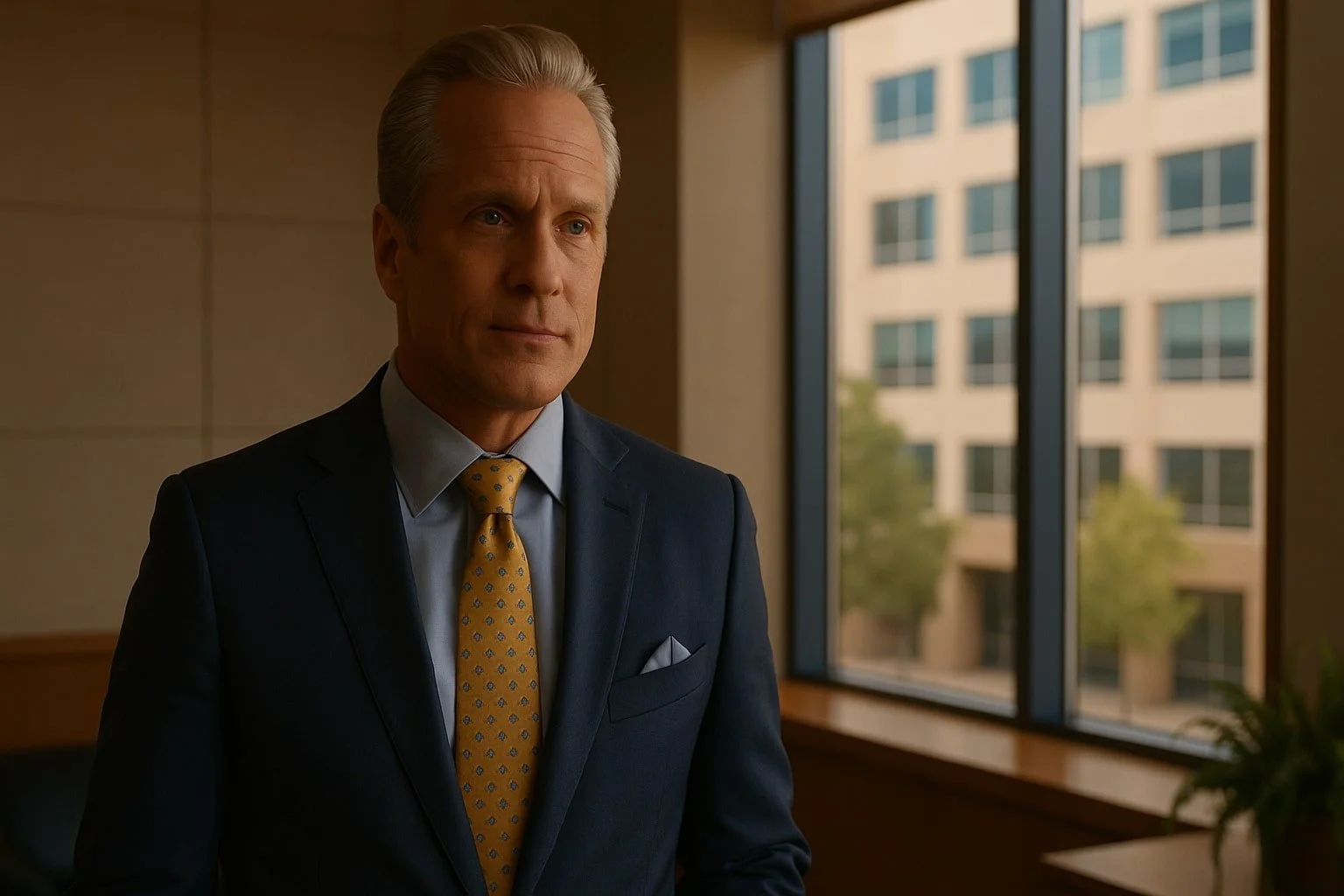
Howard Hamlin in Better Call Saul is neither a clear-cut villain nor a straightforward victim; instead, he’s a complex character caught between the ambitions and frustrations of those around him. As managing partner at Hamlin, Hamlin & McGill, Howard is often perceived as an obstacle by Jimmy McGill and Kim Wexler, fueling much of the conflict that surrounds his character. Yet, his actions show a man following his principles, even as others misinterpret or use him as a scapegoat.
Throughout Better Call Saul, Howard’s role shifts depending on whose perspective the audience follows. He faces personal and professional challenges, often bearing the consequences of schemes that were never really about him. This ambiguity leaves viewers questioning his true nature and wondering if the real harm done in the story is not by Howard, but to him.
Who Is Howard Hamlin?
Howard Hamlin is a central figure in the crime drama Better Call Saul, working as a senior partner at the prestigious law firm Hamlin, Hamlin & McGill (HHM). Played by Patrick Fabian, Howard's career choices and personal demeanor significantly influence both the firm and other key characters.
Background and Early Career
Howard Hamlin is introduced as a highly competent attorney in Albuquerque, New Mexico. He was raised in a legal environment, as the son of one of the founding partners of HHM. This early exposure to law shaped his understanding of professionalism and ethics.
Howard attended reputable law schools and demonstrated ambition early in his career. His education and family connections gave him both the technical skills and the confidence to thrive in a demanding legal setting.
Throughout his early career, Howard built a reputation for being polished and composed. His calm exterior and attention to detail set him apart from peers. Within the firm and the legal community, he gained respect for his careful approach to both cases and client relations.
Role Within HHM
At HHM, Howard became the managing partner and the public face of the firm. He leads with a focus on the company's reputation and internal harmony. This visible authority sometimes places him in difficult positions between other strong personalities, such as Chuck McGill and Jimmy McGill.
Howard frequently acts as a mediator, balancing the interests of his partner Chuck McGill with the ambitions of Jimmy McGill. His leadership is defined by formal professionalism and a desire to maintain HHM's high standards.
Key responsibilities at HHM:
Overseeing major legal cases
Managing client relationships
Representing HHM in public and private affairs
Staff rely on Howard for strategic direction and stability during crises. However, his decisions can be perceived as cold or elitist by those outside his inner circle, contributing to widely varying perceptions of his character throughout the series.
Howard Hamlin’s Relationships
Howard Hamlin’s time at HHM is defined by his complex dynamics with both Jimmy McGill and Chuck McGill. These relationships influence his choices and the perception others have of him throughout Better Call Saul.
Connection with Jimmy McGill
Howard Hamlin’s relationship with Jimmy McGill is often marked by conflict and misunderstanding. At first, Howard maintains a professional distance, often acting as the enforcer of firm policies at Hamlin, Hamlin & McGill (HHM). This role frequently puts him at odds with Jimmy, especially regarding Jimmy’s employment prospects and legal ambitions.
Despite being seen as an antagonist by Jimmy, much of Howard’s treatment of him is revealed to come from Chuck’s insistence rather than Howard’s own animosity. When the truth emerges that Chuck is behind many setbacks in Jimmy’s career, Howard’s motivations become clearer. He attempts to reconcile with Jimmy at times, expressing regret and seeking resolution.
Key moments include Howard’s decision to offer Jimmy a job at HHM after Chuck’s death and his later attempts to repair their working relationship. However, Jimmy’s resentment and Kim Wexler’s influence contribute to Howard remaining a target, despite his efforts.
Partnership with Chuck McGill
Howard’s partnership with Chuck McGill is central to both men’s professional lives at HHM. Chuck, as a founding partner, commands significant influence, and Howard is often placed in the difficult position of balancing Chuck’s wishes with the firm’s interests. This alliance often puts Howard in the role of executing Chuck’s decisions, particularly those that negatively affect Jimmy.
While Howard respects Chuck’s legal acumen and trusts his judgment, he nevertheless becomes caught in the crossfire between the McGill brothers. The partnership is complicated by Chuck’s declining mental health, with Howard often forced to manage both the firm’s reputation and Chuck’s personal struggles.
After Chuck’s dramatic exit from the firm and subsequent death, Howard grapples with feelings of responsibility and remorse. He tries to do right by Chuck’s memory while dealing with the fallout of their actions, revealing the burdens he carries from both personal loyalty and professional duty.
Howard as Antagonist or Victim: Key Storylines
Howard Hamlin's role in Better Call Saul is often debated, especially in relation to major legal battles and his interactions with other central characters. He is frequently caught between his professional duties and the hidden schemes of those around him.
Sandpiper Case and Settlement
The Sandpiper Crossing case was a class-action lawsuit that positioned Howard as both a prime decision-maker and a perceived obstacle. As managing partner at Hamlin, Hamlin & McGill, he controlled the case’s direction and settlement terms.
Jimmy McGill saw Howard as blocking a lucrative settlement, fueling personal resentment. However, Howard’s approach was driven by a calculated legal strategy, ensuring the residents of Sandpiper received a fair outcome rather than a rushed settlement.
Key points:
Howard’s leadership meant he often bore the brunt of client frustrations.
Antagonism was amplified by Jimmy's schemes, making Howard appear as the villain.
Legal strategy vs. personal motives: Howard’s decisions sometimes protected the firm at the cost of his reputation.
Despite being portrayed as an adversary, Howard was often acting out of professional obligation, not malice. His careful, sometimes rigid, handling of the case reflected his commitment to ethical law practice.
Confrontation with Kim Wexler
Howard’s conflict with Kim Wexler highlighted him as an antagonist in her and Jimmy’s eyes. The confrontation arose as Kim, with Jimmy’s help, orchestrated schemes to undermine Howard's credibility during the Sandpiper settlement.
Kim challenged Howard’s authority by exposing his limits and vulnerabilities. She participated in a plot that aimed to unravel Howard’s personal and professional image, not just for financial gain but as a matter of principle and retaliation.
Table: Key Elements in Howard vs. Kim Conflict
Character Motivation Outcome Howard Hamlin Firm reputation, ethics Undermined Kim Wexler Revenge, autonomy Escalated conflict
This power struggle forced Howard into a defensive position, often making him look like the bad actor. However, the reality showed a man struggling to navigate hostile plotting rather than an outright villain.
Psychological Profile and Character Development
Howard Hamlin’s storyline in Better Call Saul reveals a layered character shaped by ambition, principles, and ongoing internal conflict. His behavior is deeply rooted in his personal values, shaped by his family legacy and his perceptions of responsibility and personal failure.
Motivations and Morality
Howard’s actions as managing partner at Hamlin, Hamlin & McGill are driven by a commitment to professionalism and the legacy of his father. He often tries to balance the demands of running a successful law firm with his own ethical standards.
He is sometimes perceived as antagonistic, especially in his dealings with Jimmy McGill. However, Howard usually acts according to a genuine belief in fairness and procedure rather than malice. His attempts to steer Jimmy away from trouble are more protective than hostile, indicating a sense of duty.
Howard exhibits consistent moral restraint, even under pressure from Chuck McGill and others at the firm. These choices show that, despite appearances, he often prioritizes the greater good and the firm’s reputation over personal vendettas. He rarely acts out of spite, instead trying to maintain a respectable image in both public and private scenarios.
Struggles with Guilt and Loyalty
Howard’s journey is strongly influenced by guilt, particularly after Chuck’s mental health crisis and eventual death. He blames himself for actions he believes contributed to Chuck’s downfall, leading to visible changes in his demeanor and confidence.
His loyalty to both Chuck and the law firm becomes a source of internal struggle. Howard’s efforts to protect the firm and its partners sometimes come at the expense of his own mental well-being. He displays anxiety and stress, especially when faced with manipulation and sabotage by Jimmy and Kim.
Though Howard tries to remain composed and rational, cracks often appear in moments of personal confrontation. Unlike other characters, he does not fully adopt a hardened or cynical outlook but instead wrestles with his conscience, highlighting the ongoing tension between loyalty, guilt, and self-preservation.
Season 6 and The Tragic Downfall of Howard Hamlin
In Season 6, Howard Hamlin's fate is sealed by events largely outside his control. With mounting pressure from calculated adversaries and a violent criminal element, his story takes a dark and unexpected turn.
Manipulation by Jimmy and Kim
Howard's professional and personal life collapses primarily due to the elaborate scheme orchestrated by Jimmy McGill and Kim Wexler. Their plan involves sabotage, framing, and psychological warfare designed to ruin Howard's reputation and career.
Key steps in their scheme include spreading rumors about Howard's drug use, orchestrating embarrassing public situations, and planting evidence. Jimmy and Kim manipulate situations to make Howard appear unstable to his colleagues and clients at HHM (Hamlin, Hamlin & McGill).
As the pressure builds, Howard is isolated and desperate to prove his innocence. Despite his efforts, the consequences are severe. He is left with diminished standing, both professionally and personally, as the duo succeeds in discrediting him. Unlike a villain, Howard acts as a victim of calculated malice rather than an architect of his own downfall.
The Role of Lalo Salamanca
Lalo Salamanca’s arrival marks a decisive, violent end for Howard. Lalo is a major figure in the Salamanca drug cartel, known for his unpredictability and brutality. When he appears at Jimmy and Kim’s apartment, Howard becomes an unintended casualty.
Howard’s presence during Lalo’s confrontation is entirely coincidental; he walks into a situation he cannot comprehend or control. Lalo kills Howard, using him as a warning and a cover for his own criminal activities.
This violent event has nothing to do with Howard’s actions or choices. His death contrasts sharply with the legal and psychological battles he faced previously, showing how the world of organized crime is indifferent to the lives of outsiders. Howard’s story ends as a victim caught in a web spun by others, not as a perpetrator himself.
Howard Hamlin’s Reputation and Legacy
Howard Hamlin’s character in Better Call Saul is shaped by widespread assumptions about his motives and actions. His involvement with the law firm HHM and his interactions with other key figures anchor both his reputation and his lasting legacy in the series.
Public Perception and Misunderstandings
Howard is often viewed as an antagonist, particularly in the show’s early seasons. Many see him as an obstacle to Jimmy McGill’s ambitions, painting him as cold and unyielding. This perception grows from his professionalism and the formal role he holds as managing partner at HHM.
However, much of Howard’s supposed hostility comes from misinterpretation. Viewers and characters alike frequently attribute blame to him for decisions actually made by Chuck McGill. His adherence to rules and the firm’s reputation leads to unfair criticism, overshadowing instances where he shows empathy and fairness.
Outside appearances, such as his polished and controlled demeanor, reinforce misunderstandings. Yet, key moments—like his efforts to help Kim Wexler and his attempts at reconciliation—reveal a more nuanced character, caught between loyalty to HHM and a personal sense of justice.
Lasting Impact on HHM and the Series
Howard’s legacy in HHM is significant. Under his leadership, the law firm maintains its respected position, despite facing internal conflict and external pressures. He serves as a stabilizing presence, striving to uphold the values set by the Hamlin and McGill families.
His involvement in the conflicts among main characters, most notably Jimmy and Kim, brings unforeseen consequences for both himself and HHM. Howard’s downfall marks a turning point, impacting the firm’s reputation and financial stability.
Beyond HHM, his story highlights the complexities of personal and professional integrity in Better Call Saul. Howard's actions continue to reverberate, affecting the narrative’s tone and illustrating the weight of both perception and legacy in shaping a character’s fate within the series.
Howard Hamlin’s Significance in the Breaking Bad Universe
Howard Hamlin played a pivotal role in shaping the paths of those around him within Better Call Saul. His professional actions, relationships, and ultimate fate impacted not only Saul Goodman but several characters integral to the Breaking Bad crime drama universe.
Connections to Saul Goodman
Howard Hamlin was both a rival and an indirect mentor to Jimmy McGill, who would later become Saul Goodman. As managing partner of Hamlin, Hamlin & McGill (HHM), Howard represented the ideals and prestige that Jimmy aspired to, but could never attain through conventional means.
Howard often found himself caught between Chuck McGill’s schemes and Jimmy’s ambitions. Despite being depicted as an antagonist early on, much of Howard’s resistance stemmed from loyalty to his firm and the obligations to Chuck rather than personal malice.
Key moments—such as denying Jimmy’s promotion at Chuck’s behest and later extending an olive branch—led to increased resentment and tension. This dynamic played a significant part in pushing Jimmy away from legitimate legal routes and toward adopting his “Saul Goodman” persona, central to Breaking Bad’s narrative.
Influence on Breaking Bad Characters
Howard’s behavior and eventual downfall deeply affected both Kim Wexler and Jimmy McGill. His seemingly rigid but principled demeanor served as a counterpoint to their willingness to bend rules. The consequences of their plot against Howard exposed the limits they were willing to cross and set off a chain reaction with lasting consequences.
When Howard was unexpectedly killed in Kim and Jimmy’s apartment, it shocked everyone within their circle. His death highlighted the real dangers lurking beneath the legal maneuverings of the crime drama and intensified Jimmy’s transformation into Saul Goodman.
Howard’s relationships with characters like Chuck, Kim, and Jimmy demonstrated the often-unseen costs of ambition and moral compromise in the Breaking Bad universe. His story illustrated the blurred lines between victim and antagonist, leaving a legacy that resonated long after his exit from the series.
Portrayal and Performance
Howard Hamlin’s character in the crime drama Better Call Saul stands out due to both a nuanced performance and complex writing. His journey from perceived antagonist to sympathetic figure is shaped as much by Patrick Fabian’s approach as by the reactions of viewers.
Patrick Fabian’s Approach to the Character
Patrick Fabian portrayed Howard Hamlin with an intentional balance of confidence and vulnerability. He avoided making Howard an outright villain, instead suggesting a man caught between professional ambition and personal ethics.
Fabian chose subtle gestures and understated delivery to convey Howard’s inner conflicts. For example, Howard’s calm demeanor masks underlying stress, highlighted by small changes in tone and body language rather than overt emotional displays.
Fabian worked closely with the writers to ensure Howard felt authentic. He brought out the multi-faceted nature of the character, showing how power in a law firm can come with isolation and misunderstanding from others.
Fabian’s performance received praise for showing Howard’s humanity during moments of both self-assurance and unfair treatment, helping the audience see him as more than an obstruction to Jimmy McGill.
Audience Reception
Audience reaction to Howard Hamlin evolved significantly over the series. Early on, many viewers saw him as an antagonist, largely due to his professional disputes with Jimmy and Kim.
Over time, discussion forums and social media posts began reflecting a shift in perception. Viewers recognized Howard as a victim caught in circumstances created by others, particularly the manipulation by Chuck and Jimmy.
Critical response supported this reappraisal; reviewers highlighted Howard’s tragedy and increasing vulnerability as the story progressed. Some began describing him as one of the most tragic figures in the Breaking Bad universe.
Surveys and feedback indicated that Patrick Fabian’s understated delivery was key in winning sympathy for Howard. His nuanced performance is often cited as a reason why Howard’s fate left a strong impact on the show’s audience.
