
Lydia Rodarte-Quayle
The Most Understated Villain in Breaking Bad and Her Stealthy Impact on the Series
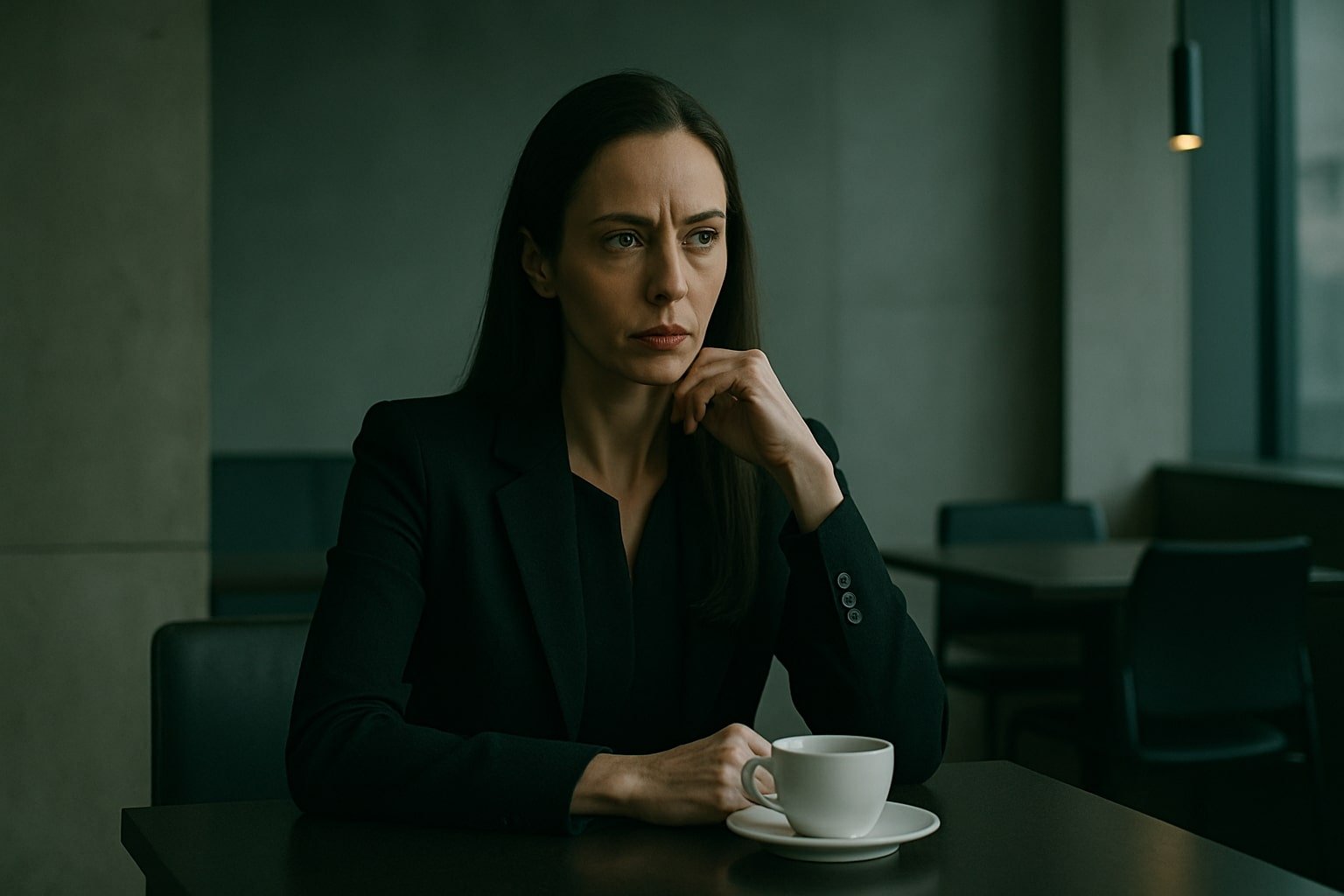
Lydia Rodarte-Quayle quietly entered the Breaking Bad universe as a nervous executive, but her cunning and decisive actions quickly set her apart from other antagonists. Despite her unassuming appearance, Lydia became one of the series' most dangerous and resourceful villains, orchestrating critical elements of the meth trade while avoiding the spotlight. Her careful maneuvering and willingness to make ruthless decisions protected her interests and made her indispensable to powerful criminal operations.
What made Lydia unique was her corporate background and ability to manipulate situations to her advantage, often using her position at Madrigal Electromotive to stay one step ahead. She maintained a low profile while dealing with volatile figures and made pragmatic choices motivated by self-preservation, setting her apart from the show’s more overtly violent characters.
Who Is Lydia Rodarte-Quayle?
Lydia Rodarte-Quayle is a business executive with a hidden criminal life in the acclaimed series Breaking Bad. She operates in the world of international logistics while engaging in high-stakes drug trafficking tied to some of the show’s most dangerous figures.
Background and Personality
Lydia Rodarte-Quayle is depicted as highly intelligent and cautious, with a deeply anxious and tense demeanor. She is known for meticulous attention to detail, especially when it comes to her own safety and the secrecy of her operations.
Despite her corporate success, Lydia constantly fears exposure and often seeks extreme measures to eliminate any perceived threats. Her need for control makes her quick to suggest drastic solutions, such as orchestrating murders to protect herself.
She juggles her criminal life with her responsibilities as a single mother, raising a young daughter whose presence adds another layer to Lydia’s anxieties. Lydia’s outward appearance is calm and polished, but her actions reveal a ruthless nature masked by professionalism.
Her extreme paranoia and obsession with cleanliness are consistent throughout her appearances, often causing tension in every scene she is in. Lydia’s complex personality stands out among Breaking Bad’s cast of villains.
Role at Madrigal Electromotive
Lydia serves as the Head of Logistics at Madrigal Electromotive GmbH, an international corporation that supplies industrial equipment worldwide. Her position grants her the authority and connections to facilitate illicit drug operations while maintaining the company’s legitimate front.
She secretly supplies methylamine, a key chemical required for large-scale methamphetamine production. Initially, she works with Gustavo Fring and continues her involvement with Walter White’s empire after Gus’s fall. Lydia later collaborates with Jack Welker’s gang.
While based in the Houston office of Madrigal, Lydia manages the logistics and documentation that keep the drug shipments running smoothly. She handles high-level coordination and covers her tracks through careful manipulation of Madrigal’s supply chains.
The organizational resources at Madrigal allow Lydia to operate without drawing the suspicion of law enforcement—at least for a time. Her role at the corporation is central to sustaining the criminal activities detailed in Breaking Bad’s final season.
Portrayal by Laura Fraser
Laura Fraser brings Lydia Rodarte-Quayle to life with a performance marked by restraint, anxiety, and underlying menace. Fraser’s portrayal captures Lydia’s facade of corporate composure alongside her growing paranoia and moral ambiguity.
The actress convincingly shows Lydia’s fear-driven decisions, from obsessive precautions to her willingness to sanction violence. Fraser’s subtle expressions and controlled body language add depth to Lydia, making her a memorable, understated antagonist.
Fraser approaches Lydia as a character who is deeply uncomfortable in dangerous situations but remains involved out of desperation and loyalty to her daughter. The performance avoids caricature and gives Lydia a troubling humanity within her criminal role.
This nuanced representation stands out in the Breaking Bad cast and adds to the tension in every scene featuring Lydia. Fraser’s interpretation makes Lydia both relatable and unsettling in equal measure.
First Appearance in Breaking Bad
Lydia first appears in Season 5 of Breaking Bad during the episode “Madrigal.” Viewers meet her as a nervous yet sharply dressed executive deeply involved in managing Madrigal’s logistics.
From her introduction, Lydia’s anxiety and paranoia are immediately clear as she discusses concerns about visibility and law enforcement. Her first scenes establish her as a behind-the-scenes operator, crucial to the supply chain but rarely in the direct line of fire.
Her debut marks a shift in the series, revealing the depth of the infrastructure supporting the meth operation. Lydia’s role expands across subsequent episodes, eventually connecting her with key characters and furthering major plotlines.
Key information about Lydia’s background and earlier activities is also explored in Better Call Saul, providing additional context to her character before her full introduction in Breaking Bad.
Lydia’s Place in the Breaking Bad Universe
Lydia Rodarte-Quayle occupies a unique role within both Breaking Bad and Better Call Saul. Her actions and alliances impact the fate of multiple central characters, and her cautious approach sets her apart from other antagonists.
Major Storylines and Alliances
Lydia is introduced as the head of Logistics at Madrigal Electromotive GmbH, based in Houston, Texas. She quietly supplies large quantities of methylamine, a key chemical for meth production, to Gustavo Fring and later to Walter White.
Her involvement begins as a behind-the-scenes supplier, but after the collapse of Gus Fring’s operation, Lydia becomes more directly entwined with Walt’s empire. She seeks out ongoing meth production and aligns herself with those who can ensure her safety and profits.
Lydia’s navigation of shifting power dynamics—first collaborating with Mike Ehrmantraut, then Walter White, and finally forming connections with Jack Welker’s gang—demonstrates her adaptability. She always prioritizes self-preservation, often at the expense of others.
Collaboration With Antagonists
Lydia’s connections with fellow villains are often transactional and discreet, focusing on mutual benefit. She first works under Gustavo Fring, discreetly enabling his meth operation by providing the precursor chemicals he needs through Madrigal’s resources.
After Gus’s death, she attempts to have Mike killed fearing exposure, but when her own position is threatened, she assists Walt and Todd Alquist in reestablishing their meth business. With Jack Welker and his gang, Lydia brokers deals for distribution, remaining physically distant yet integral to their operations.
Her willingness to work with dangerous individuals such as Jack Welker and Todd Alquist, while maintaining a professional façade, highlights her pragmatic and risk-averse personality. Lydia’s alliances with antagonists shape the criminal landscape and illustrate how her understated approach contributes to her effectiveness as a villain.
Her Key Role in the Meth Operation
Lydia Rodarte-Quayle was pivotal in transforming a local meth operation into a multinational drug empire. Her expertise in logistics and her established international connections made large-scale production and export possible in ways that few other characters in Breaking Bad could manage.
International Connections and the Czech Republic
Lydia's value stemmed largely from her ability to open international markets—most notably in the Czech Republic. She recognized that the American Southwest was a saturated market, so she proposed expanding meth sales overseas, where demand was high and law enforcement scrutiny was lower.
Her connections in Europe, especially with distributors and importers, gave the operation a safe and dependable route to move large quantities of blue meth. Lydia also facilitated financial transactions across borders and masked the traceability of profits. This international reach made the meth empire not just larger, but more sustainable and profitable.
Key aspects of Lydia's international facilitation:
Function Impact Overseas buyers Expanded market reach Money laundering Concealed illicit profits Logistics Steady supply chain abroad
Methylamine and Logistics
Lydia managed the acquisition and transport of methylamine, an essential methamphetamine precursor. Without her, the meth operation would have faced critical shortages, as methylamine is difficult to obtain legally and is closely monitored.
She leveraged her position at Madrigal Electromotive GmbH to divert and disguise shipments of methylamine. Lydia's detailed knowledge of corporate supply chains and her ability to manipulate shipping records made law enforcement detection unlikely.
Her paranoia about being caught drove her to use elaborate safety protocols. For example, she would insist on covert meetings and used dead drops for communication. In doing so, Lydia ensured the smooth, uninterrupted flow of methylamine—a necessity for the meth empire's survival.
Expansion of the Drug Empire
Before Lydia's involvement, Walter White and his associates sold meth primarily through local channels. Lydia pushed to expand the distribution network and introduced new, large-scale buyers, fundamentally altering the scale of the drug trade.
She systematically replaced smaller, vulnerable intermediaries with more secure and profitable arrangements. Lydia's actions led to a dramatic increase in meth production, moving the organization far beyond its New Mexico roots.
Her business acumen allowed the operation to adapt rapidly, filling power vacuums after major players such as Gustavo Fring were removed. This expansion, largely orchestrated behind the scenes by Lydia, played a significant part in making the meth empire formidable and difficult to dismantle.
Complex Network of Relationships
Lydia Rodarte-Quayle’s navigation of the criminal underworld involved strategic alliances and calculated risks with key figures from Gus Fring to Walter White. Her relationships offered insight into her survival tactics and the shifting allegiances that defined her role in the meth empire.
Walter White and His Criminal Network
Lydia first became essential to the operation by supplying methylamine, the critical component for meth production. After Gus Fring’s death, she partnered directly with Walter White and his associates, including Todd Alquist and Declan, to maintain the enterprise.
Her dealings with Walter were marked by mutual distrust. Lydia believed she was expendable, which fueled her paranoia and led her to suggest killing anyone she considered a threat, such as Mike Ehrmantraut and even Chris Mara, one of Mike’s men.
She maintained boundaries with Skyler White, keeping business strictly separate from family ties. Lydia insisted on anonymity and minimal direct contact, even as her actions had major impacts on the White family’s life. Her careful maneuvering showed her awareness of how volatile power had become after Gus’s fall.
Mike Ehrmantraut’s Partnership
Lydia’s partnership with Mike Ehrmantraut was shaped by caution on both sides. Mike initially distrusted Lydia’s neurotic tendencies but saw her as a necessary source for chemical supplies after Gus’s network collapsed.
Their relationship was fraught as Lydia’s attempts to protect herself—including plots to eliminate perceived risks—undermined Mike’s preference for stability. She caused tension by suggesting the murders of those who could expose her, making her less reliable to Mike.
Lydia later became complicit in escalating violence when she partnered with Todd Alquist after Mike’s death. This decision aligned her with more unpredictable elements of the organization and further complicated her standing, drawing her deeper into the cycle of distrust and danger that defined Breaking Bad’s final season.
Methods, Motives, and Ruthlessness

Lydia Rodarte-Quayle consolidates her power through calculated violence, manipulation, and relentless attention to security. Her actions reveal a leader who is both resourceful and remarkably cautious in maintaining control of the meth operation and protecting herself from threats.
Use of Violence and Poison
Lydia is not physically violent herself, but she orchestrates violence to eliminate risks and competition. She arranges for the deaths of associates who might compromise her safety or the drug operation, often outsourcing the dirty work to hired killers or criminal partners.
A distinctive example is her use of ricin, a potent and nearly undetectable poison. She attempts to have rivals, such as Declan and his crew, eliminated when she feels her position is threatened. Her willingness to employ ricin poisoning shows both creativity and ruthlessness—using methods that conceal her involvement and minimize the chance of direct retaliation.
The table below summarizes her key actions related to violence:
Method Target(s) Motivation Ordered killings Mike’s associates, Declan Reduce risk to herself Ricin poisoning Herself (accidentally), Jesse (planned by Walt) Remove obstacles, control threats
Lydia’s approach is always indirect, relying on technical means or criminal networks to enforce her will without direct confrontation.
Paranoia and Security Measures
Lydia’s paranoia shapes nearly every move she makes. She is constantly on guard, convinced that law enforcement or rivals could expose her at any moment. This paranoia drives her to operate in secret, use coded language, and demand extreme discretion from partners.
She employs a security consultant who checks restaurant tables for surveillance devices before meetings. Video calls, burner phones, and insistence on face-to-face meetings in public places are routine precautions.
Lydia frequently requests proof that her orders were followed, such as photographic evidence of executions. Her anxiety extends to personal habits, carefully altering routines and never lingering in one place. This obsessive caution is not just anxiety but a core survival strategy, allowing her to thrive longer than many of her criminal peers in the volatile Breaking Bad universe.
Her attention to security is not overblown; it reflects a rational calculation given the stakes and the violent nature of the drug trade.
The Final Season: Betrayal and Downfall
Lydia Rodarte-Quayle's fate in the fifth season is shaped by her shifting alliances and heightened paranoia. Critical turning points with the neo-Nazis, Todd Alquist, and Walter White drive her undoing.
Betrayal of Allies
Lydia's partnership with the neo-Nazi group, led by Jack Welker, marks a pivotal turn in her criminal role. Initially working with Gus Fring and later Walter White, she steps deeper into meth distribution by collaborating with Jack and Todd.
She orchestrates betrayals to remove perceived threats, promoting violence to protect herself. Lydia convinces Jack Welker to eliminate Declan and his crew so her own supply chain remains secure. Her interactions with Todd Alquist also reveal her manipulative tactics; she exploits Todd’s loyalty and personal feelings to ensure her demands are met.
Despite her meticulous approach, Lydia's insistence on secrecy increases suspicion and risk. Paranoia isolates her from her allies, and her readiness to dispose of partners marks her as a dangerous yet vulnerable player.
Decline and Death
As her need for control heightens, Lydia’s paranoia becomes her greatest weakness. She tries to remain anonymous, only meeting allies in highly controlled environments, but her efforts to keep distance do not guarantee safety.
Walter White, foreseeing Lydia’s willingness to betray him, takes calculated action. In the series finale, he secretly poisons Lydia by lacing her trademark stevia with ricin during a meeting arranged by Todd. This methodical plan exploits Lydia's routines and ultimately leads to her painful and inevitable death.
Her demise is not violent in a physical sense, but rather the result of her own secrecy and the careful plotting of an old partner she underestimated. Lydia’s end emphasizes her decline from a powerful manipulator to an isolated, betrayed casualty within the criminal world.
Legacy and Lasting Impact

Lydia Rodarte-Quayle quietly shaped the structure and scale of the meth business in Breaking Bad. Her influence intersected with several key figures and extended into the wider Breaking Bad universe, leaving a distinctive mark among the show’s most notorious villains.
Influence on the Drug Business in Breaking Bad
Lydia’s position as the head of Logistics at Madrigal Electromotive GmbH allowed her to secretly supply methylamine, an essential ingredient for high-purity meth. This made her a key link between corporate operations and criminal enterprises.
After Gustavo Fring’s death, Lydia facilitated the expansion of Walter White’s meth business into new territories. She brokered deals and opened distribution routes across Europe, massively increasing profits.
Her drive to eliminate threats, including ordering the killing of anyone who might expose her, demonstrated her willingness to use extreme measures for self-preservation. Despite her anxious demeanor, Lydia’s strategic thinking and connections enabled the meth business to operate at an international scale.
Notable Actions:
Supplied methylamine
Opened European distribution
Orchestrated the killings of potential informants
Appearances in El Camino and Better Call Saul
Lydia’s direct on-screen time is limited to Breaking Bad, but her presence is felt in the larger franchise. She does not personally appear in El Camino: A Breaking Bad Movie, though her previous actions affect the world Jesse Pinkman moves through as he tries to escape.
In Better Call Saul, Lydia appears as a supporting character, building her criminal relationships before the events of Breaking Bad. The prequel explores how she began working with Mike Ehrmantraut and Gus Fring, showing the depth of her involvement in Madrigal’s illicit operations.
Her role in both series deepens the viewer’s understanding of the scale and reach of the meth trade, highlighting connections that other criminals rely on but rarely see.
Lingering Reputation Among Villains
Lydia stands apart from more flamboyant villains like Gustavo Fring or Tuco Salamanca. Her reserved, anxious style masks a ruthless commitment to self-protection and profit. Other major criminals in the Breaking Bad universe rely on her logistical skills, but remain wary of her unpredictable decisions.
Her legacy is defined by cold pragmatism: cutting ties, eliminating threats, and securing lucrative expansion. Lydia’s actions leave a trail of casualties, both direct and indirect, making her one of the most quietly dangerous figures among the show’s antagonists.
Despite operating from behind the scenes, Lydia’s reputation lingers, shaping the behaviors and choices of criminal partners both before and after her demise.
Connections to Law Enforcement

Lydia Rodarte-Quayle's careful movements in the criminal world were shaped by her constant anxiety over law enforcement scrutiny. Her relationships with DEA investigators, especially Hank Schrader, as well as her reliance on technology to monitor threats, defined her strategies for survival.
DEA Investigations
Lydia was well aware that the DEA was closing in on operations linked to Madrigal Electromotive GmbH. After the collapse of Gustavo Fring’s drug empire, the agency, focused on meth distribution networks, turned its attention to anyone associated with Fring.
She worked out of Houston, but her involvement in the supply of methylamine—a crucial ingredient for making meth—put her directly in the DEA’s crosshairs. The agency questioned executives from Madrigal after Fring’s death, leading Lydia to worry that evidence might connect her to illegal activities.
To reduce exposure, Lydia became extremely cautious in her business dealings. She responded to any rumors of a DEA investigation by distancing herself from employees, suppliers, and even customers she considered liabilities. Her constant shifting of contact methods and preference for middlemen reflected her fear of surveillance and eventual arrest.
Confrontations With Hank Schrader
Hank Schrader, as a leading DEA agent, played a key role in narrowing the investigation toward Madrigal. Lydia had to navigate encounters with Hank and his team, who viewed her as a potential source of information.
During formal audits and questioning, Lydia displayed her trademark nervousness and tendency to over-prepare. She made repeated efforts to give only the minimal information required, avoiding direct answers whenever possible. Hank’s suspicions increased as Lydia’s evasive behavior and business activities attracted attention.
Her meetings with Hank were marked by a strategic blend of politeness, deflection, and veiled anxiety. She avoided incriminating herself but never managed to fully dispel the attention of the DEA. This ongoing concern shaped nearly every decision she made within the organization.
Use of GPS Trackers
Lydia’s fear of surveillance went beyond standard caution—she obsessively checked for devices that could tie her to illegal operations. The use of GPS trackers became a recurring point of paranoia for her.
She was convinced that either law enforcement or criminal rivals could plant a tracker on her or her property. Lydia frequently hired contacts to inspect her vehicle and surroundings for hidden devices. She was especially wary of the tactics the DEA used, having seen agents like Hank utilize tracking technology to gather evidence.
This fixation on electronic tracking drove her to monitor not just her movements but also those of associates. It significantly influenced her interactions with Walt, Mike, and others in the meth operation, as she regularly pushed for ever-more elaborate security precautions. Lydia’s ongoing fear of being monitored—whether real or imagined—underscored both her vulnerability and her ruthlessness.
A Study in Understated Villainy
Lydia Rodarte-Quayle operates in the shadows, leveraging her corporate status to conceal her actions in the criminal underworld. Her approach to villainy contrasts sharply with the more overt evil of other characters, making her a unique and complex antagonist.
How Lydia Defies Typical Villain Tropes
Unlike most villains in Breaking Bad, Lydia does not use intimidation or violence directly. Instead, she outsources her dirty work through intermediaries, including hitmen and drug dealers.
She maintains a polished, anxious demeanor that fits her executive role at Madrigal Electromotive, masking her involvement in meth distribution and murder plots. Lydia rarely acts impulsively, preferring calculated decisions over rash displays of power.
Her understated nature can mislead both characters and viewers. While others appear ruthless, Lydia's true danger is hidden beneath her professional exterior. This makes her ability to survive and thrive in the criminal underworld particularly effective.
Comparison to Other Antagonists
Villains like Gus Fring or Tuco Salamanca employ intimidation, violence, or charisma to assert dominance. Lydia contrasts with them by relying on business acumen, connections, and a relentless drive for self-preservation.
Unlike Walter White, who transforms from a passive teacher to a drug kingpin, Lydia never seeks the spotlight. She consistently avoids attention and shuns direct confrontations. This allows her to evade detection longer than other villains.
A simple table illustrates key differences:
Antagonist Approach Motivation Visibility Lydia Indirect, covert Survival, profit Low Walter White Direct, evolving Ego, power, money High Gus Fring Charismatic, calm Control, empire Medium-High Tuco Salamanca Violent, volatile Power, fear High
Lydia's methods make her one of the most elusive yet effective antagonists in the series.
Interpretations of Pure Evil
Lydia embodies a type of evil that hides in plain sight, blurring the line between corporate respectability and criminal ruthlessness. Her willingness to order killings without hesitation demonstrates a chilling detachment from morality.
She operates without emotional investment in her victims—decisions are based on risk management, not personal vendetta. This cold pragmatism can be viewed as a form of "pure evil" distinct from anger or sadism.
Some argue that Lydia represents the dangers of institutionalized villainy. When corporate power intersects with the criminal underworld, people like her can facilitate crimes on a massive scale, all while maintaining an innocent veneer. This makes her a particularly troubling antagonist in the Breaking Bad universe.
