
Marie Schrader
The Quiet Collapse in Breaking Bad Explored Through Her Character’s Subtle Downfall
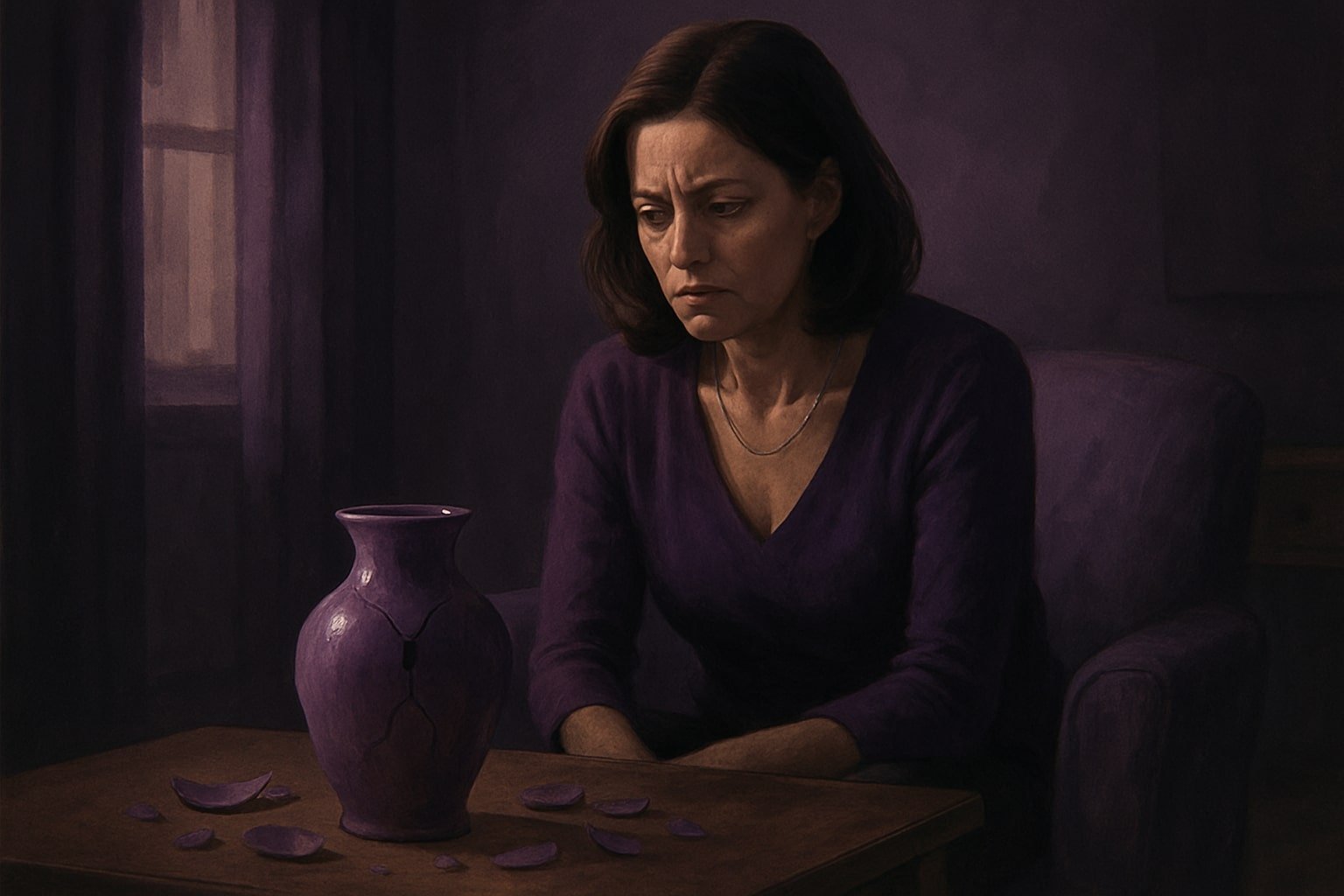
Marie Schrader is often overlooked in Breaking Bad’s tangled web of crime and deception, yet her story quietly reflects the personal cost of chaos that unfolds around her. Her character arc is marked by a subtle, mounting collapse, as she struggles with stress, denial, and a hidden kleptomania that mirrors the series’ larger themes of moral compromise and disintegration.
Through Marie’s journey, viewers witness the psychological impacts of living on the periphery of secrets and danger. Her relationships with her husband, Hank, and her sister, Skyler, reveal how even those not directly involved in Walter White’s criminal activities are pulled into the show’s atmosphere of tension and decay.
Breaking Bad’s depiction of Marie is not just a side story but an essential look at how turmoil quietly invades and erodes once-stable lives. Audiences are left asking whether survival in such a toxic environment is truly possible without irreversible change.
Marie's Role in Breaking Bad
Marie Schrader is a mainstay of the White and Schrader families, portrayed by Betsy Brandt. Her actions and relationships often illuminate the consequences of crime on loved ones outside the criminal underworld, adding emotional complexity to the series.
Supporting Character in a Crime Drama
Marie serves as a secondary character throughout Breaking Bad, offering a window into the lives touched by the show’s central drug trade. As a radiologic technologist at Kleinman Radiology Center, she is one of the few main characters with a legitimate day job outside criminal activity.
She is not directly involved in Walter White’s meth business or the violent conflicts seen elsewhere, but her life is deeply affected by these crimes. Marie’s kleptomania is a notable subplot, hinting at repressed anxiety and an attempt to control her environment as her family’s secrets escalate.
Her role often contrasts with more active participants like Saul Goodman or Jesse Pinkman. While they manipulate the legal system or engage in direct criminal activity, Marie tries to uphold appearances and normalcy, even as her personal life quietly unravels.
Relationship With Hank Schrader
Marie’s marriage to Hank Schrader is a significant anchor in her storyline. Hank, a DEA agent, is dedicated to his work and the hunt for Heisenberg—unaware for much of the series that his brother-in-law, Walter White, is the man he seeks.
Their relationship is often tested by Hank’s work-related trauma and injuries. Marie supports him through his recovery after he is shot, despite her own struggles with kleptomania and emotional stress.
They present a united front, yet moments of tension reveal the strain of living with secrets. Marie is fiercely loyal, defending Hank’s reputation and standing by him even as he risks his life due to his job.
Family Connections: Skyler and Walt
Marie is Skyler White’s sister, forming one half of the show’s principal family unit alongside Hank and Walter. The sisters’ relationship is close, but complicated by secrecy and the growing rift between the White and Schrader households.
When Skyler becomes complicit in Walt’s crimes, Marie is initially unaware but grows suspicious over time. Marie’s reactions—ranging from concern to outrage—highlight the impact of Walt’s actions on family members not directly involved in the drug business.
Marie’s bond with Walt deteriorates as revelations come to light. Her willingness to confront both Walt and Skyler underscores her strong sense of right and wrong, even as the family breaks down under mounting pressure.
Appearances in Better Call Saul
Marie Schrader does not appear in Better Call Saul, the prequel series to Breaking Bad. The focus of Better Call Saul is primarily on Saul Goodman (Jimmy McGill), Mike Ehrmantraut, and the criminal underworld operating in Albuquerque.
Any overlap with the Schrader family is indirect. Characters like Hank or Marie are only referenced, with no direct screen time for Marie herself. Consequently, Marie’s story remains largely contained within the events of Breaking Bad.
Her shadow in the prequel is mostly felt through the development of law enforcement themes and the depiction of collateral damage on families. The absence of Marie in Better Call Saul maintains a clear boundary between the timelines of the two series.
The Quiet Collapse: Marie’s Psychological Decline
Marie Schrader’s psychological unraveling in Breaking Bad is gradual, shaped by a combination of internal compulsions and the external pressures of her family’s criminal entanglements. Her journey includes moments of therapy, failed coping mechanisms, and shifting support systems that highlight her vulnerability.
Triggers and Stressors in Her Life
Marie’s kleptomania develops amid persistent stress and a lack of meaningful emotional outlets. The demands of supporting her husband Hank—first through his injury, then his obsession with the Heisenberg case—leave Marie isolated and undervalued.
She is routinely drawn into conflicts involving her sister Skyler and brother-in-law Walter, both of whom withhold information and treat her as an outsider. Financial strain and fear of exposure add to her anxieties. Marie’s compulsive shoplifting is not motivated by greed but is a symptom of underlying impulse control issues.
Kleptomania offers a brief escape. Each theft provides temporary relief from her sense of powerlessness, but this cycle deepens her feelings of shame and isolation. Her attempts to assert control only unravel her existing support networks further.
Therapy and Recovery
Marie eventually seeks therapy to address her compulsive behaviors. Early therapy sessions reveal her struggles with trust, as she withholds information out of embarrassment or denial.
Her progress in therapy is uneven. She sometimes resists the process, but small breakthroughs occur when she actively participates and confronts her feelings of guilt and low self-worth. Therapy provides coping tools that help her manage obsessive and compulsive urges, yet persistent family crises make sustained recovery difficult.
Written lists, structured routines, and external accountability form the backbone of her recovery strategy. Over time, therapy supports episodes of clarity, though relapses highlight the long-term nature of impulse control disorders like kleptomania.
Therapist and Support Systems
Marie's relationship with her therapist is characterized by a mixture of reliance and resistance. She often attends sessions after significant setbacks, such as being confronted about her stealing. Her interactions suggest an internal conflict—she wants to get better but feels misunderstood, both by professionals and by family members.
Her primary support system is her husband Hank, although his own trauma reduces his capacity to help her emotionally. Marie’s circle is limited, and while Skyler offers some support, their bond is strained by secrets and moral disagreements. The lack of consistent social support leaves Marie vulnerable to setbacks and makes therapy even more essential.
Table: Marie's Support Network
Source Consistency Type Notes Hank (husband) Inconsistent Emotional/Practical Limited by his own struggles Skyler (sister) Sporadic Emotional Strained by secrecy Therapist Professional Therapeutic Most stable relationship
Emotional Support During Crisis
Marie's need for emotional support intensifies during family crises. When Hank is injured or obsessively pursues Heisenberg, Marie assumes both emotional and logistical burdens with little reciprocation. She is often the family’s secondary caretaker, her own needs sidelined amid chaos.
Loss and fear permeate her home life, escalating her compulsive behaviors. Few in her environment recognize her distress or provide substantial comfort. Even when she reaches out, she is met with avoidance or distraction due to others' overwhelming crises.
Her isolation becomes most acute in the wake of trauma, underlining the consequences of an unsupported emotional collapse. Marie is left to manage her compulsions and recovery without dependable reassurance from those closest to her.
Kleptomania and Obsessive Tendencies
Marie Schrader’s actions throughout Breaking Bad reveal persistent patterns of compulsive shoplifting and behaviors that point to deeper psychological struggles. Her kleptomania affects personal relationships, disrupts daily life, and comes with consequences that push her family to confront the issue directly.
First Signs of Shoplifting
Marie’s first incidents of shoplifting happen at the start of the series. She takes small, relatively inexpensive items from stores without paying. These thefts are not for financial need, but appear driven by impulsive urges.
Her behavior is secretive and often carefully concealed from her family. At times, she justifies the theft with rationalizations or denial when confronted. This compulsive pattern suggests kleptomania, a recognized impulse control disorder.
Marie’s need for control and focus on herself can be linked to underlying feelings of stress and inadequacy. Psychological tension and her desire for order in other areas seem to contribute to her shoplifting.
Impact on Family and Social Life
Marie's shoplifting places significant strain on family relationships, particularly with her sister Skyler White. Skyler becomes suspicious after noticing inconsistencies in Marie’s stories and is forced to address the troubling behavior.
Her husband, Hank Schrader, adds another layer to the family’s reaction. As a DEA agent, Hank’s position causes additional embarrassment and tension when Marie’s thefts are exposed. This leads to awkward social situations and quiet rifts within the couple’s dynamic.
The issue of kleptomania is occasionally discussed in the context of therapy, but Marie often resists acknowledging the full extent of her actions. The family’s efforts to help highlight broader concerns about trust and denial in their home.
The Stolen Tiara Incident
One of Marie's most notorious acts of shoplifting involves the theft of a baby tiara from a store. She gifts the stolen tiara to Skyler, who later discovers its origins after being confronted by the store manager.
This incident publicly exposes Marie’s kleptomania and brings embarrassment to herself and her sister. The event escalates quickly: Skyler is questioned by store staff and Marie reacts defensively, refusing to admit fault.
The tiara theft stands out as a turning point. It forces Marie to face the real impact of her actions on her family and their reputation. The incident makes it clear her compulsions are not harmless quirks but serious disruptions that cannot be ignored.
Marie's Symbolic Associations
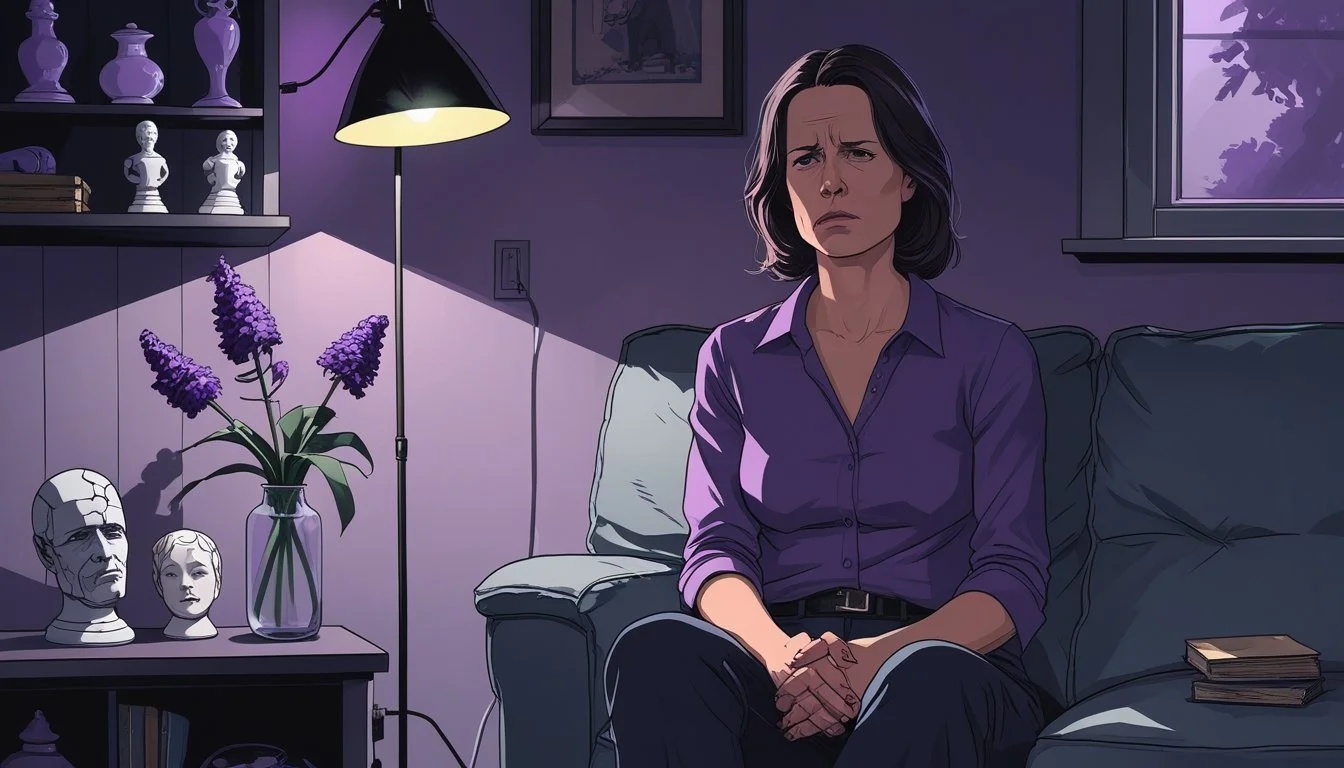
Marie Schrader’s visual identity in Breaking Bad is carefully crafted through deliberate artistic choices, especially her close relationship with the color purple. This section explores how color, symbolism, and character traits combine to reveal deeper truths about Marie’s role, motivations, and the narrative themes she represents.
Significance of the Color Purple
Marie is nearly always seen wearing purple, from her clothing to her home décor. This distinctive color palette is a visual hallmark and is consistently utilized throughout her appearances. According to statements from Breaking Bad’s creators, this was never accidental.
Purple often symbolizes control, luxury, and aspiration. For Marie, it suggests both a desire for stability and a longing for recognition within her turbulent environment. The repeated use of purple in her wardrobe and personal spaces also acts as a means of setting her apart from the chaos and criminality surrounding other characters.
Table: Marie’s Use of Purple Across Contexts
Context Examples Clothing Dresses, blouses, jewelry Home Décor Kitchen accents, bathroom towels, bedroom furniture Personal Items Bags, mugs, accessories
This calculated use of a single color becomes one of Marie's defining characteristics and serves as a visual shorthand for her psychological state.
Symbolism in Marie’s Character
Marie’s attachment to purple conveys her attempts to maintain order and self-worth amid unpredictable circumstances. The color acts as a shield, expressing her need for control while hinting at underlying anxiety and compulsive behavior.
Her compulsion toward theft is another subtle aspect of her symbolic arc. While purple suggests control, her actions betray underlying insecurities and frustration about her own agency. The contrast between her composed appearance and chaotic private life deepens her complexity.
This interplay between her outer appearance and inner struggles mirrors how many individuals manage stress by creating personal rituals or adopting powerful symbols. In Marie, purple embodies both her facade and hidden vulnerabilities.
Representation of Progress and Loyalty
Marie’s use of purple also touches upon ideas of loyalty, particularly in her relationships with Hank and Skyler. By consistently appearing in purple, she reminds viewers of her steady—if sometimes misguided—allegiance to those she cares about.
Her loyalty is shown not just in words, but through actions that, while flawed, aim to protect her family. Purple’s historical association with royalty and dignity highlights that Marie’s support is steadfast but sometimes at odds with her need for personal progress.
At various points in the series, shifts in the shades of purple she wears may reflect changes in her situation or her approach to conflict. The color thus becomes a subtle barometer of her evolving role, underscoring both her dedication and her struggle for self-advancement.
Interactions With Walt’s Criminal Activities
Marie Schrader’s journey through Breaking Bad is deeply impacted by her proximity to Walter White and the clandestine world he creates. Her gradual exposure to Walt’s criminal actions strains her personal values and alters her relationships inside the family.
Unaware Involvement in Walt’s Secret
At first, Marie remains outside the circle of Walt’s double life. She sees him as a brother-in-law battling cancer, unaware that he is transforming into the drug dealer Heisenberg. Family gatherings and casual interactions reflect her distance from the reality unfolding around her.
Marie’s support often centers on Skyler and Hank, not realizing the criminal activities shaping their lives. She encourages Skyler during Walt’s illness and assists Hank through his struggles at the DEA, never suspecting Walt’s real role in Albuquerque’s meth trade.
Her lack of knowledge leads her to inadvertently defend Walt or question suspicions about him. Marie is sometimes present when Walt’s lies shield his criminal operations, but she views them as personal or marital issues. This highlights her position as an unintentional participant in Walt’s secret—a supporting character to events outside her perception.
Moral Dilemmas and Family Tensions
Marie’s world shifts as she learns the truth about Walt’s criminal activities from Skyler. The revelation of Walt as Heisenberg triggers a personal and moral crisis. She is confronted with the reality that her own family is connected to poisoning, violence, and drug production.
She instantly feels betrayed by Skyler’s part in hiding the secret and by Walt’s actions. Marie’s response is direct: she slaps Skyler and tries to take Holly, acting out of both outrage and concern for the innocent child. Family trust shatters, with Marie caught between supporting her husband Hank—who is investigating Walt—and coping with the collapse of trust in her sister.
The tension intensifies as she weighs loyalty to her family against the demands of justice. Marie swiftly aligns with Hank, urging him to pursue the case despite personal cost. Her reaction underscores the series’ themes of moral dilemmas and the far-reaching consequences of criminal activities within the family structure.
Professional Life at Kleinman Radiology Center

Marie Schrader’s career centers around her work at the Kleinman Radiology Center, a key site for medical imaging and diagnostics. Her daily responsibilities place her at the intersection of patient care, imaging technology, and the challenging reality of cancer detection.
Work as a Radiologic Technologist
Marie is employed as a radiologic technologist at Kleinman Radiology Center, a facility specializing in diagnostic medical scanning and X-rays. Her role requires technical skill, attention to patient comfort, and the ability to operate advanced imaging equipment.
At the center, she interacts with patients undergoing scans and offers direction and reassurance. She is responsible for precise image capture, which is crucial for accurate diagnoses.
Her professional demeanor and procedural expertise indicate formal medical training and certification. By maintaining a strict standard of practice, Marie contributes to the reliability of the center’s diagnostic results.
Role in Medical Scanning and Oncology
Kleinman Radiology Center handles a steady flow of cases involving oncology, with patients referred by oncologists for suspicion or confirmation of cancer. Marie takes part in preparing patients for scans like CT, MRI, and X-ray imaging, which help identify tumors and other abnormalities.
She often works closely with radiologists and doctors to ensure the clarity of images. Thorough documentation of findings from these scans supports further investigation or a formal cancer diagnosis.
Marie’s proficiency in medical scanning strengthens clinical evaluation and provides essential support for oncology teams. Her role fits into a multidisciplinary effort critical for timely intervention and treatment planning.
Connection to Cancer Diagnosis
Due to her position at an X-ray office with significant oncology involvement, Marie is routinely exposed to the medical implications of serious conditions. She assists in the imaging processes that lead directly to cancer diagnoses.
This context influences her awareness of the emotional weight these diagnoses carry for patients and families. Her access to medical information also affects her interactions with her family, especially after Walter White’s cancer diagnosis.
While Marie’s professional judgment must remain objective, her proximity to the cancer diagnosis process sometimes shapes her personal responses and actions outside of work. Her career directly connects her to the realities of cancer detection and patient care within the Kleinman Radiology Center.
Personal Life and Character Development
Marie Schrader’s personal life is shaped by her marriage, her sense of familial duty, and her underlying flaws. Her choices and relationships provide insight into her character’s complexity and her shifting priorities throughout Breaking Bad.
Marriage and Loyalty
Marie is married to Hank Schrader, a DEA agent. Their relationship is built on years of commitment, but it faces serious tests, especially as Hank suffers trauma following a shooting.
Marie stands by Hank, displaying loyalty during his physical and psychological recovery. She manages household burdens and supports his quest for justice, even as stress mounts. Still, cracks appear. Her support sometimes clashes with her tendency to offer advice, occasionally leading to tension.
Her loyalty to Hank is unwavering, even in difficult times. Yet, this loyalty does not preclude her from disagreement, especially when Hank’s sense of duty causes friction at home. Marie’s role as a spouse highlights both her resilience and her vulnerabilities.
Baby Shower and Family Events
Marie is actively involved in her sister Skyler White’s family life, notably during events like the baby shower for Skyler’s daughter. She brings an expensive tiara as a gift, showcasing both her affection and a lack of awareness about boundaries. The incident with the tiara exposes Marie’s struggles with kleptomania when it is revealed she shoplifted the item.
Family gatherings often reveal the underlying tension and complexity within relationships. Marie’s presence at such events is marked by a blend of support and discomfort. Her actions, both considerate and problematic, shape how others perceive her.
Significant family milestones become points of stress or connection within the Schrader and White families. Marie is quick to insert herself into family affairs, sometimes exacerbating conflicts while trying to help.
Self-Centered Traits
Marie displays self-centered tendencies throughout the series. While she cares deeply for her sister and husband, her behavior often revolves around her own insecurities and anxieties.
Her need to be heard and tendency to advise others are recurring elements. Marie can appear oblivious to the impact of her words and actions on those around her. For example, she gives unsolicited advice but struggles to accept guidance or criticism in return.
Her kleptomania is not just a quirk; it reflects inner turmoil and a desire to assert control. Moments of insensitivity, such as when she minimizes other characters’ pain, illustrate this pattern. Marie’s self-centeredness stands in contrast to her more supportive gestures, adding depth to her portrayal.
Notable Events and Storylines

Marie Schrader is defined by her close ties to law enforcement, her exposure to criminal activity, and pivotal decisions that change the course of her life. Key storylines include her involvement with Hank’s investigation, encounters with the dangers of the drug world, and moments that reveal the complexity beneath her surface.
SaveWalterWhite.com and DEA Connections
Marie is married to Hank Schrader, a dedicated DEA agent. Her connection to law enforcement frequently places her at the center of discussions about crime and justice within the White and Schrader families.
She is present during critical moments, such as debates about Walter White's cancer treatments. Marie is the one who first suggests to Skyler that they seek financial help or look at alternative treatment options. She later becomes aware of and promotes the SaveWalterWhite.com fundraising site, which is used as a front for laundering Walt’s drug money.
Within her home, Marie’s support for Hank’s stressful job is often complicated by his trauma and obsession with the case involving Tuco Salamanca and other criminals. She struggles to provide emotional backing while coping with her own flaws and secrets, including involvement in covering up Skyler’s stories about marijuana to conceal deeper issues.
Run-ins With Crime and Danger
Despite her attempts to maintain distance from Walter’s criminal life, Marie is repeatedly drawn into situations involving significant danger. She becomes a target when Hank is threatened by Tuco Salamanca, leading to heightened fear and security concerns for the family.
At one point, Marie is unwittingly involved in laundering drug money when she accepts funds under the guise of charity. She experiences break-ins, is questioned by the police, and finds herself navigating tense family confrontations about illegal activities. Her role as a radiologic technologist occasionally brings her into discussions about patients affected by the drug trade, highlighting the extent of criminal reach.
Turning Points in Marie’s Story
Key turning points for Marie include her confrontation with Skyler over the truth behind Walt’s actions and the devastating fallout from Hank’s involvement in the DEA case against Heisenberg. She experiences deep betrayal and emotional collapse after learning about Walt’s crimes and Hank’s fate.
Marie’s kleptomania resurfaces in times of stress, emblematic of her difficulties in coping with loss of control. During the events of 2022 (in-universe timeline), she is left to pick up the pieces, managing grief and uncertainty in a world forever changed by the impact of the drug empire she once believed was distant from her everyday life. Marie’s journey is one of quiet unraveling, marked by moments of resilience and vulnerability.
