
The Structure of Breaking Bad Is Like a Chemical Reaction
Analyzing the Show’s Unique Narrative Formula
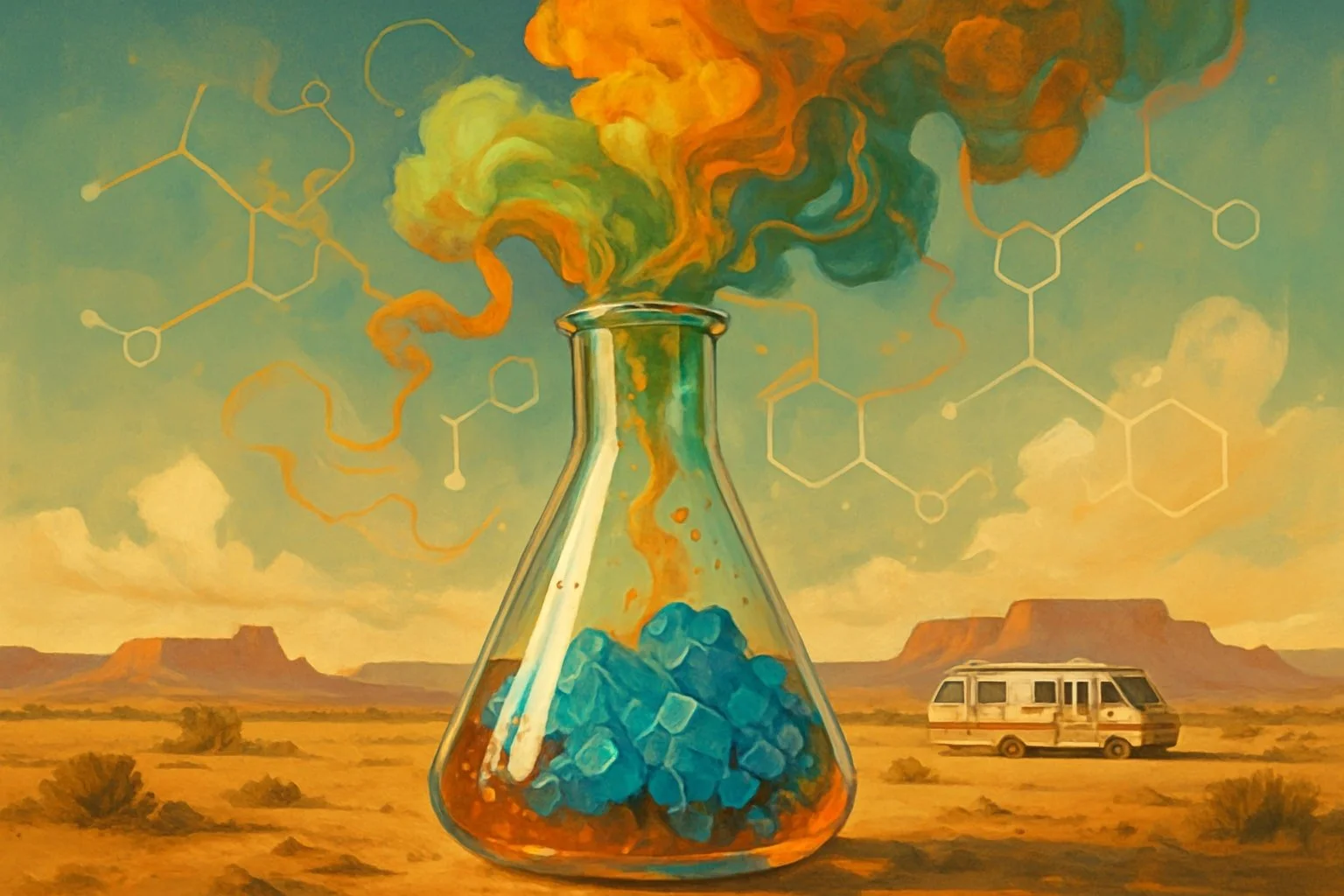
The structure of Breaking Bad closely mirrors the progression of a chemical reaction, with each episode introducing changes that build steadily and then accelerate toward dramatic outcomes. Just as chemical reactions depend on careful combinations and precise timing, the television series uses each plot point and character decision as a catalyst for transformation. The story’s movements are deliberate, causing slow but inevitable shifts in the lives of its characters.
Viewers witness Walter White’s evolution as he responds to outside pressures, much like reactants transforming when exposed to new conditions. The creators' attention to accurate chemical processes isn’t just a detail, but a reflection of the show's larger narrative design—change, escalation, and sometimes, explosive results. This approach makes Breaking Bad a uniquely structured television series that rewards careful observation and makes even small developments significant.
Chemical Reactions as a Narrative Framework
Breaking Bad uses chemistry not only as subject matter but also as a blueprint for narrative structure. Its story mirrors both the precision and unpredictability of chemical reactions, bridging science and storytelling through detailed, logical progression.
Designing the Plot Like a Chemical Equation
Each major event in Breaking Bad’s narrative can be compared to a step in a chemical equation. The writers introduce story elements—the “reactants”—in carefully measured amounts, ensuring each component contributes to the outcome. Plot turns often result from the combination of characters’ choices, much like reagents interacting to yield a product.
For example, Walter White’s decision to produce meth represents a catalyst, accelerating the transformation of his character and circumstances. The show pays close attention to cause and effect, echoing the logic of chemistry: when one element is added to the mix, it creates a predictable, yet sometimes explosive, result. This systematic approach keeps each episode tightly structured, with consequences rippling logically from previous actions.
The show's progression often echoes laboratory procedure, such as isolating variables and repeating experiments to achieve a desired outcome. Characters, like molecules in a reaction, change states and roles depending on the context and pressures applied.
Transformation and Irreversibility
Transformation is central to both chemical reactions and the evolution of Breaking Bad's characters. Chemical reactions frequently result in permanent changes—once the reactants become the product, the original state cannot be restored. This idea is mirrored in Walter White’s journey.
As Walter transforms from a mild-mannered teacher to a ruthless drug manufacturer, the changes in his character are irreversible. Each step he takes—whether it's a new crime or a new scientific breakthrough—marks a point of no return, similar to a reaction’s endpoint in chemistry.
Irreversibility is highlighted in several narrative moments, such as the first murder Walt commits or the destruction of his personal relationships. These plot points cannot be undone, much like a chemical change that has gone to completion. This reinforces the theme that actions, once taken, alter the narrative “compound” permanently.
Through these mirrored processes of change and permanence, Breaking Bad subtly educates viewers on both chemistry concepts and human consequences.
Breaking Bad’s Structure Explained Through Chemistry
Just as chemical reactions are triggered by specific conditions and shaped by the substances involved, Breaking Bad progresses from a single choice and evolves through interactions between distinctive characters. The show’s structure mirrors scientific processes, where each element plays a precise and necessary role in producing the final outcome.
The Catalyst: Walter White’s Initial Decision
In chemistry, a catalyst is a substance that initiates or accelerates a reaction without being consumed. In Breaking Bad, Walter White’s choice to manufacture methamphetamine acts as the narrative’s catalyst.
Walter, a high school chemistry teacher facing terminal cancer, decides to use his expertise for illegal drug production. This initial decision destabilizes his life, creating a chain reaction that propels every subsequent event. The decision doesn’t just spark action; it defines the show’s tone and pace, much like a true chemical catalyst alters the speed and outcome of a reaction.
Walter’s background in chemistry is central. His knowledge gives him a unique advantage, enabling efficient meth synthesis and drawing attention from both allies and adversaries. This transformation from teacher to drug producer is foundational—without this catalytic step, the plot’s dramatic escalation would not occur.
Reaction Components: Key Characters as Reactants
In a chemical reaction, reactants are the starting materials that interact to yield new compounds. Each key character in Breaking Bad can be seen as a reactant that interacts with Walter and advances the plot.
Jesse Pinkman acts as a complementary reactant, bringing street-level knowledge and connections but also instability.
Skyler White contributes emotional and ethical variables, impacting the direction and outcomes of Walter’s choices.
Hank Schrader, as a DEA agent, increases the “activation energy” of the reaction, raising stakes and tension.
Gus Fring and other adversaries function as reactive agents, challenging Walter and forcing transformation.
The interplay between these characters produces distinct, sometimes volatile outcomes. Their continuously changing relationships resemble the dynamic exchanges of chemicals in a reaction vessel, ensuring that the story evolves beyond predictable patterns while remaining grounded in logical cause-and-effect.
Key Chemical References and Motifs
References to real chemical substances and laboratory processes help anchor Breaking Bad’s narrative in credibility. The selection and depiction of chemicals often serve both literal and symbolic functions throughout the series.
Blue Methamphetamine as an Iconic Product
Blue methamphetamine acts as the signature product of Walter White’s operation. Its distinct blue color immediately sets it apart from other meth on the market within the story. Though actual methamphetamine is typically colorless or white, the show uses the blue appearance as a visual trademark.
The high purity of Walt’s product becomes a core plot point and a symbol of his expertise. Blue meth signals both the technical precision of his chemistry and the expansion of his influence. Visually, it appears in many scenes as a mark of quality and innovation, even as its production draws dangerous rivals.
The show’s choice to feature blue meth is not just aesthetic but also ties to character motivations and market dynamics. This artificial distinction becomes a cause for pride and conflict among characters, especially as competitors attempt to mimic or steal the formula.
Purity and Consequences in the Story
Purity is a recurring theme tied closely to both chemistry and morality in Breaking Bad. Walt’s meth routinely achieves 99% purity or higher. This level of refinement sets his product above all others but also escalates the dangers he faces.
High purity meth not only fetches a higher price but also signals to others the presence of a new, highly skilled player in the drug trade. The show demonstrates how the pursuit of perfection has unintended consequences, impacting relationships and attracting law enforcement attention.
A simple purity test often functions as an immediate measure of quality, authority, and status in various scenes. The relentless focus on chemical exactness parallels Walt’s growing personal ambition and the moral complexities he encounters as a result.
Symbolic Use of Methylamine and Hydrofluoric Acid
Methylamine is pivotal to the fictional meth synthesis in Breaking Bad. Characters go to great lengths to obtain large quantities, underscoring the substance’s importance and scarcity. Its acquisition sparks several of the series’ most memorable heist and negotiation scenes.
Hydrofluoric acid serves a different narrative function. It is featured in Season 1 when Jesse and Walt use it to dissolve organic material. The acid’s destructive power is depicted with scientific accuracy, highlighting dangers both in the lab and beyond.
Both methylamine and hydrofluoric acid are more than chemical props—they represent the consequences of knowledge misapplied. Their handling in the series demonstrates how technical details carry real, sometimes grim, weight in the characters’ lives.
Pseudoephedrine to Ice: The Synthesis of Crystal Meth
Breaking Bad presents a step-by-step depiction of how a common pharmaceutical, pseudoephedrine, can be chemically transformed into the potent stimulant known as "ice," or crystal meth. The series connects essential concepts in chemistry with the real-world consequences of illicit drug synthesis.
Extraction and Synthesis Methods in Storyline
In Breaking Bad, characters frequently acquire pseudoephedrine by extracting it from over-the-counter decongestant tablets. The show demonstrates basic laboratory techniques—such as filtration, recrystallization, and solvent extraction—to isolate the active ingredient.
Table: Common Steps in the Meth Synthesis Process
Step Reagent/Material Purpose Extraction Pseudoephedrine tablets Obtain precursor compound Reduction Red Phosphorus, HI Acid Convert pseudoephedrine to methamphetamine Crystallization Solvents, Cooling Purify and form "ice" crystals
The use of red phosphorus and hydriodic acid is highlighted, as these chemicals play a central role in reducing pseudoephedrine to methamphetamine. This route, known as the "pseudoephedrine method," mirrors real-world clandestine lab processes commonly used in the United States.
Depicting the Science of Stimulants
Crystal meth, chemically known as methamphetamine, is a powerful central nervous system stimulant. In the series, the effects of "ice" are emphasized, including increased alertness, energy, and risk of dependency.
The drug’s crystalline form results from careful purification, which yields the highly pure "blue meth" featured in the storyline. Accurate chemical terminology, such as isomerism and synthesis, is referenced to offer a realistic portrayal.
Methamphetamine’s impact is framed within both scientific and social contexts, informing viewers about not just how the substance is made, but also its stimulant properties and potential dangers. The series uses these elements to ground the fictional narrative in factual science, highlighting the real-life implications of chemical synthesis.
Evolution of Conflict and Escalation
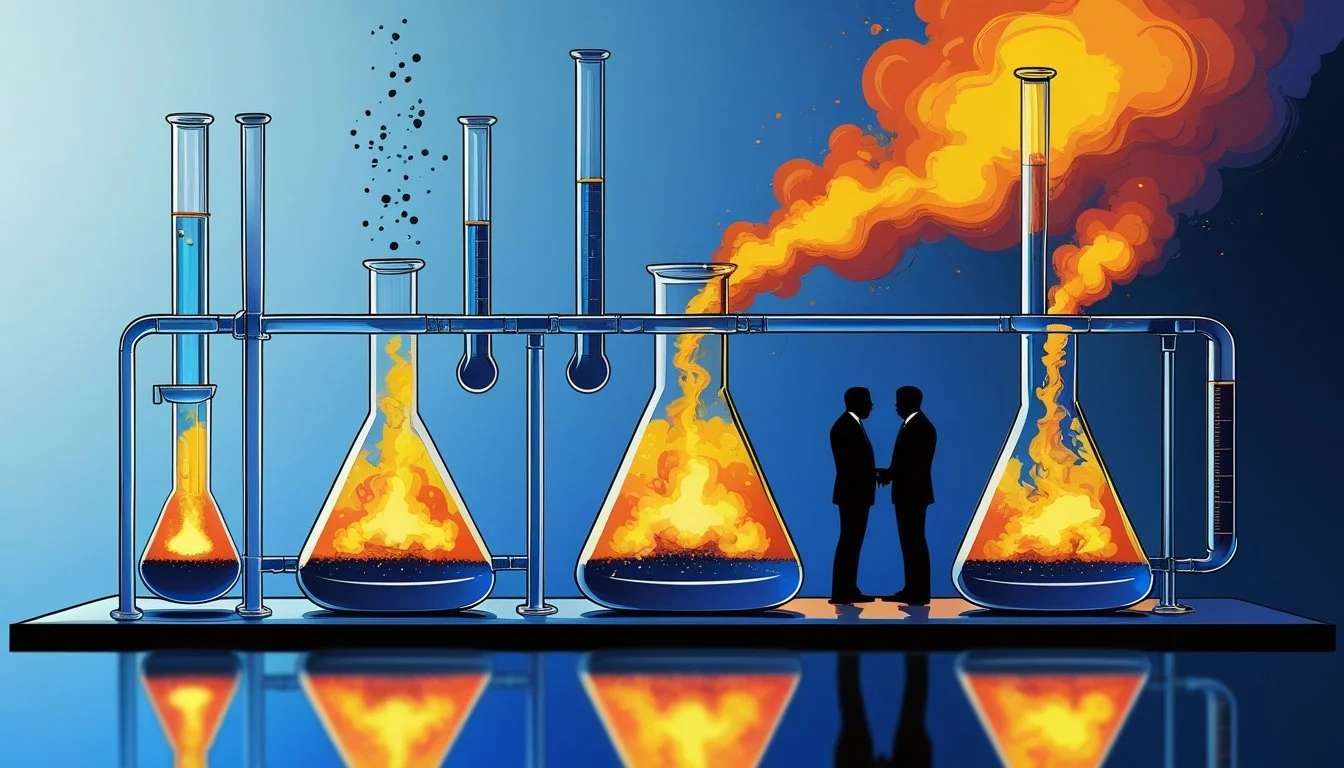
Breaking Bad shapes its conflict much like a chemical process, where every decision or action creates shifts with lasting consequences. Escalation is not random but is structured through cause and effect, leading to irreversible character changes and situations.
Unpredictable Outcomes and Chain Reactions
The television series employs a narrative strategy similar to a chemical reaction—small actions trigger disproportionate outcomes. For example, Walter White’s initial decision to manufacture meth as a way to provide for his family leads to a widening spiral of criminal entanglements.
Each plot development functions as a catalyst, pushing characters such as Jesse Pinkman into situations with unpredictable, often dangerous results. Minor events, like a missed phone call or a simple lie, accumulate into major plot twists.
Breaking Bad’s creators structure these chain reactions to escalate tension, amplifying stakes with each episode. Characters adapt or break down in response, mirroring the volatility found in reactive chemicals. The pace of escalation is gradual at first but intensifies, allowing viewers to witness the logical yet unforeseeable consequences.
Morality, Decay, and Decomposition
The theme of moral decay is central to the structure of Breaking Bad. As the series progresses, the ethical boundaries of its main characters disintegrate, much like materials decomposing during a chemical breakdown.
Walter White’s transformation from a teacher to a drug kingpin demonstrates a steady erosion of values. Choices that once seemed unthinkable become rationalized and routine. This moral decomposition is reflected in both his actions and his relationships.
Key moments—such as betrayal, violence, and manipulation—are depicted with clarity to highlight this rot. The show’s use of visual and narrative cues reinforces the progression, presenting moral decay as inevitable once certain lines are crossed. Breaking Bad uses this process to illustrate the psychological costs of conflict escalation.
Conclusion: The Lasting Impact of Chemical Structure on Breaking Bad
Breaking Bad's approach to storytelling reflects the same logic and progression found in chemical reactions. Every plot twist and character transformation is built upon a chain of cause and effect, mirroring stepwise processes in chemistry.
The series uses chemistry not only as a narrative tool but also as a method of structuring its episodes and character arcs. Walter White’s choices act as catalysts, initiating sequences that yield sometimes unpredictable—or explosive—results.
Key parallels between the show’s structure and chemistry include:
Stepwise escalation, akin to multi-stage syntheses
Interconnected reactions, with one event impacting another
Catalysts: characters or moments that accelerate change
A focus on chemical accuracy contributed to the show's authenticity. Consulting with experts ensured that both the terminology and the portrayal of lab work were grounded in real science, which enhanced its reputation in the television industry.
The series helped highlight the relevance of chemistry in popular culture. By framing complex developments using chemical principles, Breaking Bad set a new precedent for scientific storytelling in drama.
In summary:
Aspect Chemistry Influence Example in Breaking Bad Narrative progression Stepwise reactions Walter’s transformation Character interactions Catalysts and reactants Jesse and Walter’s partnership Pacing Reaction rates Escalating tension per episode
