
Todd in Breaking Bad: Examining TV’s Most Chilling Psychopath

Todd Alquist, introduced in the fifth season of Breaking Bad, stands out as one of television’s most unsettling and chilling portrayals of a psychopath. With a polite demeanor that masks a complete lack of empathy, Todd’s character keeps viewers on edge through his unpredictable blend of friendliness and sudden violence.
Unlike more overtly aggressive TV villains, Todd’s calm and almost cheerful attitude makes his heinous actions even more disturbing. His emotional detachment and willingness to carry out horrific acts, often for practical or self-serving reasons, reveal a psychological profile rare even among the show’s ruthless cast.
Many fans and critics agree that Todd’s behavior is one of the most accurate and unforgettable depictions of a sociopath on screen. His interactions with characters like Walter White and Jesse Pinkman have cemented his place as a character who redefines what it means to be truly chilling.
Who Is Todd Alquist?
Todd Alquist stands out in "Breaking Bad" for his unsettling calm and polite demeanor, which masks his capacity for violence. His progression from a low-level worker to a significant threat highlights both his adaptability and his chilling detachment.
Background and Introduction
Todd Alquist is first introduced in the fifth season of "Breaking Bad" as a worker for Vamonos Pest, a fumigation company. At this point, he is portrayed as quiet, respectful, and seemingly eager to prove himself, especially to Walter White and Jesse Pinkman.
His ties to the white supremacist gang led by Jack Welker set him apart from the other characters. This connection becomes crucial as the series progresses. Todd's willingness to cross moral lines quickly becomes evident. He assists in several key crimes, including murder and the running of the meth operation.
Unlike other antagonists in the series, Todd does not display outward malice. His politeness and lack of emotion while committing violent acts make him difficult to predict and even more disturbing.
Character Development
Todd’s evolution in the series is marked by his increasing involvement in the operations of the white supremacist gang. Under his uncle Jack Welker’s leadership, Todd becomes more influential and active in the group’s criminal activities.
He displays a unique blend of loyalty and ambition, aiming to gain approval from both his uncle and Walter White. His character is unsettling because he commits atrocities without apparent remorse or enjoyment. For example, his decision to kill Drew Sharp, a young boy, is carried out with chilling practicality.
Todd's interactions with Jesse Pinkman become a notable focus, especially as he plays a role in Jesse’s captivity and exploitation. His lack of empathy, masked by polite conversation, distinguishes him from other "Breaking Bad" villains.
Portrayal by Jesse Plemons
Jesse Plemons brings a subtle, nuanced performance to Todd Alquist. His ability to balance Todd’s boyish politeness with a cold, vacant stare adds depth to the character and enhances the discomfort viewers feel during Todd’s scenes.
Plemons’s performance is marked by restraint rather than theatricality. His understated delivery and controlled body language make Todd’s violent actions even more disturbing. This portrayal received praise for its authenticity and realism.
The contrast between Todd’s mild, calm speech and his actions is emphasized by Plemons's acting choices. This dynamic cements Todd Alquist as one of the series’ most chilling and memorable antagonists.
Todd Alquist's Role in Breaking Bad
Todd Alquist serves as a pivotal character in Breaking Bad's later seasons, blending unassuming politeness with ruthless pragmatism. His trajectory through the series sees him becoming increasingly entwined with key players and influencing the dynamics of the meth operation.
Early Appearances and Vamonos Pest
Todd is introduced during Season 5 as a worker at Vamonos Pest, a fumigation business used by Walter White's operation as a front for cooking methamphetamine. He quickly sets himself apart from other employees with his willingness to follow instructions without question and his keen attention to detail.
Unlike other members of the Vamonos Pest crew, Todd is observant and eager to please. He notices Walter and Jesse's secretive activities and discreetly offers his help. His competence results in him being gradually trusted with greater responsibilities, including helping inside the meth labs.
As his role expands, Todd proves himself to be both resourceful and highly adaptable. He begins as a background figure but soon demonstrates his capacity for violence and moral detachment, characteristics that make him an asset and a threat.
Relationship with Walter White
Todd's relationship with Walter White evolves from employee to trusted associate. Walter recognizes Todd’s effectiveness and loyalty, valuing his willingness to take decisive action without hesitation. As the operation faces new risks, Walt increasingly relies on Todd for sensitive and dangerous tasks.
Todd's unwavering respect for Walter is evident in their interactions. He addresses Walt as "Mr. White," signaling deference and professionalism. Todd's actions, such as his involvement in the train heist and his handling of problems, often reflect Walt's influence and leadership style.
This relationship is not without complexity; Todd sees Walt as both a mentor and an example to emulate. He models his approach to crime after Walt, resulting in an efficient but chilling execution of orders that lacks empathy or moral restraint.
Partnership with Jesse Pinkman
Todd’s interactions with Jesse Pinkman shift dramatically over the course of the series. Initially, their partnership is functional, with Todd assisting in meth cook operations and supporting Jesse as needed. However, after critical events, Todd’s attitude becomes colder and far more menacing.
He participates in the kidnapping and captivity of Jesse, using intimidation and violence to ensure obedience. Todd views Jesse both as a rival and a tool, using him to maintain meth production quality and to further Todd's own standing with criminal partners.
Todd's combination of politeness and brutality becomes especially apparent in his relationship with Jesse. He is capable of expressing courteous respect, yet treats Jesse’s suffering as inconsequential whenever it serves his interests or those of the operation.
Psychopathic Traits and Behavioral Analysis
Todd Alquist is characterized by a chilling calmness and persistent politeness that starkly contrasts with his actions. His behavior in Breaking Bad exhibits a notable absence of emotional attachment, deliberate moral disengagement, and a repeated pattern of extreme violence.
Emotional Detachment and Lack of Empathy
Todd displays a consistent lack of emotional response in situations where others would express fear, guilt, or compassion. When committing serious crimes, he remains unfazed and even polite, highlighting a profound disconnect from the emotional weight of his actions.
A notable instance is his killing of a child who witnessed the train heist. Todd carries out the act with no visible regret or distress, demonstrating an inability to empathize with the victim. He treats life-and-death scenarios with the same casual attitude as mundane tasks.
Key traits:
Consistent absence of visible guilt
Calm demeanor in tense situations
Unconcern for emotional suffering of others
His approach remains mechanical—never allowing himself to be emotionally affected, regardless of the severity of his actions.
Violent Tendencies and Moral Detachment
Todd’s capacity for violence is not just reactive but premeditated. He fulfills orders without hesitation, showing little to no hesitation or conflict. Rather than being impulsive, his violence often serves a practical, goal-oriented purpose.
He is willing to kill, threaten, or inflict suffering with complete moral disengagement. This moral detachment is exemplified in his interactions with Jesse Pinkman, whom he manipulates and tortures without remorse. Each act of violence is carried out with a disarming politeness that makes his brutality even more disturbing.
Behavioral summary table:
Behavior Typical Response Todd’s Response Confrontation Anxiety, anger Politeness, calm Violence Remorse, conflict Calm, neutral Suffering of others Sympathy Indifference
The Sociopath vs Psychopath Debate
The distinction between sociopathy and psychopathy in Todd’s portrayal is a subject of ongoing debate. While both involve antisocial behavior and lack of empathy, psychopaths are generally more emotionally detached and calculating, whereas sociopaths may display impulsiveness and emotional outbursts.
Todd’s behavior closely aligns with psychopathy due to his careful planning, emotional coldness, and calculated approach to violence. Unlike many sociopathic characters, he rarely acts out of anger or passion.
Discussions among fans and analysts often point out that Todd’s traits—such as emotional disconnection, manipulativeness, and surface charm—are more in line with clinical definitions of psychopathy. This sets him apart from other morally ambiguous characters in the series.
Notorious Acts and Key Episodes
Todd Alquist’s involvement in Breaking Bad is marked by a series of calculated, violent decisions. Each of his most notorious acts reveals his lack of remorse and his capacity for methodical violence.
The Train Heist and Drew Sharp
In Season 5’s “Dead Freight,” Todd takes part in a complex train heist aiming to steal methylamine without detection. He executes his role effectively, demonstrating both technical skill and loyalty to the crew. However, the heist ends with young Drew Sharp unexpectedly witnessing the crime.
Todd’s reaction is swift and unflinching. Without seeking guidance or weighing options, he pulls out a gun and kills Drew, ensuring there are no witnesses. The act is chilling because Todd remains outwardly calm, treating the murder as a simple necessity. He later discusses the killing with a disturbing lack of emotion, showing no regret.
Cold-Blooded Murders and Witnesses
Todd’s calm approach to violence is apparent in situations involving witnesses or threats. He consistently removes perceived obstacles with little hesitation. His demeanor is polite, even friendly, moments before and after his brutal acts.
Notable examples include eliminating a housekeeper who stumbles onto the gang’s operation. Todd’s primary concern is maintaining secrecy, regardless of the human cost. Each murder is carried out with a professional, methodical attitude, further reinforcing his reputation as a cold-blooded enforcer.
Kidnapping and Hostage Situations
Todd escalates his criminal behavior by participating in kidnapping and hostage scenarios, especially involving Jesse Pinkman. He is instrumental in capturing Jesse, keeping him restrained to force continued work in the meth lab.
During these episodes, Todd maintains a disturbing sense of normalcy. He brings Jesse ice cream and attempts superficial kindness, but it serves only to highlight his emotional detachment. The juxtaposition between his polite treatment and the brutal circumstances deepens the impact of his actions, cementing his role as a menacing and unpredictable presence.
Ambition and Rise Within the Gang
Todd Alquist’s ascent in the criminal underworld of Breaking Bad is marked by unwavering loyalty, an ability to adapt, and a calculated pursuit of power. His actions within the white supremacist gang reveal a clear drive for advancement and acceptance among violent peers while managing high-stakes resources.
Relationship with Jack Welker
Todd's relationship with his uncle, Jack Welker, is central to his status in the gang. Jack serves as both mentor and gatekeeper, granting Todd access to the group’s resources and operations. Todd earns Jack's trust quickly by executing sensitive tasks with efficiency and a lack of conscience, such as carrying out killings without hesitation.
This connection is not rooted in familial affection but in mutual benefit. Jack recognizes Todd’s usefulness for expanding the gang’s criminal reach. In return, Todd finds validation and belonging, integrating himself further by consistently aligning with Jack’s directives.
Jack’s respect for Todd allows him to play a significant role in critical decisions, such as the elimination of witnesses or planning complex heists. Todd’s growing influence within the gang stems directly from his loyalty and willingness to adopt the gang’s ruthless philosophy.
Expansion in the White Supremacist Network
Todd’s ambition extends beyond serving the gang; he seeks to enhance its position within the criminal landscape. His efforts help transition the group from traditional crimes to highly organized, large-scale drug manufacturing. Todd’s contributions—and technical skills—set him apart in a world that values violence and loyalty.
He introduces new criminal ventures and helps facilitate deals with other organizations, demonstrating an understanding of both brutality and logistics. Todd’s ability to blend into legitimate society also allows the gang to avoid immediate suspicion, widening the scope of their activities.
Within the network, Todd’s commitment to secrecy and discipline makes him a go-to problem solver. His actions directly contribute to the gang’s increased wealth and influence, presenting him as a linchpin in their broader operations.
Pursuit of Methylamine
Todd’s pursuit of methylamine becomes a defining aspect of his ambition. Recognizing its value in producing high-grade methamphetamine, he orchestrates a train heist to secure a supply for the gang, demonstrating boldness and resourcefulness. This dangerous operation showcases both his technical competence and disregard for human life.
For Todd, methylamine is not just a commodity—it solidifies his position in the gang’s hierarchy. By ensuring a steady flow of precursor chemicals, Todd reinforces the gang’s dominance in the meth market and positions himself as indispensable.
His management of the methylamine supply chain involves meticulous planning and a willingness to take risks others would avoid. This approach cements his reputation as a key architect of the gang’s expansion and profitability.
Impact on Major Characters
Todd Alquist’s involvement reshapes the emotional and moral landscape of "Breaking Bad." His actions not only escalate violence but reveal hidden aspects of the show's main players, shifting relationships and motivations with lasting consequences.
Influence on Walter White
Todd’s relationship with Walter White evolves from employee to trusted protege. Walter relies on Todd’s willingness to commit extreme acts without hesitation, most notably the murder of Drew Sharp during the train heist.
This unsettling obedience allows Walter to expand his meth operation with fewer moral checks. Todd’s efficiency and lack of remorse separate him from previous partners; he doesn’t question or push back.
When Todd enters the picture, Walter distances himself further from morality. Walter exploits Todd’s cold loyalty, while Todd idolizes him, even mimicking his behaviors. This dynamic highlights Walter’s own transformation and the chilling synergy between them.
Dynamic with Jesse Pinkman
Jesse Pinkman’s interactions with Todd are marked by trauma and fear. Todd’s actions—such as murdering Andrea right in front of Jesse—are pivotal in deepening Jesse’s despair and sense of entrapment.
Jesse is forced to witness and endure Todd’s casual brutality, especially while being held captive. Unlike other antagonists, Todd combines politeness with violence, making Jesse’s suffering both psychological and physical.
The dynamic culminates in Jesse’s final act of revenge. Todd’s behavior fuels Jesse’s hatred, leading to the pivotal moment where Jesse kills Todd. This act is not just vengeance—it is Jesse reclaiming agency after months of victimization.
Contrasts with Other Villains
Todd stands apart from characters like Gus Fring, Tuco Salamanca, and Jack Welker. Whereas others display calculated ambition or open aggression, Todd’s violence is often detached and matter-of-fact.
Table: Comparison of Villain Traits
Villain Motivation Methods Distinct Trait Gus Fring Power/Control Calculated Professionalism Tuco Salamanca Chaos/Violence Unpredictable Impulsive brutality Jack Welker Greed/Family Ruthless Racist, opportunistic Todd Alquist Approval/Belonging Polite, cold Chilling detachment
Todd’s chilling banality makes him unpredictable. He commits acts like child murder or casual torture with a disturbing calm. This approach leaves a unique psychological imprint that differentiates him from every other villain in the series.
Todd Alquist Beyond Breaking Bad
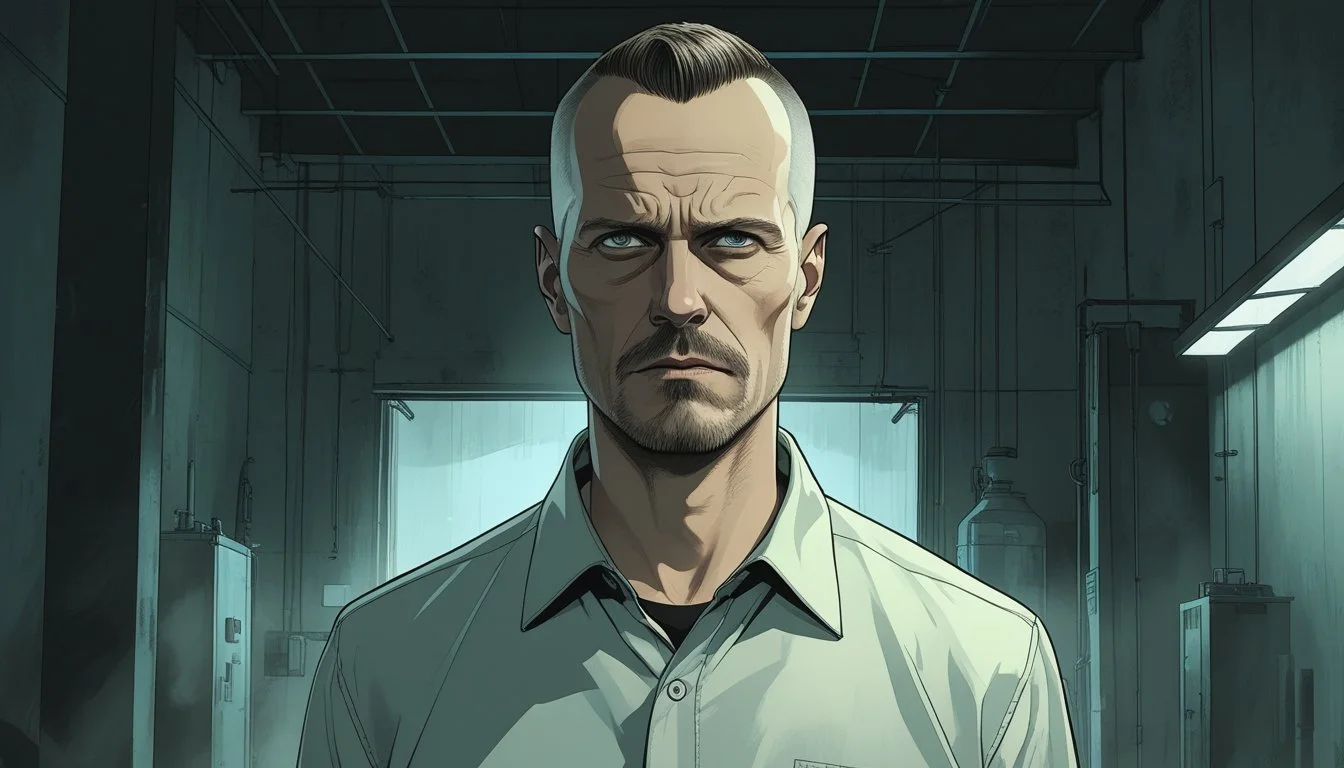
Todd Alquist’s impact in the Breaking Bad universe extends beyond the main series, shaping key events and characters in subsequent stories. His actions and personality leave significant consequences, especially as explored in El Camino and through his continued influence on the narrative world.
Role in El Camino
In El Camino, Todd Alquist plays a pivotal role despite being deceased before the film’s events. Through flashbacks, Todd’s interactions with Jesse Pinkman are explored in greater depth, highlighting his disturbing blend of politeness and brutality. These flashbacks offer new insights into Todd’s chilling demeanor, such as his casual approach to violence and his attempts to form a bond with Jesse.
Scenes like the apartment cleaning, where Todd enlists Jesse’s help after committing a murder, further illustrate his emotional detachment. Todd’s treatment of Jesse, veering from almost friendly gestures to cold-blooded supervision, deepens the audience’s understanding of his complex character. The film underscores his ability to control and manipulate, reinforcing his standing as one of the most unsettling figures associated with Breaking Bad’s world.
Legacy in the Breaking Bad Universe
Todd’s influence continues to be felt in both El Camino and the broader Breaking Bad universe. His actions directly shape Jesse Pinkman's post-series journey, with Jesse’s trauma and desperation for freedom in El Camino rooted in Todd’s abuse and manipulation. The ripple effects of Todd’s decisions highlight how his presence lingers even after his death.
The character contributes to the thematic exploration of morality and evil within the franchise. Discussions in media and among fans cite Todd as an archetype of the sociopath: polite, unflappable, and deeply amoral. His legacy endures in the series’ ongoing discourse, often cited as one of the most realistic portrayals of a TV psychopath, influencing both narrative direction and character development in the Breaking Bad universe.
Cultural Reception and Lasting Influence
Todd Alquist’s portrayal in Breaking Bad has sparked ongoing discussion about the nature of psychopathy in television storytelling. Viewers and critics continue to analyze his unsettling calm and impact on how villains are written for modern dramas.
Audience Perception and Chilling Persona
Fans frequently describe Todd as one of the most unnerving characters in the Breaking Bad universe. His matter-of-fact approach to violence and lack of visible remorse set him apart from other antagonists.
A common reaction centers on his polite demeanor, which creates a sharp and disturbing contrast with his psychopathic actions. This contrast has made him memorable to audiences, who often recall scenes where Todd commits shocking acts with a calm expression.
Discussions on forums and review platforms highlight the consensus that he embodies what many viewers fear most in a fictional psychopath. His unpredictability amplifies the tension in every scene, strengthening his place in television history.
The Most Chilling Psychopath on TV
Todd is notable among TV psychopaths for his understated menace. Unlike some melodramatic villains, his casual attitude towards cruelty is unsettling in its realism.
He is studied as an example of the banality of evil, showing how an unassuming individual can mask horrifying actions. Critics often cite Todd when ranking television’s most chilling characters, noting how his portrayal shapes the archetype of the modern TV psychopath.
Writers, showrunners, and scholars have referenced Todd Alquist when analyzing evolving standards for villains. His character continues to influence how new TV antagonists are conceived, particularly regarding the portrayal of cold, calculated behavior.
