
Why Kim Wexler Deserves Her Own Spinoff After Better Call Saul
Exploring Her Untold Story

Kim Wexler’s richly developed character and complex journey in Better Call Saul make her a strong candidate for a spinoff series. Throughout the show's run, Kim has stood out with her intelligence, moral struggles, and layered relationships, distinguishing her narrative from other characters in the Breaking Bad universe.
Unlike many characters whose paths are clearly defined, Kim’s fate at the end of Better Call Saul remains open, sparking continuing interest and speculation. Her story of rebuilding and seeking authenticity suggests there is still much more to explore.
A spinoff featuring Kim would offer viewers a fresh perspective grounded in legal drama and personal growth, expanding the possibilities within the universe created by Breaking Bad and Better Call Saul.
The Significance of Kim Wexler in Better Call Saul
Kim Wexler stands apart in Better Call Saul as a character with nuanced motivations, personal conflicts, and a moral complexity that shapes the core of the narrative. Her relationships, legal expertise, and ethical choices contribute to the show’s depth and set her apart from other characters.
Character Evolution and Complexity
Kim Wexler’s character arc is distinct in its gradual but striking transformation. Introduced as a reserved and dedicated lawyer, she develops into someone willing to cross personal and legal boundaries. This shift is not abrupt but carefully constructed over seasons.
Her emotional restraint and internal struggles create a layered portrait. Unlike many secondary characters, Kim’s choices are often unpredictable yet believable, making her journey compelling. She isn’t merely a supporting character for Jimmy McGill; she brings her own stakes and dilemmas.
Viewers see Kim grapple with burnout, moral tension, and ambition. Her internal battles—both professional and personal—highlight the pressures of working in law and the toll it takes on her identity. Rhea Seehorn’s performance ensures these layers remain visible, even in quieter moments.
Her Dynamic With Jimmy McGill
The partnership between Kim and Jimmy McGill serves as an anchor for the series. Their relationship, marked by affection, mutual respect, and growing complicity, evolves into a nuanced and sometimes tense alliance.
Kim is not simply Jimmy's confidante; she actively shapes his trajectory. Their choices often intertwine, with Kim influencing Jimmy’s transformation into Saul Goodman as much as he impacts her approach to law. Their marriage, while unconventional, is rooted in genuine, if complicated, affection.
Crucially, Kim’s involvement in some of Jimmy’s schemes illuminates her willingness to break the rules when she feels justified. This dynamic blurs the lines between protagonist and antagonist, making their bond a constant source of narrative tension.
Lawyer Skills and Ethical Dilemmas
Kim Wexler is consistently depicted as a highly skilled lawyer with a deep commitment to her clients. She is often recognized within the legal community, and her ability to analyze cases and advocate effectively is frequently showcased.
Her professional reputation is supplemented by an internal ethical code. Kim frequently confronts moral dilemmas, weighing justice against loyalty and personal ambition against integrity. This tension is clear when she must choose between the corporate firm of Schweikart & Cokely and public defense work, reflecting her divided loyalties.
These professional challenges force Kim to make difficult decisions, often at personal cost. Her willingness to bend or challenge legal boundaries further underlines the intricacies of her ethical landscape, setting her apart in the Better Call Saul universe.
Impact on the Series’ Narrative
Kim Wexler’s presence shapes the narrative of Better Call Saul in significant ways. She is much more than a secondary character or love interest; her actions shift the course of the story and deeply influence Jimmy’s transformation into Saul Goodman.
Her initiatives—ranging from legal battles to elaborate cons—bring momentum and unpredictability to the story. Kim’s growing involvement in criminal activity mirrors the series’ darkening tone, drawing clear parallels with the descent of other primary characters.
Without Kim, the emotional stakes of the series would be diminished. Rhea Seehorn’s nuanced portrayal allows viewers to witness the consequences of every high-stakes choice and risk, making Kim’s influence central to both plot and theme.
Kim Wexler’s Relationships With Key Characters
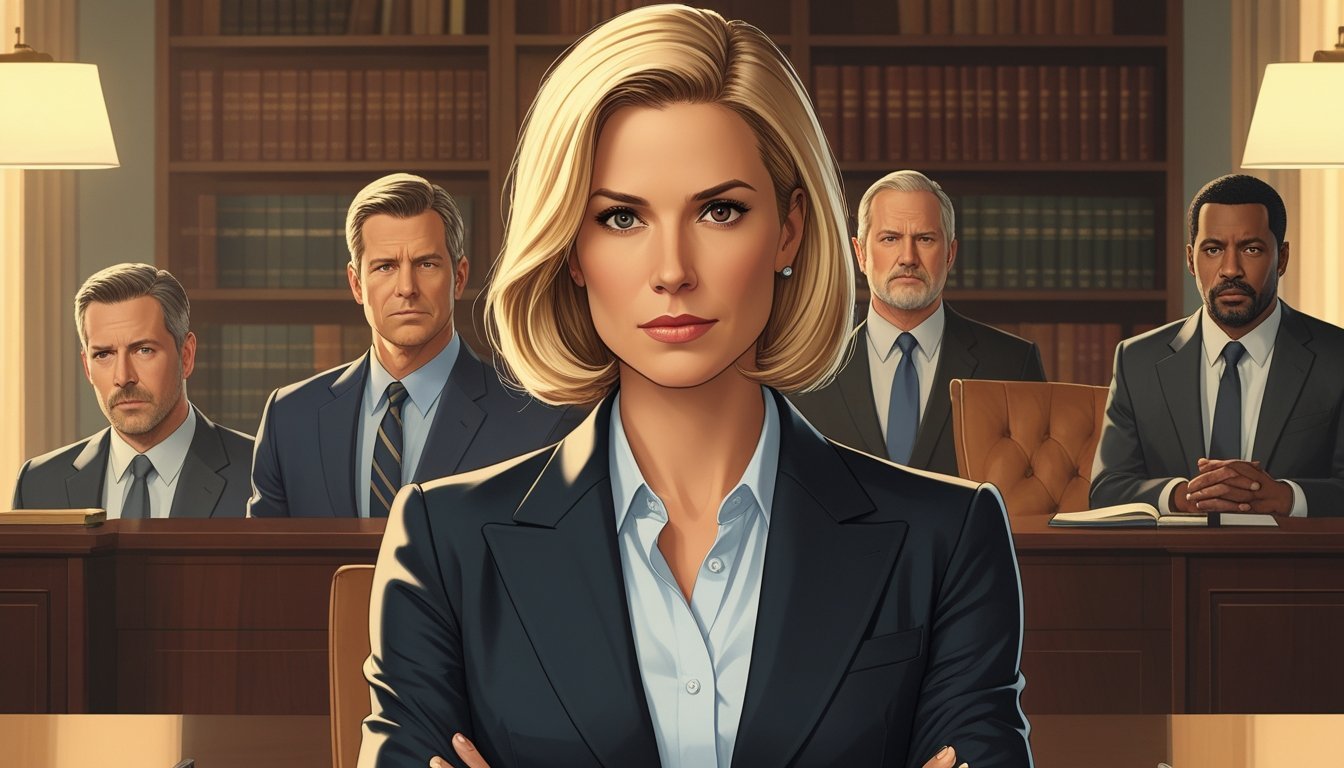
Kim Wexler’s story in Better Call Saul is largely defined by her connections with central figures in the series. Her actions, growth, and turning points are shaped by her unique, often complicated interactions with Jimmy McGill, Howard Hamlin, and the cartel operatives Nacho, Lalo, and Gus.
Interactions With Jimmy
Kim’s relationship with Jimmy McGill (later Saul Goodman) intertwines her personal and professional lives. Their connection begins with deep mutual respect: both work long hours and possess sharp legal minds. Over time, their relationship evolves into something more intimate and risky, as Kim participates in Jimmy’s schemes.
While Jimmy’s moral decisions become more questionable, Kim makes conscious choices to stand by, and even enable, him. She isn't manipulated but is actively engaged, stepping into morally gray territory herself. This complexity allows viewers to see Kim as a partner—not simply as a romantic interest or bystander.
Notable moments include joint cons, their shared legal strategies, and the way she shelters Jimmy from severe consequences. Kim repeatedly demonstrates that her loyalty comes with clear-eyed awareness, not naivete. Her bond with Jimmy ultimately becomes a partnership built on both affection and shared transgression.
History With Howard Hamlin
Kim's dynamic with Howard Hamlin, played by Patrick Fabian, begins as that of a subordinate facing professional hurdles. Howard recognizes Kim’s competence but often treats her with caution or reservation. Their interactions highlight Kim's drive for autonomy as she resists being kept in a secondary role.
As Kim gains experience, she starts to challenge Howard openly. Notable examples include her efforts to branch out on her own and her willingness to call out what she perceives as injustices at HHM. Her professional growth directly clashes with Howard's traditional, risk-averse methods.
Their relationship culminates in the joint scheme Kim and Jimmy orchestrate against Howard. This shows her willingness to manipulate, and even harm, former mentors if she believes it serves her ideals or interests. Kim’s evolution is marked by her decisive break from Howard’s vision of justice.
Connections to Nacho, Lalo, and Gus
While Kim's primary sphere is the legal world, she is inevitably drawn into the network of cartel operatives. Her contact with Nacho Varga, Lalo Salamanca, and Gus Fring exposes her to criminal danger far beyond her early days at HHM.
Kim’s tense confrontation with Lalo Salamanca in their apartment stands out. She remains composed, asserting herself in front of a violent and unpredictable antagonist. This encounter demonstrates her resilience and ability to navigate high-stress criminal threats.
Despite minimal direct interaction with Gus Fring or Nacho, Kim is aware of the shadowy forces influencing Jimmy/Saul’s life. These interactions underline her capacity to adapt and face danger, highlighting her as a figure uniquely suited for stories involving both legal drama and organized crime.
The Importance of Kim Wexler’s Story Arc
Kim Wexler’s journey in Better Call Saul stands out due to her complex motivations, ambiguous moral choices, and the open-ended nature of her fate after the series finale. Her arc offers layers of meaning that connect deeply with both the Breaking Bad universe and new viewers interested in character-driven storytelling.
Standalone Narrative Potential
Kim Wexler’s background and character development are mostly original to Better Call Saul, with few direct ties to Breaking Bad at the outset. This independence allows her story to branch in directions not limited by pre-existing canon.
Her transformation from a by-the-book attorney to a morally conflicted partner of Jimmy McGill offers material for an entirely new series. A spinoff could follow her legal career after leaving Saul Goodman behind or dig into her personal struggles in the aftermath of "Saul Gone."
She is a character with established relationships beyond Jimmy, such as her connections with Hamlin, Schweikart, and Mesa Verde. Exploring her world outside Albuquerque would allow the Breaking Bad universe to expand into fresh themes and environments.
Moral Ambiguity and Redemption Themes
Kim embodies the moral gray area that defines much of Better Call Saul and the wider Breaking Bad universe. Her choices are rarely simple, from bending the law to orchestrating cons, but she is driven by logic and emotion rather than pure greed or malice.
Her participation in complex scams and eventual self-imposed exile reflect a search for redemption, setting her apart from characters who fully embrace criminality. The aftermath of "Saul Gone" leaves her wrestling with guilt but also opens the possibility for moral reckoning and repair.
A spinoff could examine this ongoing struggle. Storylines could include pro bono legal work, facing consequences from her past, or navigating new ethical challenges. Viewers interested in nuanced character arcs rooted in self-reflection would find plenty to engage with.
Unanswered Questions From the Series Finale
The series finale leaves Kim’s fate ambiguous. After her visit to Saul in prison and her confession, many questions about her next steps remain open. She leaves the legal profession but is later shown volunteering—signaling a potential path to redemption but not providing closure.
Key questions include whether she ever formally reconciles with Jimmy/Saul, if she returns to law, or if her actions catch up with her in the Breaking Bad universe. Her future relationships and how she copes with her own choices are also unresolved.
A spinoff could provide answers while developing new stories. Fans who followed Kim throughout Better Call Saul are left without full resolution, and her arc offers enough depth and intrigue to justify further exploration in the Breaking Bad universe.
Connections to Breaking Bad and the Wider Universe
Kim Wexler’s continued story offers a unique opportunity to bridge the events of Better Call Saul with the broader timeline established in Breaking Bad. Her character intersects naturally with major figures like Jesse Pinkman, Walter White, and Saul Goodman, providing fresh insight and context to familiar narratives.
Potential Interactions With Jesse and Walter White
Kim’s legal background and complex moral decisions make her a candidate for direct and meaningful encounters with both Jesse Pinkman and Walter White. While she never appears in the original Breaking Bad series, a future spinoff could plausibly explore how she might cross paths with them, particularly during the years when Saul Goodman becomes entangled with Heisenberg.
Scenarios where Kim aids or hinders Jesse—possibly as a legal advisor or through backchannel negotiations—would expand on Jesse’s world outside Walter’s direct influence. These interactions could also highlight the ripple effects of Heisenberg’s criminal enterprise, emphasizing Kim’s potential impact on the fates of both Jesse and Walt.
Exploring this would address a gap in Breaking Bad’s history, showing how legal professionals like Kim operated as the criminal world in Albuquerque grew more chaotic. Her interactions could introduce tension or reluctant alliances with the show’s key players.
Integrating Heisenberg and Saul Goodman’s Storylines
Kim’s connection to Jimmy McGill, who evolves into Saul Goodman, is central to both series. By following her actions after the events of Better Call Saul, a spinoff could reveal her influence on Saul’s decisions and the operations that intersect with Heisenberg’s rise.
A focus on how Kim is affected by or responds to key moments in Walter White’s story would add depth to the network of relationships in the Breaking Bad universe. This could include her reacting to events like Saul’s involvement in laundering drug money, or the legal fallout from Walt’s criminal activities.
Kim’s unique viewpoint—as someone both inside and outside the criminal world—could clarify Saul Goodman’s motivations during his appearances in Breaking Bad. Her insight and reactions have the potential to recontextualize iconic scenes involving Walt and Jesse, offering fans a new perspective.
Exploring New Facets of the Breaking Bad Universe
Kim’s journey extends the exploration of moral ambiguity and professional ethics, areas central to both original shows. Her perspective can introduce parts of Albuquerque’s legal and criminal spheres yet unseen, such as the long-term consequences of the Heisenberg era on local institutions and individuals.
A spinoff focused on Kim could detail underexplored legal battles, witness protection programs, or the lives of victims and minor characters affected by the actions of Walt, Jesse, and Saul. This approach would expand the Breaking Bad universe beyond drug operations and law enforcement, providing new storylines grounded in character-driven drama.
Using tables or lists, writers can map the potential connections between Kim and established characters, making clear how her presence weaves through the established timeline:
Character Possible Connection With Kim Narrative Potential Jesse Pinkman Legal aid or conflict New dimensions to Jesse’s arc Walter White Collateral damage, legal ties Broader legal repercussions Saul Goodman Shared history, influence Emotional and plot-driven depth
By focusing on Kim’s unique vantage point, the franchise can meaningfully evolve and add greater depth to its established world.
Opportunities for a Kim Wexler Spinoff
A spinoff focused on Kim Wexler could explore unique legal scenarios, offer new character dynamics, and shed light on her personal journey after leaving Albuquerque. Each storyline direction has the potential to expand the Breaking Bad universe in a grounded, character-driven manner.
Narrative Directions Beyond Nebraska
Kim Wexler’s fresh start in Nebraska at Cinnabon leaves open many narrative possibilities. Her story could follow her attempts to rebuild her life, confront past decisions, and redefine her values away from Albuquerque’s criminal world. Flashbacks might illuminate her motivations, while present-day challenges force Kim to reckon with her past as a lawyer and partner in morally complicated schemes.
The show could depict her struggle with guilt and the search for redemption. Story arcs might include managing the consequences from the “Howard incident” or exploring the tension between anonymity and the urge to make a positive difference in her new community. This environment, both unfamiliar and mundane compared to her previous life, would test Kim’s identity and resilience.
Fresh Legal Service Storylines
Kim’s deep commitment to providing meaningful legal service sets her apart in the Better Call Saul universe. In a spinoff, she could engage with public interest law, pro bono cases, or advocacy work for underserved groups in Nebraska. Such storylines allow the series to examine the legal system from new perspectives, focusing more on social justice and ethics than on criminal defense and manipulation.
Lists of potential legal themes:
Tenant rights and fair housing
Domestic abuse and legal aid
Small business legal support in rural areas
By shifting focus from criminal antics to genuine legal advocacy, a series could deliver a more nuanced, yet still dramatic, legal drama.
Exploring New Characters and Settings
A Nebraska setting introduces opportunities to build a fresh supporting cast outside the established Breaking Bad and Better Call Saul worlds. Kim’s interactions with new colleagues, clients, and local residents could drive character-centered plots and spotlight the challenges of starting over.
There is room for recurring and minor characters with their own legal, personal, and ethical dilemmas. The contrast between Nebraska's small-town environment and Kim’s big-city experience could highlight regional legal issues and cultural conflicts. This setting also makes space for unique visual storytelling, emphasizing everyday environments over the criminal underworld that defined previous series entries.
Creative Vision: What Makes a Kim Wexler Series Unique?

A Kim Wexler spinoff stands apart from other shows in the Breaking Bad universe thanks to its ability to explore underrepresented themes and its compelling lead. The character’s mix of moral complexity and professional ambition opens up fresh storytelling opportunities.
Potential Storytelling Styles and Themes
A Kim Wexler series could experiment with storytelling formats not previously seen in the franchise. The narrative may use legal drama, psychological thriller, or even quiet character study elements to reflect Kim’s internal and external conflicts.
Themes like redemption, personal accountability, and the ethical limits of the law would likely take center stage. The show could chronicle her life post-Better Call Saul, showing how she repairs or distances herself from her past. Viewers might experience timelines that shift or flashbacks that deepen Kim’s backstory and motivations, paralleling her fractured sense of identity.
Distinct visual styles—such as long takes, muted color palettes, and focused close-ups—might emphasize solitude and tension. Unlike Saul Goodman’s flamboyant world, Kim’s journey would likely be more introspective and nuanced, focusing on subtle decisions with high emotional stakes.
The Role of Rhea Seehorn
Rhea Seehorn’s portrayal is integral to every aspect of Kim’s character. Her acclaimed performances, both subtle and expressive, have drawn praise in interviews from showrunners and critics alike.
Seehorn has discussed, in various videos and interviews, her process for depicting Kim’s emotional restraint and moral ambiguity. Her ability to communicate internal conflict without words sets a high standard for dramatic depth.
Casting Seehorn in a lead role offers the potential for a grounded, character-driven series. Any creative vision for a spinoff would depend on her continued involvement, ensuring the show retains the complexity and realism that fans expect from her work.
Perspectives From the Creators and Cast
The creative minds and actors behind Better Call Saul have spoken often about Kim Wexler's character and legacy. Their commentary sheds light on both her narrative depth and the ongoing interest in potential future stories.
Insights From Peter Gould and Vince Gilligan
Peter Gould, co-creator and showrunner, has consistently highlighted Kim’s complexity in interviews. He has stated that her journey was meticulously crafted, with her actions and choices reflecting a nuanced human struggle rather than pure morality. Gould has acknowledged fan enthusiasm for a spinoff, but he emphasizes the importance of strong creative justification before pursuing such a project.
Vince Gilligan, the original creator of Breaking Bad and co-creator of Better Call Saul, has offered a similar stance. He admires Kim as a standout character, yet he remains cautious about extending the story just for popularity’s sake. Gilligan’s comments make it clear that while the creative team recognizes Kim’s appeal, they prioritize story quality and originality. They have left the door open for future exploration but only under the right circumstances.
Cast Opinions and Public Demand
Rhea Seehorn, who plays Kim, has expressed both gratitude and excitement about the audience’s connection with her character. In various interviews, Seehorn has discussed her own curiosity about Kim’s life after the series finale. She acknowledges frequently being approached by fans and media with hopes for a Kim-focused spinoff.
Her willingness to return, matched by Bob Odenkirk’s public support, adds fuel to ongoing speculation. Meanwhile, social media trends and petitions demonstrate substantial demand, with viewers viewing Kim as one of television’s most layered and untapped figures. Interest in learning more about Kim’s life after Better Call Saul continues to grow, encouraging the creative team to keep the conversation open.
Conclusion: The Case for a Kim Wexler Spinoff

Kim Wexler stands out as one of television’s most compelling recent characters. Her choices and evolution throughout Better Call Saul have drawn significant interest from viewers and critics.
A spinoff focused on Kim would offer a chance to explore her psychology, ethics, and the consequences of her actions. Many fans remain curious about her fate and whether she ever finds redemption or peace.
Key reasons a Kim Wexler spinoff would be valuable:
Unfinished Story: The end of Better Call Saul leaves Kim’s journey open-ended, creating space for new stories.
Unique Perspective: Her point of view offers insights distinct from both Saul Goodman and other Breaking Bad universe characters.
Strong Acting Talent: Rhea Seehorn’s performance has been praised for depth and subtlety.
A table outlining interest points:
Element Potential in a Spinoff Career after Saul Legal, personal, or new field Moral struggles Further ethical dilemmas Relationships Family, new characters, past
Kim’s narrative potential remains strong, especially given the careful development she received throughout the original series.
A focused spinoff could build on her established character while introducing new challenges, conflicts, and relationships. This approach would offer both continuity and growth within the Breaking Bad universe.
