
The Deep Sadness Behind Saul’s Persona in Better Call Saul
Explored Through His Relationships and Choices
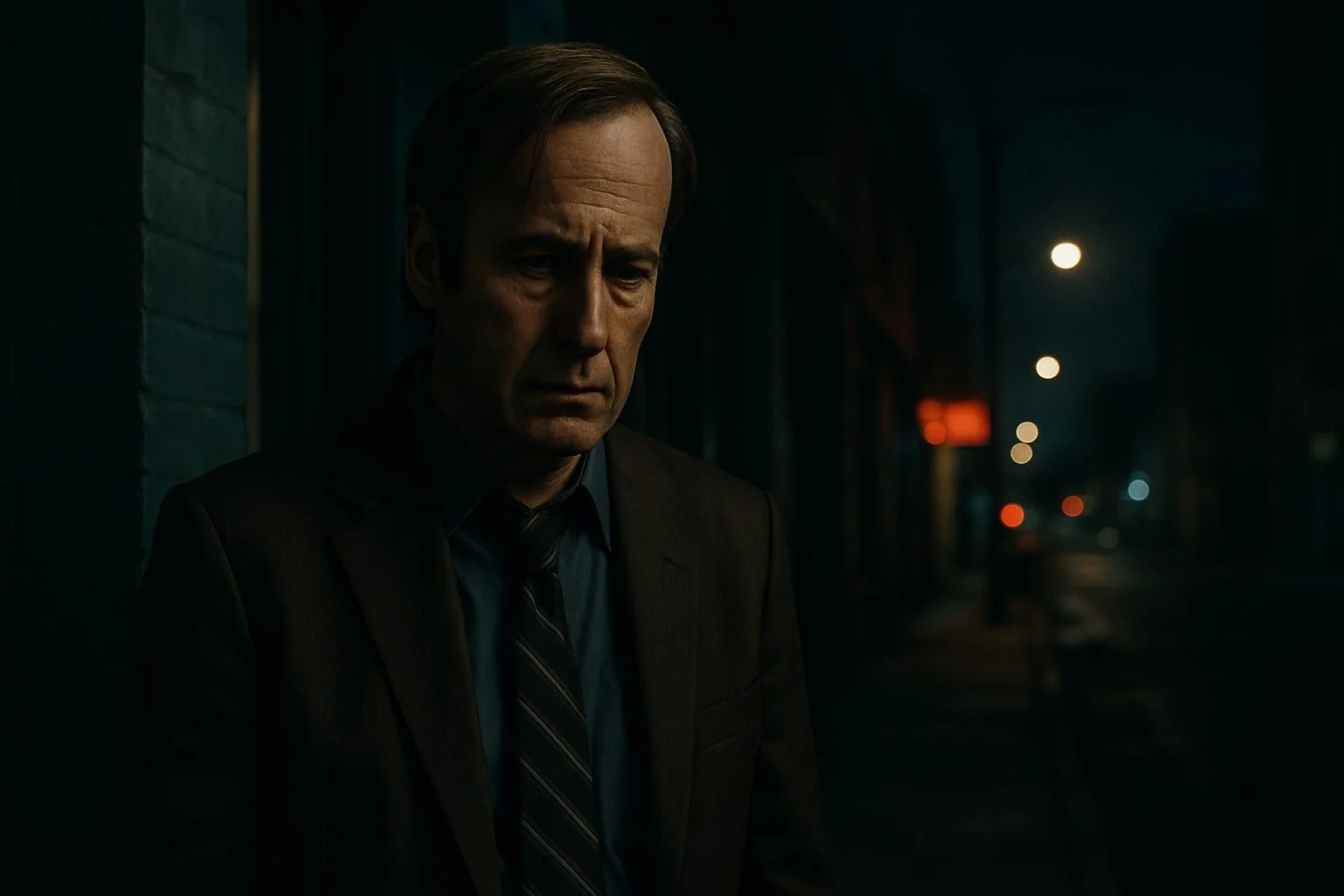
Beneath Saul Goodman’s vibrant, fast-talking exterior lies a profound sadness shaped by loss, regret, and the slow erosion of his true identity. In Better Call Saul, viewers witness Jimmy McGill’s gradual transformation into Saul, with each choice and setback pushing him further from the warmth and hope he once had. What may seem like confidence and humor is often a mask forged to hide disappointment and deep emotional pain.
This duality—between the man he was and the persona he crafts—creates a compelling tension that sets the tone for his actions. Audiences see glimpses of the heartbreak and isolation that drive Saul’s more flamboyant behavior, making his story feel more tragic and relatable. The show reveals not just how he changes, but why, leading to a character far more complex than his surface might suggest.
The Layers of Saul Goodman’s Persona
The persona of Saul Goodman is built on careful transformation. Each layer of his character is shaped by shifting identities and calculated adaptations to his environment.
From Jimmy McGill to Saul Goodman
Jimmy McGill’s transformation into Saul Goodman is at the heart of his story. Born as James McGill, he starts as a hustler trying to win respect as a legitimate lawyer. His early failures and troubled family dynamics nudge him towards cutting corners and bending the rules.
Disillusionment grows after repeatedly trying to fit in with the legal establishment, only to be rejected. Turning into Saul Goodman isn’t a single decision—it’s a gradual process. Each setback pushes Jimmy further into a persona that thrives on manipulation and flamboyance.
The contrast between Jimmy and Saul becomes more pronounced with every season. While Jimmy searches for approval, Saul builds walls and relies on bravado to navigate an increasingly dangerous world.
Crafting a Mask of Confidence
The Saul Goodman persona is deliberately constructed to project confidence, charm, and wit. Bob Odenkirk’s performance highlights how this mask is both convincing and ultimately hollow. Saul uses outrageous advertising, colorful clothing, and fast-talking routines to distance himself from the pain and insecurity of being Jimmy.
This mask is a coping mechanism. Where Jimmy was vulnerable, Saul is unflappable. Confidence becomes a shield, hiding real fears of failure and loss. The outer show helps him win cases and attract clients but also isolates him emotionally.
Every gesture, slogan, and business decision as Saul is a calculated move. He dials up his persona for legal drama, knowing that it protects him even as it pushes others away.
Identity Shifts and Dualities
Saul Goodman embodies complex dual identities throughout Better Call Saul. He is at times both Jimmy McGill and Saul Goodman, and later, Gene Takovic during his life in hiding. These shifts highlight the internal conflict as he tries to balance personal morality with survival.
The duality is not just about legal and illegal acts—it’s about who he allows himself to be seen as. Saul suppresses aspects of Jimmy to function in the criminal underworld, yet the tension never disappears. Under stress, old habits of Jimmy resurface, showing that the transformation is incomplete.
This layering of identity—Jimmy, Saul, and Gene—illustrates the deep sadness at his core. Each new identity conceals unresolved wounds rather than truly healing them, making his journey one of constant, uneasy reinvention.
Origins of Deep Sadness
Jimmy McGill’s transformation into Saul Goodman was shaped by specific sources of trauma, betrayal, and regret. His journey is marked by key events and relationships that fuel the persistent sadness behind his outward persona.
Early Struggles and Aspirations
Growing up in Cicero, Jimmy was known as "Slippin’ Jimmy." He relied on small cons and quick money schemes, but these choices masked a desire for something greater. Jimmy longed for legitimate respect and acceptance, particularly from his family.
Despite poor beginnings, he worked hard to become a lawyer. Law school was a turning point, raising his hopes for a better life. Yet, past mistakes and social stigma often followed him, leaving Jimmy feeling perpetually undervalued, even after earning his degree.
His early struggles reveal a cycle of ambition clashing with the weight of past actions. Every attempt at personal growth was complicated by old habits and the skepticism of those around him.
Betrayal by Chuck McGill
The relationship with his brother, Chuck McGill, was central to Jimmy’s life and deepest wounds. Chuck, a highly respected lawyer, could never accept Jimmy as his equal. He viewed "Slippin’ Jimmy" as dishonest, incapable of real change.
Chuck’s actions compounded this pain. He sabotaged Jimmy’s legal career, going so far as to report him and block him from advancement. Chuck’s betrayal became a defining trauma, reinforcing Jimmy’s feelings of unworthiness.
Their bond ultimately shattered after Chuck’s public and personal rejection. The resulting regret and emotional fallout were profound, directly contributing to Jimmy’s disillusionment and his final break from his old identity.
Family and Loneliness
Family relationships for Jimmy were fraught with disappointment and distance. His bond with Chuck was characterized by admiration mixed with bitterness. The absence of unconditional support left Jimmy isolated, even within his own family.
As Jimmy shifted toward his Saul Goodman persona, loneliness became more pronounced. Attempts at connection—with friends or romantic partners—were often undermined by secrecy or self-sabotage. The lack of genuine, lasting relationships deepened his sadness.
Over time, Jimmy’s separation from his own values and loved ones intensified his sense of isolation. This inner loneliness colored every aspect of his development, making the Saul Goodman mask a shield for pain he could not escape.
Key Relationships and Emotional Decline
Saul Goodman’s transformation is shaped by significant figures who test his sense of loyalty, expose deep personal vulnerabilities, and accelerate his emotional unraveling. Each relationship in his life brings a specific kind of pain, forcing him to confront the cost of his choices.
Kim Wexler’s Influence
Kim Wexler is central to Jimmy McGill’s ambitions and moral conflict. Her confidence in his abilities gives him strength, while her own slide into risky schemes encourages his darker instincts.
Their partnership is marked by both genuine care and escalating consequences. When Kim voluntarily distances herself, the emotional impact on Jimmy is severe. Her departure leaves a void that fuels his detachment from previous ideals.
Kim’s mixture of support and disapproval complicates Jimmy’s identity. As he loses her trust, he distances himself from the values that once anchored him, which makes his transformation into Saul Goodman feel inevitable.
Key Facts:
Support: Encouraged his legal career, but also his cons.
Impact of separation: Triggers lasting emotional fallout.
Moral struggle: Her presence and absence both alter his trajectory.
The Breakdown with Chuck
Chuck McGill, Jimmy’s older brother, embodies a kind of betrayal that permanently shapes Jimmy’s sense of self-worth. Their relationship is built on admiration turned to rivalry, with Chuck refusing to believe in Jimmy’s sincerity as a lawyer.
Chuck’s mistrust acts as a constant reminder of Jimmy’s painful limits. When Chuck openly undermines him and orchestrates his downfall, Jimmy internalizes this as a fundamental rejection by family.
Chuck’s final words and tragic fate deepen Jimmy’s guilt and defensiveness. This loss, and the feeling of responsibility, drives Jimmy further toward the emotionally distant persona of Saul Goodman.
Factor Effect on Jimmy Sibling rivalry Deep-seated insecurity Public betrayal Loss of trust Chuck’s death Intense guilt, regret
Ties to Mike Ehrmantraut
Mike Ehrmantraut provides a complex form of stability and mentorship for Jimmy. Their partnership is built on mutual understanding, with Mike showing Jimmy both the limits and the realities of operating outside the law.
Despite their practical alliance, Mike’s unwavering personal code stands in contrast to Jimmy’s increasing willingness to compromise ethics. Mike’s loyalty is conditional—based on mutual interest rather than affection or friendship.
This relationship exposes Saul’s growing cynicism. Witnessing Mike’s sacrifices and moral discipline, while never quite reaching them himself, highlights the gap between the flawed ideal Jimmy wishes to be and the pragmatic operator Saul becomes.
Complicated Loyalty and Loss
Loyalty is both a motivator and a source of pain for Saul Goodman. He often builds connections through shared secrets and mutual needs, not genuine trust.
Betrayals—by family, romantic partners, and colleagues—leave Jimmy isolated. His willingness to bend the truth and sacrifice relationships for short-term gains increases his sense of loss.
Key events, like Howard Hamlin’s death and Kim’s departure, underscore how loyalty in Jimmy’s life is fragile and transactional. These repeated losses strip away his emotional defenses, leaving him reliant on the Saul Goodman persona for self-preservation.
Highlights:
Loyalty: Often one-sided or ends in betrayal.
Loss: Leads to emotional retreat.
Self-preservation: Worsens as empathy is replaced by detachment.
Impact of the Criminal Underworld
Saul Goodman’s transformation is inseparable from his growing involvement in the criminal underworld. The demands and dangers of this world shape his decisions, deepen his moral compromises, and change the trajectory of his relationships.
Immersion into Criminal Circles
As Jimmy McGill adopts the Saul Goodman persona, his work as a criminal lawyer draws him into a complex web of illicit activity. He partners with figures like Gus Fring, whose calculated approach to crime exposes Saul to high stakes and constant threats.
Saul’s associations are not just business transactions. They force him to adapt to shifting power dynamics and sudden violence, especially as cartel members, such as Lalo Salamanca, enter the scene. Fear and survival become central to his day-to-day existence, causing him to distance himself emotionally from those he cares about.
This immersion changes how Saul interacts in every aspect of his life. Even routine legal tasks begin to overlap with schemes and criminality, blurring the line between advocacy and complicity. The need to keep up appearances pushes him further from his moral foundation and deeper into isolation.
Manipulation and Moral Ambiguity
Operating in a world fueled by deception, Saul becomes skilled in manipulation to navigate threats and gain advantage. He bends ethical boundaries, often justifying lies and fraudulent acts as necessary protections—for himself and, at times, for others.
Saul’s techniques include legal loopholes, fake identities, and emotional appeals, all designed to turn situations to his favor. His involvement with dangerous clients means that even minor decisions carry life-or-death consequences, heightening the stakes of every move.
What sets Saul apart is not just his willingness to manipulate, but how routine such actions become. Moral ambiguity replaces clear distinction between right and wrong, leading to inner conflict that intensifies his sadness and insecurity. The persona he builds is both his shield and his prison, fueled by choices made in a world that rarely rewards honesty.
The Shadow of Breaking Bad

Saul Goodman’s involvement in the world of Breaking Bad directly tied his fate to the actions and choices of more dangerous figures, particularly Walter White and Jesse Pinkman. These relationships intensified the pressures and emotional turmoil that shaped his development and fueled the sadness beneath his outward confidence.
Connections to Walter White and Jesse Pinkman
Saul Goodman’s introduction in Breaking Bad placed him at the intersection of Walter White’s rise and Jesse Pinkman’s struggles. He became an essential advisor and facilitator, guiding Walt and Jesse through legal loopholes and risky schemes involving meth production.
His ability to maneuver through their criminal world was a mix of legal savvy and survival instinct. Bob Odenkirk’s portrayal emphasized Saul’s outward bravado while hinting at internal stress. Saul rarely knew whom he could trust, as Walt’s unpredictable nature and Jesse’s vulnerability constantly shifted their working dynamic.
These associations forced Saul to hide his anxieties and adapt his persona. Any misstep could lead to violence or exposure, making every moment with Walt and Jesse loaded with more risk than reward.
Consequences of Association
Being linked to Walter White and Jesse Pinkman had severe consequences for Saul Goodman’s safety and psyche. His connection to the meth empire, led by Bryan Cranston’s character, subjected him to threats from law enforcement, cartel members, and even his own clients.
Saul’s efforts to maintain his fortunes and life required desperate measures. As Walt’s actions grew more violent and Jesse’s life spiraled, Saul was caught in the fallout—forced to abandon his career and identity. His decision to seek a new life as Gene in Omaha illustrates the depth of his fear and regret.
The emotional burden of these events contributed to the loneliness and mistrust seen later in Better Call Saul. The consequences of associating with Walt and Jesse shaped Saul’s future as much as his past choices.
Inner Conflict and Moral Downfall
Jimmy McGill’s transformation into Saul Goodman is shaped by a series of internal battles and unresolved pain. His choices reflect a gradual erosion of morality, fueled by trauma and a struggle to maintain his sense of agency.
Struggles with Conscience
Jimmy’s conscience serves as an unstable checkpoint throughout his journey. He often rationalizes morally questionable actions, believing he is helping others or simply surviving. Despite these justifications, glimpses of guilt surface in his interactions, especially with Kim Wexler and his brother, Chuck.
His sense of morality is frequently tested by circumstances meant to protect or advance his own interests. Each compromise chips away at his moral compass, leaving him with a dull sense of regret rather than clear remorse. Choosing to become Saul Goodman represents not just an adoption of a new name, but a conscious move away from his ethical boundaries. The tension between self-preservation and empathy remains unresolved, leading to frequent inner conflict.
Depression and Trauma Revisited
Lingering trauma and depressive thoughts shape much of Jimmy’s behavior behind the confident facade of Saul. Events like his troubled relationship with Chuck and the fallout from his cons leave emotional scars that never fully heal.
These experiences create an ongoing struggle to assert his agency. Rather than processing loss and pain, he buries them under humor and manipulation, which ultimately deepens his isolation. The weight of his unresolved trauma manifests in moments of self-doubt and emotional exhaustion, illuminating his struggle to find meaning beneath the legal bravado.
Redemption, Regret, and the Final Transformation
Saul Goodman’s journey closes with significant shifts in his identity and his willingness to confront the consequences of his actions. The last chapters of Better Call Saul emphasize how deeply personal redemption and regret shape the fate of both Saul and his alter ego, Gene Takovic.
Searching for Redemption
Jimmy McGill’s pursuit of redemption becomes more pronounced as the story nears its end. After years spent rationalizing questionable choices as Saul Goodman, he is forced to reckon with a life lived through manipulation and self-preservation.
He recognizes the damage caused not just to himself, but to those closest to him, especially Kim Wexler. His final acts are driven by a desire to own his mistakes, not just legally but morally.
Rather than continuing to run or justify, he confesses in court—rejecting the persona of Saul and reclaiming his identity as Jimmy. This moment marks a significant departure from his actions as "Saul Gone" and is illustrated by his willingness to lose everything for a chance at truth.
Facing Consequences and Regrets
The finale does not shy away from showing the consequences that follow Jimmy’s years as Saul and later, Gene. After his arrest in Omaha, he faces a long list of federal charges, with his past as an accomplice laid bare.
Jimmy’s regret is not abstract or distant; it is immediate and directed at the irreparable damage done to Kim and others. Key scenes with Kim in the finale reveal both shared guilt and personal accountability.
He addresses the fallout from his involvement with major criminal figures and acknowledges that his attempts to escape justice only deepened his isolation. Legal reckoning is intertwined with emotional reckoning as he finally accepts the full weight of his choices.
The Gene Takovic Escape
As Gene Takovic, Jimmy’s effort to vanish into a mundane life is a temporary solution, not a real transformation. Although he adopts a new name and hides in plain sight, the sadness of his existence only grows.
The routine of managing a Cinnabon in Omaha becomes a daily reminder of what he has lost. The Gene persona represents not freedom, but a slow suffocation under the burden of his past.
When he is exposed and captured, Gene’s escape is revealed as an illusion. Ultimately, it takes embracing his real identity and the truth of his actions for him to find any sense of closure, even as he faces the consequences.
Behind the Scenes and Cultural Impact
The story of Saul Goodman in Better Call Saul is not only shaped by on-screen events but by crucial off-screen contributions. Key creative figures, performance choices, and audience engagement have all played distinct roles in deepening the show's exploration of personal sadness beneath Saul’s outward persona.
Bob Odenkirk’s Performance
Bob Odenkirk’s portrayal of Jimmy McGill, later Saul Goodman, is a focal point of the series. Odenkirk brought nuance, moving beyond comedic timing to reveal the vulnerabilities and flaws of his character. His dedication became especially apparent during the sixth season, following his on-set heart attack—a moment that shocked both cast and fans and highlighted his resilience.
He balances Saul’s outward bravado with subtle gestures and expressions, giving viewers insight into moments of insecurity, regret, and longing. His approach consistently invites empathy, making Saul’s gradual transformation both convincing and tragic. Odenkirk’s performance has drawn praise for turning what could have been a caricature into a layered, deeply human portrayal.
Contributions from Vince Gilligan and Peter Gould
Series creators Vince Gilligan and Peter Gould have been instrumental in guiding the narrative tone and depth of Better Call Saul. Their vision for Jimmy’s evolution, from an earnest public defender to the morally ambiguous Saul Goodman, is reflected in tight scripts and character-driven storytelling.
Gilligan and Gould often prioritize character development over plot twists, allowing viewers to witness incremental changes in Saul’s persona. The writers’ room, led by their philosophy, maintained consistent quality and complexity throughout the series’ run. They also established a collaborative environment that enabled cast members, including Odenkirk, to contribute meaningfully to their roles.
Audience Reflection and Community Analysis
Viewers have turned to platforms like Reddit to analyze and discuss the show’s themes, frequently focusing on Saul’s inner conflict and the interplay between privacy and authenticity. These discussions often examine the impact of Jimmy’s decisions on his relationships and sense of self, highlighting the emotional cost of living behind a constructed identity.
Fan theories and scene breakdowns frequently reference specific moments of character development, piecing together how minor choices accumulate into larger tragedies. Community analysis has helped sustain interest between episodes and seasons, turning Better Call Saul into a subject of ongoing cultural conversation and study.
