
Why Walter White’s Family Life Is the Show’s Real Tragedy
The Hidden Heartbreak Behind Breaking Bad

Walter White’s transformation in Breaking Bad, created by Vince Gilligan, is remembered for its crime and chaos, but the true tragedy lies within his family life. While the series is often celebrated for its intense storylines and character arcs, the unraveling of the White family is its most lasting impact. The show carefully illustrates how Walter’s choices, meant to secure his family’s future, ultimately drive them apart and put them in danger.
Breaking Bad’s depiction of family moves beyond typical television tropes, using Walter’s home life as the emotional core of the series. Every decision he makes as a husband and father, from secrecy to criminal activity, deepens the family’s suffering even as he insists it’s all for their benefit. The pain and fallout felt by Skyler, Walt Jr., and Holly make the story’s end truly devastating, underscoring how one man’s ambition can destroy the people he loves most.
Walter White’s Family: The Heart of Breaking Bad
Walter White’s role as a high school chemistry teacher evolves into that of a criminal, impacting not just his own fate, but deeply affecting his wife and son. The unraveling of the White family becomes a central element in the drama, showing how his choices fracture their lives.
Skyler White’s Struggle
Skyler White faces the reality of her husband’s secret life with a mix of disbelief and fear. At first, her concern is for Walter’s health, but suspicion grows as she is excluded from his plans and learns the truth about his crimes.
She becomes increasingly isolated, stuck between protecting her children and managing the fallout of Walt’s double life. This pressure pushes her to take drastic actions, like laundering money and eventually distancing herself emotionally and physically from Walter.
Her struggle is not only with her own conscience, but also with public scrutiny and a sense of powerlessness. Throughout Breaking Bad, Skyler’s attempts to shield her family highlight the emotional cost of Walt’s descent into criminality.
Walt Jr.’s Innocence
Walt Jr., also known as Flynn, remains largely innocent and unaware of the true extent of his father’s activities for most of the series. As the son of a high school chemistry teacher, he looks up to Walter, unaware of the dark double life his father leads.
Walt Jr.’s experience reflects the collateral damage done to family members who are left in the dark. The reveal of Walt’s actions devastates him, particularly when faced with the loss of trust and security within his family unit.
His relationship with both parents becomes strained, culminating in feelings of betrayal and confusion. Walt Jr.'s innocence and eventual disillusionment drive home the personal cost of Walter’s choices.
Family Dynamics and Conflict
The shifting dynamics among Walter, Skyler, and Walt Jr. create constant conflict within the family. Walter’s efforts to rationalize his actions as being for the good of his loved ones only heighten the tension.
Major decisions, such as Skyler’s complicity in money laundering or her attempts to keep Walt Jr. safe, are shaped by the fractures brought on by Walter’s criminal life. The drama intensifies as loyalties are tested and the family’s unity deteriorates.
Breaking Bad uses the White family’s turmoil to show how one person's choices can have widespread effects. The resulting mistrust, anger, and fear ripple through every interaction, making the family the emotional core of the series.
The Fall of Hope: How Cancer Upended the Whites

Cancer shattered the White family’s sense of stability. The diagnosis introduced fear, forced quick decisions, and exposed conflicting emotions among Walter, Skyler, and their children.
Diagnosis as a Catalyst
Walter White’s lung cancer diagnosis marked the end of ordinary family life. Before the news, the Whites dealt with everyday financial strain and personal disappointment, but cancer turned these pressures into a looming crisis.
The threat of death made Walter obsess over how his family would survive without his income. He chose to keep the diagnosis secret at first, thinking he could shield them from pain, but this decision also isolated him emotionally. His hope for a simple, loving life was replaced by the burden of impending mortality.
This medical crisis did not bring the family closer—it opened a chasm of secrecy and tension. The fear of loss loomed over every conversation, fundamentally changing their relationships and daily routines.
Desperation and Denial
Walter’s cancer put the family in a constant state of uncertainty. Desperation took hold as he realized that standard solutions—insurance, a second job—were not enough to provide security for his loved ones.
Skyler, overwhelmed by news of the illness, alternated between active support and anxious suspicion about Walter’s actions. Both clung to denial in different ways: Walter by refusing to admit how grave his situation was, Skyler by holding onto the illusion that normalcy could return.
This denial was both a shield and a trap. As Walter made increasingly risky choices to solve financial problems, he justified his actions as acts of love. However, each step took him further from hope and deeper into secrecy, crime, and emotional distance from his family.
Love and Duty Amidst Despair
The Whites navigated a complicated balance of love and obligation. Walter claimed every illegal act was for his family’s future, believing his choices were acts of ultimate care. Skyler, struggling to support him while protecting her children, found love entwined with suspicion and fear.
Faced with cancer, Walter’s sense of duty became all-consuming. Decision after decision was driven by a need to control fate and deliver security after his death. Yet, this pursuit eroded trust, replacing shared hope with arguments, guarded truths, and emotional withdrawal.
Love persisted, but it was strained. Every act of protection or sacrifice echoed with the knowledge that death—either Walter’s or the destruction of the family unit—was never far away.
Sins and Consequences: Walter’s Descent Into Tragedy
Walter White’s path is marked by repeated moral transgressions that fracture both his identity and his closest relationships. His transformation from a struggling chemistry teacher to a notorious figure exposes how pride and deception poison the foundation of his family life.
Heisenberg’s Emergence
Walter’s alter ego, Heisenberg, begins as a response to fear and desperation but quickly grows into something more sinister. The need for control and power steadily overtakes legitimate motives, pushing him to choose illegal and immoral acts.
Heisenberg’s ruthless decision-making—murders, intimidation, and manipulation—reflects a departure from basic morality and compassion. This personality shift does not only affect his criminal life but seeps into his domestic world, bringing instability and fear into his home.
The escalation from a provider to an enforcer alienates Walter from Skyler and their son. Heisenberg’s sins are not isolated; they reverberate in every corner of his household, transforming family dinners into battlegrounds dominated by suspicion.
Pride Versus Sacrifice
Walter insists that his crimes are sacrifices for his family’s well-being, but his actions often reveal a deep-seated pride. When faced with opportunities to walk away or minimize risk, he chooses escalation, motivated by ego and a desire for legacy rather than true selflessness.
This pride blinds him to the harms inflicted on his loved ones. His refusal to accept help from others, including Skyler or his wealthy friends, underscores a tragic flaw. The tragic outcome is that his need to be the sole savior and provider pushes his family further away.
A list of key consequences of Walter's pride:
Destruction of trust between him and Skyler
Emotional trauma for his children
Escalation of violence and legal danger
Truth and Lies Within the Home
Deception becomes a central element in Walter’s family life. Lies about his whereabouts, finances, and actions pile up, eroding the shared foundation of truth in the White household.
Skyler’s growing suspicions and eventual involvement reflect the toxic spread of secrets. Attempts to shield his family from danger actually entangle them deeper in criminality and moral compromise. Jesse Pinkman, too, becomes enmeshed in these domestic deceptions, illustrating collateral damage beyond the immediate family unit.
The home shifts from a place of safety to an arena of paranoia, illustrating how the loss of honesty amplifies the tragedy. Walter’s attempt to manage fear through secrecy is ultimately what breaks the very bonds he claims to protect.
Addiction to Power: The Meth Empire’s Impact on Family
Walter White’s drive to create a meth empire leads to devastating changes in his home life. As his commitment to his growing criminal business intensifies, each step erodes the stability and safety his family once had.
The Rise of the Methamphetamine Business
Walter begins as a chemistry teacher facing financial insecurity due to cancer. His decision to cook methamphetamine is initially presented as a way to support his family through the financial strain of his illness.
The meth cook operation quickly grows beyond its original purpose. Walt becomes engrossed in building his empire, seeking recognition and control rather than just cash. His involvement deepens, and every success fuels a new level of commitment, often at the expense of his time and attention at home.
Jesse Pinkman joins Walt, and together they develop “Blue Sky,” a highly pure meth product. The growing business brings in large amounts of money, but the increasing scale also attracts violent criminals and law enforcement scrutiny. The family's financial security comes at the cost of constant danger and deception.
The Cost of Empire on Loved Ones
Walt's commitment to the meth business causes a breakdown of trust within his family. Skyler discovers the source of Walt’s cash and is quickly burdened by fear and guilt. She becomes an unwilling accomplice in money laundering, which distances her from friends and her sister Marie.
The emotional cost spreads further. Walt Jr. is confused by his parents’ secretive behavior and sudden changes in lifestyle. The influx of illegal cash introduces new moral conflicts and puts a strain on relationships that once seemed unbreakable.
As Walt grows more obsessed with his empire, family dinners turn cold and conversations become tense. The very relationships Walt once claimed to protect become collateral damage, eroded by lies and the pressures of keeping his criminal activities concealed.
Violence and Paranoia at Home
Violence becomes a constant threat in the White household as Walt’s reputation grows. Encounters with rivals, armed criminals, and unpredictable situations make home life unstable.
Skyler and the children are increasingly exposed to the fallout from Walt’s actions. There are break-ins, threats, and moments when physical harm seems imminent. Walt’s paranoia intensifies, and he implements elaborate security measures, turning the home into a fortress rather than a sanctuary.
The environment shifts from one of comfort to one dominated by fear and suspicion. The lingering risk of retaliation from those involved in the meth trade overshadows daily family life, leaving lasting psychological impacts on the entire family.
The Role of Secondary Characters in the White Family’s Downfall
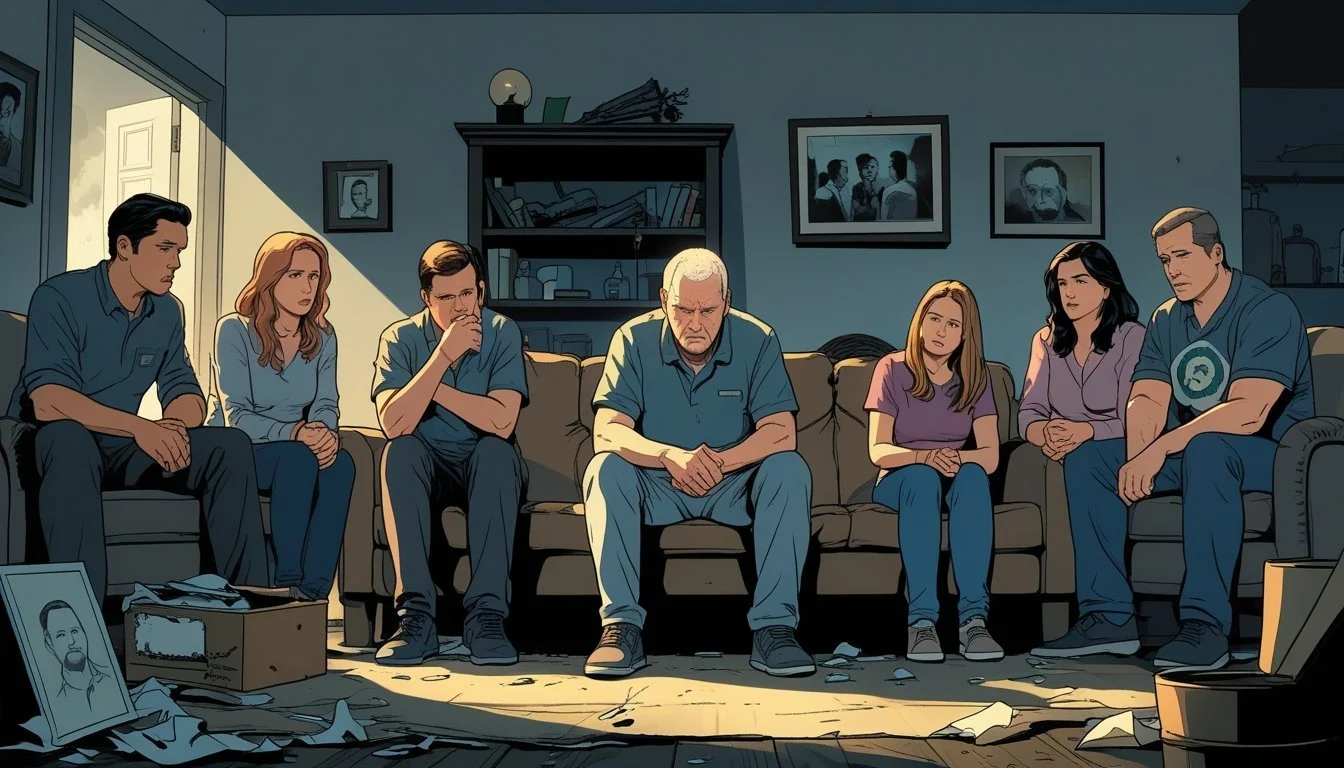
Multiple key figures outside the White household play a direct and indirect role in the erosion of the family’s stability. Their involvement in the drug trade, personal relationships, and acts of violence drive conflict and shape key episodes that destabilize Walter White’s home.
Jesse Pinkman’s Unintended Influence
Jesse Pinkman, once Walter’s struggling high school student, becomes his partner in meth production. Their collaboration draws Walt deeper into the criminal underworld, especially as Jesse’s recklessness and dependency issues escalate.
Jesse’s relationship with the White family is complex. Although he seeks approval and connection, his presence creates tension, especially as Walt uses him to justify his double life. Episodes such as “Phoenix” highlight Jesse’s struggles, with tragic consequences for Jane and rippling effects on Walt’s family.
His moral struggles and eventual opposition to Walt further expose the hidden side of Walt’s life to those close to him, intensifying suspicion and stress in the White home. Jesse’s involvement also brings law enforcement and drug rivals dangerously close to the family.
Jane Margolis’s Tragic Connection
Jane Margolis enters as Jesse’s landlord and girlfriend, quickly becoming a critical figure in Walt’s downfall. Jane’s heroin use draws Jesse into addiction, which distracts him from both the meth business and his own wellbeing.
Her accidental overdose, witnessed but unprevented by Walt, is a turning point. The episode “Overdose” marks a moment when Walt’s choices have direct, catastrophic consequences on innocents, which weighs on his conscience and contributes to his strained behavior at home.
Jane’s father, an air traffic controller, unknowingly becomes part of the tragedy, causing a mid-air collision in his grief. This event demonstrates how Walt’s web of secrecy and crime creates unintended, widespread suffering far beyond his immediate family.
Todd, Tuco, and the Spread of Chaos
Todd Alquist and Tuco Salamanca represent the violent escalation of the meth operation. Tuco’s aggression and volatility expose Walt to the brutal realities of the drug trade, forcing him into situations that require secrecy and violence, further distancing him from his family.
Todd, who emerges later, plays a pivotal role in the family’s collapse. His casual approach to violence—including the murder of a child—pushes Walt into new ethical lows. Todd’s partnership escalates the level of danger that Walt must shield his family from.
Both men introduce threats that Walt cannot control or predict, undermining his efforts to compartmentalize his criminal and personal lives. Encounters with Tuco and Todd directly or indirectly lead to episodes of fear, mistrust, and ultimately contribute to the breakdown of the White family.
Redemption and Guilt: Searching for Meaning in Ruin
Walter White’s journey is shaped by his conflicted sense of guilt, fleeting attempts at redemption, and the broader societal judgment his actions attract. Each aspect exposes the fractured foundation of his family life and the deep moral costs of his choices.
Guilt and Self-Justification
Walter’s initial motivation to cook meth is rooted in providing for his family after a cancer diagnosis. However, as his power grows, his explanations shift from necessity to pride. He repeatedly insists his actions are "for his family," but this rationale becomes a shield against guilt.
Scenes in Breaking Bad reveal Walter’s increasing difficulty in reconciling his choices. Moments with Skyler and his children become strained, as he realizes the damage caused by his criminal life. Throughout the series, Walter deploys denial, anger, and rationalization, making his guilt more complex than simple remorse.
In literature, anti-heroes often use similar defense mechanisms. Walter’s journey illustrates how self-justification intensifies internal conflict, especially when contrasted with loved ones’ suffering. This theme underscores the psychological breakdown at the heart of the show’s family tragedy.
Moments of Redemption
Walter’s path is marked by rare, minor efforts at redemption. The most notable occurs in the series finale, when he ensures his remaining money reaches his son, Walter Jr., using an anonymous method. This act, though tainted by manipulation, demonstrates a last attempt to fulfill his paternal role.
He also confesses to Skyler that he acted out of ego, not just love or duty. Admitting the truth is a measure of self-awareness, but it comes too late to repair destroyed relationships.
Walter protects Jesse Pinkman from certain death in the end by intervening on his behalf. While this choice is significant, it does not erase his prior betrayals. The show frames redemption as fragmented and incomplete, spotlighting the limits of repentance in literature and real life.
Society’s Judgment
Society’s view of Walter White changes sharply over the show’s run. Once a mild-mannered teacher, he becomes a symbol of criminal excess. The media, law enforcement, and even his neighbors condemn him after his identity as "Heisenberg" is revealed.
Breaking Bad uses public reaction to highlight themes of morality, justice, and reputation. Walter’s attempts at justification carry little weight in the face of societal norms. Legal consequences and personal alienation reinforce the idea that society is both judge and executioner.
In literature, social judgment often amplifies a character’s isolation. Walter White’s downfall demonstrates how collective values shape—and ultimately destroy—those who violate them, especially when family and reputation are at stake.
Ozymandias and the End of the White Family
Walter White’s downfall reaches its peak when his criminal world collides directly with his family life. The destruction is not only physical but deeply personal, showing how his choices unravel the bonds that once defined him.
The Collapse in Ozymandias
The episode "Ozymandias" on AMC is widely recognized as the pivotal moment of Walter White’s undoing. Named after Percy Bysshe Shelley’s poem about the inevitable decay of power and legacy, the episode draws direct parallels to Walt’s own demise.
In this episode, Walt loses everything he once claimed to be fighting for. His money, intended to secure his family’s future, is either confiscated or lost. The physical safety of his wife and children is shattered, most notably in the violent confrontation at the car wash and the aftermath in their home.
Family ties are visibly broken. Skyler turns on him with a knife, and Walt’s son, Flynn, calls the police against his own father. The show depicts this collapse not with melodrama, but with stark, irreversible actions that make reconciliation impossible.
Final Acts: Ricin and Farewells
As Walter attempts to put his affairs in order, his use of ricin symbolizes his cold, calculated approach to problem-solving, even in his final days. He retrieves the ricin he hid earlier in the series, planning its use with meticulous care.
Walt’s farewell to his family is marked more by necessity than love. He abducts baby Holly in a desperate act, then leaves her at a fire station, recognizing that his presence is now only a threat. His last phone call to Skyler serves both to distance her from his crimes and to give her legal cover, but it also leaves an emotional gulf that cannot be bridged.
This stage of Walt’s journey is defined by the erosion of trust and affection. The once-intact family unit is now a collection of fractured individuals, each left to cope with the damage.
Aftermath: Broken Bonds
In the wake of "Ozymandias," the White family is irrevocably damaged. Skyler faces legal scrutiny, financial ruin, and social isolation. Flynn, previously sheltered from much of the truth, is left angry and betrayed, refusing any inheritance from his father’s criminal endeavors.
The family home—once a symbol of stability—is abandoned and vandalized, reflecting the destruction within. Walt’s pursuit of money, power, and control leads only to loneliness and loss, echoing the message of the "Ozymandias" poem: even the greatest empires eventually crumble.
The tragedy is not just in Walter’s death, but in the death of the family that was supposed to be his legacy. The true cost of his actions is measured in broken relationships and lost futures, not dollars or criminal fame.
