
The Bermondsey Horror: The Gruesome Murder Case That Inspired Charles Dickens | Victorian London Crime
London in the early 19th century was a city of stark contrasts and ever-present danger. The crowded metropolis drew people from all walks of life, including those with nefarious intentions. While Jack the Ripper may dominate historical crime narratives, countless other killers stalked the foggy streets, leaving citizens in constant fear. The city's dangerous reputation was well-earned, with even Prime Minister Spencer Percival falling victim to assassination.
Disease compounded these fears, with the cholera epidemic of 1849 claiming over 14,000 lives. The Thames River, functioning as both drinking water source and open sewer, created perfect conditions for illness to spread. Against this backdrop of violence and disease, one particularly captivating murder case emerged—the "Bermondsey Horror." This tale of Marie Deru, Frederick Manning, and Patrick O'Connor would involve a deadly love triangle, financial deception, and a desperate manhunt that captured public attention across England.
Key Takeaways
Victorian London's dangerous environment fostered notorious crimes that fascinated the public and influenced literature.
The inadequate police system of parish constables eventually evolved into the modern Metropolitan Police Force.
The Bermondsey Horror murder case revealed a deadly love triangle involving Marie Deru, her husband Frederick, and her former lover Patrick O'Connor.
Real Crime Chronicles: True Crime Podcast
Mysterious Deaths and Skydiving Incident
The Real Crime Chronicles podcast has launched its first season with two compelling investigations. The series delves into a series of suspicious deaths that occurred at a California hospital, raising questions about patient safety and potential malicious activity within healthcare settings.
The podcast also examines a bizarre case involving a skydiver who was found dead on a suburban driveway. This peculiar incident becomes even more intriguing due to the bag discovered with the body, which contained an alarming collection of items: guns, drugs, and night vision goggles.
These mysterious circumstances form the foundation of the podcast's investigative approach. The production team conducts thorough research into both cases, examining evidence, interviewing witnesses, and analyzing potential motives behind these disturbing events.
The podcast is now available for subscription on major platforms including Apple Podcasts and Spotify. Listeners interested in true crime narratives with detailed investigative reporting will find this series particularly engaging.
Each episode carefully reconstructs the timeline of events while exploring the human elements behind these tragedies. The production maintains a balance between factual reporting and respectful treatment of the victims and their families.
Real Crime Chronicles: True Crime Podcast

Mysterious Deaths and Skydiving Incident
The Real Crime Chronicles podcast has launched its first season with two compelling investigations. The series delves into a series of suspicious deaths that occurred at a California hospital, raising questions about patient safety and potential malicious activity within healthcare settings.
The podcast also examines a bizarre case involving a skydiver who was found dead on a suburban driveway. This peculiar incident becomes even more intriguing due to the bag discovered with the body, which contained an alarming collection of items: guns, drugs, and night vision goggles.
These mysterious circumstances form the foundation of the podcast's investigative approach. The production team conducts thorough research into both cases, examining evidence, interviewing witnesses, and analyzing potential motives behind these disturbing events.
The podcast is now available for subscription on major platforms including Apple Podcasts and Spotify. Listeners interested in true crime narratives with detailed investigative reporting will find this series particularly engaging.
Each episode carefully reconstructs the timeline of events while exploring the human elements behind these tragedies. The production maintains a balance between factual reporting and respectful treatment of the victims and their families.
Historical Background
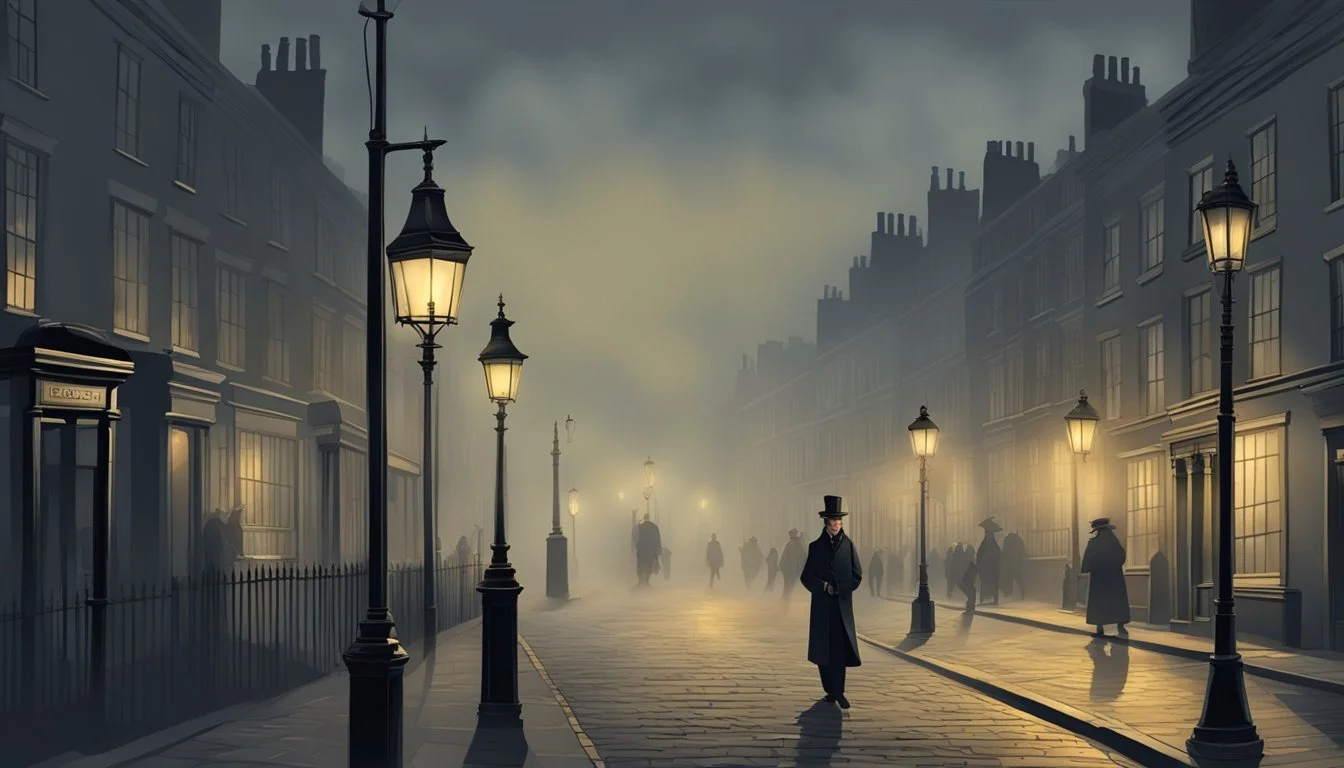
London's Perilous Streets in the 1800s
London during the 19th century was a treacherous metropolis that attracted both the desperate and the dangerous. The overcrowded city streets harbored threats from violent criminals and deadly diseases alike. In the early 1800s, safety concerns peaked when even Prime Minister Spencer Percival fell victim to assassination. No one was immune from danger, regardless of social standing.
The city's law enforcement system proved woefully inadequate for addressing these threats. Traditional policing relied on unpaid parish constables and watchmen who performed minimal duties like announcing the time and watching for fires. This ineffective system eventually led to the formation of the Metropolitan Police, establishing the foundation for modern policing that continues today.
Disease presented an equally terrifying threat to Londoners. The Thames River had deteriorated into an open sewer where waste flowed out with the tide only to return with the next. A devastating cholera epidemic in the summer of 1849 claimed over 14,000 lives. In areas like Bermondsey in southeast London, residents suffered not only from sewage but also from the stench of local tanneries, where vats of collected urine used in leather production further fouled the air.
Notable Murder Cases and Their Cultural Impact
Among London's notorious crimes, the "Bermondsey Horror" of 1849 captivated public attention. This case involved Marie Manning, a Swiss-born former lady's maid who had developed expensive tastes while serving in one of London's grandest homes. Despite her husband Frederick's suspected criminal background, they married at St. James Church in Piccadilly in 1847.
The case centered around Patrick O'Connor, a wealthy 50-year-old moneylender from County Tipperary who had a prior relationship with Marie. Even after her marriage, Marie maintained close contact with O'Connor, creating what many described as a casual but complex three-way relationship. Frederick likely tolerated this arrangement because of O'Connor's considerable wealth.
On August 9, 1849, the Mannings lured O'Connor to their home where they brutally murdered him—reportedly striking him 17 times—before burying his body beneath the flagstone floor of their kitchen at 3 Miniver Place. After the murder, Marie visited O'Connor's lodgings to steal his valuable railway shares.
These sensational murder cases did more than just shock the public; they inspired some of Britain's greatest literary and artistic works. The detailed newspaper coverage fed the nation's growing appetite for gruesome crime stories, while also highlighting the need for more effective law enforcement in London's dangerous streets.
Law Enforcement Transformation
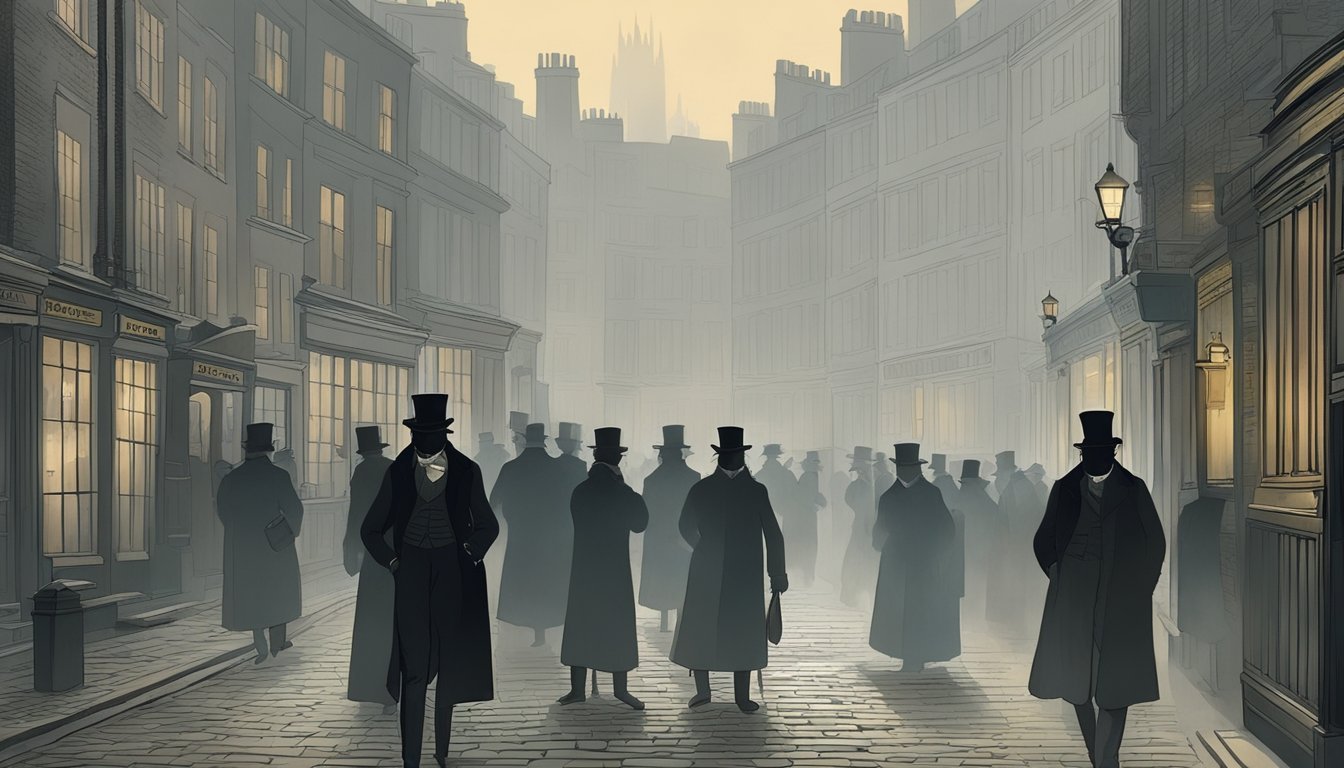
The Security Crisis in Pre-Modern London
In early 19th century London, crime posed a significant threat to public safety. The crowded metropolis generated notorious murder cases that captured public imagination and revealed serious flaws in security systems. Even high-profile individuals faced danger, as demonstrated by Prime Minister Spencer Percival's assassination. Citizens from all social classes lived in constant fear of highway robbers and violent criminals.
The traditional law enforcement system relied on unpaid parish constables and watchmen. These individuals had limited responsibilities that included calling out the time, watching for fires, and attempting to maintain order. This volunteer-based approach proved inadequate for a growing city plagued by increasing criminal activity.
Beyond violence, public health emergencies further complicated safety concerns. The cholera epidemic of 1849 claimed over 14,000 lives in London. The River Thames, described as an "open sewer," served as both waste disposal and drinking water source, creating catastrophic health conditions throughout the city.
The Formation of Modern Policing
The limitations of London's early security systems became increasingly apparent as crime rates rose. Public pressure mounted for a more organized approach to protecting citizens and their property. The ineffective nature of the volunteer watchmen system created an opportunity for significant reform.
The establishment of the Metropolitan Police marked a revolutionary development in law enforcement history. This new organization introduced a structured, professional approach to policing that contrasted sharply with the previous informal system. Officers received training, wore uniforms, and operated under centralized leadership.
This transformation didn't happen in isolation—it was directly influenced by the public's reaction to notorious crimes. Murder cases that captivated public attention highlighted the urgent need for effective investigation techniques and reliable law enforcement. These high-profile incidents:
Inspired literary and artistic works
Generated newspaper coverage
Increased public demand for protection
Demonstrated the inadequacy of existing systems
The Metropolitan Police Force created during this period established the foundation for modern policing practices that continue to this day. Its formation represented a critical shift from reactive, volunteer-based policing to a proactive, professional law enforcement model.
Health and Living Conditions
1849 Cholera Outbreak
London in the early 19th century faced numerous health challenges, with disease spreading rapidly through the crowded metropolis. The summer of 1849 brought a devastating cholera epidemic that claimed over 14,000 lives across the city. This public health crisis created an atmosphere of fear that rivaled concerns about violent crime. Many residents believed that drinking certain beverages like brandy might help ward off the disease, though such folk remedies proved ineffective against the deadly outbreak.
Thames Water Pollution
The River Thames presented one of London's most significant health hazards during this period. The waterway had essentially become an open sewer by the mid-19th century. Londoners routinely disposed of all their sewage directly into the Thames, creating a cycle where waste would flow out with the tide only to return with the next. Horrifyingly, this same polluted water served as the drinking supply for many residents. The river was so contaminated that it was commonly said it would take thirty tide cycles to carry a dead dog downstream and out of the city.
Bermondsey's Leather Industry
Residents of Bermondsey in southeast London faced particularly harsh living conditions. The neighborhood was dominated by the leather trade, with numerous tanneries operating in the densely populated area. These facilities created an overwhelming stench that permeated the closely packed houses. The tanning process required vast quantities of urine, which was collected and stored in large vats throughout the district. This industrial practice significantly worsened the already poor air quality in Bermondsey, making daily life unpleasant for its inhabitants. The combination of riverside location and industrial pollution meant residents also had to contend with sewage that collected along the Thames banks during low tide.
The Story of Marie Deru and Frederick Manning
Their Lives Before the Crime
Marie Deru was born in Lausanne, Switzerland before relocating to England. She developed a taste for luxury while working as a lady's maid for Lady Evelyn Blanton at Stafford House, one of London's grandest residences. Her employment exposed her to a world of opulence with marble, silver, extravagant dinners, and travels to France.
Frederick Manning, despite his suspected criminal background, managed to court Marie successfully. Their wedding took place at St. James Church in Piccadilly in 1847. Frederick's courtship involved significant deception, claiming he would inherit substantial property from his mother.
London in the early 19th century provided a dangerous backdrop to their story. The metropolis was plagued by crime, disease, and poverty, with even the Thames River serving as both a drinking water source and an open sewer.
The Fraudulent Union
Frederick Manning's marriage proposal to Marie was built on falsehoods. He convinced her to marry him by fabricating claims about a substantial inheritance from his mother. This deception formed a critical foundation of their relationship.
The marriage occurred during a period when London faced numerous challenges. A cholera epidemic had claimed over 14,000 lives in the summer of 1849, and crime was rampant throughout the city. These circumstances created an environment of desperation for many residents.
Frederick and Marie settled in Bermondsey, an area in southeast London known for its leather trade and the unpleasant odors of its tanneries. Their home at 3 Minver Place would later become infamous.
Connection with Patrick O'Connor
Marie had maintained a relationship with Patrick O'Connor before her marriage to Frederick, and they remained close afterward. O'Connor, a wealthy 50-year-old money lender from County Tipperary, Ireland, had first met Marie during her travels with her employer.
Their relationship continued despite Marie's marriage, creating what some described as a "casual ménage à trois." O'Connor reportedly had substantial wealth from his money lending business, which proved particularly attractive to Marie.
O'Connor was allegedly displeased when Marie accepted Frederick's proposal before he could make his own offer. Nevertheless, the three maintained an unusual relationship after the marriage, with O'Connor frequently visiting the Manning household.
The Deadly Scheme
On August 8, 1849, Marie Manning prepared to attack Patrick O'Connor during a planned visit to their home. The attempt was thwarted when O'Connor arrived with an unexpected guest, Pierce Walsh.
The following night, on August 9, O'Connor returned alone as promised. This time, the Mannings executed their plan. Frederick Manning brutally attacked O'Connor, reportedly striking him approximately 17 times.
After the murder, the couple buried O'Connor's body beneath the flagstone floor of their kitchen. They quickly moved to profit from their crime, with Marie visiting O'Connor's lodgings to steal his railway shares and money. She even attempted to sell his Eastern Counties Consolidated Stock—20 shares worth £120—while impersonating him.
The crime, which became known as the "Bermondsey Horror," would soon trigger a desperate manhunt across land and sea as authorities worked to capture the Mannings and bring them to justice.
Investigation and Aftermath
The disappearance of Patrick O'Connor quickly raised concerns among his acquaintances. His absence from his usual haunts and places of business triggered a series of events that would lead to one of London's most notorious murder investigations of the 19th century.
The Hunt for the Killers
After Patrick O'Connor failed to appear at his office for several days, his colleagues became increasingly worried. His landlady reported her suspicions about Marie Manning's visit to his lodgings, noting how unusual it was for her to be there. Police were eventually alerted to investigate his disappearance.
The authorities quickly focused on the Manning residence at 3 Minver Place in Bermondsey. When officers arrived to question the couple, they discovered the house abandoned. Both Frederick and Marie had fled separately, taking different routes in their escape:
Marie Manning had departed first, carrying valuables including:
Railway shares belonging to O'Connor
Various jewelry items
Cash from O'Connor's lodgings
Frederick Manning left shortly after, but traveled in a different direction from his wife.
The police conducted a thorough search of the property. Investigators noticed disturbed flagstones in the kitchen floor and began digging. Beneath these stones, they discovered Patrick O'Connor's body, brutally bludgeoned with at least 17 blows to the head.
A nationwide manhunt ensued. Marie was tracked to Edinburgh where she had attempted to sell some of O'Connor's railway shares. She was arrested at a local railway station while preparing to flee further north. Frederick, meanwhile, was apprehended in Jersey after spending time in pubs and drawing attention to himself through his heavy drinking.
The Legacy of Bermondsey Horror
The Bermondsey murder captivated the public imagination and transformed how crime was reported. Newspapers provided detailed accounts of the investigation, the capture of the Mannings, and their subsequent trial. The case generated unprecedented public interest for several reasons:
The calculated nature of the crime shocked Victorian sensibilities
Marie Manning's status as a woman involved in murder fascinated readers
The international element - with Marie being Swiss - added exotic intrigue
The trial became a spectacle, with crowds gathering outside the courthouse daily. Both Mannings were found guilty and sentenced to death. Their public execution in 1849 drew an estimated crowd of 30,000-50,000 spectators, one of the largest gatherings for such an event.
Famous author Charles Dickens attended the execution and was deeply affected by what he witnessed. He later incorporated elements of the case into his literature, particularly in the character of Mademoiselle Hortense in Bleak House.
The Bermondsey Horror also contributed to important changes in London's criminal justice system. It highlighted the need for more systematic investigation methods and better coordination between different law enforcement agencies. The case reinforced public support for the recently formed Metropolitan Police Force and its growing detective division.
The murder site at 3 Minver Place became infamous, with locals avoiding the area for years afterward. The house itself eventually had to be demolished due to its macabre reputation.
