
Monica Dutton’s Struggle Reflects Yellowstone’s Deeper Pain Through Generational Trauma
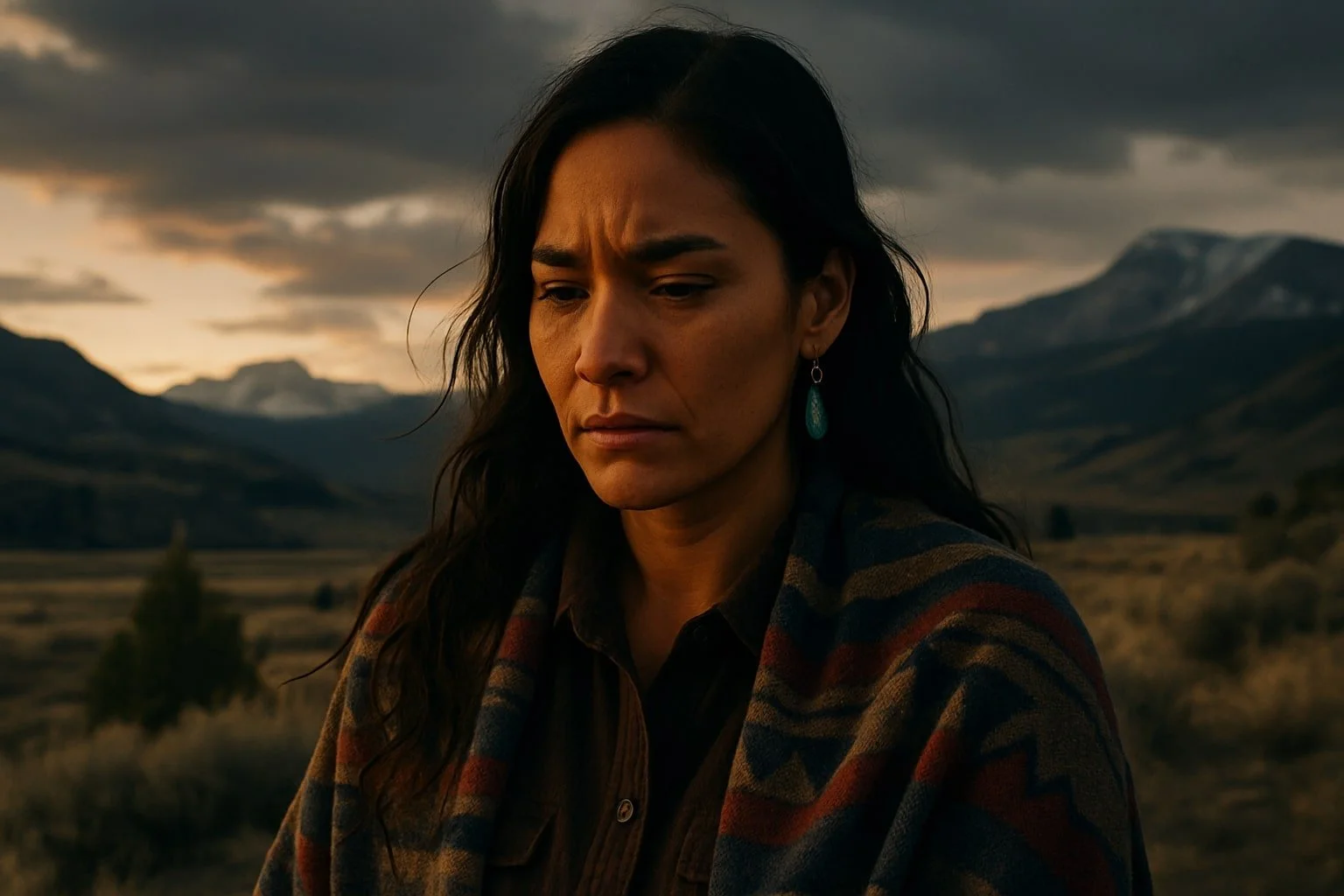
Monica Dutton’s struggle in Yellowstone illustrates the show’s deeper exploration of pain, identity, and division between cultures. As both the wife of Kayce Dutton and a member of the Broken Rock tribe, Monica’s life is shaped by tension between her Native American heritage and her connection to the Dutton family. Her journey represents a personal and cultural battle, echoing the broader conflicts at the heart of the series.
Through Monica’s experiences, Yellowstone confronts complex themes like land rights, family loyalty, and belonging. Her character serves as a bridge between two worlds, often forced to navigate conflict, loss, and resilience. This struggle is not isolated; it reflects the hardships and emotional scars that permeate the lives of those on and around the Dutton Ranch.
Understanding Monica Dutton’s Emotional Journey
Monica Dutton’s life in Yellowstone is shaped by the tensions between her Native heritage and her ties to the Dutton family. Her path is marked by cultural conflict, painful losses, and a determined pursuit of hope amid adversity.
Exploring Monica Dutton’s Identity
Monica Dutton, portrayed by Kelsey Asbille, is grounded in both her Native American roots and her position as Kayce Dutton’s wife. Growing up on the Broken Rock Reservation, Monica's worldview is deeply influenced by tribal traditions, community expectations, and historical trauma.
She works as a teacher, using education to bridge divides and foster understanding among young people—highlighting her dual commitment to both the reservation and modern society. The tension she constantly faces in reconciling her roles is depicted through her difficult interactions with the Dutton family and her efforts to maintain a separate, meaningful identity.
Monica’s choices often place her at odds with both communities. Her experience illustrates the difficulty of moving between two worlds, carrying the weight of clashing values while trying to preserve her sense of self.
Resilience Through Adversity
Resilience defines much of Monica’s arc throughout the series. Despite repeated hardship, she returns again and again to her role as a mother, educator, and partner. Her strength is tangible in moments of crisis, such as dealing with family conflict, injury, and displacement from her home.
Monica’s determination to provide stability for her son, Tate, stands out. She confronts danger and heartbreak but continues to advocate for what she believes is right, refusing to accept injustice in either world.
Her experiences underscore a recurring pattern: Monica endures pain but emerges stronger, channeling her grief and frustration into constructive action. She faces obstacles directly instead of retreating, emphasizing the depth of her character.
The Burden of Tragedy
Monica’s journey is deeply shaped by personal tragedy. One of the most significant moments in recent seasons is the devastating loss of her baby, which has a profound impact on her sense of hope and security.
Her grief is portrayed with raw honesty, without melodrama, showing the lasting effect such loss can have on a person’s psyche. Monica’s mourning process is complicated by her responsibilities as a mother and partner, requiring her to support her family while tending to her own pain.
The show explores how Monica carries the burden of this tragedy, not just privately but in the way it alters her relationships. Her struggle with loss becomes a lens through which broader themes of pain, healing, and endurance within the Yellowstone universe are revealed.
Family Dynamics and the Dutton Legacy
Monica Dutton’s role in the Dutton family highlights internal struggles at Yellowstone Ranch. Her journey exposes the ways marriage, parenthood, and trauma shape the Duttons' broader legacy.
Challenges in Marriage and Parenthood
Monica’s marriage to Kayce Dutton links two worlds: her Native American heritage and the Dutton family’s ranching empire. Balancing these identities often leads to marital strain, especially as Kayce’s loyalty is tested between his family and wife.
Conflicts regularly arise over the Duttons’ dependence on violence and secrecy to protect their legacy. Monica’s opposition to these methods puts her at odds with the rest of the family, leading to repeated separations and struggles over how to raise their son, Tate.
Key factors shaping their marriage:
Kayce’s conflicting loyalties
Monica’s role as a moral anchor
Cultural tension from two backgrounds
Their challenges as parents are amplified by the dangerous environment at the Yellowstone Ranch. Monica’s protective instincts frequently clash with family traditions, making co-parenting complicated and uncertain.
Impact of Tate’s Trauma
Tate Dutton’s kidnapping and other traumatic events deeply impact both Monica and Kayce. The family’s exposure to violence brings lasting psychological effects, highlighting the risks tied to the Dutton legacy.
Tate’s trauma becomes a catalyst for Monica’s doubts about her place at the ranch. She questions whether raising a child in such an environment is sustainable or right.
Key impacts of Tate’s trauma:
Impact Consequence Anxiety and fear Strained marriage Loss of innocence Shift in parenting Growing mistrust Distance from family alliances
Monica’s response is often to seek distance from the Dutton family, pushing for decisions that prioritize Tate’s safety over family loyalty. These choices reveal the difficult costs of legacy within the Yellowstone universe.
Yellowstone Ranch as a Battleground
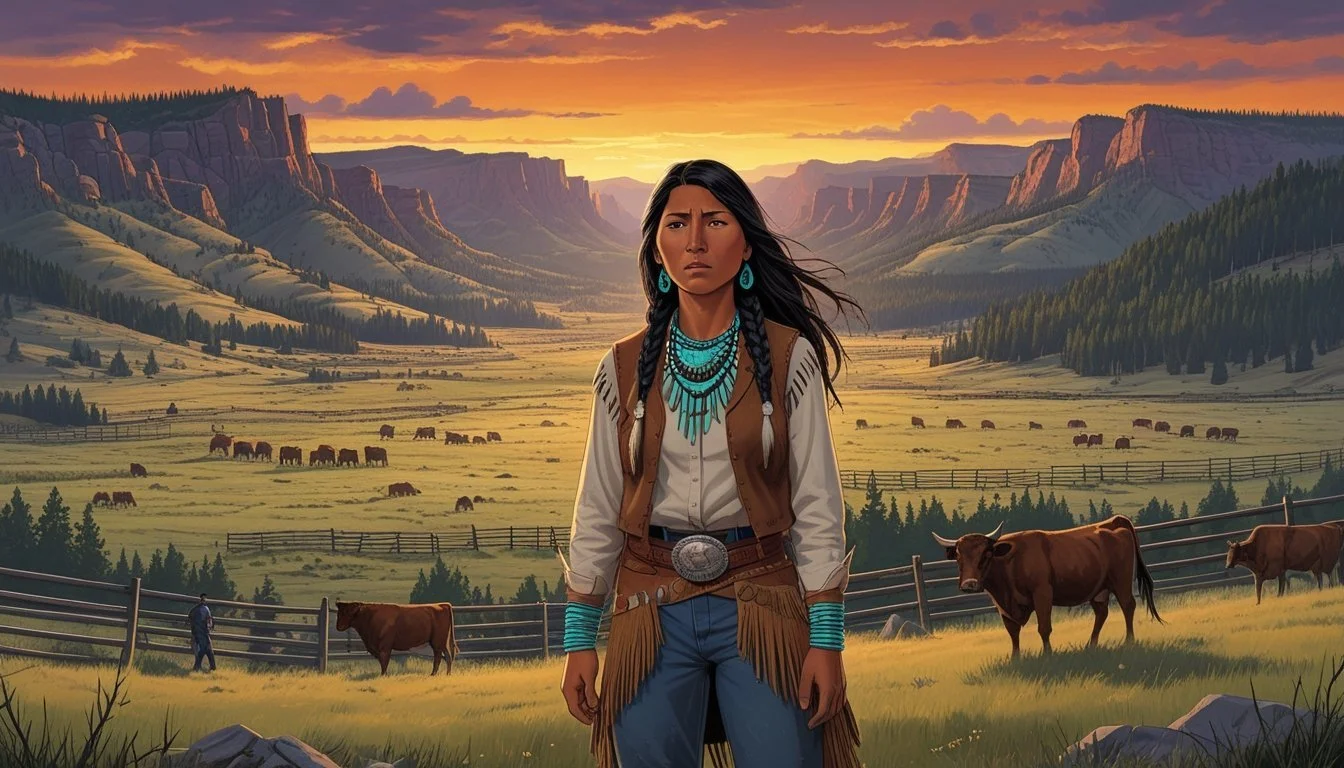
Yellowstone Ranch sits at the center of persistent land struggles and complex personal loyalties. Fierce challenges over land rights and questions of who truly belongs define the ongoing conflicts in this Montana setting.
Land Rights Conflicts
The vast Yellowstone Ranch, larger than many small U.S. states, is not only a family home but a highly sought-after property. Its location in southwestern Montana has drawn attention from real estate developers, multinational corporations, and environmental groups. Each outsider arrival reignites legal and moral battles over ownership and use of the land.
Montana's history of land disputes underpins the Duttons’ current day conflicts. As developers and investors see the land’s potential for profit, the fight intensifies between longstanding ranchers and those seeking to reshape the region. Legal maneuvers, intimidation, and even violence become tools in a relentless competition for control.
These competing interests make Yellowstone Ranch a focal point for broader tensions about property, heritage, and modern expansion in the American West. The Duttons' battle is just one episode in Montana’s long struggle over who controls the land and how it should be used.
Loyalty Versus Outsider Status
Loyalty to Yellowstone Ranch is a core value among the Duttons and their closest allies. The ranch is both a source of identity and a dividing line—determining who is trusted and who is seen as an outsider. Family members and longtime workers are expected to put the ranch above all else, even when it requires personal sacrifice.
Outsiders, no matter their intentions, are met with suspicion and resistance. Whether they come as businesspeople, government officials, or individuals seeking a place in Montana, their motives are continually questioned by those who have deep roots in the land. This dynamic fosters an atmosphere of tension and exclusivity.
Key characters find themselves caught in the crossfire, as loyalty is constantly tested by new threats and changing relationships. The ranch itself becomes a symbol of steadfastness against the push and pull of external influence, making each conflict intensely personal.
Native American Identity in a Changing West
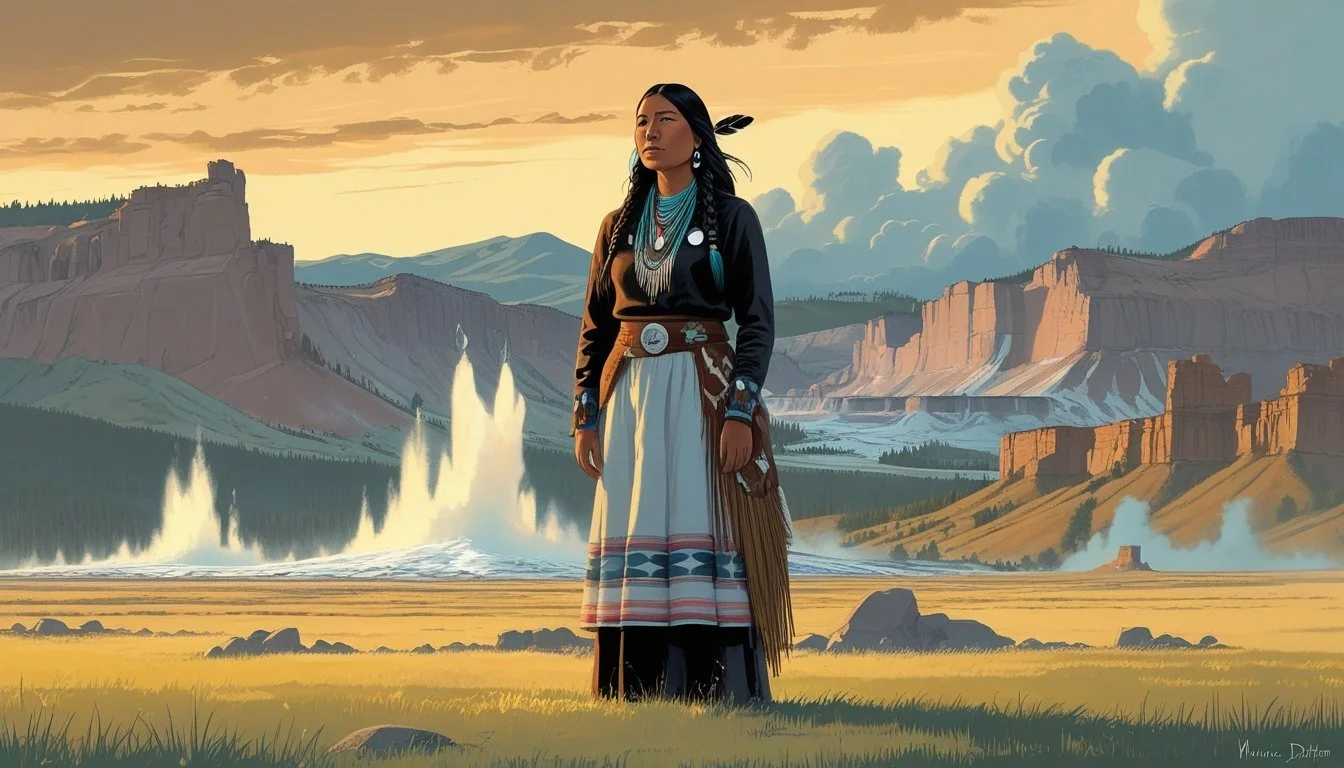
Monica Dutton’s experiences in “Yellowstone” highlight ongoing challenges for Native Americans seeking to maintain identity amid social and historical pressures. Her story demonstrates how the Duttons’ choices and the broader legacy of colonialism affect not only one family but also the community around them.
Cultural Strength and Determination
Monica Dutton embodies strength as she navigates the complexities of life between her Native heritage and her marriage into the Dutton family. She consistently advocates for her son’s connection to his roots, demonstrating resistance to assimilation.
Monica’s background as an educator and advocate at the Broken Rock School allows her to challenge prejudice and stereotypes directly.
Her determination is most visible in moments where she confronts difficult truths about her own trauma and the ongoing impact of colonial policies on her family.
She is shown supporting other Native women, opening up conversations about violence, generational trauma, and identity. Through Monica, “Yellowstone” addresses the resilience required to preserve Indigenous culture in modern America.
The Role of Broken Rock Indian Reservation
The Broken Rock Indian Reservation serves as a central location for exploring Native American identity within the series. Led by Chief Thomas Rainwater, played by Gil Birmingham, the reservation’s leadership strives for sovereignty and protection of tribal land.
Chief Rainwater’s efforts to reclaim stolen land connect current struggles to centuries of American history and legal battles over treaties and land rights. Monica’s ties to Broken Rock deepen the show’s portrayal of Native belonging, showing that identity is shaped by both community and external pressures.
Interactions with the Dutton family reveal how the reservation’s residents fight for self-determination and cultural continuity. Broken Rock becomes a symbol of both resilience and the ongoing consequences of displacement and colonization.
Monica’s Relationships with the Duttons
Monica Dutton’s connection to the Yellowstone ranch family shapes her daily life, creating unique tensions and alliances. Her interactions with Beth and John Dutton illustrate the ongoing conflicts and moments of understanding that define her place within the family.
Navigating Conflict with Beth Dutton
Monica and Beth Dutton, played by Kelly Reilly, have a frequently strained relationship. Beth’s defensive nature and abrasive personality often clash with Monica’s more empathetic, principled approach.
Key moments between them usually involve disagreements over family decisions or cultural boundaries. Beth’s loyalty to her family sometimes translates to suspicion toward Monica, seeing her as an outsider connected to Broken Rock and Kayce’s divided loyalties.
Monica challenges Beth’s worldview, leading to heated confrontations but occasional moments of respect. Their tensions are heightened by Monica’s influence on Kayce’s choices, with Beth sometimes viewing Monica as a threat or complication. Despite repeated clashes, there are moments where mutual understanding surfaces, revealing a begrudging respect beneath their differences.
Complex Bonds with John Dutton
John Dutton, portrayed by Kevin Costner, represents the Yellowstone legacy and its complicated moral code. Monica’s relationship with John is marked by mutual wariness but also shared concern for Kayce and Tate.
John sometimes struggles to trust Monica due to her ties with the Broken Rock Reservation. At the same time, he recognizes her value as Kayce’s wife and Tate’s mother, which pushes him to find common ground despite cultural differences.
Their interactions often highlight John’s attempts to balance safeguarding the ranch with keeping his family intact. Although Monica sometimes challenges John’s authority and decisions, particularly regarding land and community issues, she also acts as a mediator between worlds—not just for Kayce, but for the Dutton family as a whole. These exchanges often bring the perspectives of other characters like Jamie, played by Wes Bentley, into sharper focus, as Monica’s presence exposes deeper rifts and priorities within the Duttons.
Public Perception and Media Portrayal
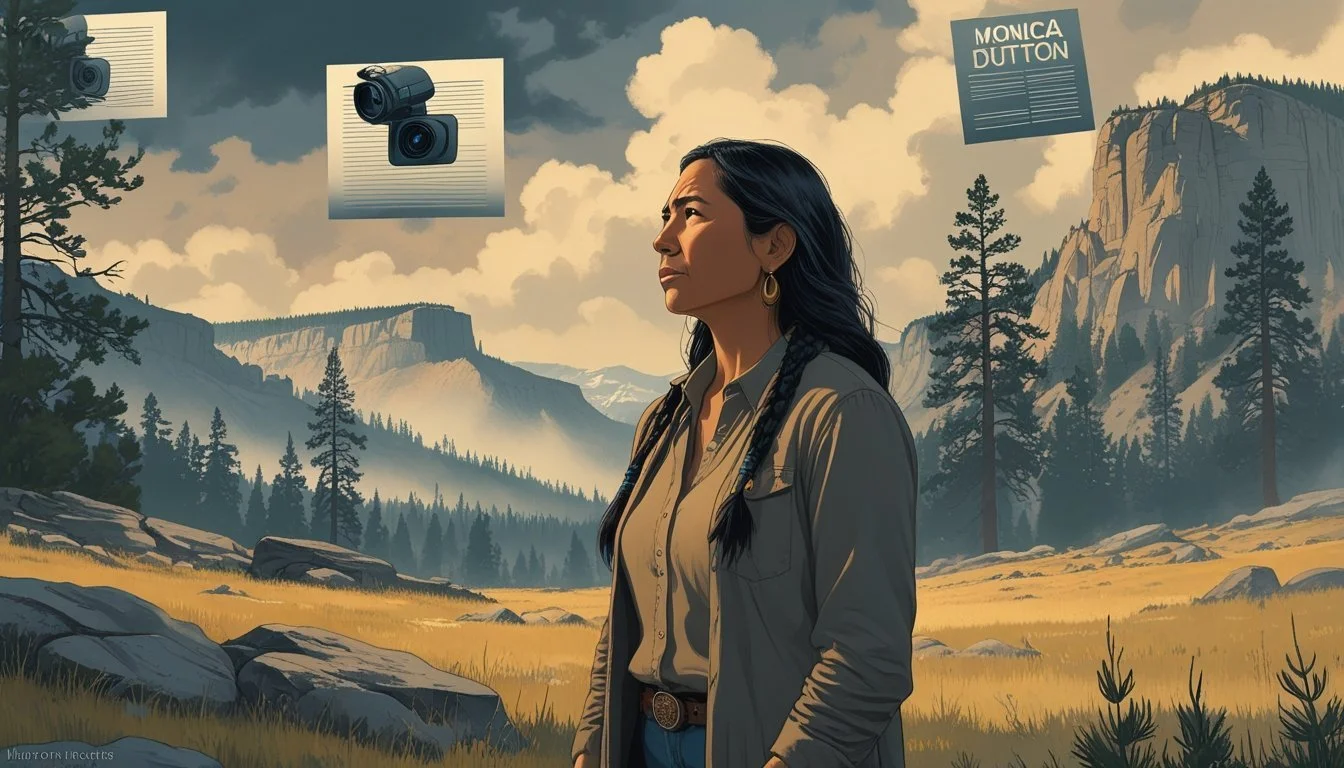
Monica Dutton’s character, shaped by both casting and storytelling decisions, has ignited discussion among viewers and critics. Her journey highlights key issues about representation, family dynamics, and the depiction of contemporary Native experiences.
Portrayal by Kelsey Asbille
Kelsey Asbille plays Monica Dutton with a reserved strength and emotional realism. Her performance often centers on Monica’s struggle to balance familial loyalty with her identity as a member of the Broken Rock tribe.
There has been ongoing discussion around Kelsey Asbille's casting, as questions were raised about her Native American heritage. Industry critics and some viewers argue that accuracy in representation matters, especially when the character’s culture is central to the story. Despite the debates, Asbille’s work is seen as integral to Monica's layered presence in the show.
Asbille’s chemistry with Luke Grimes, who portrays Kayce Dutton, grounds many of the series’ most personal storylines. The emotional difficulty Asbille brings to Monica’s loss and resilience in season 5 is recognized as a highlight, deepening the audience’s understanding of Monica’s ongoing pain.
Impact of Paramount Network’s Yellowstone
Paramount Network’s Yellowstone frames Monica’s experiences as part of a larger commentary on land, family, and cultural survival. The show uses Monica’s perspective to address the tension between the Dutton family’s interests and the Broken Rock community.
Media coverage often focuses on how Yellowstone spotlights themes like land rights, generational trauma, and the constant push-pull between tradition and modernity. Monica’s narrative is used as a lens for issues seldom seen in network dramas, marking her character as unique within the series.
Public perception of Monica remains divided—some viewers appreciate the show’s effort to explore Native American voices, while others criticize the depth and authenticity of that portrayal. Paramount’s approach places Monica at the center of difficult, sometimes controversial topics that reflect broader cultural debates.
Yellowstone’s Deeper Pain: America’s Struggle with Land and Identity
Generations of Americans have contended with the tension between ownership, heritage, and belonging. The legacy of trauma, shaped by force, negotiation, and manipulation, still echoes in families and communities across the American West.
Historical Trauma of the American West
The American West is marked by a long history of conquest and displacement. As settlers expanded westward, Indigenous populations were systematically removed from their ancestral lands through treaties, warfare, and forced relocation.
This removal was often justified using legal frameworks that favored expansionism, leading to generations of loss and trauma. The struggle for land was not just about property, but about survival and cultural identity. Native communities faced manipulation by government agencies and private interests, which fractured their traditional ways of life.
These events planted deep wounds that continue to shape the region. The pain of dispossession has been inherited, creating a legacy of mistrust and unresolved conflict.
Enduring Challenges for Modern Americans
Today, land ownership and identity remain deeply intertwined in the American West. Modern ranchers, including families like the Duttons, confront pressures from developers, government bodies, and historical claims by Indigenous groups.
Negotiations about land rights rarely involve only legal considerations—they also revive questions about who truly belongs and whose stories are heard. For Native Americans, sovereignty and cultural survival are ongoing battles. For others, holding onto land symbolizes continuity and resilience, even as economic and social shifts bring instability.
The manipulation of land laws, fluctuating markets, and political priorities keep these struggles at the forefront of life in the West. Each group’s relationship to the land is shaped by this history of trauma and contest.
