
Secrets Behind Yellowstone's Authentic Montana Accents Revealed
Behind the rugged landscapes and intense drama of Paramount's hit series "Yellowstone," lies meticulous attention to authentic regional speech patterns. The show's dialect coaches work tirelessly with actors to master the distinctive Montana accent, helping to create the immersive world that millions of viewers have come to love.
Creating a believable Montana dialect requires understanding subtle vocal characteristics including slightly flattened vowels, minimal vocal inflection, and specific regional terminology that distinguishes it from other Western American accents. This challenging work involves detailed research into linguistic patterns specific to different Montana regions, from ranch lands to reservations.
The dialect coaching process on "Yellowstone" combines historical linguistics with contemporary speech samples, enabling actors from diverse backgrounds to convincingly portray Montana natives. Many viewers from Montana appreciate these efforts, noting how the authentic speech patterns enhance the show's credibility and strengthen its connection to the real-world location it portrays.
The Art of Dialect Coaching
Dialect coaching transforms actors' speech patterns to authentically represent specific regional accents and vocal characteristics. This specialized field combines linguistics, performance, and cultural awareness to create believable character voices that enhance storytelling.
Defining Dialect Coaching
Dialect coaching is the process of teaching actors to adopt speech patterns, pronunciations, and linguistic features authentic to specific regions or social groups. A dialect coach analyzes the phonetics, rhythm, and musicality of target accents, breaking them down into learnable components.
These specialists typically have backgrounds in linguistics, speech pathology, acting, or voice training. Their expertise extends beyond mere accent mimicry to include cultural context and historical evolution of speech patterns.
Effective dialect coaches understand both the technical aspects of pronunciation and the emotional qualities that different speech patterns convey. They help actors internalize accents so thoroughly that the performance appears natural rather than affected.
The Role of a Dialect Coach on Set
Dialect coaches work closely with directors and actors throughout production. They begin in pre-production, researching authentic accent samples and creating custom learning materials for cast members.
During filming, coaches attend rehearsals and shoots to provide immediate feedback. They often stand just off-camera, ready to correct pronunciation issues or offer quick reminders before takes.
Their responsibilities include:
Conducting one-on-one training sessions with actors
Creating reference recordings and phonetic guides
Monitoring consistency across multiple scenes and episodes
Providing emergency fixes for problematic lines or words
The best dialect coaches function as supportive collaborators rather than critics. They help actors feel confident in their character's voice while maintaining the production's overall linguistic vision.
Processes and Techniques in Dialect Coaching
Professional dialect coaches employ various methodologies to help actors master accents. The process typically begins with active listening exercises where actors study recordings of native speakers from the target region.
Coaches often use the International Phonetic Alphabet (IPA) to precisely notate sound changes. This creates a technical framework that actors can reference consistently.
Physical techniques play a crucial role as well. Coaches may guide actors through mouth positioning, jaw tension adjustments, and breathing patterns that facilitate authentic accent production.
Repetition remains fundamental to the learning process. Actors practice key sounds in isolation before progressing to words, phrases, and eventually improvised conversations in their target accent.
Many coaches now incorporate technology, using spectrogram analysis software to visually demonstrate pitch patterns and speech rhythms. These tools make abstract concepts more concrete for actors.
Yellowstone's Linguistic Landscape

The hit series Yellowstone immerses viewers in Montana culture through its carefully crafted dialogue and regional speech patterns. The show's commitment to linguistic authenticity helps establish its sense of place and character depth.
Montana Accent Characteristics
Montana speech features subtle but distinctive patterns that dialect coaches on Yellowstone carefully emphasize. The accent typically includes slightly flattened vowels and a measured, unhurried cadence that reflects the rural Western lifestyle.
Native Montanans often display what linguists call a "Western twang" - less pronounced than Southern drawls but with noticeable differences from standard American English. Words like "creek" might be pronounced "crick," and certain vowel sounds are slightly elongated.
The Montana accent also incorporates unique regional vocabulary. Terms like "chinook" (warm winter wind), "coulee" (dry ravine), and "going to town" (making a special trip) appear throughout Yellowstone dialogue.
Creating Authenticity Through Accents
Yellowstone's dialect coaches work extensively with cast members to develop believable Montana speech patterns. This process involves analyzing recordings of authentic Montana natives and tailoring accent work to each character's background.
The approach varies by character. Ranch hands receive more pronounced rural Western patterns, while characters with education outside Montana display modified accents that reflect their experiences.
Key accent elements emphasized in coaching:
Subtle consonant shifts
Specific vowel modifications
Appropriate pacing and rhythm
Regional vocabulary integration
Authenticity comes not just from pronunciation but timing. Montana speech typically features more pauses and a deliberate pace that dialect coaches carefully incorporate into character performances.
The Challenge of American Accents for Non-American Actors
Foreign actors face significant hurdles when portraying authentic American characters, particularly those with regional dialects like the distinctive Montana accent featured in Yellowstone. The transformation requires technical skill, cultural understanding, and consistent practice.
British Actors Mastering the American Accent
British actors often struggle with specific American phonetic patterns that differ markedly from their native speech. The American 'r' sound proves particularly challenging, as British English typically features a non-rhotic pronunciation.
Voice coach Kate DeVore notes that British performers must focus on maintaining rhotic 'r' sounds throughout their speech, especially in words like "car" and "mother." They also need to master the American 't' sound, which is often softened to a 'd' sound in American speech.
The musicality and rhythm of American speech patterns differ significantly from British ones. American English generally features a more varied intonation range and stress patterns that British actors must consciously adopt.
The Specifics of the Montana Accent for Actors
The Montana accent presents unique challenges with its distinctive blend of Western and Midwestern speech patterns. Non-American actors must master specific vowel shifts characteristic to the region.
Key features include:
Slightly elongated vowels in words like "bag" and "flag"
Dropped 'g' endings in words ending with "-ing"
Simplified diphthongs that differentiate the accent from Southern drawls
Montana speech also incorporates unique regional terminology and phrases unfamiliar to foreign actors. Dialect coaches on Yellowstone often provide glossaries of local expressions and slang to help actors understand contextual meanings beyond mere pronunciation.
Maintaining Accent Consistency in Performance
Consistency presents perhaps the greatest challenge for non-American actors. Emotional scenes frequently trigger reversion to native speech patterns, requiring actors to develop muscle memory through extensive rehearsal.
Dialogue coaches employ recording techniques that allow actors to review their performances and identify moments of accent slippage. Many actors report creating personal "anchor phrases" they can quickly recite before takes to re-center their American accent.
Stress and fatigue significantly impact accent maintenance. Productions like Yellowstone often schedule dialect refresher sessions throughout filming, particularly before emotionally demanding scenes or after production breaks.
The physical aspects of performance—horseback riding, fighting, running—further complicate accent work, as actors must maintain authentic speech while engaged in strenuous activities.
Behind the Scenes with Jessica Drake
Jessica Drake's expert dialect coaching has been instrumental in creating the authentic sound of Montana in the hit series Yellowstone. Her methodical approach combines research, personalized coaching techniques, and close collaboration with actors to achieve convincing regional accents.
Jessica Drake's Journey to Yellowstone
Jessica Drake established herself as a premier dialect coach in Hollywood long before joining the Yellowstone production. Her credentials include work on acclaimed films like No Country for Old Men and There Will Be Blood, where her attention to regional speech patterns earned industry recognition.
Drake's background in linguistics, with a Master's degree from UCLA, provides her with the technical foundation to break down complex accent patterns. She spent three months in Montana prior to production, recording native speakers and documenting the subtle variations across different parts of the state.
Taylor Sheridan, Yellowstone's creator, specifically sought Drake for her reputation for authenticity and detail. Drake's passion for preserving the linguistic heritage of the American West made her the perfect fit for the production's commitment to regional accuracy.
The Process of Coaching on Yellowstone
Drake's coaching methodology begins with extensive research into Montana's distinct regional dialects. She distinguishes between eastern Montana's flatter vowels and western Montana's slightly different cadence, ensuring geographic accuracy within the show's setting.
The coaching process typically starts six weeks before filming. Drake creates personalized accent packets for each actor, containing:
Audio recordings of native Montanans
Key pronunciation guides
Script analysis with marked dialect shifts
Character-specific speech patterns
Drake holds both group sessions and one-on-one meetings with cast members. Her approach emphasizes the rhythm and musicality of Montana speech rather than exaggerated pronunciations that might sound inauthentic.
On set, Drake remains available for quick consultations before scenes. She often reviews dailies each evening to catch subtle accent inconsistencies that can be addressed the following day.
Working with the Cast
Drake's collaboration with Kevin Costner exemplifies her tailored approach to dialect coaching. Rather than imposing a generic "Montana accent," she helped Costner develop a specific sound for John Dutton that reflected his character's background and personal history.
For Kelly Reilly, who portrays Beth Dutton while naturally speaking with a British accent, Drake implemented an intensive immersion technique. Reilly maintained her Montana accent even between takes, helping her internalize the speech patterns completely.
Drake faces unique challenges with recurring guest stars who must quickly adapt to the established accent environment. She developed a "rapid immersion" technique that focuses on key phonetic markers rather than comprehensive accent transformation.
The cast members frequently credit Drake's patience and precision. Luke Grimes once remarked that Drake helped him find "not just how Kayce speaks, but how he thinks through his words" – demonstrating how dialect work extends beyond mere pronunciation to character development.
Kelly Reilly's Transformation into Beth Dutton
Kelly Reilly's journey to embody the fierce Beth Dutton character required extensive dialect work, character immersion, and a complete transformation from her natural British accent to an authentic Montana drawl.
British Actress Embracing the Montana Way
Kelly Reilly, born and raised in Surrey, England, faced the significant challenge of shedding her distinct British accent to portray the quintessentially American Beth Dutton. The stark contrast between Reilly's natural speaking voice and Beth's Montana drawl required considerable technical expertise and cultural immersion.
Reilly spent time in Montana before and during production, absorbing the regional speech patterns and cultural nuances. She worked with locals and observed their interactions, paying particular attention to rhythm and cadence unique to the area.
The transformation process involved not just changing pronunciation, but understanding the historical and socioeconomic factors that shaped Montana speech patterns over generations. This environmental immersion proved crucial for Reilly's authentic portrayal.
Dialect Training for the Role of Beth Dutton
Reilly partnered with renowned dialect coach Jessica Drake to develop Beth Dutton's specific accent. Their sessions focused on the subtle vowel shifts and consonant variations distinctive to Montana speech.
The training regimen included daily practice sessions, recorded conversations with Montana natives, and constant monitoring on set. Drake emphasized the importance of maintaining accent consistency throughout emotional scenes, which presented a particular challenge.
Reilly utilized specialized techniques like muscle memory exercises for mouth positioning and breath control. She practiced dialogue while engaging in physical activities to ensure the accent remained natural under various conditions.
The dialect work went beyond pronunciation to include regional vocabulary, expressions, and speech rhythms that characterize Montana communication styles. This comprehensive approach helped create Beth's authentic voice.
Reilly's Dedication to the Character
Reilly's commitment extended beyond dialect work into a complete psychological immersion. She studied ranch life and Montana family dynamics to understand Beth's background and motivations thoroughly.
The actress maintained elements of her character's speech pattern between filming seasons to preserve authenticity. This dedication impressed both the production team and Montana locals who praised the believability of her performance.
Reilly documented her transformation process, keeping journals of dialect notes and character insights. These resources allowed her to quickly reconnect with Beth's voice when returning for new seasons of the drama series.
Her comprehensive approach to character development earned praise from critics who often express surprise upon hearing her natural British accent in interviews. The dramatic contrast between Reilly and Beth Dutton highlights the actress's remarkable technical skill and artistic commitment.
Accent and Identity in Yellowstone
Accents serve as powerful tools in Yellowstone, establishing character backgrounds and reinforcing the authenticity of Montana's rugged landscape. They function beyond mere dialogue, becoming integral components of character development and regional representation.
The Significance of Accent in Storytelling
Accents in Yellowstone operate as narrative shortcuts, immediately placing characters within the social geography of Montana. The distinction between ranch workers' drawls and outsiders' speech patterns creates immediate cultural tension without requiring exposition.
Dialect coaches work meticulously to ensure these accents remain consistent and historically accurate. When John Dutton speaks with his distinctive cadence, viewers intuitively understand his deep connection to the land and traditional values.
The show's creators recognize that linguistic authenticity grounds the fictional world in reality. Characters from different backgrounds—urban transplants, Native Americans, and multi-generation ranchers—all speak with appropriate variations that reflect their origins.
How Accents Shape Character Identity
A character's accent in Yellowstone reveals crucial information about their upbringing, education, and worldview. Beth Dutton's speech, for example, combines Montana rhythms with sophisticated vocabulary, reflecting both her local roots and cosmopolitan experience.
When characters code-switch between accents, it demonstrates their navigation between different social worlds. This linguistic flexibility becomes particularly evident in scenes where ranch hands interact with corporate representatives or government officials.
Newcomers to the Yellowstone universe often undergo accent evolution as their characters become more integrated into Montana life. This transformation mirrors their shifting loyalties and growing attachment to the land.
The production team understands that consistent dialect work creates believable character arcs. Actors report that finding the right accent helps them access emotional truths about their characters that might otherwise remain inaccessible.
Cultural Impact and Reception
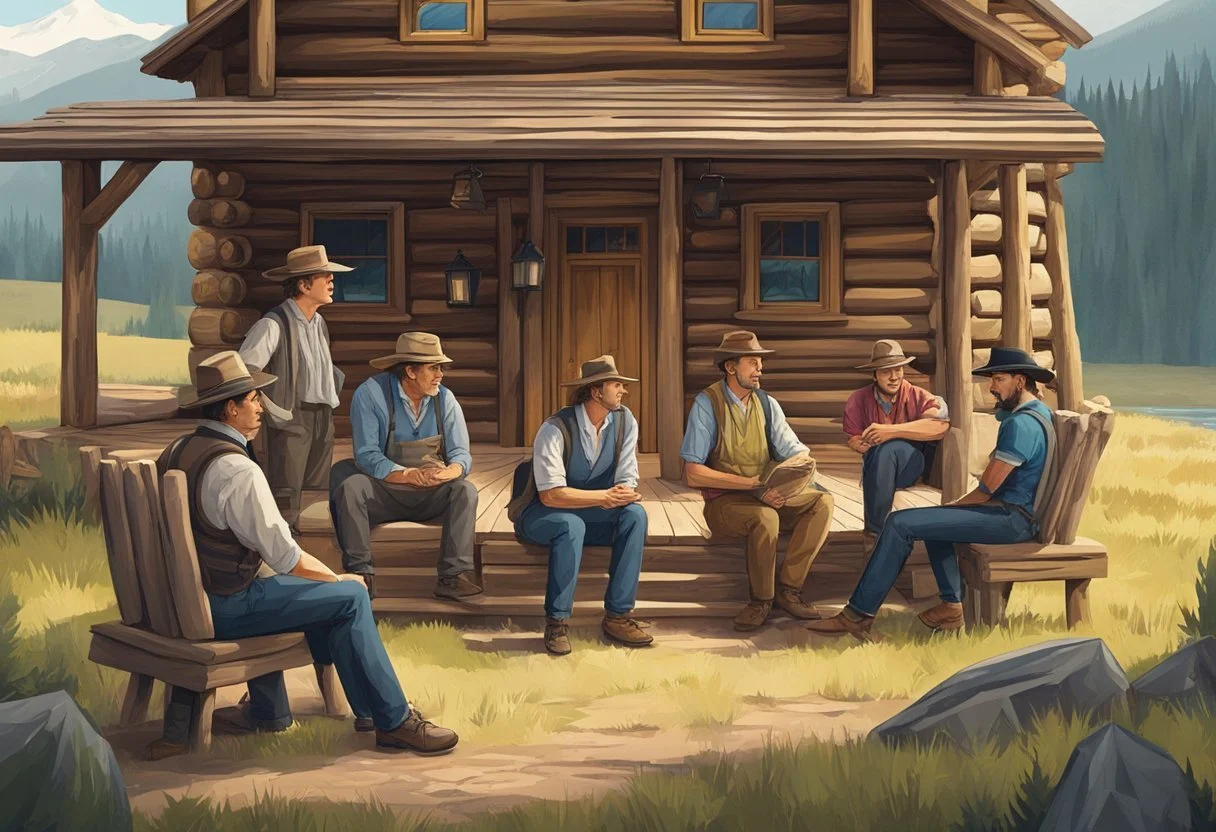
Yellowstone's dedication to authentic Montana accents has significantly influenced both the show's cultural footprint and its reception among diverse audiences. The dialect coaching efforts have contributed substantially to the series' reputation for regional authenticity.
Audience's Connection to Authentic Portrayals
Viewers from Montana and surrounding Western states often express strong emotional connections to Yellowstone's dialect work. Many native Montanans report feeling genuinely represented in mainstream media for the first time, creating a sense of cultural validation.
The accurate portrayal of Montana speech patterns has fostered deeper engagement among regional audiences. According to Nielsen ratings, Yellowstone maintains consistently higher viewership in Western states compared to coastal regions.
Social media discussions frequently highlight the show's linguistic authenticity as a key factor in its appeal. One Montana-based Facebook group dedicated to the show has grown to over 50,000 members who regularly praise the accurate regional dialect.
Accent Appreciation and Critique
Professional critics have largely praised Yellowstone's commitment to authentic Montana accents. The Hollywood Reporter specifically highlighted the dialect coaching as "setting a new standard for regional authenticity in television drama."
Not all reception has been positive, however. Some linguists have noted inconsistencies in certain characters' speech patterns, particularly in later seasons. These critiques often point to the challenge of maintaining accent consistency across multiple seasons of production.
The show's dialect work has influenced other productions set in Montana and the broader Mountain West. Several recent films and series have cited Yellowstone's accent coaching as a benchmark for their own regional authenticity efforts.
The attention to linguistic detail has helped elevate cultural perceptions of Montana beyond simplistic cowboy stereotypes to a more nuanced understanding of the state's diverse cultural identity.
Reflection on Accent Work in Modern Television
The landscape of dialect coaching has transformed dramatically over the past two decades, with productions like Yellowstone setting new standards for regional authenticity. This evolution reflects both audience expectations and the industry's growing commitment to accurate representation.
The Evolution of Dialect Coaching in TV
Television dialect coaching has progressed from basic accent approximations to nuanced regional specificity. In the 1990s, TV shows often employed generic "Southern" or "Midwestern" accents that lacked true local characteristics.
Today's dialect coaches utilize extensive linguistic research, field recordings, and historical documentation to recreate authentic speech patterns. Digital technologies now allow coaches to provide actors with reference materials and feedback even when physically separated.
Networks have increasingly recognized the value of dialect authenticity, with many productions now employing full-time dialect coaches from pre-production through filming. This shift coincides with viewers becoming more discerning about regional accuracy in the shows they watch.
The industry has also expanded beyond just accent work to include regional vocabulary, speech cadence, and even body language associated with different cultural backgrounds.
Comparing Yellowstone to Other Works
Yellowstone's approach to Montana accents stands out for its subtle authenticity compared to other regional productions. Unlike shows that exaggerate regional speech patterns, Yellowstone employs understated dialect work that reflects the actual mixed influences in Montana.
Notable Regional Accent Productions:
Fargo (Minnesota/North Dakota): More stylized, heightened accent work
Justified (Kentucky): Strong commitment to Appalachian specificity
True Detective (Season 1, Louisiana): Detailed bayou dialect coaching
Yellowstone: Realistic Montana ranch speech patterns
Yellowstone's dialect coaching team conducts extensive local research, distinguishing between generations of Montana speakers and incorporating indigenous influences where appropriate. This contrasts with earlier Western productions that often used generic "cowboy" accents.
The show's success has influenced newer productions to invest more resources in regional authenticity rather than relying on broad stereotypes.
