
Yellowstone's Family Drama Rivals Any Soap Opera
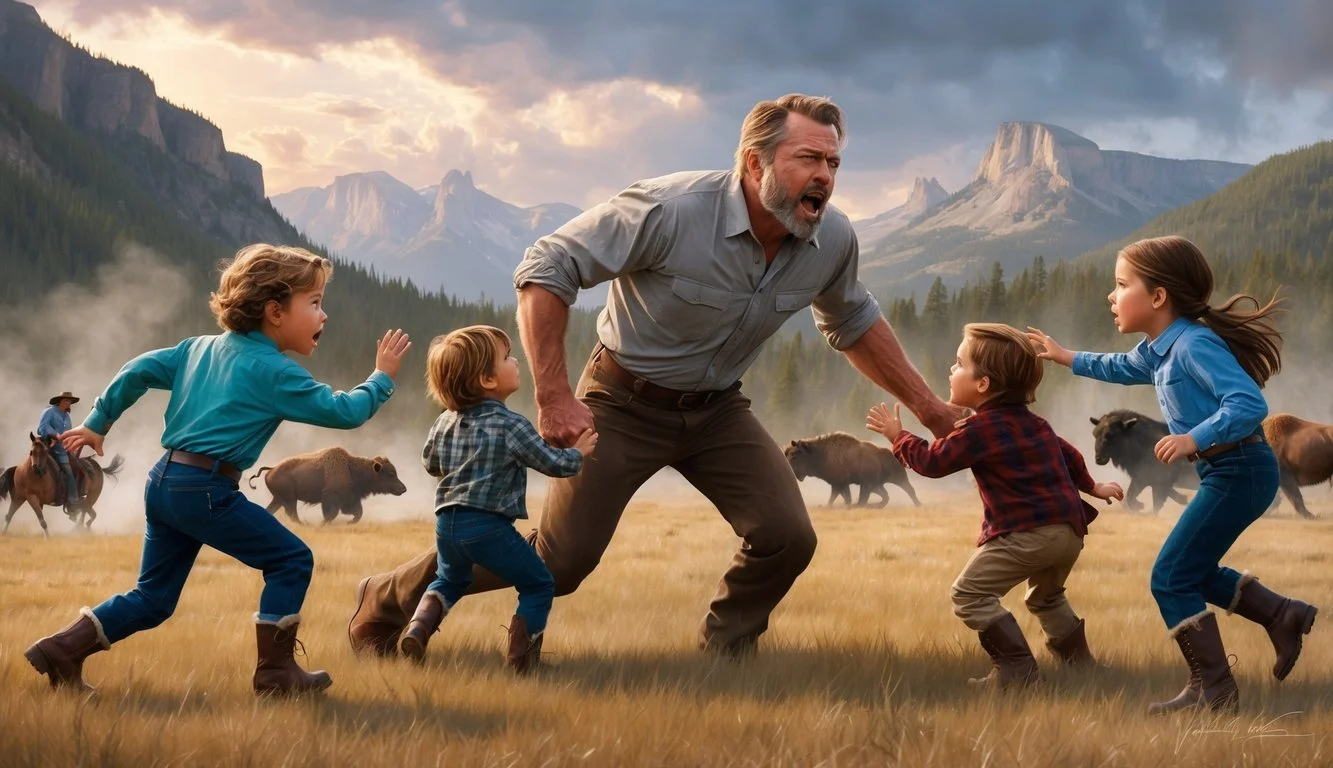
Yellowstone captivates audiences with its rugged landscapes and power struggles, but at its core, the show explores the intricate dynamics of family and parenthood. From John Dutton's fierce protection of his children to Beth's complex journey with motherhood, these relationships form the emotional backbone of the series.
The most powerful moments in Yellowstone often center around how characters navigate their roles as parents, revealing their vulnerabilities and demonstrating that even the toughest ranchers struggle with raising the next generation. These scenes resonate deeply because they contrast sharply with the otherwise harsh world of ranch politics and territorial disputes.
The Dutton family's struggles with parenting reflect universal challenges that transcend their privileged position, making these moments particularly poignant for viewers. Through flashbacks and present-day conflicts, Yellowstone consistently returns to themes of legacy, sacrifice, and the complicated love between parents and children.
Defining Parenthood in the Rugged Landscape of Yellowstone
Parenthood in the Yellowstone universe transcends traditional boundaries, shaped by the harsh Montana environment and the Dutton family's legacy. The show portrays parenting as an intricate blend of protection, sacrifice, and preparing the next generation for survival.
John Dutton's Paternal Struggle and Vision for the Future
John Dutton embodies the complexities of fatherhood in a world where legacy and land are inseparable. His relationship with his children is defined by high expectations and tough love, believing this approach necessary for their survival in Montana's unforgiving landscape.
As the Dutton patriarch, John's parenting style often prioritizes the ranch over individual happiness. "You fight for your family" becomes more than a mantra—it's the fundamental principle he instills in his children.
His complicated relationships with each child reveal different facets of his paternal approach. With Kayce, John struggles between demanding loyalty and respecting independence. Jamie experiences the conditional nature of John's love, while Beth receives both his admiration and impossible standards.
John's vision for his children is ultimately tied to preserving the Yellowstone ranch, believing this legacy is his greatest gift to them despite the personal costs.
Strength and Sacrifice: Beth Dutton as a Surrogate Mother Figure
Beth Dutton's complex relationship with motherhood forms one of the show's most poignant narratives. Despite her inability to have biological children, Beth demonstrates profound maternal instincts through her fierce protection of those she considers family.
Her relationship with Carter evolves into a surrogate mother-son dynamic that challenges and transforms her. This unexpected connection forces Beth to confront her own vulnerability and capacity for nurturing beyond the hardened exterior she presents.
Beth's mothering style mirrors her father's tough approach while incorporating her unique brand of emotional honesty. She protects Carter from false hopes while preparing him for life's harsh realities—a distinctly Dutton form of parenting.
The contradiction between Beth's sharp exterior and her deep capacity for maternal sacrifice creates some of the show's most emotionally resonant moments. Her willingness to fight for her family demonstrates that parenthood in the Yellowstone world is defined by actions rather than biology.
Exploring the Complex Dynamics of the Dutton Siblings
The Dutton siblings form the emotional core of Yellowstone, with their relationships defined by loyalty, betrayal, and shared trauma that shapes their identities and choices throughout the series.
The Tumultuous Relationship of Beth and Jamie Dutton
Beth and Jamie's relationship represents one of television's most volatile sibling dynamics. Their interactions are characterized by Beth's unrelenting hostility toward Jamie, rooted in a devastating secret from their past.
The source of their conflict stems from Jamie's decision to take teenage Beth to a clinic where she underwent sterilization without her knowledge. This betrayal robbed Beth of her ability to have children, creating an irreparable rift between them.
Beth's verbal assaults on Jamie reflect her deep-seated pain and resentment. She consistently undermines his confidence and position within the family through biting remarks and calculated moves.
Jamie, meanwhile, struggles with his identity and place in the Dutton hierarchy. His revelation about being adopted further complicates his relationship with Beth and the entire family.
Despite their animosity, both siblings demonstrate unwavering dedication to protecting the Dutton legacy, albeit through drastically different approaches and moral frameworks.
Kayce Dutton's Journey Between Two Worlds
Kayce Dutton exists in a constant state of tension between his Dutton heritage and his life with Monica and their son on the reservation. This duality creates unique challenges among the siblings.
Unlike the Beth-Jamie dynamic, Kayce's relationships with his siblings are less openly antagonistic but equally complex. He often serves as a reluctant mediator, maintaining distance from family drama while remaining loyal to the ranch.
His military background shapes his approach to family conflicts. Kayce typically responds with measured action rather than the emotional volatility that characterizes Beth or the calculated planning preferred by Jamie.
Kayce's sacrifice is evident in his constant struggle to balance family responsibilities. His decision to return to the ranch creates friction in his marriage but strengthens his bond with his father John.
His position between two cultural worlds—the Dutton ranch and his wife's Broken Rock community—gives him perspective that his siblings lack, making him both an insider and outsider in family disputes.
Rip Wheeler's Impact on the Dutton Family
Rip Wheeler stands as a cornerstone of the Dutton family dynamic in Yellowstone, offering unwavering loyalty while navigating complex relationships that define the show's emotional core.
Rip and Beth: A Tale of Love and Loyalty
Beth Dutton and Rip Wheeler's relationship represents one of television's most compelling love stories. Their connection, forged in childhood trauma and strengthened through years of shared history, showcases remarkable resilience.
Rip's devotion to Beth transcends typical romantic relationships. When Beth faces corporate enemies or personal demons, Rip remains her steadfast protector and emotional anchor. Cole Hauser's nuanced performance captures both Rip's hardened exterior and the vulnerability reserved exclusively for Beth.
Their relationship evolves from secret rendezvous to a genuine partnership. The impromptu wedding scene—where Beth appears in a gold dress with a kidnapped priest—perfectly encapsulates their unconventional but authentic love.
Their bond strengthens the Dutton family infrastructure while illustrating how chosen family can prove as meaningful as blood relations.
The Father Figure: Rip's Relationship with John and the Boys
Rip's connection with John Dutton defies simple categorization, existing somewhere between loyal employee, adopted son, and trusted confidant. John's gift of a cabin on Dutton land symbolizes Rip's earned place within the family structure.
With the younger ranch hands, Rip embodies tough love and practical wisdom. His mentorship of Jimmy shows Rip's capacity for guidance despite his rough methods. He teaches survival not through gentle encouragement but through demanding excellence.
Rip's interactions with Carter further reveal his paternal instincts, albeit delivered with characteristic gruffness. Despite initial resistance, Rip gradually assumes a father-figure role for the troubled boy.
The ranch hands respect Rip not from fear alone but from his demonstrated commitment to the Yellowstone and its people. His leadership provides stability during the family's most turbulent moments, making him indispensable to the Dutton legacy.
The Influence of External Threats on Family Cohesion
Throughout Yellowstone, external forces consistently push the Duttons to close ranks despite their internal conflicts. These outside threats serve as catalysts for family unity, revealing how shared enemies often strengthen familial bonds in unexpected ways.
Monica and Kayce: Navigating Marriage Amidst Dutton-Induced Drama
Monica and Kayce Dutton's relationship faces constant strain from their position between two worlds. Their marriage struggles under the weight of Kayce's loyalty to his father and Monica's connection to the reservation.
In season 3, their relationship stabilizes as they create distance from the ranch, only to be pulled back by external dangers. When threats emerge against the family, Kayce's protective instincts intensify, creating tension with Monica's desire for a peaceful life.
The loss they experience in season 5 becomes a pivotal moment that tests their bond. Rather than driving them apart, this tragedy ultimately reinforces their commitment to each other despite the Dutton family complications.
Market Equities: The Corporate Antagonist Challenging the Dutton Legacy
Market Equities emerges as the most formidable corporate threat to the Dutton ranch, representing the relentless march of development against tradition. Their aggressive tactics to acquire land force the family to set aside personal grievances.
Beth takes the lead in countering Market Equities, using her financial expertise to protect the family legacy. Her corporate battle becomes personal, demonstrating how external business threats transform into existential family concerns.
Jamie's complicated position between loyalty to the Duttons and his political ambitions creates additional vulnerability against Market Equities. Their attempts to exploit this family division highlight how external enemies often identify and target weak links in family structures.
The conflict with Market Equities in season 5 ultimately strengthens family cohesion as the Duttons recognize that survival requires unity despite their differences.
Cultural Identity and Parenthood in Yellowstone
Yellowstone explores the complex intersection of cultural heritage and parenting through various family dynamics on the show. These relationships reveal how cultural identities shape parenting styles and family values across different communities in Montana.
The Depiction of Native American Family Structures with Monica and Kayce
Monica and Kayce Dutton's relationship represents a bridge between two distinct cultural worlds. Monica's strong connection to her Broken Rock Reservation roots influences her parenting priorities, often placing cultural education and heritage above material success. She struggles with raising their son Tate between two worlds—the traditional values of her Native American community and the Dutton ranch lifestyle.
This cultural tension becomes evident when Tate experiences trauma. Monica turns to traditional healing practices while Kayce balances his respect for these traditions with his more direct ranch-influenced approach to problem-solving.
The show portrays Monica's extended family connections as vital to her parenting style. Her grandfather offers wisdom that shapes how she views her responsibilities as a mother, emphasizing community ties rather than individualism.
Interweaving Traditions: The Duttons and Montana's Cowboy Culture
The Dutton family's parenting approach is deeply rooted in Montana's cowboy culture. Ranch life dictates much of how children are raised, with an emphasis on hard work, resilience, and protecting the family legacy at all costs.
John Dutton's parenting style reflects traditional cowboy values—teaching his children to be self-reliant, tough, and loyal to family above all else. This cultural framework creates a distinct contrast with more contemporary parenting approaches.
Daily ranch routines shape family bonds through shared labor and responsibility. Children learn ranch operations not through formal education but through practical experience and mentorship.
The show highlights how cowboy culture's emphasis on land stewardship transfers between generations. The Duttons view parenting not just as raising children but as preparing heirs for a sacred duty to preserve their way of life in Montana.
Production Influence on Parenthood Portrayal
Taylor Sheridan's vision and the show's cinematic approach profoundly shape how Yellowstone depicts parenthood themes, creating resonant family moments through deliberate storytelling techniques and visual craftsmanship.
Taylor Sheridan's Storytelling: A Lens into Parenthood
Taylor Sheridan's background influences his approach to family dynamics in Yellowstone. As creator and primary writer, Sheridan infuses the narrative with complex parental relationships that avoid simplistic characterizations.
His storytelling doesn't shy away from the harsh realities of parenting. John Dutton's stern patriarchal style emerges from Sheridan's interest in traditional values colliding with modern pressures. The writer intentionally balances moments of family violence with unexpected tenderness.
Before moving to Paramount Network, Sheridan developed his distinctive voice that prioritizes family legacy over melodrama. His scripts frequently place characters in situations where parental choices have immediate, often brutal consequences.
Cinematic Techniques Enhancing Emotional Engagement with Family Themes
Yellowstone's cinematography elevates parental moments through deliberate visual choices. Wide landscape shots often contrast with intimate close-ups during parent-child interactions, symbolizing how family bonds exist within the vastness of ranch life.
The production deploys lighting techniques that underscore emotional family scenes. Warm golden hues typically illuminate rare moments of parental affection, while harsh lighting accompanies disciplinary confrontations.
Sound design plays a crucial role in parent-focused scenes. The show frequently removes background music during pivotal parental conversations, allowing raw emotion to resonate with viewers. These quiet moments often precede or follow intense dramatic sequences.
Camera movement subtly reflects parent-child power dynamics, with static shots for traditional authority figures and more dynamic movement for evolving relationships. This visual language helps viewers connect with the emotional weight of familial decisions.
Evolving Themes of Parenthood Across Seasons
Yellowstone's portrayal of parenthood transforms significantly from its early episodes to its most recent season, revealing deeper layers to the Dutton family dynamics and their individual growth as parents and children.
Season 1 Beginnings: Establishing the Dutton Family Pillars
John Dutton emerges immediately as the dominant parental figure in Season 1, ruling his family with unwavering authority. His parenting philosophy centers on legacy preservation, often at the expense of emotional connection with his children.
Beth, Jamie, and Kayce respond differently to John's strict leadership. Beth demonstrates fierce loyalty despite their complex relationship, while Jamie craves validation that rarely comes. Kayce's decision to marry Monica and live on the reservation represents his rejection of John's controlling nature.
The first season establishes how the early loss of Evelyn Dutton created a void in the family's emotional foundation. This absence shapes John's approach to parenthood, as he struggles to provide both the firm guidance and nurturing his children need.
Season 5 Reflections: Growth and Revelations of the Dutton Parents
By Season 5, the Dutton family's parental relationships have evolved dramatically. John shows glimpses of vulnerability and reflection about his parenting choices, particularly regarding his treatment of Jamie.
Beth's character development reveals her own complicated relationship with the concept of motherhood. Her bond with Carter offers a redemptive parenting narrative, allowing her to express care and guidance that she herself didn't consistently receive.
Kayce's journey as a father to Tate represents perhaps the most significant growth. His struggle to balance Dutton family traditions with creating a healthier family environment than the one he grew up in becomes central to his storyline.
The drama of Season 5 highlights how the cycle of parenting affects multiple generations. The storytelling emphasizes that while the Duttons remain deeply flawed as parents, they demonstrate genuine evolution in their understanding of family beyond merely protecting the ranch.
Iconic Family Moments in Yellowstone
The Dutton family's complex relationships form the emotional core of Yellowstone, with several unforgettable scenes showcasing their fierce loyalty and painful conflicts. These pivotal moments reveal the true depths of their characters and illuminate the show's central themes of legacy, sacrifice, and familial bonds.
Beth Dutton's Vulnerability: Episodes That Moved Us to Tears
Kelly Reilly's portrayal of Beth Dutton stands out for moments when her character's tough exterior cracks, revealing raw emotional truths. In season 2, Beth's breakdown with Rip Wheeler exposed her deep-seated trauma and self-loathing, creating one of the series' most poignant scenes.
Beth's confrontation with her father John (Kevin Costner) in season 3 about her inability to have children showcased both actors' remarkable performances. The revelation of Jamie's betrayal years earlier added layers to their strained relationship.
Season 4 delivered another powerful moment when Beth comforted a young boy who reminded her of what she lost. Her unexpected tenderness highlighted the complexity of her character beyond her usual sharp-tongued persona.
Weddings, Feuds, and Reconciliations: The Duttons Through the Seasons
The impromptu wedding between Beth and Rip in season 4 stands as perhaps the most bittersweet celebration in the series. Beth's unconventional approach—kidnapping a priest and wearing a golden dress instead of white—perfectly captured their unique bond amid the family's ongoing struggles.
Family conflicts provide the show's dramatic backbone, particularly the bitter rivalry between Jamie (Wes Bentley) and Beth. Their confrontations expose generational wounds that continue to shape Dutton dynamics.
Kayce (Luke Grimes) and Monica's (Kelsey Asbille) relationship offers another perspective on family loyalty, with their attempts to balance Dutton obligations against building their own family unit. Their reconciliations after periods of estrangement demonstrate the pull of family ties despite seemingly insurmountable differences.
