
Yellowstone Exposes Shocking Truths About Corporate America's Dark Side
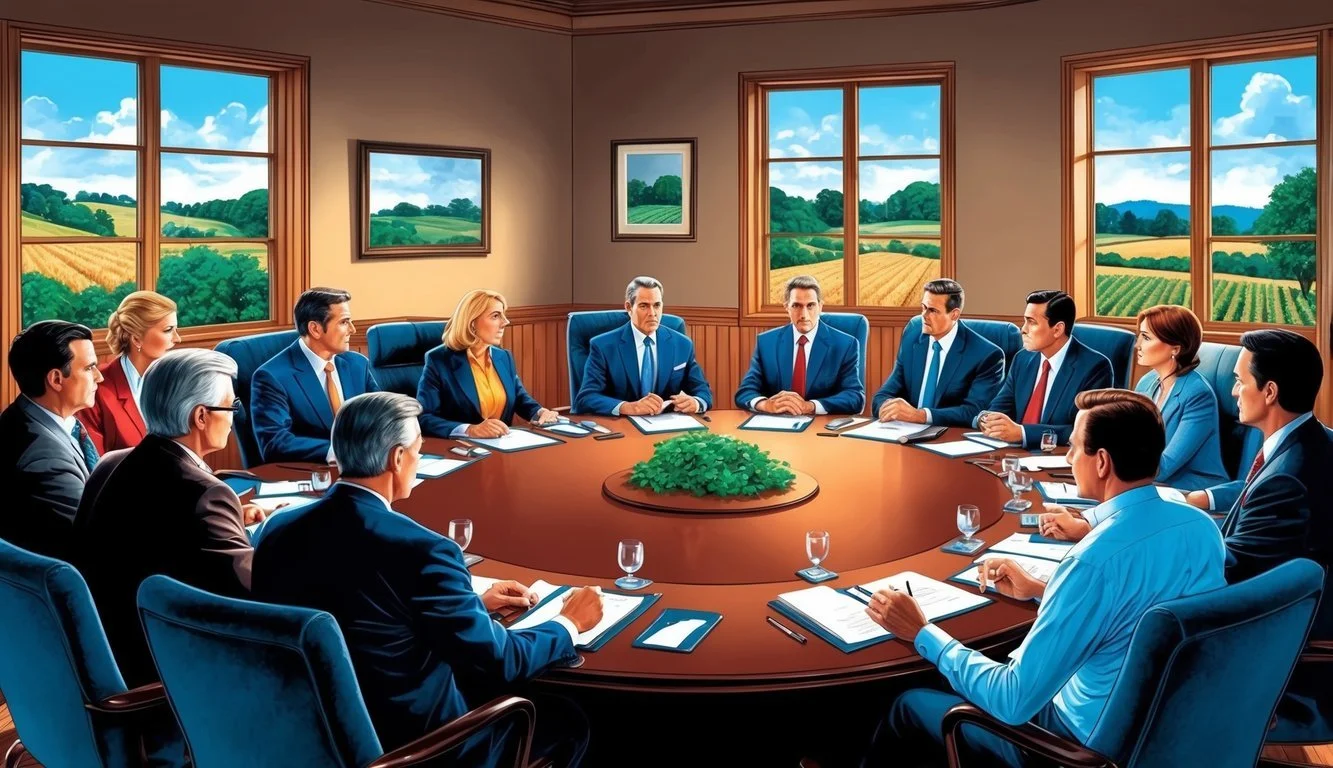
The hit TV series "Yellowstone" has captivated audiences with its dramatic portrayal of power struggles, family dynamics, and corporate America's influence on rural communities. While the show delivers compelling entertainment, it often presents a heightened version of business dynamics that may not fully align with everyday corporate reality.
Yellowstone's depiction of corporate tactics—from Market Equities' aggressive land grabs to Beth Dutton's ruthless business maneuvers—reflects genuine tensions between development interests and traditional land use, though frequently amplified for dramatic effect. These fictional portrayals contain kernels of truth about modern business conflicts, particularly in regions where natural resources, tourism potential, and generational land ownership intersect.
The show's corporate characters serve as powerful storytelling devices, representing broader themes about capitalism, progress, and tradition in contemporary America. Their board room machinations and billion-dollar deals create narrative tension while touching on authentic concerns about corporate influence, though viewers should recognize the distinction between Yellowstone's dramatized corporate world and the more nuanced realities of actual business operations.
Exploring Yellowstone: The Series

Yellowstone has emerged as one of television's most compelling dramas, offering a nuanced portrayal of power struggles in modern America through the lens of the fictional Dutton family. The series combines breathtaking Western landscapes with complex narratives about land ownership, family loyalty, and corporate influence.
Synopsis and Background
Yellowstone premiered on Paramount Network in June 2018, created by Taylor Sheridan and John Linson. The series follows John Dutton (Kevin Costner), the patriarch who controls the largest contiguous ranch in the United States, as he defends his land from developers, a nearby Indian reservation, and America's first national park.
Set in Montana, the show explores themes of family legacy, political corruption, and the changing American West. The Dutton family's struggles reflect broader tensions between traditional ranching culture and modern corporate interests.
Taylor Sheridan's vision expanded into a franchise with prequels 1883 and 1923, exploring the Dutton family's earlier generations. 1883 chronicles the family's perilous journey west, while 1923 depicts their fight to maintain their ranch during Prohibition and the Great Depression.
Cultural Significance and Audience Reception
Yellowstone has achieved remarkable success, becoming Paramount Network's most-watched show with over 10 million viewers for recent season premieres. The series transformed from an underdog to a cultural phenomenon that revitalized interest in Western-themed entertainment.
Critics initially gave mixed reviews, but audience reception proved overwhelmingly positive. The show's authentic portrayal of ranching life resonated particularly with viewers from rural America, a demographic often underrepresented in prestige television.
The series has sparked renewed interest in Western fashion, ranch tourism, and rural property values. Its success led Paramount to develop it into a cornerstone franchise for its streaming service, Paramount+.
Industry analysts credit Yellowstone with helping redefine the television landscape by demonstrating that stories set outside urban centers can achieve mainstream popularity. Its influence extends beyond entertainment into conversations about land use, Native American rights, and corporate influence in rural America.
Character Analysis and Performances
The success of Yellowstone rests heavily on its compelling characters and the actors who bring them to life, particularly in how they embody the tension between traditional ranching values and modern corporate interests.
John Dutton's Embodiment of the American Rancher
Kevin Costner's portrayal of John Dutton delivers a nuanced take on the modern American rancher caught between two worlds. His performance captures the stoicism and determination of a man fighting to preserve his family legacy against corporate encroachment.
Costner brings gravitas to the patriarchal figure, embodying the cowboy ethos through his physical presence and measured speech. His weathered face and deliberate movements reflect decades of hard work on the land.
John Dutton represents a romanticized version of ranching culture that resonates with viewers nostalgic for a simpler America. Yet the character isn't one-dimensional; he demonstrates moral complexity through his ruthless tactics to protect his interests.
The character's struggle between traditional values and the need to adapt to modern realities mirrors the actual challenges facing American agriculture today.
Beth Dutton: The Corporate Power Player
Kelly Reilly transforms Beth Dutton into one of television's most formidable corporate strategists. Her character subverts expectations by using cutthroat business tactics learned in the corporate world to protect her family's ranching interests.
Beth's razor-sharp dialogue and unflinching demeanor make her both feared and respected in boardrooms. Reilly embodies this duality with remarkable precision, shifting between vulnerability in private moments and calculated aggression in business settings.
The character represents the evolution of power dynamics in corporate America, where traditional gender roles are increasingly challenged. Beth's business acumen makes her a vital player in the family rivalry against corporate developers.
Reilly's performance is notable for its physicality—her tense body language and penetrating stare communicate as much as her biting verbal takedowns of opponents.
The Dutton Family and Dynamics
At the heart of Yellowstone lies the complex web of relationships within the Dutton family, who operate Montana's largest contiguous ranch. Their interactions reflect power struggles, loyalty tests, and the preservation of a disappearing way of life.
Ranch Hierarchies and Roles
The Yellowstone Dutton Ranch operates with a clear hierarchical structure that mimics corporate America. John Dutton sits atop as the unquestioned patriarch who makes final decisions affecting the ranch's future.
His children—Beth, Jamie, and Kayce—occupy different positions within this hierarchy based on their abilities and loyalty. Beth functions as a strategic advisor with corporate savvy, while Kayce balances ranch responsibilities with family obligations.
The Dutton Lodge serves as both family home and unofficial headquarters where critical business discussions occur. Employees are divided between those trusted enough to enter the main house and those restricted to the bunkhouse.
Ranch hands live in the rustic bunkhouse, forming a tight-knit community with its own internal pecking order. Their status is earned through skill, tenure, and most importantly, loyalty to the Dutton family.
Rip Wheeler: Right-Hand Man and Protector
Portrayed by Cole Hauser, Rip Wheeler embodies unwavering loyalty and serves as John Dutton's enforcer and confidant. His position transcends typical employment—he functions more as an adopted son than an employee.
Rip manages daily ranch operations, directing the bunkhouse crew and implementing John's vision. His relationship with the Duttons began as a troubled youth taken in by John, creating a debt of gratitude that shapes his every action.
As Beth Dutton's love interest and eventual husband, Rip's personal and professional lives intertwine completely with the family's destiny. His willingness to handle the ranch's "dirty work" makes him indispensable to maintaining Dutton power.
The character represents an intriguing corporate parallel—the loyal executive who operates in moral gray areas to protect company interests. Rip's methods would be questionable in legitimate business settings but illustrate how power is maintained in Yellowstone's fictional corporate world.
Portrayal of Corporate America

The hit TV series Yellowstone presents a stark contrast between traditional ranching values and modern corporate interests. This conflict serves as a central tension throughout the show, highlighting the struggles of rural communities against profit-driven development.
Corporate Greed vs. Ranching Values
In Yellowstone, corporate entities are frequently depicted as ruthless antagonists with little regard for local traditions or environmental concerns. The character of Dan Jenkins exemplifies the profit-driven developer willing to transform pristine landscapes into tourist destinations. Market Brothers Development represents another corporate force threatening the Dutton ranch through aggressive land acquisition tactics.
The show portrays ranchers, particularly the Dutton family, as guardians of a vanishing way of life. Their connection to the land transcends financial value, creating a philosophical clash with corporate interests that view property purely as assets.
This conflict isn't presented as entirely one-sided, however. John Dutton himself employs cutthroat tactics to preserve his ranch, blurring the moral lines between preservation and corporate-style power plays.
Development and Gentrification Challenges
Yellowstone effectively illustrates the gentrification pressures facing rural communities in the American West. Luxury developments, golf courses, and vacation homes represent the encroachment of urban wealth into previously isolated regions.
The show highlights how these developments drive up property taxes and cost of living, making it increasingly difficult for local residents to maintain their traditional lifestyles. Native American communities are particularly vulnerable to these pressures, as portrayed through conflicts over reservation lands.
Wealthy outsiders are shown purchasing ranches as status symbols rather than working properties. This transformation of agricultural land into recreational estates fundamentally alters the social and economic fabric of the region.
The resulting tension between development and preservation creates complex community dynamics where longtime residents struggle against what they perceive as cultural erosion driven by outside economic interests.
Cinematic Influences and Storytelling

The visual style and narrative approach of "Yellowstone" draw heavily from established film traditions while incorporating modern storytelling techniques. These cinematic elements work together to create the show's distinctive portrayal of corporate conflicts and family dynamics.
Taylor Sheridan's Cinematic Approach
Taylor Sheridan's distinctive directorial voice shapes "Yellowstone" through his characteristic visual style and narrative pacing. As creator and primary writer, Sheridan maintains substantial creative control over the series, ensuring consistency in tone and themes.
His background as both actor and filmmaker informs his approach to character development, particularly evident in how he portrays the moral complexities of corporate struggles within the show.
Sheridan employs sweeping landscape shots juxtaposed against intimate character moments, creating a visual contrast that mirrors the series' thematic tensions between tradition and progress. This technique appears in his earlier works like "Wind River" and "Hell or High Water," establishing a recognizable Sheridan aesthetic.
Inspirations from Westerns and Modern Classics
"Yellowstone" draws clear inspiration from classic Western filmmakers, particularly John Ford's frontier epics that similarly examined cultural conflicts against breathtaking natural backdrops. The series modernizes these traditions by incorporating contemporary business conflicts into its narrative.
The show's portrayal of corporate power dynamics shares DNA with films like "Dances with Wolves," particularly in its exploration of cultural preservation against expanding commercial interests. These influences manifest in both visual composition and thematic elements.
Television precedents like "Mad Men" also influence "Yellowstone's" approach to depicting business environments, though filtered through Sheridan's more rugged sensibility. Both shows examine how personal ethics intersect with corporate ambitions.
The series employs both traditional Western tropes (horseback confrontations, ranch settings) and modern business drama elements (boardroom tensions, legal maneuvers) to create its distinctive portrayal of American corporate culture.
Representation of Society and Politics
Yellowstone's sociopolitical commentary extends beyond its corporate critique to examine the complex power dynamics that define the modern American West. It portrays a region where traditional values clash with progressive ideals while depicting the ongoing struggles of indigenous communities.
The American West and Political Landscape
The series depicts Montana as a microcosm of America's political divide. Conservative ranchers and rural communities face encroachment from wealthy outsiders with different values and priorities.
Yellowstone avoids explicit partisan messaging, instead focusing on how geography and lifestyle influence political identity. The Dutton family represents traditional Western values: self-reliance, property rights, and skepticism toward external authority.
Local politics in the show revolve around land use, development, and resource management. John Dutton's eventual run for governor highlights how personal interests drive political ambitions in the region.
The series portrays a red state mentality without direct partisan identification, exploring how rural Americans feel increasingly alienated from urban centers of power and influence.
Native American Presence and Struggle
Yellowstone offers a nuanced portrayal of Native American communities through the Broken Rock Reservation. The series highlights ongoing tensions over land rights and historical injustices.
Thomas Rainwater, the tribal chairman, represents indigenous leadership fighting for economic development and cultural preservation. His character illustrates the complex position of Native leaders navigating both tribal interests and external pressures.
Kelsey Asbille's character Monica Dutton serves as a bridge between worlds, highlighting the personal cost of living between Native and white communities. Her identity struggles reflect broader questions about cultural belonging.
The Native American reservation faces threats from energy development, tourism, and land disputes. These conflicts mirror real challenges facing tribal nations across the American West today.
Yellowstone's Impact and Legacy
The series has left an indelible mark on American television while sparking conversations about wealth, power, and rural life. Its portrayal of corporate battles against the backdrop of Montana's sweeping landscapes has resonated with viewers across demographic divides.
Influence on Popular Culture
Yellowstone has transformed prestige TV with its rugged aesthetic and unapologetic portrayal of the modern West. Sales of cowboy boots and Western wear have surged dramatically since the show's premiere, with retailers reporting increases of up to 30% in markets previously uninterested in ranching attire.
The series has popularized a romanticized vision of ranching life that appeals to viewers seeking authenticity in an increasingly digital world. Elements of the show—from its fashion to its soundtrack—have infiltrated mainstream culture, inspiring everything from interior design to tourism.
Montana tourism officials have documented a significant increase in visitors specifically citing the show as their inspiration for traveling to the region. This phenomenon, dubbed the "Yellowstone effect," has brought both economic benefits and growing pains to areas featured in the series.
Relevance and Real-World Parallels
The show's exploration of privilege and power dynamics resonates with real-world corporate tensions. Its portrayal of land disputes between wealthy ranchers, developers, and indigenous communities mirrors actual conflicts throughout the American West.
Many business professionals recognize familiar corporate tactics in the show's dramatic boardroom confrontations. While exaggerated for television, these scenes often reflect authentic negotiation strategies and power plays common in high-stakes business environments.
The series has sparked meaningful discussions about land ownership, conservation, and the changing face of rural America. Academics have analyzed how Yellowstone both challenges and reinforces traditional notions of American identity through its complex characters and evolving storylines.
Critics note that the show's vision of ranching exists in a carefully constructed middle ground between documentary and fantasy. This deliberate positioning allows it to critique American power structures while simultaneously celebrating aspects of the very privilege it sometimes questions.
