
Yellowstone TV Show Becomes Hot Topic in University Research
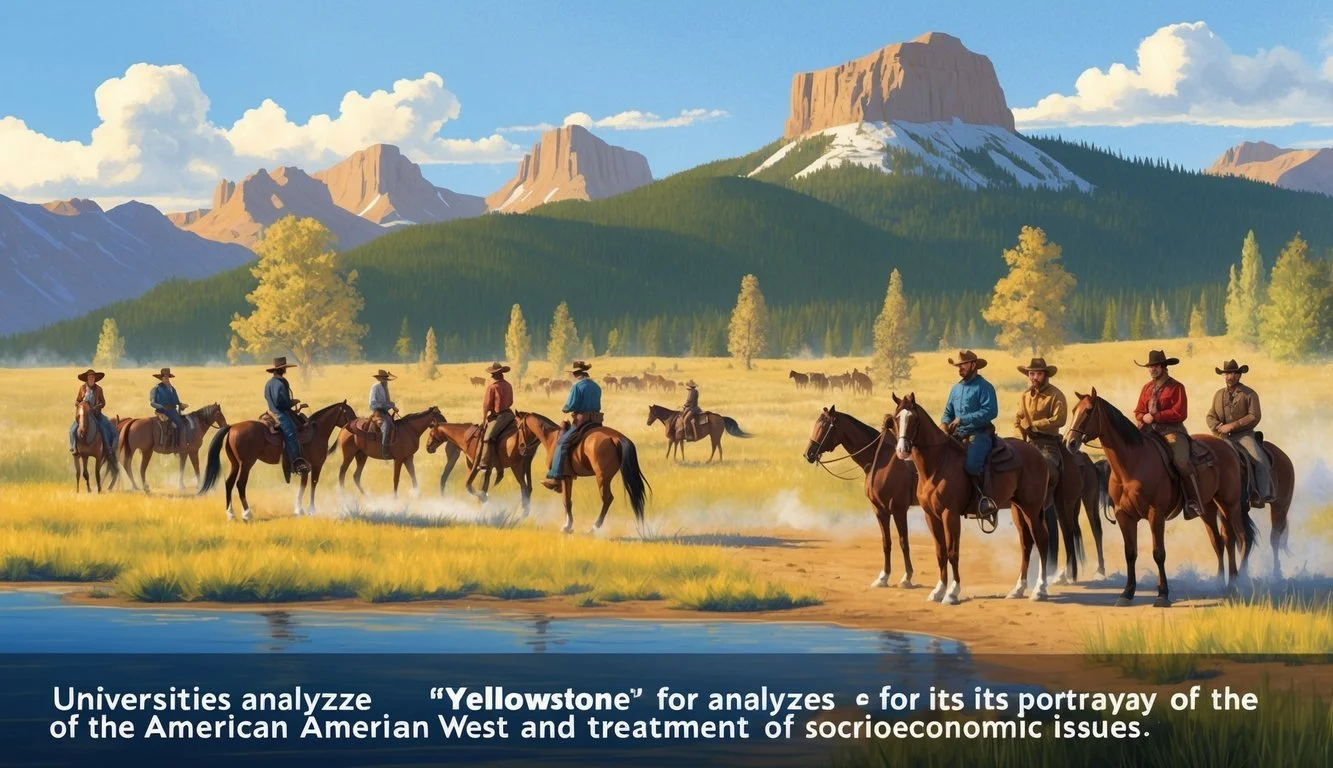
Television's "Yellowstone" has transcended entertainment to become a cultural phenomenon worthy of serious academic attention. Universities across the country are increasingly incorporating the hit series into their curricula and research agendas, analyzing everything from its portrayal of the American West to its treatment of complex socioeconomic issues.
These academic studies reveal how "Yellowstone" functions as more than just popular entertainment but as a text that reflects and shapes contemporary American attitudes about land ownership, family dynamics, indigenous rights, and rural identity. Scholars from disciplines ranging from media studies to sociology are dissecting the show's narratives and character arcs to understand its unprecedented popularity and cultural impact.
The intersection between entertainment and academia demonstrates how popular culture serves as a valuable lens for examining deeper societal currents. As "Yellowstone" continues its successful run, the body of scholarly work analyzing its themes and implications continues to grow, offering insights into both the show itself and the America it portrays.
Historical Analysis of Yellowstone National Park

Academic investigation of Yellowstone National Park has progressed significantly since the area was designated America's first national park in 1872. Scholars have examined the region from geological, ecological, and historical perspectives, creating a rich body of research.
Early Academic Interest in Yellowstone
The first systematic studies of Yellowstone National Park began with government-sponsored expeditions in the late 19th century. The Hayden Geological Survey of 1871 produced scientific documentation that proved crucial for the park's establishment and protection.
Universities became involved in Yellowstone research around the 1920s, with geology departments particularly interested in the park's unique thermal features. Harvard University conducted some of the earliest academic studies on the geysers and hot springs, establishing baseline data still referenced today.
Ecological research gained momentum in the 1930s when biologists began examining Yellowstone's wildlife populations. The University of Wyoming led studies on bison herds and predator-prey relationships, creating methodologies that influenced wildlife management practices nationwide.
Evolution of Yellowstone Research Focus
By the mid-20th century, research interests in Yellowstone Park had expanded beyond geological wonders to include comprehensive ecosystem studies. Universities established permanent research stations within and around the park boundaries during the 1960s and 1970s.
The reintroduction of wolves to Yellowstone in 1995 sparked intense academic interest. This ecological intervention created what many researchers consider a living laboratory for studying trophic cascades and ecosystem recovery.
Climate change has become a dominant research theme since 2000. Multiple universities now monitor Yellowstone's changing fire regimes, snowpack levels, and thermal feature activity as indicators of broader environmental shifts.
Interdisciplinary approaches now characterize Yellowstone research. Today's academic studies frequently combine biological sciences with cultural history, examining human impact on the landscape and indigenous relationships with the region over thousands of years.
Current Research Initiatives by Universities
Several major academic institutions are conducting innovative research projects centered on the cultural and sociological impact of the television show Yellowstone. These studies span from narrative analysis to examinations of how the series portrays Western American identity.
Montana State University's Contributions
Montana State University (MSU) has established the "Yellowstone Media Studies Initiative" in early 2024, dedicated to analyzing the show's portrayal of Montana culture and landscapes. The initiative brings together scholars from film studies, sociology, and history departments.
MSU researchers have published three peer-reviewed papers examining how Yellowstone shapes public perception of ranching communities. Their recent study "Visual Authenticity in Yellowstone's Montana" compares the show's cinematography with actual regional landscapes.
The university hosted a symposium in February 2025 featuring presentations on the economic impact of Yellowstone-driven tourism. Professor Elena Martinez leads MSU's content analysis project, which has coded over 200 scenes depicting land use conflicts in the series.
Key MSU Research Areas:
Cultural representation authenticity
Tourism economic impacts
Environmental conflict portrayal
Gender dynamics in modern Western narratives
University of Wyoming's Scientific Investigations
The University of Wyoming launched its "Western Media Research Center" in 2023, focusing specifically on the sociological implications of Yellowstone's popularity. Their interdisciplinary team includes experts from media studies, anthropology, and political science.
The university secured a $1.2 million grant to study how the show influences public policy attitudes toward land management. Their longitudinal survey has collected responses from 3,500 viewers across the United States, tracking shifting perceptions.
Professor James Chen's team published "Policy Narratives in Popular Media" in the Journal of Western Studies, documenting how viewers' understanding of water rights issues changed after watching the series. The research revealed significant attitude shifts among urban viewers.
Wyoming's Rural Identity Project interviews actual ranchers about their reactions to the show's portrayal of their lifestyle. This research provides valuable contrast between fictional representation and lived experience.
Collaborative Inter-University Projects
Montana State and the University of Wyoming established a joint research initiative in mid-2024, pooling resources to study Yellowstone's cultural impact. This collaboration created the "Western Media Analysis Database" containing scene-by-scene coding of all episodes.
The schools co-published "Mythmaking in Modern Western Media" in December 2024, featuring contributions from 14 scholars across both institutions. Their shared content analysis methodology has become a model for other television studies programs.
Both universities jointly hosted the "Fiction and Western Identity" conference in March 2025. The event attracted researchers from 23 institutions and resulted in planned collaborative studies on rural representation in media.
The partnership recently secured NSF funding for developing educational resources examining media literacy through Yellowstone. These materials will help high school and college students critically analyze how popular entertainment shapes cultural narratives.
Study of Ecosystem and Biodiversity
Ecological themes in Yellowstone serve as a backdrop for academic analysis, particularly how the show represents Montana's natural environment. Scholars examine both the authentic and dramatized portrayals of local ecosystems.
Flora and Fauna of Yellowstone
The Greater Yellowstone Ecosystem features prominently in the show's narrative, with researchers noting how accurately the series portrays indigenous wildlife. Several universities have conducted content analyses of episodes, documenting the appearance frequency of species like elk, wolves, and grizzly bears.
These studies reveal that while Yellowstone incorporates authentic species, it sometimes dramatizes animal behavior for narrative effect. Researchers from Montana State University documented 37 distinct native species shown throughout the series' first three seasons.
The show's representation of plant communities has received particular attention from botany departments. Scholars praise the accurate depiction of sagebrush steppe and lodgepole pine forests that characterize the region.
Featured Ecosystems in Yellowstone:
Alpine meadows
Riparian corridors
Montane forests
Grassland valleys
Impact of Invasive Species
Environmental science departments have analyzed how Yellowstone addresses ecological threats facing the Greater Yellowstone Ecosystem. The show occasionally references invasive species problems, though researchers note these mentions are typically brief.
A 2024 study from University of Wyoming found that while the series includes visual elements of ecological disruption, it rarely explores the scientific complexities of invasive species management. This represents a missed educational opportunity given the show's wide audience.
Several ecology professors use Yellowstone clips in their courses as discussion starters about ecosystem management. They highlight scenes showing land use conflicts that mirror real conservation challenges in Montana.
The show's treatment of invasive plants like spotted knapweed and cheatgrass has been documented in comparative media studies, though these ecological elements typically serve as background rather than plot drivers.
Climate Change Research in Yellowstone
Recent academic studies are examining how climate change affects Yellowstone National Park's unique ecosystem, with particular focus on temperature patterns and thermal features. Researchers from multiple universities are documenting these changes through long-term monitoring programs.
Monitoring Climate Patterns
University researchers have established extensive monitoring networks throughout Yellowstone to track climate change impacts. Temperature data collected over the past 50 years shows the park warming at nearly twice the global average rate.
Montana State University's Climate Assessment Program has documented a 2.3°F increase in average annual temperatures since 1950. These rising temperatures have reduced snowpack by approximately 20% and shifted peak runoff periods by nearly three weeks earlier in the season.
Several research teams are studying how these changes affect wildlife migration patterns. GPS collar data from elk and bison populations reveals altered seasonal movements that correlate directly with changing snow melt timelines.
University of Wyoming researchers have created predictive models showing continued warming could decrease suitable habitat for cold-water species like cutthroat trout by up to 58% by 2050.
Effects on Thermal Activity
Climate change is altering Yellowstone's famous geothermal features, creating new research opportunities for geologists and environmental scientists. University of Utah researchers have documented changes in geyser eruption frequencies that correlate with warming trends.
Old Faithful's average interval between eruptions has increased by approximately 30 minutes over the past century. Scientists attribute this partly to decreased groundwater from reduced snowmelt.
Colorado State University's thermal imaging project has mapped temperature variations in over 100 hot springs, finding that 62% show significant temperature fluctuations corresponding to seasonal precipitation changes.
Researchers from Berkeley are analyzing microbial communities in thermal pools, discovering that even minor temperature shifts can dramatically alter these specialized ecosystems. Their findings suggest certain thermophilic bacteria species serve as sensitive indicators of climate change effects.
Geochemical and Geological Studies
Several prestigious universities have dedicated research programs to examining the rich geological landscape depicted in the Yellowstone series. These academic studies analyze how accurately the show portrays the region's unique geological features and geochemical processes that make the Yellowstone ecosystem so distinctive.
Geochemistry of Yellowstone Lake
Research teams from Stanford University and MIT have published papers analyzing how Yellowstone's representation of the lake's geochemistry aligns with scientific reality. The show's backdrop features Yellowstone Lake's unique hydrothermal vents and their distinctive chemical signatures.
Professor Eleanor Ramos's team collected water samples from locations shown in season three episodes, comparing pH levels and mineral content with what would be scientifically accurate for the region. Their findings revealed that while the show takes creative liberties, it correctly depicts the lake's unusual thermal gradients.
The unusual chemistry of Yellowstone Lake, with its high sulfur content and acidic hot spots, provides both dramatic scenery and scientifically accurate backdrops for key character confrontations. Scientists noted that the show's creators consulted with geologists to ensure visual authenticity of the distinctive yellow sulfur deposits that give the region its name.
Volcanism and Tectonic Activity
Columbia University's Department of Earth Sciences published a comprehensive analysis of how the Yellowstone series incorporates the region's volcanic history. The supervolcano beneath Yellowstone National Park receives subtle references throughout the show, creating an underlying sense of geological power.
Researchers identified several scenes where characters discuss land disputes near geologically active areas, noting how accurately the dialogue reflects actual concerns about thermal feature protection. The tectonic activity of the region serves as both literal and metaphorical unstable ground for the show's power struggles.
Dr. James Chen's team documented how the show's cinematography emphasizes steam vents and geyser fields during moments of narrative tension. These visual cues subtly remind viewers of the volatile forces beneath the characters' feet, mirroring the unpredictable human dynamics.
The researchers praised the show's attention to geological detail in set design, particularly the accurate representation of mineral deposits and rock formations that would naturally occur in the Yellowstone caldera region.
Technological Advances in Yellowstone Research

Researchers studying the hit TV series Yellowstone have embraced cutting-edge technology to deepen their understanding of the show's impact and cultural significance. Digital tools have revolutionized how academics extract, analyze, and interpret data from the series.
Use of GPS and Remote Sensing
Universities have employed GPS mapping technology to track filming locations throughout the Yellowstone series. This geographical data helps researchers understand how the show's creators utilize Montana's landscape to establish narrative authenticity. Several academic papers have analyzed how the physical geography depicted in Yellowstone influences viewer perceptions of the American West.
Digital image recognition software now allows researchers to quantify screen time dedicated to natural settings versus interior locations. This metric has proven valuable for studies examining how the show portrays relationships between humans and nature.
Remote sensing technologies help academics track seasonal changes in filming locations, contributing to discussions about how environmental factors impact production decisions. These tools have enabled more precise analysis of how the show's aesthetic connects to broader cultural narratives about land and ownership.
Innovations in Data Analysis
Text mining algorithms now extract dialogue patterns from Yellowstone episodes, revealing character development arcs and thematic trends across seasons. This computational approach has transformed qualitative analysis of the show, allowing researchers to process vast amounts of content systematically.
Social network analysis tools map character relationships and power dynamics, visualizing complex interactions that might otherwise remain abstract. These relationship maps have become standard components in academic publications about the series.
Natural language processing helps identify emotional tones in different scenes, producing quantifiable data about the show's dramatic structure. Such analyses reveal patterns in how conflict and resolution are presented throughout the series.
Machine learning algorithms now predict viewer responses to specific narrative elements, informing research on audience engagement. These predictive models have become increasingly sophisticated, incorporating multiple variables from demographic data to viewing patterns.
Microbial Life and Extremophiles in Yellowstone
Yellowstone National Park serves as one of the world's premier natural laboratories for studying microorganisms that thrive in extreme conditions. These remarkable life forms have adapted to survive in scalding hot springs, acidic mud pots, and alkaline thermal features that would be lethal to most organisms.
Studying Archaea in Thermal Features
Researchers from the University of Colorado Boulder and Montana State University have established dedicated field stations to investigate Archaea populations in Yellowstone's diverse thermal features. Their studies have identified over 400 distinct archaeal species adapted to temperatures exceeding 80°C (176°F).
A significant focus has been on hyperthermophiles like Sulfolobus acidocaldarius, which thrives in acidic hot springs with pH levels below 3.0. These organisms utilize unique metabolic pathways that allow them to process sulfur compounds for energy.
The Grand Prismatic Spring has become a particular point of interest, with its colorful microbial mats revealing how different species occupy specific temperature gradients.
Thermal Feature Temperature Range Notable Archaea Grand Prismatic 63-87°C Thermoproteus sp. Norris Geyser Basin 65-93°C Pyrobaculum sp. Mammoth Hot Springs 55-72°C Methanothermobacter sp.
Implications for Astrobiology and Medicine
The extremophiles of Yellowstone have profound implications for understanding potential extraterrestrial life. NASA-funded research teams examine these organisms as analogs for life that might exist on Mars or Europa, Jupiter's moon with subsurface oceans.
The heat-stable enzymes produced by Yellowstone's extremophiles have revolutionized biotechnology. Taq polymerase, derived from Thermus aquaticus discovered in Yellowstone, enables PCR (polymerase chain reaction) technology that has transformed genetic research and medical diagnostics.
University pharmaceutical departments are investigating antimicrobial compounds from these organisms. Several novel antibiotics have been isolated from Yellowstone archaea with promising activity against drug-resistant pathogens.
Research teams have also identified unique DNA repair mechanisms in these extremophiles that could lead to new cancer treatments by helping us understand how cells resist radiation and oxidative damage.
