
Unveiling Yellowstone's Secret: Taylor Sheridan's Genius Writing Room
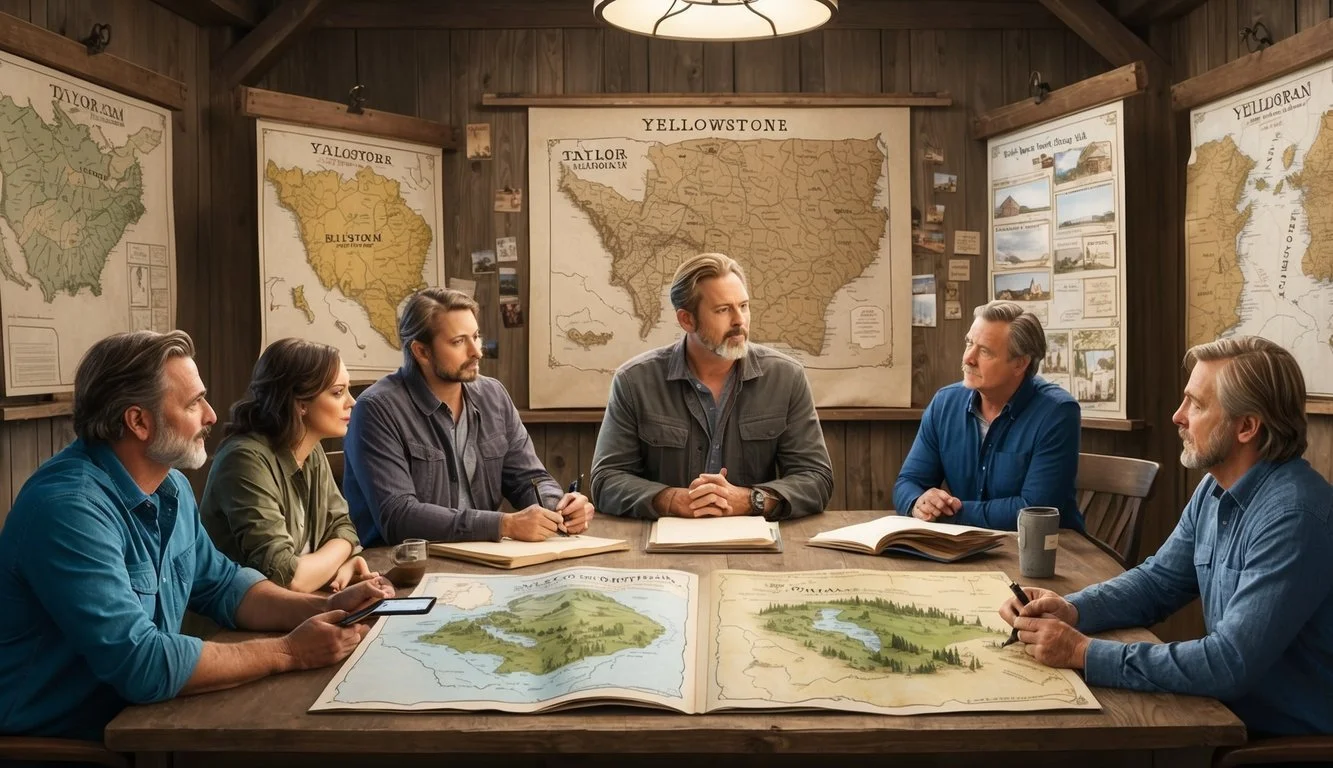
Behind the sweeping success of the "Yellowstone" universe lies a carefully orchestrated writing process that has redefined modern television storytelling. Taylor Sheridan, the creative force driving this phenomenon, has developed a unique collaborative environment where ideas flourish and narratives take shape. His writing room operates unlike traditional television models, combining his cinematic vision with selected collaborators who help expand and refine his intricate, interconnected worlds.
Sheridan's approach balances strong authorial control with strategic delegation, allowing him to maintain creative consistency across multiple series while producing content at an unprecedented pace. This system has proven remarkably effective as his franchise continues to expand beyond "Yellowstone" into prequels like "1883" and "1923," as well as related series such as "Mayor of Kingstown" and "Tulsa King."
The inner workings of Sheridan's writing methodology reveal important lessons for creative professionals in any field. His ability to build complex character arcs while constructing authentic American landscapes has attracted top-tier talent both in the writers' room and on screen, creating a feedback loop of excellence that continues to elevate his storytelling empire.
The Genesis of Taylor Sheridan's Storytelling

Taylor Sheridan's distinctive voice in modern American storytelling emerged from a unique combination of lived experience and artistic vision. His journey from actor to acclaimed writer-director reflects a deep understanding of the American West and human nature.
Influences and Inspirations
Sheridan's storytelling draws heavily from his Texas upbringing on a ranch, infusing authenticity into his portrayals of rural America. This personal connection to the land shapes his nuanced depiction of the American West as both beautiful and unforgiving.
Classic Western filmmakers like John Ford and Sam Peckinpah significantly influenced his visual style and thematic concerns. However, Sheridan's work stands apart by examining contemporary issues within traditional Western frameworks.
Writers Cormac McCarthy and Larry McMurtry also left indelible marks on his narrative approach. Their unflinching examination of the American experience resonates throughout Sheridan's work, particularly in how he portrays violence and moral complexity.
Evolution of the Narrative
Sheridan's screenwriting career began with Sicario (2015), which established his trademark tense pacing and morally ambiguous characters. The film demonstrated his ability to craft tight, suspenseful narratives that examine institutional power and individual agency.
With Hell or High Water (2016), he refined his exploration of economic struggle in forgotten America. The film's critical acclaim cemented his reputation for authentic dialogue and regional specificity.
Wind River (2017) completed what Sheridan calls his "frontier trilogy," examining justice and loss in Native American communities. These early works reflect his consistent interest in American institutions failing vulnerable populations.
His transition to television with Yellowstone allowed for expanded narrative scope while maintaining his thematic interests in land, legacy, and power dynamics.
A Deep Dive into Genre and Style
Sheridan's work blends genre elements from Westerns, crime dramas, and family sagas. This hybrid approach has revitalized the Western for contemporary Hollywood audiences while addressing modern concerns.
His dialogue stands out for its:
Economic precision
Regional authenticity
Philosophical underpinnings without pretension
Rhythmic quality that actors can effectively deliver
Visual storytelling remains central to his approach, with landscape functioning as a character rather than mere backdrop. The tension between modernism and tradition permeates his work, particularly in how characters navigate changing social and economic realities.
His protagonists typically embody traditional masculinity while facing its limitations in the contemporary world. This complex portrayal of American identity has resonated with audiences seeking nuanced examination of national myths and realities.
Building the Yellowstone Universe
Taylor Sheridan's approach to creating the sprawling Yellowstone universe combines meticulous attention to historical context with complex character dynamics. His vision has expanded from a single series into a franchise that explores different time periods in the American West.
The Conception of Yellowstone
Sheridan conceived Yellowstone as an examination of land conflict in the modern American West. The series, which debuted in 2018 on Paramount Network, centers on the Dutton family's struggle to maintain control of their vast ranch.
Sheridan drew inspiration from his own experiences growing up in rural Texas and his understanding of ranching culture. He intentionally set the story in Montana to capture the dramatic landscapes that would serve as more than mere backdrop—the land itself functions as a character in the narrative.
The writer's room approach for Yellowstone differed from traditional television models. Sheridan maintained tight creative control while still fostering collaborative input on regional authenticity and historical accuracy. This balance helped create a world that feels both contemporary and timeless.
Character Development and Relationships
The Dutton family dynamics form the emotional core of the Yellowstone universe. Sheridan's writing room focused on creating multi-dimensional characters with complex motivations rather than simplistic heroes and villains.
John Dutton, played by Kevin Costner, exemplifies this approach—a character simultaneously sympathetic and ruthless in his determination to preserve his family legacy. The writing team developed intricate relationship webs that extend beyond the family to include tribal conflicts, corporate antagonists, and political maneuvering.
Character arcs were designed to evolve gradually across seasons, allowing for significant growth while maintaining consistency. The collaborative process involved extensive discussions about character backstories, even for elements never explicitly shown on screen.
This depth of character development has been particularly praised in academic circles studying representations of the modern West in humanities programs, noting how the series challenges simplified narratives about the American frontier.
Collaborative Dynamics in the Writing Room
Taylor Sheridan employs distinctive collaborative methods that shape the creative direction of his television franchise. His approach prioritizes open communication while maintaining his strong vision for narrative integrity.
Fostering Creativity through Teamwork
Sheridan's writing room operates unlike traditional television models. He assembles writers with diverse backgrounds—from novelists to journalists and playwrights—creating an environment where multiple perspectives converge on storytelling challenges.
Writers report working in concentrated sessions rather than season-long rooms. This intense collaborative period allows for deep focus on narrative development while avoiding creative fatigue.
Team members often research separately before bringing findings to collective brainstorming sessions. This interdisciplinary approach ensures authenticity in portraying specialized worlds like ranching, law enforcement, and reservation life.
Key collaboration techniques include:
Paired writing assignments for complex character arcs
Rotating "point" writers for specific storylines
Mandatory field research experiences shared among team members
Communication Strategies
Sheridan maintains creative control through structured communication protocols. Writers describe a feedback system where initial ideas receive immediate response, allowing quick pivots away from unproductive directions.
Digital collaboration tools enable real-time script annotations and revisions, even when team members work remotely. This technological integration became particularly valuable during production challenges in 2020-2021.
The writing team employs a distinctive "challenge session" approach where finished drafts face rigorous questioning about character motivation and plot coherence. These sessions create space for constructive criticism without personality conflicts.
Writers cite Sheridan's direct communication style as crucial to the franchise's consistent voice. He provides clear boundaries for creative exploration while encouraging bold character development within those parameters.
On-Screen Representation and Realism

Taylor Sheridan's productions stand out for their commitment to authentic portrayals of American landscapes and cultures. His writing room prioritizes research and consultation to ensure representations that balance dramatic storytelling with social responsibility.
Balancing Fiction with Historical Accuracy
Sheridan's approach to historical content involves extensive research before scripting begins. His team regularly consults historians, cultural anthropologists, and subject matter experts to verify period details and contextual accuracy.
In "1883" and "1923", the writing team conducted months of research into pioneer-era clothing, speech patterns, and daily hardships to create believable period dramas. This attention to detail extends to set design and location scouting.
The writers' room maintains what Sheridan calls a "truth threshold" - a minimum standard of historical accuracy that cannot be compromised for dramatic effect. When historical events must be condensed or simplified, the team documents these creative decisions.
Physical authenticity matters equally in contemporary shows. "Yellowstone" employed actual ranch hands as consultants and extras to ensure realistic portrayal of modern ranching techniques and culture.
Diversity and Inclusion in Sheridan's Work
Sheridan's writing room has evolved in its approach to representing diverse communities, particularly Native American characters and cultures. Early criticism of "Yellowstone" led to more nuanced Indigenous representation in later seasons.
For authentic portrayal, Sheridan brought in Mo Brings Plenty not just as an actor but as a cultural consultant who reviews scripts for accuracy in Native American representation. The writing team expanded to include Indigenous writers for storylines centered on reservation life.
The franchise demonstrates a growing commitment to showcasing women in positions of power and agency. Characters like Beth Dutton in "Yellowstone" and Cara Dutton in "1923" illustrate complex female characters navigating traditionally male-dominated spaces.
Casting directors work closely with writers to find performers who bring lived experience to roles representing specific cultural backgrounds. This collaboration ensures that dialogue and character behaviors reflect genuine human nature rather than stereotypes.
Research and World-Building
Taylor Sheridan's commitment to authenticity forms the backbone of his storytelling approach. The extensive research and world-building processes employed in his writers' room establish the credibility that has become a hallmark of his productions.
Deep Research Techniques
Sheridan's writing team employs rigorous research methodologies that go beyond surface-level investigation. Writers frequently spend weeks in locations like West Texas and Montana, immersing themselves in local culture and interviewing residents. This firsthand experience proves invaluable when crafting authentic dialogue and scenarios.
The team also consults with subject matter experts, including retired law enforcement officers, working ranchers, and Native American consultants. These professionals review scripts for accuracy and provide insights that might otherwise be overlooked.
Documentary footage serves as another crucial research tool. Writers study these materials to understand the nuances of regional speech patterns, body language, and daily routines of the communities they portray.
Translating Research to Screen
The writing room transforms collected research into compelling narratives through a systematic approach. Writers maintain extensive research databases organized by location, character type, and historical context for quick reference during script development.
Sheridan encourages writers to incorporate sensory details gathered during field research—the quality of light in Montana, the smell of dust in West Texas, or the ambient sounds of working ranches. These elements create visceral viewing experiences.
Technical consultants remain on set during filming to ensure authenticity in everything from horse-riding techniques to law enforcement procedures. Dialogue authenticity receives particular attention, with regional colloquialisms and speech patterns carefully integrated.
The Importance of Setting: American West
The American West functions as more than backdrop in Sheridan's narratives—it operates as a character with its own motivations and influence. The writing team researches the economic realities of modern ranching, land use conflicts, and changing demographics in western states.
Sheridan's shows explore the tension between traditional western values and modernization. This theme emerges from extensive research into how technological advances and economic pressures transform western communities.
The network supports location shooting despite higher costs, recognizing that authentic western settings contribute significantly to narrative credibility. Writers craft scenes that showcase the visual drama of western landscapes—from sweeping mountain vistas to claustrophobic coulees.
Weather patterns and seasonal changes in the West influence storylines, with writers researching how these elements affect daily life and livelihoods in these regions.
Tapping into the Cultural Zeitgeist
Taylor Sheridan's writers' room excels at capturing America's evolving social landscape through storytelling that resonates with current cultural concerns. His team methodically studies societal shifts and integrates them with compelling narrative techniques that appeal to modern audiences across streaming platforms.
Reflecting Societal Trends and Attitudes
Sheridan's writing team conducts extensive research into contemporary social issues before crafting storylines. They regularly consult social science experts to ensure authentic portrayals of rural America, economic inequality, and changing power dynamics.
This research-driven approach allows the writers to address topics like land rights, indigenous perspectives, and economic disparity with accuracy and depth. The team monitors social media trends and public discourse to gauge audience interests and concerns.
"We're not trying to be political," a room contributor noted. "We're reflecting what's already happening in America's heartland, just without the typical Hollywood filter."
Their success partially stems from avoiding overt messaging while still engaging with complex modern realities that resonate with viewers across political spectrums.
The Role of Narrative in Modern Culture
Sheridan's team understands that compelling narratives serve as cultural touchstones in an era of fragmented media consumption. Their writing room operates with awareness of how streaming services have transformed audience expectations.
They craft stories that balance episodic satisfaction with season-long arcs, adapting to binge-watching behaviors prevalent on platforms like Paramount+. This modernist approach to storytelling creates narrative convergence between traditional Western themes and contemporary concerns.
The room develops characters who embody cultural contradictions rather than simplistic archetypes. This nuanced approach helps explain the franchise's broad appeal despite tackling divisive topics.
Media analysts note that Sheridan's advertising campaigns strategically highlight these cultural connections without alienating potential viewers. The writing team ensures storylines contain multiple entry points for diverse audience segments.
Marketing and Distribution in the Digital Age

Taylor Sheridan's universe of shows has redefined how television franchises approach digital distribution channels. The marketing strategies behind hits like "Yellowstone" and its spin-offs demonstrate a sophisticated understanding of audience engagement across multiple platforms.
Strategies for Streaming Platform Success
Paramount+ has positioned itself as the primary digital home for most of Sheridan's expanding universe, though "Yellowstone" initially followed a different path with Peacock securing streaming rights. This strategic split created an interesting tension that ultimately drove viewers to multiple services. The franchise employs targeted social media campaigns highlighting character development and behind-the-scenes content rather than just plot teasers.
Data analytics plays a crucial role in Sheridan's distribution approach. The writing team receives regular reports on viewing patterns, helping them understand which narrative elements resonate most strongly with audiences. This feedback loop influences both creative decisions and marketing strategies.
Cross-promotion between shows has become a hallmark of the franchise's digital presence. Trailers for new series often appear during the broadcast of established hits, creating a seamless viewer journey across the expanding universe.
Navigating International Distribution
The international rollout of Sheridan's shows demonstrates a nuanced understanding of global markets. Rather than simultaneous worldwide releases, the distribution team implements staggered launch strategies tailored to regional viewing habits and cultural contexts.
Localization goes beyond mere subtitling or dubbing. Marketing materials receive careful adaptation to resonate with specific international audiences while maintaining the authentic American western aesthetic that defines the franchise.
Foreign partnerships have expanded the reach of Sheridan's universe considerably. Strategic agreements with regional broadcasting giants in Europe, Asia, and Latin America ensure the content reaches viewers who might not subscribe to American streaming platforms.
Digital rights management represents another sophisticated element of the international distribution strategy. The team actively monitors unauthorized distribution channels to protect the franchise's intellectual property while ensuring legitimate access points remain easily available to global audiences.
Behind the Scenes: Editing and Shaping the Story
The final product viewers see on screen is the result of meticulous editing decisions that transform raw footage into compelling narratives. Taylor Sheridan's productions undergo rigorous post-production processes where storylines are refined and emotional impact is maximized.
The Art and Science of Editing
Sheridan's editing team plays a crucial role in maintaining the distinctive visual style across the Yellowstone franchise. Editors typically work with 30-50 hours of raw footage for each episode, making precise cuts to create the tight 42-60 minute episodes viewers experience.
The editing room operates as a secondary writing phase where pacing decisions can dramatically alter a scene's impact. Editors often reposition dialogue exchanges, compress time sequences, and emphasize specific character reactions to enhance dramatic tension.
Music selection represents another vital editing component. The team collaborates with composers to develop thematic motifs that underscore emotional beats while maintaining the rustic, atmospheric quality that defines Sheridan's productions.
Choosing the Right Angle
Camera angles and shot composition decisions made during filming provide editors with multiple storytelling options. Sheridan's productions favor wide landscape shots juxtaposed against intimate close-ups that reveal character psychology.
Editors must choose whether a scene works better from an objective perspective or through a character's subjective viewpoint. These decisions significantly impact how viewers connect with the narrative.
The documentary-style approach in certain scenes helps establish authenticity, particularly in depicting ranch operations or Native American cultural practices. This technique requires editors to balance realism with dramatic necessity.
Test screenings inform final editing decisions, with Sheridan remaining heavily involved throughout the process. Audience reactions often prompt re-edits that clarify storylines or heighten emotional moments before episodes receive final approval.
Industry Impact and Sheridan's Legacy
Taylor Sheridan has transformed modern television storytelling through his distinctive approach to character development and authentic Western narratives. His collaborative writing methods have created ripples throughout the entertainment industry, establishing new standards for quality television.
Influence on Contemporary Hollywood
Sheridan's success has dramatically altered how networks approach rural American stories. According to the Hollywood Reporter, his proven formula of combining gritty realism with star power has inspired numerous imitators across streaming platforms and traditional networks.
Executives now actively seek "Sheridan-esque" projects that feature complex characters in forgotten American landscapes. His reputation for creating character-driven dramas has made him one of Hollywood's most sought-after creators, commanding unprecedented deals.
The industry has taken note of his efficient writing room structure. Rather than large teams of writers, Sheridan's leaner approach emphasizes clear vision and authenticity over committee-driven storytelling.
Studios increasingly value creator-driven projects where a single vision guides the narrative, directly challenging traditional writers' room models.
Expanding the Sheridan Franchise
Paramount's partnership with Sheridan exemplifies how streaming services now build entire business strategies around singular creative talents. The "Yellowstone universe" has become a cornerstone franchise, driving subscriber growth for Paramount+.
The franchise expansion includes:
1883 and 1923 (historical prequels)
6666 (contemporary spin-off)
Lioness and Mayor of Kingstown (non-Western Sheridan projects)
This multi-show approach has created year-round Sheridan content, keeping subscribers engaged continuously. His production company has established a development pipeline that efficiently transforms concepts into marketable series.
Beyond television, Sheridan's influence extends to feature films and has revitalized interest in modern Western themes. The economic impact on filming locations has been substantial, with Montana and Texas experiencing tourism boosts from fans visiting Sheridan's fictional landscapes.
Popular Culture and its Reflections
Taylor Sheridan's writing has deeply penetrated American popular culture, creating narratives that reflect authentic regional experiences while resonating with universal themes. His distinctive storytelling approach has influenced both mainstream and niche entertainment landscapes.
Taylor Sheridan's Influence on Pop Culture
Sheridan's impact on Hollywood extends far beyond his critically acclaimed projects. His neo-Western aesthetic has revitalized a genre once considered outdated, inspiring a wave of similar productions across film and television.
Major studios have taken note of his success formula—combining gritty realism with compelling character development—and attempted to replicate it in their own projects. Even animated series like South Park have parodied Sheridan's distinctive style, particularly his penchant for stoic characters and expansive landscape shots.
His writing room techniques have become industry talking points, with many showrunners adopting his collaborative yet decisive approach. This influence has created what some critics call the "Sheridan school" of television writing, characterized by tight plotting and authentic dialogue.
Resonance with Audience Through Storytelling
Sheridan's narratives connect with viewers through their unflinching portrayal of modern American challenges. His characters face recognizable struggles with economic hardship, family obligations, and moral dilemmas in changing landscapes.
Unlike the satirical approach of shows like Beavis and Butt-head, Sheridan employs earnest storytelling that treats regional cultures with respect rather than derision. This authenticity resonates with audiences who rarely see their experiences represented thoughtfully in mainstream media.
His writing room's emphasis on regional specificity produces characters who speak and behave like real people from particular places. This attention to detail creates an immersive experience that viewers find refreshingly honest compared to more generic Hollywood productions.
Sheridan's collaborative techniques ensure that multiple perspectives inform each narrative, resulting in stories that feel both personal and universal.
