
Yellowstone Writers Revolutionize TV with New Western Hits
Yellowstone's massive success has birthed a new wave of Western television projects, led by the show's former writers and staff members. These creatives, who learned their craft under Taylor Sheridan's guidance, are now developing their own productions that capture the same rugged American spirit that made the Dutton family saga a cultural phenomenon. With Yellowstone's uncertain future following Kevin Costner's departure from his role as John Dutton, these alumni are carrying the torch for the modern Western genre across multiple streaming platforms including Paramount+.
The exodus of talent from the Yellowstone writers' room represents a natural evolution in television, where successful shows often become informal incubators for new creative voices. Several key writers who helped shape the Montana ranch drama's distinctive tone and characters are now helming projects that explore different facets of contemporary Western life and themes.
The Origins of 'Yellowstone'
The hit series that revolutionized modern Western television began as a passion project deeply rooted in authentic ranch culture. Taylor Sheridan's vision for the show combined family drama with contemporary Western themes while showcasing the stunning landscapes of Montana.
Conception by Taylor Sheridan
Taylor Sheridan created "Yellowstone" after establishing himself as a screenwriter with critically acclaimed films like "Sicario" and "Hell or High Water." The concept emerged from his desire to explore modern conflicts in the American West. Sheridan grew up on a ranch in Texas, giving him firsthand experience with the lifestyle he would later depict.
The show was originally pitched as a meditation on land ownership and family legacy. Sheridan wanted to examine how traditional ranching families like the Duttons navigate modern challenges including land developers, Native American tribal politics, and changing economic realities.
Paramount Network greenlit the series in 2017, marking their first scripted drama. Sheridan maintained significant creative control throughout development, insisting on authenticity in portraying ranch life and the cattle business.
Casting Key Characters
Kevin Costner's casting as patriarch John Dutton proved pivotal to the show's success. His involvement immediately elevated the production and signaled the series' ambitions. Costner, known for iconic Western roles in "Dances with Wolves" and "Open Range," brought credibility and star power.
The supporting cast came together with actors who could embody the complexity of the Dutton family. Kelly Reilly was cast as Beth Dutton, bringing fierce intensity to the role of John's daughter. Luke Grimes and Wes Bentley joined as sons Kayce and Jamie, completing the core family dynamic.
Cole Hauser's portrayal of ranch foreman Rip Wheeler became a fan favorite, though initially conceived as a smaller role. The chemistry between cast members helped establish the complex relationships that drive the series' emotional core.
Setting the Stage in Montana
Montana's breathtaking landscape serves as more than backdrop—it functions as a central character in "Yellowstone." Sheridan specifically chose the region for its rugged beauty and the genuine working ranches that still operate there.
The production established its base at the real-life Chief Joseph Ranch in Darby, Montana, which serves as the iconic Dutton Ranch house. This 2,500-acre working cattle ranch provided authentic settings that couldn't be replicated on soundstages.
Filming in Montana presented challenges, including unpredictable weather and remote locations. However, Sheridan insisted on shooting on location to capture the true essence of ranching life. This commitment to authenticity helped "Yellowstone" stand apart from stylized Westerns of the past.
The series showcases the complex relationship between modern ranchers and their land, highlighting the economic pressures facing cattle operations today. This grounding in reality resonated with viewers who recognized genuine Western experiences rarely depicted on television.
Expansion of the 'Yellowstone' Universe
Taylor Sheridan's creative vision has transformed the Dutton family saga into a sprawling frontier epic spanning multiple generations. The expanding universe continues to explore different periods of American history through the lens of this iconic ranching family.
'1883' - The Dutton Origin Story
'1883' serves as the first prequel in the 'Yellowstone' universe, chronicling the Dutton family's perilous journey across the Great Plains to establish their Montana ranch. The limited series stars Tim McGraw and Faith Hill as James and Margaret Dutton, with Sam Elliott portraying the hardened wagon train leader Shea Brennan.
The critically acclaimed show debuted in December 2021 on Paramount+ and immediately drew substantial viewership. Taylor Sheridan wrote all ten episodes, crafting a narrative that balances brutal frontier realism with intimate character development.
The series provides essential context for 'Yellowstone' fans, explaining how the Duttons acquired their coveted land and the sacrifices made to establish their legacy. The show's production values mirror the cinematic quality of its parent series, with sweeping vistas and meticulous period detail.
'1923' - The Next Chapter
'1923' continues the Dutton lineage story, focusing on a new generation facing the challenges of Prohibition and the Great Depression. Harrison Ford and Helen Mirren lead the cast as Jacob and Cara Dutton, bringing considerable star power to this installment.
The series explores themes of land disputes, economic hardship, and family resilience during this tumultuous period in American history. Sheridan's storytelling connects direct lineage between the characters of '1883' and modern-day 'Yellowstone,' filling crucial historical gaps.
Premiering in December 2022, '1923' initially received an eight-episode order before being expanded due to its popularity. The production spans multiple continents, including filming in Tanzania, reflecting the ambitious scope of Sheridan's vision for the Dutton drama.
Other Spinoff Series
Beyond the period prequels, Sheridan has developed contemporary spinoffs to further expand the 'Yellowstone' universe. '6666' focuses on the historic Four Sixes Ranch in Texas, which was featured prominently in 'Yellowstone' season four.
Another project in development is '1944,' which would chronicle the Dutton family during the challenges of World War II. This continues Sheridan's methodical approach to building a complete historical timeline for the family.
Paramount has fully embraced these expansions, investing significantly in Sheridan's vision. These spinoffs not only satisfy existing fans but also create entry points for new viewers to discover the broader narrative universe.
The strategic release scheduling ensures that some form of Dutton drama remains on screens year-round, maintaining audience engagement between flagship 'Yellowstone' seasons.
Evolving the Genre: Modern Westerns
The Western genre has undergone significant transformation in recent years, embracing contemporary themes while honoring traditional elements. Taylor Sheridan stands at the forefront of this evolution, creating narratives that blend classic Western motifs with modern storytelling techniques.
Redefining Western Drama
Taylor Sheridan has revolutionized the Western genre through projects that explore complex social issues within familiar frontier settings. His work maintains Western themes of justice, land ownership, and individual freedom while incorporating contemporary challenges.
Shows like "Yellowstone" tackle modern concerns such as land development, tribal sovereignty, and corporate power. These productions feature traditional Western elements—horseback riding, ranching, vast landscapes—but place them firmly in the 21st century.
Paramount Network and Paramount+ have become key platforms for these modernized Westerns, investing heavily in Sheridan's vision. His upcoming series "Landman" continues this trend, examining the modern oil industry through a distinctly Western lens.
'Tulsa King' and Beyond
"Tulsa King" represents an innovative fusion of mob drama and Western themes. Though set in Oklahoma rather than traditional Western landscapes, the series maintains core Western elements: an outsider navigating unfamiliar territory and establishing new order.
Sylvester Stallone's character embodies the classic Western archetype of the displaced gunslinger, reimagined as a mafia capo building a new empire. This creative approach has attracted viewers who might not typically engage with traditional Westerns.
The success of "Tulsa King" has inspired other productions exploring non-traditional Western settings. Writers from Sheridan's team have begun developing projects that transport Western themes to unexpected environments, from urban landscapes to international settings.
Influence of 'Sons of Anarchy'
"Sons of Anarchy" significantly shaped modern Western storytelling through its outlaw motorcycle club narrative that paralleled classic Western themes. The series featured territorial disputes, codes of honor, and frontier justice—all reimagined for contemporary audiences.
This influence appears prominently in current Western productions. Many writers from Sheridan's room previously worked on "Sons of Anarchy," bringing its gritty realism and character-driven approach to their new projects.
The show's exploration of found family and loyalty under pressure continues to resonate in modern Westerns. Characters often navigate moral gray areas, making difficult choices that protect their communities while challenging ethical boundaries.
This formula has proven commercially successful, with streaming platforms actively seeking content that follows similar thematic patterns.
Impact on Hollywood and Media
The departure of Yellowstone writers to develop new Western projects has created ripples throughout Hollywood's creative landscape. Their collective influence has reshaped industry expectations for the modern Western genre while garnering significant critical acclaim and commercial success.
Awards and Recognition
Taylor Sheridan's post-Yellowstone projects have dominated award circuits, earning multiple Golden Globe nominations and wins. His neo-Western sensibilities have resonated with critics who praise the authentic portrayal of contemporary rural America.
The Television Academy recognized these efforts with Emmy nominations for outstanding writing and directing in drama series. Paramount+ has leveraged this prestige to position itself as a premium destination for quality Western content.
Several former Yellowstone writers have earned individual WGA nominations for their new projects, highlighting the talent pool that emerged from the original writers' room. CBS and other networks have actively recruited this proven talent to develop similar programming.
Influence on Industry Trends
The Yellowstone alumni have transformed the Western from a niche genre into a cornerstone of premium television. Networks now actively seek writers with experience in the genre, creating a specialized career path within Hollywood.
Production companies have increased development budgets for Western and rural-set dramas in direct response to these writers' success. The trend has extended beyond television into film, with studios greenlighting more Western projects.
Taylor Sheridan's multi-platform approach—creating interconnected series across Paramount+ and CBS—has become a blueprint for other creators. The emphasis on authentic locations and regional specificity has influenced production decisions throughout the industry.
Media Coverage and Popularity
Entertainment journalists have extensively covered the "Yellowstone effect," documenting how former staff writers secured unprecedented development deals. Major publications have published profiles examining how these writers translate their Yellowstone experience into new creative ventures.
Social media engagement metrics show audiences following these writers from project to project, creating ready-made viewership for new releases. Paramount+ has reported subscription surges coinciding with premieres of Yellowstone-adjacent content.
The cultural conversation around neo-Westerns has expanded beyond entertainment columns into mainstream media discussions about American identity and values. Industry podcasts regularly feature deep dives into how these writers have revitalized what was once considered a dormant genre for modern audiences.
Behind the Scenes: Filmmaking and Locations
The remarkable settings of "Yellowstone" and its related productions have become characters in their own right, with sprawling ranches and breathtaking landscapes providing authentic backdrops that help define the Western genre's revival.
Bosque Ranch: The Home of 'Yellowstone'
Bosque Ranch in Weatherford, Texas serves as a primary filming location for "Yellowstone" and its related productions. Owned by series creator Taylor Sheridan, this working ranch provides authentic Western environments essential to the show's visual identity.
The property features expansive pastures, rustic buildings, and natural landscapes that translate beautifully to screen. Production designers have enhanced the ranch with purpose-built sets while maintaining its authentic character.
Beyond serving as a filming location, Bosque Ranch functions as a creative headquarters where writers and producers collaborate on upcoming storylines. Cast members often live on-site during production, creating a immersive environment that contributes to the authentic portrayal of ranch life.
Four Sixes Ranch and Other Filming Locations
The historic 6666 Ranch (Four Sixes) in Texas gained prominence when it was featured in "Yellowstone" season 4 and subsequently purchased by Taylor Sheridan and investors in 2021. This 266,000-acre property now serves as both a filming location and a real-world inspiration for the franchise.
Montana locations provide the breathtaking mountain vistas seen throughout the original series. The Chief Joseph Ranch in Darby, Montana, doubles as the exterior of the iconic Dutton Ranch, while locations near Bozeman and Paradise Valley appear frequently.
For period pieces like "1883" and "1923," production expanded to include locations in Fort Worth, Texas and historic sites throughout the American West. Visual effects teams carefully remove modern elements while preserving the natural beauty of these landscapes.
Prominent Figures and Characters
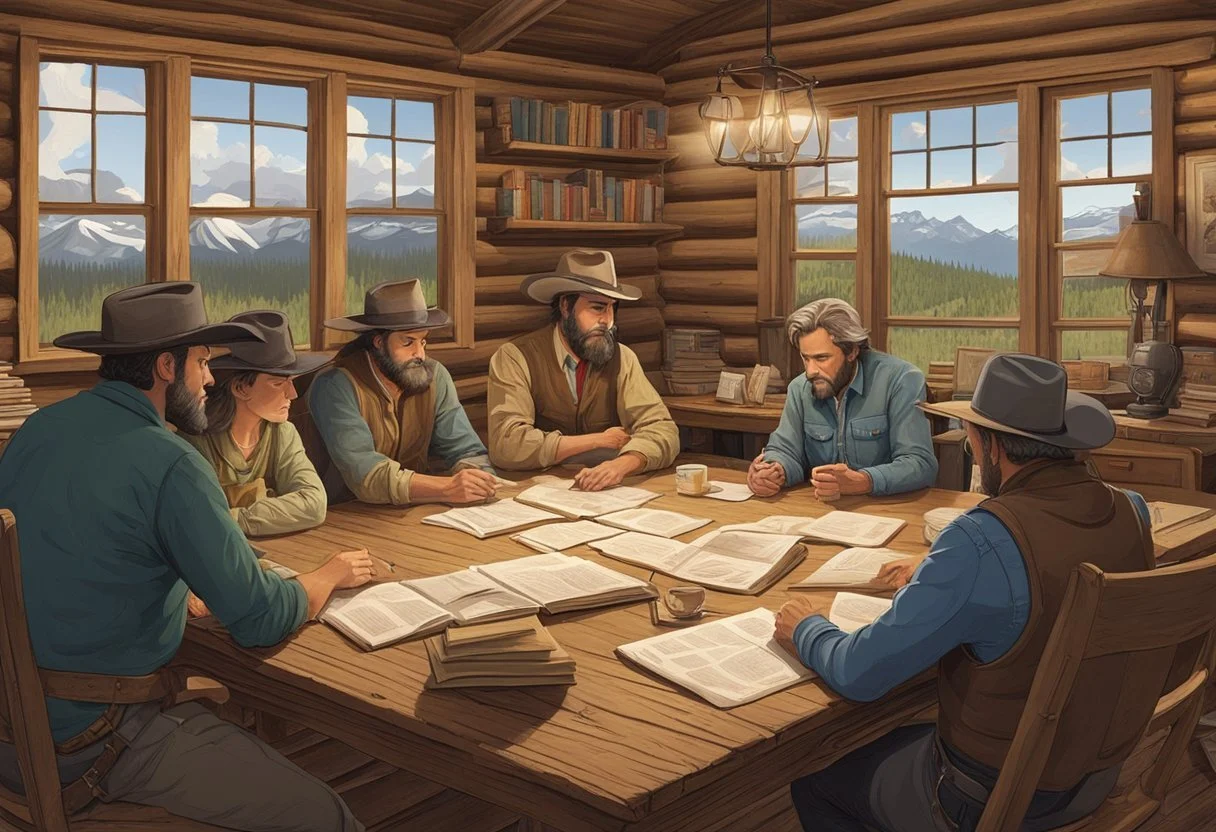
The Yellowstone universe has been defined by its compelling characters and the acclaimed actors who portray them. These performances have helped establish the neo-Western genre's resurgence in television and film.
Kevin Costner as John Dutton
Kevin Costner's portrayal of patriarch John Dutton stands as the cornerstone of the Yellowstone series. His commanding presence brought gravitas to the role of the sixth-generation rancher fighting to protect his land. The character's complexity—balancing ruthlessness with family loyalty—resonated with audiences nationwide.
Costner's departure from the series in 2024 sent shockwaves through the production. His exit coincided with his focus on his own Western saga, "Horizon," a multi-part film series exploring America's western expansion.
Despite leaving, Costner's influence on the Yellowstone universe remains substantial. His portrayal established the template for the tough-but-principled Western character that now appears throughout the franchise's spinoffs and related projects.
Notable Guest Stars and Recurring Roles
The Yellowstone universe has attracted exceptional talent beyond its main cast. Sam Elliott delivered a powerful performance in the prequel "1883," embodying the hardened trail boss Shea Brennan with his trademark gravelly voice and weathered demeanor.
Harrison Ford and Helen Mirren headlined "1923," bringing their considerable star power to Jacob and Cara Dutton. Their chemistry and emotional depth added historical richness to the Dutton family saga.
Billy Bob Thornton made a memorable appearance in "1883" as Marshal Jim Courtright. His brief but impactful role showcased the lawless nature of the frontier era.
The Bass Reeves limited series tapped into the real-life history of the legendary Black U.S. Deputy Marshal. This spinoff expanded the franchise's scope while maintaining its commitment to exploring complex western characters.
Cultural Impact and Audience Engagement
The success of Yellowstone alumni in developing new Western projects has created ripple effects throughout entertainment culture, fostering dedicated communities and commercial opportunities across multiple platforms.
Fan Base and Communities
Yellowstone's devoted fan base has followed many writers to their new Western-themed projects, creating vibrant online communities. These fans frequently gather on forums and dedicated websites to discuss plot developments, character arcs, and the authentic portrayal of ranch life.
Convention events featuring writing staff from the original series regularly sell out, with attendees often arriving in Western attire inspired by the shows. Many fans appreciate the nuanced depiction of modern ranching challenges, including cattle management and land use conflicts.
Community engagement often centers around authenticity questions, with viewers debating whether the portrayal of horses, ranch operations, and Western values rings true. Some fan groups have organized ranch tours and riding experiences to connect more deeply with the lifestyle depicted in these series.
Merchandising and Partnerships
The commercial impact extends well beyond viewership, with merchandise sales becoming a significant revenue stream. Branded apparel featuring ranch logos from these series has become particularly popular among urban consumers seeking connection to Western aesthetics.
Several writers have leveraged their Yellowstone experience to establish partnerships with authentic Western brands. These collaborations include limited-edition cowboy boots, premium cookware, and even specialty food products that reference show elements.
Corporate sponsorships have evolved carefully, with production teams selective about partnerships to maintain authenticity. Notable agreements include:
Major truck manufacturers featuring vehicles in show settings
Western apparel companies creating character-inspired clothing lines
Premium bourbon brands developing signature show-themed spirits
These partnerships require careful consent agreements to protect creative integrity while capitalizing on commercial opportunities.
Social Media Presence and Campaigns
Digital engagement strategies have evolved significantly from early Yahoo groups to sophisticated multi-platform campaigns. Writers and producers maintain active social media accounts where they share behind-the-scenes content and engage directly with viewers.
Instagram has proven particularly effective for showcasing the visual appeal of Western landscapes and ranch settings. Production teams regularly post striking images of horses, mountain vistas, and authentic ranch work to maintain audience interest between seasons.
Strategic hashtag campaigns drive conversation during premiere events, with real-time engagement spikes during key episodes. Writers often participate in live-tweeting sessions, providing insider context without spoiling upcoming developments.
Content creators carefully balance promotional material with authentic engagement, avoiding spam-like practices that might alienate core viewers. This approach has helped establish these Western projects as cultural touchstones rather than merely entertainment products.
Exploring Related Projects by Former Staff
Yellowstone's writing team alumni have leveraged their experience to create distinctive projects that build on the show's Western foundations while branching into new territory.
Alumni Success Stories
Taylor Sheridan stands as the most prolific Yellowstone graduate, establishing an impressive portfolio beyond the Dutton saga. His crime thriller Sicario demonstrated his ability to craft tense narratives in borderland settings. Hell or High Water, with its modern Western themes of economic desperation, earned Sheridan an Oscar nomination for Best Original Screenplay.
Michael Kelly, following his writing contributions to Yellowstone, has collaborated on several frontier-themed projects. His nuanced character development skills have made him sought-after in the industry.
Jeremy Renner, while primarily known for acting, has moved into production of Western-themed content inspired by his time on Taylor Sheridan projects. His commitment to authentic portrayals of rural America has influenced several upcoming series.
New Westerns Inspired by 'Yellowstone'
Former Yellowstone writers have launched several contemporary Western projects that carry the show's DNA. Mayor of Kingstown, another Sheridan creation, transfers the power dynamics and family tensions of Yellowstone to a prison town setting.
Zoe Saldaña stars in Lioness, which was developed by ex-Yellowstone story editors who wanted to explore female perspectives in traditionally masculine environments. The series blends espionage with Western themes of territory and loyalty.
Several writers who cut their teeth on Yellowstone seasons 1-3 have developed projects set in Alaska, Montana, and Wyoming. These shows maintain the cinematic landscape focus while exploring different socioeconomic issues facing rural America.
Spawned Genres and Hybrid Themes
The success of Yellowstone has inspired former staff writers to experiment with hybrid genres. "Neo-Westerns" combining traditional frontier themes with contemporary issues have become particularly popular among the alumni.
Sylvester Stallone's Tulsa King benefits from former Yellowstone writers who apply Western archetypes to a fish-out-of-water crime story. The show's exploration of territory and power mirrors Yellowstone's central conflicts.
Morgan Freeman has partnered with a Yellowstone writing room veteran for an upcoming historical Western examining racial dynamics in post-Civil War Wyoming. This project demonstrates how alumni are expanding the Western genre to include previously underrepresented perspectives and histories.
Writers have also created anthology series exploring different eras of the American West, applying the character-driven approach that made Yellowstone successful.
