
Fly: Why Breaking Bad’s Most Divisive Episode Deserves a Second Look

Few episodes of Breaking Bad spark as much debate as "Fly." While it’s often called the most divisive entry in the series, this quieter hour stands apart not for what happens, but for why it matters. "Fly" uses its slow pace and focus on Walt and Jesse to expose deep truths about guilt, control, and the relationship at the show’s core.
The episode's minimal setting and dialogue-heavy scenes turn the spotlight inward, challenging viewers to look beneath the surface. Instead of high stakes and action, "Fly" delivers tension and revelation in every pause, making it a masterclass in character study for those willing to watch closely.
For anyone revisiting Breaking Bad or watching for the first time, "Fly" is an essential piece that pushes the boundaries of what a TV drama can accomplish, even if it divides opinion.
Overview of Breaking Bad and Its Legacy

Breaking Bad, an AMC drama created by Vince Gilligan, examined the transformation of Walter White from mild-mannered chemistry teacher to methamphetamine kingpin. Its reputation for high-caliber storytelling and character development places it among television’s landmark dramas.
Critical Acclaim and Best Episodes
Breaking Bad received widespread acclaim for its narrative complexity, acting, and direction. The series regularly appeared on critics' lists of the best TV shows, with episodes such as “Ozymandias,” “Face Off,” and “Felina” often singled out as highlights.
The show earned numerous Emmy Awards, including Outstanding Drama Series, recognizing performances from Bryan Cranston, Aaron Paul, and Anna Gunn. Episodes like “Crawl Space” and “Dead Freight” are still discussed for their tension and unpredictability.
Despite the polarizing response to episodes like “Fly,” the series is praised for taking risks and exploring characters’ psychological depths. Viewer polls and critical roundups commonly rate Breaking Bad among the best series to air on AMC, standing alongside other trailblazers.
Impact on Television
Breaking Bad’s meticulous plotting and visual storytelling influenced a generation of writers and directors. Its use of tight character arcs and long-term narrative planning reshaped expectations for what serialized TV could achieve.
The series was central to AMC’s rise as a serious network for original dramas, helping establish its brand alongside shows like Mad Men. Breaking Bad’s structure—a slow escalation of stakes and moral ambiguity—set a new standard for creator-driven prestige television on cable.
Viewership grew notably over its run, aided by streaming platforms, making its final episodes among the most-watched in cable history. Its impact is observed in later dramas and in the proliferation of antihero-led narratives.
Connection to Other TV Series
Breaking Bad is often discussed in the context of TV’s golden age, sharing influence with shows like Mad Men, Lost, and Buffy the Vampire Slayer. All of these series elevated the scope and ambition of television storytelling.
AMC’s investment in quality programming was proven with Breaking Bad, following in the footsteps of Mad Men. Meanwhile, genre shows like Lost and Buffy pioneered long-form narrative structures and serialized storytelling, which Breaking Bad refined for a drama audience.
Its legacy is further extended by the prequel/spin-off Better Call Saul and the sequel film El Camino. Collectively, these works expand the “Breaking Bad universe,” inspiring interconnected storytelling and spinoff models across the industry.
Setting the Stage for ‘Fly’: Context Within the Series

The "Fly" episode takes place during a period of intense pressure in both the meth operation and the relationship between Walter White and Jesse Pinkman. The episode’s minimalist scope is a product of major developments that reshape their dynamic and the story’s criminal stakes.
Plot Leading to the Episode
Season 3 of Breaking Bad finds Walter White, played by Bryan Cranston, deeply entrenched in Gus Fring’s meth empire. By episode 10, Walt and Jesse are fully committed to cooking in the high-tech underground Superlab beneath the industrial laundry.
Key events drive Walt toward emotional exhaustion. Jane Margolis’s death, the midair plane crash, and his increasing paranoia all contribute to a heavy psychological burden. These threads converge as the story slows in “Fly,” placing Walt and Jesse alone together, physically confined.
At this point in the series, Walt’s anxiety over uncontrollable variables is at its peak. The episode’s isolated setting follows a sequence of crises—including cartel threats and strained family ties—that push Walt to the edge.
Character Arcs: Walter White and Jesse Pinkman
Walter White’s transformation intensifies. His guilt about Jane’s death and his obsession with control surface prominently in “Fly.” The episode highlights Walt’s emotional volatility, reflecting internal turmoil fueled by secrets and regret.
Jesse Pinkman, in contrast, seeks comfort and distraction. Struggling with his own grief over Jane, he drifts toward reckless behavior. “Fly” punctuates a period where trust between Walt and Jesse erodes, yet they are forced into close proximity, exposing vulnerabilities.
Walt’s fixation on the fly becomes a metaphor for his psychological unraveling. Jesse’s attempts to keep the operation functional underscore the growing divide in their outlooks and priorities.
Role of Meth and the Superlab
The Superlab is central to both the episode’s physical setting and its symbolism. The lab’s sterile environment amplifies the tension, with the meth-cooking process operating as both a literal job and a source of constant stress for both men.
Inside the Superlab, meth serves as the unifying factor—the reason Walt and Jesse must coexist despite deepening mistrust. The presence of contaminants, embodied by the fly, draws attention to their ever-present fear of imperfection, both in their product and their choices.
This sterile but high-pressure environment reflects the demands placed on Walter by Gus Fring. The pursuit of a pure batch is no longer only about chemistry; it is also about Walt’s need for validation and control in a life spiraling away from him.
Dissecting ‘Fly’: Themes and Symbolism
"Fly" stands apart from other Breaking Bad episodes through its concentrated exploration of Walter White’s psyche. With a claustrophobic setting and sharp focus on character, it examines themes like obsession, guilt, and the looming presence of death.
Obsession and Control
Walter’s relentless pursuit of the fly in the lab serves as a clear metaphor for his need for control. He fixates on the insect, convinced it threatens the purity of his meth. This reveals his perfectionism, but also how he labors over small threats while ignoring larger issues in his life.
The fly symbolizes his anxieties growing out of control. Instead of focusing on human threats or criminal dangers, Walter’s energy is spent eradicating a tiny, harmless pest. This obsession illustrates how his compulsion for control seeps into every aspect of his world, including science and relationships.
By narrowing in on this struggle, the episode presents an authentic portrait of how minor setbacks can consume someone caught in a high-stress situation. Walter’s inability to control even a small thing like a fly underlines his growing lack of control everywhere else.
Death, Guilt, and Mortality
The fly is more than an annoyance—it represents Walter’s guilt and fear of death. Throughout the episode, he is haunted by memories, especially his role in Jane’s death, and the fly becomes a physical manifestation of this guilt.
He confesses to Jesse that there was a "perfect moment" to die, hinting at deep regrets he cannot shake. The lab, meant to be a place of safety, transforms into a space reflecting his fear of mortality and the burden of his actions. The role of villain shifts here, becoming internal rather than external.
The fly’s persistent presence evokes thoughts of decay and contamination, drawing an implicit connection to death. Walter’s agitation and insomnia signify the weight of his unresolved guilt and his awareness that his actions have irreversible consequences.
Minimalism and the Bottle Episode Format
"Fly" is a textbook bottle episode, taking place entirely in the meth lab and featuring only Walter and Jesse. This minimalist format puts the focus squarely on character dynamics rather than action or plot twists.
By stripping away outside distractions, the episode emphasizes dialogue and nonverbal storytelling. The conversations between Walter and Jesse gain significance as viewers are forced to analyze every gesture, pause, and word choice.
This setup also amplifies tension. The confined setting justifies the psychological intensity, and the lack of a traditional antagonist turns the internal struggles of the main characters into the central conflict. As a result, the episode feels uniquely intimate and experimental within a series known for high-stakes drama.
Why ‘Fly’ Is So Divisive
“Fly” stands out from the rest of Breaking Bad’s episodes for its unusual focus and dramatic shift in style. This episode prompts polarized reactions, centered around narrative pacing and the depth of personal introspection.
Viewer Expectations and Pacing
Breaking Bad is known for high stakes, escalating conflict, and tense plot twists. “Fly,” however, focuses almost entirely on Walter White and Jesse Pinkman in the meth lab. The episode unfolds in a single location and features minimal action, breaking away from the fast pace viewers expect.
Many fans felt that the episode stalled the narrative, especially given its placement late in the third season. Some saw its slower pacing as frustrating, particularly for those eager for major plot developments.
Despite this, others appreciated the way “Fly” uses this deliberate pace to heighten tension in a different way. The confined setting creates a sense of claustrophobia. The fly itself becomes a focal point, symbolizing both a mundane problem and deeper psychological disturbances. For viewers accustomed to action-driven episodes, this minimalist, introspective approach was unexpected.
The Role of Introspection in Storytelling
“Fly” shifts away from advancing the plot to delve into Walter’s mental and emotional struggles. The episode highlights themes of guilt, obsession, and self-doubt, with the uncatchable fly serving as a metaphor for Walt’s internal turmoil.
This introspective focus is unusual for Breaking Bad, which typically balances character development with external conflict. Here, most of the drama occurs in conversation and silences, as Walt and Jesse discuss their regrets, uncertainties, and trust.
Not all viewers value this slower, character-driven style. Some found it revealing and important for understanding Walt’s mindset and the cost of his decisions. Others felt the emphasis on introspection disrupted the narrative momentum and didn’t align with the show’s usual tone.
The episode’s use of privacy—closing off the characters from the world—amplifies their vulnerability and isolation. Sentiments about the episode often depend on whether viewers see value in this level of psychological exposure over conventional action.
Direction and Craft of ‘Fly’
“Fly” is recognized for its tightly focused narrative, minimalist set, and stylistic experimentation. Director Vince Gilligan’s creative approach and Bryan Cranston’s nuanced performance both shaped the episode’s distinct tone.
Vince Gilligan’s Creative Decisions
Vince Gilligan directed “Fly” with a resourceful, intentional style, using the episode’s bottle format to heighten tension and intimacy. The episode is set almost entirely in the lab, employing deliberate camera angles and lighting to make the confined space visually compelling.
Gilligan’s approach includes long takes and stark close-ups, emphasizing both physical and emotional claustrophobia. The use of the fly as a persistent visual motif visually reinforces Walt’s psychological struggle and obsession.
Budget constraints influenced the episode’s design, leading to minimal cast and limited locations, but the results are inventive. This economical approach allowed the script and performances to take center stage without distractions.
Bryan Cranston’s Performance
Bryan Cranston delivers an introspective and controlled portrayal of Walter White in “Fly.” He conveys Walt’s exhaustion, growing paranoia, and emotional vulnerability through small gestures and sustained silences.
Much of Cranston’s performance relies on subtle body language and facial expressions rather than dialogue. The tension with Jesse, played by Aaron Paul, is maintained through understated exchanges, frustrated glances, and moments of near-confession.
Cranston’s work grounds the episode’s experimental direction. His ability to shift between guilt, anger, and stubborn fixation provides the psychological core of the story and showcases his skill in capturing complex character dynamics in constrained scenarios.
Connections and Influences
"Fly" owes much of its impact to television traditions and contemporary approaches to storytelling. The episode’s design is best understood by examining its place among bottle episodes and in relation to animation.
Bottle Episodes in Television History
A bottle episode is a cost-saving installment that uses minimal sets and cast, but its influence on television extends beyond budget. "Fly" is a prime example, set solely in the meth lab with only Walt and Jesse, focusing intensely on character psychology.
Historically, classic shows like "Friends" and "The X-Files" have used bottle episodes to great effect. These episodes often strip away external conflict, forcing characters to confront personal and relational issues.
Critics often compare "Fly" to "Pine Barrens" from "The Sopranos," though the approaches differ. While some fans found "Fly" slow, others argue it deepened the viewer’s understanding of Walt’s guilt and inner turmoil. The episode’s deliberate limitations became a feature, not a flaw, revealing character through restriction.
Show Bottle Episode Example Impact Breaking Bad "Fly" Character exploration, tension The Sopranos "Pine Barrens" Survival, dialogue-driven drama Friends "The One Where No One's Ready" Comedic tension, bottle setup
Animation and Storytelling Styles
The storytelling style of "Fly" shares similarities with some animated series, particularly "BoJack Horseman." Like "Fly," episodes of "BoJack Horseman" sometimes focus on a single setting, using limited space to explore emotional states and internal conflicts.
Animation often pushes the boundaries of narrative, allowing for introspective plots and non-linear storytelling. In "BoJack Horseman," for example, episodes such as "Fish Out of Water" use visual minimalism and sparse dialogue to evoke mental isolation, much like "Fly" uses silence and confined setting.
Both "Fly" and these animated episodes prioritize psychological depth over external action. The choice to slow down the plot allows viewers to engage with the characters’ internal struggles in a concentrated way.
Key parallels:
Visual and narrative minimalism
Focus on guilt, regret, and self-reflection
Character-driven storytelling
The Legacy and Impact of ‘Fly’
“Fly” continues to attract debate among fans and critics because of its unconventional storytelling and its influence on later episodes in both “Breaking Bad” and other acclaimed TV series. The episode’s minimalist style, character focus, and subtle symbolism have led to a lasting impact that extends beyond its original mixed reception.
Influence on Future TV Episodes
The format of “Fly”—a bottle episode with limited characters and a single setting—demonstrated the power of character-driven storytelling even in high-stakes dramas. Many later TV series, including “Better Call Saul,” “The Walking Dead,” and “Mr. Robot,” took inspiration from its focused approach. Writers and directors reference “Fly” when discussing the potential of bottle episodes to add psychological depth to a series.
It also showed that a slow-paced episode could advance character arcs and reveal vulnerabilities without moving the main plot forward. This impact went beyond “Breaking Bad” and encouraged creators to prioritize emotional tension over action in key episodes. Some series intentionally mirrored this format to establish intimacy or create a pause for reflection in the storyline.
Cultural References and Parodies
Since airing in 2010, “Fly” has been frequently referenced in pop culture and television critique circles. It has appeared in lists of the most controversial and memorable TV episodes. Parodies and nods to its slow pacing and obsessive focus have surfaced in satirical shows like “Robot Chicken” and “Community,” where the trope of a “bottle episode” is often used for comedic effect.
Memes and online discussions highlight the episode's symbolism and Walt’s fixation on control, cementing its place as a recognizable cultural touchstone. Even outside of direct parody, critics and entertainment writers cite “Fly” when discussing episodes that divide fanbases or attempt bold stylistic shifts in storytelling.
Audience Re-evaluation Over Time
Initially, “Fly” was one of the lowest-rated episodes of “Breaking Bad,” with some viewers frustrated by what they perceived as narrative stagnation. Over time, however, online forums and critical essays have contributed to a shift in perception. Detailed scene analyses brought appreciation for the episode’s direction by Rian Johnson and its psychological exploration of guilt and confession.
Many fans now cite “Fly” as essential to understanding Walter White’s character. The subsequent rise of critical reappraisal places it alongside episodes from other groundbreaking tv series that prompted debate, such as “Pine Barrens” from “The Sopranos.” This reevaluation underscores “Fly’s” growing importance within the legacy of modern television.
Supporting Characters and Subplots
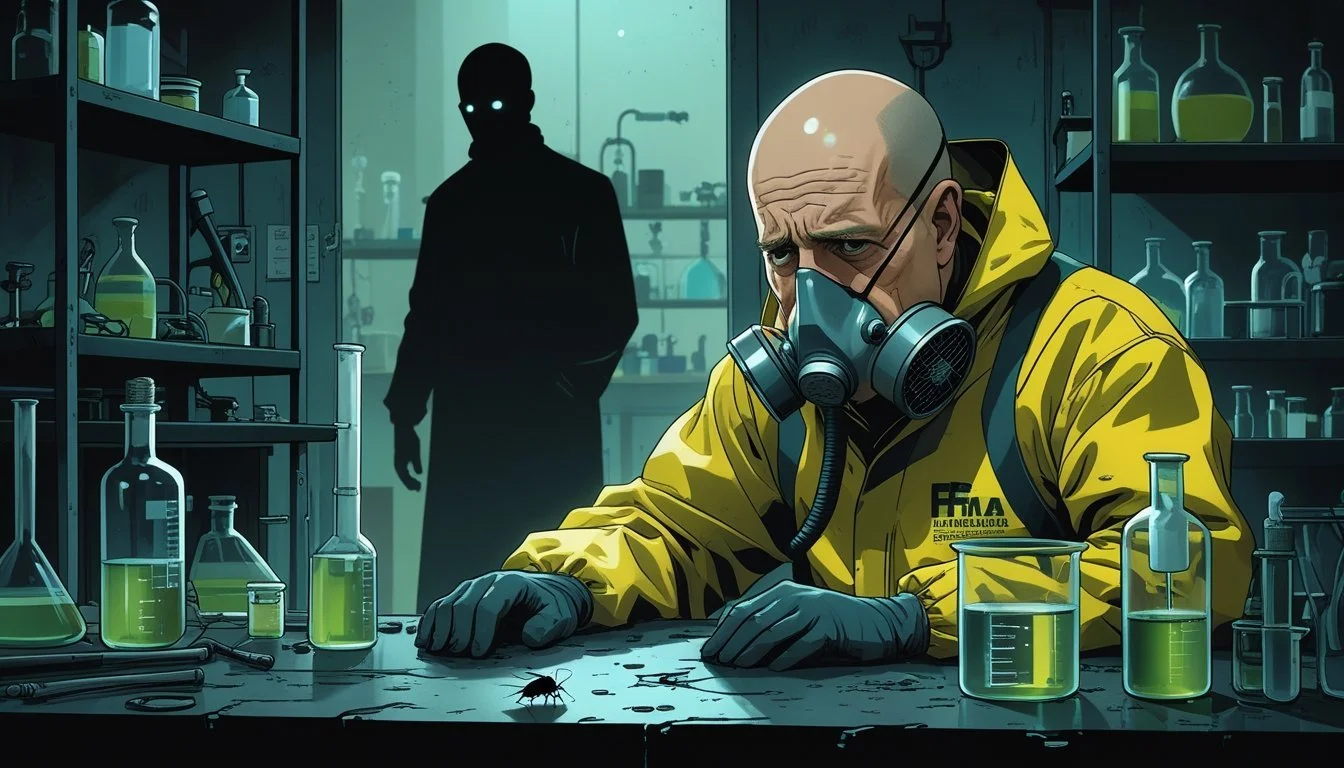
"Fly" narrows its lens almost entirely to Walt and Jesse, but supporting characters and narrative hints still shape the episode’s impact. Small references and moments outside the lab offer insight into the wider world of Breaking Bad, even with the story confined to one setting.
Skyler’s Role in the Story
Skyler White has only a brief presence in “Fly,” but her actions remain central to the story’s context. In the broader timeline, Skyler is dealing with laundering Walt’s money through the car wash, navigating complex legal and moral territory. Her absence from the lab scenes is notable—she is physically separated from Walt, highlighting how their lives have diverged as his criminal activities escalate.
This distance is reinforced by Walt’s growing paranoia and guilt, both of which surface during his time with Jesse. Skyler is mentioned when Walt reflects on his family, bringing emotional weight to seemingly minor dialogue. While she does not directly influence the events in the lab, her ongoing subplot—partnering with Ted Beneke and covering for Walt—reminds viewers of the parallel struggles happening outside the camera’s focus.
Minor References and Easter Eggs
Even in a bottle episode like “Fly,” Breaking Bad peppers in subtle nods and references that connect to the show’s larger mythology. Lists, background details, and dialogue often hide Easter eggs. For example, the conversation between Walt and Jesse briefly touches on pop culture, including random asides such as apes in television or movies, contributing flavor to the scene—but without major plot consequences.
There are no direct references to Channing Tatum in “Fly,” but the episode’s tight focus creates room for small visual cues or jokes about pop culture, reflecting the duo’s attempt to break the tension. Production design in the lab sometimes hints at past episodes through objects or equipment shown, rewarding attentive viewers who catch these details. These minor background elements help keep connections to earlier and later parts of the story, even when the plot feels isolated from the rest of the season.
