
The RV as a Symbol of Freedom and Doom in Breaking Bad
Exploring Mobility and Consequences

The RV in Breaking Bad stands as a powerful symbol of both freedom and impending doom for Walter White and Jesse Pinkman, representing their escape from ordinary life as well as the consequences that follow their choices. This 1986 Fleetwood Bounder, transformed into a mobile meth lab, provides the pair with independence and secrecy as they break away from the constraints of society and plunge into the criminal world.
At the same time, the RV’s growing wear and constant mechanical troubles mirror the unraveling of their morality and the mounting dangers that threaten to expose them. Each dent and rusted patch reflects the heavy toll of their actions, foreshadowing the inevitable collapse that shadows their journey. For fans of Breaking Bad, the RV is more than just a setting—it’s the vehicle that drives both their ambition and their downfall.
The RV in Breaking Bad: Setting the Stage
The RV served both as a technical tool and a powerful narrative device within Breaking Bad. Its presence shaped the early arcs of Walter White and Jesse Pinkman, marking the beginning of their journey into the world of methamphetamine production.
Origins and Acquisition
Walter White first considered cooking meth to secure his family’s financial future after a terminal cancer diagnosis. His lack of criminal experience led him to Jesse Pinkman, a former student, for assistance.
Walter provided Jesse with cash to purchase equipment, but Jesse instead purchased a used 1986 Fleetwood Bounder RV. This vehicle was not chosen for comfort but for necessity—its mobility allowed them to produce meth in relative secrecy. The choice reflected their improvisational style and initial lack of resources.
The RV’s rundown exterior contrasted sharply with its purpose as a high-stakes mobile laboratory. This RV, soon to be called "The Krystal Ship" by Jesse, became an unmistakable symbol of their clandestine activities. Its ability to blend in while hiding significant criminal activity played a crucial role in the pair’s early survival.
Walt and Jesse’s Partnership
The arrival of the RV marked the true beginning of Walter and Jesse’s partnership. Walt’s scientific knowledge and Jesse’s street experience came together in the confined and unpredictable space of the RV.
Cooking in the RV forced both characters to confront their limits. Scenes inside the RV often highlighted the tension, desperation, and occasional ingenuity needed to operate in secrecy. Walt’s relationship with Skyler became strained as he kept longer absences, always using the RV as his cover.
For Jesse, the RV was a second chance at proving himself to Walt and to the drug world. For Walt, it was a break from domestic life and its constraints, but also a new source of danger. Their dynamic—rooted in necessity and evolving into mutual dependence—developed every time the RV rattled out into the desert.
Freedom on the Open Road: The RV as Liberation
The RV in Breaking Bad offers Walter and Jesse an escape from the rigid expectations of daily life. Mobility and anonymity transform a common vehicle into a haven for choice, signaling both personal freedom and internal struggle.
Breaking From Societal Norms
The RV represents a physical and symbolic break from conventional life. Walter White’s decision to use the RV as a mobile meth lab allows him to step outside his role as a high school chemistry teacher and father. Inside the RV, traditional restrictions—laws, social status, and community judgment—lose their immediate hold.
Its isolation allows for candid conversation and honest expression rarely shown elsewhere in the series. Jesse, for instance, feels less pressure to conform to family or societal standards while in the RV. This mobile sanctuary fosters temporary relief from personal struggles tied to mental health and failure.
Key aspects:
Escape from societal and family expectations
Brief relief from anxieties and stress
A space where true intentions emerge
Adoption of a New Life
Both main characters use the RV to adopt new roles. For Walt, it is the origin point of his transformation into “Heisenberg,” a shift characterized by secrecy and control. Jesse, meanwhile, sees the RV as an opportunity to distance himself from the chaos of his previous lifestyle.
The RV enables their double lives without immediate scrutiny or detection, reinforcing the idea of personal reinvention. Each trip onto the open road offers them a chance for renewal—for better or worse.
This adoption of new identities also comes with internal conflict. While the RV grants freedom, it also reflects the challenges of maintaining secrecy and stability, both closely tied to their sense of mental wellbeing.
Faith in a New Identity
Developing faith in a new persona is central to both characters’ journeys inside the RV. Walter, in particular, begins to trust his abilities and decisions when in the intimate, enclosed space of the vehicle. The RV acts as a proving ground, where they test their skills without interference.
Gaining confidence in this new identity boosts their self-esteem but also strains their value systems. The different environment allows for risk-taking and moral ambiguity, pushing boundaries that might have felt immovable elsewhere.
This faith is not without consequences, as belief in their constructed selves becomes crucial to their survival and psychological stability. The RV, therefore, holds complex significance—not just as a means of literal escape, but as the crucible in which they forge and reaffirm belief in new versions of themselves.
Doom Within Mobility: The RV’s Shadow
The RV in Breaking Bad is more than just a means of transport; it serves as both a shelter and a trap. Its mobility masks an ongoing transformation, where freedom is constantly shadowed by forces of doom and moral erosion.
Confinement and Isolation
Although the RV enables movement across the New Mexico landscape, its cramped interior creates a sense of entrapment for Walt and Jesse. The chemical stench, cluttered tools, and blocked windows create a claustrophobic environment, cutting them off from the outside world.
Within this capsule, both characters become isolated, not only from society but from their former selves. Mobility becomes a paradox, as each escape into the desert deepens their confinement in lives ruled by secrets and criminal judgment.
Isolation in the RV also intensifies paranoia and stress. Police, rival dealers, and family scrutiny are always at the edge of the desert, making the vehicle a temporary refuge but never a sanctuary. Over time, the very walls that protect also imprison, fostering a sense of doom that lingers even when the engine is running.
Moral Decay on Wheels
Every cook in the RV propels Walter and Jesse deeper into apostasy from their previous morals. The RV literally and figuratively becomes a vessel of intoxication, as methylamine fumes fill the air and the pursuit of money clouds their judgment.
The small space amplifies every risky decision. Decisions to kill, lie, or betray are made within feet of the symbols of their old identities—family photos, textbooks, and junk food wrappers. The transition from teachers and students into criminals unfolds in real time, making the RV a moving stage for each lapse in ethics.
Doom hangs over every mile traveled. The RV is weighted by evidence of their illegal enterprise, making it not just a symbol of freedom, but of impending capture. Its wheels carry them forward, but its presence guarantees that judgment and consequences are always close behind.
Symbolism and Duality: Freedom Versus Doom
The RV in Breaking Bad operates as both sanctuary and trap for Walter White and Jesse Pinkman. As events unfold, its meaning shifts from an emblem of liberation to a harbinger of their eventual downfall.
Freedom as Illusion
The RV initially provides Walt and Jesse with a sense of escape from their everyday lives. Hidden away in the desert, the vehicle allows them to break free from societal rules and expectations. This illusion of freedom is fragile.
Inside the RV, Walt escapes the restraints imposed by family and work. Yet, as the meth operation grows, the RV becomes a mobile prison—nowhere truly safe or private. List of key illusions:
Safety: The isolation of the desert appears secure, but law enforcement and cartel threats intensify.
Control: Operating out of sight suggests autonomy, but forces beyond their control constantly interrupt.
What seems like liberation instead brings vulnerability. The RV’s confined space amplifies the impact of secrecy, sin, and the risk of divine judgment, mirroring the biblical themes of revelation and punishment.
Revelation and Consequences
The RV’s presence leads to a series of revelations that unravel Walt and Jesse’s operations. When Hank Schrader nearly discovers the RV, the threat of exposure—and with it, consequences—comes dangerously close. The destruction of the RV marks a turning point where freedom is exposed as fleeting.
Moments inside the RV often involve confession or the confrontation of harsh truths. Jesse’s guilt over Jane’s death and Walt’s manipulation linger within its walls. The RV becomes a chamber for the consequences of their actions, linking acts of moral transgression, such as fornication and deceit, with impending judgment.
This motif of revelation highlights the duality of the RV: each attempt at concealment brings the threat of doom closer, combining physical danger with moral reckoning.
The RV as a Site of Moral Conflict
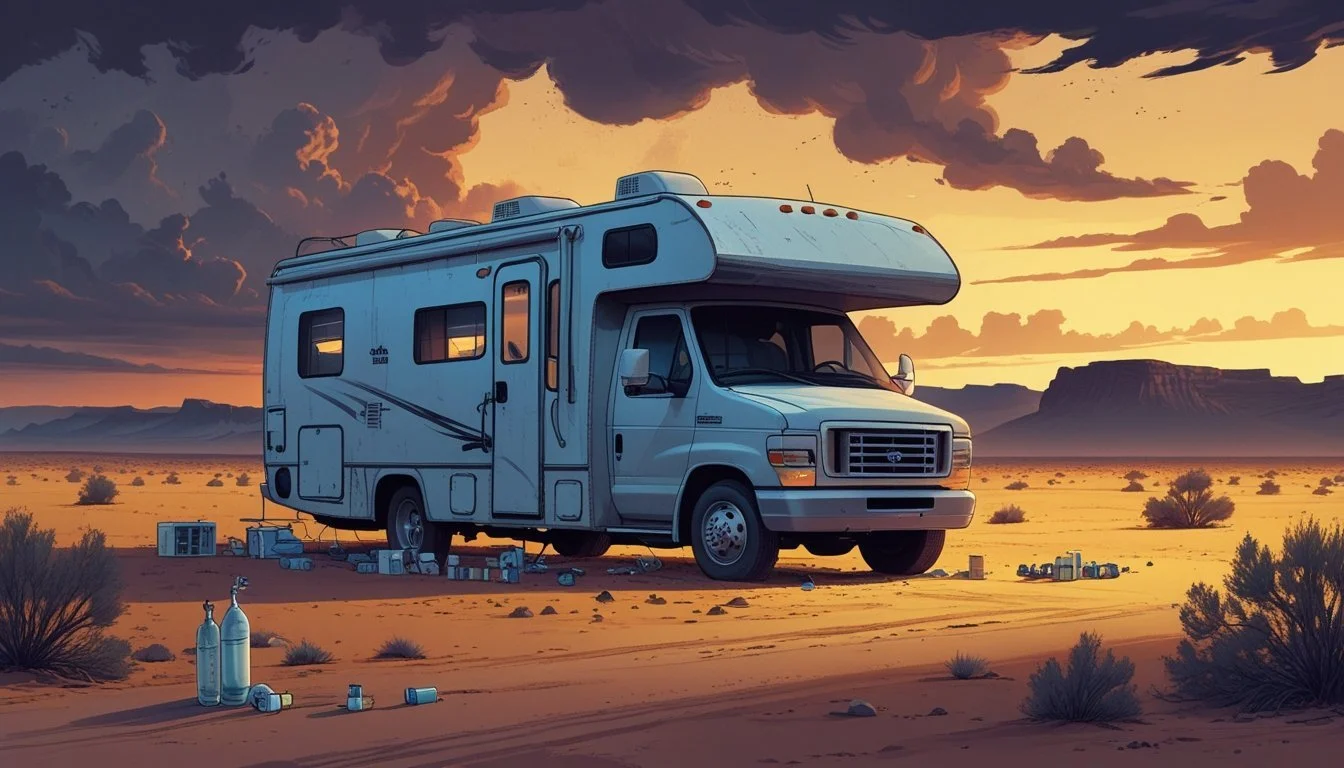
Throughout Breaking Bad, the RV stands as more than a backdrop for crime; it becomes a central stage where ethical dilemmas, spiritual questions, and crisis of conscience unfold. The shifting actions and attitudes within the RV reveal much about the characters’ inner struggles with justification, repentance, and the search for meaning.
Justification and Righteousness
Inside the RV, Walter White and Jesse Pinkman wrestle with the ethics of their choices. Walter often frames their meth production as a desperate act to provide for his family, turning the RV into his forum for rationalization. These discussions highlight how easily individuals justify morally questionable acts.
Walter’s pursuit of “righteousness” manifests in his arguments about the greater good. He portrays himself as a provider forced to break the law, using logic to shield himself from guilt. Jesse, meanwhile, struggles to maintain a sense of right and wrong, at times questioning Walter’s claims of justification.
This push-pull between self-justification and genuine morality makes the RV a key space for debates about what is truly righteous. It is here that the rationalizations begin to unravel, revealing the thin line between logic and self-deception.
Repentance and Mercy
Moments of regret and pleas for understanding often play out in the cramped space of the RV. Jesse, grappling with the harm they cause, seeks Walter’s forgiveness or displays remorse over their actions. The RV becomes a physical and emotional shelter where confessions of regret often occur.
Mercy, or the lack of it, emerges in tense encounters within the RV. When Jesse breaks down or when they debate the fallout of their decisions, the RV sees requests for a second chance or a sign of redemption. These moments emphasize their longing for a sense of mercy, even if it remains elusive.
The vehicle’s isolation from the outside world amplifies feelings of guilt and the search for forgiveness. For Jesse especially, the RV becomes a confessional booth, underscoring his internal struggle with guilt and desire for absolution.
Prayer and Existential Crisis
At their most desperate, characters in the RV face moments that border on prayer or existential questioning. While explicit prayers are rare, the silence and anxiety in high-stake scenes resemble spiritual pleas. Walt and Jesse’s fear and uncertainty push them to confront the possibility of fate or a higher power.
The RV—as a confined, almost sacred space—forces them into existential reflection. When danger looms, both are driven to confront the limits of their control, implicitly questioning whether their lives are governed by chance, choice, or something larger.
Walter’s repeated near-misses encourage reflection on the nature of luck and destiny, while Jesse’s despair hints at searching for meaning amid chaos. The RV, in these instances, acts almost as a sanctuary or place for reckoning with the existence of mercy or a god, even if unspoken.
Key Relationships Forged in the RV
Inside the RV, deep bonds and conflicts shaped the paths of its key occupants. Their interactions in this confined space often revealed secrets, tested loyalties, and prompted personal crises.
Walt and Jesse: Partnership and Judgment
Walter White and Jesse Pinkman’s partnership solidified within the cramped quarters of the RV. Both men brought contrasting skills and perspectives—Walt’s scientific precision, Jesse’s street instincts—leading to moments of cooperation and tension.
Key moments of trust and betrayal occurred while they worked side by side. Walt often acted as the mentor, but his decisions forced Jesse into uncomfortable moral territory, raising questions about loyalty and judgment.
The RV became a space where they both risked their lives, faced imminent dangers, and negotiated personal limits. Their conversations over the chemistry table, arguments about strategy, and shared crises often echoed the dynamics of a familial relationship, blending love, resentment, and dependence.
A table summarizing major themes:
Theme Example from RV Scenes Trust Saving each other from threats Judgment Walt’s criticisms of Jesse’s actions Dependency Needing each other to survive and succeed
The Impact on Skyler
Skyler White’s awareness of the RV—and what it symbolized—transformed her relationship with Walt. For Skyler, the RV represented secrecy, lies, and the growing gulf in their marriage.
Her suspicion and eventual discovery of Walt's criminal life led to feelings of betrayal and moral judgment. The RV, as a mobile lab, made Walt’s world inaccessible and fueled Skyler’s fears for their family's safety.
Moments involving the RV prompted Skyler to confront not only Walt’s choices but also her own boundaries regarding love and complicity. The presence of the RV forced her to weigh her role as spouse against her sense of right and wrong, causing lasting shifts in their relationship dynamic.
The Demise of the RV: Finality and Resurrection
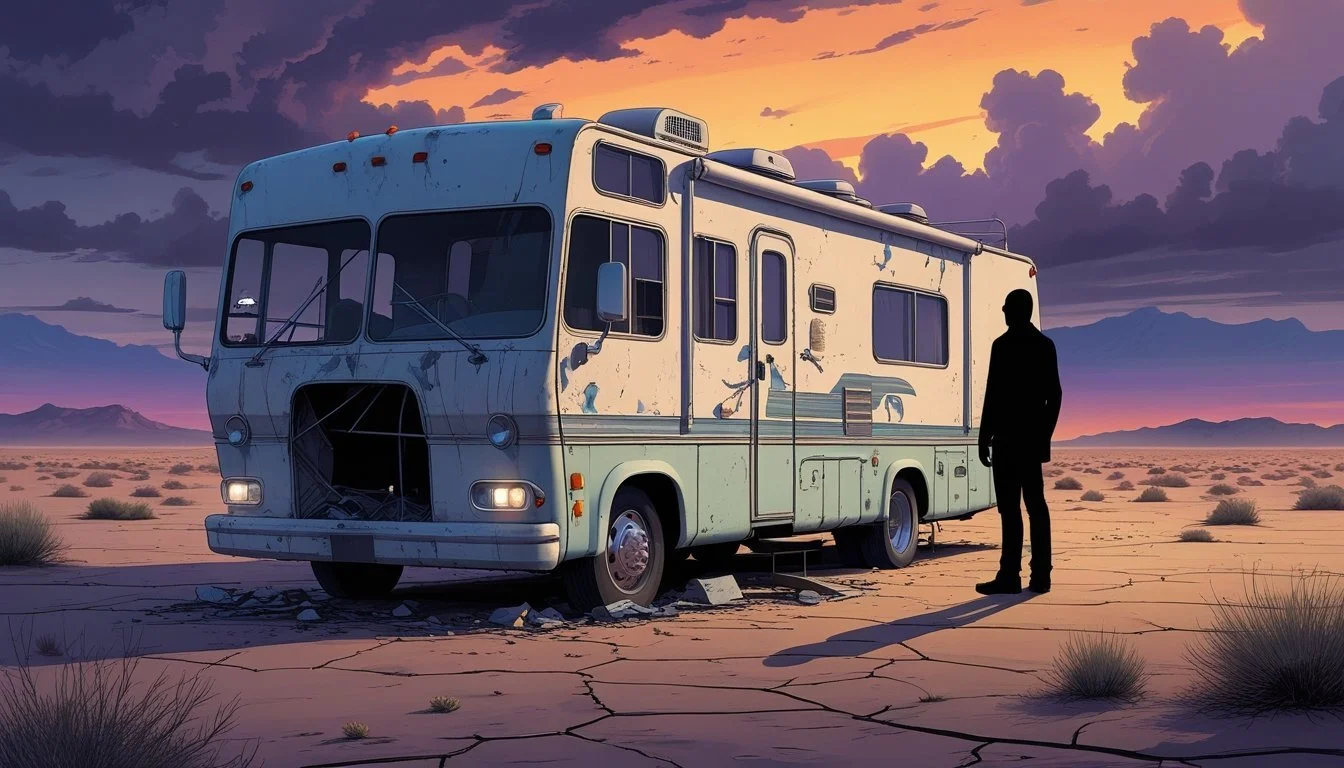
The end of the RV marks both the destruction of a crucial piece of Walter White and Jesse Pinkman's past and the beginning of its lasting legacy. Its fate intertwines with themes of evidence, resurrection, and eternity in Breaking Bad's narrative.
Destruction of Evidence
When the RV faces destruction in “Sunset” (Season 3), it’s more than a dramatic scene. Hank Schrader closes in on catching Walt and Jesse, with the RV as the key evidence tying them to their crimes. The urgency to destroy it is clear: the RV isn’t just a vehicle but a mobile crime scene.
Jesse’s deep reluctance clashes with Walt’s cold calculation. In the end, they use a junkyard crusher to utterly demolish the RV, ensuring nothing can ever be linked to them again. The tension is heightened as Hank arrives at the junkyard, only minutes too late. The RV’s destruction severs a physical link to Walt and Jesse's origin as partners, closing off their early freedom and symbolizing the point of no return.
Symbolic Resurrection and Legacy
While the RV is gone, its presence lingers throughout the series as a powerful symbol. Characters often reference it, and its memory haunts both Walt and Jesse. The show uses flashes, stories, and callbacks to keep the RV alive in the narrative.
The resurrection of the RV’s symbolism is especially clear in El Camino, where Jesse recalls moments tied to it. In Breaking Bad’s memory, the RV achieves a certain eternity—living on as a reminder of what was gained and lost. Its destruction did not erase its legacy; instead, the RV remains a marker of transformation, freedom, and irreversible decisions.
Cultural Influence Beyond Breaking Bad
The Fleetwood Bounder RV’s distinct identity in Breaking Bad paved the way for a renewed interest in vehicles as storytelling devices. Other television series and films have adopted similar strategies, using specific cars, trailers, and other vehicles to reflect character arcs and drive larger cultural conversations.
Iconic Vehicles in Television
The RV in Breaking Bad holds a place among television's most memorable vehicles, alongside the Mad Men Cadillac, Buffy’s classic Jeep and the mysterious van from Orange Is the New Black. Each vehicle is chosen not only for narrative convenience but as an extension of a character’s psychology and the show’s tone.
The Bounder’s dilapidated exterior visually contrasts with the slick professionalism often seen in criminal enterprises. In Mad Men, Don Draper’s Cadillac symbolizes upward mobility and latent insecurities, while Christina Hendricks’ character Joan is frequently framed in scenes with luxury cars to emphasize independence.
Table: Notable Vehicles in TV (with symbolism)
Series Vehicle Symbolism Breaking Bad Fleetwood Bounder RV Freedom / Doom Mad Men Cadillac Success / Identity Buffy the Vampire Slayer Jeep Agency / Rebellion Orange is the New Black Prison Van Confinement / Transition
Cross-Series Symbolism
The symbolism of the RV extends beyond Breaking Bad, influencing how viewers interpret other on-screen vehicles. Its dual representation—simultaneously a haven and a trap—can be seen echoed in films like Argo, where vehicles serve as both means of escape and sources of tension.
In shows like Orange is the New Black, the prison van becomes a moving space of vulnerability and change. In Buffy, the Jeep is tied to moments of freedom, much as the RV is to Walter White’s fleeting autonomy.
Creators use these vehicles to outwardly chart characters’ emotional journeys and societal constraints. The thematic weight assigned to vehicles in one series can reshape expectations and deepen the audience’s understanding in others.
Comparative Perspectives: Law, Society, and Morality
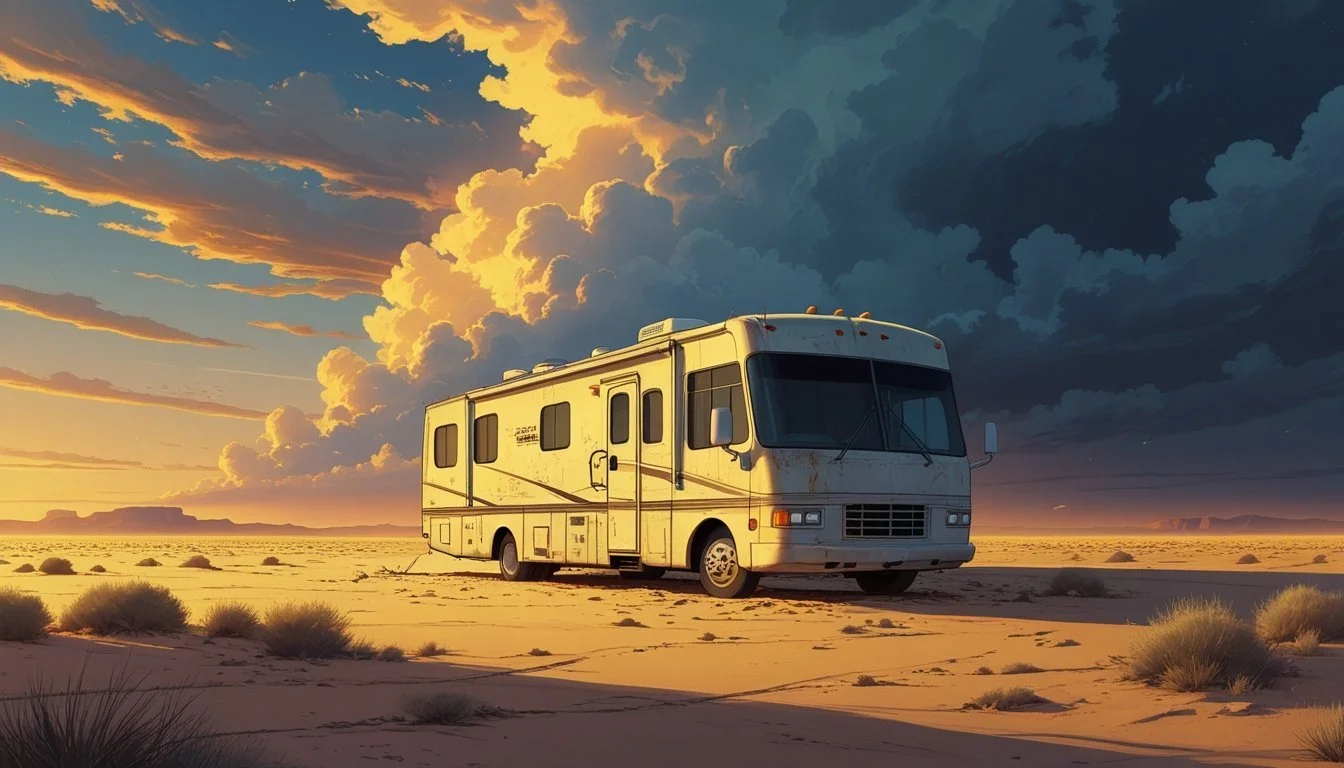
Breaking Bad’s RV not only functioned as a mobile meth lab, but also as a shifting boundary between personal ethics and the law. The vehicle moved through social spaces where legality, morality, and societal order clashed and intersected.
Legal and Ethical Dimensions
The RV’s illicit purpose foregrounds the contrast between codified law and personal morality. Walter White uses the RV to evade law enforcement, operating outside legal boundaries while justifying his actions as necessary for his family’s survival. This invokes the age-old debate about whether ends can justify means when the law is circumvented for perceived higher moral reasons.
Legal systems—such as those enforced by the Supreme Court of Canada—prioritize public safety and predictable order. In contrast, Walter’s methods embody a challenge to the collective social contract. Law exists to reinforce shared basic norms, but Breaking Bad shows that these norms can be rationalized away or contested by individuals under pressure.
Legal Principle Example:
Context RV in Breaking Bad Supreme Court of Canada Role Site of criminal activity Interpreter of legality Impact Undermines social order Upholds legal framework
Ethically, characters weigh personal needs against legality, reflecting wider societal dilemmas.
Historical and Philosophical Parallels
Throughout history, vehicles—literal or symbolic—have carried individuals beyond the everyday reach of law and authority. During the Roman Empire, certain social classes exploited legal loopholes and extraterritorial zones to pursue goals outside civic regulation, much like Walter White’s use of the RV as a sanctuary from legal oversight.
Philosophers and social theorists have long highlighted the tension between what is lawful and what is considered moral within a society. The RV mirrors this by embodying both liberation from constraints and the threat of chaos.
Comparative studies reveal that societies often turn to legal systems to codify morality, but as seen in both ancient Rome and contemporary court systems, this codification is always incomplete. The RV, as both refuge and trap, underscores the limitations of legal and moral boundaries across different historical and social contexts.
