
How Breaking Bad Turned the Suburbs Into a War Zone
Examining the Show’s Impact on Crime Drama Narratives
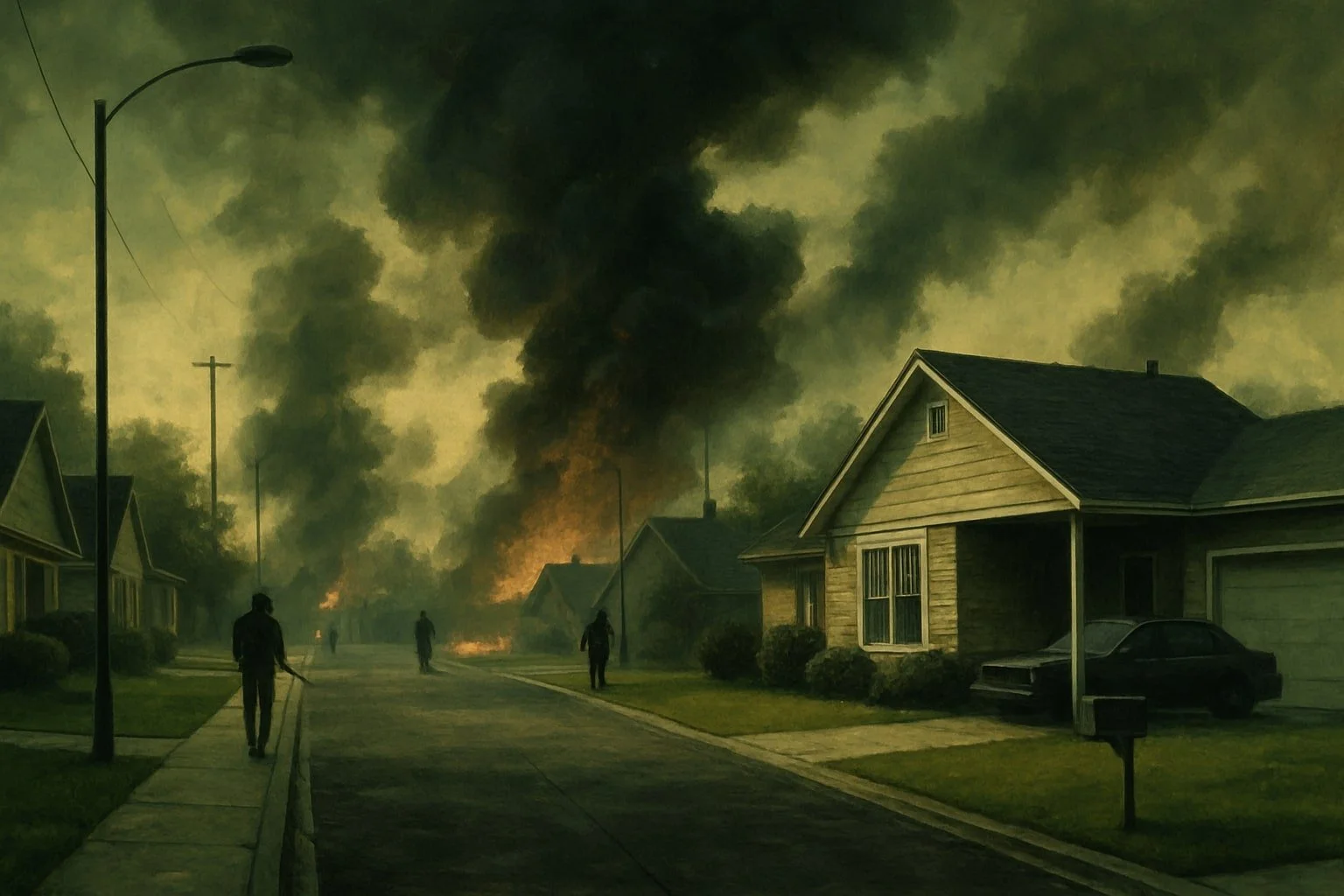
Breaking Bad redefined the typical image of suburbia by showing how everyday neighborhoods could become the backdrop for intense criminal conflict. The series transformed tranquil residential streets into battlegrounds, where danger and moral collapse could invade even the quietest cul-de-sac. Crime, tension, and violence moved into the suburbs, fundamentally changing how viewers saw these familiar settings.
The show’s impact came from its ability to merge the ordinary with the extraordinary. Viewers saw teachers, neighbors, and families caught up in drug wars and life-or-death struggles that would have seemed impossible in such a setting. This blend of normality and chaos challenged the safety and predictability often associated with suburban life.
Setting the Scene: Suburbia in Breaking Bad
Breaking Bad roots its story in the calm neighborhoods of Albuquerque, New Mexico, using the recognizable look of suburban life to amplify the show’s tension. The contrast between outward normalcy and growing peril is central, shaped by its locations, visual style, and use of the surrounding desert.
Albuquerque’s Transformation
The series redefines Albuquerque's suburbs beyond their quiet surface. Everyday places—Walt and Skyler’s house, Saul Goodman’s strip mall office, local car washes—become sites of plotting, secrecy, and violence.
Familiar locations turn unsettling as criminal activity seeps into residential streets and family homes. Regular schools, stores, and neighborhoods become backdrops for pivotal moments, making the transition from private conflict to open warfare feel especially jarring.
This transformation is intentional. By placing drug deals, betrayals, and threats among well-kept lawns and planned communities, Breaking Bad exposes the fragile boundary between order and chaos. The comfort of the suburbs is continuously undermined by new threats and moral decay.
Visual Contrast: Domesticity and Danger
The show’s visuals play on the tension between domestic settings and the risk lurking beneath. Scenes of family dinners or birthday parties happen in the same spaces where criminal plans unfold.
Contrasting imagery—such as a bloody shootout in a homey living room—reinforces the clash between safety and violence. Cinematography often accentuates everyday objects: a pool, a baby monitor, a kitchen table. These items frame illegal activities, making the viewer reconsider what is truly safe.
Key visual strategies include:
Juxtaposing warmth and sterility: Soft lighting around family scenes, harsh shadows during secretive or violent acts
Recurring motifs: Breaking Bad often repeats shots of normal life before or after acts of violence, building tension visually
This approach turns the familiar into the unsettling, reminding viewers that danger may be closer than expected.
Role of the New Mexico Desert
The New Mexico desert is not a backdrop but an active part of the show’s emotional landscape. Its vastness contrasts with the closed, private world of the suburbs.
Characters frequently step from neatly organized neighborhoods into bare, open wastelands for clandestine meetings, body disposals, and meth cooks. These scenes emphasize isolation and a loss of control that cannot be escaped within city limits.
The desert’s harsh light and wide horizons evoke exposure and vulnerability, stripping away the pretense of suburban safety. Although much of the story unfolds in Albuquerque, the proximity and inevitability of the desert make it clear that the boundaries between civilization and lawlessness are paper-thin.
Walter White’s Evolution: From Chemistry Teacher to Drug Kingpin
Walter White’s journey from a suburban chemistry teacher to the notorious drug kingpin known as Heisenberg is defined by sharp shifts in his morals, ambitions, and relationships. Health crises, family concerns, and his dynamic with Jesse Pinkman all play direct roles in this transformation.
The Descent Into Heisenberg
Walter White begins Breaking Bad as a high school chemistry teacher in Albuquerque, New Mexico. Intelligent and cautious, he struggles to support his family on a teacher’s salary. After his lung cancer diagnosis, Walter’s behavior shifts; desperation and a desire for significance drive him to use his chemistry expertise for manufacturing methamphetamine.
He slowly abandons his law-abiding principles. Each criminal act becomes easier as he accumulates money and power. By adopting the alias "Heisenberg," Walt distances himself from his former self, embracing ruthlessness and intimidation. Local neighborhoods and familiar suburbs, once symbols of safety, become the backdrop for violent confrontations and criminal activities.
Walter’s transformation is marked by clear milestones: eliminating rivals, deceiving loved ones, and crossing moral lines previously unthinkable for him. These actions redefine not only his life but the environment around him.
Motivations: Lung Cancer and Family
Walter’s lung cancer diagnosis is the initial catalyst for his criminal enterprise. Faced with high medical bills and a sense of inadequacy as a provider, he turns to meth production. He justifies each step by claiming it is for his family's future, particularly his wife Skyler and son Walt Jr.
Key drivers:
High cost of cancer treatment
Fear of leaving his family destitute
Perceived lack of respect in both career and personal life
While his health deteriorates, his resolve intensifies. Over time, providing for family becomes a rationalization for his growing ambition and need for control. Walter’s sense of self-worth and mortality are deeply tied to his decisions, and family remains a constant—though increasingly complicated—motivation.
The Influence of Jesse
Jesse Pinkman, a former student, becomes Walter’s essential partner in the meth operation. Jesse brings street knowledge and connections, while Walter provides technical expertise. Their collaboration develops into a complex, shifting relationship marked by tension, loyalty, and manipulation.
Walter acts as both mentor and manipulator, guiding Jesse through the criminal world but frequently using him to achieve darker aims. The emotional bond between them wavers, as Jesse struggles with guilt and Walter pushes him to new extremes.
Jesse is instrumental in the operation’s success. Without his insight into drug networks and ability to navigate criminal circles, Walter’s ascent to kingpin status would not have been possible. Their partnership shapes many of the show’s most critical turning points.
The Suburban War Zone: Violence and Crime
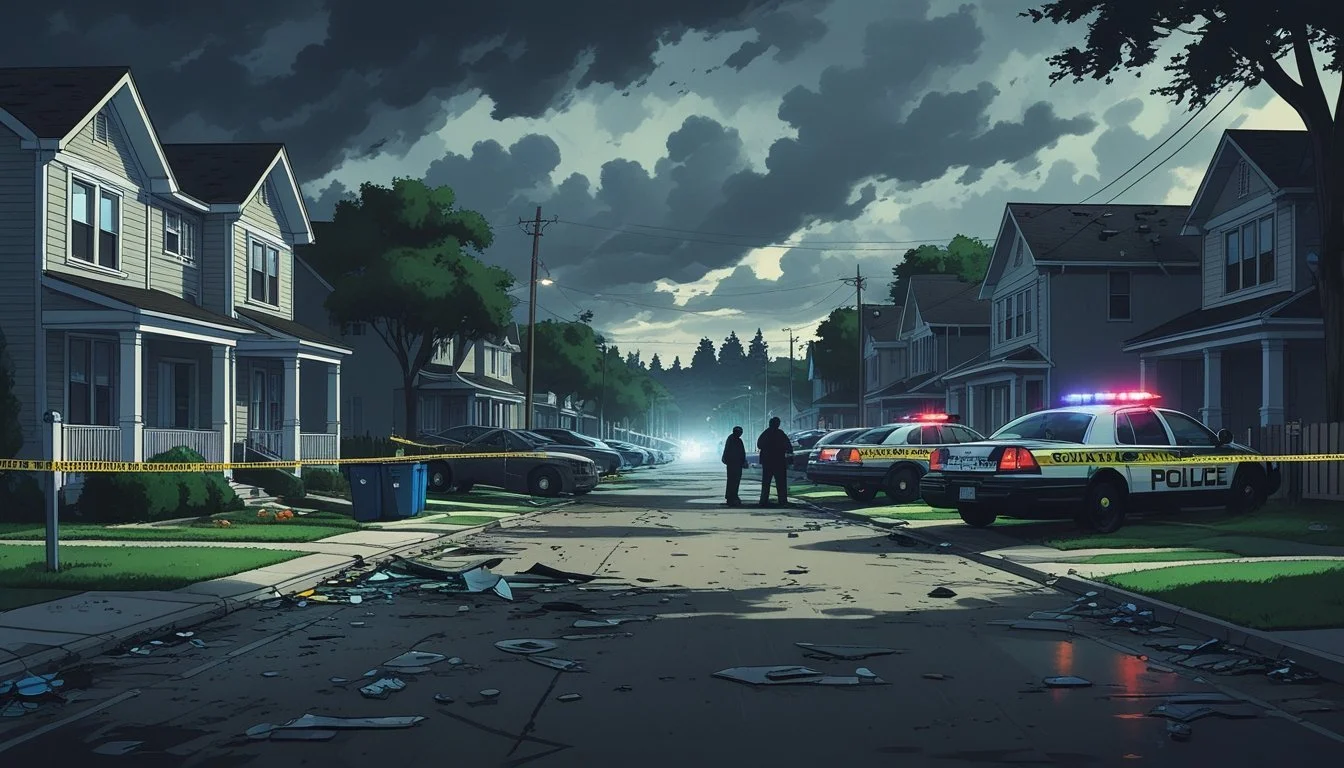
Breaking Bad changed the image of the suburbs by introducing real threats—home invasions, poisonings, and personal tragedies—where characters once felt secure. The series highlights the vulnerability of domestic spaces as criminal elements cross into family homes.
Home Invasions and Captivity
Throughout Breaking Bad, several key scenes show the collapse of safety within suburban walls. Home invasions target both the innocent and the guilty, frequently holding people captive in their own houses.
One notable incident is when Walter White and Jesse Pinkman are held hostage by Tuco Salamanca in a remote house, showing how quickly suburban settings can turn hostile. Jane Margolis and Jesse face danger inside their own apartment, which becomes a site of both substance abuse and criminal threats.
Home invasions are often tied to drug activity or attempts to gain leverage over other characters. The show makes it clear that even outwardly quiet neighborhoods are not insulated from violence or unpredictable aggression.
Use of Poison and Ricin
Breaking Bad repeatedly uses poison as an instrument of control and assassination. Ricin, a deadly toxin, becomes a plot device that transforms ordinary homes into sites of calculated attacks.
Walter White synthesizes ricin in his suburban kitchen, storing it in everyday objects and waiting for the right moment to use it against his enemies. The tension surrounding the eventual use or discovery of ricin seeds fear throughout the series.
Besides ricin, other poisons like Lily of the Valley enter the plot. Walter’s willingness to poison a child, Brock Cantillo, demonstrates how far suburban dwellers are drawn into danger. The risk of hidden toxins in household items makes domestic spaces feel unsafe and fraught with suspicion.
Tragedy at Home
The series anchors much of its emotional weight in personal tragedy, often occurring within suburban homes. Key character deaths and crises unfold in spaces meant for comfort.
Jane Margolis’s fatal overdose in her apartment highlights the destructive consequences of addiction and neglect. Her father’s grief and Jesse’s trauma reinforce how quickly normalcy can unravel behind closed doors.
Other tragedies, such as the dissolution of the White family, take root in the secrecy and deception cultivated within the home. The show underscores how criminal life penetrates the most intimate areas, erasing the boundary between survival and suffering.
Criminal Networks Invading the Suburbs
Organized crime did not stay confined to the city’s margins in Breaking Bad. Violent criminal leaders and their operations entered residential neighborhoods, shifting the sense of safety and reshaping community dynamics in Albuquerque.
The Rise of Tuco
Tuco Salamanca, a key player in the Mexican cartel, was among the first to forcefully insert violent criminality into the suburban landscape. He established his presence quickly, using intimidation and erratic violence to secure local distribution. Tuco did not respect traditional boundaries, often conducting business and confrontations in broad daylight near middle-class homes.
His confrontations with Walter White and Jesse Pinkman often took place in otherwise quiet surroundings, highlighting the jarring contrast. Suburban Albuquerque, once considered insulated from cartel violence, became a staging ground for drug deals, abductions, and brutal fights. This new reality erased the illusion that the suburbs were entirely safe from the criminal underworld.
Gus Fring’s Empire
Gus Fring presented himself as a legitimate businessman while secretly controlling a vast criminal drug network. He blended into suburban life as a respected local entrepreneur, managing Los Pollos Hermanos and supporting community events, which masked his illicit operations.
His drug empire relied on the infrastructure of the suburbs, including warehouses, laundromats, and underground meth labs. Fring’s methods were calculated, and he surrounded himself with layers of security and loyal employees. The presence of criminal activity behind suburban facades exposed how organized crime can operate efficiently and invisibly within ordinary neighborhoods.
Key elements of Gus Fring’s approach:
Use of legal businesses as fronts
Infiltration of the community’s daily life
Maintaining a façade of legitimacy for protection
Hector Salamanca’s Revenge
Hector Salamanca’s vendetta against Gus Fring escalated cartel violence in suburban settings. Confined to a wheelchair yet undeterred, Hector coordinated attacks and intimidation from nursing homes and residential areas, making personal revenge a public spectacle.
His animosity fueled a cycle of retaliatory attacks, endangering not only criminal associates but also innocent residents near the conflict zones. The explosion that killed Hector and Gus happened in a senior care facility, vividly illustrating how cartel warfare could erupt anywhere, including places seen as safe havens. The reach of Hector’s revenge left visible scars on previously untouched suburban communities.
Enforcement at the Front Door: The DEA and the Law

In Breaking Bad, law enforcement is not a distant force but a constant presence embedded in everyday life. The series shows the DEA’s reach extending directly into the neighborhoods and homes of its characters, intensifying the conflict.
Hank’s Pursuit
Hank Schrader, a dedicated DEA agent, becomes the main legal adversary as he investigates the Albuquerque meth scene. His connection to Walter White as both brother-in-law and investigator adds complexity and increases the stakes.
Hank’s commitment manifests in tireless surveillance, raids, and evidence gathering. His work is not just a backdrop but drives much of the plot, pulling the suburbs into the heart of criminal investigations.
Key investigative tools include:
Search warrants and surveillance
Interagency cooperation
Use of confidential informants
Hank’s efforts put real pressure on the White family and their associates. The DEA’s local presence means that suburban homes are not immune to the threat of raids or legal scrutiny.
Legal and Moral Boundaries
The show repeatedly addresses the challenges DEA agents face while adhering to legal and ethical standards. While Hank follows procedures for warrants and evidence collection, there are moments when legal lines blur in pursuit of justice.
The tension between protocol and necessity is evident. Hank is sometimes forced to push limits, such as bending rules for urgent investigations. This raises questions about the appropriate balance between upholding the law and achieving results.
Ethical dilemmas also arise when dealing with informants or confronting violent suspects. The DEA characters must weigh what is legal against what is right, often in high-stress and ambiguous situations.
These challenges highlight the complexity of law enforcement in suburban settings, exposing the difficulties of maintaining legal boundaries as criminal activities invade residential life.
Family Under Siege: Skyler and Domestic Fallout
Breaking Bad uses Skyler’s home life to expose how crime infiltrates every corner of suburban existence. Personal safety, family unity, and trust erode as Walt’s secrets turn the family’s daily reality into a battleground.
Skyler’s Dilemma
Skyler White faces mounting pressure as her husband’s criminal activities overtake their household. She finds herself caught between protecting her children and shielding her husband, decisions forced upon her by Walt’s continued deception. Her attempts at control, such as laundering money through the car wash, highlight her desperation to maintain a semblance of normalcy.
As law enforcement closes in, Skyler’s options become limited and fraught with risk. She takes calculated actions, like distancing herself from Walt at key moments or cooperating with the police when threatened. Skyler’s shifting loyalties and anxiety demonstrate how suburban security is an illusion when criminality enters the home.
Impact on Children and Relationships
The fallout from Walt’s actions deeply affects the White family’s relationships, especially between Skyler and her children. Walt Jr. is shielded from the truth for most of the series, but tension and confusion rise as family patterns change. Baby Holly is used as leverage in family disputes, illustrating the high emotional cost.
Extended family, including Hank and Marie, are pulled into the conflict, blurring lines between domestic life and criminal investigation. Trust erodes; everyday decisions become charged with suspicion and fear. The home, once a symbol of stability, transforms into a contested space where safety is never guaranteed.
Cultural Impact and Legacy
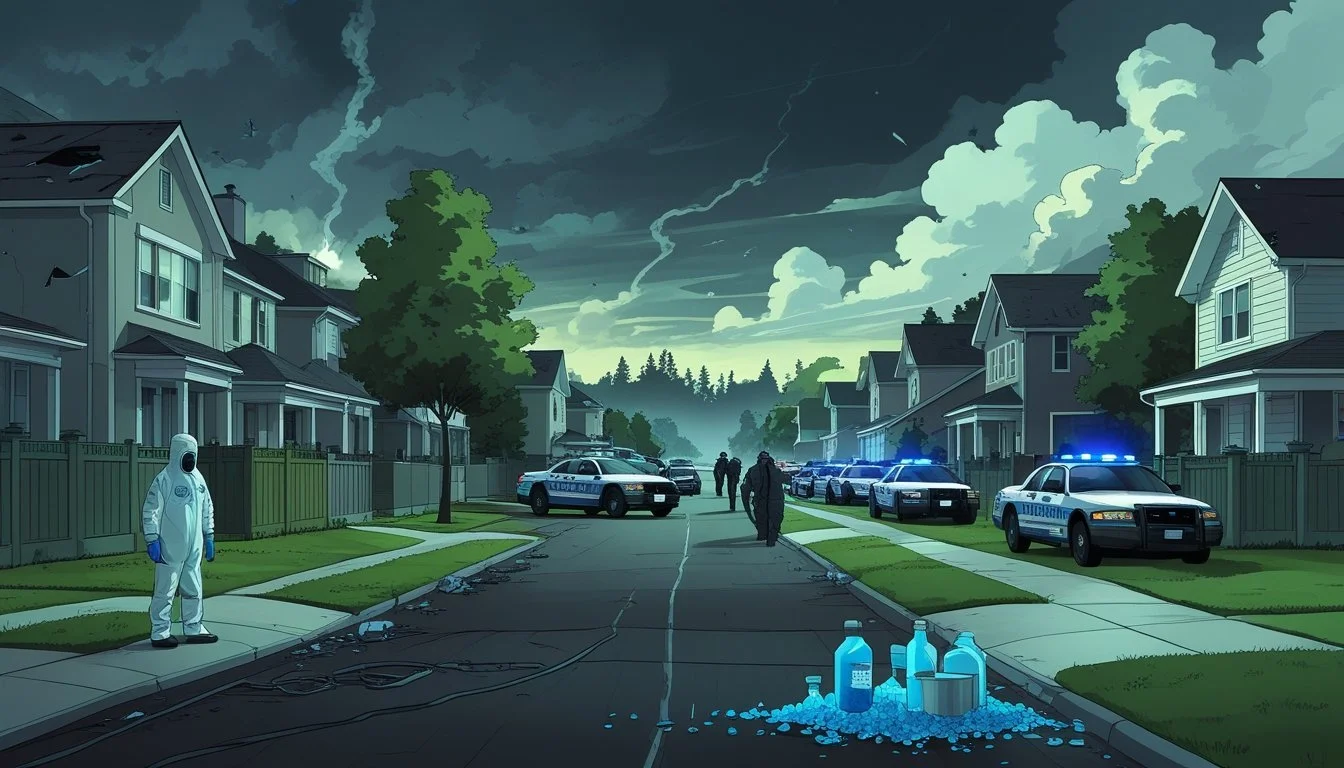
Breaking Bad reshaped television storytelling by placing stark criminal conflict into the context of the modern American suburb. The show’s creative leadership, cast, and extended universe contributed substantially to how audiences perceive the intersection of ordinary life and moral crisis.
Redefining the American Suburbs
Breaking Bad challenged the cultural image of the suburbs as quiet and safe by setting violent drug operations, power struggles, and criminal activities in tranquil Albuquerque neighborhoods.
Walter White’s transformation from teacher to meth manufacturer unfolded in suburban kitchens, living rooms, and cul-de-sacs, making the extraordinary feel unsettlingly common. The show spotlighted how personal desperation and moral choices could unravel behind closed doors, repositioning suburbia as a battleground.
This subversion was more than just visual. The series drew attention to how everyday people might confront crime and corruption in their own communities. Its portrayal has influenced later works that seek to depict the hidden darkness within ordinary lives.
Influence on Better Call Saul
Better Call Saul, the critically acclaimed spin-off, carries forward Breaking Bad’s suburban contradictions. The prequel deepens the narrative by exploring legal and ethical decline through characters like Jimmy McGill (Saul Goodman), again set in familiar, everyday locales.
Elements carried over:
Moral ambiguity in personal and professional settings
Domestic spaces as sites of life-changing decisions
The thin line between legality and crime
Better Call Saul refines the original’s style while extending its influence on narrative pacing and character complexity in TV drama. The suburban setting remains integral, showing its versatility in both series.
The Vision of Vince Gilligan and Bryan Cranston
Vince Gilligan, as creator and primary writer, deliberately selected the suburbs to juxtapose normalcy and danger. His vision was realized through tight scripts, ethical dilemmas, and detailed world-building.
Bryan Cranston’s portrayal of Walter White was pivotal. He captured the psychological collapse and transformation of his character, making Walter’s moral descent feel plausible in a suburban setting.
Gilligan’s approach and Cranston’s performance together elevated Breaking Bad’s cultural resonance, redefining expectations for TV crime dramas and the portrayal of “ordinary” environments. Both shaped the show’s enduring legacy by using suburbia not as a background, but as an active element of the story’s tension.
