
What Walt’s Chemistry Lessons Reveal About His Character and Moral Complexity
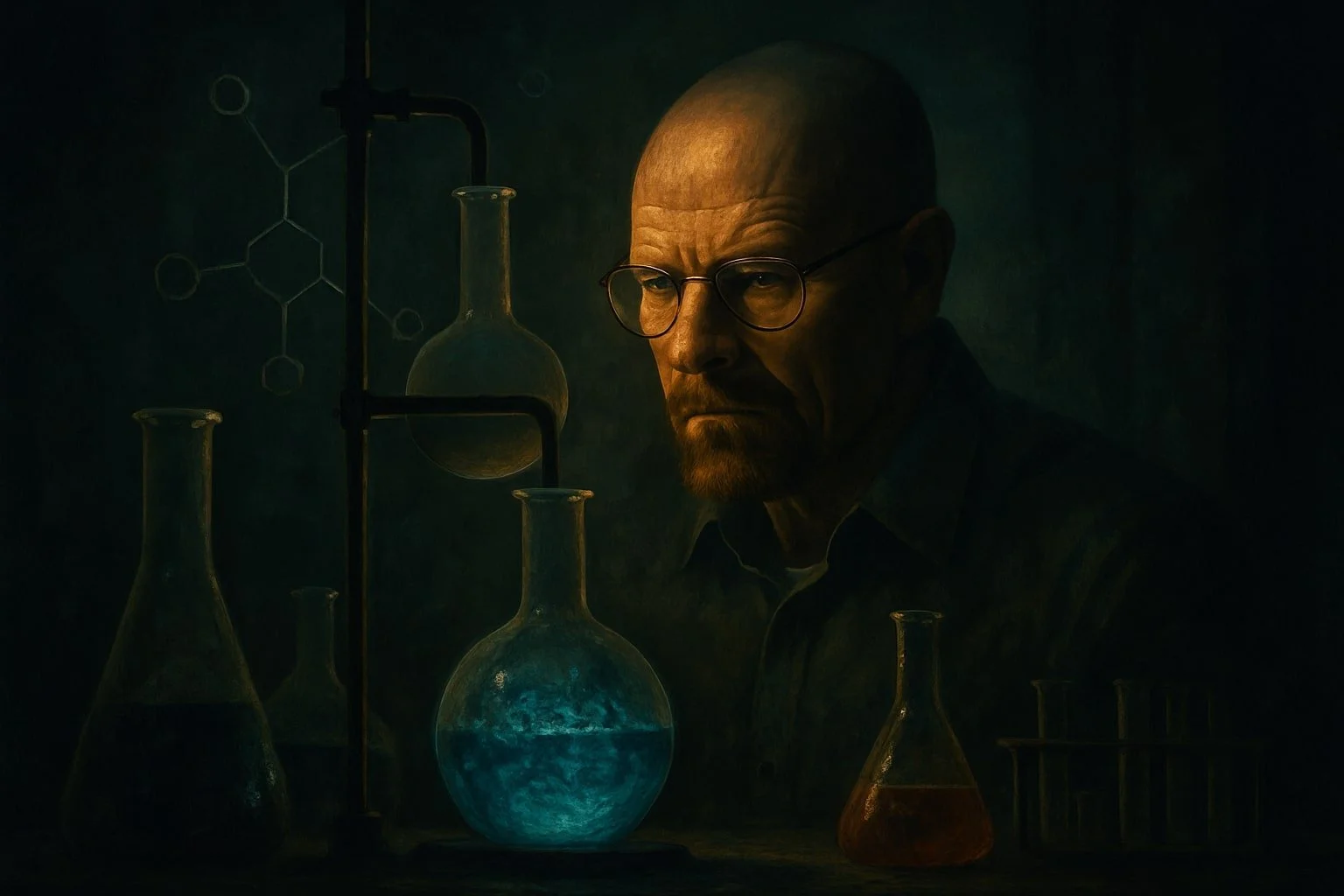
Walter White’s chemistry lessons in Breaking Bad do more than teach reactions and formulas—they reveal his mindset, personality, and motivations. Through these scenes, AMC’s television series, created by Vince Gilligan, uses chemistry as a lens for understanding Walt’s transformation and deep need for control and respect. Walt’s lectures show his passion for chemistry, but they also highlight his desire to prove his intelligence and command authority, both in the classroom and outside it.
These moments in Breaking Bad offer insight into how Walt justifies his actions and choices, framing illegal activities as rational experiments rather than emotional decisions. By showcasing his deep knowledge and attention to detail, the show positions chemistry as a core part of his identity and reveals why he feels drawn to the drug trade. The lectures become a window into his complex character, hinting at both his moral descent and his underlying ambitions.
How Walt’s Chemistry Lessons Reflect His Personality
Walter White’s use of chemistry in the classroom mirrors his approach to life outside of teaching. His lectures are not only technical explanations but also windows into his mindset, priorities, and transformation as both a person and a criminal.
Applying Scientific Principles to Life
Walt’s lessons often draw direct parallels between scientific concepts and real-world situations. For example, in the series pilot, he asserts, “chemistry is the study of change”—a phrase underlining not only scientific truth but also his evolving character.
He frames life’s challenges as problems to be solved methodically. This analytical and clinical approach shapes his decisions both as a teacher and a methamphetamine manufacturer. By treating obstacles and dangers through a scientific lens, Walt rationalizes morally questionable actions.
His speech patterns and lesson structures reveal a preference for order, predictability, and control. For him, uncertainty is a variable to be managed rather than accepted.
Linking Chemistry to Control and Power
Walt’s mastery of chemistry is his source of personal power. Scientific expertise, once used for education, is repurposed as a tool for dominance in the drug world.
He teaches not just reactions and formulas, but also a way of seeing the world through the lens of control. When circumstances threaten his family or ego, Walt applies chemical knowledge to assert superiority, such as his use of mercury fulminate to intimidate rival drug dealers.
Chemistry, for Walt, is no longer about knowledge. It becomes an instrument to manipulate, intimidate, and demonstrate superiority—both personally and professionally. This drive for power marks a drastic departure from his humble image as a high school chemistry teacher.
Chirality Symbolism in Walt’s Moral Descent
Chirality, the concept of molecules as mirror images that cannot be superimposed, appears in Walt’s lectures on organic chemistry. He describes two versions of a molecule: one harmless, the other deadly—a theme that parallels his moral journey.
Walt’s discussion of chirality symbolizes the duality within himself. He transitions from a law-abiding family man to a ruthless figure in the drug trade, embodying both sides of the ‘mirror image.’
This scientific idea is not just a classroom metaphor. It functions as a recurring symbol for Walt’s shifting ethics and growing willingness to embrace darker choices, highlighting his transformation through objective, chemical terms.
The Chemistry Teacher’s Influence on Jesse
As a chemistry teacher, Walt’s mentorship significantly shapes Jesse Pinkman’s growth. Walt’s teaching extends beyond factual knowledge, instilling in Jesse a sense of precision, curiosity, and confidence in their illegal enterprise.
Jesse, once a struggling former student, begins to adopt some of Walt’s disciplined, methodical approach to problem-solving. The dynamic between the two—teacher and student—evolves into a partnership with shifting power balances predicated on expertise.
Walt’s insistence on scientific rigor and discipline often clashes with Jesse’s initial recklessness. Over time, Jesse becomes not just an apprentice in chemistry, but also a reflection of the influence wielded by Walt as both an educator and manipulator.
Chemistry as a Metaphor for Transformation
Chemistry in Breaking Bad is not just a subject Walt teaches; it is woven into the structure of his journey. His knowledge of chemistry reflects the transformation of matter and identity, while the process of methamphetamine synthesis symbolizes personal and moral change.
Walt’s Shift from Teacher to Heisenberg
Walter White's transformation from a mild-mannered chemistry teacher to the criminal mastermind Heisenberg is marked by his increasing use of scientific principles for illicit purposes. He channels his deep understanding of chemical reactions and laboratory methods into the synthesis of crystal meth, moving from addressing students in a classroom to commanding the drug trade.
This professional shift mirrors his personal evolution. Where he once taught about change as an academic topic, he becomes the agent of his own radical change. Chemistry’s focus on transformation—how elements combine, break apart, and become unrecognizable—serves as an apt analogy for his character arc.
Walter’s lessons, both in and out of the classroom, illustrate his belief in control and mastery over materials and situations. This belief grows into arrogance as he embraces the Heisenberg persona.
Breaking Bad’s Exploration of Change
Breaking Bad centers its storytelling on the concept of change. As Walt explains in the opening episode, chemistry is "the study of change." This principle is reflected not only in the physical reactions he demonstrates but in his own evolving morality and self-concept.
The show uses chemistry as both a literal and figurative catalyst. Just as a catalyst accelerates reactions without being consumed, new challenges and decisions push Walt further on his path—from family man to feared figure in the drug trade.
Every stage of Walt's descent is paralleled by a corresponding transformation in the laboratory. The meticulous nature of his work with meth mirrors the precision with which he manages his criminal life. Both forms of transformation are scientific and methodical yet deeply unpredictable.
Symbolism of Methamphetamine Synthesis
The process of synthesizing methamphetamine is a focal point for the series. Walt's approach is careful, deliberate, and exacting, reflecting his identity as a scientist. Each batch he creates is not only a product but a symbol of his growing power and confidence.
Meth synthesis is more than a means to an end; it represents the intersection of knowledge and moral compromise. The purer the product, the further Walt distances himself from his former life and embraces his new role in the underworld.
This symbolic act underscores the story’s exploration of transformation. The chemical conversion of raw materials into crystal meth mirrors the changes within Walt—subtle at first, but irreversible and profound. These moments in the lab become milestones in his journey from Walter White to Heisenberg.
Knowledge, Pride, and Emasculation in Walt’s Teaching Style
Walt’s role as a high school chemistry teacher exposes core facets of his personality. His classroom methods, sense of self-worth, and interactions outside school highlight underlying tensions and ambitions.
Intellectual Superiority and Pride
Walter White possesses a Ph.D. in chemistry and has contributed to Nobel Prize-winning research. In the classroom, he often teaches far beyond the basics, bringing advanced ideas and passion to his lessons. This depth reflects his immense pride in his scientific expertise.
He takes visible satisfaction in demonstrating chemical principles with precision. Frequently, Walt’s language reveals a subtle sense of superiority; he corrects others quickly or expresses impatience when students cannot keep up. For Walt, teaching chemistry is not just a job—it is a means of affirming his intellect.
Key Behaviors:
Conducts experiments that impress students.
Uses technical language confidently.
Relies on his credentials to assert authority.
Emasculation and the Pursuit of Respect
Despite his achievements, Walt’s life as a teacher leaves him feeling undervalued. His graduate school partner's success and the modest teacher’s salary feed a sense of emasculation. Walt’s pride is often bruised, especially when compared to more outwardly successful men.
These emotions influence his interactions at home and work. The contrast between his past achievements and present circumstances stirs frustration and insecurity. After his cancer diagnosis, this sense of emasculation intensifies, fueling risky choices as he seeks to reclaim lost respect and agency.
Key Impacts on Walt:
Resentment towards former colleagues’ wealth.
Sensitivity to perceived slights from family or peers.
Decisions driven by a need to prove himself.
Walter’s Relationship with the DEA and Law
Walt’s brother-in-law, Hank, works for the DEA, adding another layer to Walt’s struggle with pride and authority. While Hank is celebrated for his work in drug enforcement, Walt feels overlooked within his own family. Hank’s confidence and status increase Walt’s sense of inadequacy.
Interactions at home often underscore this dynamic. Walt is quiet at family gatherings but becomes defiant in private. The contrast between Hank’s profession and Walt’s secret criminal activities highlights themes of pride, rivalry, and the desire for recognition, even within the boundaries of law and morality.
Relevant Context:
DEA’s role raises the stakes of Walt’s decisions.
Familial admiration tilts towards Hank, deepening Walt’s resentment.
Walt’s knowledge becomes a tool to outsmart law enforcement.
The Impact of Walt’s Chemistry Expertise on Others

Walter White’s advanced chemistry skills do not exist in a vacuum. His expertise directly changes the lives and trajectories of those closest to him, wielding both empowering and destructive effects.
Jesse Pinkman’s Growth Under Walt’s Tutelage
Walt’s mentorship allows Jesse Pinkman to transform from a hapless small-time dealer into a skilled meth manufacturer. Through explicit lessons in chemical processes, Jesse gains confidence and technical ability, distinguishing his product in a saturated market.
Jesse learns not just textbook chemistry but develops keen problem-solving skills by dealing with real-world challenges—such as creating a battery out of scrap metal and neutralizing hazardous situations with scientific precision.
This apprenticeship, however, comes with increased exposure to danger and moral ambiguity. Jesse’s loyalty to Walt, born from shared success and dependency on Walt’s expertise, repeatedly places him at risk. As Jesse’s technical abilities grow, so does his entanglement in violent and illegal activities, showing how knowledge can both empower and imperil.
Jane Margolis and Consequences of Addiction
Jane Margolis’s relationship with Jesse intersects with Walt’s world, highlighting the destructive path of addiction. Jane, a recovering addict, relapses alongside Jesse after being exposed to the lucrative proceeds of their meth business—a business only possible due to Walt’s skills.
Walt is directly involved in the consequences of Jane’s addiction when he chooses not to intervene as she overdoses. His decision is informed by both a paternalistic view of Jesse and a cold calculation regarding his criminal enterprise.
The tragedy of Jane reveals how Walt’s scientific prowess indirectly contributes to personal loss. While chemistry becomes a means for Walt to exert influence, it also drives others—like Jane and Jesse—toward increasingly tragic outcomes through addiction and dependency.
Chemistry, Morality, and the Drug Trade
Walter White’s understanding of chemistry directly shapes his approach to the drug business, influencing both his technical success and ethical decisions. The relationship between his scientific skill, the structure of the meth operation, and interactions with figures like Gustavo Fring provides insight into the evolution of his character.
Organic Chemistry and the Structure of the Drug Business
Walt’s expertise in organic chemistry forms the backbone of his entry into the drug trade. Unlike traditional meth producers, he applies laboratory precision, synthesizing a high-purity product that quickly gains notoriety.
His knowledge allows him to control every variable in production, from chemical reactions to purity levels. This technical edge sets him apart from competitors and attracts buyers seeking consistency and strength.
The structure of the meth business mirrors principles of organic chemistry—organization, adaptation, and reaction to changing conditions. Walt’s meticulous approach brings a scientific rigor to a chaotic criminal world, emphasizing the importance of method and expertise in illicit enterprise.
Gustavo Fring’s Manipulation of Walt’s Abilities
Gustavo Fring recognizes Walt’s potential and manipulates it for organizational gain. He offers advanced lab resources and funding, creating an environment where Walt can maximize his chemistry prowess while producing meth at scale.
Gus’s operation depends on Walt’s skills to manufacture a product unmatched in purity. The relationship is transactional—Gus leverages Walt’s expertise to strengthen his own position in the drug trade, while Walt gains security and resources previously unavailable.
Their dynamic highlights the intersection of scientific skill and criminal strategy. Gus’s calm efficiency draws out Walt’s ambitions, leading to a collaboration marked by mutual benefit and mounting distrust as moral lines are tested.
Moral Complexity and Character Development
Walt’s journey through the drug trade is marked by increasing moral ambiguity. His chemistry background, once a tool for teaching, becomes a means to justify choices that grow progressively darker.
As the business expands, Walt’s ethical boundaries shift. Key decisions, such as allowing Jane to die, illustrate how scientific detachment can bleed into personal life, muting moral concerns in favor of self-preservation and success.
The transformation from teacher to drug kingpin is gradual but significant. Chemistry, in Walt’s hands, is not just a science but a rationale for power, manipulation, and ultimately, the erosion of his previous values.
Supporting Characters: Reactions and Adaptations

Walter White’s chemistry lessons influence those closest to him, shaping not just his fate but the lives and choices of key supporting characters. These individuals respond and adapt to Walt’s growing expertise and ambition, reflecting the tension and complexity within his world.
Skyler White’s Evolving Role
Skyler White, played by Anna Gunn, initially functions as Walt’s concerned and unknowing spouse. As she uncovers the truth about his criminal activities, Skyler’s stance shifts from shock and confrontation to reluctant participation.
She leverages her own strengths in accounting and logistics, managing the car wash business for money laundering. Her practicality and caution reflect a calculated approach to Walt's escalating risks.
Skyler struggles with moral boundaries, often pressured by both fear for her family and Walt’s increasingly manipulative tactics. Her adaptation demonstrates how deeply Walt’s actions complicate the lives of those around him, forcing them to make difficult choices of their own.
Saul Goodman and Criminal Enterprise
Saul Goodman’s entrance marks a turning point in Walt's operation. As a lawyer with deep connections in Albuquerque’s criminal underworld, Saul becomes indispensable for handling legal, financial, and logistical threats.
He introduces Walt and Jesse to methods of laundering money and evading law enforcement. Saul’s resourcefulness and flexibility allow the operation to expand, demonstrating his value as more than just legal counsel.
Bob Odenkirk’s portrayal balances comic relief with shrewdness, reflecting the eclectic dangers of the criminal world. Saul adapts quickly to shifting dangers, and his advice and networks repeatedly pull Walt out of precarious situations.
Tuco and the Underworld of Albuquerque
Tuco Salamanco, a violent and unpredictable drug dealer, embodies the dangers introduced by Walt’s entry into Albuquerque’s criminal landscape. His explosive temper and erratic behavior challenge Walt’s scientific approach and problem-solving skills.
Early interactions with Tuco force Walt to use his knowledge of chemistry as both a tool and a weapon. The infamous meeting, where Walt detonates fulminated mercury, illustrates the collision between order and chaos.
Tuco’s reactions are shaped by a mix of fear, respect, and suspicion, setting a precedent for future criminal encounters. His presence signals the consequences of Walt’s ambitions and the volatile alliances he must navigate.
Cultural Impact and Legacy of Walt’s Chemistry
Walter White’s chemistry knowledge is a foundation for both his criminal persona and the unique appeal of Breaking Bad. The show’s reputation for authenticity and depth is shaped by Bryan Cranston’s performance, genre innovation, and the integration of scientific concepts.
Bryan Cranston’s Performance and Character Arc
Bryan Cranston’s portrayal of Walter White is detailed and layered. He uses Walt’s chemistry background to express subtleties in the character’s shift from a mild-mannered teacher to a calculating figure known as Heisenberg.
Cranston’s approach is marked by physical nuance—measured gestures, controlled speech, and an evolving posture. These choices reinforce Walt’s growing self-assurance and transformation, reflecting technical and personal mastery.
Chemistry lessons serve as dramatic turning points. When Walt explains chemical reactions or crafts new methods, Cranston’s delivery demonstrates Walt’s pride in his intelligence. This pride becomes intertwined with his moral descent.
Breaking Bad’s Influence on TV History
Breaking Bad stands as a landmark in television history because it merges character-driven drama with detailed scientific realism. Its influence can be seen in the rise of other series featuring complex protagonists and morally ambiguous storytelling.
The series pushed the boundaries of what cable TV could accomplish. High production values, serialized storytelling, and careful attention to technical accuracy set new standards. This contributed to what some critics have called a “renaissance” for television drama.
Walter’s transformation, rooted in his chemistry expertise, became synonymous with power and fear in popular culture. The show’s lasting presence in internet discussions and academic circles highlights its broad cultural legacy.
Storytelling Techniques Shaped by Scientific Themes
Chemistry isn’t just background; it shapes the structure and progression of the story. Scientific principles are often woven directly into plot devices and visual motifs, such as the use of periodic table elements in episode titles.
Key episodes hinge on chemical logic, like the creation of fulminated mercury or innovative solutions to narrative obstacles. These moments add tension and authenticity, framing Walt’s genius as both a solution and a threat.
Writers use chemistry as a metaphor—not only for change in matter, but for shifting identities. This scientific approach grounds the series in realism and gives thematic weight to the narrative, distinguishing it from typical crime dramas.
Season 2: Evolution of Chemistry’s Narrative Role
In Season 2, chemistry’s role in the story grows increasingly sophisticated. The season explores the practical and symbolic implications of Walt’s skills as he becomes more deeply involved in the drug trade.
Jesse Pinkman, Walt’s partner, begins to internalize his mentor’s lessons. He moves from passive participant to an active, competent co-producer. This shared knowledge deepens their alliance and establishes chemistry as a source of agency for both.
The narrative in Season 2 employs chemistry to drive suspense and shape character decisions. Walt’s scientific problem-solving creates both opportunities and unforeseen complications, stressing the limits of control even for someone with academic mastery.
