
How Breaking Bad Uses Silence More Powerfully Than Dialogue to Elevate Tension and Storytelling

Breaking Bad stands out among TV dramas because it uses silence not simply as a pause, but as a powerful tool stronger than dialogue to build tension and reveal character motivations. Vince Gilligan and his team carefully crafted moments where saying nothing communicates more than words ever could, letting viewers sit with the gravity of Walter White’s decisions or the uncertainty of shifting alliances.
Silent scenes in Breaking Bad draw viewers into the psychological conflicts at play, allowing emotions and stakes to simmer just beneath the surface. Rather than relying solely on conversation, the show uses subtle glances, body language, and carefully chosen quiet to make the story feel more real and immersive.
By mastering silence, Breaking Bad delivers sequences that linger with the audience long after the episode ends, setting a new standard for how TV dramas can convey meaning without saying a word.
Silence As A Narrative Tool
Breaking Bad stands out for its measured approach to silence, harnessing quiet moments to intensify character conflict and highlight unspoken tension. Through careful control of dialogue and pauses, the show deepens its impact and draws viewers into the emotional world of its characters.
Purposeful Use of Silence
Showrunner Vince Gilligan and his team of screenwriters use silence with intention, rarely allowing quiet moments to exist without narrative reason. Instead of filling every scene with dialogue, they allow characters space to react, think, and reveal their inner states.
A key example is Walter White's frequent pauses during confrontational moments. The silence exposes his internal conflicts and growing ruthlessness. These moments ensure viewers interpret meaning from actions and facial expressions rather than words.
In scenes where Saul Goodman or Jesse Pinkman are present, deliberate silence changes the dynamic and signals shifts in power or trust. Unspoken exchanges between characters become just as meaningful as their spoken words, emphasizing underlying motivations.
Creating Tension Without Words
Silence in Breaking Bad often heightens suspense more effectively than music or dialogue. By stripping sound away, the show forces viewers to focus on visual cues and subtle facial shifts.
Consider scenes such as the parking lot confrontation with Gustavo Fring. The absence of speech amplifies dread and uncertainty, making the threat more tangible. Silence stretches time, drawing out the audience's anticipation before a critical decision or violent moment.
This technique is especially powerful during climactic sequences. The tension is not a product of what is said, but what is withheld. Silence becomes an active force, sharpening the conflict and leaving viewers uneasy about what comes next.
Contrast Between Silence and Dialogue
The interplay between silence and dialogue in Breaking Bad is purposeful and precise. When silence is finally broken by dialogue, every word carries increased significance, changing the mood or redefining relationships.
For example, extended quiet during Walt and Skyler’s confrontations accentuates each line of dialogue that follows. The impact of their words is heightened, making conversations feel loaded with resentment and regret.
Contrast is also used to expose moments of manipulation. A sudden shift from silence to dialogue can signal a character’s control over a situation or their decision to escalate conflict. Through careful contrast, Breaking Bad turns silence into a storytelling asset that rivals its most memorable lines.
Key Silent Scenes And Their Impact
Breaking Bad relies on silence to elevate tension, reveal character motivations, and deliver emotional weight. In key episodes, silence becomes a storytelling tool that shapes crucial moments more effectively than spoken dialogue.
Ozymandias: The Power Of Pauses
In "Ozymandias" from season 5, silence amplifies stress and heartbreak. As Walter White stands near the site of Hank’s execution, the gaps between spoken words draw out time, making every second feel agonizing for both characters and viewers.
After the gunshots, characters move with a heaviness that dialogue cannot capture. Skyler’s stunned silence at the house, and Marie’s wordless grief, are moments framed by quiet, letting the audience process the emotional collapse. These pauses let the viewer experience shock and disbelief alongside the characters.
Pauses also highlight the irreversible damage Walter has done. Instead of explanatory dialogue, the show uses silence to magnify the consequences of every choice. This restraint helps create one of the series’ most emotionally resonant episodes.
The Fly: Minimal Words, Maximum Effect
Directed by Rian Johnson, "Fly" strips away most of the supporting cast and sets Walter and Jesse alone in the lab. The episode’s quiet is interrupted mostly by the persistent buzzing of the titular fly and sporadic dialogue between the two characters.
The extended silences in "Fly" are used to highlight Walter’s growing guilt and his obsessive need for control. Each unspoken moment allows physical gestures, eye movement, and subtle actions to fill in details about their psychological states.
Instead of constant talking, Breaking Bad relies on the echo of silence in the spacious lab. The chemistry between Bryan Cranston and Aaron Paul comes through as much in what they do not say as in what they admit out loud, making the episode’s tension deeply personal.
I Am The Danger: Speech Through Stillness
In the well-known "I am the danger" scene, Walter White moves through cycles of calm, silence, and clipped speech. The threat of violence is heightened not by shouting, but by the quiet, controlled delivery between moments of speaking.
Walter’s tone drops and his body language tightens, while Skyler listens in tense silence. Each pause gives the statement more gravity. The table between them, untouched and still, acts as a silent barrier and increases the scene’s intensity.
This use of stillness, punctuated by a few sharp lines, demonstrates how silence can carry a message. By minimizing noise, the scene allows Walter’s transformation to be both chilling and unmistakable.
Character Development Through Quiet Moments
Breaking Bad leverages silence to reveal its characters’ motives, reactions, and evolution. Wordless scenes strip away pretense, letting viewers interpret intent and emotion through subtle gestures and expressions.
Walter White’s Transformation
Walter White’s journey from a meek chemistry teacher into the calculating Heisenberg is marked by crucial silent moments. Bryan Cranston’s performance often relies on restrained expressions and body language rather than dialogue.
In several scenes, Walter’s silence conveys internal conflict and growing ruthlessness more effectively than words. When he quietly observes or considers a situation, viewers see the shift in his identity.
Notable examples include his reflective gaze after letting Jane die and his emotionless demeanor during the death of Gus Fring. These moments let the audience witness a man reshaping himself, as silence builds tension and underscores his transformation.
Jesse Pinkman’s Responses
Jesse Pinkman is defined as much by what he does not say as by what he does. His discomfort, regret, and vulnerability frequently surface in his body language—slumped shoulders, averted eyes, or a trembling hand.
In scenes following traumatic events, Aaron Paul’s portrayal focuses on Jesse’s silence to communicate emotional damage. For example, his mute reaction to Jane’s death speaks louder than any protest.
Jesse’s quiet is also a defense; he processes guilt and fear privately, standing apart from the chaos that surrounds him. These wordless pauses help flesh out his identity as someone struggling with conscience and circumstance.
Gus Fring’s Composure
Gus Fring’s most intimidating attribute is his unshakable composure, maintained through silence. Giancarlo Esposito’s performance shows Gus rarely raises his voice or displays overt emotion. He often uses extended pauses or wordless stares to exert control.
Silence becomes a deliberate power play in scenes like his face-off with Hector Salamanca, where minimal dialogue underscores the gravity of their rivalry. This approach intensifies the sense of danger without obvious threats.
Gus’s quiet reinforces his calculated nature. His ability to maintain composure without a word demonstrates authority and reveals his precise, businesslike identity.
Mike’s Silent Strength
Mike Ehrmantraut exemplifies stoic resolve, offering quiet guidance and strength with minimal speech. Jonathan Banks plays Mike as perceptive—listening, observing, and acting without commenting unnecessarily.
His mentorship of Jesse often takes place in silence, with Mike’s supportive presence grounding volatile situations. In difficult moments, such as the fallout after a botched operation, Mike’s wordless gestures—like a nod or a steady look—reassure or signal intent.
Key Traits Illustrated by Silence in Mike’s Character:
Reliability
Patience
Professionalism
Empathy, shown through protective actions rather than words
Mike’s silence upholds his identity as a problem solver whose trustworthiness and resolve are apparent without explanation.
Visual Storytelling And Cinematic Techniques
Breaking Bad elevates silent moments using precise visual choices and detailed sound design. The show’s ability to communicate emotion and story through images and subtle audio cues is particularly noticeable in key locations like Albuquerque and El Paso.
Camera Work During Silent Scenes
In Breaking Bad, camera placement and movement are carefully chosen to maximize the impact of silent scenes. Directors use long, unbroken takes to allow actions to unfold in real time, often holding on a character’s face or reaction instead of cutting away. This technique is seen during tense standoffs in Albuquerque or when Walter White is alone, grappling with his decisions.
Extreme close-ups focus on small gestures—a clenched jaw, a tapping finger. These shots reveal inner conflict without a single word spoken. When flashbacks appear, the shift in camera style cues the viewer that past events shape present tension.
The use of wide shots is also common, especially in scenes set in the sweeping landscapes of the Southwest. These visuals underscore character isolation, amplifying the effect of silence in vast, empty settings.
Background Noise And Ambience
Sound design in Breaking Bad uses background noise and ambience to fill the void left by absent dialogue. In many scenes, subtle sounds—like the hum of an Albuquerque air conditioner, traffic in El Paso, or the distant barking of a dog—set the emotional tone.
Instead of silence feeling empty, these ambient noises heighten tension or highlight vulnerability. During the second season, sequences without dialogue often rely on the rhythmic ticking of a clock or muffled city sounds to evoke looming threat or quiet anxiety.
By controlling the audio landscape, the series guides viewers’ attention, enhancing suspense or intimating character moods without overt musical cues. The careful layering of background sound is as crucial as any spoken line.
Silence Reflecting Themes And Morality
Silence often works as a mirror for Breaking Bad's most complex moral questions. Through extended pauses and minimal dialogue, the series confronts viewers with the weight of its characters’ decisions and the ever-present sense of threat in their world.
Moral Ambiguity In Quiet Moments
Breaking Bad uses silence to force viewers to sit with the ethical dilemmas its antiheroes face. When Walter White hesitates in a tense moment, his wordless gaze reveals the internal struggle between his sense of morality and his growing ambition.
Key examples include:
Walt silently weighing the decision to let Jane die.
Jesse’s mute, haunted stare after violent acts.
These silent interludes intensify the ambiguity at the heart of the show. Viewers must interpret a character’s shifting loyalty, guilt, or rationalization based on nothing but a look or a sigh.
In the absence of discussion, the audience is left to reflect on the cost of Walter’s transformation. The lack of dialogue underscores the isolation that comes with his choices.
Depicting Danger Without Dialogue
Silence is frequently used to build suspense and signal danger without a single word spoken. The iconic “I am the one who knocks” scene may be filled with dialogue, but it’s the silent lead-up—the pacing, the pause before he speaks—that communicates real threat.
Scenes where characters await a gunshot or move through empty spaces are marked by minimal sound. Viewers sense the imminent danger through long, quiet takes, tight close-ups, or lingering camera shots.
This technique heightens the realism and anxiety, as in the infamous scene with the cartel twins stalking their prey. Rather than describing risk out loud, the show lets silence do the work, amplifying how peril and violence are constant, looming forces in the criminal world.
Silence And Family Conflict
Breaking Bad uses silence as a deliberate tool to highlight tension within Walter White’s family. Moments without dialogue often reveal underlying emotions and make family conflicts more impactful than direct confrontation.
Strains With Skyler And Family
Silence is present throughout Walter’s strained relationship with Skyler, especially as she notices changes in his behavior after his lung cancer diagnosis. Long, wordless scenes between them—at the breakfast table or before bed—emphasize the growing distance that words fail to bridge.
When Walter hides the truth about his criminal activities, the quiet in their home becomes heavy. Skyler’s silence, often paired with a cold stare or withdrawn body language, communicates suspicion and disappointment more clearly than arguments could.
This unspoken tension extends to other family members, such as Walter Jr. and Hank. Scenes in which family members exchange glances or avoid eye contact highlight the discomfort that secrecy brings. Silence amplifies the emotional weight of Walt’s choices, making the family’s internal fractures unmistakable.
Divorce And Emotional Isolation
The theme of divorce is closely tied to the way silence creates emotional isolation. When Skyler considers separation, much of her decision is expressed through long pauses, unspoken resentment, and the physical distance she places between herself and Walt.
A notable example is the use of silence after Skyler tells Walt she wants him out of the house. The absence of conversation in these moments builds an atmosphere of loneliness and mutual alienation.
Walt’s reaction to these silent confrontations often takes the form of avoidance—choosing to leave the room or remain silent rather than engage. This pattern of non-communication underscores the breakdown of their marriage and the “silent treatment” dynamic which can hurt more than heated arguments.
Emotionally, both characters experience a growing sense of isolation, heightened by their inability or unwillingness to articulate their pain. Silence, in these moments, stands in for words they cannot or will not say.
Crime, Violence, And The Unspoken
Silence in Breaking Bad often reveals just as much as the violence itself. Sweat, glances, and pauses in conversation expose the dynamics of power, risk, and criminal intent involved in the meth trade.
Conveying Threats Nonverbally
Breaking Bad frequently shows threats and brutality with minimal dialogue. Throughout the series, characters like Gus Fring and Tuco Salamanca use silence as a weapon, creating fear and uncertainty.
Gus’s quiet composure while slicing a colleague’s throat in front of Walt and Jesse says more than any outburst. The lack of words in these violent moments forces viewers to interpret danger through body language, subtle facial expressions, and the stark sound of silence.
When Walt is threatened or corners others, his power is felt in gestures: a look, a step forward, or the handling of objects like drug money. These wordless cues communicate stakes without the need for explanation, making the threat more intimate and immediate.
DEA Agent Cat-And-Mouse
The pursuit between DEA agent Hank Schrader and those involved in the meth business is filled with silent tension. Scenes where Hank sifts through evidence or shares a knowing glance with suspect acquaintances use quiet to increase suspense.
Discreet observations are pivotal. When Hank uncovers clues about crystal meth production, he notices details silently—a fingerprint, a hidden bag—rather than confronting suspects directly. This technique builds pressure on characters like Walt, who must hide guilt without betraying himself through words.
Often, the most critical information comes from what is unsaid during interrogations or family dinners. These quiet moments convey risk and suspicion more powerfully than explicit accusations, emphasizing the psychological complexity of the cat-and-mouse game between law enforcement and criminals.
Breaking Bad In The Context Of Prestige Television
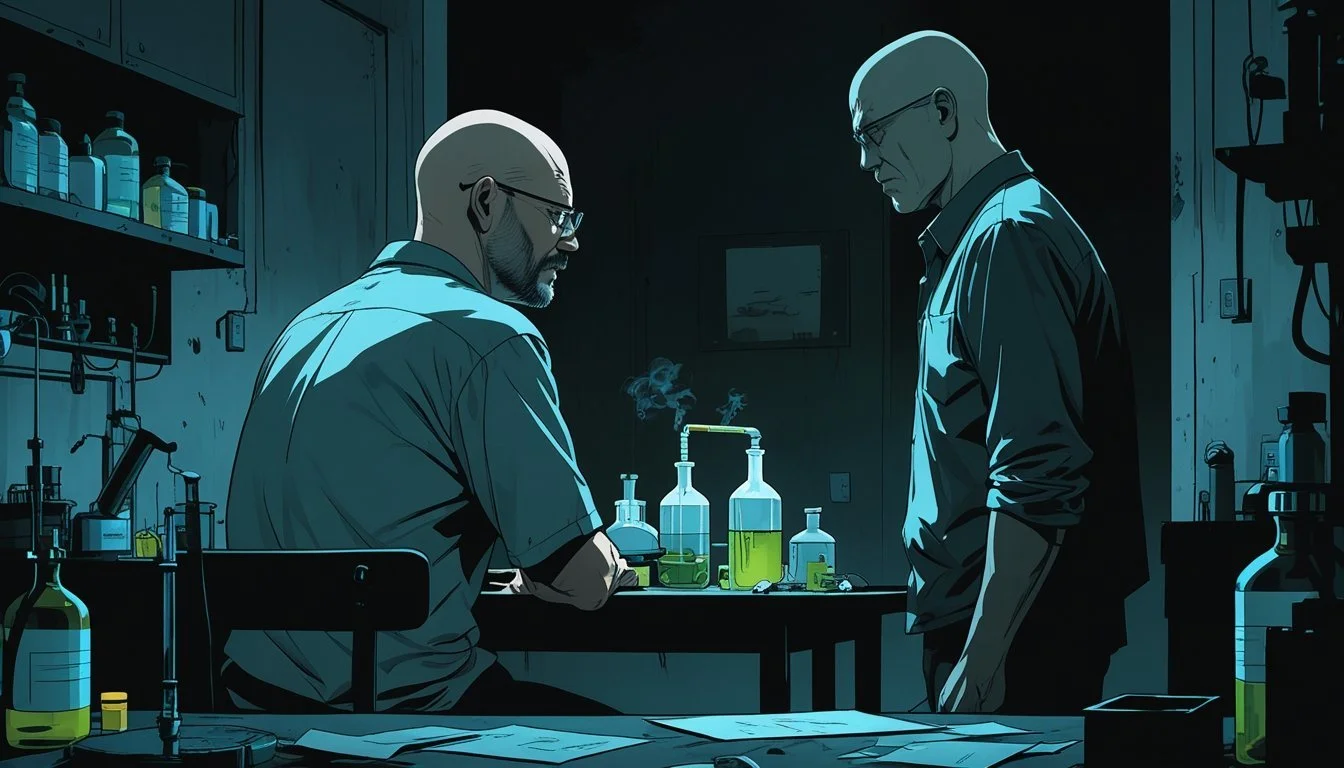
Breaking Bad stands out in the landscape of prestige television for its deliberate use of silence, shaping emotion and narrative in ways that dialogue alone cannot achieve. This approach places the show in direct conversation with its contemporaries and influences how subsequent series leverage non-verbal storytelling tools.
Comparing Silence In The Sopranos
The Sopranos, an early example of prestige TV, often used silence for tension and psychological depth—especially in Tony Soprano’s therapy scenes. Unlike Breaking Bad, where silence frequently coincides with moments of decision or moral conflict, The Sopranos leaned into silence to convey ambiguity in character motives and internal struggles.
For example, scenes where Tony sits quietly with Dr. Melfi allow the audience to consider his emotional state without overt explanation. Breaking Bad builds on this by deploying visual silence in critical plot moments, such as Walter White’s silent decision-making.
Both shows use silence to heighten realism and invite viewers to interpret more from expressions, body language, and environment than dialogue could explicit state.
Influence On The Wire
The Wire, praised for its realism and complexity, uses silence in a distinct but related manner. Specific scenes, like those following a character’s death or during undercover operations, rely heavily on the absence of music and words to evoke tension or grief.
Breaking Bad adapts this technique but with a focus on individual characters’ moral transformations. For instance, moments where Jesse Pinkman processes trauma echo The Wire’s use of quiet to reflect institutional and personal consequences.
Viewers are made to confront the weight of choices, not by what is said, but by what remains unspoken—an approach that aligns both series with the traditions of cinematic storytelling, yet tailored to serialized television drama.
Broader Impact On TV Drama
Breaking Bad’s use of silence has influenced numerous post-2010s dramas by highlighting how restraint can magnify narrative stakes. This style marked a departure from the fast-paced, joke-driven formats found in earlier Bryan Cranston works such as Malcolm in the Middle, where dialogue and comedic timing dominated.
Increasingly, contemporary series opt for pauses, drawn-out shots, and ambient sound to allow audiences space for reflection. Key elements—like a character’s silent stare or a wordless confrontation—are now recognized as powerful, sometimes unforgettable, ways to convey emotional complexity.
A pattern has emerged across top-tier dramas: moments of quiet have become a signature of high-quality storytelling, encouraging attention to what characters do not say as much as what they do.
The Legacy Of Silence In Breaking Bad
Silent scenes in Breaking Bad have left an enduring impression, shaping both its storytelling and the approach of future television creators. The show's careful use of pauses, glances, and unsaid words created tension and depth that dialogue alone could not achieve.
Narrative Impact On Future Series
Breaking Bad demonstrated that silence could drive a narrative as effectively as any line of script. This technique, especially in crime dramas, encouraged other series to adopt minimalist sound design and wordless storytelling.
Shows like Batman and Better Call Saul—the latter featuring Saul Goodman—emulated this approach. They used understated moments to present character motivations and heighten suspense. The influence is clear in how tense exchanges play out in near silence, focusing viewers on subtle cues.
A table below compares the use of silence in Breaking Bad and later series:
Series Notable Silent Scenes Impact on Storytelling Breaking Bad Episode 15, cold opens, Gus scenes Establishes dread, reveals intent Better Call Saul Jimmy/Saul, silent standoffs Builds anxiety, emphasizes isolation Batman (modern shows) Brooding, wordless confrontations Amplifies mystery, deepens character
These techniques have become a hallmark in modern television, particularly when handling heavy themes or nuanced relationships.
Memorable Silent Moments Revisited
Several key scenes in Breaking Bad elevate silence above spoken word, such as in episode 15 or the infamous moments involving Gus Fring. For instance, Giancarlo Esposito's portrayal of Gus uses silence to intimidate and unsettle, often making him scarier than any villain dependent on threats.
The cold open of "Buyout" (Season 5, Episode 6) is another example, showing Walt, Jesse, and Mike disposing of evidence in total silence. No one speaks, yet their choices and remorse are unmistakable.
Jesse's collapse into Walt’s arms—a chemistry teacher turned criminal—happens with barely a word. The silence underscores grief and guilt, leaving a stronger impact than any dialogue could deliver.
These scenes remain some of the series’ most talked-about, drawing attention to how silence can become its own powerful form of storytelling.
