
The Final Shot of Breaking Bad
What It Really Means for Walter White's Story
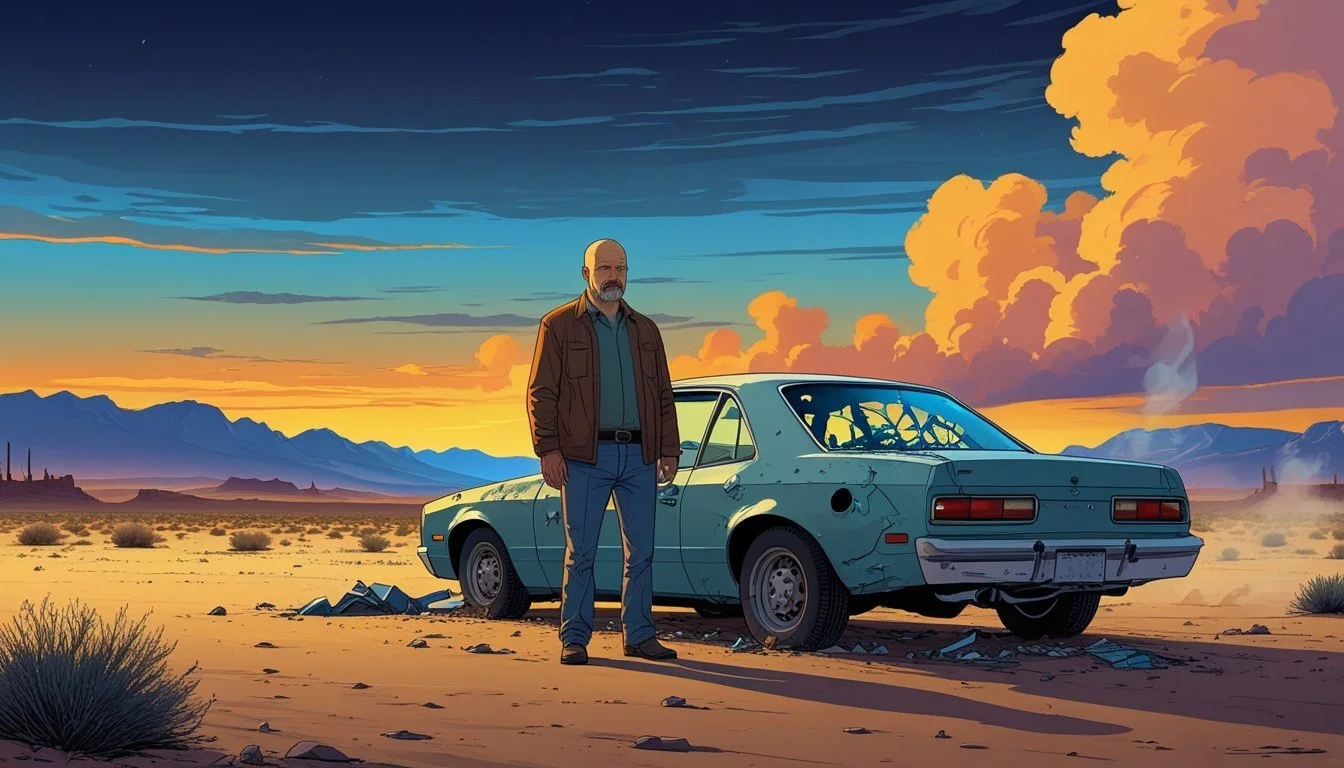
When Breaking Bad aired its series finale, "Felina," viewers were left with an unforgettable image: Walter White collapsing in the lab as the police close in, surrounded by the chemistry equipment that defined his transformation. This final shot isn't just a dramatic end to his story; it symbolizes Walter's acceptance of his choices and the world he built for himself, highlighting the true cost of his journey.
Rather than relying on shocking twists, the finale wraps up with a sense of closure and intentionality, reflecting creator Vince Gilligan’s careful approach to the end of Walter's arc. The final moments invite viewers to consider whether Walter finds peace, regret, or neither as he dies among the consequences of his own actions.
By focusing on the details and symbolism of this closing scene, fans and critics alike continue to interpret what the ending truly says about Walter White, morality, and Breaking Bad’s legacy as a TV phenomenon.
Recapping The Final Scene
The last scene of Breaking Bad focuses on Walter White’s fate amidst the fallout of his criminal empire. Through careful visual choices and deliberate interaction between key characters, the series concludes its central story arcs in the meth lab.
Visual Composition And Cinematography
The final shot utilizes a high-angle pullback, looking down as Walter White collapses and dies on the lab floor. This perspective emphasizes his isolation, contrasting the chaotic violence that just unfolded with a sudden stillness.
Walt is surrounded by shiny lab equipment and the blue meth he created, under stark fluorescent lights. The reflective surfaces and cold color palette reinforce the sterile, clinical world he built. The camera lingers, showing his blood-stained hand caressing a batch of blue meth, signifying both his legacy and the cost of his ambition.
Subtle details, like the pattern of shadows and the slow zoom out, contribute to a sense of finality and detachment. The composition references earlier scenes, tying together visual motifs from across the series.
Key Characters Featured
Walter White is central, appearing alone in the lab at the moment of his death. Heisenberg’s duality is visually apparent—his expression slips between contentment and regret. No words are spoken; his actions and demeanor serve as the character’s last confession.
Jesse Pinkman, a crucial participant in Walt’s empire, escapes minutes earlier after being given the chance to kill Walt but refusing. His absence in the final shot is significant—it symbolizes his break from Walt's influence and the violent world of blue meth.
No other major characters directly appear in the scene, but Walt's relationship with Jesse, the fate of his family, and the legacy of the blue meth linger in the atmosphere. The focus remains solely on Walt, intensifying the personal closure.
Setting And Atmosphere
The setting is a hidden, industrial meth lab located in Albuquerque. Steel machinery, glassware, and rows of equipment dominate the space. The environment is both sterile and mechanical, offering a stark contrast to the emotional intensity of the moment.
The sounds are minimal: lab equipment hums quietly, punctuated only by Walt’s labored breathing. Fluorescent lighting casts harsh, cold shadows on the scene, devoid of any warmth.
This atmospheric setup underscores the loneliness of Walt’s final moments. The lab stands as both the site of his greatest achievement—the invention of the ultra-pure blue meth—and the final stage of his downfall. The ambiance is one of resignation, as Walt finally confronts the consequences of his choices alone.
The Fate Of Walter White
Walter White’s final moments are critical to understanding both his personal downfall and the transformation that defined him as Heisenberg. His journey ends in a scene that speaks directly to his battle with cancer, his choices as a criminal mastermind, and the impact he leaves behind.
Walt’s Final Moments
As the series concludes, Walter White enters the meth lab one last time. He is wounded by a gunshot sustained during a confrontation with his enemies. Alone, he collapses, and the camera lingers as he succumbs to his injuries, surrounded by the chemistry equipment that started it all.
Bryan Cranston’s performance during these moments is restrained and powerful. Walter appears reflective but not regretful, his hands caressing the machinery as he dies. The police enter the lab, but Walter is already dead by the time they arrive.
This ending is confirmed by both the show’s creator, Vince Gilligan, and Cranston. There is little narrative ambiguity; Walter’s fate is sealed by his injuries and his own decisions. He dies not in battle, but in the world he built.
Resolution Of His Cancer Arc
Walter’s cancer diagnosis was the catalyst for his criminal activities. Initially, he justified his choices as necessary to secure his family’s financial future before lung cancer could claim his life. Throughout Breaking Bad, the cancer recedes and returns, mirroring his internal struggles.
In the last episode, the cancer has weakened him significantly. His appearance is gaunt, and his cough is persistent. The disease limits his physical strength, underlining that time is running out.
Walter’s death in the lab signifies that, while cancer started his journey, it was not what ultimately ended it. Fate, or more precisely, the cumulative weight of his actions as a criminal mastermind, brought his story to a close. The cancer arc ends in parallel with the collapse of Heisenberg.
Heisenberg’s Legacy
Walter White leaves behind a divisive legacy. Once a high school chemistry teacher, his transformation into Heisenberg impacted everyone around him. His actions led to suffering for his family, associates, and countless others affected by his meth empire.
To some, Walter’s intelligence and audacity are impressive, but the cost was immense. He built an empire on lies, violence, and manipulation. His confession to Skyler—"I did it for me"—acknowledges a selfish motive behind his criminal choices.
In the criminal world, Heisenberg’s name carries weight even after his death. Yet, his personal legacy is much darker, marking him as both a tragic figure and a cautionary tale. Walter White’s death closes a chapter defined by hubris and irreversible consequences.
Jesse Pinkman’s Escape And Freedom
Jesse Pinkman’s final moments in Breaking Bad deliver a powerful image of physical escape and emotional release. His departure marks the end of his captivity and the transformation of his character, setting the stage for his search for redemption.
How Jesse Leaves The Lab
After enduring months as a captive forced to cook meth for a group of drug dealers, Jesse Pinkman, played by Aaron Paul, finally gains his freedom in the Breaking Bad finale. Walt intervenes, orchestrating a violent standoff in the compound’s meth lab.
He uses a remote-controlled machine gun to kill most of the captors, creating chaos and giving Jesse a chance to act. Jesse is handed the opportunity for revenge when Walt slides him a gun. Instead, Jesse refuses to kill Walt, showing that he no longer wants to be manipulated or drawn further into violence.
Once the immediate threat is neutralized, Jesse finds the keys to a car and drives out of the compound. The final shot of him speeding away, screaming in relief and pain, focuses on the sheer emotion of finally leaving captivity behind.
The Symbolism Of Freedom
Jesse’s escape from the lab is more than just a physical act. For viewers, it symbolizes his release from years of abuse, manipulation, and involvement in the drug trade. The image of Jesse breaking through the compound gate in the car stands as a visual metaphor for newfound autonomy.
His departure is raw and desperate, capturing both trauma and hope. Jesse’s freedom doesn’t erase his past, but it opens the door to redemption, which will be further explored in El Camino. The act of not killing Walt also sets him apart from other characters who were consumed by revenge.
As he drives into the darkness, Jesse’s escape embodies a rare moment of clarity. The sequence suggests his story is no longer defined by the choices of the dealers or Walter White, but by his capacity to seek a future beyond them.
Symbolism Embedded In The Final Shot
The final shot of Breaking Bad uses deliberate visual and auditory cues to reinforce central themes from earlier in the series. Through lighting, music, and strategic callbacks, the scene provides resolution while deepening the viewer’s understanding of character and story arcs.
Use Of Music And Lighting
The last scene is scored with “Baby Blue” by Badfinger, a song whose lyrics directly reference Walt’s blue meth and his ownership of his choices. The selection is neither accidental nor subtle. The line "Guess I got what I deserved" underscores the inevitability of Walt’s comeuppance and his acceptance of the consequences he faces.
Lighting in the lab contrasts sharply with the dim, bleak lighting of the “Ozymandias” and “Granite State” episodes. The cold overhead fluorescence isolates Walt among the equipment that came to define his legacy. Shadows, combined with the blue tint, mirror the emotional and thematic chill of his downfall.
Baby Blue’s upbeat melody juxtaposes the somber visuals, highlighting the complexity of Walt’s fate. The carefully constructed environment cements the moment as Walt quietly admires his work before his death, connecting the emotional stakes from the earlier plot points to this conclusion.
References To Previous Episodes
Visually and thematically, the final shot refers back to multiple pivotal episodes and motifs. The camera’s upward, spiraled movement matches earlier shots—such as those in the crawlspace scene—reminding the audience of times when Walt’s world seemed to spin out of control.
The presence of lab equipment and the blue-tinted lighting evoke images from the first cook in the RV, connecting his end to his beginnings. The use of the machine gun and the hidden resin (“rezin”) encapsulates the evolution from his amateur tactics in “Granite State” to the sophisticated measures he orchestrates in the finale, showing growth and descent side by side.
By pausing on Walt’s lifeless body, the show acknowledges the fatal consequences of his pursuit of power and control rooted in earlier episodes like “Ozymandias.” These visual echoes reinforce the idea that the path to this moment was built from choices made throughout the series.
Interpretations Of The Ending
Walter White’s final moments are loaded with symbolism and prompt analysis of his motivations, sense of self, and fate. The last shot confronts key themes like redemption, punishment, pride, and the consequences of his actions on his family.
Is It Redemption Or Punishment?
Many viewers question whether Walter’s death is an act of redemption or a fitting punishment for his transformation into a villain. He frees Jesse from captivity, takes responsibility for his crimes, and even admits to his wife, Skyler, that he acted out of pride rather than for his family. These actions can be read as attempts to reclaim lost humanity.
However, others see his demise as an inescapable end brought on by his own choices. Walter dies alone, separated from his family, and surrounded by the consequences of the world he built. His final acts are ambiguous—while he restores some agency to Jesse, he never truly undoes the damage.
Key Points:
Frees Jesse, but after making him suffer
Admits truth to Skyler about his motivations
Dies among his own inventions, not with family
Themes Of Pride And Hubris
Walter’s journey is marked by unchecked pride and hubris. He enters the drug world claiming to support his family but increasingly seeks validation for his intellect and achievements. In the end, he acknowledges that pride, not necessity, drove his actions.
The final shot visually ties Walter’s fate to his pride. He dies in the lab, touching the equipment he built, satisfied by his own work even in his last moments. This moment highlights the paradox of his character: genius and destruction combined.
Focus Areas:
Chooses pride over family in key decisions
Final moment is one of satisfaction, not regret
Fate sealed by inability to let go of ego
The Writers’ Room Perspective
The final shot of Breaking Bad was not a spontaneous decision but the result of deliberate choices and collaboration. The creative process involved detailed planning, weighing narrative closure, character arcs, and expectations from both AMC and a large viewership.
Vince Gilligan’s Intentions
Vince Gilligan, the series creator, was clear about his vision for the ending. He wanted Walter White’s journey to have a definitive conclusion. This approach avoided ambiguity and rejected the idea of the finale being a dream sequence, which some fans speculated.
Gilligan’s goal was to make the ending resonate emotionally without resorting to symbolism that could cloud the story’s resolution. His team ensured that Walt’s fate was visually clear, reinforcing the character’s choices and their consequences. He also aimed for a sense of closure, emphasizing that actions have lasting outcomes.
According to statements made in interviews and writer discussions, Gilligan was especially focused on rewarding attentive viewers. The last moments were crafted to reflect what Walter had truly become, both to himself and to those around him.
Key Creative Decisions
The writers’ room, led by Gilligan, mapped out critical choices for the final sequence. Deciding to end with Walt lying alone was a significant consensus point among the core writers and directors. The shot of Walt in the meth lab was intended as a direct reflection of his legacy.
Writers considered audience reactions, given the show’s high ratings and AMC’s interest in a memorable send-off. They debated whether Jesse Pinkman should survive, and close scrutiny was given to how much to show of each character’s outcome. A recurring topic was the moral clarity of the ending.
The collaborative environment included contributions from Emmy-winning writers. Each decision regarding camera work, dialogue, and pacing was scrutinized to reinforce the show’s tone. Small details, such as Walt’s final movements, were dissected for narrative weight and visual impact.
The Final Shot’s Impact On Breaking Bad’s Legacy
The final shot of Breaking Bad’s finale has become a defining moment not only for the fate of Walter White but also for the show’s legacy in television history. Its execution influenced both critical perception and the responses of long-time fans to the entire series.
Critical Reception
Critics responded to Breaking Bad’s last shot with widespread praise. Many noted how the scene offered closure for the character of Walter White, while highlighting the show’s consistent attention to visual storytelling and cinematic composition. Reviewers from outlets such as Rotten Tomatoes and Mic compared the visual elegance of the final moments to classic cinema, even likening individual frames to works of art.
This directorial choice underscored Breaking Bad’s reputation for elevating how stories are told on television. The ending was examined in detail for its symbolic weight, with critics debating whether the shot represented redemption, defeat, or simply acceptance. Importantly, it cemented the series as a benchmark for final episodes, often cited in discussions about how to end a prestige drama.
Fan Reactions
Fans reacted strongly to the show’s conclusion, with online forums and social media flooded with discussions and emotional reactions. The subreddit dedicated to Breaking Bad captured the range of feelings—from sadness to satisfaction—after the final shot. Many viewers felt the ending matched the series’ tone and brought needed closure to Walter’s story.
Specific elements of the last scene sparked debate, such as Walter’s expression and the soundtrack choice. For some, it was a fitting tribute to the character’s arc; for others, it highlighted the tragedy of his journey. Fans also highlighted how the final moments affected their perspectives on supporting characters and lingering story threads, showing the shot’s lasting influence on Breaking Bad’s legacy.
Notable Characters And Their Conclusions
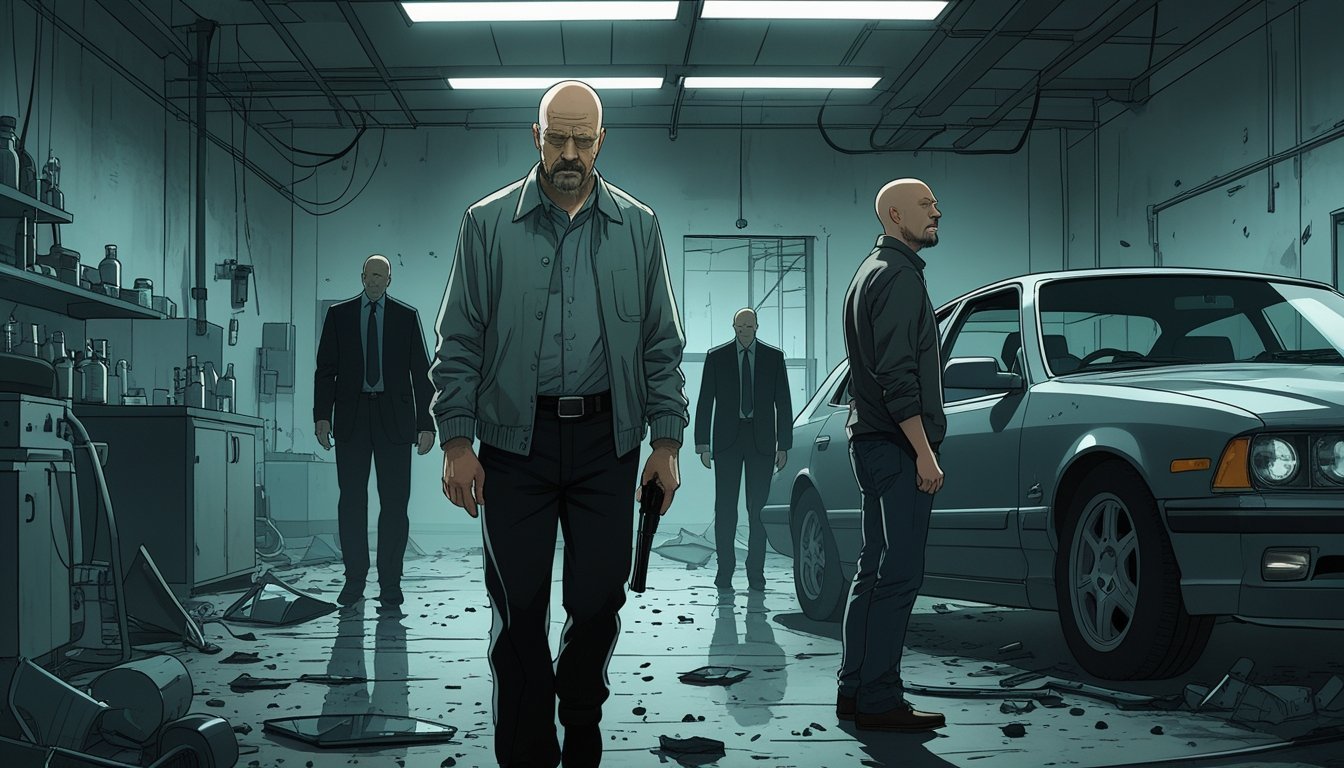
Key figures experienced sharply defined fates in the last episodes, cementing the show's reputation for providing closure and consequence. From law enforcement to criminal alliances, each role concluded with direct impact from Walter White’s choices.
Skyler White’s Resolution
Skyler White, portrayed by Anna Gunn, faces the aftermath of her husband’s criminal endeavors. She finds herself isolated and monitored by the DEA, with limited freedom due to her involvement in money laundering.
Caring for her children becomes Skyler’s main priority. Her relationship with Walter collapses as his actions endanger their family, leaving her conflicted but determined to protect her son and daughter.
By the series end, Skyler negotiates a truce of sorts with Walt during a brief final meeting. She receives the GPS coordinates where Hank is buried, allowing her closure and a potential bargaining chip with federal agents.
Hank And The DEA
Hank Schrader, a high-ranking DEA agent and Walter’s brother-in-law, is central to the law enforcement pursuit. After years of investigation, Hank uncovers Walt’s secret but pays dearly for his discovery.
Hank’s determination is unwavering, guided by loyalty to his principles and duty. Despite having partners in the DEA, Hank’s solo pursuit leads to his entrapment by Jack’s white supremacist gang.
He is executed by Jack when Walt is powerless to stop it. Hank’s murder resonates deeply, symbolizing the tragic cost of the meth empire and the futility of justice against overwhelming criminal forces.
Todd And The Neo-Nazis
Todd Alquist, played by Jesse Plemons, becomes a pivotal figure within Jack’s neo-Nazi gang. Serving as a partner and enforcer, Todd escalates the group’s brutality through calculated violence and manipulation.
His relationship with Jesse Pinkman is cruel, forcing Jesse into captivity as a meth cook. Todd orchestrates murders on behalf of the gang, demonstrating loyalty to Jack and their white supremacist ideology.
In the final confrontation, Walt enters the gang’s compound. Todd is swiftly killed by Jesse, ending his reign of intimidation. The decimation of the neo-Nazi group signifies the collapse of the criminal partnership that dominated the final season.
Cultural And Narrative Influences
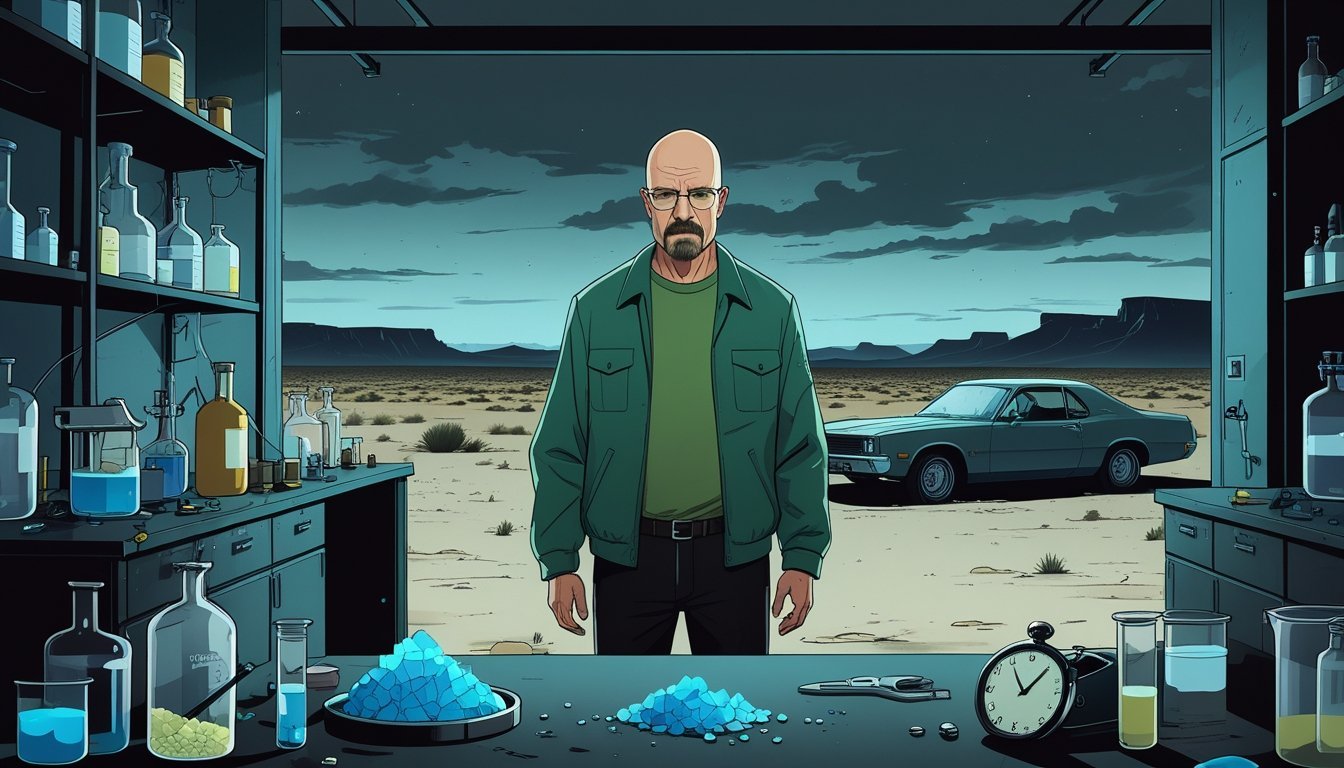
The final shot of Breaking Bad draws on significant cultural touchstones and careful narrative choices. Its visual language and staging reference classic cinema and earlier key moments in the series.
Homages And References In 'Felina'
"Felina," the last episode, is filled with deliberate nods to other works and earlier Breaking Bad plot points. One major reference appears in how Walt’s final moments echo his interactions throughout the series, particularly with Gray Matter Technologies and the unfinished business that defined his transformation.
Previous events in Season 3, especially To'hajiilee, set up a pattern of Walt returning to significant locations and confronting the consequences of his choices. The laboratory in the final scene mirrors the one from these earlier episodes, and Walt's positioning in the final shot is reminiscent of earlier frames in the series, subtly emphasizing the cyclical nature of his journey.
Additionally, the episode’s soundtrack, including the use of "Baby Blue," directly calls back to Walt’s emotional and psychological state at the end. The song selection acts as a narrative device, underlining the personal satisfaction he feels at the conclusion of his story.
The Searchers Influence
The staging and cinematography of the last scene pay homage to John Ford’s "The Searchers," a classic Western. In that film, the main character is framed in a doorway, symbolizing isolation and unresolved redemption. Breaking Bad mirrors this with its own framing of Walt in the meth lab.
Vince Gilligan, the show’s creator, often cited "The Searchers" as an influence during production, especially in moments that call for visual symbolism. Walt’s solitary stance in that final shot underlines his estrangement from both family and society, reflecting themes from Ford’s film.
This direct visual reference serves a narrative purpose, too. Just as The Searchers’ protagonist is left alone after completing his mission, Walt’s last moments show him separated from those he claimed to protect, visually representing his chosen path and the cost of his actions.
Aftermath And Continuing The Story
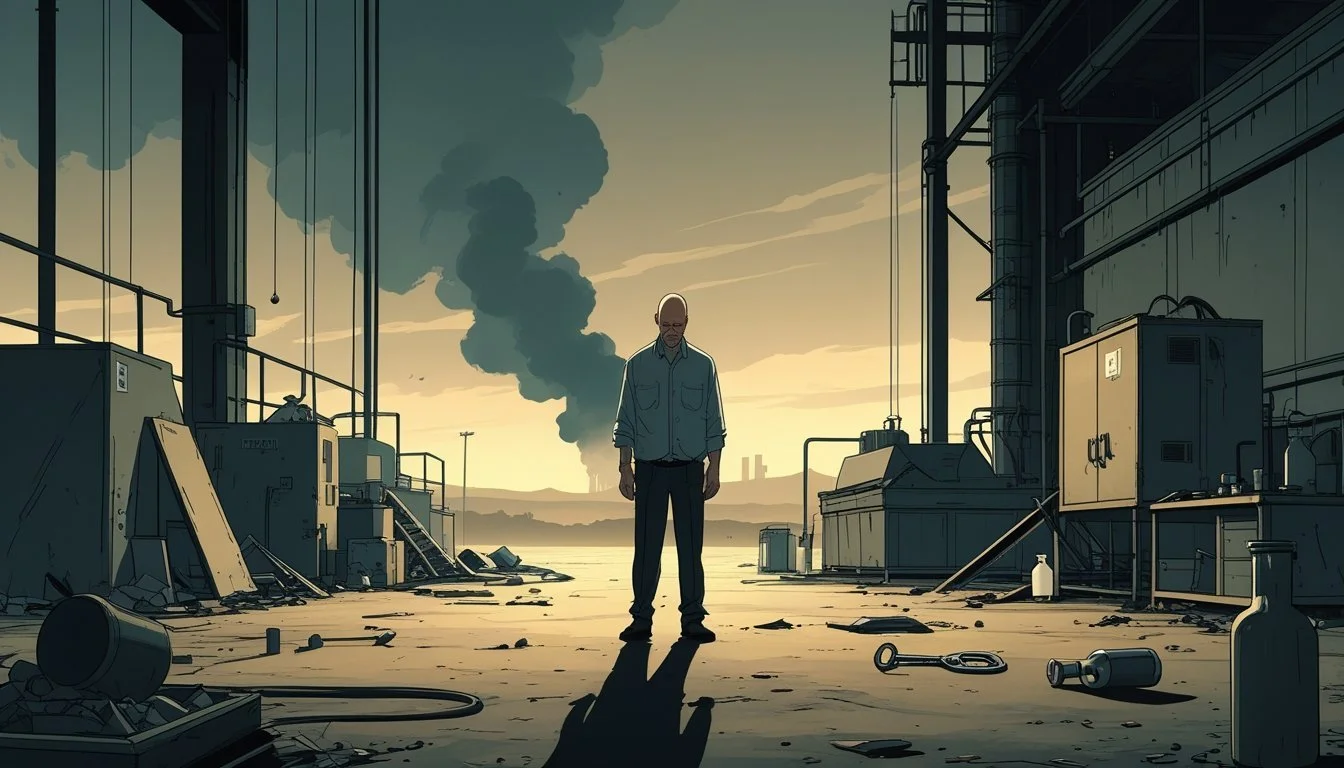
Breaking Bad’s conclusion left many characters’ futures uncertain, but extended stories and ongoing cultural impact have addressed lingering questions. Key figures like Jesse Pinkman have received their own narratives, while the series itself continues to shape television and inspire new works.
'El Camino' And The Jesse Epilogue
"El Camino: A Breaking Bad Movie" was released in 2019 as a direct continuation of Jesse Pinkman’s story after the Breaking Bad finale. The film tracks Jesse as he escapes captivity and law enforcement, ultimately seeking freedom in Alaska with a new identity.
The epilogue answers questions about Jesse’s psychological state and future, depicting his struggle with trauma and guilt. Viewers see flashbacks that feature several familiar faces, including Jesse’s interactions with Walter White and other pivotal characters.
By focusing tightly on Jesse, the film avoids revisiting larger criminal operations or bringing back Gus Fring in a central way, though his influence lingers in the world’s atmosphere. "El Camino" offers resolution for Jesse without overreaching into unnecessary subplots or undermining the show’s original ending.
Breaking Bad’s Ongoing Influence
Breaking Bad’s storytelling has led to multiple spin-offs and an expanded universe. The most prominent spin-off, Better Call Saul, dives deeply into characters like Saul Goodman and Gus Fring, further exploring their complex histories and moral shades.
Giancarlo Esposito’s performance as Gus Fring remains iconic, influencing how TV depicts criminal masterminds. The narrative techniques, character development, and visual style established in Breaking Bad have become benchmarks for prestige TV.
Merchandise, critical essays, and analysis continue to thrive, demonstrating Breaking Bad’s enduring footprint. Networks and creators frequently cite its impact when developing new high-stakes dramas, solidifying its lasting presence within popular culture.
