
Could Yellowstone Exist Without the Ranch?
Exploring the Series’ Core Dynamic

Yellowstone has captured viewers with its intense family drama, stunning landscapes, and high-stakes power struggles centered on the Dutton family ranch. The land itself is not just a backdrop—it’s the heart of the series, shaping the characters’ values and decisions at every turn. Without the ranch, the show would lose its core conflict and the unique culture that separates it from other dramas.
Every major storyline, from land disputes to family legacies, revolves around protecting or threatening the ranch. The show's deep ties to cowboy heritage, conservation, and Native land rights are all anchored by this setting.
Asking whether Yellowstone could exist without the ranch is asking if the series could persist without its central source of tension and identity. The ranch is more than a piece of land; it defines what Yellowstone is.
The Role of the Ranch in Yellowstone

The Dutton Ranch is at the heart of Yellowstone, shaping its story, setting, and characters. Its landscape, history, and operations deeply influence the series’ conflicts and themes.
Centrality of the Dutton Ranch
The Dutton Ranch serves as the primary setting throughout the show, representing more than just a stretch of land in Montana. Located near Darby, Montana, and filmed at the real Chief Joseph Ranch in the Bitterroot Valley, it anchors the plot and links together characters like John Dutton, Beth Dutton, and the bunkhouse crew.
Much of the conflict in Yellowstone originates from efforts to defend or acquire the ranch. Developers, the Broken Rock tribe, and nearby ranchers all pose threats that drive the story forward. This ongoing struggle reveals Montana’s complex relationship with land ownership.
Key family issues—loyalty, sacrifice, and inheritance—always come back to the land. Every major decision made by the Duttons is tied to protecting, expanding, or preserving their home and legacy.
Yellowstone Dutton Ranch as a Character
Unlike typical settings, the Yellowstone Dutton Ranch often acts as a character itself. Its imposing mountains, rivers, and sprawling pastures set the emotional tone for many scenes and reflect the resilience and isolation of the Dutton family.
The land is always present, shaping the daily challenges faced by ranchers and cowboys living in the bunkhouse. Dust, weather, and distance add realism to every moment, and the pressures that come from the ranch’s existence directly shape the choices of key figures like John Dutton and Beth Dutton.
Because the ranch is under constant threat, its presence continually motivates characters’ actions. Scenes filmed at the Chief Joseph Ranch directly immerse viewers in the harsh realities of maintaining such a vast, historic property.
Ranching Tradition and Legacy
Ranching is fundamental in Yellowstone, with the Duttons representing seven generations of Montana ranchers. The show explores the tension between tradition and progress as outsiders seek to purchase or develop the land.
John Dutton’s determination to keep the ranch intact highlights the importance of family legacy. The ranch’s survival is portrayed as inseparable from the identity of the Duttons. Their ongoing stewardship of the land is seen as both a duty and a personal burden.
Through daily work and rituals—from cattle drives to brandings—the series emphasizes the realities and values of rural Montana life. The Dutton Ranch not only anchors the story but keeps alive the culture and history of ranchers in the region.
Storytelling Without the Ranch Setting

Removing the ranch from "Yellowstone" would change the entire narrative landscape. Family drama, conflicts over inheritance, and battles with land developers would all be shaped differently by the absence of this iconic setting.
Narrative Shifts and Structural Impact
Without the Yellowstone Dutton Ranch, the series would lose its primary backdrop for confrontation and legacy.
The ranch provides the context for critical plotlines, such as the struggle with Market Equities and ongoing disputes with outside land developers. Eliminating this setting would weaken the stakes around land ownership, inheritance tax issues, and the family's efforts to keep their property intact.
Much of the origin story for the Duttons depends on their deep generational ties to the land. A different setting would require a significant reworking of how legacy and loyalty are portrayed. The visual symbolism of wide-open Montana spaces and ranch operations serves as a constant reminder of what is at risk. Key plot tensions—like state politics and local rivalries—lose much of their meaning without the unifying presence of the ranch.
Implications for Character Development
Characters are shaped by their relationship to the land and their roles on the ranch.
John Dutton’s motivations—especially his fierce protection of the family's property against outside forces—are closely tied to the ranch’s existence. Family drama, especially around inheritance and succession, becomes less personal if the central asset isn’t land that has been passed down for generations.
The ranch is also where much of the character interplay occurs. From wranglers to family members, the daily routines and conflicts build interpersonal dynamics. Without this environment, the pressure of inheritance tax or Market Equities' maneuvers becomes abstract rather than immediate, and the grounding for generational loyalty or rivalry would have to find new roots. The sense of place directly informs each character’s purpose and growth within the story.
The Ranch as a Symbol of Legacy and Conflict
The Dutton family ranch stands at the center of Yellowstone’s story, reflecting deeper questions about inheritance, identity, and historical disputes. The ranch’s existence shapes both personal relationships and political battles in the Yellowstone universe.
Inheritance and Land Ownership
The Yellowstone Dutton Ranch serves as a tangible link to the past, emphasizing generational continuity. Ownership transitions have become flash points for tension as each family member’s ambitions and loyalties are tested. Questions about who will inherit the estate have taken on outsized importance, influencing behavior and alliances both inside and outside the Dutton family.
Real estate value is crucial here—the ranch is one of the largest private properties in the United States, and its worth places enormous pressure on each succession decision. External threats often stem from the property’s staggering value, with developers, corporations, and even state actors seeking to acquire or control the land. As a result, land ownership is depicted as both a privilege and a burden, connecting deeply with themes of power and legacy.
Preserving Heritage Amidst Change
Attempts to preserve the ranch tie directly to efforts to protect family heritage. The Duttons’ refusal to sell the ranch, despite lucrative offers or legal challenges, highlights their commitment to tradition and the land itself. This stance is not without opposition, as neighboring Native American tribes remind viewers of displaced communities and unresolved historical grievances.
Land disputes between the Duttons and the Broken Rock Reservation underscore the broader context of American land history. The show addresses the consequences of past injustices, treaty violations, and continuing efforts by indigenous peoples to reclaim heritage. Issues of conservation, tourism, and modernization introduce new complications, challenging the Duttons to adapt their definition of legacy while confronting external pressures that threaten their way of life.
Montana’s Cultural and Geographic Influence
Montana's landscape and culture shape the backdrop, tone, and conflicts at the heart of Yellowstone. Its settings and history are not decorative but fundamental to the story and characters.
Big Sky Country and Its Visual Impact
Montana is known as “Big Sky Country” because of its sweeping vistas and open horizons. The show’s cinematography relies heavily on these natural features, using wide shots of rolling plains, distant mountains, and dramatic skies. These visuals establish a sense of scale and isolation that influences every scene.
Filming on location in Montana offers a visual authenticity that’s difficult to replicate elsewhere. The unique lighting, the expanses of grassland, and the Rockies serve as both setting and character within the series. This geographic presence creates an atmosphere that amplifies the show’s themes of land, legacy, and survival.
Notable elements:
Bitterroot Valley and surrounding regions are frequently featured.
Seasonal changes are visible, impacting both scenery and storyline.
Small towns and rural infrastructure provide credibility.
Cattle Ranching in Montana
Cattle ranching has long played a central role in Montana’s history and economy. The show reflects the realities of ranch life, from the practical operations of herding and branding cattle to the broader challenges of land ownership and market changes. This authenticity grounds the narrative and links the characters to Montana’s traditions.
Montana’s ranches are often multi-generational, with families stewarding the same land for decades. The economic pressures faced by real ranchers—including rising land values and shifting regulations—parallel storylines in the series. Unlike romanticized depictions, the show recognizes the risks and rewards embedded in Montana ranching.
Ranches contribute to the local economy through cattle, hay, and tourism.
Modern ranches blend tradition with technology, reflecting local adaptation.
Chief Joseph Ranch, the real-life setting for the Dutton homestead, is a working ranch and highlights authentic practices.
Link to Yellowstone National Park
Yellowstone National Park, though not the direct setting of the Dutton ranch, is closely tied to the show’s identity. The park, located in southern Montana and northern Wyoming, symbolizes the wildness and preservation issues echoed in the storyline. Its proximity influences themes of land use, wildlife conflict, and federal oversight.
The park’s presence amplifies dramatic tension between private landowners and conservation interests. Issues such as wildlife migration, the reintroduction of predators, and tourism impact both the fictional ranch and the real region. The interplay between the national park’s protected lands and Montana’s working ranches is an important dynamic presented throughout the series.
National park boundaries are points of legal and ethical debate in the narrative.
Tourism, boosted by both the show and the park, transforms the local economy and culture.
Yellowstone’s reputation for natural beauty and complexity is mirrored in the show’s plotlines.
Real-World Inspirations and Filming Locations
Yellowstone draws heavily from actual Western landscapes and traditions, grounding its story in places and people connected to real working ranches. The series films on location and incorporates genuine ranch owners, giving its world an authentic look and feel.
Chief Joseph Ranch and Darby, Montana
The Chief Joseph Ranch in Darby, Montana, is the primary filming location for the Yellowstone Dutton Ranch. This historic ranch provides the recognizable backdrop for many scenes, including the ranch house featured throughout the series.
When cameras aren’t rolling, Chief Joseph Ranch operates as a family-owned cattle ranch. The property sits at the base of Trapper Peak, surrounded by forests and mountains. Its history dates back to the early 1900s, and over the years, it has been preserved as both a functioning ranch and a scenic lodge.
Fans sometimes visit the ranch, drawn by its distinctive log buildings and Western vistas. The use of real working ranches like Chief Joseph Ranch emphasizes the show’s commitment to showcasing the region’s landscape and ranching heritage.
Notable Ranch Owners and Figures
Shane Libel owns and manages Chief Joseph Ranch, the main set for the Dutton family home. He and his family have maintained its operations and welcomed the cast and crew, ensuring the ranch remains a working enterprise even during filming.
Outside Chief Joseph Ranch, Bill Galt is another well-known Montana rancher connected to the state’s ranching community. While his ranch is not featured in Yellowstone, his reputation among Montana ranchers has influenced local perceptions of the series’ portrayal of ranch life.
These real-world figures contribute to the authenticity viewers see in Yellowstone. Their involvement and presence help the show reflect both the business and culture of actual Montana ranching.
The 1883 Legacy and Yellowstone Spinoffs
1883 and its follow-up series have deepened the understanding of the Dutton family's origins and expanded the scope of the Yellowstone world. These spinoffs demonstrate how the narrative foundation of Yellowstone extends far beyond just the ranch itself.
Connection to the Origin Story
1883, created by Taylor Sheridan, serves as a direct prequel to Yellowstone. It explores the Dutton family's migration to Montana, highlighting the hardships they faced during their westward journey. This historical backdrop explains not only how the family acquired the land but also why they are so fiercely protective of it in the main series.
The depiction of the Duttons’ resilience and sacrifices in 1883 helps viewers grasp the roots of their legacy. The show establishes critical themes of survival, family loyalty, and the costs of building a new life. These themes remain central to Yellowstone and frame the ranch as a symbol of generational struggle rather than just property.
Key moments—such as the loss and decisions made on the trail—directly inform the dynamics and motivations seen later in Yellowstone. Understanding these beginnings provides clarity into the values and conflicts that persist throughout the franchise.
Expanding the Yellowstone Universe
Spinoffs like 1883 and 1923 have allowed the Yellowstone universe to grow in both scope and appeal. Each series introduces new characters and storylines that enrich the narrative tapestry, giving viewers multiple viewpoints about the Duttons' place in American history.
Taylor Sheridan’s approach emphasizes interconnected storytelling. 1923, for example, advances the timeline by depicting the Duttons during the Prohibition era and the Great Depression. Notable actors such as Harrison Ford and Helen Mirren bring depth to these new chapters. The combination of distinct time periods and complex characters keeps the franchise engaging for different audiences.
Visual guides and timelines help fans track the relationships and generational changes across the series. By exploring different eras, the spinoffs make it clear that Yellowstone’s story is as much about legacy and identity as it is about land or ranch life.
Influence on American Ranching and Pop Culture
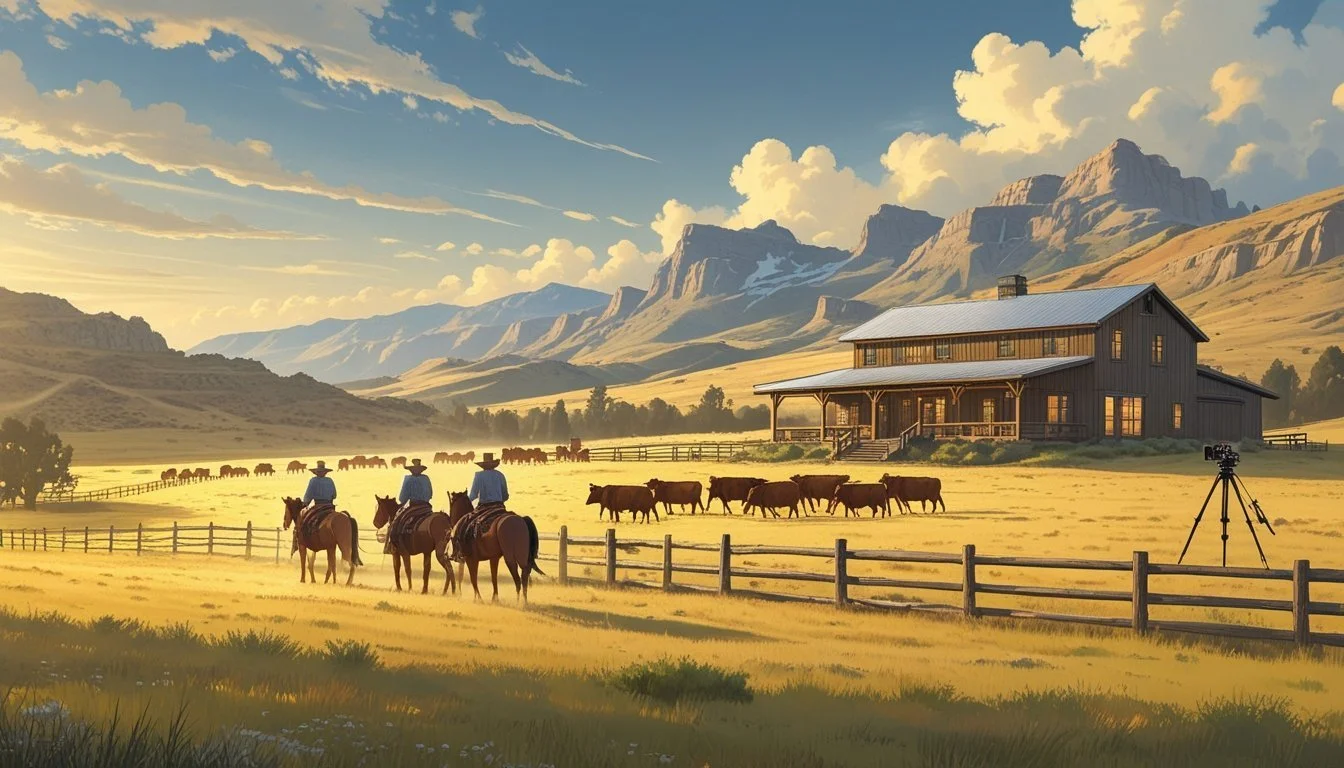
The television series Yellowstone has put a national spotlight on ranch life and large-scale cattle operations. Its influence reaches beyond entertainment, shaping both how the public views real ranches and how real estate markets and tourism respond.
True Stories and Historical Ranches
Ranches like the W.T. Waggoner and the Four Sixes (also known as the 6666 Ranch) have long histories rooted in real operations, not fiction. These ranches cover hundreds of thousands of acres and continue to run cattle across large swaths of Texas and beyond.
Yellowstone borrows imagery and themes from these storied places. Although the show dramatizes many scenarios, its portrayal of land disputes, generational legacy, and the challenges of running a massive cattle operation does have grounding in real events documented at historic ranches.
Some viewers now recognize ranch names like Four Sixes because of Yellowstone’s references, linking television drama to actual ranch history. However, while ranch hands on the show face soap opera-level conflicts, real workers often deal with steady, difficult labor that is less glamorous but crucial to the cattle industry.
Impact on Ranch Real Estate
Interest in ranch real estate has surged since Yellowstone gained popularity, with brokers and land agents noting increased demand for properties resembling those featured on the show. Properties associated with or similar in scale to the Dutton Ranch can reach millions of dollars, especially in Montana and Texas.
Lists of available ranches highlight acreage, stocked cattle, and historic pedigrees, with the Four Sixes Ranch as a noted example after its recent high-profile sale. Television exposure has encouraged visitors and buyers to seek out ranch tours, guest stays, and even part-ownership opportunities.
This shift has also affected land values. Sellers and buyers now see not just working cattle operations, but also the aesthetic and lifestyle portrayed on screen as selling points. The result is a blending of real agricultural business and pop culture-driven demand.
Paramount Network’s Creative Direction
The future of Yellowstone depends heavily on how the Paramount Network and Taylor Sheridan approach the show's most iconic element: the ranch. Their creative direction will shape not just the setting, but the core narrative tension that sustains the series.
Taylor Sheridan’s Vision
Taylor Sheridan, the creator and main writer of Yellowstone, has consistently emphasized authenticity and intense family drama rooted in the ranch lifestyle. He uses the Dutton ranch as more than a backdrop—it serves as the foundation for the show’s conflicts and values. Sheridan’s storytelling revolves around land, heritage, and the Duttons’ fight to preserve their legacy.
Sheridan’s approach often involves complex characters who are shaped by their ties to the land. According to industry summaries, much of Yellowstone’s success is due to this sensibility. Even as plotlines evolve, Sheridan returns to themes of territory, loyalty, and the threats posed by external forces like developers and reservations. The ranch is woven into the identity and stakes of the series.
The Future of Yellowstone Without the Ranch
If the Paramount Network chose to move Yellowstone away from its ranch setting, the series would face significant changes. The ranch is not just a location; it is a driving force for plot, character motivation, and visual storytelling. Removing it would mean redefining the central struggle for legacy and survival that defines the Dutton family.
Paramount’s expansion of the Yellowstone franchise, including prequels and spinoffs, still relies on ranching and land themes. This indicates a network commitment to the setting as a core element. Without the ranch, new conflicts and character arcs would be needed, but these may not resonate the same way with audiences who expect the specific tone and stakes Sheridan has built.
