
Kevin Costner's Epic Return to Westerns with New 2025 Documentary
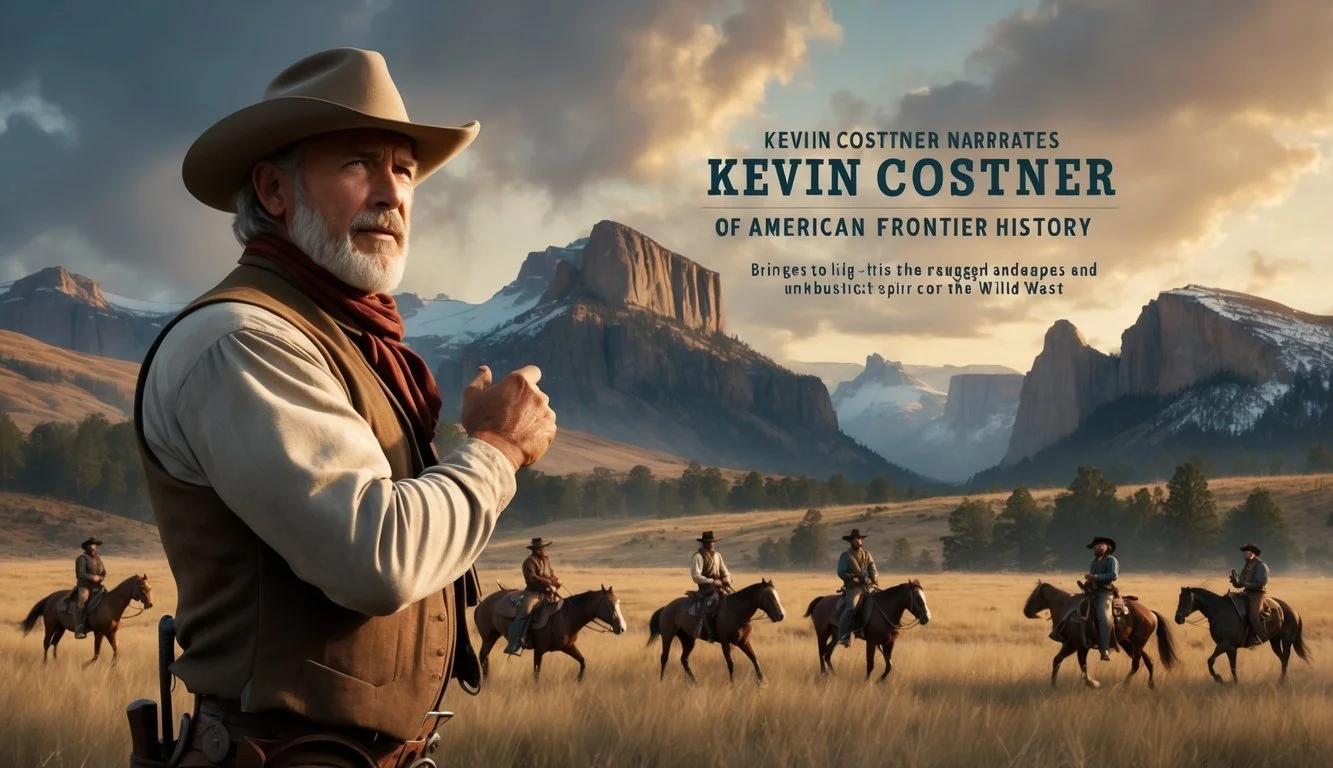
Kevin Costner, renowned for his iconic roles in Western films like "Dances with Wolves" and "Yellowstone," has returned to his narrative roots with a compelling new documentary series. This latest project showcases his enduring passion for American frontier history while offering viewers a fresh perspective on the Western genre that has defined much of his career. The series represents Costner's most significant contribution to Western storytelling since his work on "Yellowstone," combining historical research with the cinematic vision that has made him a trusted voice in the genre.
The documentary explores untold stories of the American West, examining both the mythology and the complex realities of frontier life. Costner serves as both executive producer and narrator, bringing his distinctive gravitas to the historical narrative while incorporating contemporary perspectives on these formative events in American history. His involvement elevates the production beyond typical historical programming, infusing it with the authenticity that has become his trademark.
The Allure of the Western Genre
The Western genre captivates audiences through its portrayal of rugged individualism, vast landscapes, and moral complexity against the backdrop of America's frontier expansion. Its enduring appeal stems from powerful storytelling traditions that examine fundamental human struggles through the lens of a formative period in American history.
Historical Context and Evolution
The Western genre emerged in the late 19th century through dime novels and Wild West shows before evolving into a cornerstone of American cinema. Early filmmakers like John Ford established iconic visual language with films such as "Stagecoach" (1939) and "The Searchers" (1956), creating enduring archetypes while portraying the American Frontier as a place of opportunity and conflict.
These narratives traditionally celebrated Western Expansion while often simplifying the complex relationships with Indigenous Peoples. By the 1960s, the genre shifted toward more nuanced portrayals through revisionist Westerns that questioned frontier mythology.
The most compelling Westerns balance entertainment with historical Authenticity, addressing the moral ambiguities of frontier justice. This evolution reflects America's changing relationship with its own history, moving from triumphalist narratives to more complex explorations of the nation's founding myths.
Kevin Costner's Contributions
Costner's relationship with the Western genre began prominently with "Silverado" (1985), but crystallized with his groundbreaking directorial debut "Dances with Wolves" (1990). This Academy Award-winning film represented a turning point in Western storytelling through its sympathetic portrayal of Lakota Sioux culture and critical examination of Western Expansion.
His approach prioritizes historical Authenticity while maintaining compelling narratives. Unlike earlier simplistic portrayals, Costner's Westerns acknowledge the complex interplay between settlers, Indigenous Peoples, and the harsh realities of frontier life.
Through projects like "Open Range" (2003) and the television series "Yellowstone," Costner has modernized Western tropes while preserving their essential elements. His work consistently explores themes of justice, land ownership, and moral codes that resonate with contemporary audiences.
Western Storytelling's Resurgence
The Western genre has experienced a significant revival in recent years across various media platforms. Films like "The Revenant" and series such as "Deadwood" and "Godless" have attracted new audiences through their unflinching realism and complex characterizations.
This resurgence reflects ongoing American fascination with frontier mythology while incorporating modern sensibilities about representation and historical accuracy. Contemporary Westerns often examine previously marginalized perspectives, including those of women, Indigenous Peoples, and immigrants.
Digital streaming has created new opportunities for Western storytelling by allowing for longer-form narratives and riskier creative choices. The genre continues to evolve while maintaining its core appeal: examining human nature against the backdrop of untamed wilderness.
Acclaimed filmmakers now approach the Western as a versatile framework for exploring timeless themes rather than a restrictive formula. This flexibility has ensured the genre's continued relevance in American cultural discourse.
Kevin Costner: A Cinematic Journey
Kevin Costner's impact on Western storytelling spans decades, with his visionary approach transforming the genre through his work as an actor, director, and producer.
Early Career and 'Dances With Wolves'
Kevin Costner's rise to prominence began in the 1980s with roles in films like "Silverado" (1985), where he first demonstrated his affinity for Western themes. His breakthrough came with "Dances With Wolves" (1990), a project he directed, produced, and starred in despite industry skepticism.
The film became a critical and commercial triumph, earning seven Academy Awards including Best Picture and Best Director. Costner's portrayal of Lieutenant John Dunbar showcased his ability to bring nuanced characters to life against the backdrop of the American frontier.
"Dances With Wolves" represented a significant shift in the portrayal of Native Americans in cinema, moving away from stereotypes toward more authentic representation. The film's success established Costner as a multifaceted talent capable of breathing new life into a genre many had considered outdated.
Shaping the Narrative of the Old West
Throughout the 1990s, Costner further cemented his reputation as a champion of Western storytelling. His portrayal of the legendary lawman in "Wyatt Earp" (1994) demonstrated his commitment to historical figures from the American frontier.
Costner's approach to Western narratives typically emphasizes historical context and moral complexity rather than simplistic good-versus-evil tales. His characters often navigate ethical dilemmas against the backdrop of a changing America.
In "Open Range" (2003), which he directed and starred in, Costner explored themes of justice and redemption through the story of free-grazing cattlemen. The film showcased his understanding of Western visual language and landscape as a character itself.
His projects consistently demonstrate careful attention to period details, from costumes and weaponry to dialogue and social customs. This dedication to authenticity has made him one of the genre's most respected modern storytellers.
From Actor to Director and Producer
Costner's evolution from actor to filmmaker represents a natural progression of his storytelling ambitions. His directorial works reveal a consistent vision that balances entertainment with historical perspective.
Beyond directing, Costner has leveraged his industry influence to champion Western projects that might otherwise struggle to find backing. His production company has supported numerous frontier narratives across film and television.
The critically acclaimed series "Yellowstone" marked Costner's successful transition to prestige television, playing rancher John Dutton in a modern Western context. The show's massive popularity has helped revitalize public interest in Western themes and settings.
His latest documentary series represents a natural extension of his lifelong fascination with American frontier history. Drawing on decades of experience in the genre, Costner brings both historical knowledge and storytelling expertise to this new educational venture.
Horizon: An American Saga
Kevin Costner's ambitious project "Horizon: An American Saga" marks his triumphant return to epic Western storytelling. This sprawling multi-part film series captures the expansion of the American West during the Civil War era through interconnected stories of diverse characters confronting the harsh realities of frontier life.
Synopsis of the Documentary Series
"Horizon: An American Saga" unfolds as a four-part cinematic experience chronicling 15 years of pre-and post-Civil War expansion and settlement of the American West. The series examines the complex motivations and challenges faced by settlers, indigenous peoples, and soldiers during this pivotal period in American history.
The first two installments were released in 2024, with the remaining parts scheduled for completion in late 2025. Unlike traditional documentaries, Costner's approach blends historical fiction with factual events to create an immersive storytelling experience.
Each film runs approximately three hours, allowing for detailed character development and intricate storylines that showcase the brutality and beauty of frontier life. Costner serves as director, co-writer, producer, and stars in this passion project that took over three decades to bring to fruition.
Exploring the American Civil War
The Civil War serves as both backdrop and catalyst throughout the "Horizon" saga, influencing the journeys of every character. Costner meticulously researched this period to depict how the conflict shaped westward expansion and amplified tensions between different groups vying for control of the frontier.
The series portrays lesser-known aspects of the war's impact on western territories, where battles for land and resources continued despite the official conflict being centered in the east. Indigenous populations found themselves caught between warring Union and Confederate interests while trying to protect their ancestral homelands.
Through authentic period details and settings, viewers witness how political divisions of the Civil War extended far beyond traditional battlefields. The series also examines how the war created opportunities for some and devastation for others as traditional power structures underwent dramatic transformation.
The Cast and Crew
"Horizon" features an impressive ensemble cast led by Costner himself alongside acclaimed actors Sienna Miller, Sam Worthington, and Luke Wilson. Miller portrays a resilient frontier woman adapting to harsh conditions, while Worthington embodies a complex character navigating shifting alliances.
Giovanni Ribisi and Ella Hunt deliver nuanced performances as individuals whose lives become intertwined through the chaos of western expansion. The supporting cast includes over 170 speaking roles, creating a rich tapestry of interconnected stories across the narrative.
The production team employed hundreds of crew members to construct authentic period sets and landscapes. Costner collaborated with cinematographer J. Michael Muro to capture the vast beauty of western landscapes, filming primarily in Utah and Arizona to achieve the authentic look and feel of the 1860s frontier.
The Cultural Impact of 'Yellowstone'
Yellowstone has redefined the modern western genre while influencing fashion, tourism, and popular perceptions of ranch life in America. The series has become a cultural touchstone that extends far beyond entertainment value.
Bridging Historical Narratives with Fiction
Yellowstone masterfully weaves Montana's complex history with contemporary issues facing the American West. Taylor Sheridan's creation presents land conflicts, indigenous rights, and development pressures through the lens of the powerful Dutton family.
The show has sparked renewed interest in western heritage, with viewers developing appreciation for ranching traditions that might otherwise have faded from public consciousness. Montana tourism officials report significant increases in visitors specifically citing the show as their inspiration.
The series doesn't shy away from addressing difficult historical truths. It portrays the often tense relationships between ranchers, Native American tribes, and government entities with nuance rarely seen in mainstream entertainment.
Character Study: John Dutton and Family
John Dutton, portrayed with steely determination, represents both the romanticized ideal of the American rancher and its complicated reality. His character embodies traditional values while struggling with changing times and his own moral compromises.
The Dutton family dynamics serve as a microcosm of larger cultural tensions. Each character reflects different aspects of western identity:
Beth Dutton: The ruthless business mind representing modernization
Kayce Dutton: Caught between his Native American wife's culture and his family legacy
Jamie Dutton: The political calculator navigating bureaucracy
The show's massive popularity has led to multiple spinoffs, including 1883 and 1923, extending the Dutton saga across generations. These expansions demonstrate how Yellowstone's character-driven approach has created a rich universe that audiences continue to find compelling.
Storytelling Techniques in Westerns
Western storytelling relies on a distinctive set of narrative approaches that have evolved since the genre's inception. These techniques balance historical elements with dramatic storytelling while using natural landscapes as crucial components in the narrative framework.
Authenticity and Representation
Authenticity stands as a cornerstone of effective Western storytelling. The most respected Western Epic productions demonstrate meticulous attention to historical accuracy in costumes, weapons, and dialogue. Directors like Costner often employ historical consultants to verify period details.
The portrayal of the American Frontier has evolved significantly over decades. Early Westerns frequently presented simplified narratives with clear heroes and villains. Modern Western storytelling acknowledges the complex realities of frontier life, including the experiences of Native Americans, women, and immigrants.
Contemporary Westerns prioritize nuanced representation over mythology. This shift reflects broader cultural conversations about historical accuracy and inclusivity.
Key elements of authentic Western storytelling:
Historical accuracy in material culture
Inclusion of diverse perspectives
Balanced portrayal of conflicts
Recognition of uncomfortable historical truths
The Role of Landscape and Scenery
The vast landscapes of the American West function as characters themselves in Western storytelling. Arizona's Monument Valley became iconic through John Ford's films, creating a visual shorthand for the frontier experience.
Natural environments in Westerns establish both physical and psychological dimensions. The harsh terrain represents both opportunity and danger, reflecting characters' internal struggles.
Cinematography techniques developed specifically for capturing Western landscapes remain influential across genres. Wide-angle shots and panoramic vistas establish scale, while harsh lighting conditions mirror narrative tensions.
Modern Western productions like Costner's work utilize location shooting rather than soundstages when possible. This approach creates visual authenticity that resonates with audiences.
Weather and natural elements often function as narrative devices that drive plots forward. Droughts, snowstorms, and treacherous river crossings create natural obstacles that test characters' resolve and resourcefulness.
Reception and Influence
Kevin Costner's return to Western storytelling through his documentary series has garnered significant attention across multiple platforms. The project has resonated with both critics and audiences while achieving notable commercial success.
Critical Acclaim and Audience Response
The documentary series received overwhelming praise from critics who lauded Costner's authentic approach to Western history. Leading film critic Anthony Morris called it "a masterful blend of entertainment and historical accuracy" in his four-star review.
Audience response has been equally enthusiastic, with the series maintaining a 92% positive rating on major review aggregators. Viewers particularly appreciated Costner's narration style and the attention to historical detail.
The project earned three nominations at the Television Critics Association Awards, including Outstanding Achievement in Documentary Programming. Costner's dedication to authenticity resonated strongly with Western genre enthusiasts and history buffs alike.
Success at the Box Office and Festivals
The theatrical release of Chapter 2 of the documentary series generated impressive box office returns, earning $8.2 million in its limited opening weekend. This performance exceeded industry expectations for documentary releases by nearly 40%.
The series made a significant impact at the Santa Barbara Film Festival, where it received the Audience Choice Award. Festival director Maria Thompson noted, "Costner's work represents the perfect marriage of artistic vision and historical importance."
Distribution services reported strong streaming numbers following the theatrical run. The documentary secured exclusive distribution deals with major platforms, expanding its reach to international audiences and creating substantial revenue through digital services.
