
What Makes Yellowstone’s Train Station So Terrifying?
Exploring the Dark Secrets Behind Its Fearsome Reputation
The Train Station in Yellowstone stands out as one of the show’s most chilling elements because it is a place where justice is delivered outside the law, giving the Dutton family and their enforcers the ultimate weapon against their enemies. This remote cliffside spot, located in an unpopulated county near the Yellowstone ranch, is more than just a burial ground; it represents the dark side of power and the lengths people will go to protect their land.
The fear surrounding the Train Station comes from its secrecy and its finality. Any character taken there knows exactly what awaits—there is no return, no mercy, and no chance of legal consequence. For viewers, the concept is unsettling because it erases accountability, leaving life-or-death decisions in the hands of those with the most to lose.
Origins Of Yellowstone’s Train Station
Yellowstone’s train station stands as one of the series’ most chilling fictional locations, a remote canyon with a dark reputation. Its presence is deeply intertwined with the fate of the Dutton family and the preservation of their ranch above all else.
First Appearance In Yellowstone
The train station is first introduced in "Yellowstone" as a remote stretch of land on the border between Montana and Wyoming. Viewers learn early on that it’s not an actual train depot but a nickname for a cliffside area used for disposing of bodies.
Location Details:
Feature Description Position Unpopulated county between MT and WY Accessibility Isolated, rarely traveled Purpose (in show) Secret place for eliminating threats
Taylor Sheridan, the creator, uses the train station to illustrate the lengths the Duttons will go to protect their legacy. The location is depicted as lawless, outside traditional jurisdiction, making it “perfect” for the ranch’s grim business. The chilling nature of the site comes from its almost casual use as a solution to threats.
In Yellowstone Season 5, the train station takes on renewed significance as John Dutton and others continue to use it to safeguard their interests, further cementing its legacy in the series’ lore.
Connection To The Dutton Family
The connection between the train station and the Dutton family is at the heart of its terror. From its first use, it acts as the Duttons’ secret weapon—a last resort for those who endanger the Yellowstone ranch.
The origin of the train station is further explored in the prequel series, 1923. It is revealed that the idea was not originally the Duttons’ but rather a discovery made by their ancestors, showing that this grim tradition dates back generations.
Notable family members including John Dutton, Beth, and Jamie are directly involved with the location over the course of the series. Their use of the train station signals how far the family will go, setting them apart from others in the region. The secrecy and normalization of the train station among the Duttons highlight both their unity and their isolation from outside moral codes.
Geographic And Legal Context
Yellowstone’s infamous Train Station draws from very real quirks in geography and law. Its fearsome reputation is linked directly to the region’s odd political boundaries and a unique federal jurisdiction.
Location In Wyoming, Montana, And Idaho
The Train Station, as referenced in Yellowstone, is depicted near the intersection of Wyoming, Idaho, and Montana. While the show keeps the exact location vague, it strongly suggests an isolated area in the western part of Yellowstone National Park—specifically in the portion that overlaps with Idaho.
This particular borderland is remote, mountainous, and largely inaccessible by vehicle. The fictional use of the Train Station leverages the daunting landscape, where steep cliffs and valleys make hiding evidence possible and recovery challenging.
Yellowstone National Park’s territory is federally managed and divided among three states. However, only about 50 square miles—a small fraction of the park—falls within Idaho, with the rest mainly in Wyoming and a sliver in Montana. This tripoint creates a rare overlap of jurisdictions that most Americans never encounter in daily life.
The Jurisdictional Dead Zone
The so-called “Zone of Death” refers to an actual legal anomaly in the Idaho portion of Yellowstone National Park. All crimes committed in Yellowstone, regardless of state, fall under the jurisdiction of the District of Wyoming federal court.
According to the Sixth Amendment, a defendant must be tried by a jury from both the state and federal district where the crime occurred. However, the Idaho section of the park has no residents, meaning a jury cannot be formed from people living in both the District of Wyoming and Idaho.
This loophole makes it nearly impossible to prosecute major crimes committed in this isolated strip, theoretically offering immunity from law enforcement. Scholars have highlighted this jurisdictional dead zone as a genuine legal gray area—unusual, but not entirely fictional. This anomaly is central to the Train Station’s power in the narrative, making it a place where justice is both absolute and untouchable.
The Legal Loophole: What Makes The Train Station Possible?
The idea behind Yellowstone’s Train Station is rooted in a real legal loophole. This loophole centers on issues with criminal jurisdiction and the right to a fair trial under unusual circumstances.
Absence Of Jury Trial
A crucial factor that makes the Train Station possible is a unique jurisdictional gap in a remote section of Yellowstone National Park. Nicknamed the "Zone of Death," this roughly 50-square-mile area is in Idaho but governed by the federal court district of Wyoming.
No permanent residents live in this section. If a crime were committed there, it would be difficult or impossible to gather a local jury, as required for legal proceedings. The lack of available jurors means authorities may not be able to form a constitutionally valid jury panel.
Without eligible citizens to serve as jurors, the right to a trial by jury cannot be fulfilled. This leaves a serious procedural gap. Crimes in this area, in theory, could go unprosecuted because the legal process cannot advance without a proper jury.
The Sixth Amendment And The Legal Gray Area
The Sixth Amendment guarantees every defendant the right to a speedy and public trial by an impartial jury of peers, specific to the state and district of the crime. The "Zone of Death" presents a challenge because of its unique geographic and legal overlap.
Brian C. Kalt, a law professor at Michigan State University, identified this flaw while studying the technicalities of the Sixth Amendment. If a crime occurs in this isolated part of Yellowstone, the court must assemble a jury of people both from Idaho and living within the park's Idaho section—where no one actually resides.
This creates a legal gray area which undermines the normal safeguards of a fair trial. Without residents, it is nearly impossible to meet the Sixth Amendment requirements, leaving an exploitable loophole for anyone seeking to evade prosecution within this specific piece of land.
Dramatic Incidents And Victims At The Train Station
The Train Station’s reputation is built on the cold efficiency and secrecy behind its use. The site became infamous as both a graveyard for the Dutton family’s enemies and a defining marker for how far the ranch would go to protect its own.
Notable Victims And Enemies
A number of individuals met their fate at the Train Station, reinforcing its fearsome reputation. Wade Morrow and his son Clint Morrow were targeted after intense conflicts with the Duttons. Their deaths sent a message that betrayal or threats are not tolerated.
Rowdy was taken out after he crossed dangerous lines, becoming an example for other ranch hands. Fred Myers, a branded man who showed disloyalty and posed a threat, was also eliminated at this site.
Chester Spears became another victim, linked to escalating violence against the ranch. The attempted killing of Walker at the Train Station—though ultimately unsuccessful—demonstrates how even Dutton allies could end up at the edge if trust was broken. Garrett Randall found his end here as well, brought down for his actions against the family.
Name Connection to Duttons Fate at Train Station Wade Morrow Enemy Killed Clint Morrow Enemy Killed Rowdy Branded Ranch Hand Killed Fred Myers Branded Ranch Hand Killed Chester Spears Threat/Enemy Killed Walker Branded Ranch Hand Survived attempt Garrett Randall Enemy Killed
The Long Black Train Phrase
The phrase "taking someone to the long black train" quickly became code among the Duttons. It is used to signal that someone is about to be eliminated at the Train Station, without the need for further explanation or discussion.
This euphemism creates a chilling code of silence across the ranch. When someone hears this phrase, everyone knows what comes next. The Train Station’s remote location and local legal loopholes ensure the victims simply vanish, making the phrase especially ominous.
The routine use of this phrase not only hides violent intentions but also solidifies a grim tradition. It’s a warning understood by every branded member and family ally: loyalty is absolute, and crossing the line brings only one destination.
The Dutton Family’s Role In The Train Station’s Legacy
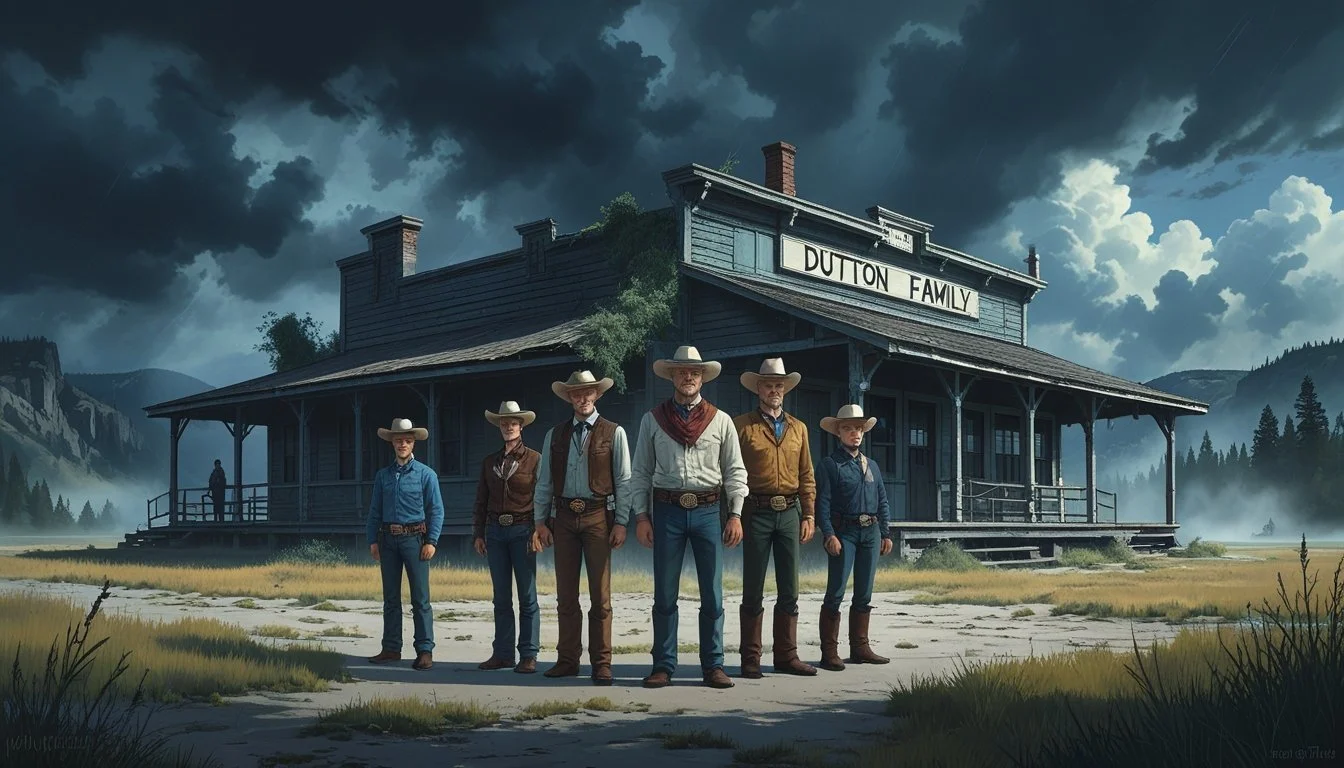
The Train Station’s significance is inseparable from the actions and choices of the Dutton family. Their involvement has turned this remote spot into a dark solution for threats to their land and legacy.
John Dutton’s Decisions
John Dutton has long been the driving force behind the use of the Train Station. He sees it as a last resort to protect the Yellowstone Ranch from those who pose a real danger.
By making the Train Station a tool for dealing with persistent threats, John normalizes extreme actions among the ranch's inner circle. He often frames these decisions as necessary to ensure his family’s survival, rather than acts of violence for their own sake.
John’s leadership also means imposing strict boundaries. Only a select circle—often marked by the “brand”—are trusted with the knowledge and use of the Train Station. This creates an environment of silence, complicity, and loyalty that keeps outsiders, including Jamie Dutton at times, on the periphery.
Involvement Of Rip Wheeler And Kayce Dutton
Rip Wheeler plays the role of the Duttons’ fixer at the Train Station. He is tasked with carrying out John’s decisions and leading others in the grim process of making threats “disappear.”
Rip’s unwavering loyalty and willingness to act set him apart. He enforces the ranch’s code of silence and is the person most trusted to interpret and execute John’s wishes without question.
Kayce Dutton’s involvement grows over time. At first, he hesitates to embrace the family’s darkest traditions. However, as external pressures increase, Kayce is drawn deeper into the web of secrecy, forced to demonstrate his allegiance to the family’s survival—including participation in Train Station operations.
This reliance on Rip and Kayce reinforces the Duttons’ insular approach. Both men must balance personal morality with loyalty to the family, as each act at the Train Station leaves lasting marks on their sense of self—and their relationships within the family. Betrayal of this silence or code carries severe consequences, underscoring the seriousness of their role in maintaining the Dutton family’s legacy.
Moral Implications And Power Dynamics
The Train Station in Yellowstone is more than just a plot device—it is a focal point where hidden crimes, moral ambiguity, and raw power all intersect. By examining how justice is circumvented and how power is asserted, one can see why this location remains so disturbing.
Accountability And Justice
At the Train Station, accountability is deliberately sidestepped. Instead of facing courts, criminal trials, or any public scrutiny, those deemed threats by the Duttons simply vanish.
This method bypasses the formal justice system entirely. The Dutton family’s choices serve as their own version of law enforcement, leaving victims' stories untold and their deaths uninvestigated.
This establishes a chilling precedent: power can determine guilt or innocence without due process. As a result, the concept of the "perfect crime" becomes real—not because of cleverness, but because of enforced silence. No external entity can hold those responsible to account, resulting in a dangerous erosion of justice.
The Pursuit Of Power
The Train Station embodies unrestrained power. By using this site, the Duttons and their enemies, such as Donald Whitfield and Market Equities, assert total control over their fate and enemies.
It’s not just about protection; it’s about dominance. Those with the means can erase opposition, conveying a warning to anyone challenging their influence. Power in Yellowstone is not simply held—it's protected through fear and decisive action.
For ambitious rivals or business entities, the knowledge that the Train Station exists discourages opposition. In effect, power at the Yellowstone ranch is maintained not only through legal or corporate means, but also through criminal acts that remain unpunished.
