
How Yellowstone Makes Every Death Matter
Exploring the Show’s Impactful Storytelling
Yellowstone stands out among modern TV dramas by making every character death purposeful and significant, rather than simply shocking for its own sake. Under Taylor Sheridan’s direction, the deaths on the series—whether of major characters like Lee Dutton or supporting roles—are carefully crafted to affect the Dutton family, the ranch, and viewers alike. Each loss carries real consequences, underscoring the personal and business stakes that drive the show’s gripping storylines.
Instead of using frequent, gratuitous violence, Yellowstone maintains tension by keeping its death count measured and impactful. This approach gives actors like Kevin Costner, who portrays John Dutton, a deeper canvas to explore their characters’ vulnerabilities and motivations following loss. The emotional weight of every death lingers, shaping relationships, power struggles, and the very future of the ranch.
Taylor Sheridan’s writing ensures that no death is wasted—every moment of loss adds to the series’ complex narrative and heightens the drama. This rare restraint keeps the audience invested, allowing Yellowstone’s world to feel both dangerous and deeply human.
The Importance of Death in Yellowstone
Death is central to the storytelling and themes of Yellowstone. The fates of major and minor characters shape the Dutton family’s future, dictate the direction of every storyline, and provoke strong reactions from viewers.
Death as a Narrative Device
Yellowstone uses death not just for shock but to drive the narrative forward in meaningful ways.
Each loss is significant, often resulting from violence, betrayal, or natural dangers that highlight the ongoing conflict over the Yellowstone ranch. Characters like Lee Dutton, killed in the series premiere, set the tone for how high the stakes are for the Dutton family and anyone near their world.
Deaths are often tied to land disputes, personal vendettas, or the harsh realities of ranch life. For example:
Character Cause of Death Impact on Storyline Lee Dutton Gunshot in land dispute Propels family into war with rivals John Dutton (flashforward) Illness/violence (varies) Changes power dynamics within the family Roarke Morris Rattlesnake attack Concludes corporate threat subplot
By making each demise integral to ongoing conflicts, death serves as a powerful tool to build tension and momentum.
Shaping Character Arcs
The deaths in Yellowstone leave lasting marks on surviving characters, directly influencing their decisions and personalities. For instance, Beth Dutton's experience with family loss informs her fierce loyalty and relentless tactics.
When major characters die, their legacies persist through the actions of others. Kayce’s trauma after losing his brother and participating in violent confrontations deeply affects his role in the ranch’s future and his relationship with his wife and son.
The consequences of death are seen in the shifting leadership dynamics within the Dutton family. Each passing shapes the way the family interacts, questions their values, and plans for the ranch’s survival. These deaths are never forgotten, and their effects echo in both spoken dialogue and plot developments.
Emotional Impact on Viewers
Yellowstone carefully builds emotional investment by showing the personal costs of every fatal outcome.
Witnessing characters struggle with grief, revenge, or guilt allows viewers to connect with the Dutton family’s challenges on a personal level. Scenes like the mourning after Lee Dutton’s death, or the uncertainty that follows John Dutton’s injuries, create tension and empathy.
Deaths are shown with restraint, avoiding gratuitous violence. Instead, they are woven into the emotional landscape—highlighting the fragility of life in the ranch’s rugged environment. This approach ensures that every loss carries weight, making the viewer feel the pain and consequences alongside those left behind.
Major Deaths and Their Consequences
Shifts in the balance of power at the Yellowstone ranch often hinge on the fatalities of prominent characters. Each major loss or close call forces intense personal reckonings and immediate changes in loyalty, placing the Dutton family and their enemies in new and often unpredictable positions.
John Dutton’s Near-Death Experience
John Dutton, the family patriarch, faced a severe assassination attempt in the season 3 finale. He was ambushed in his truck and left for dead by gunmen. This event didn't just threaten his life—it shocked both the ranch and his family into action.
After surviving, John’s authority became even more pronounced as he sought revenge. His brush with death sparked immediate and violent countermeasures from Rip and other ranch hands. The power dynamic in the family shifted as his children, particularly Beth and Kayce, assumed greater responsibility to protect the ranch.
This near-fatal moment made John’s continued dominance central to the story. It underscored the relentless threat facing the Duttons and forced every character, from confidants to rivals, to reconsider their alliances and tactics.
The Fate of Beth Dutton
Beth Dutton, known for her fierce loyalty and aggressive tactics, faced multiple life-threatening situations. A key moment occurred during the coordinated attacks in the season 3 finale, where a package bomb detonated in her office. Beth's survival was uncertain, and the explosion left lasting physical and emotional scars.
Her near-death experience amplified her resolve against family enemies and deepened her connection to Rip, her partner. This incident impacted how the family viewed external threats, with Beth emerging even more ruthless and protective of the ranch.
Beth's ongoing presence remains crucial to the family’s business operations and the ranch's defense. Her trauma manifests as unapologetic aggression toward rivals like Market Equities and anyone she suspects of targeting the Duttons.
Garrett Randall’s Demise
Garrett Randall, the biological father of Jamie Dutton, played a pivotal role as an antagonist. After orchestrating the assault on the Duttons, his fate was sealed once Jamie discovered the truth behind the attacks.
Jamie, under pressure from Beth, confronted and killed Garrett. This act permanently transformed Jamie’s relationship with both Beth and John. It eliminated a key threat but also isolated Jamie within the family.
Garrett’s death ended his influence over Jamie but left a legacy of mistrust. Jamie’s decision fractured familial ties and further complicated ranch succession, as Beth held new leverage over Jamie leading into the finale.
Character Responses to Loss
Yellowstone uses grief as a driving force for its main characters, shaping their motivations and relationships. Personal loss is never isolated; it ties directly into family drama, power struggles, and acts of retribution.
Rip’s Loyalty and Vengeance
Rip Wheeler responds to loss with unwavering loyalty to the Dutton family, often blurring ethical boundaries. He sees avenging the ranch’s losses as a duty, not just a reaction. When a family member is killed, Rip directly confronts those responsible, frequently using violence and the “train station” as his tools of justice.
His relationship with the “train station”—a secret dumping ground for enemies—shows how grief and loyalty mix with brutality. Loss does not weaken Rip; instead, it sharpens his resolve to protect what’s left. He operates by a strict personal code, shaped by hard experiences on the ranch.
When John Dutton or Beth is threatened, Rip acts without hesitation. His actions serve as a warning that loss will be met with consequences, reinforcing his role as the family’s chief enforcer.
Beth’s Transformation
Beth Dutton’s experiences with loss drive a dramatic transformation in her character. Early tragedies—including her mother’s fatal accident and later betrayals—leave her emotionally scarred but fiercely protective of her family. She channels grief into calculated aggression, particularly in her business dealings.
Loss pushes Beth toward vulnerability with Rip, yet intensifies her ruthlessness against rivals. She is instrumental in strategizing revenge or damage control when the family suffers a setback. While her methods are often harsh, they are also effective.
Beth’s trauma intertwines with her relationships, leading to volatile exchanges with her father and other family members. She embodies how Yellowstone’s deaths fuel both personal change and the broader family drama surrounding the Duttons.
Family and Power Struggles
Family loyalty and the fight for power shape nearly every major event on Yellowstone. Key decisions often stem from the personal ambitions, inner conflicts, and moral dilemmas of characters facing life-or-death stakes.
Jamie Dutton’s Conflicted Choices
Jamie Dutton serves both as a Dutton son and, at times, as Attorney General. His professional role puts him at odds with his family’s interests, especially when he must balance legal duties with loyalty to the ranch.
Jamie’s adoption is a source of pain and resentment, fueling his strained relationship with his father, John Dutton. This tension often leads to Jamie making choices that threaten the stability of the family as well as their control over the land.
He becomes a catalyst for conflict, frequently forced to weigh his career ambitions against the cost of betraying his blood ties. Every loss in Jamie’s orbit, such as strained alliances or broken trust, intensifies the stakes in the family power dynamic.
Kayce’s Burden
Kayce Dutton, a former Navy SEAL, carries a complex burden as both a son of the ranch and a husband to Monica. His loyalty is split between protecting his father’s legacy and safeguarding his own family.
The violence surrounding the ranch often drags Kayce into moral quandaries, especially as he takes on more responsibility. Monica’s objections and fears about ranch life highlight the heavy emotional cost of Kayce’s involvement in family disputes.
Kayce’s choices frequently place him at the center of life-and-death scenarios. As he rises to greater authority, each consequence—especially death—compounds his internal struggles, making the weight of his decisions deeply personal.
The Role of Antagonists and Murder
Yellowstone’s most memorable conflicts often stem from the threats posed by business rivals and outside forces, incorporating murder and assassination as real consequences. Antagonists’ deaths aren’t just for shock—they typically impact the balance of power or drive personal vendettas.
Market Equities and Sarah Atwood
Market Equities emerges as a major threat, using both legal and illicit tactics to gain control of Yellowstone land. Their aggressive approach escalates confrontations, leading to criminal schemes and, eventually, violent outcomes.
Sarah Atwood operates as a key player within Market Equities. Her strategies include manipulation, seduction, and leveraging legal authority—often pushing characters into dangerous territory. Her eventual murder in season 5B marks a turning point and demonstrates the show's willingness to eliminate powerful antagonists when their threats become too great.
Her death is abrupt but consequential. Major players in the Dutton family orchestrate retribution, highlighting that crossing certain lines invites fatal responses. This approach ensures that each murder in the show carries weight, directly influencing ongoing power dynamics among the ranch, Market Equities, and local authorities.
Key actions associated with Market Equities:
Action Impact Legal Maneuvers Threatens Dutton ownership Bribery Undermines local government Murder/Assassination Forces fatal confrontations
Dan Jenkins and Threats to the Ranch
Dan Jenkins is an early symbol of outside threats. A real estate developer, Jenkins seeks to exploit Yellowstone’s land for profit, often clashing with John Dutton and his family.
His involvement with other adversaries and willingness to cross ethical lines results in escalating threats against the ranch. Attempts on his life—including an assassination attempt—illustrate how high the stakes are for those who oppose the Duttons.
Jenkins’ ultimate death closes a chapter in Yellowstone’s struggles against encroaching outsiders. His arc reveals how the show ties murder closely to territory battles. Removing Jenkins is not just a plot twist—it represents the lengths to which the Duttons and their enemies will go when their survival is at stake.
Notable aspects of Dan Jenkins’ storyline:
Real estate speculation
Alliances with more dangerous foes
Victim of failed and successful murder attempts
Montana Setting and Its Influence
Montana’s landscape in Yellowstone is more than a backdrop; it shapes the power structures and values that determine life and death on the Dutton ranch. Central to these dynamics are the Livestock Office and deep-seated ranching traditions that define conflict and loyalty.
The Livestock Office’s Role
The Livestock Office is a unique Montana institution, pivotal within the show’s world. Officially tasked with enforcing cattle laws and managing livestock disputes, these agents wield significant authority across ranch lands. They are part law enforcement, part enforcers of ranching codes.
On-screen, the Livestock Office blurs legal boundaries when protecting the interests of the ranch. Their actions—ranging from straightforward investigations to harsh measures against threats—reflect the moral ambiguity of Montana’s frontier justice. This role is crucial in the show, where every loss or killing involving livestock or property represents not only a personal blow, but a challenge to survival itself.
The unpredictable reach of the Livestock Office, supported by state power and local loyalty, means that every death connected to their work carries heightened consequences. The system they operate within is both an extension of Montana law and a product of its unique ranching culture, making the stakes for each character immediate and significant.
Ranching Culture and Conflict
Ranching is the backbone of the Dutton ranch and broader Montana society within Yellowstone. The vast, open ranges mean territory is fiercely protected, with boundaries that are both literal and symbolic. In this environment, cowboys and ranchers build close alliances and deep grudges, often settled by force or dramatic confrontation.
Conflicts over cattle, grazing rights, and family legacy drive much of the violence depicted in the series. The isolation of rural Montana—stretching across forests, prairies, and rugged terrain—amplifies these disputes. Ranching becomes an identity, and defending that way of life often results in personal sacrifice.
Deaths on the ranch do not just mark the end of a character; they alter the balance of power within and between families. The consequences ripple through ranching operations, relationships, and Montana society at large, underscoring how the setting turns each death into a pivotal event that affects everyone tied to the land.
Supporting Cast and Their Fates
The emotional weight of loss extends beyond the Dutton family to the ranch hands and allies who populate Yellowstone Ranch. Events involving Teeter and Tate, in particular, demonstrate how the series assigns a unique importance to every supporting character’s fate.
The Tragedy of Teeter
Teeter stands out among the bunkhouse crew for her rough-edged resilience and plainspoken loyalty. As threats to the ranch escalate in season 5, Teeter’s storyline becomes a focal point for the risks every hand faces.
Her death comes during an armed attack on the property. Teeter tries to fight off the intruders alongside other workers, refusing to abandon her post. Ultimately, she is fatally wounded, her loss reverberating through both the remaining ranch staff and the Duttons themselves.
The show lingers on her absence, depicting the empty bunk and the subdued mood in the aftermath. Teeter’s fate is a reminder that loyalty and courage can be costly on the Yellowstone ranch and that the loss of even a single member fragments the larger family.
Tate’s Brush with Death
Tate Dutton faces several near-death situations throughout the series, but season 5 tests the family's youngest in new ways. When antagonists target the Dutton family directly, Tate is kidnapped during a calculated attempt to strike at John Dutton through his grandson.
A tense rescue sequence, involving Kayce and Thomas Rainwater, saves Tate at the last moment. This event forces the entire family—and their allies, including Rainwater—to confront the high stakes that come with their legacy. Tate’s survival is not treated lightly; the psychological repercussions for him and his parents are clear in the episodes that follow.
Rainwater's involvement highlights his strong, if complicated, alliance with the Duttons. The ordeal underscores how anyone connected to the ranch is vulnerable and how survival often comes at a profound emotional cost.
Mystery, Intrigue, and Ongoing Storylines
Yellowstone’s approach to character deaths extends far beyond the act itself, using loss to deepen intrigue and prop up new plot threads. Stakes remain high through unanswered questions, tense investigations, and the shadow of the Dutton family’s secret methods.
Detective Dillard’s Pursuit
Detective Dillard stands out as a persistent force seeking truth in the tangled web of the Yellowstone universe. His investigation into suspicious activity, especially deaths linked to the Duttons, introduces tension and uncertainty. The series often shows Dillard sifting through conflicting testimonies and dead-end leads, reflecting the labyrinthine nature of Yellowstone’s backstory.
Dillard’s presence signals that none of the past actions are forgotten. Even as other characters try to move on, he revisits old cases, scrutinizing every gap in the Dutton narrative. His work creates a recurring sense of danger for the ranch, as new questions arise about long-standing cover-ups and mysterious disappearances.
Unresolved Deaths and The Train Station
The “train station” is a secret dumping ground for bodies—a symbol of the lengths the Dutton family will go to protect their way of life. Many deaths remain officially unexplained, their stories hidden beneath the landscape where the train station sits. This location is both a literal place in the series and a backdrop to unresolved violence.
Unanswered questions about the true number of victims and their backstories ignite viewer speculation with each new Yellowstone recap or episode. The unresolved deaths tied to the train station haunt those involved, maintaining a cycle of secrecy and prompting new storylines as the weight of these actions builds over time.
Key Entities Relevance Detective Dillard Leads investigations, adds tension Train Station Hides bodies, source of mystery Unresolved Deaths Fuel ongoing plotlines Storyline/Backstory Deepen intrigue and character arcs
The Broader Impact of Death in Yellowstone
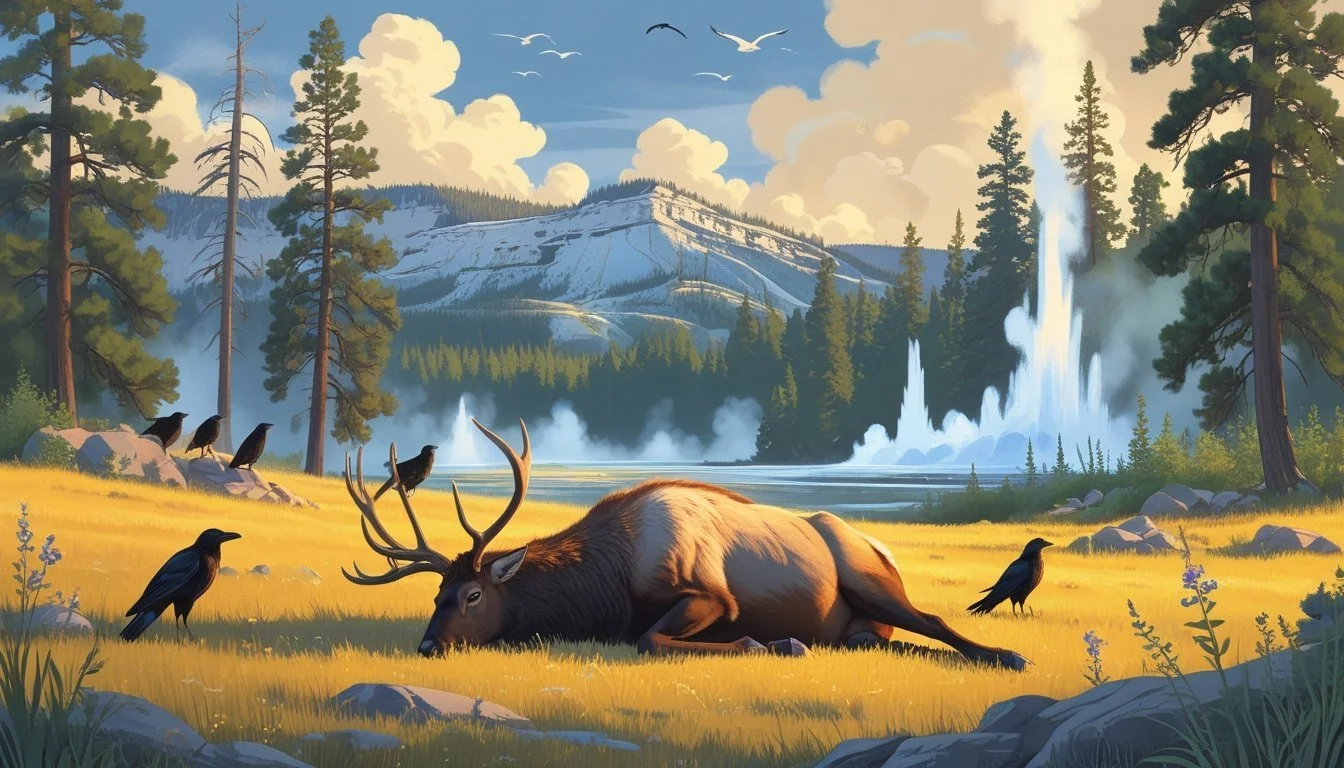
Death in Yellowstone is used as a narrative device that redefines family bonds and shifts the show’s direction at crucial points. Each loss also shapes how the audience perceives characters and events, making deaths more than just plot points.
Ripple Effects on the Dutton Legacy
The death of a family member such as Lee Dutton in the pilot sets a precedent for how vulnerable even the central family can be. This loss removes John Dutton’s heir apparent, breaking expected lines of succession and forcing the family’s surviving members to carry heavier burdens.
Deaths like that of Kayce and Monica’s baby hit a personal note, echoing emotional realities that extend beyond land disputes. For the Duttons, every death triggers new responsibilities, mistrust, and re-alignments within the family structure.
These events regularly test loyalty and intensify conflicts within the ranch and across rivals. The emotional aftermath often shapes audience research metrics, as viewers respond strongly to these transformative scenes, influencing future content and storylines.
Changing the Course of the Series
Major deaths are catalysts, causing radical changes in character motivations and the series’ trajectory. Lee’s death makes Kayce reconsider his distance from the family, drawing him deeper into family matters. Similarly, the loss of minor and supporting characters raises stakes and alters the show’s pace.
The show’s writers use these shifts to explore ethical dilemmas and pivot major plotlines, making each season feel distinct. Audience engagement and content measurement reflect heightened interest after these pivotal moments, guiding creators in privacy settings, advertising, and narrative focus.
Deaths also prevent predictability by demonstrating that all characters are at risk, which keeps viewers attentive to even subtle threats. This unpredictability is often cited in viewer feedback, further informing production and personal data handling strategies.
