
The Unseen Rules of John Dutton’s World in Yellowstone: Power, Loyalty, and Survival Secrets
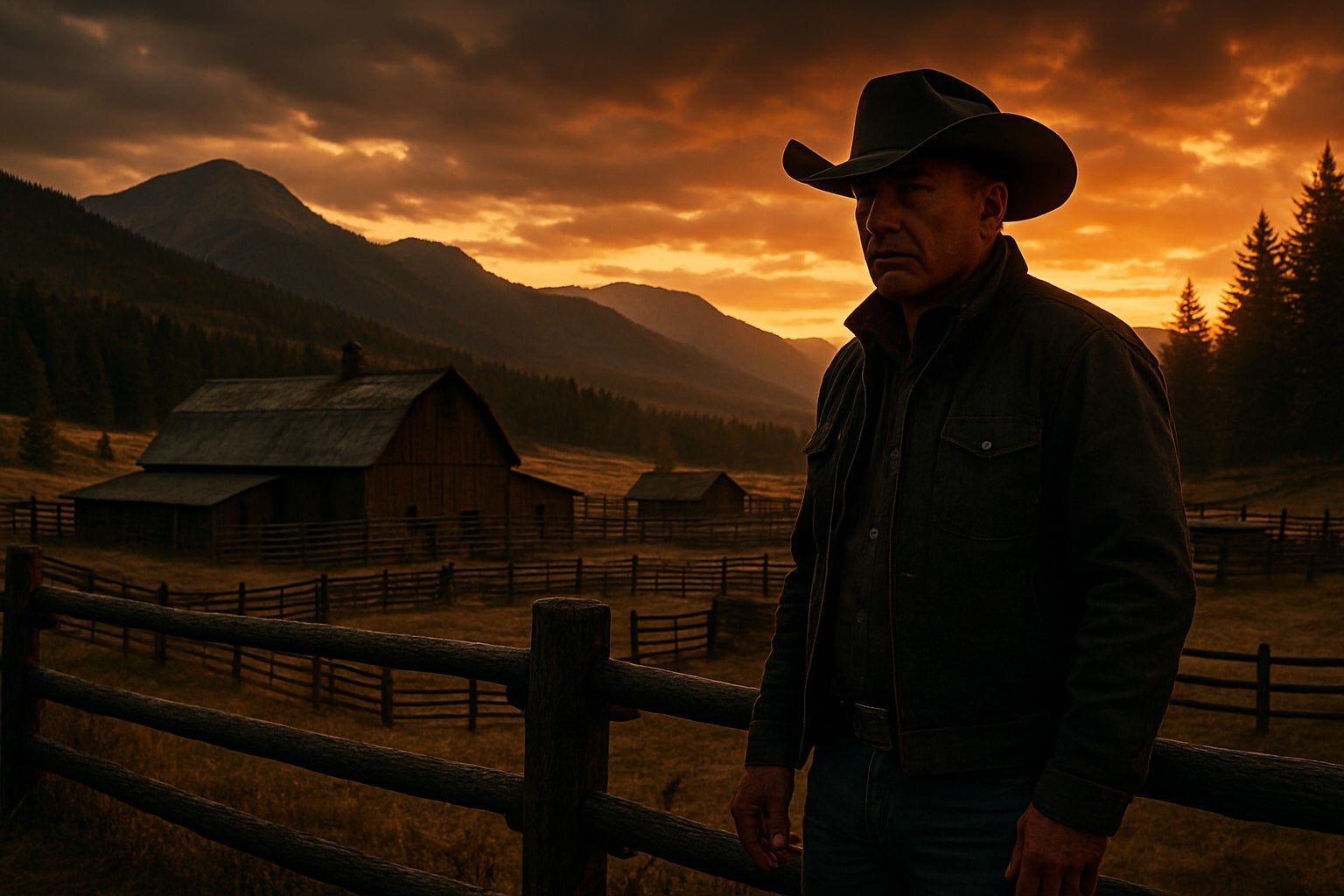
John Dutton’s world in Yellowstone is governed by a set of unwritten rules that shape his decisions, family loyalty, and the way he defends his land. These rules are not always stated outright but can be seen in his every action—from his unwavering adherence to tradition to his willingness to draw hard lines when the ranch is threatened.
The story of the Dutton family is rooted in legacy, sacrifice, and survival, forming a code that John lives by and expects others to follow. His attire, routines, and approach to conflict reflect this enduring code, creating an environment where the price of crossing these invisible boundaries is high. The unseen rules of his world are a powerful force, defining both his leadership and the lives of everyone on the ranch.
Understanding these hidden guidelines is essential to grasping why the Duttons act as they do and how their choices reverberate through every episode of Yellowstone.
The Foundations of John Dutton’s World

The stability and influence of John Dutton’s world come from the intertwining legacies of the Dutton family lineage and Montana’s storied ranching tradition. The family’s roots reach back to the hardships of the late 19th century, shaping not only their land but also the principles that drive each generation.
Historic Roots and Dutton Family Legacy
The Dutton family story begins in 1883 with James and Margaret Dutton, who migrated west seeking a new future after the Civil War. Their journey symbolizes the larger movement of American settlers pushing beyond established boundaries. This commitment to forging a legacy in the untamed American West sets the stage for the family’s identity.
James and Margaret established fundamental values: land stewardship, perseverance, and a duty to protect what is theirs. As shown across series timelines, these early choices ripple through time, impacting each descendant.
Their descendants, including John Dutton I, guide the family through historic events like the Great Depression and evolving attitudes in American history. The generational handoff from these early pioneers forms the backbone of the Dutton legacy.
Origins of the Yellowstone Ranch
The Yellowstone Dutton Ranch became the family’s anchor, founded when James Dutton chose to settle in Montana following significant hardship and loss, including the death of daughter Elsa. This decision marked the transformation from wandering pioneers to Montana ranchers.
The ranch’s vast expanse is more than land; it is ancestral ground that represents survival and sacrifice. For over a century, the ranch weathered wars, economic downturns, and continuous pressure from outside interests. The connection to the land shapes not only their wealth but also their sense of purpose.
Ownership of the Yellowstone Ranch passes through the family tree, with its history interwoven in every acre. The Duttons’ stewardship faces constant challenge, but the ranch endures as a physical symbol of their ambitions and failures.
Generational Influence and Tradition
Each generation of Duttons faces unique challenges but follows unwritten rules set forth by their predecessors. Family traditions—such as solemn family councils, rigid work ethic, and absolute loyalty—stretch back to James and Margaret’s time. John Dutton III, the current patriarch, upholds these customs while adapting to modern threats.
The Duttons are shaped as much by the past as by their own choices. Generational influence persists in their daily lives, visible in rituals, dispute resolutions, and the prioritization of legacy over individual ambition.
The focus on continuity forms an unbroken chain, making the Yellowstone Ranch not simply a place, but the living embodiment of the Dutton family saga. This perspective continues to dictate their relationships and responses to the evolving world around them.
The Unseen Social Codes
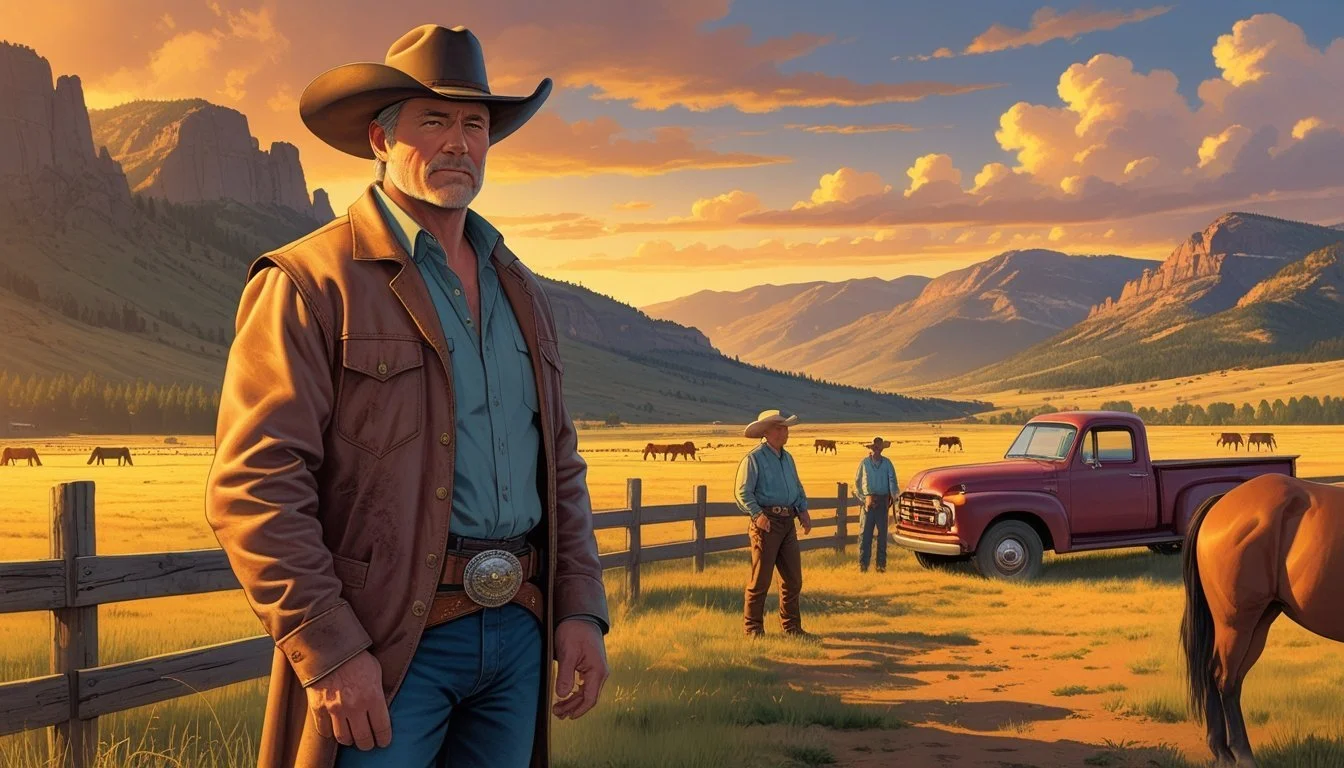
Life on the Yellowstone Dutton Ranch is governed by a set of unspoken social rules that shape every relationship, rivalry, and decision. Family ties, personal honor, and the relentless need for survival drive the expectations and behavior of each member of the clan.
Loyalty and Betrayal in the Dutton Clan
Loyalty is the most valued attribute within the Dutton family. Everyone from John Dutton to Rip Wheeler is expected to put family above personal interests, a standard reinforced by years of hardship and conflict.
Those who serve the ranch, like Rip and Beth Dutton, maintain a strict code of silence about their actions—even when ethically questionable. Straying from this expectation can result in expulsion, isolation, or much worse. Jamie Dutton’s actions, for example, reveal just how seriously betrayals are treated; even minor acts of disloyalty are met with harsh consequences and long memories.
The boundary between who is considered “family” and who is not often determines a character’s fate. This exclusive circle allows little tolerance for mistakes or perceived threats, reinforcing a constant atmosphere of suspicion and vigilance throughout the ranch.
Reputation and Honor
John Dutton and his family operate under an unwavering commitment to reputation. In the rugged landscape of Montana, a person’s word is as binding as a written contract, and honor is a key commodity.
For the Duttons, protecting their name is essential. Any sign of weakness can be exploited by rivals eager to seize their land or undermine their authority. Even in private disputes, such as the ongoing friction between Beth and Jamie, the impulse to keep appearances controls public behavior.
Violations of honor, whether intentional or accidental, carry lasting consequences. These social codes extend beyond the family, affecting cowboys and allies, who are all judged by how well they embody the values of honesty, loyalty, and self-sacrifice.
Frontier Justice and Masculinity
Survival in the Yellowstone universe is shaped by a harsh brand of “frontier justice,” often enforced outside the boundaries of law. Power on the ranch is defined by action and resolve rather than idle threats or negotiation.
Masculinity is associated with toughness and decisiveness. Rip Wheeler, Kayce Dutton, and even young Tate are measured by their readiness to confront danger, take risks, and make difficult choices regardless of emotion.
Common displays of this code include:
Settling disputes with physical confrontation
Accepting violence as a necessary tool
Prioritizing loyalty to family over personal safety
These patterns reinforce the belief that true authority comes not just from holding power, but by proving strength and willingness to act—even when the outcomes are grim or uncertain.
Power, Land, and Political Struggles
John Dutton’s world revolves around the constant management of territory, power, and relationships. His authority relies as much on his grasp of land policy as it does on navigating the ever-shifting alliances of Montana politics.
Land Rights and Ownership
Control of the Yellowstone Dutton Ranch is challenged at almost every turn. Dutton’s claim to thousands of acres puts him at odds with land developers, neighboring ranchers, and the Broken Rock Reservation.
Ownership translates directly to influence. In Montana, land is wealth, leverage, and family legacy. Legal disputes over boundaries, historical use, and water rights are frequent, forcing the Duttons to use both courts and backchannel negotiations.
Protection of their ranch means more than fences and deeds. The Duttons rely on contracts, local support, and sometimes force. Maintenance of these rights requires an intimate understanding of state laws and the ability to react quickly to any legal or physical threat.
Political Rivalries and Market Equities
John Dutton’s shift from rancher to governor marks a distinct escalation in the struggle for power. As governor, he uses political authority to influence zoning, taxation, and development efforts targeting the ranch.
Political rivals exploit every opportunity. Land developers, advocacy groups, and Native leaders often oppose or challenge the ranch’s interests. Market pressures, such as fluctuating cattle prices and property values, force the Duttons to adapt or risk losing their hold.
Key decisions are tied to market equities and local economies. The family walks a fine line between economic survival and maintaining tradition. Strategic alliances and tough negotiations shape outcomes more than any single policy or law.
Conservation and Land Stewardship
The narrative includes frequent reference to the responsibility of land stewardship. The Duttons must balance profit motives with the need to preserve open rangeland, wildlife habitats, and Montana’s natural beauty.
State and federal conservation policies, such as the Endangered Species Act, add pressure. While these rules are meant to protect the environment, they can penalize landowners like the Duttons for hosting protected species.
Conservation measures affect ranch operations directly. Choices about livestock, fencing, and river use determine not only compliance but also the ranch’s long-term viability. Stewardship is portrayed as both a burden and a deeply held value, shaping how the family approaches every conflict.
Family Dynamics and Character Studies
Power struggles, generational trauma, and shifting loyalties form the backbone of the Dutton family’s relationships. Central figures like John Dutton, Beth Dutton, and Rip Wheeler each experience and enforce the unspoken rules that define life on the Yellowstone ranch.
Complex Relationships Within the Duttons
The Dutton family operates under an unwritten code rooted in loyalty but fractured by personal ambitions and old wounds. John Dutton III’s expectations compel his children—Beth, Kayce, Jamie, and the late Lee—to prioritize the ranch over their own happiness.
Sibling rivalry and mistrust mark the bond between Kayce, Beth, and Jamie. Their relationships are shaped by past trauma, the influence of their late mother Evelyn Dutton, and their individual roles within the family’s legacy.
Kayce is torn between his duty to his father and his own family, especially as a parent to Tate Dutton. Jamie seeks acceptance from John but remains an outsider due to family secrets and his own decisions. Beth’s relationship with Jamie is openly hostile, defined by betrayal and lasting resentment.
Key Figures: John Dutton, Rip Wheeler, and Beth Dutton
John Dutton III serves as the patriarch. His methods are direct, sometimes ruthless. He demands loyalty but struggles with emotional expression, impacting how his children relate to him and each other.
Beth Dutton is fiercely intelligent and protective of her father. Her emotional volatility and traumatic history drive much of the family’s tension. She is also one of the few Duttons willing to use any means necessary to defend the ranch.
Rip Wheeler, though not a blood relative, acts as a loyal enforcer for John. His presence is both stabilizing and intimidating. Rip’s unwavering devotion to Beth and John gives him a unique place within the family, further complicating inner dynamics.
Character Main Traits Role in Family John Dutton Authoritative, Stoic Patriarch Beth Dutton Cunning, Loyal, Volatile Strategic Protector Rip Wheeler Loyal, Resilient Enforcer, Outsider Kayce Dutton Conflicted, Loyal Heir Apparent Jamie Dutton Ambitious, Isolated Legal Strategist
Ranch Life and Survival Ethics
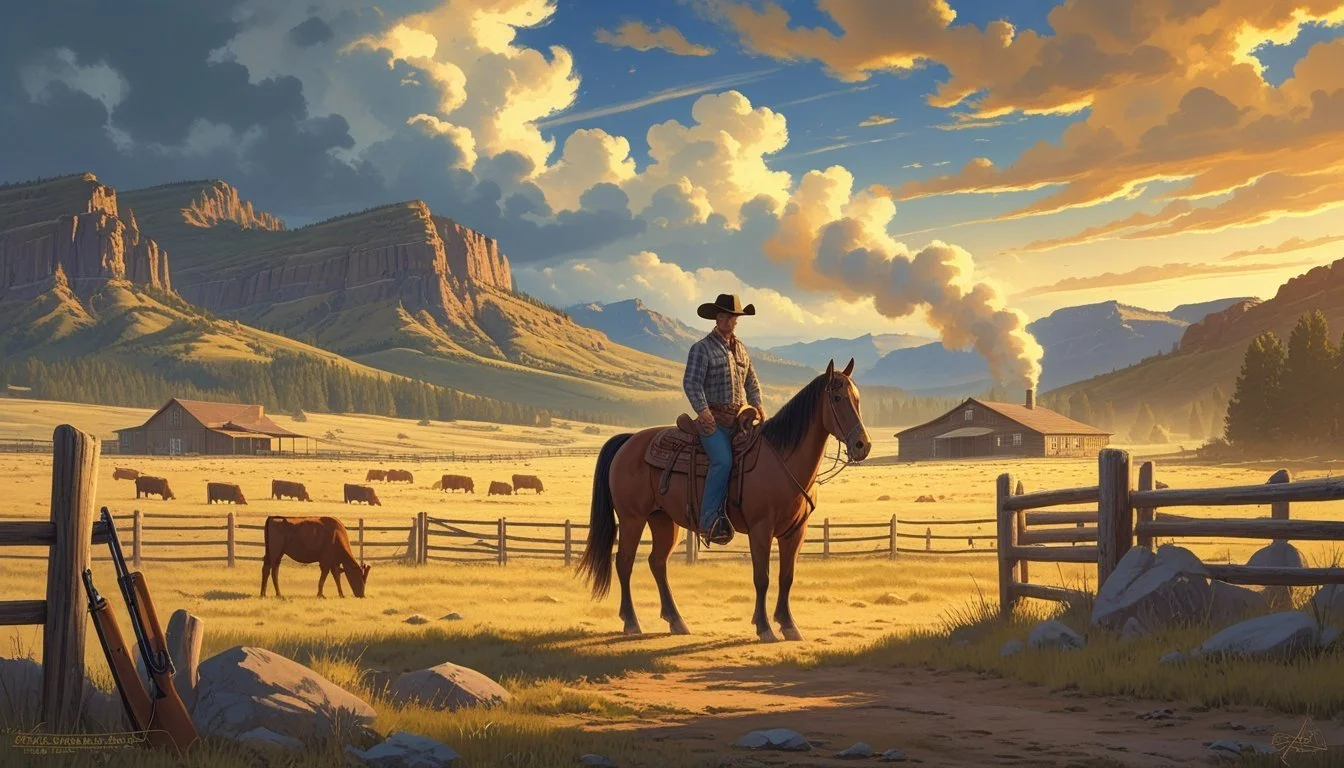
Ranch life at the Yellowstone Ranch is defined by hard routines, exacting work, and an unwavering approach to survival. Cowboys, guided by John Dutton’s rules, face unique challenges in the vast Montana landscape, balancing tradition and necessity.
Daily Realities on the Ranch
Each day on the Yellowstone Ranch starts before dawn. Cowboys like Rip Wheeler, played by Cole Hauser, handle long hours of cattle drives, fence repairs, and land management.
Tasks are physically demanding. A typical workday involves horseback riding, roping, and branding. Weather in Montana is unpredictable; harsh winters and sudden storms demand adaptability and toughness.
Cowboys are expected to demonstrate loyalty and discretion. Mistakes can have serious consequences, not only for the individual but for the entire operation.
Key responsibilities include:
Maintaining livestock health
Protecting land from trespassers or predators
Training new ranch hands in Dutton family methods
Through these tasks, the Dutton family’s code permeates every aspect of ranch operations.
Frontier Survival and Ranch Codes
Survival at Yellowstone Ranch goes beyond resisting nature—it is about enforcing a set of unwritten rules. John Dutton, as patriarch, upholds strict boundaries for family and staff alike.
The ranchers follow a quiet code of loyalty, confidence, and secrecy. Problems are often solved internally, never leaving ranch borders if possible. Conflict is resolved quickly, sometimes fiercely, to maintain control and protect the land.
Ethics revolve around the principle that the ranch's survival outweighs personal interests. Decisions, whether about trespassers or land disputes, are handled decisively, and sometimes with a hint of violence.
This approach is rooted in the legacy of frontier justice—where law is often secondary to the codes upheld by those who live off the land. These rules, though seldom spoken, guide every action taken on the Yellowstone Ranch.
The Role of Indigenous Communities
The series frequently brings the Broken Rock Reservation and its leaders into conflict and negotiation with the Dutton family’s Yellowstone ranch. These storylines highlight the ongoing struggles over land, sovereignty, and cultural identity faced by Native Americans in Montana.
Broken Rock Reservation and Native American Relations
The Broken Rock Reservation, led by Thomas Rainwater, stands as a central force in the power struggles depicted in Yellowstone. Rainwater is portrayed as strategic, aiming to protect his tribe's interests by reclaiming ancestral lands from the Duttons and other landowners.
Tensions between the reservation and the ranch are rooted in questions of history, ownership, and justice. The show details disputes over land rights, water access, and the legacy of displacement. While alliances sometimes form out of necessity, mistrust often lingers.
Key characters like Rainwater bring awareness to the motivations, resilience, and challenges facing the reservation. These dynamics emphasize how Native American communities assert their agency within a system skewed by the interests of wealthy landowners.
Notable dynamics include:
Land negotiations and legal battles
Economic competition for resources and development
Advocacy for tribal sovereignty
Indigenous Rights and Cultural Preservation
Yellowstone consistently addresses the broader issue of Indigenous rights. The show explores how the Broken Rock community works to safeguard its land, culture, and autonomy in the face of pressure from ranchers, developers, and political bodies.
Issues such as missing and murdered Indigenous women, as shown in key storylines, are used to bring real-world concerns into the narrative. The desire to preserve language, traditions, and a sense of place is threaded throughout the series.
Cultural preservation efforts are contrasted with the commercial pressures threatening the reservation. The show often portrays Rainwater and other leaders balancing the need to participate in economic ventures with the imperative to maintain identity and sovereignty.
Relevant themes:
Protection of sacred sites
Preservation of cultural heritage
Struggles against erasure and assimilation
Legacy, Storytelling, and Cultural Influence
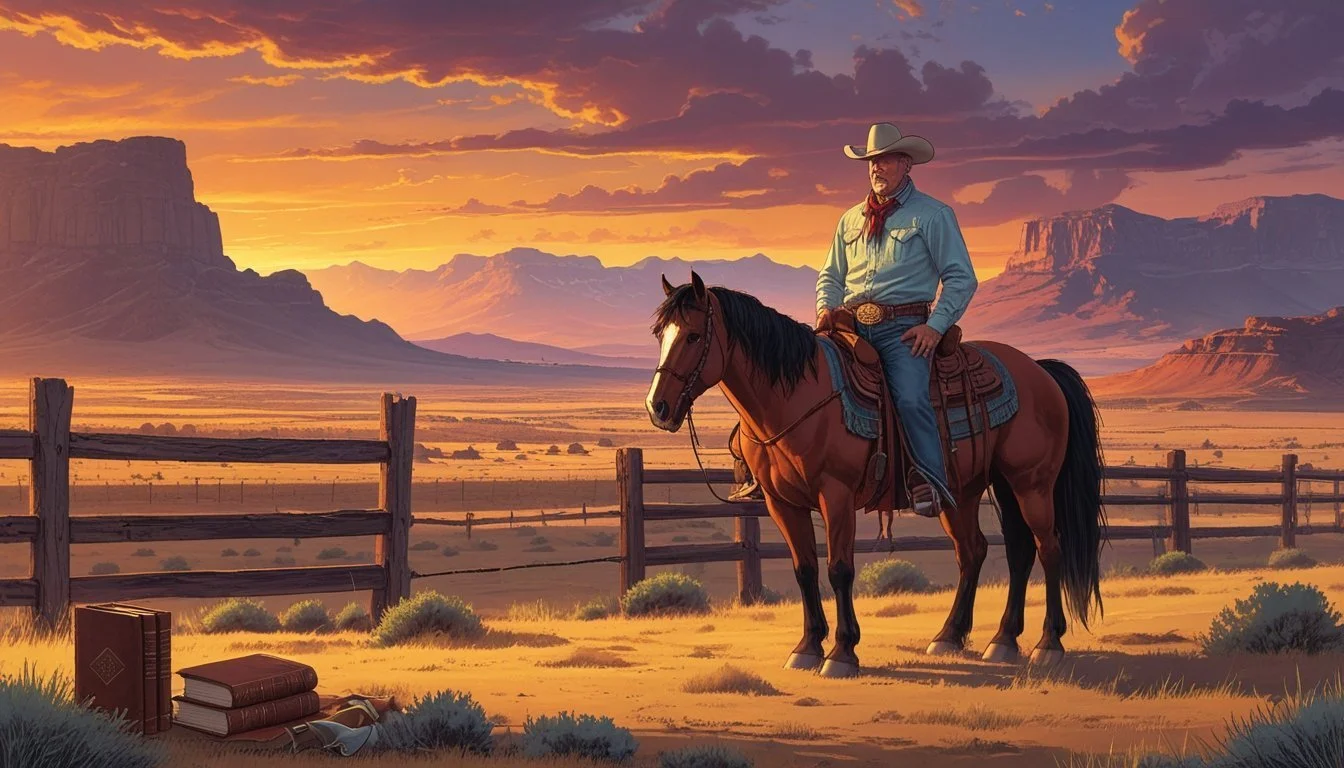
Yellowstone has significantly shaped popular perceptions of the American West through its depictions of family legacy, power dynamics, and cultural change on the Dutton Ranch. Its influence stretches beyond entertainment, affecting fashion, public debates, and interest in the Western genre.
The Power of Storytelling in Yellowstone
Storytelling serves as the backbone of Yellowstone, with Taylor Sheridan crafting narratives centered on inheritance, sacrifice, and the unspoken codes of ranch life. The stories explore how John Dutton, played by Kevin Costner, navigates threats to his family’s land and reputation, always underpinned by the weight of generations before him.
The series delves into the clash between tradition and modernity, highlighting the importance of oral histories and family lore. Through dialogue and visual cues, Yellowstone reinforces the notion that legacy is not just inherited land but a continual retelling of family victories, losses, and lessons.
Dialogues often reveal the pain of choices made for the greater family good and illustrate the pressure each Dutton faces to maintain their identity. The use of flashbacks and monologues makes the audience privy to the invisible rules that guide daily life on the ranch.
Yellowstone’s Role in the Modern Western Genre
Yellowstone revitalizes the Western genre for contemporary audiences. Instead of focusing on lone gunslingers or outlaws, it paints a complex picture of modern ranchers dealing with legal disputes, economic shifts, and cultural pressures. The setting in Montana’s rugged landscapes offers authenticity, grounding the story in a real, evolving West.
Taylor Sheridan’s direction emphasizes gritty realism over romanticized heroics. Conflicts arise from land rights, corporate encroachment, and family loyalty—issues relevant to today’s viewers. Costumes, music, and dialogue evoke classic Westerns, yet the themes are timely and grounded.
Key elements of Yellowstone’s place in the genre:
Tradition vs. Modernity Family Dynamics Realism Old codes faced with new laws Multiple strong personalities Relatable struggles
Yellowstone’s impact can be seen in the resurgence of interest in Western aesthetics, from clothing to contemporary country music.
The Enduring Public Fascination
Yellowstone has become a cultural phenomenon, capturing audiences with its uncompromising portrayal of land stewardship, power, and survival. The public’s fascination is driven by the show’s authenticity and the depth of its characters, especially the complex portrayal of John Dutton.
Debates sparked by the show touch on issues like land ownership, rural identity, and the tension between progress and preservation. Fashion and lifestyle trends inspired by the series show up in mainstream retail and social media, reflecting broader influence.
Fan communities have flourished, sharing theories and analyzing plot developments. Unlike many series, Yellowstone consistently holds the attention of a diverse audience, cementing its status as both a popular entertainment and a touchstone for discussions about the modern American West.
