
What It Means to Work for the Duttons in Yellowstone
Roles, Challenges, and Rewards

Working for the Duttons in Yellowstone, as depicted on the Paramount Network series, means entering a world defined by loyalty, commitment, and sometimes sacrifice. Employees at the Dutton ranch are expected to follow strict rules, show unwavering loyalty, and often dedicate their lives to protecting the ranch’s interests. This unique work environment is both demanding and close-knit, with deep traditions that set it apart from a typical job.
Life on the Dutton ranch isn’t just about daily chores; it’s about belonging to a fiercely loyal group where trust, hard work, and following unspoken codes are non-negotiable. Workers may even receive the infamous brand, marking a permanent bond with the ranch and its legacy. The atmosphere portrayed on Yellowstone offers a compelling look at what it truly means to work for the powerful and complicated Dutton family.
History of the Dutton Family and Yellowstone Dutton Ranch
The Dutton family began as pioneers in the late 19th century, establishing the Yellowstone Dutton Ranch in Montana’s Paradise Valley. Over generations, the family and the ranch have faced conflict, loss, and evolution, shaped by individual legacies and historical events.
Origins of the Dutton Legacy
James Dutton and his wife Margaret traveled west after the Civil War, seeking new opportunities and a fresh start. They settled in Montana and founded the Yellowstone Dutton Ranch, drawn by the promise of fertile land and open skies. James’s determination provided stability, while Margaret’s resilience kept the family united during harsh winters and personal loss.
Their journey is depicted in 1883, where the hardships of pioneering life are central. The Duttons faced dangers from the environment, disease, and conflicts with others vying for land. Through survival and adaptability, James and Margaret laid the groundwork for their descendants, establishing the ranch as a symbol of endurance and legacy.
Generations: 1883, 1923, and 1944 Eras
The ranch’s history spans several notable eras. By 1923, Jacob Dutton and his wife Cara had taken over leadership. This period was marked by tensions with neighboring forces and the challenges of early 20th-century Montana, including drought and social upheaval. Jacob’s nephew John Dutton Sr. worked alongside them, learning the complexities of ranch management.
In 1944, the family continued to protect the ranch through World War II and shifting American society. Each era brought changes in technology, circumstances, and threats, but the Duttons maintained their commitment to the land.
The transitions between generations highlight both continuity and adaptation, as each leader confronted unique challenges while holding onto the ranch’s founding values.
Key Figures in the Dutton Family Tree
The Dutton family tree includes several important members:
Name Role/Relationship Notable Facts James Dutton Founder Civil War veteran; led westward migration Margaret Dutton Matriarch Supported family through early hardship Elsa Dutton Daughter Key figure in the 1883 journey John Dutton Sr. Son/Nephew (depends on timeline) Veteran ranch manager Jacob Dutton Patriarch (1923) Steered ranch in turbulent decades Cara Dutton Matriarch (1923) Leadership during Jacob’s era Emma Dutton Relative (1923) Supported family legacy Jack Dutton Descendant (1923) Involved in ranch affairs John Dutton III Modern Patriarch Central figure in contemporary times Beth Dutton Daughter Business strategist, fiercely loyal Kayce Dutton Son Rancher, strong-willed Jamie Dutton Adopted son Legal and political strategist Spencer Dutton Family member 1923 adventurer Elizabeth & Alexandra Dutton Connected by marriage Extended Dutton influence
This complex network defines the family’s decision-making and the roles that each plays in defending and maintaining the ranch.
Evolution of the Ranch Over Time
The Yellowstone Dutton Ranch grew to become the largest ranch in the United States. Its expansion was gradual, shaped by shrewd land acquisitions and an unyielding defense against those seeking to undermine the Dutton claim. The family weathered threats ranging from business interests to legal challenges and personal vendettas.
Early years emphasized cattle ranching and survival, but as the region developed, the business diversified. The ranch adapted to changes in law, economics, and technology, adopting new methods without sacrificing tradition.
Through all shifts, the land remained central to Dutton identity. The workers and hired hands who stayed on—often living onsite—formed a close-knit community, further binding the ranch’s past to its present. This ongoing evolution underscores the profound connection between the Duttons and their Montana home.
Working for the Duttons: Roles, Power, and Loyalty
Employment at the Yellowstone Dutton Ranch involves more than day-to-day tasks; it is bound by fierce standards of loyalty, defined roles, and tradition-driven expectations. Workers are deeply affected by the ranch’s culture, the Dutton family’s influence, and the constant tension between power and trust.
Core Positions and Their Influence
The Dutton Ranch operates with a defined structure. At the top sits John Dutton (played by Kevin Costner), who controls decisions and sets expectations for everyone beneath him. Directly beneath John, Rip Wheeler serves as ranch foreman, overseeing daily operations and enforcing the Dutton code of conduct among the hired hands.
Major roles on the ranch include cowboys, veterinarians, and land managers. Rip Wheeler’s authority is unquestioned on the bunkhouse floor, acting as an enforcer and mentor to the ranch crew. The trust placed in him highlights the influence core positions hold over every aspect of ranch life.
Other key workers include long-time hands and “branded” employees. Branding on the Yellowstone ranch is both a literal and symbolic commitment, marking workers as family, but also tying them to the Dutton legacy with loyalty expected above all. This creates a tightly knit hierarchy within the ranch workforce.
Position Responsibility Influence Level John Dutton Owner/Decision-maker Maximum Rip Wheeler Ranch Foreman High Cowboys/Ranchers Day-to-day operations Moderate Branded Workers Loyalty/Enforcement High (within crew)
Values: Loyalty, Trust, and Tradition
Loyalty is the cornerstone of employment at the Yellowstone ranch. Workers are expected to put the Dutton family and land above personal needs, with trust acting as both protection and a burden. Employees often risk everything—including their own safety—for the ranch’s survival.
Traditions are carefully preserved. The Duttons require everyone on the ranch to follow established rituals and codes of conduct, which include secrecy and obedience. Trust is earned over time, not given freely. Those who fail to uphold Dutton values are swiftly removed, sometimes with severe consequences.
Work is not just transactional. Many workers become part of the Dutton legacy for life, especially those who receive the brand. This practice emphasizes the expectation of unbreakable loyalty and eternal trust.
Power Dynamics and Leadership
Power on the ranch is concentrated with John Dutton and his close circle. Leadership is absolute; decisions are rarely questioned. Workers understand their place and find their security in obedience and competence.
Rip Wheeler’s role as ranch foreman is crucial. He enforces rules with unwavering authority, sometimes requiring violence or strict discipline to maintain order. Because of this clear hierarchy, challenges to leadership are uncommon and often dangerous.
Influence on the ranch is measured by proximity to the Dutton family and performance of duty. Workers who prove their dedication advance in trust and authority, but crossing boundaries—either of conduct or loyalty—often leads to exile or worse.
Dutton Ranch's Unique Work Culture
Work culture at Yellowstone Dutton Ranch is unlike typical ranches. There is an expectation for workers to merge personal lives with the ranch’s interests. Privacy is limited; most hands live together in the bunkhouse under constant observation from leadership, especially Rip and John.
The ranch culture is defined by hard labor, long hours, and a deep connection to the land. Employees become part of a closed society, separate from the outside world. This results in tight bonds among workers, but also intense pressures to conform.
Rituals, such as the branding ceremony, reinforce this culture and serve as initiation. Tradition, discipline, and mutual dependence make the ranch both a place of refuge and a test of endurance for anyone who calls it home.
Family Dynamics and Relationships
Working for the Dutton family means entering an environment shaped by longstanding loyalties, deep-rooted conflicts, and complex personal histories. The legacy of the ranch is always central, influencing both personal relationships and the professional atmosphere.
Interpersonal Bonds and Betrayal
The Duttons are known for their fierce loyalty to each other, but that loyalty can often turn into rivalry or mistrust. At the heart of the family is John Dutton, a patriarch whose relationships with his children—Beth, Kayce, and Jamie—are marked by both love and significant strain.
Employees witness frequent shifts between openness and secrecy within the family. Betrayal is not uncommon, particularly when personal goals clash with the family’s interests. Jamie’s choices, such as seeking personal independence or aligning with political adversaries, have led to periods of deep mistrust.
Table: Examples of Dutton Family Interactions
Relationship Pair Type of Bond Notable Betrayals John & Beth Fierce, protective Minimal overt betrayal John & Jamie Tense, sometimes cold Political alignments Beth & Jamie Hostile, resentful Recurring personal rifts
These dynamics often spill over, impacting the staff who must carefully navigate shifting alliances.
Inheritance and Legacy Pressures
Protecting the Yellowstone ranch is not just a personal goal but a generational mandate. John Dutton’s children feel constant pressure to uphold the legacy and secure the estate’s future. This creates competition, anxiety, and a sense of duty that shapes every major decision.
Inheritance issues are ever-present. Concerns about inheritance taxes, land division, and legal battles mean that decisions about the property are never simple. Any misstep could put the family’s multi-generational legacy at risk.
Employees are not immune to these pressures. Many are drawn into crisis management or have their roles complicated by high-stakes estate planning. The expectation to defend the family legacy can make loyalty to the Duttons both a professional asset and a liability.
Blended Family Structures
The Dutton family tree is complex, featuring adopted children, strained biological relationships, and unconventional partnerships. Jamie’s adoption and Kayce’s marriage to Monica introduce new perspectives, conflicts, and cultural tensions into everyday life.
This blended structure extends beyond genetics. Family is defined by loyalty as much as by bloodlines, with ranch hands and longtime employees sometimes considered part of the inner circle. These arrangements can create favoritism or provoke feelings of exclusion among those who fall outside direct family lines.
Working for the Duttons means navigating a social structure where roles are constantly shifting. Trauma, loss, and reconciliation all play a part in reshaping relationships and alliances within both the family and its extended household.
Challenges of Ranch Life in Montana
Ranch operations in Montana present difficult daily demands due to the harsh environment, responsibility for livestock, and ongoing pressure from external interests. The work requires a blend of practical skills and keen awareness of the changing landscape.
Livestock Management and Cattle Ranching
Cattle ranching at the scale seen on the Dutton Ranch involves year-round routines with little margin for error. Workers must manage herds in challenging weather, performing tasks such as calving, branding, and daily feeding. Disease control, nutrition, and herd genetics are constant priorities.
Table: Key Ranch Tasks
Task Season Primary Challenge Calving Spring Cold snaps, predation Branding Late spring Herding cattle, safety Grazing/Supplementing Year-round Forage shortages, snow Health Checks All seasons Illness spread, injuries
Many job roles also demand horsemanship and the ability to handle unpredictable livestock, making experience with cattle and horses essential. Efficient livestock management directly impacts ranch productivity and profitability.
Wildlife, Ecosystems, and Conservation
Montana ranches intersect with diverse ecosystems, supporting not only cattle but also native wildlife such as elk, deer, and predators. Proper wildlife management is vital to reduce conflicts, limit disease crossover, and protect resources.
Ranches often cooperate with wildlife agencies to conserve habitats and may adopt conservation easements. These legally binding agreements protect land from future development while allowing continued agricultural use. This supports the balance between ranching and long-term ecosystem health.
Key wildlife management practices include:
Rotational grazing to prevent overgrazing
Installing wildlife-friendly fencing
Working with conservation groups on land preservation projects
Sustaining ranch operations while preserving habitat requires ongoing vigilance and collaboration.
Land Disputes and Land Rights
Ranches like the Duttons' frequently face disputes over boundaries, water access, and public land use. Conflicting interests between large ranches, developers, government, and recreational users often result in legal challenges related to land rights.
Issues extend to grazing permits, fencing disagreements, and road access across private property. Land preservation and conservation easements may be used to secure a ranch’s future and maintain open spaces, but these arrangements can also bring restrictions on development or certain ranch practices.
Accurate land records and effective conflict resolution are critical for stability and continuity in ranching operations. The pressure from external parties seeking land for commercial or residential development remains constant.
Confronting External Threats
Working for the Duttons means becoming deeply involved in their battles against outside forces determined to claim control over Yellowstone Ranch. Employees not only protect the land but also navigate complex challenges involving business interests, legal obstacles, and longstanding cultural conflicts.
Market Equities and Land Developers
Market Equities stands as a formidable threat, seeking to purchase large portions of the Dutton Ranch for high-value development projects. The company’s relentless push for profit clashes with the Duttons’ focus on preserving family land.
Land developers, backed by significant financial resources, use aggressive tactics—offering buyouts, threatening legal action, and applying public pressure. Employees often find themselves dealing with hired surveyors, security personnel, and construction teams who attempt to encroach on ranch property under questionable pretenses.
The Dutton workforce—led by figures like Rip Wheeler—must defend boundaries through direct confrontation and strategic planning. Occasionally, this means late-night patrols, fixing broken fences, or organizing meetings to counteract false claims. Loyalty and vigilance become essential traits, as Market Equities’ interests rarely align with those of the ranch.
Key Impacts:
Encounters with corporate representatives
Increase in ranch security measures
Stressful and sometimes violent standoffs
Government and Legal Challenges
The Duttons face constant scrutiny from state and federal agencies. Regulatory investigations, zoning disputes, and shifting environmental laws can threaten ranch operations.
Legal challenges often stem from overlapping jurisdictions and ambiguous boundaries. The Duttons employ legal teams to contest property rights or stall unfavorable decisions. Employees may be called to testify, collect evidence, or support lawyers during tense legal proceedings.
Sometimes, government officials side with developers or interest groups, complicating matters further. This can lead to sudden inspections, permit denials, or unwarranted fines, increasing pressure on ranch hands to maintain flawless operations.
Typical Issues for Workers:
Extra documentation requirements
Possible involvement in legal testimony
Impact of new regulations on daily work
Native Americans and Land Relations
Relations between the Dutton Ranch and local Native American tribes, particularly the Broken Rock Indian Reservation, are rooted in a history of contested land and cultural values. Chief Thomas Rainwater leads efforts to reclaim territory that once belonged to his people.
Tribal claims are deeply personal and political, highlighting past displacement and ongoing disputes over land ownership and stewardship. Ranch employees sometimes encounter peaceful protests, land blockades, or legal filings initiated by tribal leaders, requiring patience, respect, and careful negotiation.
Efforts to find common ground are ongoing. Occasionally, the ranch and reservation may cooperate on land preservation and wildlife management, but underlying tensions persist. Every employee must navigate this sensitive landscape, respecting both the Duttons’ legacy and the perspectives of Native American neighbors.
Frequent Interactions:
Negotiations over land use and access
Collaboration on environmental concerns
Addressing conflicts with diplomacy and empathy
Cultural Impact and Spinoff Series
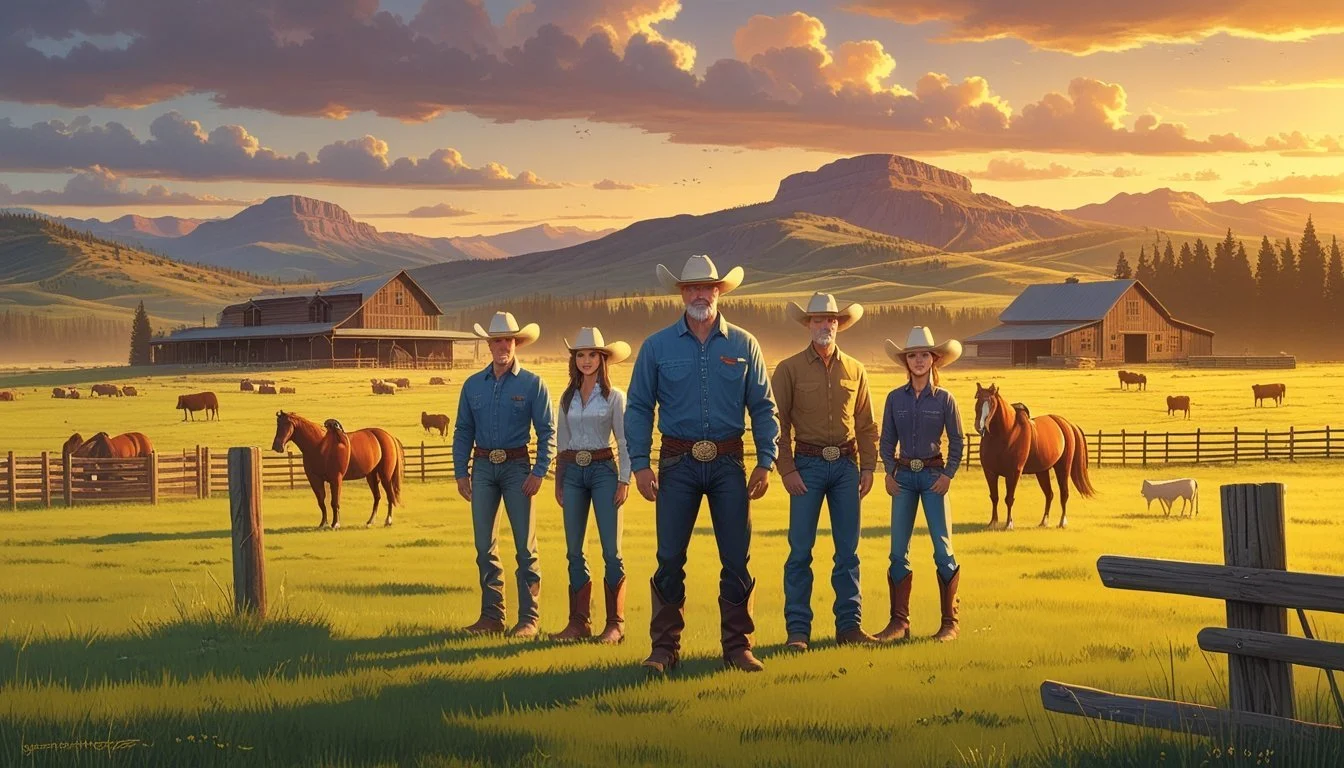
Yellowstone has shaped contemporary western drama and generated several successful spinoff series exploring American frontier history and culture. Taylor Sheridan’s vision and storytelling have made a significant mark on how audiences perceive the genre and its themes.
Yellowstone as a Cultural Phenomenon
Yellowstone became a cultural phenomenon soon after its debut in 2018. The show’s mix of neo-western grit, complex family politics, and Montana’s rugged landscape drew large audiences and renewed interest in western-themed entertainment. Events at the Chief Joseph Ranch, which stands in for the Duttons’ fictional homestead, have also become points of real-world tourism and fandom.
Popular culture has absorbed Yellowstone’s imagery, language, and style. Ranch wear and western aesthetics have seen increased popularity, and phrases or references from the series regularly appear in online conversations. This mainstream attention boosted related merchandise and inspired viewers to engage more deeply with rural American issues.
Taylor Sheridan’s Influence
Taylor Sheridan created Yellowstone and oversaw its development as both a writer and executive producer. His distinct approach blends traditional western storytelling with the modern “neo-western” genre, often focusing on moral ambiguity, survival, and conflicts over land. Sheridan’s storytelling also examines the struggles of legacy and belonging tied to the American frontier.
His influence extends to the writing, casting, and visual style. Sheridan’s shows are known for sharp dialogue and authentic characters who reflect tough realities. This approach has attracted actors from both film and television backgrounds, lending performances that feel grounded and intense. Sheridan’s work on Yellowstone has paved the way for a broader acceptance of modern westerns on major television platforms.
Exploring 1883, 1923, and Other Spinoffs
Yellowstone’s popularity led to several spinoff series that dig deeper into the Dutton family history. 1883 introduces viewers to the Duttons’ ancestors during their journey west, featuring encounters with figures like a Comanche warrior and reflecting the hardships of migration and settlement. The show’s depiction of wagon trails, conflict, and survival gives new context to the main series.
1923 picks up during the era of Prohibition and the Great Depression. It explores how the family deals with changing economic and social forces, and brings in historical elements such as land disputes and the challenges of a shifting American frontier. Additional spinoffs like The Madison and the upcoming Beth and Rip project continue to expand the Yellowstone universe, exploring new characters and timelines against backdrops like the actual Yellowstone National Park.
Symbols, Fashion, and Everyday Life
Distinct traditions and visual symbols shape life on the Dutton Ranch. Daily routines and attire reflect the balance between hard work, loyalty, and the preservation of Western heritage.
Iconic Costumes and Fashion Statements
The Dutton Ranch staff and family are recognized by their Western-inspired outfits. Key staples include cowboy hats, durable denim, leather boots, and heavy jackets. These clothes are worn for their utility in tough conditions and their connection to ranch identity.
Traditional cowboy attire is more than fashion—it's a marker of status and values. The "Y" brand, prominently displayed or referenced, is a visible symbol of allegiance to the Duttons. This branding signifies loyalty, commitment, and the acceptance of specific responsibilities.
Fashion on the ranch serves both practical and symbolic functions. For example:
Item Purpose Symbolism Cowboy Hat Sun protection Western heritage Denim/Work Shirt Durability, comfort Blue-collar work ethic Branded Belt Functional, identification Loyalty to the ranch family
Attire also sets ranch workers apart from outsiders and the urban world, highlighting the ongoing tension between tradition and modernity.
Daily Routines on the Dutton Ranch
Work on the Dutton Ranch is physically demanding and structured around the needs of livestock and land. Days often start before sunrise, with crew members feeding cattle, repairing fences, and managing horses.
Tasks are assigned based on skill and seniority. During cattle drives or branding, every hand has a specific role. The branding ritual, when performed, stands as a collective demonstration of loyalty, responsibility, and endurance.
Teamwork and discipline are crucial. Meals are eaten together, and most labor is done in groups to foster a sense of community. Long hours, changing weather, and hard labor are part of daily life, reinforcing the respect, trust, and bonds among the ranch crew.
