
Why the Yellowstone Ranch Feels Like a Kingdom at War
Exploring Power Struggles and Family Loyalties
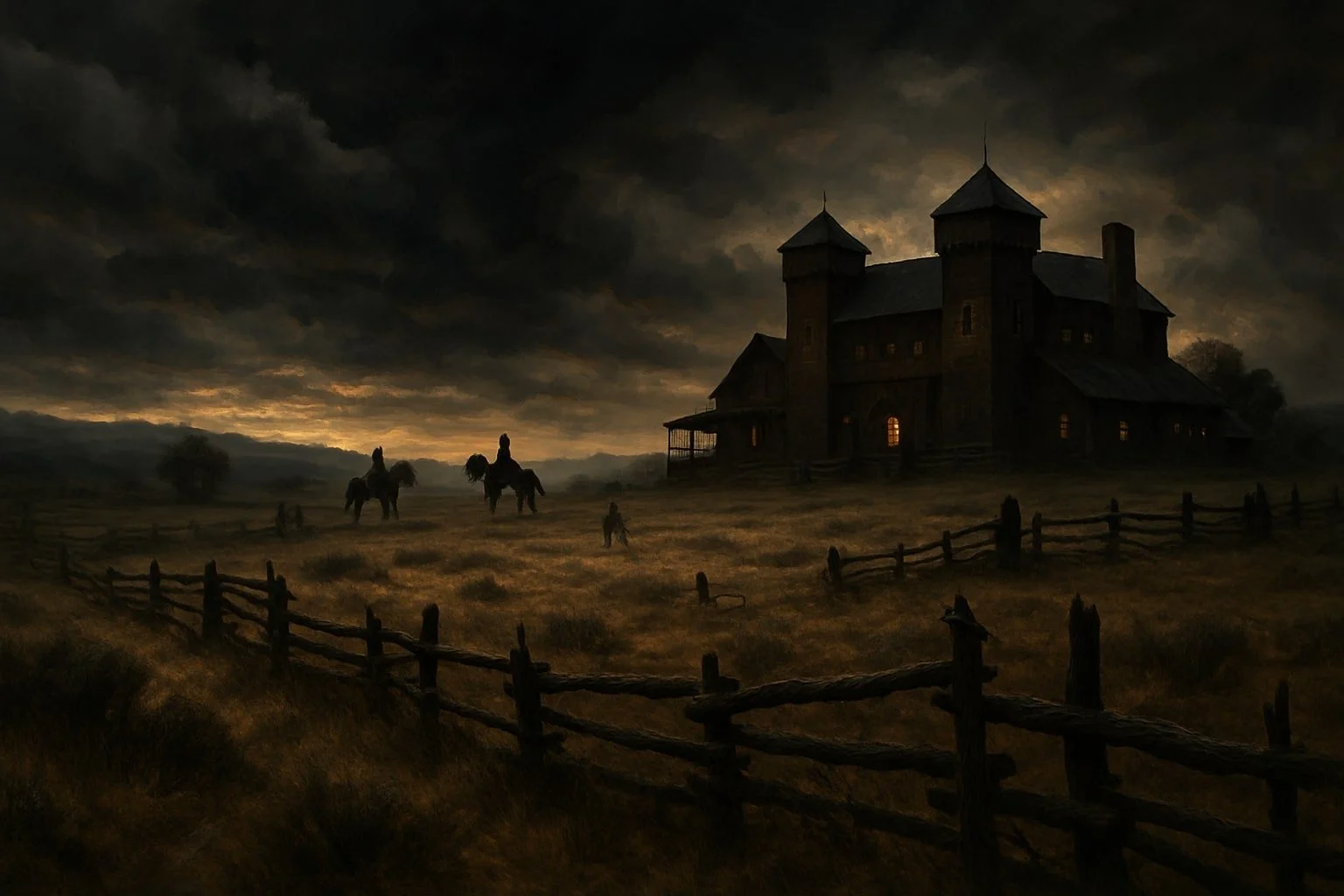
The Yellowstone Dutton Ranch operates like a kingdom at war because control over its land means everything—security, power, and survival. The ranch is more than just a business or family home; it’s a fortress constantly defending itself from outsiders, developers, and old rivals who want a piece of its territory. This unending struggle for ownership mirrors the historic and ongoing land conflicts that have shaped the American West.
Viewers see the Duttons engaged in daily battles, both literal and political, to keep their claim intact. Their challenges involve not just the hard labor of ranching but also high-stakes negotiations and fierce confrontations with anyone threatening their way of life. The tension is relentless because, on this land, losing ground often means losing everything.
Setting the Stage: Yellowstone and Its Land
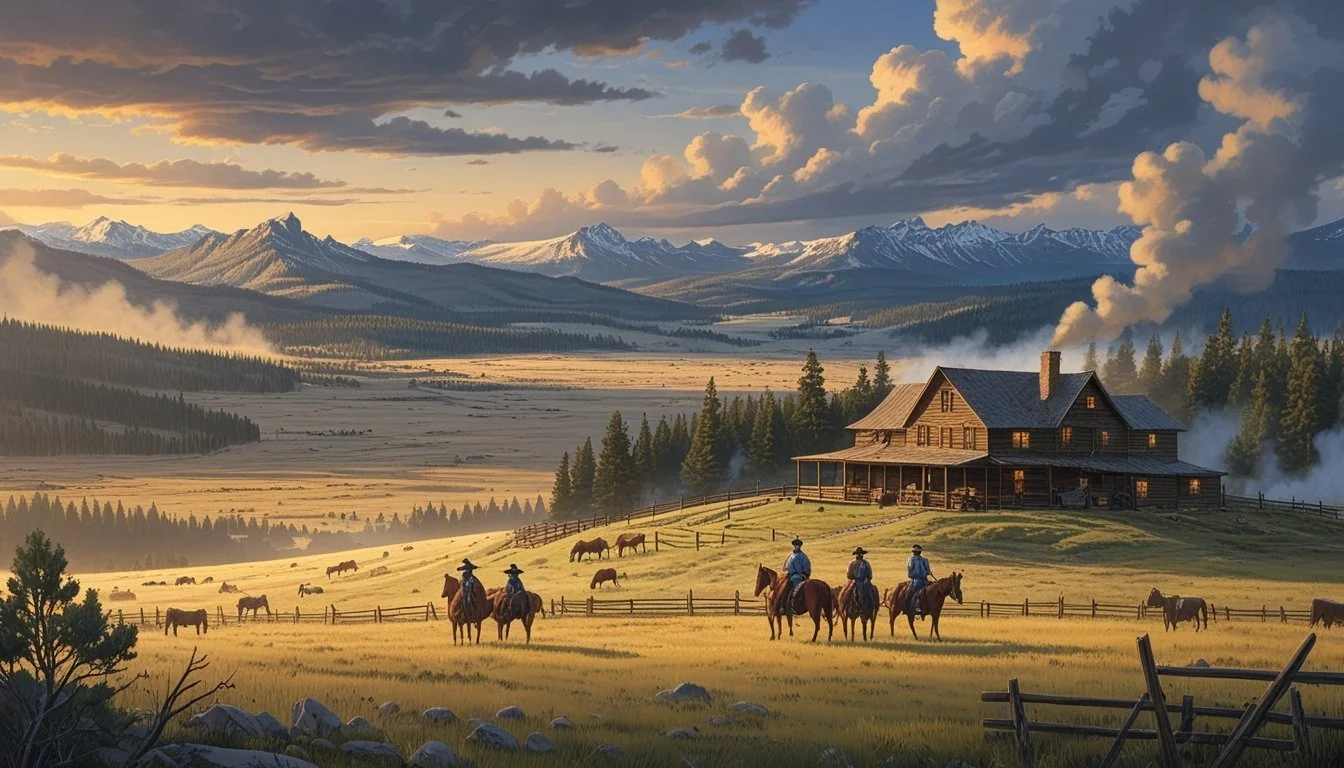
Yellowstone’s drama is anchored in its powerful sense of place, where untamed geography shapes the lives and conflicts of its characters. The ranch’s identity, history, and every rivalry are inseparable from its vast Montana setting and the significance of land ownership.
Montana’s Rugged Landscape
Montana serves as the dramatic canvas for the Yellowstone series, with sweeping plains, sharp mountains, and wide rivers. The landscape is both a barrier and a resource, dictating the rhythms of ranch life and the scale of the Duttons’ challenges.
Unlike more temperate climates, Montana is defined by harsh winters and sudden storms. These conditions test both livestock and ranchers, making survival a matter of endurance and adaptability.
The American West, captured visually at the real-life Chief Joseph Ranch near Darby, embodies the rugged frontier spirit. The land remains largely untamed, with dense pine forests, rocky outcrops, and grasslands reflecting the realities faced by ranchers across the region—demanding, beautiful, and sometimes unforgiving.
The Yellowstone Dutton Ranch Origins
The Dutton Ranch, portrayed in the series as a long-standing Montana cattle empire, is based on the actual Chief Joseph Ranch. This property dates back to the early 1900s and has functioned as a working cattle ranch for generations.
In Yellowstone, the ranch is not just a home but also the centerpiece of legacy and conflict. Its buildings, pastures, and even its fences carry the weight of history and tradition on the American frontier. Every structure serves a practical purpose, supporting the daily work required to keep a ranch this size operational.
Set design for the show closely preserves these authentic features. Stone lodges, wooden barns, and weathered corrals reflect a blend of preservation and adaptation, making the Dutton Ranch feel lived-in and historically grounded.
The Importance of Land Ownership
Ownership of land in Yellowstone is the foundation for nearly every major conflict. For the Duttons, control of the ranch means more than just economic security—it represents family, heritage, and a link to the earliest days of the American West.
Land ownership is deeply tied to identity and survival in Montana ranch culture. The Dutton family’s struggle to defend their property from developers, neighboring tribes, and state interests highlights how fragile this legacy can be.
In the context of the series, land is not just a backdrop but a source of power. Who controls the territory often determines who holds influence, echoing a tradition of frontier disputes that shaped the early history of the Yellowstone region and the American frontier at large.
Key Facts:
Aspect Details Filming Location Chief Joseph Ranch, Darby, Montana Symbolic Reference Yellowstone National Park, the American West Importance Land as power, responsibility, and historical legacy
The Dutton Family Legacy
For over a century, the Dutton family has controlled the land at the heart of Yellowstone Ranch, forging a reputation shaped by hardship, ambition, and conflict. Their story is grounded in history, defined by ties to their ancestors, unique relationships among siblings and heirs, and the powerful presence of John Dutton.
Founders and Family Heritage
The Duttons trace their roots back to the 19th century, arriving in Montana as pioneers. The origins of the family legacy are explored in the prequel "1883," which depicts James and Margaret Dutton leading their family to settle the land despite loss, struggle, and uncertainty. Their journey established the ranch as both a symbol of survival and resistance.
Through generations, the Duttons worked to preserve the ranch against external threats and changing fortunes. The land itself became central to the family's identity, with each generation teaching the next about loyalty and sacrifice. This enduring heritage is core to the family's sense of purpose and their continued fight for what they see as their birthright.
Family Dynamics Across Generations
Multiple generations of Duttons play significant roles throughout the main series and its spin-offs. Relationships among siblings—Beth, Kayce, and Jamie Dutton—are often fraught with rivalry, secrets, and shifting loyalties. Each character's choices are tied to their personal ambitions and understanding of duty to the family legacy.
Beth Dutton is fiercely protective, using sharp intellect and tenacity to defend Yellowstone from threats. Kayce balances inherited loyalty with his role as husband and father. Jamie, driven by the need for acceptance, often finds himself at odds with others, creating complex tension in the family. These dynamics influence decisions that impact the future of the ranch.
The Influence of John Dutton
John Dutton, portrayed by Kevin Costner and central throughout season 5, stands as the family’s patriarch. He represents a rigid adherence to tradition and a willingness to use political and personal power to protect the ranch. John's leadership style blends stoicism with occasional ruthlessness, setting the tone for how conflicts are handled within and outside the family.
His decisions profoundly affect every member of the family, shaping their paths and responses to challenges. John’s ability to maintain control and guide the Duttons has made him a defining figure in the legacy, for better or worse. His influence ensures the family's commitment to Yellowstone’s preservation remains unwavering despite constant threats.
Power Dynamics and Survival on the Ranch
On the Yellowstone Ranch, authority is constantly challenged by threats from inside and outside. Survival depends on navigating unyielding power struggles, fragile trust, and shifting allegiances as the Dutton family faces enemies on multiple fronts.
Loyalty and Betrayal
Loyalty on the Yellowstone Ranch is demanded but rarely guaranteed. Family members and employees alike are tested by moments where allegiance to the Duttons conflicts with personal survival or ambition. Characters such as Rip Wheeler embody unwavering loyalty, protecting the family’s interests regardless of personal cost.
However, betrayal often emerges from within the ranch’s tight-knit circle. Secret deals, informants, and shifting loyalties put everyone at risk, making trust a scarce commodity. The infamous “train station” acts as a grim reminder of the consequences for those who turn against the family.
Every act of betrayal or devotion is magnified by the immediate dangers facing the ranch. In this environment, loyalty can mean life or death, dictating who remains in power and who is cast out.
Political Intrigue and Influence
Politics weaves directly into daily life on the ranch. John Dutton’s position as Governor of Montana transforms routine governance into high-stakes power plays. Land disputes, development pressures, and rival political factions often drag the family into volatile negotiations.
Outside interests seek to undermine the Duttons’ authority, using both legal maneuvering and underhanded tactics. When laws, alliances, and threats become weapons, survival depends on outthinking and outmaneuvering both political rivals and business adversaries.
The family leverages strategic relationships to tip the balance in their favor. This includes using connections with law enforcement and government officials, as reflected in the recurring conflicts with developers and local politicians.
Complex Relationships Within the Ranch
Every relationship on the ranch is textured by history, unresolved conflict, and hidden agendas. Sibling rivalry, generational tensions, and marital strain build up over years. Beth and Jamie Dutton’s tumultuous interactions and Kayce’s struggle to balance family expectations with his own principles show how deeply personal these power struggles become.
Family ties often double as sources of vulnerability. The Duttons’ loyalty to each other is frequently tested by individual desires and old wounds. Unspoken grievances and fierce protectiveness coexist, fueling both unity and resentment.
Even hired hands are drawn into the family’s web, expected to keep secrets and demonstrate absolute allegiance. This environment fosters intense bonds but also sharp divisions, making every relationship a potential fault line for future conflict.
Ranch Life: Tradition, Culture, and Change
Ranching at Yellowstone is shaped by both long-established customs and the mounting demands of contemporary life. The environment, attitudes, and daily routines create a working culture where the past and present frequently collide.
Cowboy Culture and the Bunkhouse
Cowboy culture is at the core of the Yellowstone ranching lifestyle. Ranch hands operate under a clear hierarchy rooted in respect and shared responsibility. The bunkhouse is more than sleeping quarters; it serves as a hub for camaraderie, routine, and unwritten codes of conduct.
Tasks such as cattle drives and horse training require skill and teamwork. Tradition is apparent in rituals like sharing meals and the expectation that every hand pulls their weight. These details anchor the ranch to an older, time-honored way of life.
Ranching culture also emphasizes loyalty and resilience. Disagreements and personal struggles among ranch hands are often resolved within the bunkhouse, reinforcing a sense of community. This social unit helps maintain order in an environment where individual survival depends on collective effort.
Modern Ranching Pressures
Modern ranching faces a complex array of pressures. Changing land use, sustainable grazing practices, and environmental regulations present challenges for ranch owners and workers alike. The expectation to adapt contrasts with efforts to preserve the traditions central to cowboy life.
Economic demands and encroaching development have heightened the need for efficiency and adaptation. Technology has entered the daily routine—ranchers now use advanced equipment for monitoring land and herds. This shift often creates tension between long-standing customs and the push for progress.
These changes reflect the broader neo-western dynamic of Yellowstone, showing how tradition and modernization are constantly in negotiation. Balancing authenticity with modern success defines much of life at the ranch today.
Land Disputes and Outside Threats
The Yellowstone Ranch faces persistent challenges from government agencies and constant pressure from powerful land developers. Economic interests and legal battles threaten the stability and control held by the landowners.
Government and Legal Challenges
Government entities routinely target the Yellowstone Ranch through regulatory action, threats of eminent domain, and environmental oversight. Agencies often push for land acquisition due to conservation agendas or infrastructure expansion, leading to frequent legal disputes.
John Dutton and his family must defend their property rights in courtrooms and legislative hearings. These legal battles drain resources and force the owners to navigate a complex web of state and federal regulations. Such disputes make the ranch vulnerable, repeatedly testing its sovereignty.
Environmental laws can restrict cattle grazing, land use, and water rights. The owners are pressed to adapt their operations to comply, which adds ongoing economic pressure. This legal dynamic shifts power toward policymakers, intensifying the sense of conflict over every acre.
Big Business and Market Equities
Developers and corporate entities such as Market Equities are persistent threats to the ranch's existence. These organizations approach land acquisition with large financial resources, making offers backed by considerable capital and the promise of regional economic growth.
Market Equities, for example, represents the interests of real estate development and land speculation. Their strategy includes leveraging political influence and using aggressive negotiation tactics to pressure the Dutton family. They often aim to subdivide the land for commercial ventures or luxury housing projects.
Economic dynamics strain the owners, as land values soar and new offers undermine the ranch’s traditional business. The tension between holding the ancestral property and accepting vast sums for development epitomizes the struggle. The threat from these outside interests is constant, reshaping the economic landscape and challenging the ranch’s future.
Tribal Sovereignty and Indigenous Perspectives
Conflict over land and power at Yellowstone is closely tied to the ongoing realities faced by Indigenous people. The series weaves in themes of tribal sovereignty, identity, and the pursuit of self-determination alongside the ranch’s struggle to retain control.
Broken Rock Reservation’s Role
The Broken Rock Reservation stands as a central force in the dispute over Yellowstone land. Its residents assert ancestral rights to the territory, reflecting real-life legal and cultural battles faced by Native nations. The reservation’s leadership challenges the Dutton family and represents a modern iteration of Indigenous fights for sovereignty.
Broken Rock is not depicted as a historical remnant but as an active, evolving community with economic, political, and cultural objectives. Tensions play out in negotiations for land, water, and influence in the region. By including the reservation leaders in major plotlines, the show acknowledges ongoing disputes over Indigenous land rights and autonomy that echo current events across the United States.
Chief Thomas Rainwater’s Strategy
Chief Thomas Rainwater is portrayed as a strategic and politically astute leader of the Broken Rock Reservation. His approach is calculated—balancing legal avenues, business negotiations, and community interests to advance both tribal sovereignty and the future of his people. Rainwater is not bound to one tactic; he uses lawsuits, alliances, and enterprise to challenge the Duttons and seek economic independence.
His methods underscore the complexity of Indigenous leadership in a modern context. He is depicted negotiating with state and corporate interests, always aiming to secure greater autonomy for Broken Rock. This portrayal highlights the ongoing struggle for self-determination among Native American tribes and the multifaceted role of tribal leaders confronting historic and contemporary challenges.
Key Figures and Their Influence
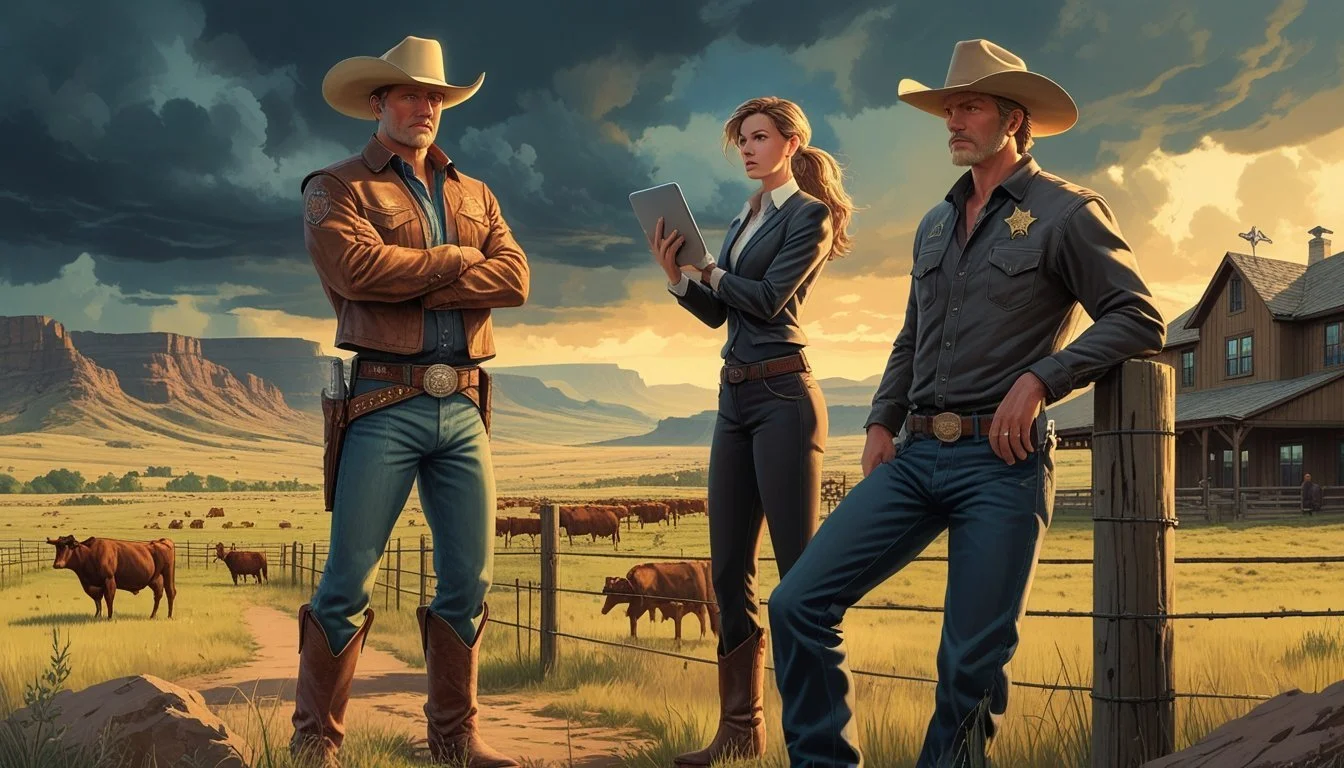
Conflicts at the Yellowstone Ranch are shaped by individual action, calculated loyalty, and personal ambition. The decisions of certain family members and allies directly influence how challenges inside and outside the ranch are confronted.
Beth Dutton’s Methods
Beth Dutton uses a direct, often ruthless approach in matters of family and business. She operates as both strategist and enforcer, using her financial expertise to secure the ranch’s interests. Emotional restraint marks her public dealings, but her commitment to protecting the ranch and her father is unwavering.
Beth’s confrontations tend to be uncompromising. She is skilled at using both legal and corporate tactics against the ranch’s adversaries. Her actions have included manipulating financial markets, intimidating opponents, and orchestrating deals behind closed doors. Beth expects loyalty, but she offers the same fierce dedication in return.
Her presence underscores the link between personal vendetta and business strategy. She is often at the center of escalating tensions, making her influence felt in every major decision concerning the ranch’s survival.
Rip Wheeler’s Loyalty
Rip Wheeler stands out as the principal enforcer on the ranch. His loyalty to John Dutton is both personal and professional. From labor-intensive ranch work to handling threats, Rip’s willingness to act without hesitation makes him a pivotal figure.
He grew up under the protection of the Dutton family, shaping his unwavering commitment. Rip leads by example, setting the pace for the ranch hands and establishing order among the often fractious crew.
Rip’s loyalty extends to defending the ranch against external threats, sometimes resorting to violence when negotiation fails. For the Duttons, he is a stabilizing force—not only trusted to protect but also to enforce the boundaries of the ranch’s authority.
Jamie Dutton’s Ambition
Jamie Dutton occupies a complex position, torn between loyalty to the family and his own aspirations. As the Duttons’ legal advisor, he has a unique vantage point on both internal dynamics and the ranch’s liabilities.
Jamie's ambition often leads him to make choices that conflict with the family’s wishes. He seeks respect and validation, sometimes aligning with outsiders or rivals to pursue political influence. His background in law and familiarity with the political landscape make him valuable yet unpredictable.
His decisions introduce vulnerability into the family structure. While Jamie has repeatedly attempted to prove his loyalty, moments of internal conflict and self-interest challenge the unity at the ranch’s core.
The American West in Pop Culture
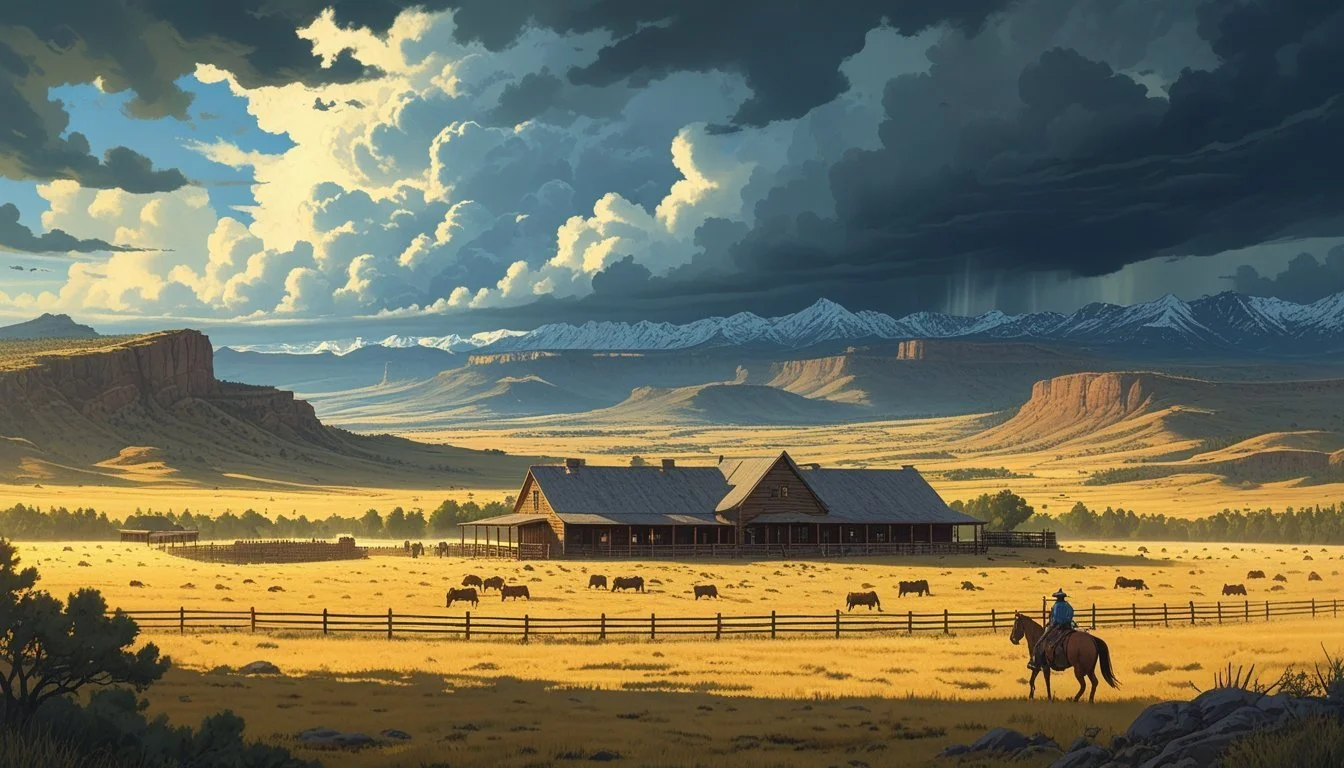
The portrayal of ranch life in modern television draws deeply from historical realities and cultural myths. Yellowstone’s impact goes beyond television, shaping perceptions of family, land, and power in the United States.
Taylor Sheridan's Storytelling
Taylor Sheridan serves as the creative force behind Yellowstone, using his experience and connection to the West to craft stories grounded in authenticity. He often draws inspiration from real locations like the historic Four Sixes Ranch, blending fact with fiction to create drama that resonates with viewers.
Sheridan prioritizes realism in character motivations, personal conflicts, and the environmental challenges faced by ranchers. This approach distinguishes his work from traditional Westerns through its focus on contemporary issues such as land development, changing economies, and clashes between tradition and progress.
His ability to write morally complex figures, especially John Dutton and his family, challenges simplistic good-versus-evil narratives. Sheridan’s storytelling extends beyond Yellowstone, influencing other Paramount Network productions and contributing significantly to the ongoing appeal of modern Westerns in pop culture.
Yellowstone in the Media
Yellowstone rapidly gained recognition as a flagship series for the Paramount Network and later, Paramount+. Its widespread success has brought the imagery and struggles of the American West into mainstream conversation, with the Dutton ranch often compared to a feudal domain amid external threats.
The series has sparked renewed interest in Western-inspired fashion and lifestyle, with costume design and set locations lauded for their realism. Media coverage frequently highlights the show's effect on travel, property values, and tourism in Montana and Texas, especially near filming locations and the Four Sixes Ranch.
Yellowstone’s viral appeal owes much to its depiction of rural identity and family legacy. The show's influence is visible in various forms of media, from news features to social media discussions reflecting debates about land use, tradition, and economic change.
Legacy of the American Frontier
The mythos of the American frontier continues to inform how audiences perceive Yellowstone. The show’s use of vast, rugged landscapes and the central role of cattle ranching evoke enduring cultural themes tied to self-reliance and resistance to change.
In pop culture, the American West often symbolizes freedom, conflict, and the defense of home and heritage. Yellowstone taps into these narratives by presenting the Dutton family's struggle as part of a broader history marked by tension between settlers, developers, and shifting political priorities.
This legacy shapes Yellowstone’s storytelling and public reception, positioning the series as both a reflection and continuation of the frontier myth. By connecting past and present, Yellowstone influences how new generations imagine life in the American West.
Environmental Concerns and Sustainable Strategies
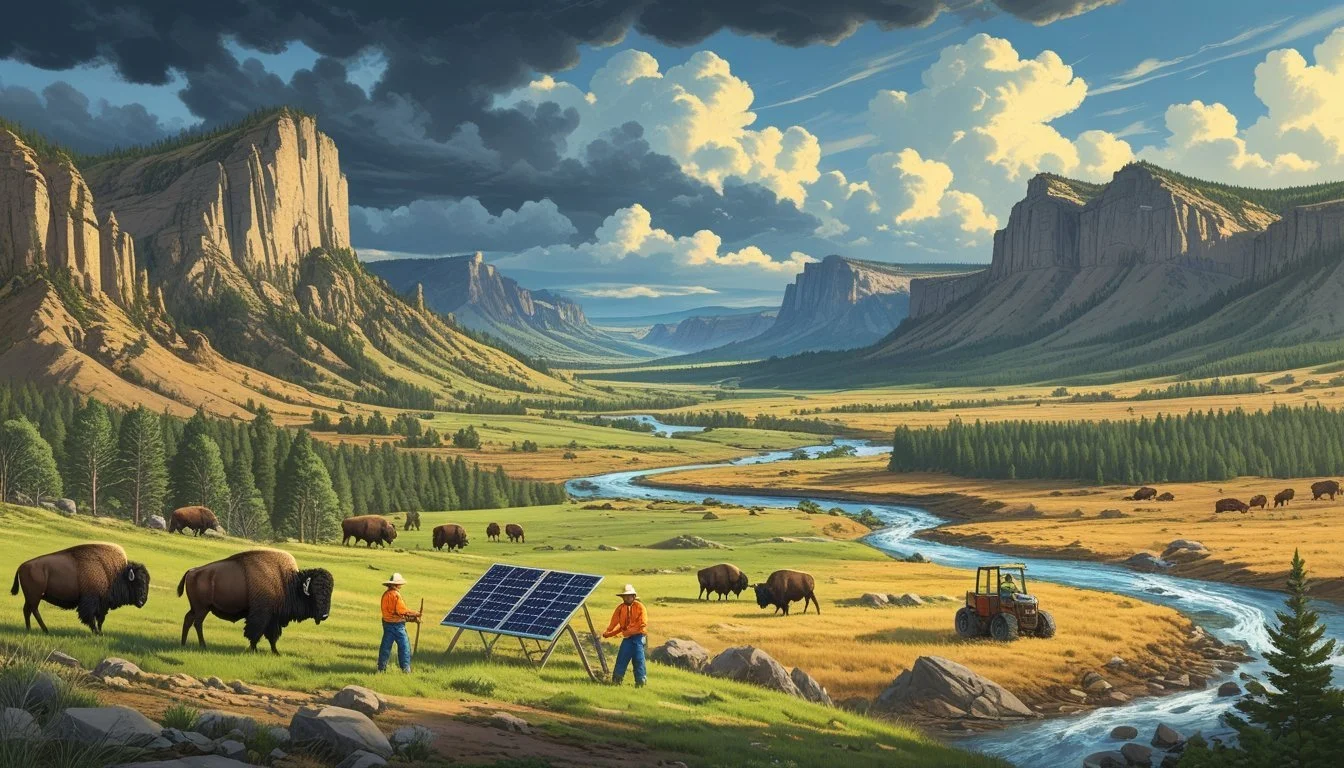
Environmental challenges are shaping how the Yellowstone Ranch operates, as ecological stability and ranching practices frequently intersect. The pursuit of long-term viability for land and wildlife requires a continual balance between established customs and adaptive methods.
Balancing Tradition and Conservation
Ranchers at Yellowstone are historically guided by principles of stewardship, valuing both the land and their way of life. This stewardship involves difficult choices when property rights, grazing patterns, and wildlife habitat needs come into conflict.
Key environmental concerns include soil erosion, water use, loss of native species, and threats to biodiversity. The series depicts how overgrazing or unsustainable land management can quickly degrade pastures, leading to reduced productivity.
Conservation measures are not always welcomed, especially if they impact cattle operations or infringe on personal rights. However, some ranchers work with environmental groups and government agencies to support sustainable grazing practices, improving ecosystem health while maintaining economic stability. These partnerships often require compromise on both sides.
A focus on ecological balance asks ranchers to limit herd sizes, rotate grazing areas, and protect riparian zones from damage. Incorporating these practices helps preserve open space and landscapes while respecting the ranching heritage.
Modern Solutions for Ranching
Modern ranchers are turning to new science and technology to address the region’s environmental pressures. Sustainable grazing uses rotational systems, allowing land to recover between grazing periods and reducing overall impact.
Water management is critical in drought-prone areas. Strategic placement of wells and improved irrigation help protect local streams and aquatic habitats. Fencing systems now direct cattle movement, preventing overuse of fragile locations and encouraging more uniform grazing.
Data-driven approaches monitor soil health, vegetation cover, and livestock performance. Renewable energy—like solar panels for water pumps—lowers the ranch’s carbon footprint. The adoption of low-stress livestock handling benefits both animal welfare and grassland regeneration.
Collaborative initiatives combine tradition with innovation, offering a practical path toward sustainability. By embracing adaptive strategies, ranching at Yellowstone seeks to ensure environmental resilience and economic viability for the next generation.
Conclusion: A Kingdom at War
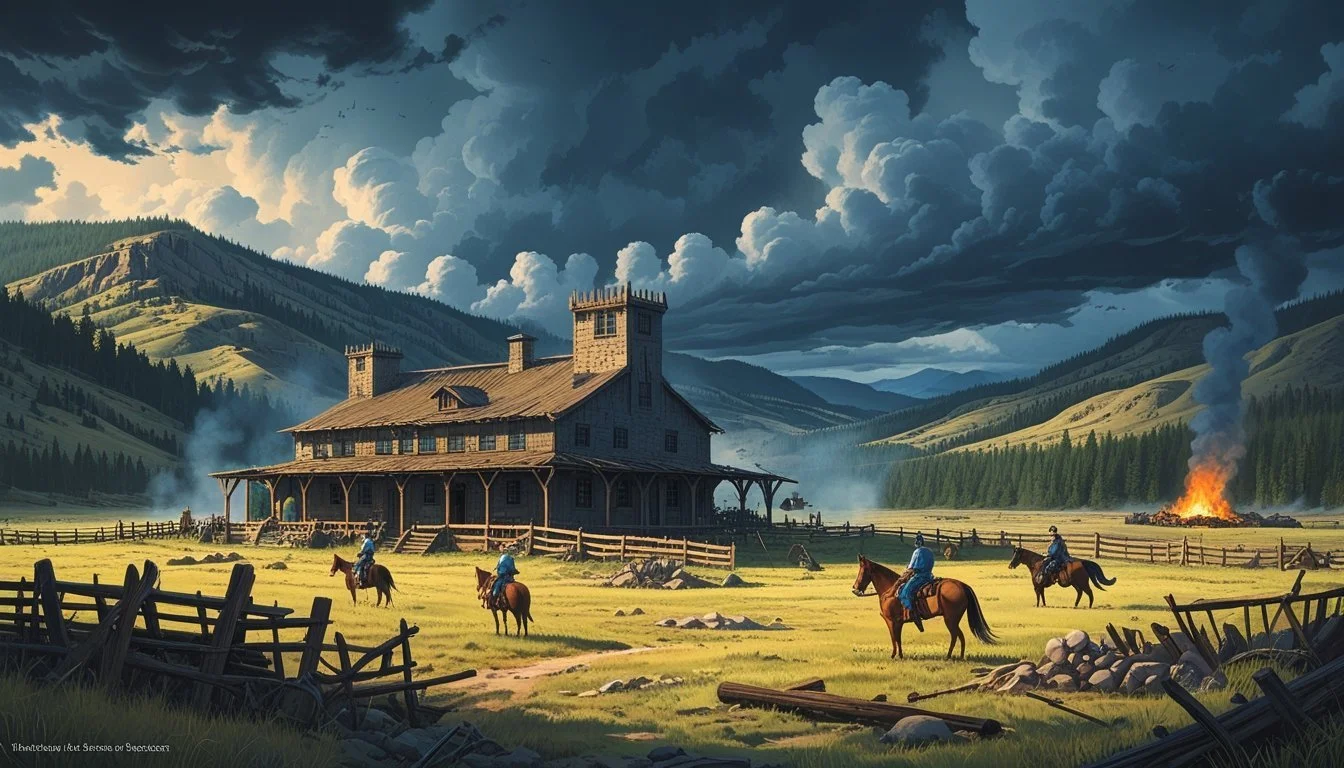
The Yellowstone Ranch stands as more than just land; it represents a legacy fiercely protected and continually contested. Every decision made by the Duttons echoes the pressures faced by rulers safeguarding territory.
Power struggles define daily life, with internal family conflicts and external threats shaping the fate of the ranch. Like a kingdom, alliances form and dissolve as each group pursues its own interests.
Key elements likening Yellowstone to a kingdom at war:
Element Description Succession Ongoing battles over who will inherit and maintain the ranch Territory Endless conflict to keep the land intact against encroachers Loyalty Shifting allegiances within family and among allies Traditions Ancient customs dictating justice and leadership
Not only do the Duttons face legal and economic obstacles, but they also confront moral and personal dilemmas. Their loyalty to each other becomes both their strength and their vulnerability.
Through shifting seasons, Yellowstone remains locked in struggle—each victory and loss another chapter in a long, often violent, history. The ranch’s enduring conflicts mirror the timeless dynamics of kingdoms at war: defense, ambition, sacrifice, and survival.
