
How Yellowstone Frames the West as a Moral Battleground
Exploring Power, Justice, and Identity in Modern Westerns
Yellowstone stands out in modern television by portraying the American West as a space where fiercely held values and emerging societal challenges collide, creating an ongoing moral battleground. The series doesn't just highlight sweeping landscapes and cowboy drama; it digs into deep-rooted conflicts over land, power, and identity, drawing from the region's history as much as its present.
Through its characters and storylines, Yellowstone exposes clashes between traditional Western ideals—such as independence and loyalty—and contemporary debates about law, justice, and environmental stewardship. These conflicts are more than personal dilemmas; they mirror the broader tensions that have shaped the West for generations.
Viewers are drawn into a world where every decision can have ethical consequences, reflecting the complexities that define both the fictional ranch and real-life debates in the American West.
Historical Context: Yellowstone and the Formation of the American West
Yellowstone National Park was established at a time when American society was debating land use, property rights, and national identity. Competing visions shaped both the reality of the American West and how Yellowstone came to embody the region’s complex moral landscape.
Manifest Destiny and the Origins of Moral Boundaries
The ideology of Manifest Destiny encouraged westward expansion across North America during the 19th century. Settlers, supported by government policies, viewed this movement as both a right and duty, which often led to conflicts with Indigenous populations.
Key impacts:
Land was acquired, settled, and controlled through treaties and forced removals.
Competing claims to land use—between Native peoples, ranchers, and federal interests—were common.
The American West developed a reputation for contested moral boundaries, with Yellowstone as a focal point for these disputes.
Yellowstone, as the first national park, became a symbol of imposed morality. Its creation marked a federal claim over lands previously inhabited, resource extraction restricted, and cultures changed by legislation.
Industrialization and Preservation Movements
In the late 1800s, the Industrial Revolution transformed the landscape of the West. Railroads, mining, and new towns accelerated settlement and resource extraction, raising concerns about environmental loss.
Major responses:
Early conservationists, including figures like John Muir, advocated to preserve natural spaces from exploitation.
The Yellowstone National Park Protection Act of 1872 established a model for federal land management and preservation.
Preservation was not universally supported; many local residents and businesses viewed it as a barrier to economic opportunity.
The preservation movement and industrial growth shaped not just public policy, but the very image of the West as a place where ethical debates over land, resources, and progress were—and remain—at the forefront.
Moral Battleground: Competing Values in the Yellowstone Region
Debates over Yellowstone involve deep tensions between long-standing moral values and shifting cultural priorities. Conflict often stems from how justice, property rights, and economic interests are weighed against environmental ethics.
Justice, Property Rights, and Local Perspectives
Local residents in the Yellowstone region often see justice as the right to manage land and wildlife according to community values and historical practices. Many ranchers and landowners view property rights as fundamental, believing their ability to make decisions about land use is threatened by federal policies or outside interests.
Key concerns:
Restrictions on grazing, hunting, or resource extraction are often perceived as infringements on freedom.
The legacy of manifest destiny and rugged individualism still influences local perspectives, leading to resistance against federal authority.
Local communities frequently assert that policies imposed by distant agencies fail to account for practical realities on the ground. They argue that true justice means respecting both property rights and local knowledge.
Economic Interests Versus Environmental Ethics
Economic interests in the Yellowstone area typically involve ranching, tourism, energy production, and other commercial activities. Local economies often depend on access to land and natural resources, making regulations and conservation efforts controversial.
Economic Interests Environmental Ethics Ranching, energy, tourism Wildlife protection Local job creation Protecting ecosystems Resource development Preservation of wilderness
Conflicts arise when conservation measures, such as limits on bison or wolf populations, are seen as threats to livelihoods. Environmental advocates, on the other hand, argue that ethical obligations demand prioritizing biodiversity and the long-term health of the park.
Stakeholders often frame their positions in moral terms, either as protecting community well-being or fulfilling a duty to the natural world.
Conservation and Environmental Conflicts
Disputes over Yellowstone’s management highlight competing interests in conservation, public land use, and ecological integrity. Key controversies focus on the balance between environmental preservation and traditional uses of land and wildlife.
Conservation Efforts and Policy Debates
Yellowstone’s policies have long been shaped by a mix of conservation priorities and competing economic interests. Park administration must weigh the goals of environmental protection against pressures from tourism, ranching, and local industries.
Federal and state agencies, such as the National Park Service and U.S. Forest Service, often face criticism from local stakeholders who perceive top-down regulations as disregarding local needs. Disagreements over land use—such as grazing rights, logging restrictions, and development limits—reflect broader debates within Western public land management.
Policy conflicts are intensified by:
Differing views of nature’s value (intrinsic vs. utilitarian)
Concerns over economic impacts on rural communities
The interplay between federal authority and local control
These disputes underscore the deeply embedded moral perspectives that continue to shape environmental policy in Yellowstone and throughout the West.
Wildlife Management and Wolf Reintroduction
Wildlife management in Yellowstone involves complex decisions, especially concerning predator species. The wolf reintroduction in 1995 remains one of the most controversial actions in the park’s recent history.
Wolves, once eradicated, were brought back to restore ecological balance. Ranchers and some local residents saw the move as a threat to livestock and livelihoods. Supporters, including many ecologists, emphasized the biological benefits, such as improved ungulate populations and ecosystem health.
Key issues include:
Predator-prey dynamics and their effects on the landscape
Economic losses to ranchers and compensation programs
Public perceptions of wolves as symbols of wilderness or danger
These conflicts reflect larger themes in wildlife policy, such as the challenge of integrating science, economics, and cultural values into shared management of public lands.
Spiritual Narratives and Moral Values in Yellowstone
Yellowstone's history is deeply shaped by spiritual narratives and divergent moral values. These influences continue to drive conflicts over land use, environmental protection, and the meaning of the West.
Spiritual Boundaries and the Battle for Symbolic Control
Spiritual boundaries in Yellowstone are strongly linked to how different groups define the park’s meaning and purpose. For some, Yellowstone is a sacred landscape deserving of protection and reverence. For others, it represents opportunity and human achievement, drawing from traditions of rugged individualism.
This contest over symbolic control is not just about material resources. It is about whose narratives and values become dominant. Ranchers, Native tribes, environmentalists, and tourists all bring distinct spiritual or moral visions. Their efforts to shape policy or interpret Yellowstone’s purpose often come down to which vision should guide decision-making.
Group Spiritual/Moral Vision Key Values Native Tribes Sacredness, ancestral connection Respect, stewardship Ranchers Human dominion, individualism Use, access, self-reliance Environmentalists Biocentrism, reverence for nature Preservation, protection
The Role of Spiritual Roots in Social Change
Spiritual roots inform Yellowstone’s evolving moral causes and help frame debates over conservation and access. The Old West tradition emphasized utilitarian resource extraction, shaped by spiritual beliefs in human mastery. The New West narrative centers spiritual and biocentric values, calling for reverence toward nature as inherently valuable.
These roots support social change by inspiring both activism and institutional shifts. Environmental groups, for example, invoke the sacredness of Yellowstone to rally support for stricter protections. At the same time, indigenous communities assert spiritual connections to reclaim roles in stewardship, reframing legitimacy and authority in park management.
Moral causes, rooted in these spiritual narratives, drive policy debates and shape the future of the park. The framing of conservation efforts as moral imperatives exemplifies the lasting impact of these spiritual values on social change within Yellowstone.
Influence of Key Stakeholders on Yellowstone’s Destiny
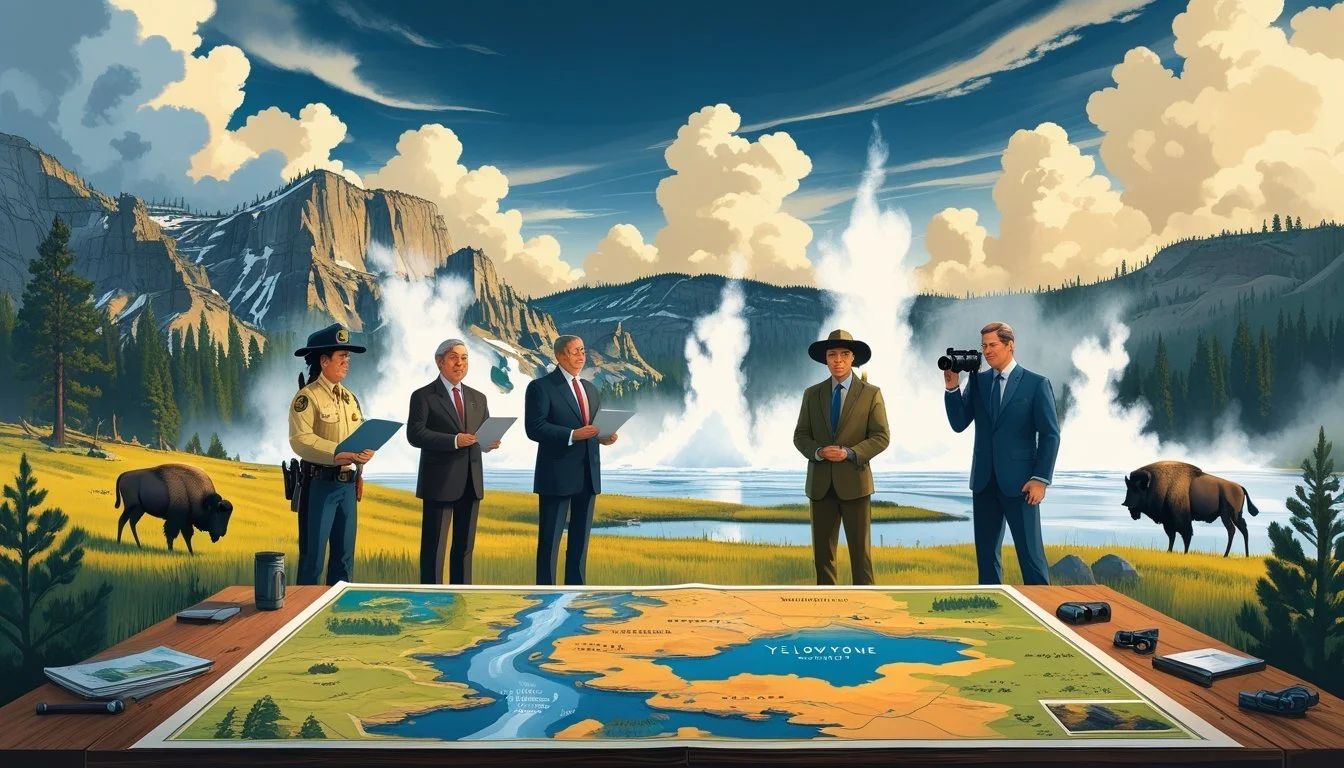
Yellowstone’s fate is largely shaped by the motivations and actions of those who hold power locally and federally. The park’s ongoing debates reflect the intersecting interests of government bodies, political leaders, longtime residents, and iconic families representing regional heritage.
Role of the National Park Service and Elected Officials
The National Park Service (NPS) is responsible for managing Yellowstone’s lands and resources. Their role centers on conservation, preservation of natural habitats, and maintaining public access. Key policy decisions frequently spark debate, especially when environmental objectives conflict with local economic interests.
Elected officials, both state and federal, often influence what happens in and around Yellowstone. They mediate between the demands of different stakeholder groups, such as local ranchers, tourism operators, and conservationists. Legislative efforts can determine the park’s funding, access policies, and response to issues like wildlife management.
Coordination between the NPS and politicians is complicated. Political pressure sometimes forces changes in park management decisions, leading to compromises that may not fully satisfy any one group. Key areas influenced include:
Visitor quotas
Wildlife policy
Resource extraction restrictions
Local Residents and the Dutton Family Legacy
Local residents around Yellowstone tend to have a deep-rooted connection to the land. Ranchers, Native communities, and small business owners often feel the direct effects of policy changes, influencing their perspectives on park management. Many advocate for balancing conservation with economic survival.
The Dutton family, as portrayed in various media, symbolizes the blend of tradition, land stewardship, and resistance to external control. John Dutton’s legacy is tied to a fierce protection of family land and local autonomy—reflecting broader regional attitudes about property rights and identity.
Community influence can manifest through:
Participation in public hearings
Advocacy for land use
Opposition to outside development
The push and pull between these local voices and outside authorities shapes much of the moral and practical debate over Yellowstone’s future.
Cultural Upheaval and Ethical Challenges
Yellowstone has long stood at the intersection of shifting cultural values and ongoing ethical conflicts. As new perspectives enter the region, tensions emerge over land use, conservation, and the rights of people and wildlife.
Cultural Values and Rugged Individualism
The American West—and Yellowstone in particular—has become closely tied to ideals of independence, resilience, and self-reliance. Many local residents view rugged individualism as essential to their way of life, influencing decisions about land, resource use, and personal freedoms.
This foundation often clashes with newer environmental ethics that emphasize collective responsibility and biocentrism. For example, debates around bison management and wolf reintroduction reflect deep divides between traditional ranching families and those prioritizing preservation and ecological health.
Key cultural tensions include:
Value Tradition Contemporary Challenge Private property Conservation easements Extractive use Sustainable management Individual rights Ecosystem health
Conflicts grow as outside voices and national interests seek to redefine what stewardship of the land should mean.
Legal Efforts Addressing Ethical Dilemmas
Federal and state laws have tried to bridge these cultural divides by codifying ethical guidelines for resource management. Landmark statutes like the National Park Service Organic Act and the Endangered Species Act set clear priorities for Yellowstone’s protection, yet gaps remain in interpretation and enforcement.
Litigation over issues such as water rights, animal migration corridors, and indigenous sovereignty further complicates the ethical landscape. Courts and regulatory bodies must weigh competing claims from ranchers, conservationists, and tribal nations.
Efforts such as collaborative agreements and land-use plans attempt to balance economic needs, cultural traditions, and ecological integrity. However, legal solutions rarely resolve the underlying ethical tension, as each party brings its own worldview and values to the negotiating table.
Academic Perspectives: Justin Farrell and the Battle for Yellowstone
Justin Farrell’s work, particularly his book The Battle for Yellowstone, explores how debates over Yellowstone are driven by moral, cultural, and spiritual values. These factors often outweigh scientific or technical considerations in shaping the ongoing controversies and alliances within the Greater Yellowstone Ecosystem.
Environmentalists and Their Impact
Environmentalists have played a pivotal role in reframing Yellowstone as more than just a park—they have highlighted its status as a cultural and ethical landmark. According to Justin Farrell, many of these conflicts present as disputes about science or policy, but often reflect deeper moral convictions about the land and its purpose.
A significant distinction arises between traditional resource users and newcomers advocating for preservation. Environmental groups frequently emphasize ideas like interdependence, sacredness of nature, and responsibility for future generations. Powerful lobbying and public campaigns have made the environment a central public issue, moving debates beyond local boundaries and into national consciousness.
Their efforts have also prompted resistance from those who feel alienated by outside influence or what they see as elitist environmental agendas. These opposing viewpoints create lasting divisions but also encourage dialogue on the meaning of wilderness and community.
The Greater Yellowstone Ecosystem as a Moral Frontier
The Greater Yellowstone Ecosystem is not just a geographical area; it represents a frontier for competing moral visions. Farrell describes it as a site where longstanding Western ideals, like rugged individualism and utilitarian land use, clash with newer ethics of preservation and shared stewardship.
These moral tensions surface in debates over wolves, bison management, and land access. Table 1 provides an outline:
Vision Key Values Major Advocates Old West Individual rights, use Ranchers, locals New West/Environmental Ecosystem health, sacredness Environmentalists
For many, the ecosystem's management is inseparable from identity, tradition, and belief. Disagreements about the landscape’s future are less about facts and more about whose values should prevail in shaping the West’s character. This ongoing battle keeps Yellowstone at the forefront of national debates about conservation and heritage.
Contemporary Issues and Future Outlook
Yellowstone faces major pressures from environmental change and shifting political realities. Its future will be shaped by how these challenges are navigated—both on the ground and in public debate.
Climate Change and Ecological Transformation
Yellowstone's ecosystems are being reshaped by rising temperatures, changing precipitation, and a shifting fire regime. Warmer winters and reduced snowpack have led to earlier spring runoff, changing the flow and temperature of rivers that support critical species like cutthroat trout.
Species such as whitebark pine are threatened by invasive pests and disease, with climate acting as a catalyst for new outbreaks. The region has also seen more frequent wildfires, which impact forest composition and animal habitats. These changes complicate longstanding conservation models, which must now account for rapid ecological shifts and increased unpredictability.
Key points:
Temperature shifts impact plant and animal life cycles
Invasive species and pests thrive in new climate conditions
Fire frequency requires adaptive land management
Ongoing Political Struggles and Social Change
Conflicts over land use and resource rights continue to define Yellowstone's role in the American imagination. Moves to restore lands to Indigenous stewardship, as highlighted in recent scholarship, question traditional management and challenge colonial legacies tied to the park.
Economic pressures—such as tourism, ranching, and development—regularly clash with conservation priorities. These debates are not just theoretical; they influence everyday policy decisions on issues like bison management, water rights, and public access. Social change, including the recognition of generational justice for Indigenous communities, is shifting the framework for understanding Yellowstone's place in contemporary society.
Ongoing challenges:
Reconciling conservation with economic use
Addressing Indigenous land claims and historical injustices
Balancing competing interests within a politically polarized environment
